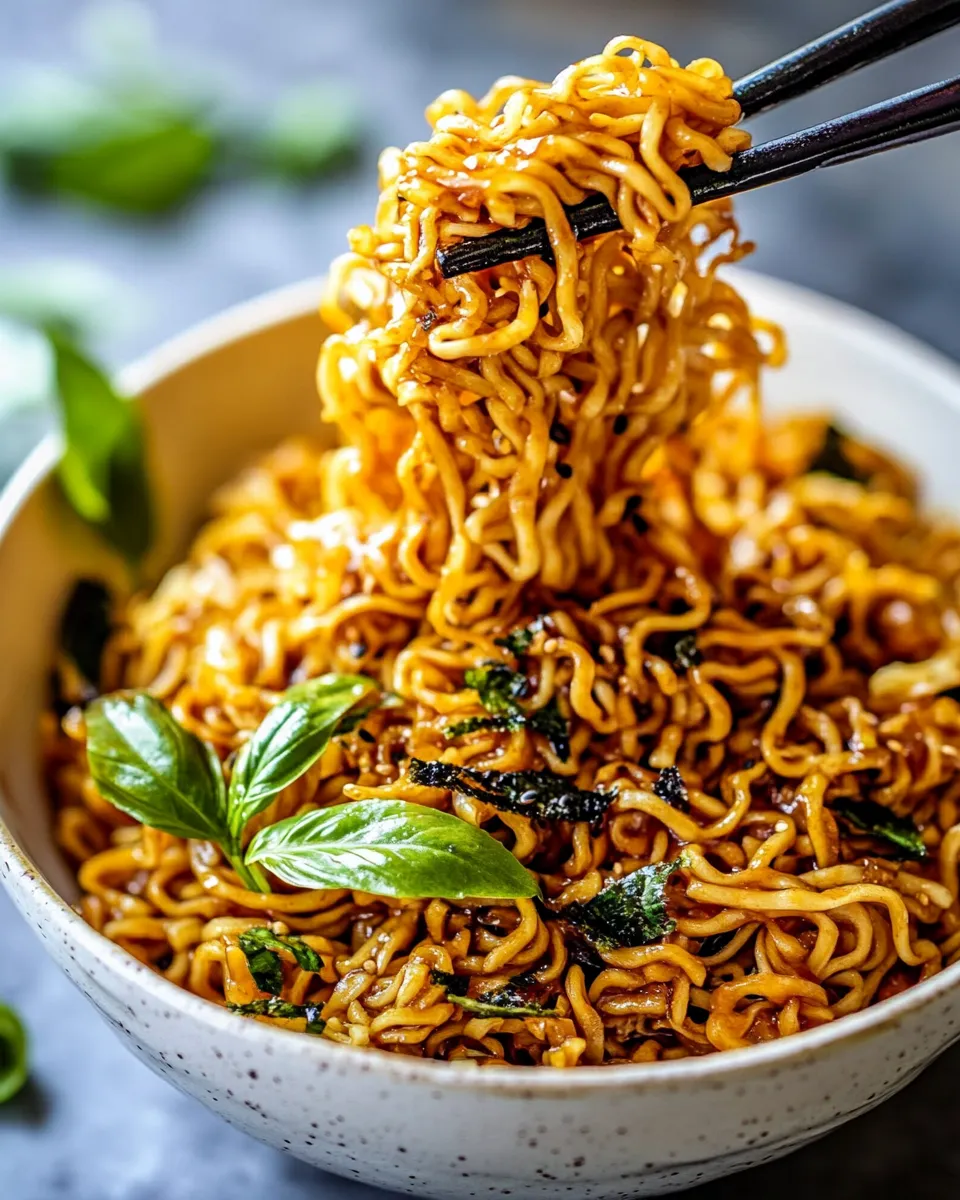
These noodles are one of my go-to meals when I want something fast, bright, and deeply flavored without a lot of hands-on time. The core idea is simple: infuse hot oil with green onions and red curry paste, pour it over fresh herbs and aromatics, then toss it with hot, tender rice noodles. The result is spicy, sweet, herbal, and silky in the same bite.
No fuss, no stir-fry marathon — just a quick sequence of infusions and a gentle toss. The dish comes together in about 20 minutes and works as a light weeknight dinner, a lunch that impresses, or a speedy side for a more elaborate meal. I’ll walk you through the exact ingredients and steps I use, why they matter, and a few smart swaps if you need them.
What Goes In
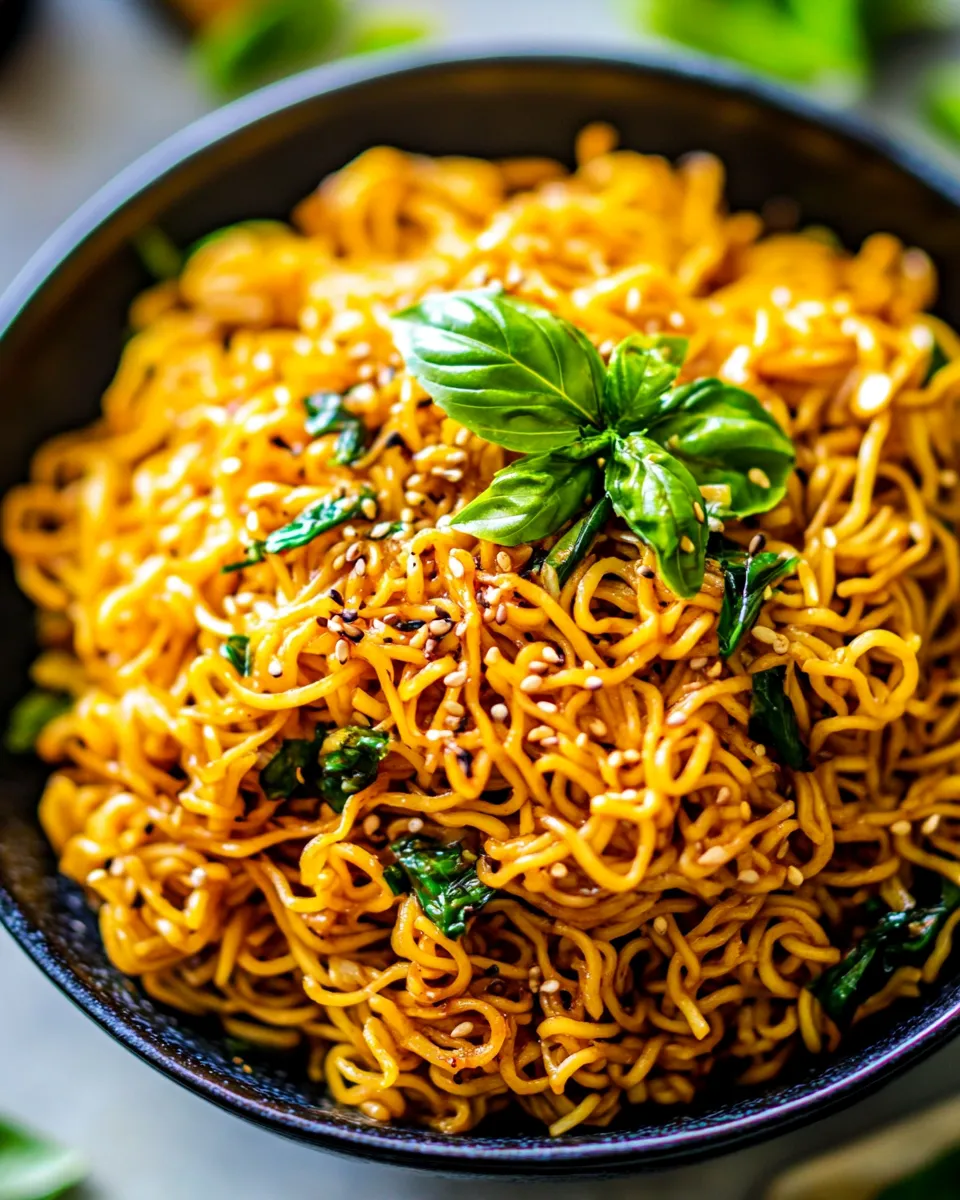
Ingredients
- 1/2 cup sesame or peanut oil — the hot oil is the flavor carrier; sesame adds nuttiness, peanut brings richness.
- 1/3 cup green onions, sliced — divided; most get cooked in the oil for aroma, a bit is reserved for garnish.
- 1-3 tablespoons Thai red curry paste — start modestly and build heat; this provides the backbone spice and aromatics.
- 3-4 cloves garlic, grated — raw in the herb mix so the hot oil mellows and blooms it.
- 1 tablespoon ginger, grated — bright, warming counterpoint to the curry paste.
- Crushed red pepper flakes, to taste — optional boost for extra heat and texture.
- 1/2 cup chopped fresh Thai or regular basil — Thai basil is more anise-like; regular basil still gives fresh herb lift.
- 1/4 cup chopped fresh cilantro — adds citrusy, leafy brightness that lifts the oil and noodles.
- 4 squares brown rice ramen noodles, or 6 ounces rice noodles — neutral carrier that soaks up the flavored oil; cook per package.
- 1/3 cup tamari or soy sauce — salts and rounds the dish, tamari for gluten-free option and deeper soy flavor.
Build 20 Minute Red Curry Basil Garlic Oil Noodles Step by Step
- Slice the 1/3 cup green onions. Reserve about 2 tablespoons sliced green onions for garnish and set aside; use the remaining sliced green onions in the next step.
- In a skillet over medium heat, warm the 1/2 cup sesame or peanut oil with the remaining sliced green onions until very fragrant, 3–5 minutes.
- Reduce the heat to low, stir in 1–3 tablespoons Thai red curry paste (start with 1 tablespoon and add up to 3 to taste), and cook, stirring, for 2 minutes.
- While the curry paste cooks, put the 3–4 cloves grated garlic, 1 tablespoon grated ginger, 1/2 cup chopped basil, 1/4 cup chopped cilantro, and crushed red pepper flakes (to taste) into a large, heatproof bowl and mix.
- Carefully pour the hot oil and green onion–curry mixture from the skillet over the herb mixture in the bowl (oil will be hot). Stir and let sit 1–2 minutes to infuse.
- Cook the 4 squares brown rice ramen noodles (or 6 ounces rice noodles) according to package directions; drain thoroughly.
- Add the hot, drained noodles and 1/3 cup tamari or soy sauce to the bowl with the oil-herb mixture. Toss thoroughly until the noodles are evenly coated.
- Divide onto plates and garnish with the reserved sliced green onions. Serve immediately.
Why This Recipe Works
This recipe uses hot oil as a concentrated flavor medium. Heating the oil with green onions draws out their aromatic sulfur compounds and creates a fragrant base. Cooking the curry paste briefly in the oil develops the paste’s essential flavors — the chilies, lemongrass, and spices become more integrated and less raw than if you just mixed them in cold.
Pouring the hot oil over uncooked garlic, ginger, and herbs gently cooks them and extracts their volatile oils without overcooking the basil or cilantro. That short infusion gives you a bright, multi-layered sauce that clings to rice noodles perfectly. Because rice noodles are neutral and porous, they soak up the oil, tamari, and aromatics, making each bite punchy and balanced.
Flavor-Forward Alternatives
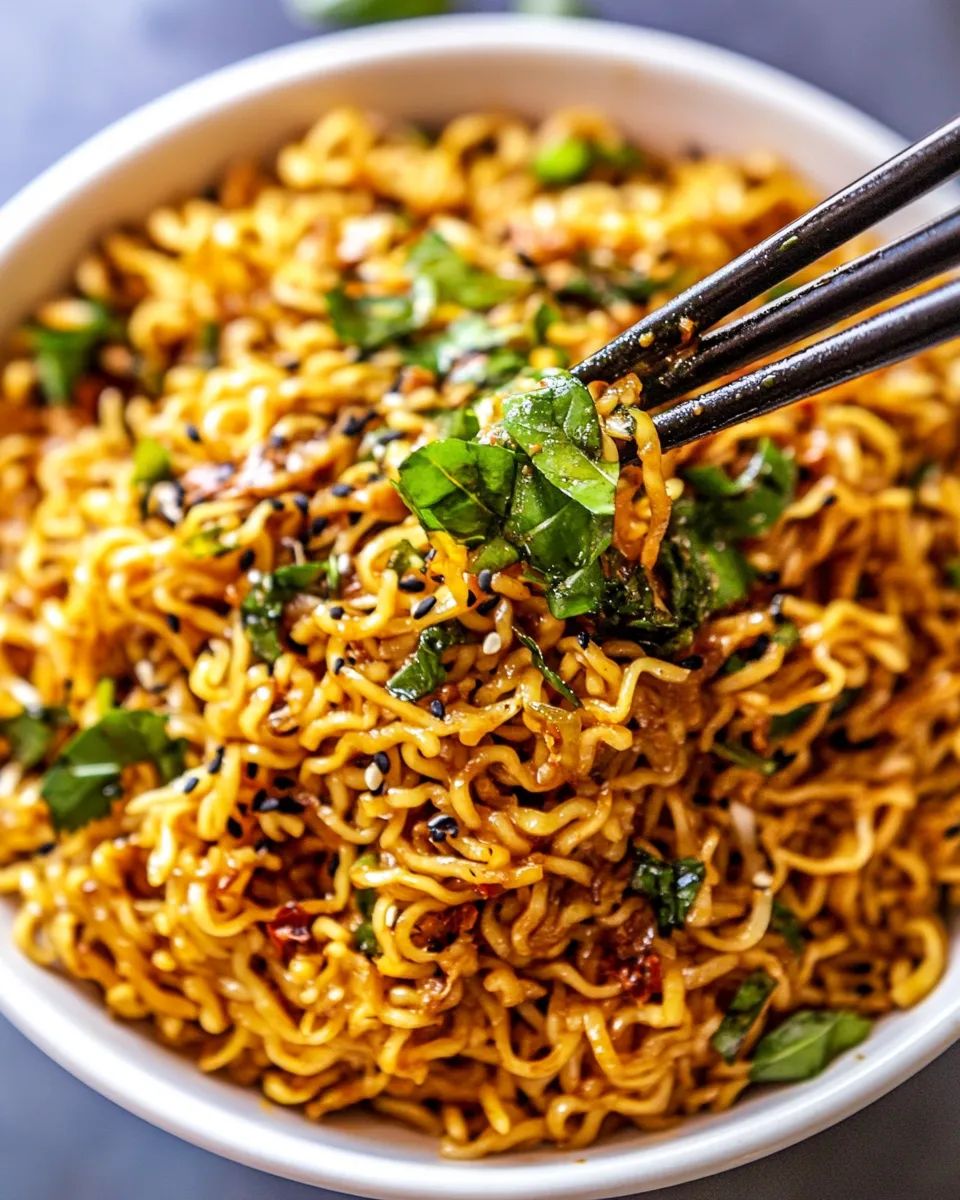
- Swap the curry paste: If you want a different profile, try a spoonful of sambal oelek for a more straightforward chili heat, or a mild green curry paste for herbaceous depth.
- Use lime: If you like a citrus lift, squeeze a little lime over the finished dish. It brightens but don’t add too early or it will flatten the oil.
- Add protein: For a heartier meal, top with quick-cooked shrimp, grilled chicken, or slices of pan-seared tofu. Toss them with the hot noodles so they absorb the sauce.
- Nuts and seeds: Toasted peanuts or sesame seeds add crunch and a toasty counterpoint to the silky noodles.
Equipment & Tools
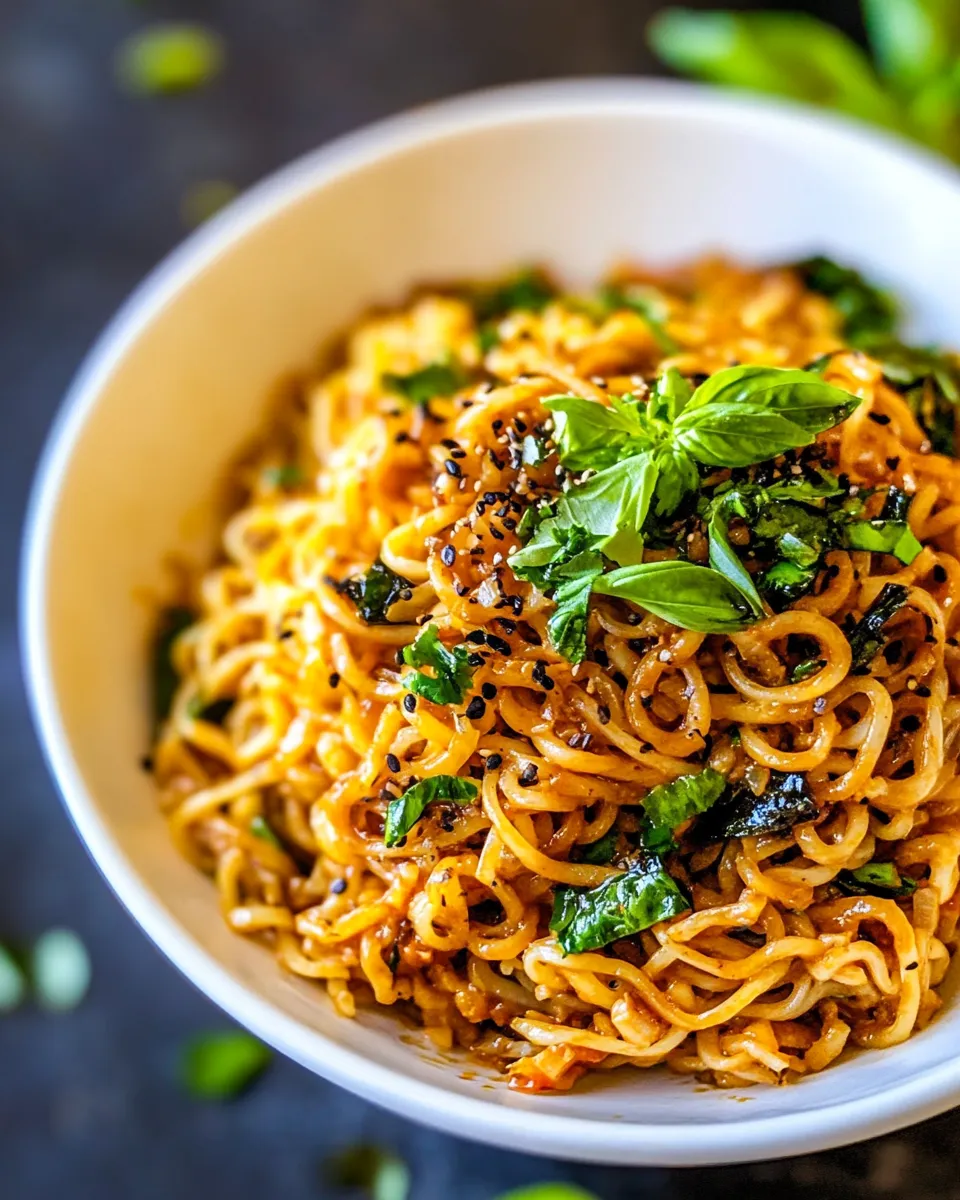
- Skillet — any medium skillet that heats evenly; cast iron or stainless works well for maintaining medium heat.
- Large heatproof bowl — big enough to toss the noodles without spilling; glass or metal is ideal so it handles the hot oil safely.
- Fine grater or microplane — for grating the garlic and ginger quickly and evenly.
- Colander or strainer — to drain the noodles thoroughly so they pick up the sauce instead of diluting it.
- Tongs or chopsticks — for tossing noodles gently and evenly with the oil-herb mix.
Pitfalls & How to Prevent Them
- Burning the curry paste: Keep the heat at low once you add the paste. Stir constantly; burnt curry paste turns bitter fast.
- Oil too hot when poured: The oil needs to be hot to bloom flavors, but if it smokes or is near smoking, remove from heat briefly. Pour carefully — the bowl will get very warm and sizzling is expected but manage the pour to avoid splatter.
- Watery noodles: Drain rice noodles thoroughly. Excess water dilutes the oil-herb mix and makes the sauce sloppy.
- Flat flavor: Taste for seasoning. If it needs life, add a splash more tamari, a pinch of sugar, or a squeeze of lime at the end.
Variations for Dietary Needs
- Gluten-free: Use tamari and ensure your curry paste is gluten-free (most are, but always check labels). The rice noodles and oil are naturally gluten-free.
- Nut-free: Use neutral vegetable oil instead of peanut or sesame if the allergy is severe. Toasted sesame flavor can be mimicked with a drop or two of toasted sesame oil if tolerated; otherwise omit.
- Lower sodium: Reduce the tamari to 2–3 tablespoons and finish with a squeeze of lime to compensate for lost saltiness.
- Protein-forward / vegan: Fold in pan-fried tofu or chickpeas for vegan protein, or add shrimp/pork/chicken for omnivores; cook proteins separately and toss while hot so they pick up the sauce.
Flavor Logic
The composition of this dish balances fat, heat, herbaceousness, and umami. The oil is the fat that carries and amplifies flavors. Thai red curry paste brings chile heat and aromatic spices; garlic and ginger give pungency and warmth. Basil and cilantro bring two types of freshness — basil is sweet and slightly anise-like (especially Thai basil), cilantro is citrusy and bright. Tamari/soy sauce brings the savory umami that makes the whole dish feel rounded and satisfying.
Because the sauce is oil-based, it coats the rice noodles rather than soaking into them like a watery sauce. That creates a glossy mouthfeel and concentrates flavor in each strand.
Meal Prep & Storage Notes
- Make-ahead oil-herb mix: You can prep the herbs, garlic, and ginger and keep them refrigerated in a sealed container for a day. Warm the oil and curry with green onions just before serving and pour over the prepared herbs.
- Storing leftovers: Store cooled noodles in an airtight container in the fridge for up to 2 days. The oil will congeal slightly; reheat gently in a skillet and add a splash of hot water or a little extra oil to loosen before serving.
- Freezing: Not recommended — the herbs and oil don’t freeze well together, and textures degrade.
Common Qs About 20 Minute Red Curry Basil Garlic Oil Noodles
- Can I make this less spicy? Yes — start with 1 tablespoon of Thai red curry paste and skip or reduce crushed red pepper flakes. You can also add a touch of sugar or coconut milk on the side to mellow heat.
- What if I don’t have Thai basil? Regular sweet basil works well; the character will be slightly different (less anise), but still bright and fresh.
- Can I use wheat noodles? You can substitute soba or wheat ramen, but be aware it changes texture and gluten content; adjust tamari if using wheat noodles as they sometimes require less sauce.
- How do I keep the noodles from sticking? Drain thoroughly and toss them immediately with the oil-herb mixture while hot; the oil prevents clumping. If you must hold them, toss briefly with a little neutral oil before sitting.
- Is it safe to pour hot oil over raw herbs? Yes — that’s the point. The hot oil infuses the herbs and aromatics and softens raw edge without fully cooking them. Pour carefully to avoid splatter and use a heatproof bowl.
Bring It Home
This recipe is about efficient flavor extraction: hot oil, a measured amount of curry paste, and fresh herbs come together to make something that feels restaurant-level in a fraction of the time. It’s reliably quick, forgiving, and flexible — swap proteins, tweak heat, or double the herbs depending on what you have on hand.
When you nail the oil infusion step and drain the noodles properly, you’ll find the balance of texture and flavor is hard to beat for a 20-minute meal. Keep the ingredients prepped, heat the oil low and steady, and finish with that reserved green onion for a bright, crunchy top note. Enjoy — and don’t be afraid to make it your own.
20 Minute Red Curry Basil Garlic Oil Noodles.
Ingredients
Ingredients
- 1/2 cupsesame or peanut oil
- 1/3 cupgreen onions sliced
- 1-3 tablespoonsThai red curry paste
- 3-4 clovesgarlic grated
- 1 tablespoonginger grated
- crushed red pepper flakes to taste
- 1/2 cupchopped fresh Thai or regular basil
- 1/4 cupchopped fresh cilantro
- 4 squaresbrown rice ramen noodles or 6 ounces rice noodles
- 1/3 cuptamari or soy sauce
Instructions
Instructions
- Slice the 1/3 cup green onions. Reserve about 2 tablespoons sliced green onions for garnish and set aside; use the remaining sliced green onions in the next step.
- In a skillet over medium heat, warm the 1/2 cup sesame or peanut oil with the remaining sliced green onions until very fragrant, 3–5 minutes.
- Reduce the heat to low, stir in 1–3 tablespoons Thai red curry paste (start with 1 tablespoon and add up to 3 to taste), and cook, stirring, for 2 minutes.
- While the curry paste cooks, put the 3–4 cloves grated garlic, 1 tablespoon grated ginger, 1/2 cup chopped basil, 1/4 cup chopped cilantro, and crushed red pepper flakes (to taste) into a large, heatproof bowl and mix.
- Carefully pour the hot oil and green onion–curry mixture from the skillet over the herb mixture in the bowl (oil will be hot). Stir and let sit 1–2 minutes to infuse.
- Cook the 4 squares brown rice ramen noodles (or 6 ounces rice noodles) according to package directions; drain thoroughly.
- Add the hot, drained noodles and 1/3 cup tamari or soy sauce to the bowl with the oil-herb mixture. Toss thoroughly until the noodles are evenly coated.
- Divide onto plates and garnish with the reserved sliced green onions. Serve immediately.
Equipment
- Skillet
- large heatproof bowl
- Pot
- Colander