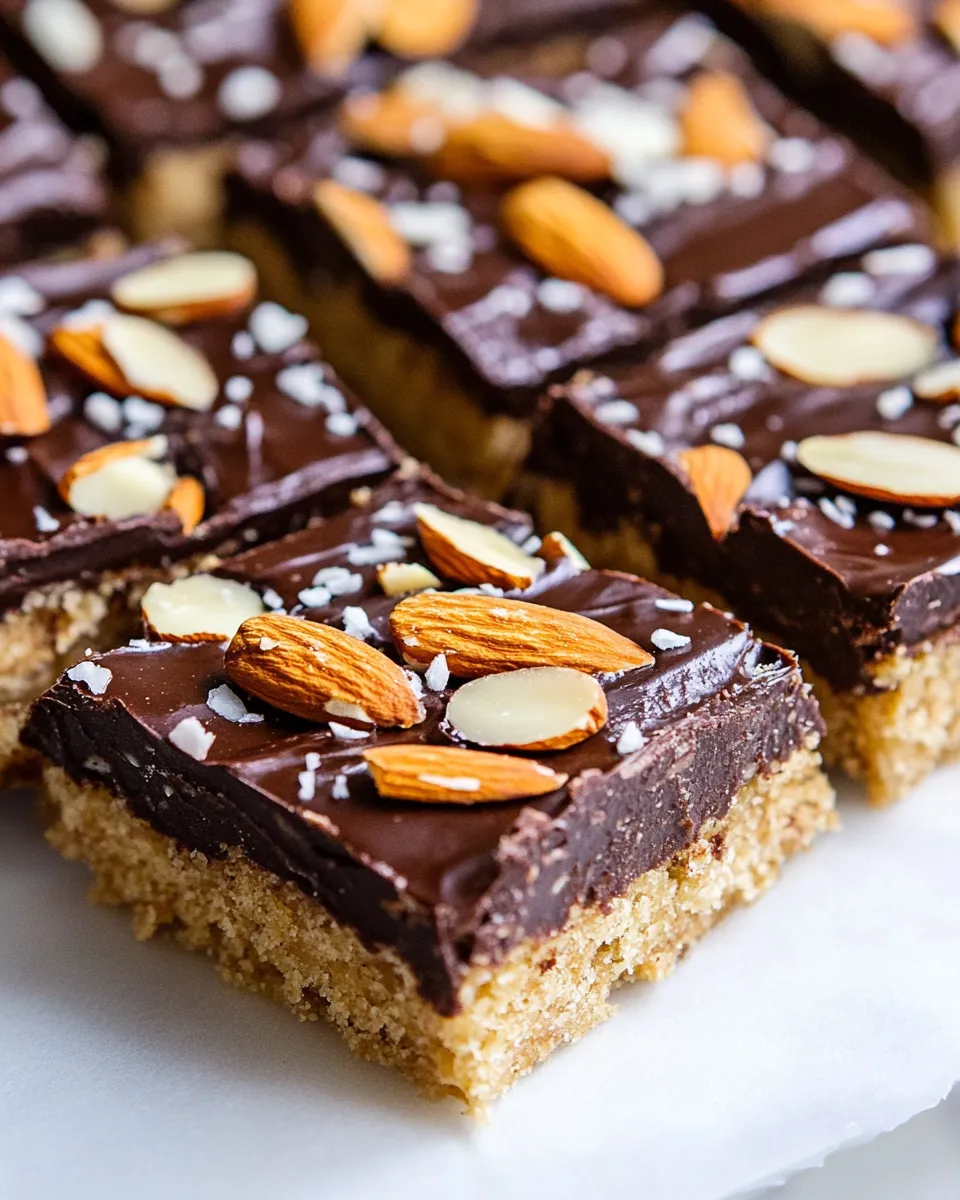
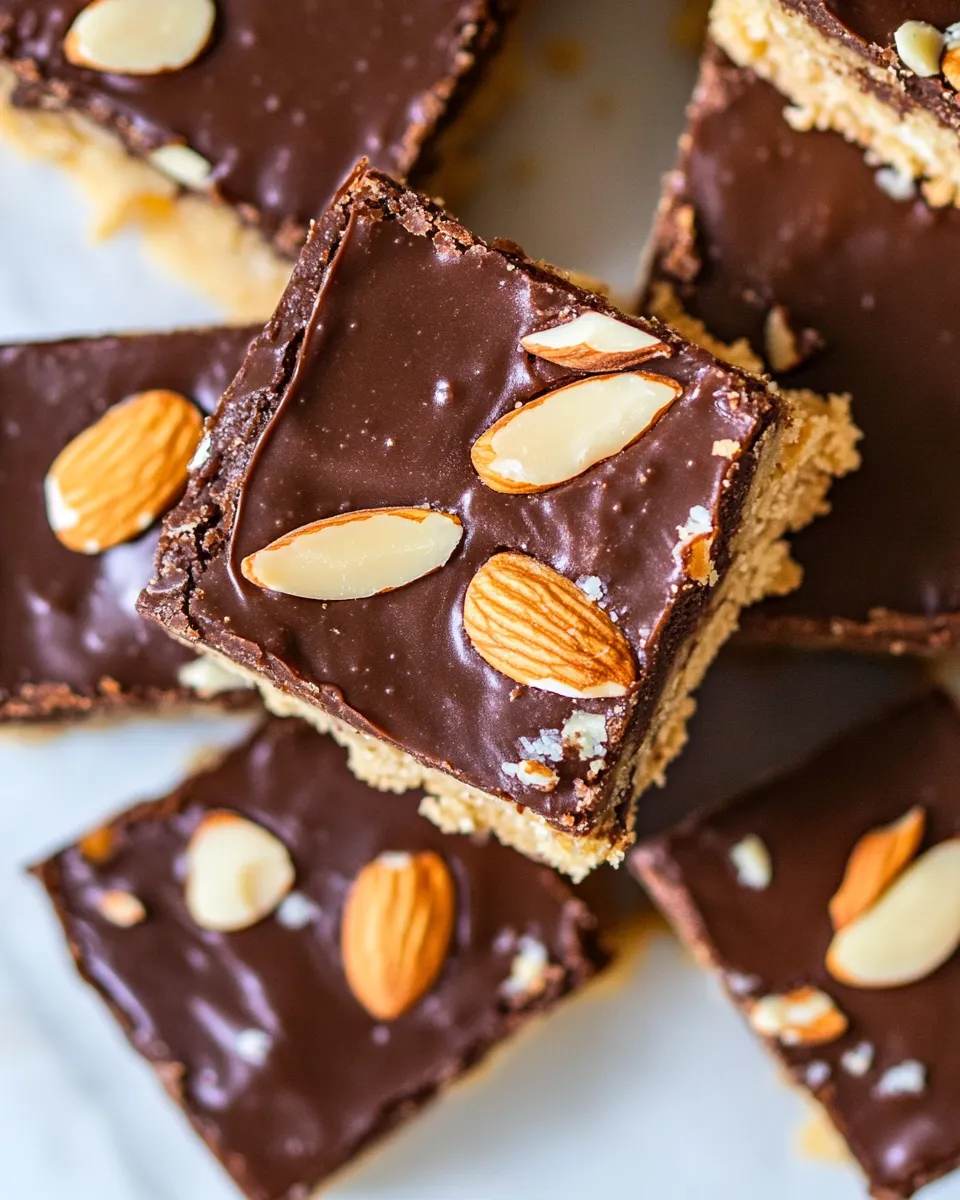
These bars are one of my go-to treats when I want something that feels indulgent but comes together without fuss. A firm, buttery shortbread base supports a glossy, chocolate-almond fudge topping. They travel well, slice cleanly, and please a crowd.
There’s a neat rhythm to the recipe: mix a simple shortbread, press and bake, then melt chocolate with sweetened condensed milk for the topping. Chill and cut. The technique is forgiving, which makes this an excellent recipe for a weekday bake or for gifting at the holidays.
What Goes Into Almond Fudge Shortbread Bars
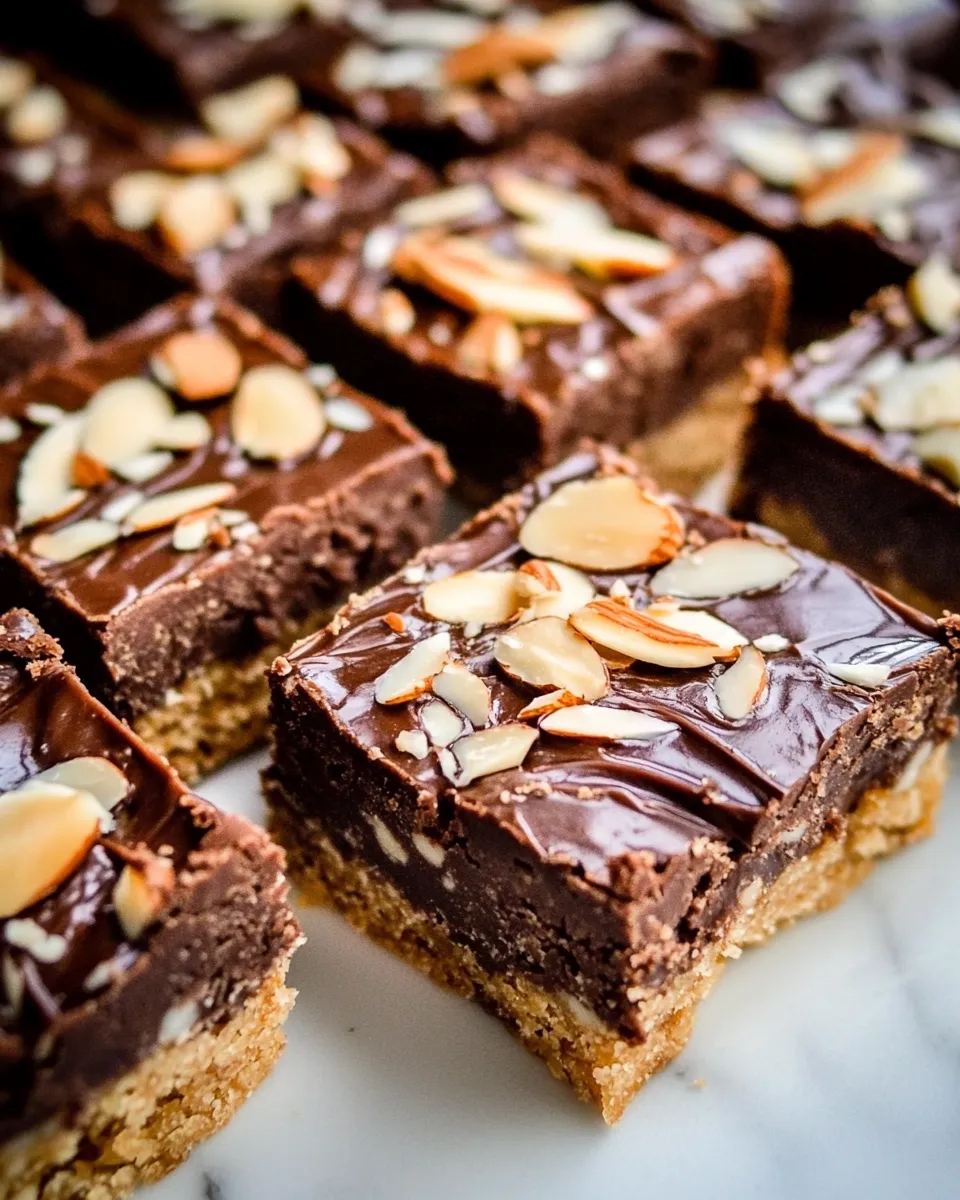
Everything here has a job: butter and confectioners’ sugar give the shortbread its tender, melt-in-your-mouth texture; flour binds; a touch of almond extract brightens the flavor. The topping is straightforward—chopped semi-sweet chocolate, sweetened condensed milk and a bit of butter become a silky fudge, finished with toasted sliced almonds for crunch and an almond accent.
Ingredients
- 1/2 cup unsalted butter, at room temperature — gives the shortbread its rich, tender crumb; room temperature butter creams smoothly with the sugar.
- 1/4 teaspoon almond extract — a little goes a long way in the shortbread for a subtle nutty lift.
- 1/4 cup confectioners’ sugar — ensures a fine, tender texture in the dough and keeps it from being gritty.
- 1/4 teaspoon salt — balances sweetness and deepens the chocolate and almond flavors.
- 1 cup all-purpose flour — the structure for the shortbread; measure gently to avoid a dry crust.
- 16 ounces semi-sweet chocolate, chopped — the base of the fudge topping; chopping helps it melt evenly.
- (1) 14 ounce can sweetened condensed milk — sweetens and emulsifies the chocolate into a smooth, sliceable topping.
- 1 tablespoon unsalted butter, cut into small bits — adds shine and a little softness to the fudge layer.
- 3/4 teaspoon almond extract — stirred into the melted chocolate for a pronounced almond note in the topping.
- 1/3 cup sliced almonds, toasted — provides crunch and a toasty finish; toasting intensifies their flavor.
Almond Fudge Shortbread Bars Made Stepwise
- Preheat oven to 350°F. Line an 8×8-inch baking pan with parchment paper so two opposite sides overlap, and spray the parchment and any exposed pan with nonstick baking spray; set pan aside.
- In the bowl of a stand mixer fitted with the paddle attachment, or in a large bowl using a handheld electric mixer, beat 1/2 cup unsalted butter (room temperature), 1/4 teaspoon almond extract, 1/4 cup confectioners’ sugar, and 1/4 teaspoon salt until light and fluffy, about 2 to 3 minutes.
- Gradually add 1 cup all-purpose flour and mix on low just until combined; the dough will be a bit crumbly.
- Dump the mixture into the prepared pan and press it firmly and evenly into the bottom of the pan (use your fingers, the back of a spatula, or the bottom of a measuring cup) to form an even layer.
- Bake on the middle rack for 13 to 15 minutes, or until the shortbread is lightly browned. Remove from the oven and set the pan aside to cool until the shortbread is no longer hot to the touch and is at least warm or room temperature.
- While the shortbread cools, combine 16 ounces chopped semi-sweet chocolate, the (14-ounce) can sweetened condensed milk, and 1 tablespoon unsalted butter (cut into small bits) in a microwave-safe bowl.
- Microwave the chocolate mixture uncovered on low in 30-second increments, stirring after each increment, until the chocolate is completely melted and the mixture is smooth.
- Stir 3/4 teaspoon almond extract into the melted chocolate mixture.
- Spread the chocolate mixture evenly over the cooled shortbread with a spatula. Sprinkle 1/3 cup toasted sliced almonds over the top and press them down slightly so they adhere.
- Refrigerate the pan until the topping is firm, about 2 hours. Use the parchment overhang to lift the bars from the pan, then cut into small squares and serve.
Why You’ll Keep Making It
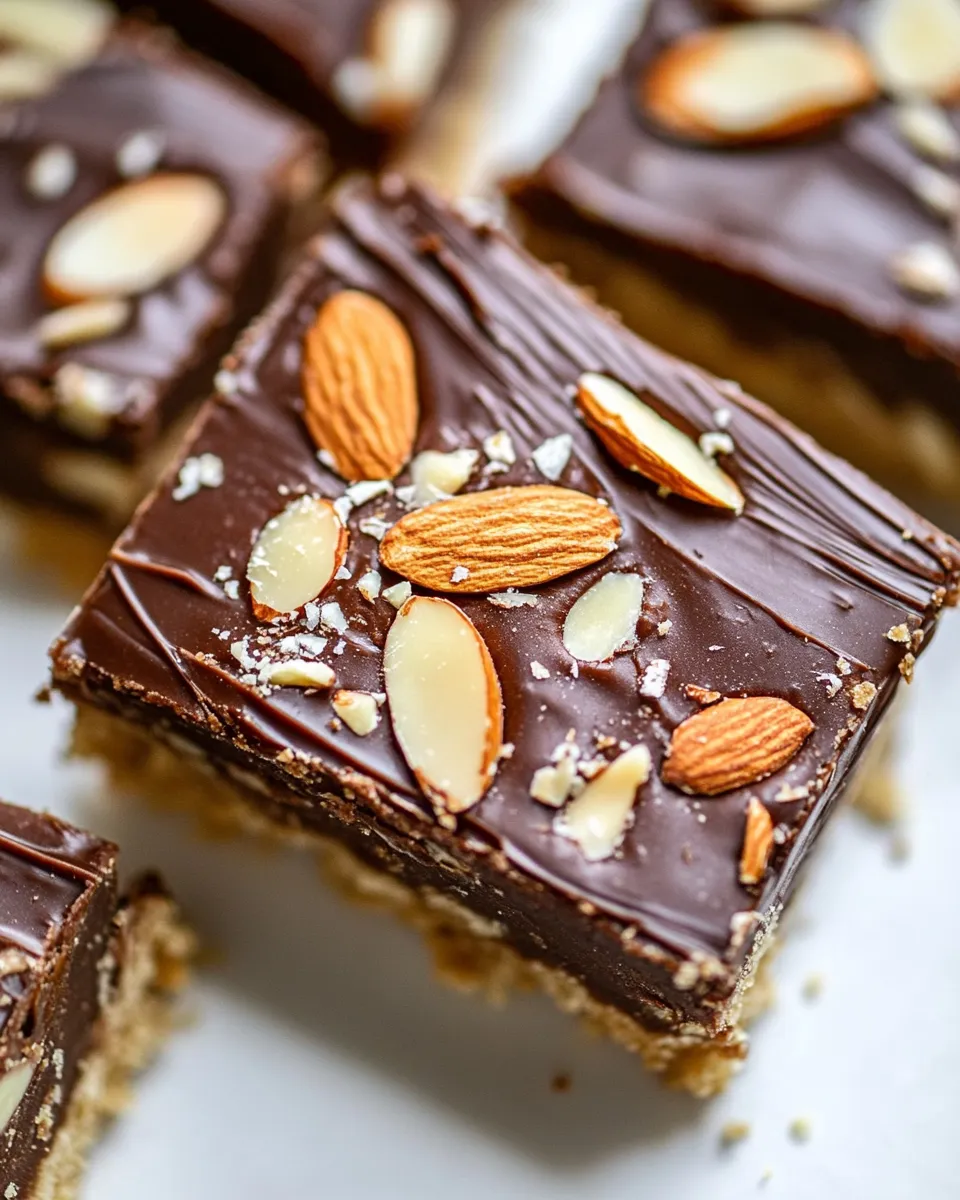
Because it’s reliably impressive with minimal effort. The shortbread is buttery and tender, the fudge is glossy and has a smooth snap once chilled, and the toasted almonds add contrast. It checks boxes for texture and flavor without advanced technique.
It’s also flexible in serving: make small squares for a cookie plate, slightly larger pieces for a dessert, or cut creative shapes for gifting. The make-ahead nature (store in the fridge or freezer) means you can prepare them ahead of parties and pull them out whenever you need a last-minute dessert.
Ingredient Swaps & Substitutions
Small swaps can adapt the bars to what you have on hand.
Chocolate: Swap the semi-sweet for milk chocolate for a sweeter, creamier topping, or use dark chocolate (60–70% cacao) if you want less sweetness and deeper chocolate flavor.
Almond extract: If you don’t have almond extract, use pure vanilla extract in equal measure. You’ll lose the almond note but keep the aromatic lift.
Butter: Unsalted butter is recommended for control over salt. If you must use salted butter, omit or reduce the added 1/4 teaspoon salt in the shortbread.
Almonds: If sliced almonds aren’t available, roughly chop whole toasted almonds or use chopped toasted pecans for a different nutty character.
Tools of the Trade
- 8×8-inch baking pan — the recipe is scaled for this size for correct thickness.
- Parchment paper — makes lifting and cutting the bars easy and keeps cleanup simple.
- Stand mixer with paddle attachment or handheld mixer — for creaming the butter and sugar efficiently.
- Rubber spatula — for spreading the chocolate topping evenly.
- Microwave-safe bowl — to melt the chocolate mixture in increments; a double boiler works too.
- Measuring cups and spoons — for accurate proportions; shortbread texture depends on good measuring.
Learn from These Mistakes
Common missteps are easy to avoid. Don’t try to spread the fudge while the shortbread is still hot. Heat will soften the shortbread and make the topping sink or mix into the crust instead of sitting cleanly on top.
Don’t overmix once you add the flour. The dough should come together but remain slightly crumbly—overworking it develops gluten and gives a tougher shortbread.
Avoid skipping the parchment overhang. Lining the pan so two opposite sides overlap makes lifting the chilled bars out simple and prevents squashed edges when cutting.
Make It Diet-Friendly
If you need diet-friendly versions, there are a few straightforward approaches, though each requires small trade-offs.
Gluten-free: Substitute a 1:1 gluten-free flour blend that contains xanthan gum for the all-purpose flour. Texture may be slightly different; press the dough gently and avoid overbaking.
Lower-sugar: Replacing the sweetened condensed milk removes a key component of the fudge’s texture, so instead use a reduced-sugar condensed milk alternative if you can source it. Keep expectations realistic: the topping’s consistency depends on the sugar and milk solids.
Dairy-free/Vegan: To attempt a vegan version, use a vegan butter alternative and a vegan condensed milk (available in some stores), and choose dairy-free chocolate. The results may vary; the shortbread texture and the fudge’s firmness can shift, so test once before making a large batch for company.
Method to the Madness
Understanding why each step is there helps you adapt confidently. Creaming room-temperature butter with confectioners’ sugar traps tiny air pockets and creates a light, tender shortbread. The short baking time is just enough to set the crust without drying it out.
The chocolate-sweetened-condensed-milk method for the fudge is essentially a quick ganache that sets firm when chilled because of the added milk solids and sugar. Heating in short intervals and stirring prevents scorching and ensures a smooth emulsion.
Best Ways to Store
Room temperature: In a cool, dry room the bars will be okay for a day or two if your kitchen isn’t warm. Keep them in an airtight container to preserve texture.
Refrigerator: Store bars in a single layer or separated by parchment in an airtight container for up to 1 week. Chilled bars slice cleaner.
Freezer: Wrap bars in plastic or parchment and place in a freezer-safe container for up to 2 months. Thaw in the refrigerator or at room temperature before serving; this preserves texture best.
Quick Q&A
Q: Can I make the shortbread ahead and add the topping later?
A: Yes. Bake and cool the shortbread, then wrap and refrigerate. Bring it to room temperature before adding the warm—or room-temperature—fudge so it adheres properly.
Q: Why did my topping separate or look grainy?
A: That can happen if the chocolate gets too hot or if it’s not stirred until completely smooth. Heat in short bursts and stir thoroughly between increments.
Q: How do I get clean slices?
A: Chill the pan well until the topping is firm. Run a sharp knife under hot water, dry it, and make each cut in a single, decisive stroke. Wipe the knife between cuts.
Bring It Home
These Almond Fudge Shortbread Bars are straightforward, dependable, and crowd-pleasing. The method is forgiving, and the result is a layered treat with buttery, tender shortbread and a rich, almond-scented fudge top. Make a pan for company and keep a few in the freezer for emergencies—these travel well and make a lovely homemade gift.
Keep the recipe handy. Once you’ve made them a couple of times you’ll find the small adjustments that match your kitchen and taste. I hope they become a regular on your dessert rotation like they are in mine.
Almond Fudge Shortbread Bars
Ingredients
Ingredients
- 1/2 cupunsalted butter at room temperature
- 1/4 teaspoonalmond extract
- 1/4 cupconfectioners' sugar
- 1/4 teaspoonsalt
- 1 cupall-purpose flour
- 16 ouncessemi-sweet chocolate chopped
- 1 14 ounce can sweetened condensed milk
- 1 tablespoonunsalted butter cut into small bits
- 3/4 teaspoonalmond extract
- 1/3 cupsliced almonds toasted
Instructions
Instructions
- Preheat oven to 350°F. Line an 8x8-inch baking pan with parchment paper so two opposite sides overlap, and spray the parchment and any exposed pan with nonstick baking spray; set pan aside.
- In the bowl of a stand mixer fitted with the paddle attachment, or in a large bowl using a handheld electric mixer, beat 1/2 cup unsalted butter (room temperature), 1/4 teaspoon almond extract, 1/4 cup confectioners' sugar, and 1/4 teaspoon salt until light and fluffy, about 2 to 3 minutes.
- Gradually add 1 cup all-purpose flour and mix on low just until combined; the dough will be a bit crumbly.
- Dump the mixture into the prepared pan and press it firmly and evenly into the bottom of the pan (use your fingers, the back of a spatula, or the bottom of a measuring cup) to form an even layer.
- Bake on the middle rack for 13 to 15 minutes, or until the shortbread is lightly browned. Remove from the oven and set the pan aside to cool until the shortbread is no longer hot to the touch and is at least warm or room temperature.
- While the shortbread cools, combine 16 ounces chopped semi-sweet chocolate, the (14-ounce) can sweetened condensed milk, and 1 tablespoon unsalted butter (cut into small bits) in a microwave-safe bowl.
- Microwave the chocolate mixture uncovered on low in 30-second increments, stirring after each increment, until the chocolate is completely melted and the mixture is smooth.
- Stir 3/4 teaspoon almond extract into the melted chocolate mixture.
- Spread the chocolate mixture evenly over the cooled shortbread with a spatula. Sprinkle 1/3 cup toasted sliced almonds over the top and press them down slightly so they adhere.
- Refrigerate the pan until the topping is firm, about 2 hours. Use the parchment overhang to lift the bars from the pan, then cut into small squares and serve.
Equipment
- 8x8-inch baking pan
- Parchment Paper
- nonstick baking spray
- Stand mixer
- paddle attachment
- Handheld electric mixer
- Spatula
- Measuring Cup
- Microwave-safe Bowl
- Refrigerator