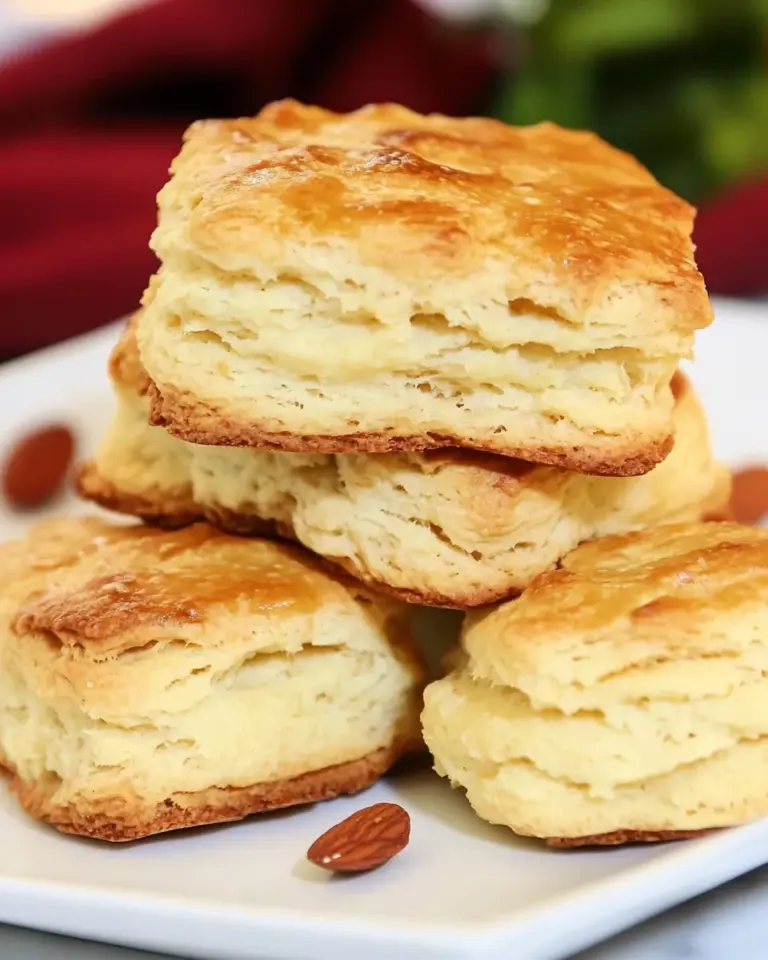
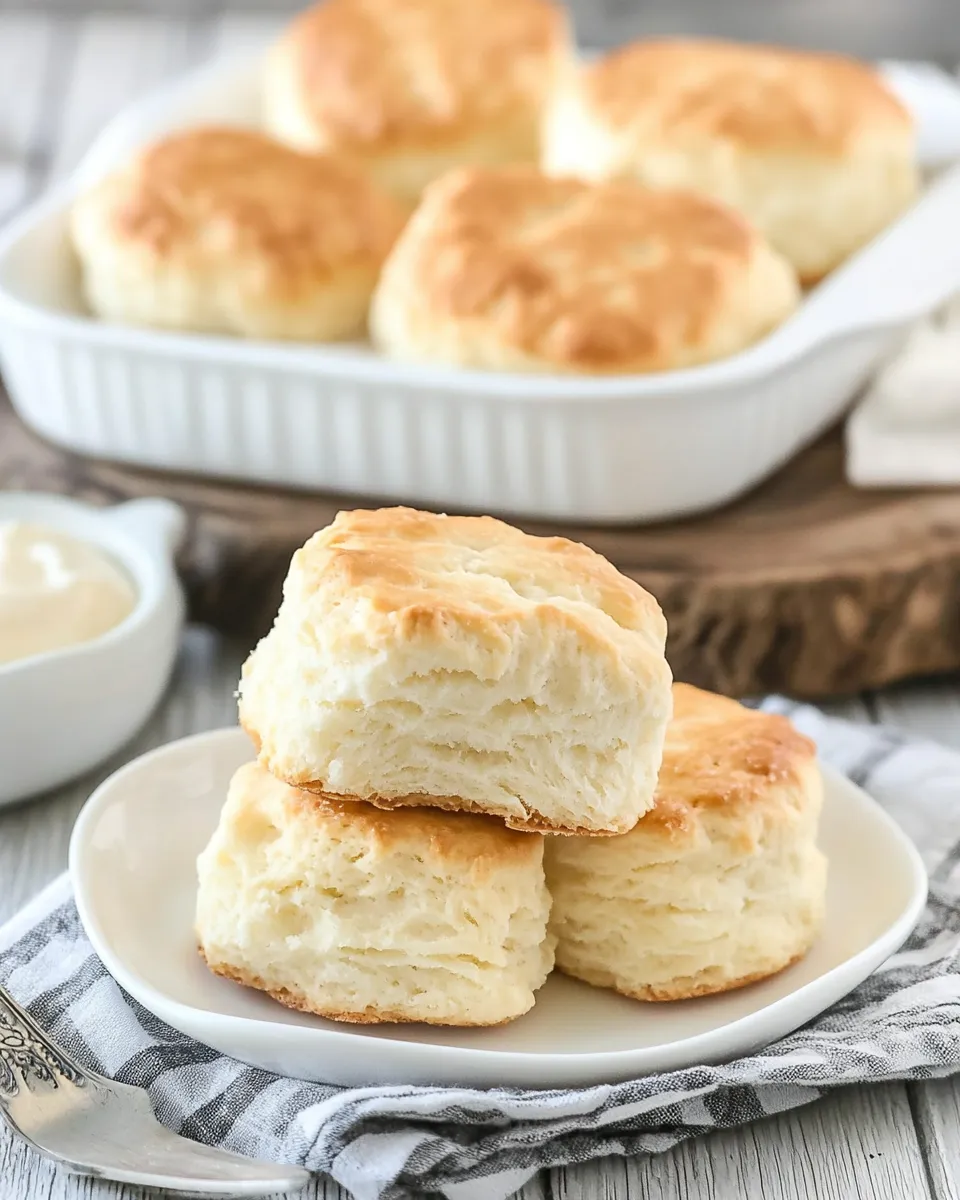
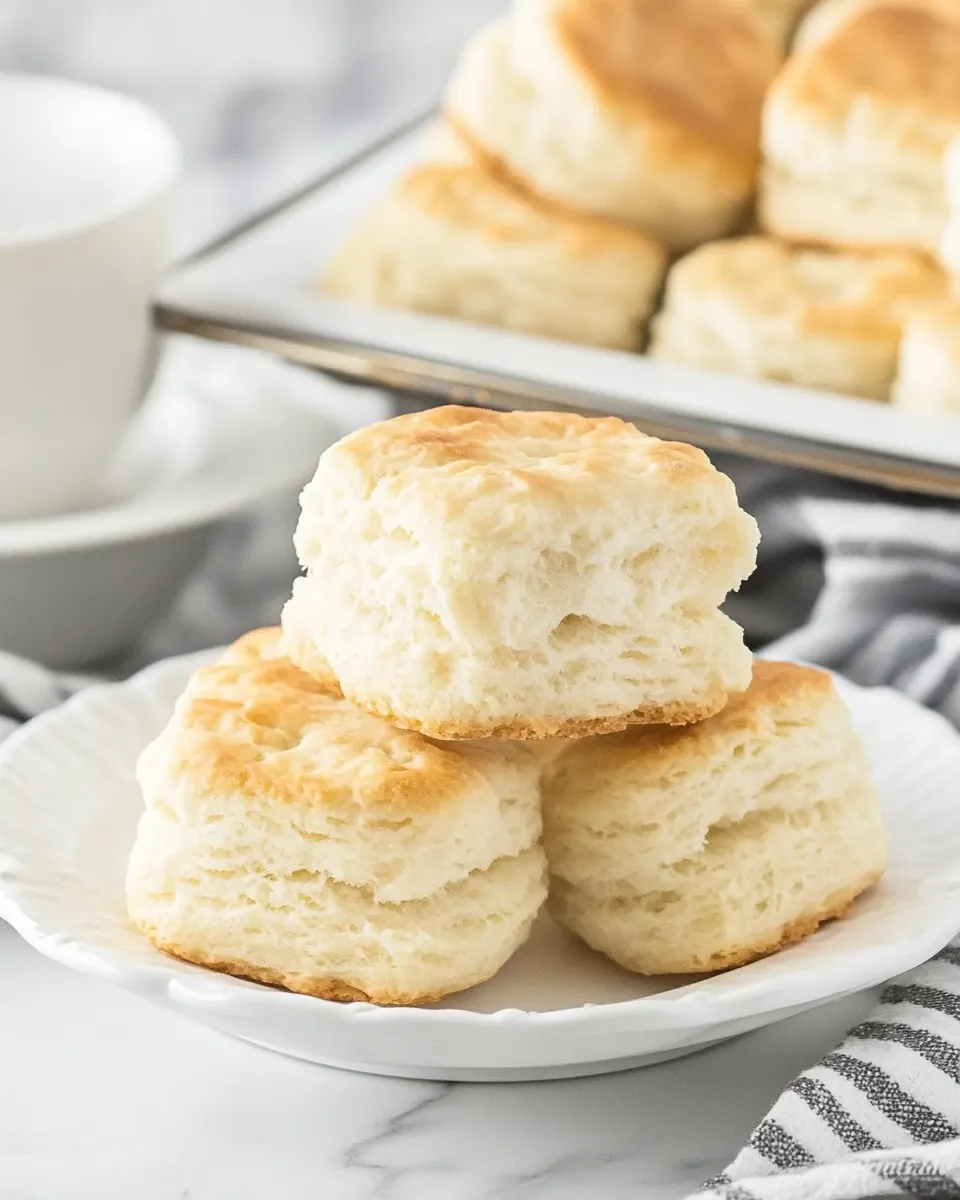
These Angel Biscuits are the kind of biscuits I reach for when I want something flaky, buttery, and just a little special. They rise with a gentle yeast lift combined with baking powder and baking soda, which gives a tender crumb and a golden top. The method favors cold butter and minimal handling so the layers stay distinct — and the result is worth the tiny bit of patience.
I like to think of them as forgiving: the dough comes together quickly, and the three simple folds create lightness without complicated laminating. Whether you serve them with jam, honey, or beside a savory stew, they hold up and taste like comfort with a whisper of bakery technique.
Ingredient Breakdown
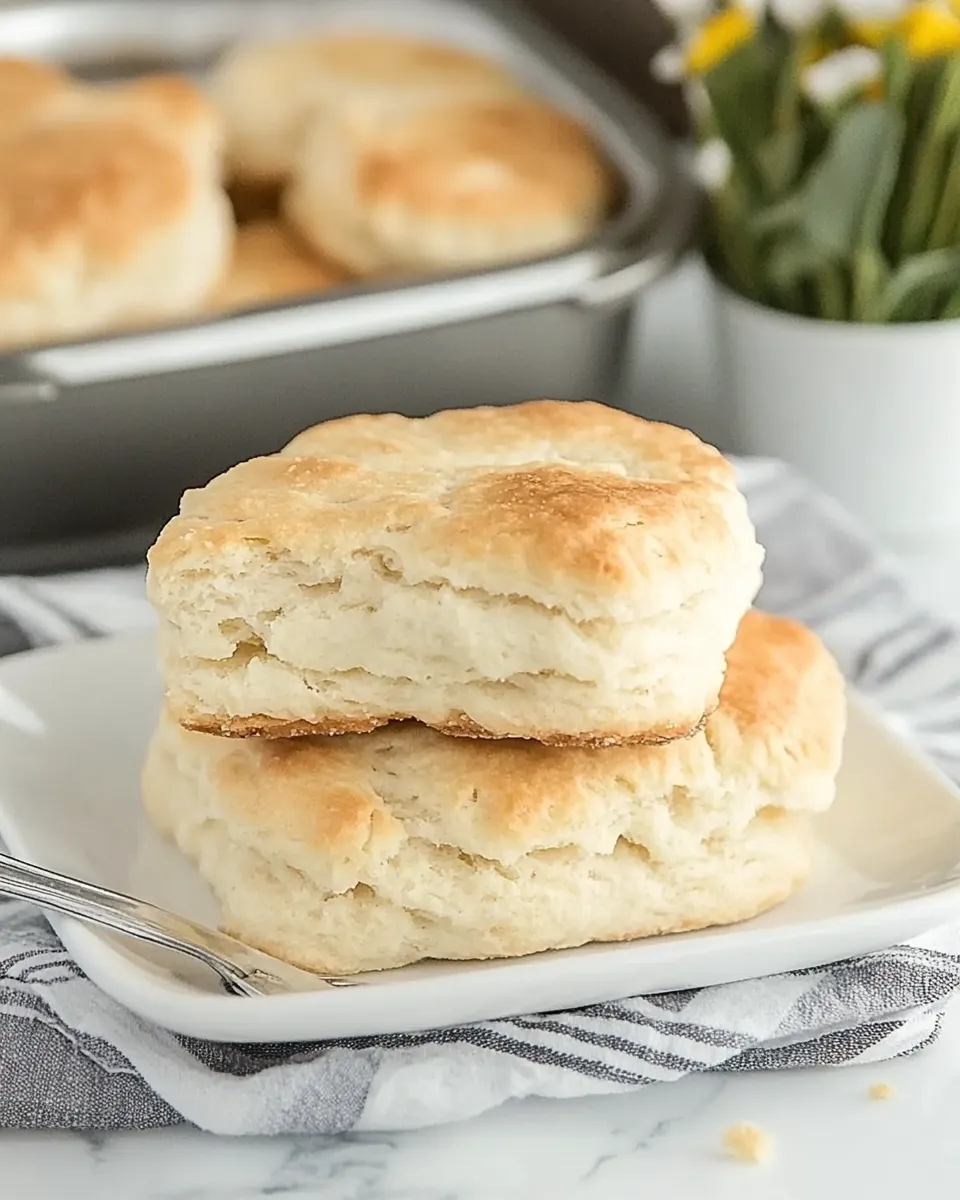
Ingredients
- 2 packages instant or active yeast, 4½ teaspoons — provides fermentation and a subtle lift alongside the chemical leaveners.
- 3 tablespoons warm water, 110-115 degrees — activates the yeast; temperature matters for a quick start.
- 5 cups all-purpose flour — the structure of the biscuits; measure by spooning into the cup and leveling for accuracy.
- ¼ cup sugar — balances the savory notes and feeds the yeast slightly for tenderness and color.
- ¾ teaspoon salt — essential for flavor; don’t skip or reduce too much.
- 2 teaspoons baking powder — quick-acting lift to pair with the yeast for a light crumb.
- 1 teaspoon baking soda — reacts with the acid in the buttermilk for extra rise and browning.
- 1 cup cold butter cut into small cubes (plus more to melt and brush over baked biscuits if desired) — cold butter creates steam pockets for flaky layers; cubes should be pea-sized when mixed in.
- 1 cup heavy cream — enriches the dough for tenderness and flavor.
- 1 cup buttermilk — adds tang and reacts with the baking soda to help the biscuits rise and brown beautifully.
Directions: Angel Biscuits
- Dissolve the yeast in the 3 tablespoons warm water (110–115°F) and stir until a paste forms; set aside.
- In a large bowl whisk together 5 cups all-purpose flour, 1/4 cup sugar, 3/4 teaspoon salt, 2 teaspoons baking powder, and 1 teaspoon baking soda.
- Add the 1 cup cold butter cubes to the dry ingredients. Cut the butter in with your fingers or a pastry blender until the butter pieces are about pea-sized. If any pieces remain larger, flatten them with your fingers so the mixture resembles coarse crumbs.
- In a separate bowl whisk together 1 cup heavy cream and 1 cup buttermilk. Whisk the dissolved yeast paste into this cream-buttermilk mixture until combined.
- Pour the liquid mixture into the dry ingredients. Use a silicone spatula to gently mix until a shaggy dough forms, working only until the dry streaks are mostly incorporated. Use your fingers to press any remaining larger pieces of butter into the dough so it comes together evenly.
- Turn the dough onto a lightly floured surface. Pat or roll it into a rectangle about 1 inch thick.
- Fold the rectangle in half, rotate it 90°, then repeat the fold-and-rotate two more times (three folds total). Do not overwork the dough.
- Pat the dough to about 1 inch thick again, then cut out biscuits using a 2-inch biscuit cutter. Press the cutter straight down and lift straight up; do not twist. Gather scraps, gently pat once, and cut additional biscuits as needed.
- Arrange the biscuits upright and touching in a cast-iron skillet (use a second skillet if needed). Cover the skillet(s) loosely with plastic wrap and proof in a warm spot for 1 hour.
- During the last 10–15 minutes of proofing, preheat the oven to 400°F. If you want to brush with melted butter, melt additional butter now.
- If desired, brush the tops of the biscuits with melted butter just before baking. Bake at 400°F until the tops are golden brown, about 16–18 minutes.
- Remove the skillet(s) from the oven and, if desired, brush the biscuits with more melted butter. Let cool in the skillet(s) for about 10 minutes, then transfer the biscuits to a cooling rack.
Why You’ll Love This Recipe
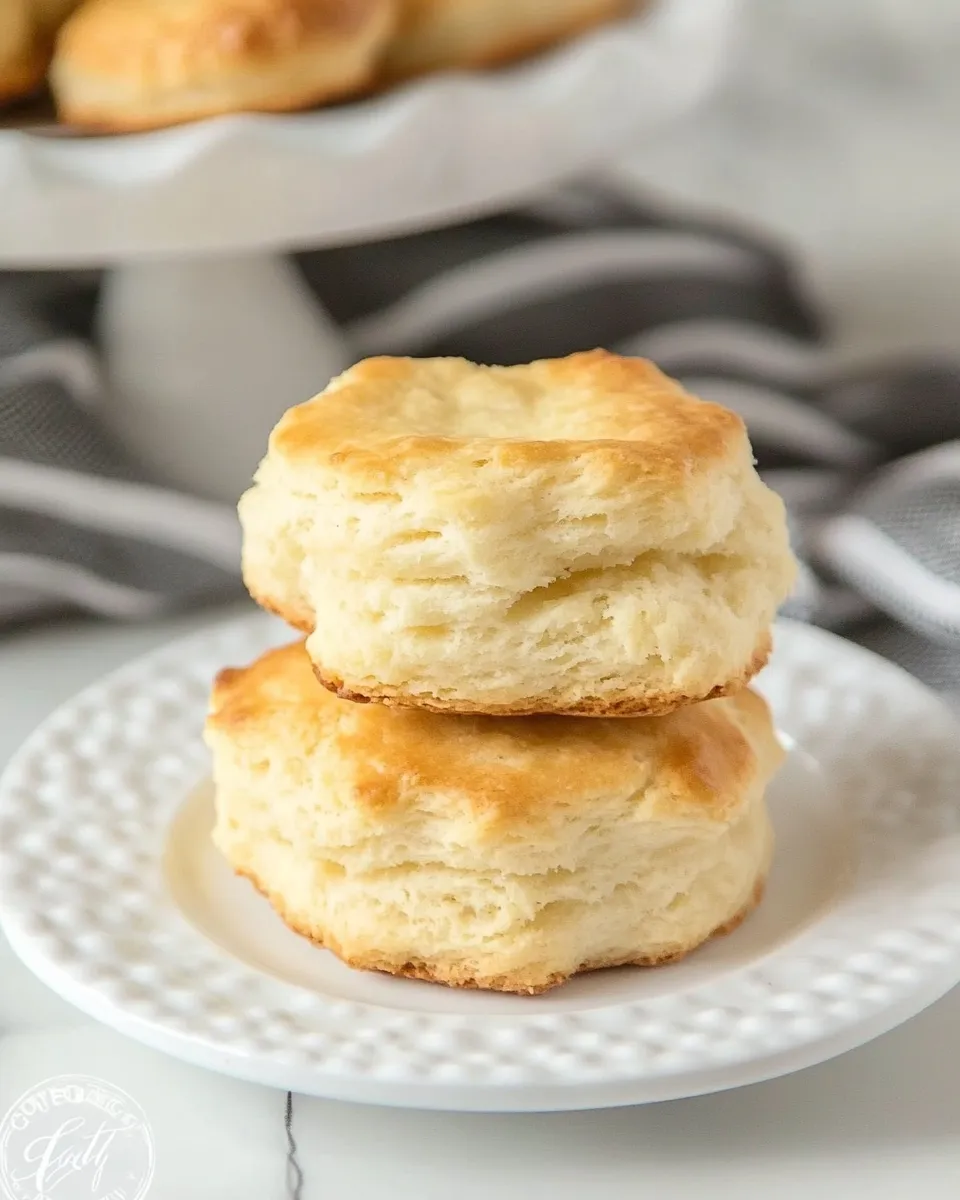
These Angel Biscuits combine the best of two worlds: the subtle, airy lift of yeast and the immediate lift of baking powder/soda. The cold butter technique gives distinct layers without rolling and folding like puff pastry. You get flaky, tender biscuits without an intimidating process.
The proofing step is gentle and predictable — leaving them to rest for an hour develops flavor and makes the interior light and slightly open. They brown beautifully thanks to the sugar and the dairy, and brushing with melted butter at the end adds a glossy, rich finish.
Substitutions by Category
Dairy
- If you don’t have heavy cream or buttermilk on hand, feel free to use another cultured dairy or a richer milk product from your fridge. Cultured dairy keeps flavor bright, so swap in something similar if you can.
Fat
- Cold, solid fat is essential. If you cannot use butter, choose a solid fat that remains cold in the dough and can be cubed. Keep pieces small to preserve layering.
Flour & Leavening
- All-purpose flour is the right balance for structure and tenderness. Stronger flours will produce a denser crumb; lower-protein flour will be finer but may not rise as tall.
Setup & Equipment
Must-have
Cast-iron skillet (or two) — used to arrange the biscuits so they bake touching for soft sides and a taller rise. A large mixing bowl and a separate mixing bowl for the liquids. A 2-inch biscuit cutter or a round cutter of similar size. A rolling pin or your hands to pat the dough. A silicone spatula and a pastry blender or your fingers for cutting in the butter.
Helpful but optional
Pastry mat or floured board for rolling, a cooling rack, an instant-read thermometer to verify water temperature for the yeast (110–115°F), and a pastry brush if you plan to brush melted butter over the tops.
What Not to Do
- Do not overwork the dough. Excess handling warms the butter and develops gluten, which makes biscuits tough instead of flaky.
- Do not twist the biscuit cutter. Press straight down and lift straight up to keep the edges even so the biscuits rise evenly.
- Do not skip chilling the butter before mixing it into the flour. Warm butter will blend too fully and eliminate the steam pockets that create layers.
- Do not rush the proof. The 1-hour proof is important for flavor and structure; shortening it will change texture and internal crumb.
Smart Substitutions
When you need to adapt, keep the technique consistent. Use a similar-styled dairy: cultured products keep the tender crumb and tang. Swap the fat for another solid, cold fat of similar texture if you’re avoiding butter, but expect a subtle shift in flavor.
If you must change leavening, avoid removing either the yeast or baking powder/baking soda entirely — this recipe relies on both working together. If you have only one option available, expect a difference: yeast alone will need longer proofing and produce a different crumb; chemical leaveners alone will create a quicker biscuit but with a different mouthfeel.
Behind the Recipe
Angel Biscuits bridge home baking and bakery techniques. The three folds are a simplified lamination that builds layers without heavy rolling or refrigeration. Using both yeast and chemical leaveners is an old baker’s trick: yeast adds flavor and a delicate chew, while baking powder and baking soda contribute instant lift so the biscuit doesn’t rely solely on fermentation.
Cold butter and minimal handling are classic for flaky baked goods. As the butter heats in the oven, it creates steam and separates the dough into layers. Arranging the biscuits side by side in a skillet encourages them to rise vertically rather than spread out, giving that tall, bakery-style profile.
Keep It Fresh: Storage Guide
Room temperature: Store leftover biscuits in an airtight container for up to 2 days; they stay best within the first day.
Refrigerator: For up to 4 days, wrap in foil or a resealable bag. Reheat gently in a low oven to restore some of the crispness.
Freezer: Cool completely, wrap well, and freeze for up to 1 month. Reheat from frozen in a warm oven until heated through; a quick brush of melted butter after reheating brings back richness.
Ask & Learn
Q: My biscuits didn’t rise tall. What went wrong?
A: Check that the butter was cold and that you didn’t overwork the dough. Also confirm your yeast was active—water between 110 and 115°F helps. Avoid twisting the cutter and make sure biscuits are placed upright and touching in the skillet for an even rise.
Q: Can I make these ahead?
A: You can make the dough and keep it chilled, then proof before baking. The flavor often improves with a slow, cool proof, but follow the given proof time when baking from room temperature dough.
Q: Can I change the size of the cutter?
A: Yes, but baking time will adjust. Smaller biscuits bake faster and will brown sooner; larger biscuits will take longer to bake through. Keep an eye on color and internal texture.
Make It Tonight
Quick timeline for a weekday dinner:
- 20 minutes — Mix the dry ingredients and cut in the butter.
- 10 minutes — Combine wet ingredients, mix to shaggy dough, and do the folds.
- 60 minutes — Proof the arranged biscuits. Use this time to prepare a main dish or a pan of roasted vegetables.
- 16–18 minutes — Bake at 400°F, then rest 10 minutes before serving.
These Angel Biscuits are straightforward, forgiving, and delicious. Follow the steps, keep your butter cold, and resist overworking the dough. You’ll have flaky, golden biscuits that make weeknight dinners feel a little more special.

Angel Biscuits Recipe
Ingredients
Ingredients
- 2 packages instant or active yeast 4 1/2 teaspoons
- 3 tablespoons warm water 110-115 degrees
- 5 cups all-purpose flour
- 1/4 cup sugar
- 3/4 teaspoon salt
- 2 teaspoons baking powder
- 1 teaspoon baking soda
- 1 cup cold butter cut into small cubes plus more to melt and brush over baked biscuits if desired
- 1 cup heavy cream
- 1 cup buttermilk
Instructions
Instructions
- Dissolve the yeast in the 3 tablespoons warm water (110–115°F) and stir until a paste forms; set aside.
- In a large bowl whisk together 5 cups all-purpose flour, 1/4 cup sugar, 3/4 teaspoon salt, 2 teaspoons baking powder, and 1 teaspoon baking soda.
- Add the 1 cup cold butter cubes to the dry ingredients. Cut the butter in with your fingers or a pastry blender until the butter pieces are about pea-sized. If any pieces remain larger, flatten them with your fingers so the mixture resembles coarse crumbs.
- In a separate bowl whisk together 1 cup heavy cream and 1 cup buttermilk. Whisk the dissolved yeast paste into this cream-buttermilk mixture until combined.
- Pour the liquid mixture into the dry ingredients. Use a silicone spatula to gently mix until a shaggy dough forms, working only until the dry streaks are mostly incorporated. Use your fingers to press any remaining larger pieces of butter into the dough so it comes together evenly.
- Turn the dough onto a lightly floured surface. Pat or roll it into a rectangle about 1 inch thick.
- Fold the rectangle in half, rotate it 90°, then repeat the fold-and-rotate two more times (three folds total). Do not overwork the dough.
- Pat the dough to about 1 inch thick again, then cut out biscuits using a 2-inch biscuit cutter. Press the cutter straight down and lift straight up; do not twist. Gather scraps, gently pat once, and cut additional biscuits as needed.
- Arrange the biscuits upright and touching in a cast-iron skillet (use a second skillet if needed). Cover the skillet(s) loosely with plastic wrap and proof in a warm spot for 1 hour.
- During the last 10–15 minutes of proofing, preheat the oven to 400°F. If you want to brush with melted butter, melt additional butter now.
- If desired, brush the tops of the biscuits with melted butter just before baking. Bake at 400°F until the tops are golden brown, about 16–18 minutes.
- Remove the skillet(s) from the oven and, if desired, brush the biscuits with more melted butter. Let cool in the skillet(s) for about 10 minutes, then transfer the biscuits to a cooling rack.
Equipment
- Large Bowl
- Mixing Bowl
- pastry blender or fingers
- Silicone spatula
- rolling or work surface
- 2-inch biscuit cutter
- Cast-Iron Skillet
- Plastic Wrap
- Oven
- Cooling rack