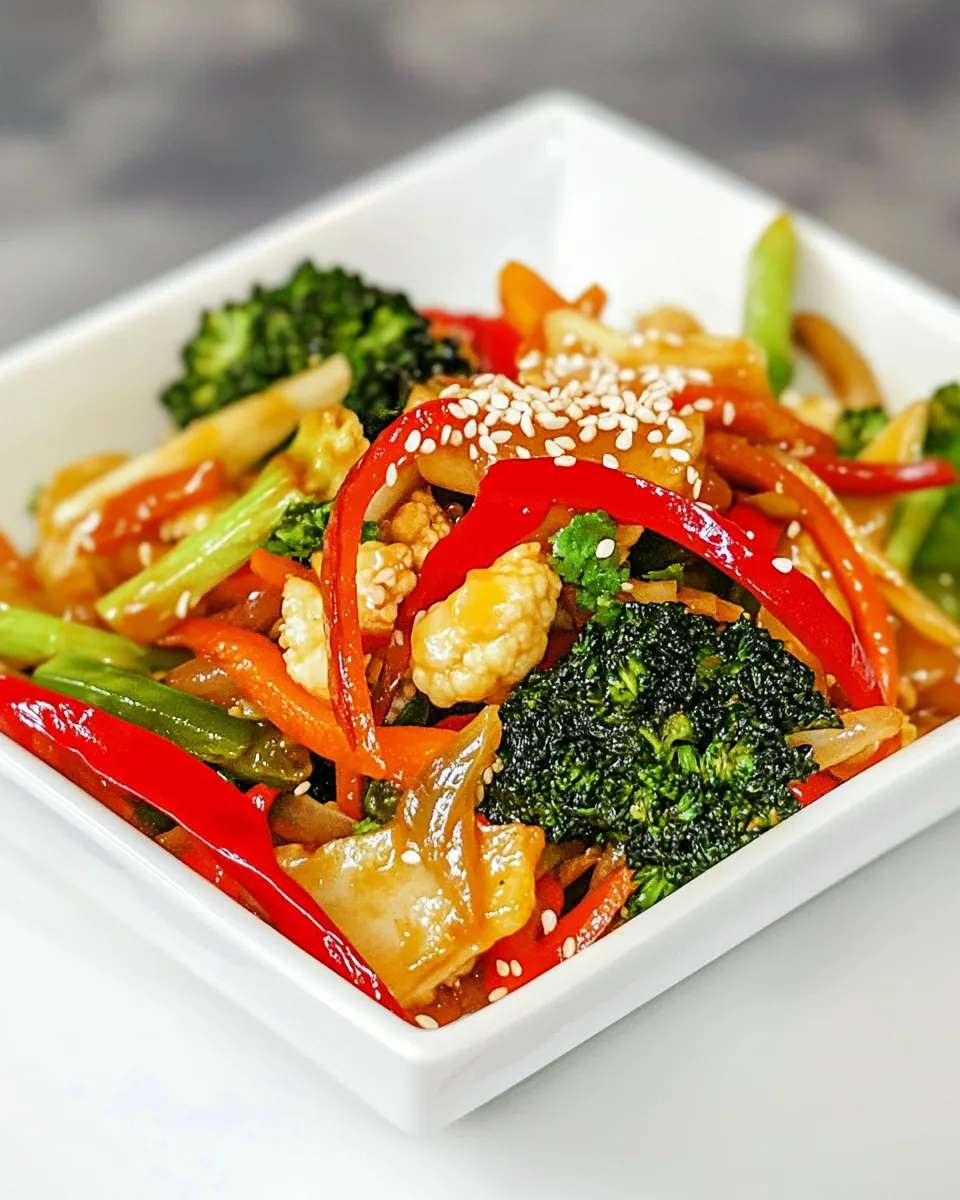
I love a stir fry because it answers the question “What’s for dinner?” in under fifteen minutes without feeling rushed. This Asian Vegetable Stir Fry is the kind of weeknight dish I turn to when I want something bright, crunchy, and just a little bit saucy. It’s forgiving, fast, and keeps well for lunches.
There’s no drama here—just good ingredients, high heat, and a quick sauce that binds everything together. I’ll walk you through the exact steps used in my kitchen, plus swaps, storage tips, and ways to make it stretch into more meals without losing freshness.
Follow the plan and you’ll have a plate of vibrant vegetables that still snap, a glossy sauce that clings to each piece, and a meal that shows how simple technique beats complication. Let’s get into it.
What Goes In
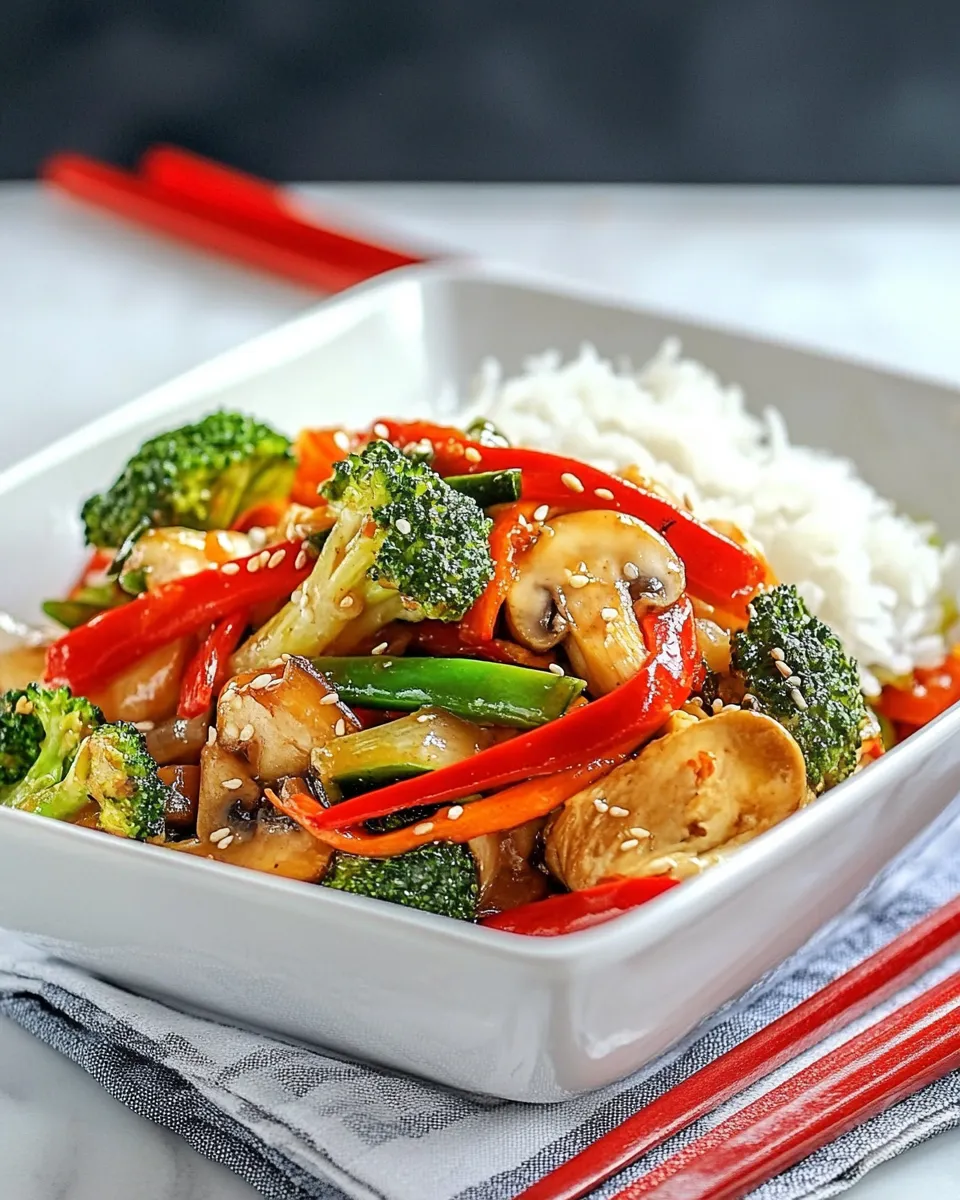
Below are the ingredients used for this stir fry and a short note on what each one does in the pan. Read them once before you start; the order and prep matter for timing.
Ingredients
- 1tablespoonsesame oil — Provides the toasty, nutty backbone; used for stir-frying and flavor.
- 1tablespoonwater — Helps lift the oil temperature gently and creates a quick steam when combined with the vegetables.
- 1cupbroccoli florets — The crunchy green that holds sauce well; core of the dish.
- ½largered bell pepper,sliced into strips — Adds sweetness, color, and a tender-crisp bite.
- 1mediumgarlic clove,minced — Builds savory depth; add early for fragrance but watch it so it doesn’t burn.
- 1teaspoongrated fresh ginger — Gives brightness and a warm zing that cuts through the vegetables.
- ¾cupjulienned carrots — Sweet, colorful, and quick to soften; helps balance textures.
- 6shiitake mushrooms,sliced into slivers — Earthy umami and meaty texture; soak up sauce nicely.
- ⅓cupcashews — Adds a buttery crunch and a contrast to soft vegetables; toss in near the end.
- 1cupbok choy or Napa cabbage,shredded — Tender leafy green that wilts quickly and carries flavor.
- 3tablespoonsfat free chicken broth(can use vegetable broth) — The liquid base for the sauce; choose vegetable broth to keep it vegetarian.
- 3tablespoonslow sodium soy sauce — Salty-sweet backbone of the sauce; low sodium keeps it balanced.
- 1tablespooncornstarch — Thickens the sauce so it clings to the vegetables instead of pooling.
Asian Vegetable Stir Fry Cooking Guide
Below are the cooking steps to follow exactly. They’re written in order — keep to the sequence for best texture and a glossy, well-coated finish.
- Preheat a large skillet or wok over medium heat. Add the sesame oil and the water and heat until the oil is shimmering.
- Add the broccoli florets, red bell pepper strips, minced garlic and grated fresh ginger to the skillet. Stir-fry for 1 minute, stirring constantly.
- Add the julienned carrots, sliced shiitake mushrooms, cashews and shredded bok choy or Napa cabbage. Stir-fry for 2 minutes, stirring frequently, until the vegetables are crisp-tender.
- In a small bowl, whisk together the fat free chicken broth (or vegetable broth), low sodium soy sauce and cornstarch until smooth.
- Pour the sauce into the skillet and stir to combine. Cook for about 2 minutes, stirring, until the sauce thickens and coats the vegetables.
- Remove from heat and serve immediately, either alone or over rice or noodles.
Notes on technique: heat management and timing are the pillars here. Preheating the pan until oil shimmers warms the surface so vegetables sear at the edges rather than steam fully. When you add the aromatics (garlic and ginger), keep them moving; they develop fragrance quickly and can bitter if they burn. The cornstarch slurry at the end does two things: it briefly raises the sauciness and ensures a glossy finish that sticks to each component. Serve hot and straight out of the skillet for the best texture.
The Upside of Asian Vegetable Stir Fry
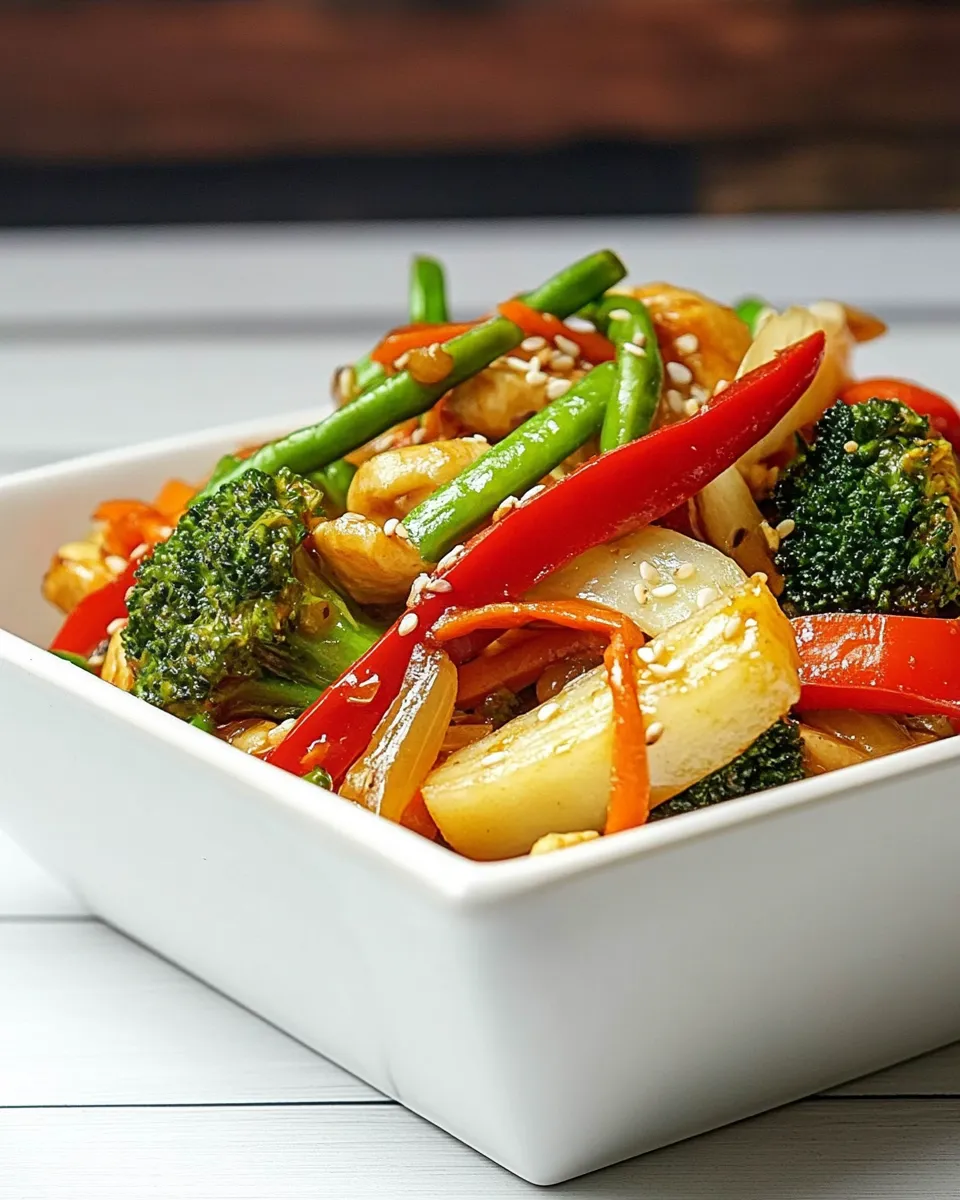
This dish is efficient in nearly every sense. It’s fast: you can cycle through the whole recipe in the time it takes water to boil for pasta. It’s flexible: swap vegetables with what’s in your crisper. It’s colorful: vegetables retain their hue and vitamins with quick, high-heat cooking.
Nutrition-wise, it’s a winner. You get a concentrated dose of fiber, vitamins, and phytonutrients from the mix of cruciferous and leafy greens, plus healthy fats and protein if you include the cashews. Using low-sodium soy sauce and a controlled oil amount keeps sodium and calories in check while leaving flavor intact.
One more practical upside: this is a first-rate “clean-your-fridge” meal. Slightly wilted greens, a lonely mushroom cluster, and a bell pepper that’s on the verge of softness can all be revived into something vibrant and delicious with this method.
Ingredient Swaps & Substitutions
- Sesame oil — If you don’t have sesame oil, use a neutral oil (canola, vegetable) and add a teaspoon of toasted sesame seeds at the end for that flavor note.
- Broccoli — Cauliflower florets work similarly. Cut to similar size so they cook evenly.
- Bok choy or Napa cabbage — Spinach, Swiss chard, or kale can substitute; add these later because they wilt quickly.
- Soy sauce — Tamari is a gluten-free alternative. Coconut aminos deliver a slightly sweeter, less salty profile.
- Cashews — Almonds or peanuts offer similar crunch; omit for nut-free eating.
- Fat free chicken broth — Use vegetable broth to keep the dish vegetarian; even a light miso-water mix can add extra umami.
- Shiitake mushrooms — Cremini or button mushrooms are fine; slice them thin so they cook in the same timeframe.
Tools of the Trade
- Large skillet or wok — A wok gives the best high-heat surface and tossing room; a roomy skillet works perfectly if that’s what you have.
- Spatula or wok spatula — Wide, sturdy tools help move vegetables quickly and scrape up any bits that form on the pan.
- Sharp knife and cutting board — Prep the veg uniformly for even cooking; julienne and slices should be similar thickness.
- Small bowl and whisk — For the cornstarch slurry so it mixes smooth and lumps-free.
- Measuring spoons and cups — The cornstarch-to-liquid ratio matters for proper thickening; measure the slurry ingredients.
Avoid These Traps
- Overcrowding the pan — If you add too many vegetables at once they steam instead of sear. Work in a single layer if needed or use the highest heat your pan can handle safely.
- Burning the garlic — Garlic goes from fragrant to bitter quickly. Keep it moving or add it slightly later with the other quick-cooking aromatics.
- Skimping on the heat — Low heat yields limp vegetables. High, controlled heat keeps color and texture.
- Not dissolving cornstarch — Add cornstarch directly to hot liquid and you’ll get lumps. Whisk it into the broth first.
- Saving the sauce for the end only — Add it at the right time (as written) so it coats vegetables and finishes cooking in the pan, not in an overcooked heap on the plate.
Year-Round Variations
- Spring — Add asparagus tips and snow peas for crisp green freshness. Use young bok choy for tenderness.
- Summer — Toss in sliced zucchini and summer squash; finish with fresh basil or Thai basil for aromatic lift.
- Fall — Swap in Brussels sprouts (halved) or sweet potato matchsticks for heartier autumn flavors; roast them briefly first for depth.
- Winter — Use root vegetables like parsnip or rutabaga sautéed a bit longer; shiitake becomes a star when fresh mushrooms are in season.
Recipe Notes & Chef’s Commentary
Timing & Heat
Stir-frying is rhythm. Preheat, add oil, then water—this little water addition prevents the sesame oil from smoking while helping to distribute heat. Once the vegetables hit the pan, keep them moving. One minute for the first set, two minutes for the next, then the sauce—this pacing preserves crunch and keeps everything vivid.
Sauce & Texture Tweaks
The cornstarch-to-liquid ratio here is modest and intentional: it creates a light glaze rather than a heavy gravy. If you prefer a thicker coating, increase cornstarch by half a teaspoon, mixed well into the broth before adding. For a looser sauce, increase broth by a tablespoon or two.
Texture contrasts matter. The cashews are there to provide crunch. If you’d like more chew or protein, thinly sliced tofu or pre-cooked chicken strips fold in well—add them right before the sauce so they warm through without overcooking.
Keep-It-Fresh Plan
- Refrigeration — Store leftovers in an airtight container for up to 3 days. Let the stir fry cool to room temperature before sealing and refrigerating to avoid steam buildup.
- Reheating — Reheat gently in a skillet over medium heat with a splash of water or broth to revive the sauce. Microwave reheats fast but risks softening the vegetables too much.
- Freezing — I don’t recommend freezing once-cooked vegetables for this dish; many will become mushy on thawing. If you want make-ahead convenience, freeze the sauce separately and fresh-cook vegetables when ready.
Common Questions
- Can I make this gluten-free? — Yes. Use tamari or a certified gluten-free soy sauce alternative and ensure any broth you use is gluten-free.
- How can I make it vegan? — Substitute vegetable broth for the fat free chicken broth; keep the soy sauce and cornstarch the same.
- My sauce is lumpy. What went wrong? — Cornstarch must be dissolved into cold liquid before hitting hot pan. Whisk the cornstarch into the broth until smooth, then add.
- Can I double the recipe? — Yes, but don’t double the quantity in a single pan. Cook in batches so the pan stays hot and vegetables sear instead of steam.
- How to make it less salty? — Reduce soy sauce by a tablespoon and taste; add a squeeze of fresh lime to brighten without adding sodium.
Serve & Enjoy
Serve this Asian Vegetable Stir Fry straight from the skillet over steamed rice or tossed with hot noodles. A sprinkle of chopped scallions or a few toasted sesame seeds makes it feel finished and special. If you like heat, a few red pepper flakes or a drizzle of chili oil at the end wakes things up without overpowering the vegetables.
This is a dinner that’s fast, forgiving, and reliably good. Make it once exactly as written to get the rhythm, then play with substitutions and proportions to match your pantry and preferences. Enjoy the color, crunch, and the fact that dinner came together with very little fuss.
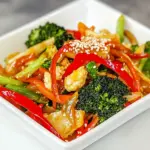
Asian Vegetable Stir Fry
Ingredients
Ingredients
- 1 tablespoonsesame oil
- 1 tablespoonwater
- 1 cupbroccoli florets
- 1/2 largered bell pepper sliced into strips
- 1 mediumgarlic clove minced
- 1 teaspoongrated fresh ginger
- 3/4 cupjulienned carrots
- 6 shiitake mushrooms sliced into slivers
- 1/3 cupcashews
- 1 cupbok choy or Napa cabbage shredded
- 3 tablespoonsfat free chicken broth can use vegetable broth
- 3 tablespoonslow sodium soy sauce
- 1 tablespooncornstarch
Instructions
Instructions
- Preheat a large skillet or wok over medium heat. Add the sesame oil and the water and heat until the oil is shimmering.
- Add the broccoli florets, red bell pepper strips, minced garlic and grated fresh ginger to the skillet. Stir-fry for 1 minute, stirring constantly.
- Add the julienned carrots, sliced shiitake mushrooms, cashews and shredded bok choy or Napa cabbage. Stir-fry for 2 minutes, stirring frequently, until the vegetables are crisp-tender.
- In a small bowl, whisk together the fat free chicken broth (or vegetable broth), low sodium soy sauce and cornstarch until smooth.
- Pour the sauce into the skillet and stir to combine. Cook for about 2 minutes, stirring, until the sauce thickens and coats the vegetables.
- Remove from heat and serve immediately, either alone or over rice or noodles.
Equipment
- Large skillet or wok
- Small Bowl
- Whisk
Notes
Reduce fat/calories by using less oil.
If preparing this as a gluten free dish, be sure to use a brand of soy sauce that is designated as GF.