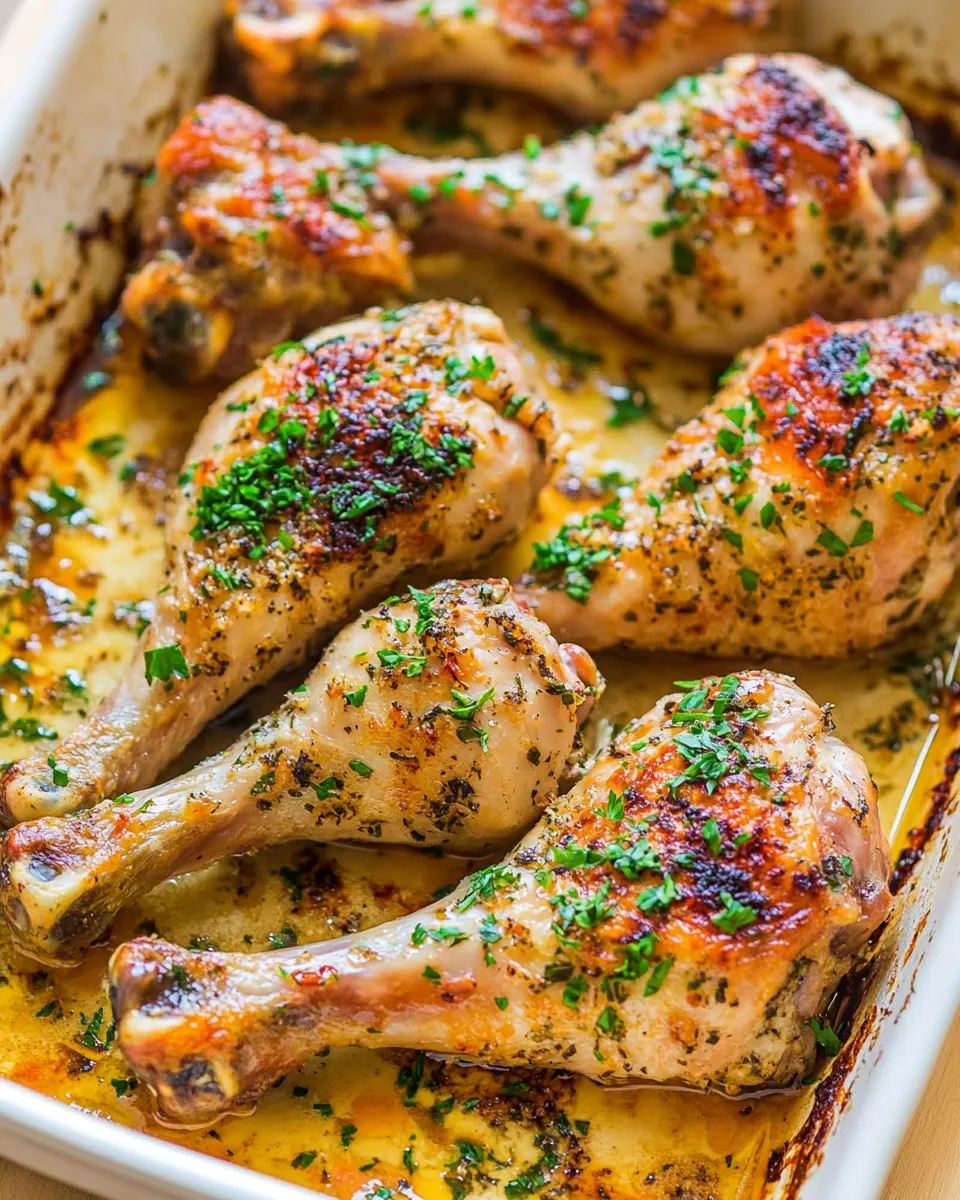
These baked chicken legs are the kind of weeknight dinner I rely on when I want something simple, flavorful, and forgiving. The marinade is bright, garlicky, and uses pantry staples so it comes together in minutes. It also does a lovely job of seasoning the meat all the way through and making the skin sing when finished under the broiler.
I test this exact method a lot because it’s reliable: a long, cool marinade for depth, then a two-stage bake that finishes with a quick broil for color and crisp. The steps are straightforward, and you’ll get consistent results even if you’re not a grill-master or a short-order cook.
If you like hands-off prep with maximum payoff — juicy meat, crisp edges, and a bright herb-lemon kick — this recipe will become a go-to. Below I walk through the exact ingredients, the method I use every time, troubleshooting tips, and sensible swaps so you can make it your own.
Ingredient List
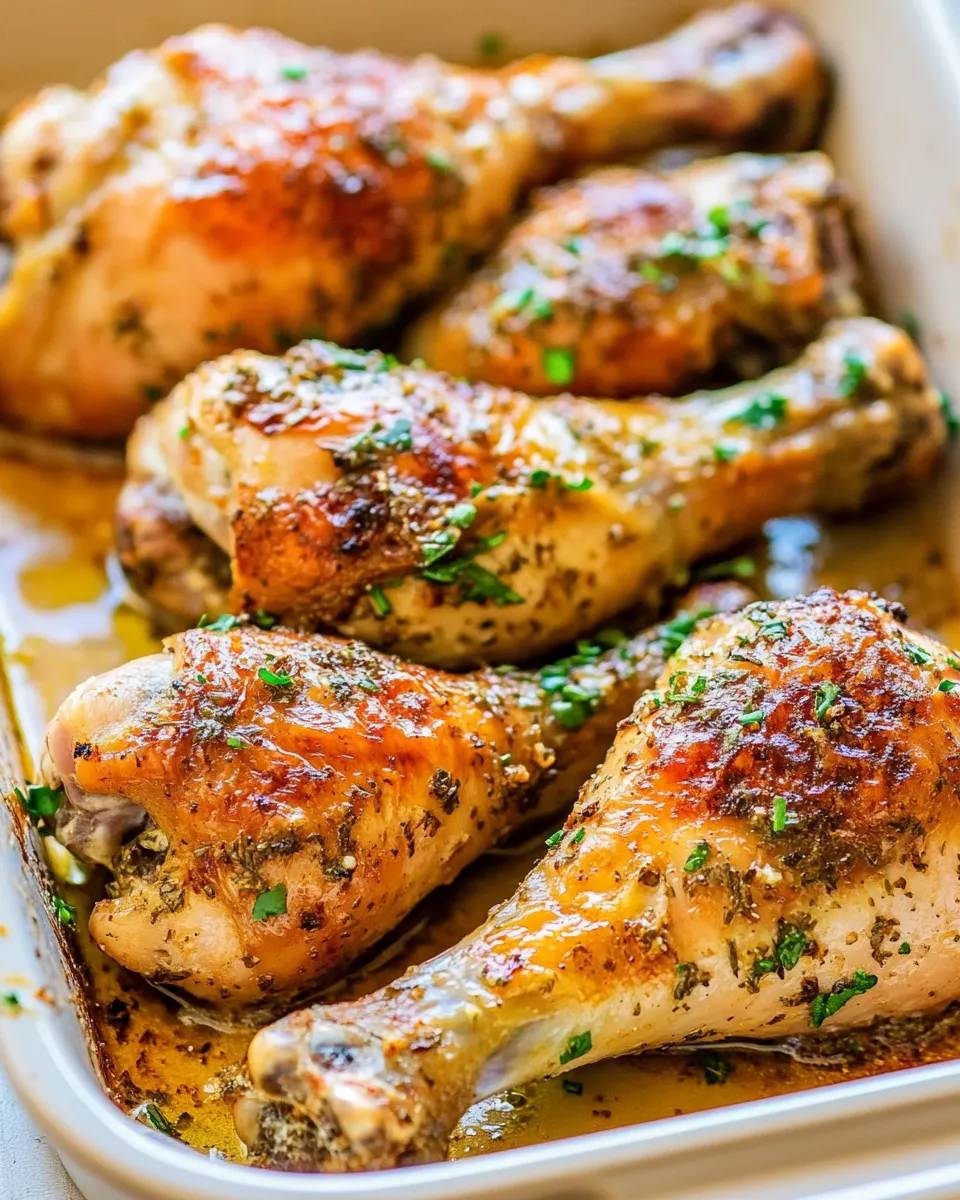
- 4 lb (14 count) Chicken Legs or drumsticks — choose pieces of similar size for even cooking; pat dry before marinating if wet.
- 1/4 cup olive oil — use light oil, not extra virgin; helps the marinade coat and transfer heat for browning.
- 4 garlic cloves — pressed or minced; provides savory backbone to the marinade.
- 4 Tbsp fresh parsley — finely chopped; adds freshness and a green lift.
- 3 Tbsp lemon juice — from 1 large lemon; brightens and tenderizes slightly.
- 2 Tbsp Dijon mustard — emulsifies the marinade and gives subtle tang.
- 2 tsp fine sea salt — seasons the meat through; don’t skip or under-measure.
- 1/2 tsp black pepper — for balanced heat; adjust if you prefer more.
Make Baked Chicken Legs (with Best Marinade): A Simple Method
- In a small bowl, combine 1/4 cup olive oil, 4 garlic cloves (pressed or minced), 4 Tbsp finely chopped parsley, 3 Tbsp lemon juice, 2 Tbsp Dijon mustard, 2 tsp fine sea salt, and 1/2 tsp black pepper. Whisk until well blended.
- Place the 4 lb (14 count) chicken legs in a large mixing bowl or a large zip-top bag. Pour the marinade over the chicken.
- Toss the chicken with your hands (or seal the bag and massage) to evenly coat each piece, pushing some of the marinade under the skin of each leg where possible.
- Cover the bowl with plastic wrap or seal the bag. Refrigerate and marinate for 6 hours or overnight, turning the chicken once halfway through the marinating time.
- When ready to cook, preheat the oven to 400°F and line a rimmed baking sheet with foil or a Silpat. Remove the chicken from the refrigerator and let it rest at room temperature while the oven preheats.
- Arrange the chicken on the prepared baking sheet skin-side-down. If any marinade remains in the bowl, brush it over the chicken.
- Bake on the center oven rack at 400°F for 25 minutes skin-side-down. After 25 minutes, turn each chicken leg skin-side-up and bake an additional 25 minutes.
- If you want crispier skin, broil on high for 2 to 3 minutes, watching closely to prevent burning.
- Remove the chicken from the oven and let rest a few minutes before serving.
What Makes This Recipe Special
This recipe balances three things I look for in simple chicken: flavor that penetrates, skin that crisps, and a method that’s tolerant of everyday life. The olive oil and Dijon combine into a loose emulsion that carries garlic, lemon, and herbs under the skin and into the meat. Pushing marinade under the skin is a small extra step that pays off with deeper flavor.
The two-stage bake is purposeful: starting skin-side-down lets the fat render out without immediately crisping the surface, which helps the meat cook through evenly. Flipping skin-side-up for the second half delivers color and texture, and a short broil is a fast, controlled finish that avoids drying the meat while giving you the gratifying crunch most of us want.
Finally, the flavors are bright but not fussy. Parsley and lemon keep the profile fresh so the legs don’t feel heavy, and garlic plus mustard add savory backbone so every bite has interest.
Low-Carb/Keto Alternatives

- Keep the recipe as written — the marinade is already low-carb and keto-friendly since it’s oil, herbs, lemon juice, mustard, and seasonings.
- Pair with cauliflower mash or riced cauliflower instead of potatoes or starchy sides.
- Serve over a bed of sautéed greens or a simple chopped green salad dressed with olive oil and lemon to keep carbs minimal.
What’s in the Gear List
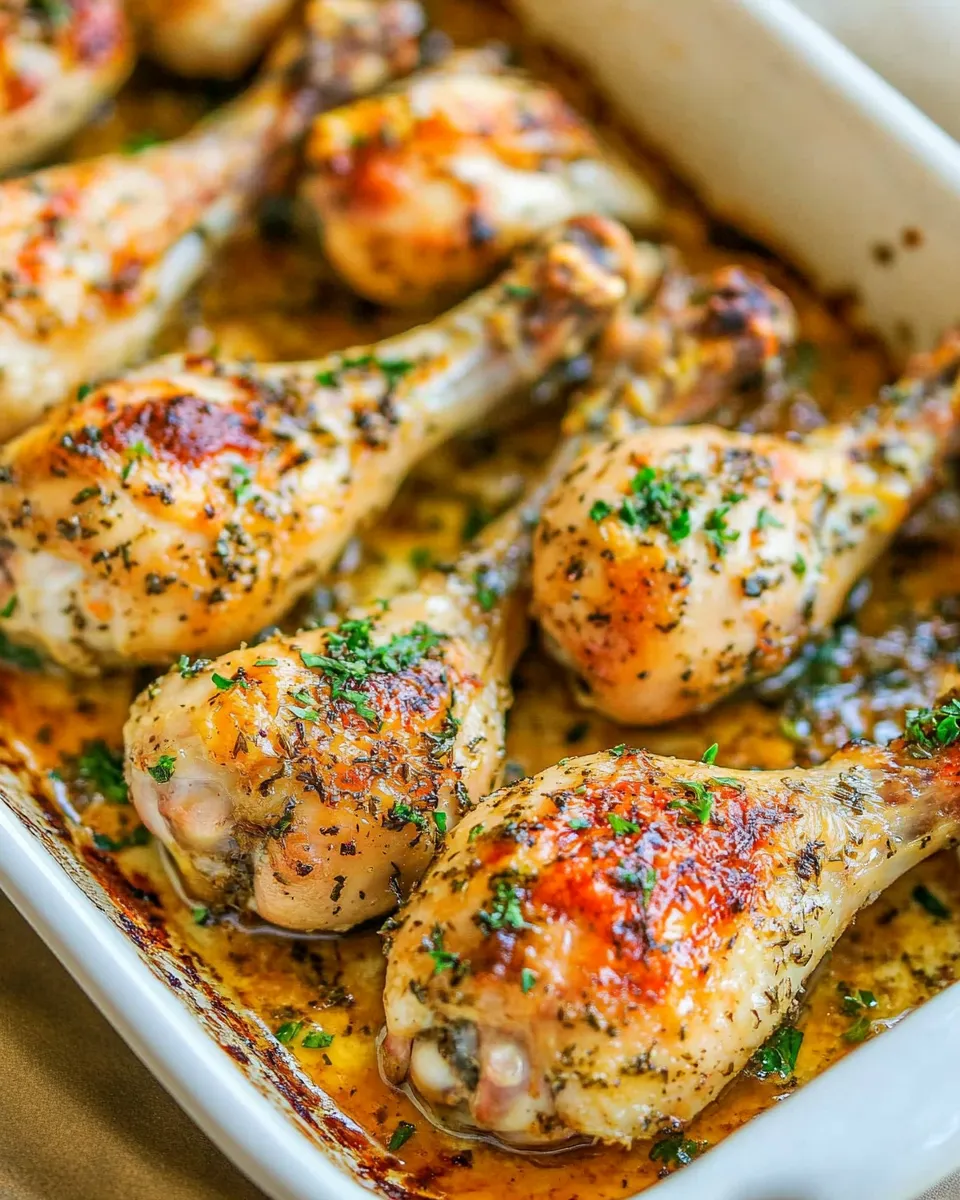
- Rimmed baking sheet — catches drips and gives the legs room to brown.
- Aluminum foil or Silpat — for easy cleanup and to prevent sticking.
- Large mixing bowl or large zip-top bag — for mixing and marinating the chicken.
- Small bowl and whisk — for combining the marinade into a smooth emulsion.
- Kitchen tongs or a silicone spatula — for turning the chicken without tearing the skin.
- Optional: instant-read thermometer — to check internal temperature for doneness (165°F is safe, though many prefer removing slightly earlier and resting).
Avoid These Mistakes
- Skipping the skin-under-marinade step — if you don’t push some marinade under the skin, you miss deeper flavor.
- Marinating too briefly — under 6 hours will still work, but you won’t get the same depth; if short on time, allow at least 1 hour.
- Overcrowding the pan — touching pieces steam instead of brown. Give each leg space.
- Broiling too long — the broiler turns color fast. Watch it closely; 2–3 minutes is often enough.
- Not letting the chicken rest — cutting right away lets the juices run out. A few minutes of rest keeps the meat juicy.
Better-for-You Options
- Trim visible excess fat if you’re watching calories. The legs will still be flavorful but slightly leaner.
- Reduce the salt by 1/2 tsp and finish with flaky sea salt at the table if you prefer lower sodium.
- Bake on a rack set over the sheet pan so excess fat drains away; this can lower the finished fat content while keeping the skin crisp.
- Double up on parsley and add extra lemon zest (no extra salt) to boost freshness without added fat.
What Could Go Wrong
Even a simple recipe has a few failure modes. The most common are overbaked, leathery skin; under-seasoned meat; and burned garlic from an aggressive broil.
Overbaking happens if you leave the legs in too long, especially after broiling. Use time as a guide but rely on visual cues and, when in doubt, an instant-read thermometer. If the skin starts deepening too quickly during the second bake, reduce the broil time or skip broiling altogether.
Under-seasoning can be prevented by distributing the marinade under the skin and turning the chicken halfway through the marinade period. If you’re worried about salt, season lightly and adjust at the table.
Finally, garlic in the marinade is safe because it cooks during the bake; but when broiling, any exposed bits can char, so watch the broiler closely and don’t step away.
Save for Later: Storage Tips
- Refrigerate leftover cooked chicken in an airtight container for up to 3–4 days.
- Freeze cooled cooked legs for up to 3 months. Thaw overnight in the refrigerator before reheating.
- To reheat and restore crispness, warm in a 350°F oven on a rack until heated through (about 10–15 minutes), or use an air fryer for 5–8 minutes. Microwaving will heat quickly but soften the skin.
- If you have extra marinade left before cooking, don’t reuse it raw on finished chicken unless you boil it first to kill bacteria; it’s safer to reserve a little of the marinade before adding raw chicken if you plan to use it as a sauce.
Handy Q&A
Can I use chicken thighs instead of legs?
Yes. Thighs have a similar cooking profile and will work with the same marinade and method. Adjust baking time slightly if pieces are much larger or smaller.
How long can I marinate the chicken?
The recipe calls for 6 hours or overnight; that range is ideal. Overnight up to 24 hours is fine for flavor; much longer can begin to change texture because of the lemon’s acidity.
Do I need to bring the chicken to room temperature?
Letting the chicken rest at room temperature for 20–30 minutes while the oven preheats helps it cook more evenly but isn’t strictly required. Don’t leave it out for longer than 30–60 minutes total.
Is broiling necessary?
No. Broiling adds crispness and color but if you’re worried about burning or prefer a less crunchy finish, you can skip that step and still have juicy, flavorful legs.
What internal temperature indicates doneness?
Cook to 165°F in the thickest part of the meat. Because legs are dark meat and coastal to carry juice, many cooks remove at 165–170°F and allow carryover to finish during rest.
Final Thoughts
This recipe is a dependable, weeknight-friendly approach to baked chicken legs. The marinade is straightforward but effective, and the cooking sequence reliably yields juicy meat and nicely colored skin. Once you get comfortable with the basic method, it’s easy to tweak the herbs and citrus to match what’s in your pantry.
Make the marinade, let time do the work, and finish with a quick broil if you like your skin crisp. You’ll have a dinner that feels composed but was effortless to pull together — which, to me, is the definition of a great home recipe.

Baked Chicken Legs (with Best Marinade)
Ingredients
Ingredients
- 4 lbs14 count Chicken Legs or drumsticks
- 1/4 cupolive oil (Use light oil, not extra virgin)
- 4 garlic cloves pressed or minced
- 4 Tbspfresh parsley finely chopped
- 3 Tbsplemon juice from 1 large lemon
- 2 Tbspdijon mustard
- 2 tspfine sea salt
- 1/2 tspblack pepper
Instructions
Instructions
- In a small bowl, combine 1/4 cup olive oil, 4 garlic cloves (pressed or minced), 4 Tbsp finely chopped parsley, 3 Tbsp lemon juice, 2 Tbsp Dijon mustard, 2 tsp fine sea salt, and 1/2 tsp black pepper. Whisk until well blended.
- Place the 4 lb (14 count) chicken legs in a large mixing bowl or a large zip-top bag. Pour the marinade over the chicken.
- Toss the chicken with your hands (or seal the bag and massage) to evenly coat each piece, pushing some of the marinade under the skin of each leg where possible.
- Cover the bowl with plastic wrap or seal the bag. Refrigerate and marinate for 6 hours or overnight, turning the chicken once halfway through the marinating time.
- When ready to cook, preheat the oven to 400°F and line a rimmed baking sheet with foil or a Silpat. Remove the chicken from the refrigerator and let it rest at room temperature while the oven preheats.
- Arrange the chicken on the prepared baking sheet skin-side-down. If any marinade remains in the bowl, brush it over the chicken.
- Bake on the center oven rack at 400°F for 25 minutes skin-side-down. After 25 minutes, turn each chicken leg skin-side-up and bake an additional 25 minutes.
- If you want crispier skin, broil on high for 2 to 3 minutes, watching closely to prevent burning.
- Remove the chicken from the oven and let rest a few minutes before serving.
Equipment
- Small Bowl
- Large Mixing Bowl
- Large Zip-Top Bag
- Rimmed baking sheet
- Foil
- Silpat
- Oven
Notes
*For extra flavor, brush chicken legs with the lemony sauce drippings in the baking pan after they come out of the oven and serve garnished with freshly chopped parsley if desired.
Note: Much of the oil, marinade and salt will end up in the bottom of the pan and discarded after baking which makes it difficult to gauge the nutrition facts on this recipe.