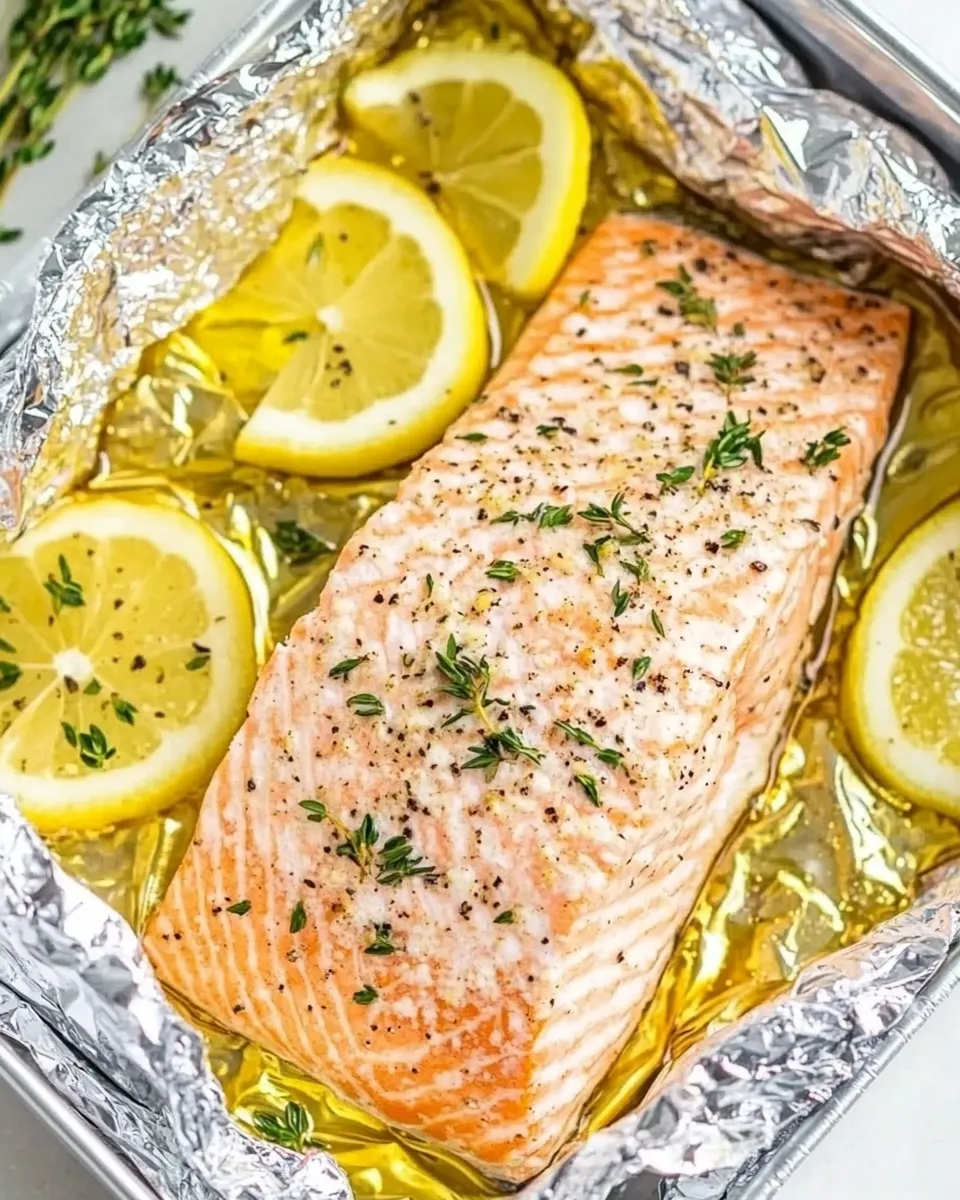
I love meals that feel thoughtful but actually take very little hands-on time. This baked salmon in foil does exactly that: a sweet-savory glaze, bright lemon, and a sealed packet that steams the fish to tender perfection while keeping cleanup minimal. It’s the kind of weeknight dinner I reach for when I want something impressive without drama.
The recipe is straightforward and forgiving. You’ll mix a simple brown sugar and butter topping, spread it over two 1‑pound filets, tuck them into foil packets with lemon slices, and bake. Timing is short and the payoff is big—moist fish, glossy glaze, and a bright finish with fresh parsley.
I’ll walk you through what to gather, exactly how to execute the steps, practical substitutions and pitfalls, storage, and answers to common questions. Read through once, gather your ingredients, and you’ll have dinner ready in about 30 minutes of oven time plus a bit of prep.
What You’ll Gather
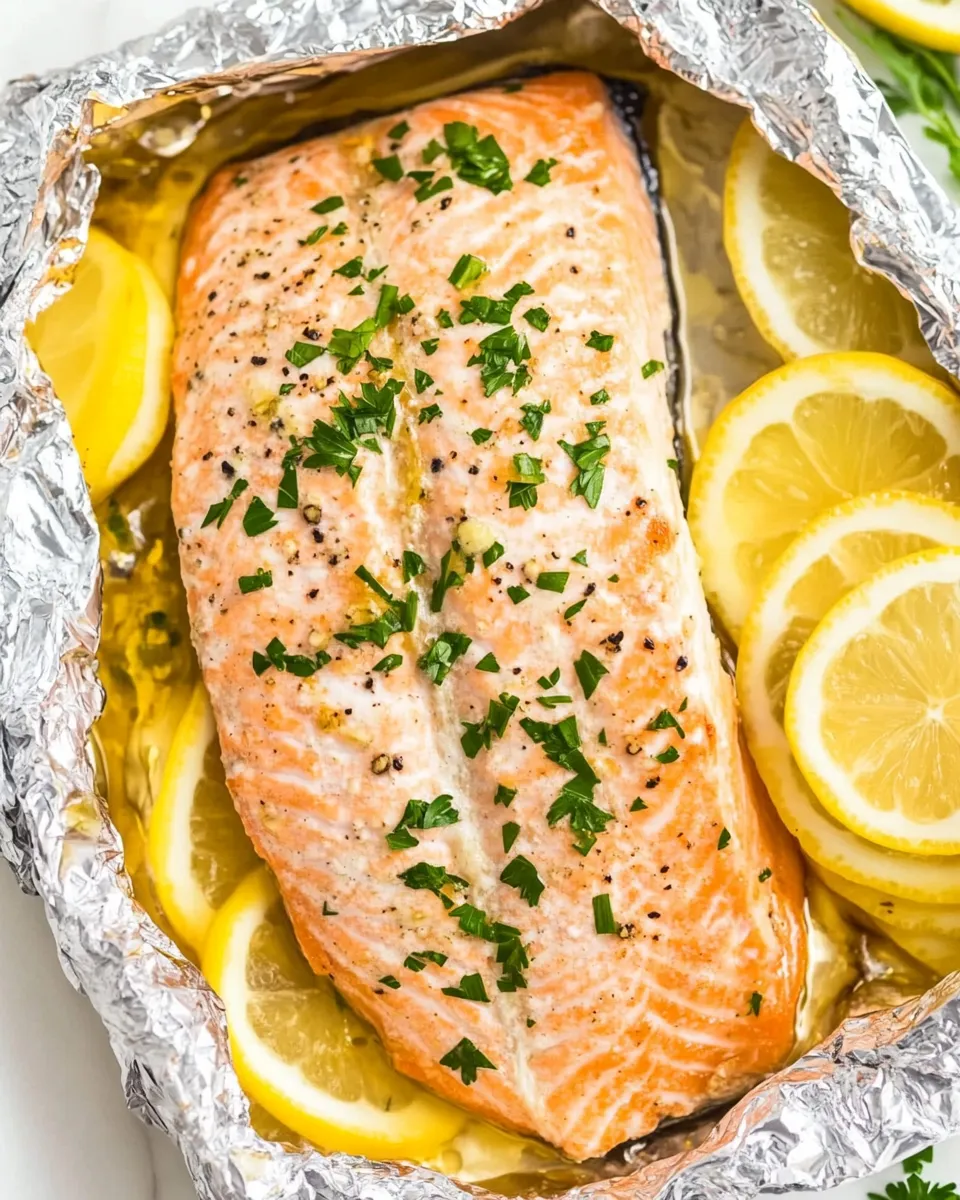
Gather the salmon, the glaze ingredients, a couple of lemons, and some fresh parsley. You’ll also need heavy‑duty foil and a sheet pan. The method is intentionally hands-off after assembly, which makes it ideal for busy evenings or when you want a simple, elegant main without extra pots.
Ingredients
- 2 pounds salmon filets — about 1 pound each, pin bones removed, with skin on or off.
- ⅓ cup brown sugar — lightly packed.
- 5 tablespoons salted butter — melted.
- 2 tablespoons lemon juice — about ½ large lemon.
- 1 ½ tablespoons dijon mustard — adds tang and helps emulsify the glaze.
- 1 ¼ teaspoons garlic powder — for savory depth.
- ¾ teaspoon onion powder — complements the garlic flavor.
- ½ teaspoon salt — balances and brings out the other flavors.
- ½ teaspoon dried thyme — an earthy herbal note.
- 2 lemons — sliced and placed on top of the filets.
- fresh parsley — chopped, for garnish.
Directions: Baked Salmon In Foil
- Preheat the oven to 400°F.
- Lay out two large sheets of heavy‑duty aluminum foil—one for each salmon filet. Place each 1‑pound salmon filet on a sheet of foil and let sit at room temperature while you prepare the topping (about 15–20 minutes).
- In a small bowl, combine ⅓ cup brown sugar, 5 tablespoons salted butter (melted), 2 tablespoons lemon juice, 1 ½ tablespoons dijon mustard, 1 ¼ teaspoons garlic powder, ¾ teaspoon onion powder, ½ teaspoon salt, and ½ teaspoon dried thyme. Whisk until completely combined.
- Pour the mixture evenly over both salmon filets, spreading gently to coat the tops.
- Top each filet with lemon slices (use the 2 lemons, sliced).
- Fold the edges of the aluminum foil up and over the salmon to form a sealed packet for each filet; if needed, use another sheet of foil to fully enclose them.
- Place the foil packets on a sheet pan and bake in the preheated 400°F oven for 15–20 minutes, or until an instant‑read thermometer inserted into the thickest part reads 145°F. (Salmon that is thicker or larger will take longer. 145°F is well done; for medium to medium‑rare aim for 125–135°F.)
- Remove the pan from the oven and let the sealed packets rest for five minutes. Carefully open the foil to avoid steam, garnish the salmon with chopped fresh parsley, then plate and serve.
Why This Baked Salmon In Foil Stands Out
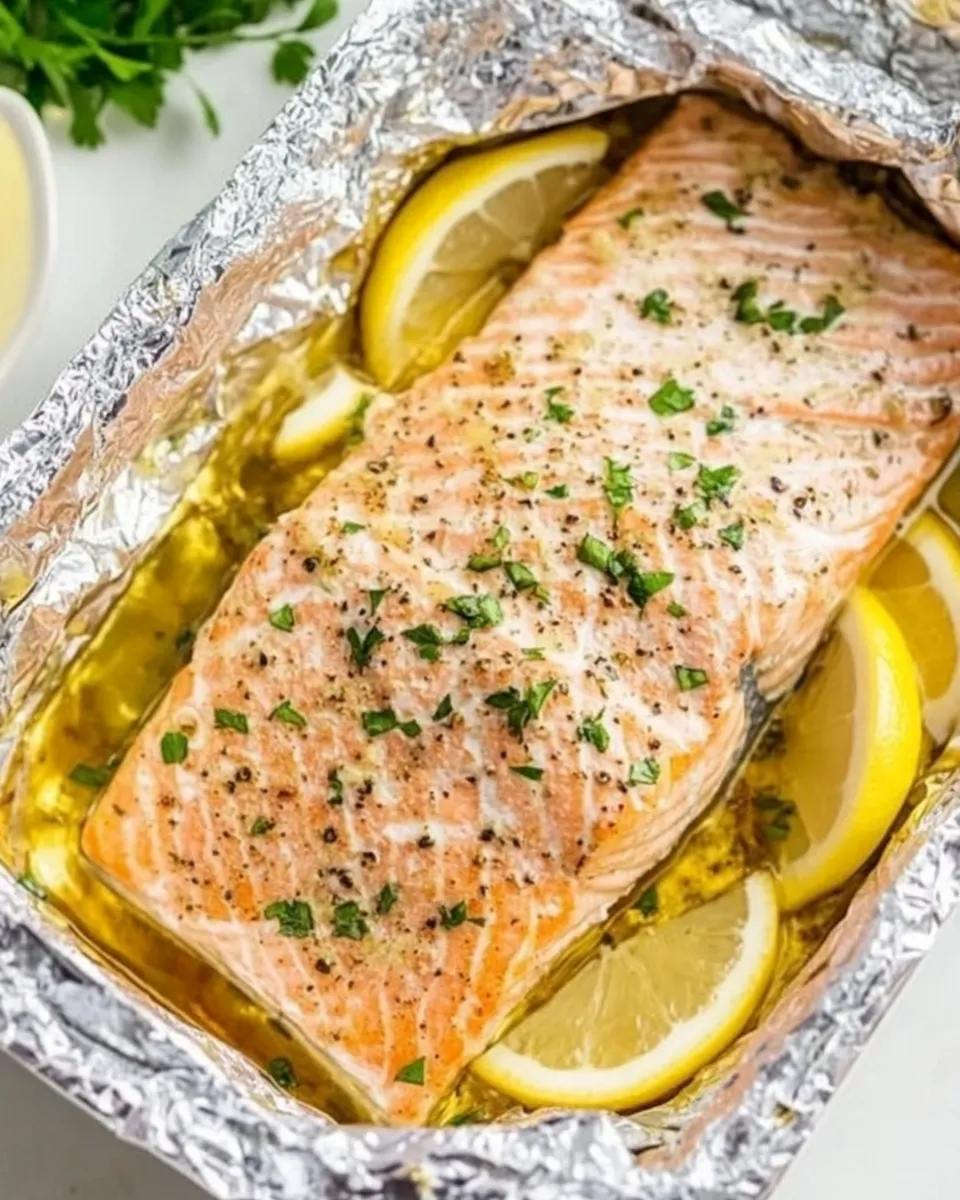
There are three practical reasons this version earns a regular spot in my rotation. First, the foil packet creates a mini steam oven that keeps the salmon ultra-moist. The butter and brown sugar glaze melts into the flesh and produces a glossy, slightly caramelized surface without drying the fish.
Second, the method is low-stress. You don’t need to monitor a hot skillet or flip delicate filets. The foil does the heavy lifting: gentle heat transfer and tidy cleanup. Finally, the lemon slices and parsley give immediate brightness and freshness. That citrus lifts the glaze and balances the richness, so the result tastes composed rather than cloying.
Ingredient Flex Options
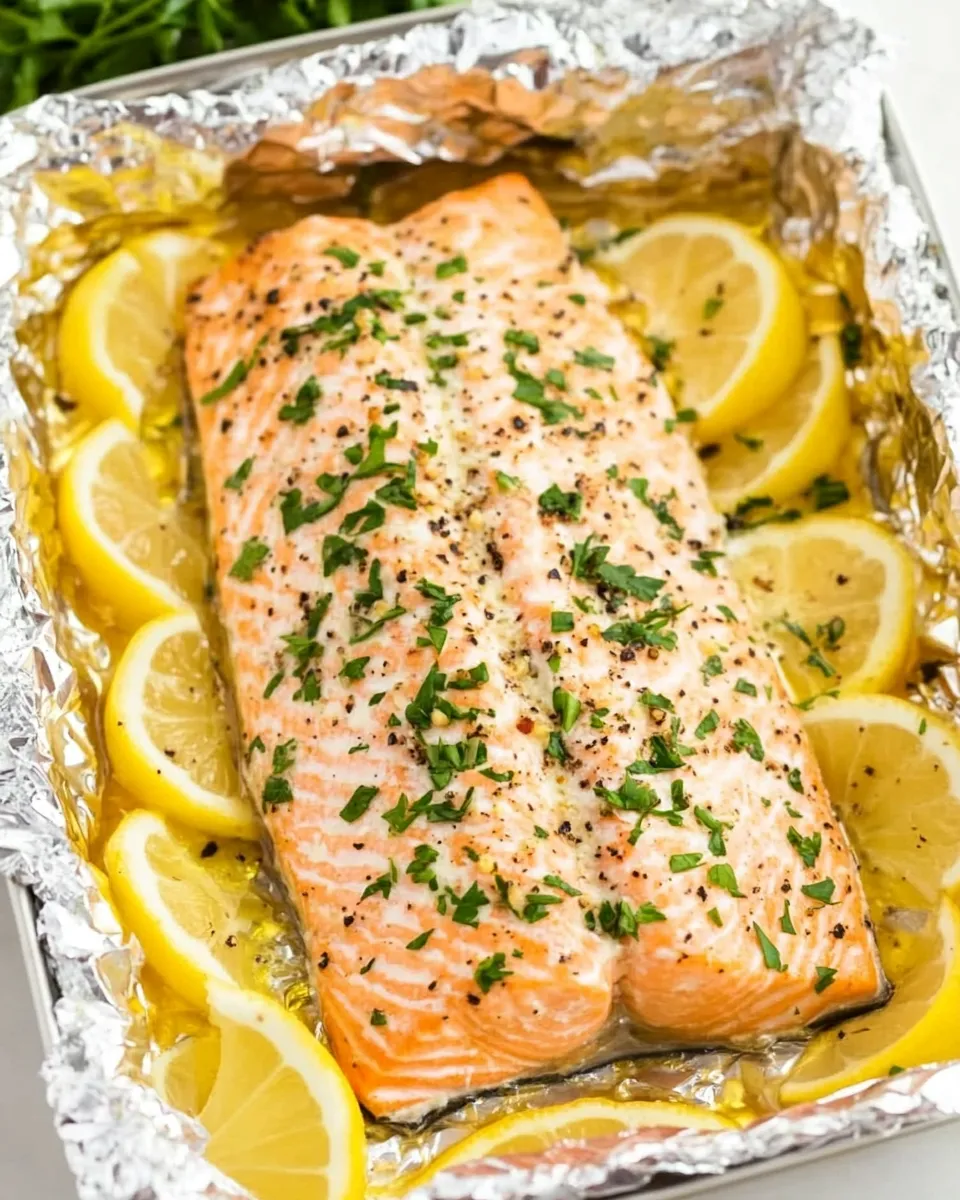
Want to tweak sweetness, salt, or herb notes? Here are safe adjustments that keep the recipe structure intact.
- Reduce the brown sugar by a tablespoon or two if you prefer less sweetness; the glaze will still coat the salmon and add color.
- If you’re watching sodium, use slightly less salt than listed or choose unsalted butter and keep the specified butter amount—this changes the salt content without altering texture.
- Swap dried thyme quantity one-for-one with another dried herb you already have on hand if you want a different aroma; keep it to the same small measure so it doesn’t overpower the fish.
- Leave the lemon slices off if you’re serving the salmon with a separate sauce or vinaigrette; they’re there for brightness but aren’t structurally necessary.
What’s in the Gear List
- Oven — preheat to 400°F as directed.
- Heavy‑duty aluminum foil — two large sheets, one per filet, plus an extra if you want double coverage.
- Sheet pan — catches any drips and supports the foil packets.
- Small bowl and whisk — for mixing the glaze ingredients.
- Instant‑read thermometer — highly recommended for checking doneness (key for salmon).
- Sharp knife and cutting board — for slicing lemons and chopping parsley.
Steer Clear of These
These are common mistakes that turn a confident dinner into an “almost.” Avoid them.
- Overbaking: Salmon cooks quickly. Use the thermometer and remove at your preferred temperature. Don’t rely on time alone for thicker filets.
- Opening the foil too soon: The resting time lets juices redistribute. Open carefully to avoid a blast of scalding steam and to keep the fish moist.
- Using flimsy foil: Thin foil can tear, leak juices, and make a mess. Heavy‑duty sheets are worth the small extra cost for sealed packets.
- Skimping on room temperature step: Letting filets sit 15–20 minutes before baking reduces cold spots and helps the fish cook evenly.
Customize for Your Needs
Portions: The recipe is laid out for two 1‑pound filets. For single servings, divide quantities accordingly. If you’re feeding more people, double everything and use more sheet pans so packets don’t crowd the oven.
Dietary tweaks: To cut calories, reduce the butter by a tablespoon or two and balance with a splash more lemon juice. For a lower-sugar profile, reduce the brown sugar or swap it with a smaller amount of a sugar alternative, keeping in mind texture will change.
Doneness: The recipe notes 145°F as well done and 125–135°F for medium to medium‑rare. If you prefer a tender, slightly translucent center, target the lower end of that range and remove the filets from the oven earlier.
Cook’s Commentary
I make this recipe when I want something that feels a little celebratory but still fits into a real weeknight. The glaze presents beautifully — a melted brown sugar sheen that reads restaurant-level without demanding technique. My favorite thing is how forgiving the method is: if you’re a few minutes over in the oven, the packet still protects moisture.
A quick tip from experience: if you like a touch more texture on top, open the packets for the last 2 minutes and broil briefly, watching like a hawk. That step is optional, but it adds a nice finish if you want a slight crust on the glaze.
Best Ways to Store
Leftovers keep well. Transfer cooled salmon to an airtight container and refrigerate for up to 3 days. To reheat, warm gently in a low oven (300–325°F) for 8–12 minutes or until warmed through, covered with foil to preserve moisture. Microwaving works in a pinch—use short intervals and check frequently to avoid overcooking.
For longer storage, remove the salmon from the glaze and freeze in a freezer-safe container for up to 1 month. Thaw overnight in the refrigerator before reheating gently; texture will be best when used within that month.
Common Questions
- Can I use frozen salmon? Thaw fully before starting. Pat dry, then proceed with the recipe so the glaze can adhere properly.
- Do I have to remove the skin? No. Cook with skin on or off per your preference; skin helps hold the filet together during baking and can be removed easily after cooking.
- What’s the best way to check doneness? An instant‑read thermometer is the most reliable method. Insert into the thickest part of the filet and check temperature against your preferred doneness range.
- Can I scale this up? Yes. Keep the packet method and glaze proportions consistent; use additional sheet pans so each packet has room to steam evenly in the oven.
Bring It Home
This baked salmon in foil is simple, forgiving, and consistently delicious. It’s a reliable choice when you want something that feels special with minimal fuss. Prepare the topping, assemble the packets, pop them in the oven, and you’ll have an elegant main that pairs with a quick grain, salad, or simple roasted veg.
Try it once as written, then adapt sugar, butter, or herbs to match your household preferences. Cooking like this—efficient, flavorful, and adaptable—is exactly why this recipe lives in my regular rotation. Enjoy, and tell me how you served it.

Baked Salmon In Foil
Ingredients
Ingredients
- 2 poundssalmon filetsabout 1 pound each pin bones removed, with skin on or off
- 1/3 cupbrown sugarlightly packed
- 5 tablespoonssalted buttermelted
- 2 tablespoonslemon juiceabout 1/2 large lemon
- 1 1/2 tablespoonsdijon mustard
- 1 1/4 teaspoonsgarlic powder
- 3/4 teaspoonsonion powder
- 1/2 teaspoonsalt
- 1/2 teaspoondried thyme
- 2 lemonssliced
- fresh parsleychopped
Instructions
Instructions
- Preheat the oven to 400°F.
- Lay out two large sheets of heavy‑duty aluminum foil—one for each salmon filet. Place each 1‑pound salmon filet on a sheet of foil and let sit at room temperature while you prepare the topping (about 15–20 minutes).
- In a small bowl, combine ⅓ cup brown sugar, 5 tablespoons salted butter (melted), 2 tablespoons lemon juice, 1 ½ tablespoons dijon mustard, 1 ¼ teaspoons garlic powder, ¾ teaspoon onion powder, ½ teaspoon salt, and ½ teaspoon dried thyme. Whisk until completely combined.
- Pour the mixture evenly over both salmon filets, spreading gently to coat the tops.
- Top each filet with lemon slices (use the 2 lemons, sliced).
- Fold the edges of the aluminum foil up and over the salmon to form a sealed packet for each filet; if needed, use another sheet of foil to fully enclose them.
- Place the foil packets on a sheet pan and bake in the preheated 400°F oven for 15–20 minutes, or until an instant‑read thermometer inserted into the thickest part reads 145°F. (Salmon that is thicker or larger will take longer. 145°F is well done; for medium to medium‑rare aim for 125–135°F.)
- Remove the pan from the oven and let the sealed packets rest for five minutes. Carefully open the foil to avoid steam, garnish the salmon with chopped fresh parsley, then plate and serve.
Equipment
- Aluminum Foil
- Small Bowl
- Whisk
- Baking Sheet
- Instant-read thermometer
Notes
The brown sugar can be reduced by half or eliminated to reduce carbs.
Use a
meat thermometer
to ensure your salmon is cooked to your liking.