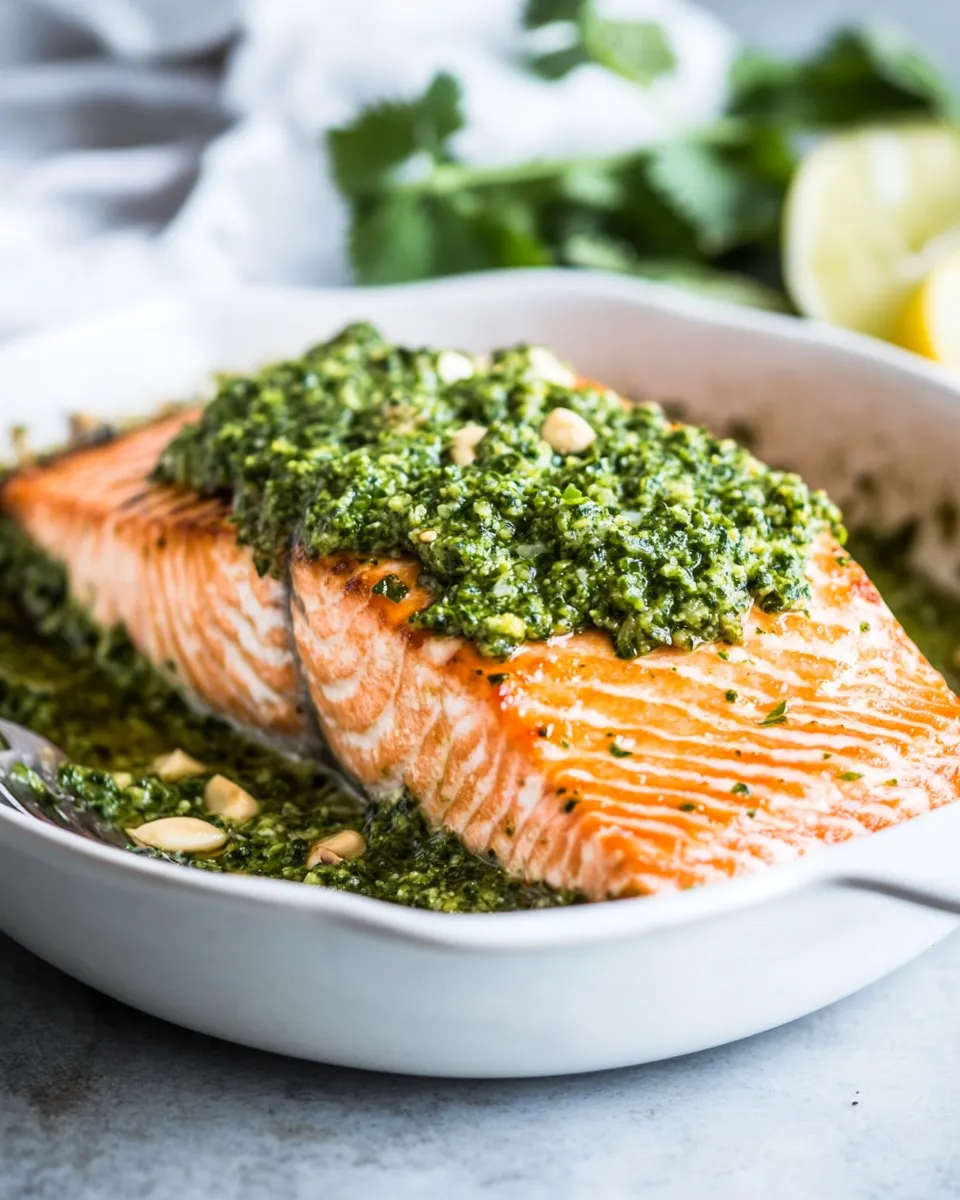
I fell in love with this dish the first time I paired a richly flavored cilantro pesto with a simple, perfectly baked fillet of salmon. The pesto is bright, herbal and slightly spicy thanks to sriracha almonds, while the salmon stays tender and flaky when baked quickly at a high temperature. It’s the kind of weeknight recipe that looks and tastes like you spent more time on it than you actually did.
There’s nothing fussy here: a short list of ingredients, a food processor, and an oven. The pesto comes together in one bowl and the salmon bakes in under 15 minutes. If you like clean, bold flavors with a touch of umami, this will be a favorite. I’ll walk through what you need, exactly how to do it, what to swap if you’re missing something, and common pitfalls so your dinner comes out great every time.
Make sure you have a good-quality, bright cilantro and some crunchy sriracha-flavored almonds (they bring texture and a hit of heat). If you follow the order below, you’ll have dinner on the table quickly, and the leftovers make a terrific lunch the next day. Let’s get into the details.
The Essentials
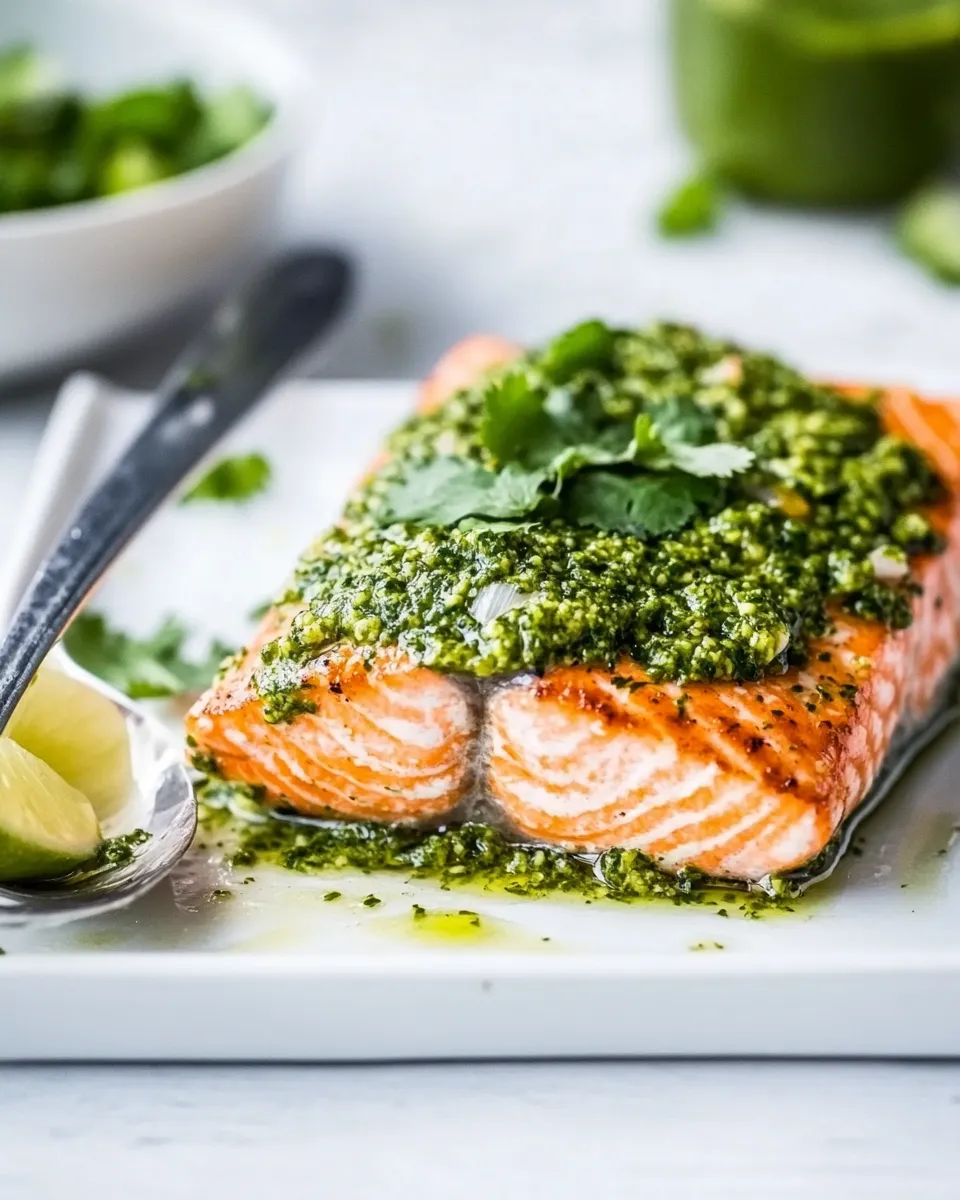
This recipe is straightforward: a short bake and a raw pesto. Bake the salmon at a hot 425°F so it cooks through quickly without drying out. The pesto is made in a food processor, so it’s rustic — expect some texture from the almonds. Key points: pat the salmon dry, oil it, season simply, and don’t overbake. For the pesto, pulse until the greens are broken down and then stream in oil to reach a creamy consistency.
Timing is your friend. While the salmon is in the oven (about 13–15 minutes), make the pesto. That way everything is fresh and hot when you plate. A quick garnish of chopped green onion finishes the dish with color and a mild oniony lift.
Ingredients
- 4 sockeye salmon fillets (about 4 ounces each) — the main protein; skin-side down is how they’re baked for easy handling.
- Olive oil — used to rub the foil and to coat the fillets before baking.
- Salt/pepper to taste — simple seasoning for the salmon; adjust to preference.
- 1/2 cup sriracha-flavored almonds — gives the pesto heat and crunchy body; process until small pieces.
- 3/4 cup cilantro (thoroughly chopped, tightly packed) — bright, herbaceous backbone of the pesto.
- 1 1/2 cups bok choy leaves (roughly chopped, lightly packed) — adds leafy volume and a mild green flavor.
- 1 teaspoon fresh lime zest — a little citrus brightness in the pesto.
- 1 teaspoon fresh lime juice — acid to balance the richness.
- 1 teaspoon fresh garlic (minced) — aromatic punch.
- 1 teaspoon fresh ginger (minced) — a clean, slightly spicy warmth.
- 1 1/2 teaspoons rice vinegar — gentle acidity to lift the pesto.
- 1 tablespoon + 1 to 2 teaspoons reduced-sodium soy sauce — umami and salt; reduced-sodium keeps it balanced.
- Pinch black pepper — seasoning for depth in the pesto.
- 2 tablespoons olive oil — streamed in to create a creamy, cohesive pesto.
- Green onion (chopped, for garnish) — fresh finishing touch for color and mild bite.
Method: Baked Salmon With Asian Cilantro Pesto
- Preheat the oven to 425°F. Line a baking sheet with aluminum foil and lightly rub the foil with the listed olive oil.
- Pat the 4 sockeye salmon fillets (about 4 ounces each) dry with paper towels. Place them skin-side down on the prepared baking sheet.
- Drizzle enough of the listed olive oil to coat the top of each fillet; use a pastry brush or your fingers to spread the oil evenly. Sprinkle salt and pepper to taste over the fillets.
- Put the salmon in the oven and bake until the fish flakes easily with a fork, about 13–15 minutes.
- While the salmon bakes, make the cilantro pesto: place 1/2 cup sriracha-flavored almonds in a food processor and process until the almonds are crushed into small pieces.
- Add 3/4 cup cilantro (thoroughly chopped, tightly packed) and 1 1/2 cups bok choy leaves (roughly chopped, lightly packed) to the processor. Process until the greens are broken down and combined with the almonds, stopping to scrape the sides and bottom of the bowl frequently so the mixture does not pack down.
- Add 1 teaspoon fresh lime zest, 1 teaspoon fresh lime juice, 1 teaspoon fresh garlic (minced), 1 teaspoon fresh ginger (minced), 1 1/2 teaspoons rice vinegar, 1 tablespoon + 1 to 2 teaspoons reduced-sodium soy sauce, and a pinch of black pepper. Process until the ingredients are well combined.
- With the food processor running, slowly stream in 2 tablespoons olive oil and continue processing until the pesto is creamy and runs through the processor smoothly. Taste and adjust seasoning with salt or pepper if desired.
- Remove the salmon from the oven and transfer the fillets to plates. Spread the cilantro pesto over each fillet, garnish with chopped green onion, and serve immediately.
Reasons to Love Baked Salmon With Asian Cilantro Pesto
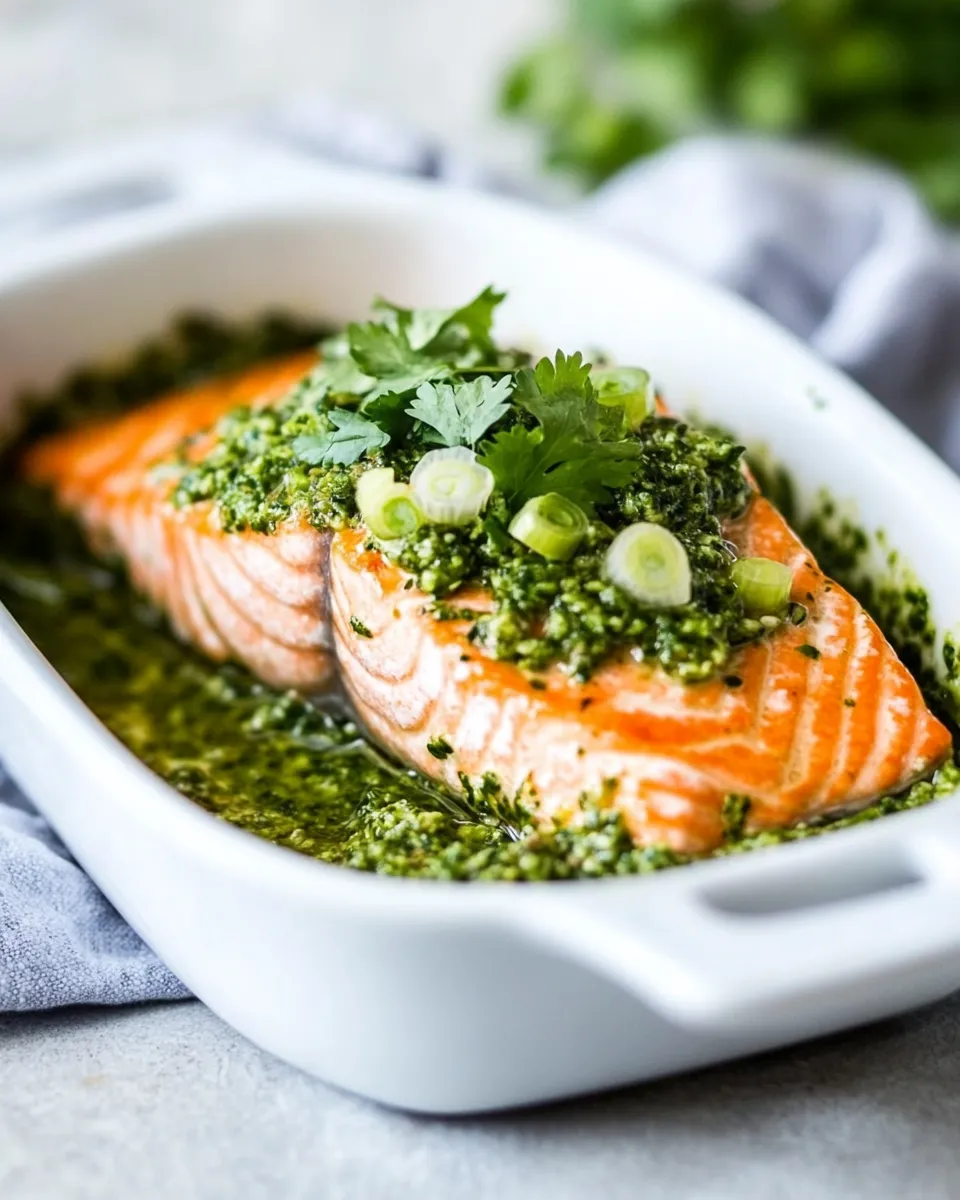
First, it’s fast: the total active time is minimal, and the oven does the heavy lifting. Second, the flavor profile is balanced—herbaceous cilantro and tangy lime play against the savory soy and the toasted, spicy almonds. That contrast is what keeps each bite interesting. Third, it’s versatile: serve it over rice, noodles, or greens, and it still sings.
Nutrition-wise, salmon delivers heart-healthy omega-3s and protein, while the pesto uses greens and nuts for fiber, vitamins and satisfying texture. The herbs and aromatics give the dish a fresh, vibrant edge that makes simple salmon feel special, without complicated prep.
Swap Guide
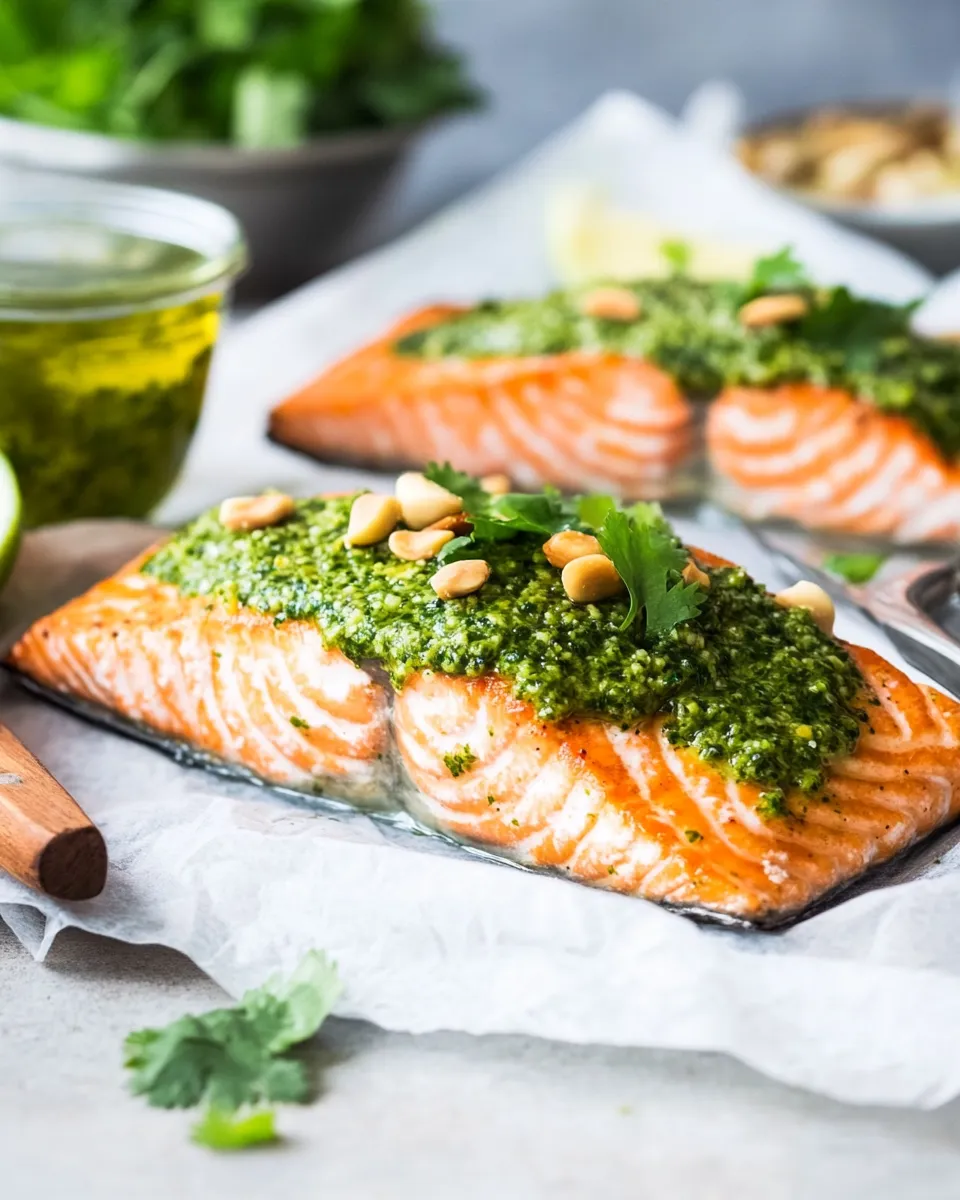
If you don’t have sockeye, another salmon variety or a fatty fish like trout will work; adjust the bake time for thickness. No sriracha almonds? Use plain roasted almonds and add a small dash of sriracha or chili paste to the pesto to control the heat. Don’t have bok choy? Baby spinach, kale (stems removed) or other tender leafy greens can stand in—spinach will make the pesto smoother and milder, kale will give a bit more chew and color.
For soy sauce swaps, tamari is a one-to-one sub; coconut aminos will make it slightly sweeter and less salty. If you’re out of lime, a touch more rice vinegar plus a small splash of lemon juice can do the job, though the citrus character will change slightly.
What You’ll Need (Gear)
- Baking sheet — lined with foil for easy cleanup and to prevent sticking.
- Food processor — necessary for the pesto texture; a blender will work but may need more pulsing and scraping.
- Pastry brush (or clean fingers) — for spreading olive oil on the fillets evenly.
- Sharp knife and cutting board — for chopping cilantro, bok choy, and green onion.
- Measuring spoons/cups — to keep the pesto balance right.
Things That Go Wrong
Overbaking the salmon is the most common issue. Because these are small fillets, they only need about 13–15 minutes. Start checking at 12 minutes if your fillets are on the thinner side. The best test is flakiness: a fork should separate the flesh easily while it still looks moist.
Another pitfall is a packed food processor bowl when making pesto. If you don’t stop to scrape frequently, the mixture compacts and won’t process evenly. Pulse, scrape, and pulse again, and add the oil slowly while the processor runs to encourage a smooth, runny pesto.
Better-for-You Options
To lower sodium, use the reduced-sodium soy sauce measurement as written and taste before adding more. You can also swap the olive oil for a lighter-tasting oil if you need fewer calories, though olive oil brings flavor and body. Increase the greens in the pesto—more cilantro or bok choy—to boost fiber and micronutrients without changing the method.
If you’re avoiding nuts, omit the almonds and substitute with toasted sunflower seeds for similar texture and healthy fats. Keep in mind the flavor will change, but the pesto will still be satisfying and nutrient-dense.
If You’re Curious
The sriracha-flavored almonds do three jobs: they provide crunch, a pleasant heat, and a roasted nuttiness that replaces the traditional pine nuts in pesto. Bok choy leaves are included for their delicate texture and mild, slightly sweet flavor; they bulk the pesto without overpowering the cilantro. The soy and rice vinegar add savory and acidic notes so the pesto doesn’t lean greasy.
Short on time? Make the pesto a day ahead and store it tightly covered in the fridge; bring it to room temperature before serving to loosen it up. If you like a silkier sauce, add another tablespoon of olive oil slowly while processing.
Leftovers & Meal Prep
Leftover salmon keeps well in the fridge for up to 2 days. Store the pesto separately in an airtight container; it will last 3–4 days chilled. Combine them when reheating to preserve texture—the pesto can be spooned over cold salmon for a quick salad atop mixed greens, or gently warmed together in a skillet over low heat (just long enough to take the chill off).
For meal prep, bake a batch of salmon and portion it into containers with a small container of pesto on the side. Add cooked rice or quinoa and quick-steamed vegetables for balanced lunches. The pesto can double as a bright sauce on noodles or roasted vegetables throughout the week.
Common Qs About Baked Salmon With Asian Cilantro Pesto
How can I tell when the salmon is done? Look for opaque flesh that flakes with a fork. A thin fillet will be done near 13 minutes; thicker pieces could need up to 15. Use an instant-read thermometer if you have one—130–135°F is a good target for medium, moist salmon.
Can I make the pesto without a food processor? You can, but it will take more work. Finely chop the almonds and greens, then whisk in the seasonings and olive oil. The texture will be chunkier, but still delicious.
Is this spicy? The heat mainly comes from the sriracha-flavored almonds. If you prefer mild, use plain roasted almonds and leave out any additional hot sauce. If you want more heat, add a touch of sriracha or chili flakes to the pesto to taste.
Ready to Cook?
This is an excellent recipe to keep in your weekly rotation: fast, flavorful, and flexible. Gather the ingredients, preheat the oven, and plan to make the pesto while the salmon bakes. Little attention to detail—patting the fish dry, pulsing and scraping the pesto, and watching the bake time—delivers a restaurant-quality plate with minimal fuss. Serve with rice, greens, or noodles and enjoy a bright, balanced meal.
If you make it, tell me how you paired it—rice bowl, noodle salad, or straight on a plate with a crisp side salad. I love hearing what readers try and how they tweak it for their kitchens.
Baked Salmon With Asian Cilantro Pesto
Ingredients
Ingredients
- 4 sockeye salmon filletsabout 4 ounces each
- Olive oil
- Salt/pepperto taste
- 1/2 cupsriracha-flavored almonds
- 3/4 cupcilantroroughly chopped tightly packed
- 1 1/2 cupsbok choy leavesroughly chopped lightly packed
- 1 teaspoonfresh lime zest
- 1 teaspoonfresh lime juice
- 1 teaspoonfresh garlicminced
- 1 teaspoonfresh gingerminced
- 1 1/2 teaspoonsrice vinegar
- 1 tablespoon + 1 to 2 teaspoonsreduced-sodium soy sauce
- Pinchblack pepper
- 2 tablespoonsolive oil
- Green onionchopped for garnish
Instructions
Instructions
- Preheat the oven to 425°F. Line a baking sheet with aluminum foil and lightly rub the foil with the listed olive oil.
- Pat the 4 sockeye salmon fillets (about 4 ounces each) dry with paper towels. Place them skin-side down on the prepared baking sheet.
- Drizzle enough of the listed olive oil to coat the top of each fillet; use a pastry brush or your fingers to spread the oil evenly. Sprinkle salt and pepper to taste over the fillets.
- Put the salmon in the oven and bake until the fish flakes easily with a fork, about 13–15 minutes.
- While the salmon bakes, make the cilantro pesto: place 1/2 cupsriracha-flavored almonds in a food processor and process until the almonds are crushed into small pieces.
- Add 3/4 cup cilantro (thoroughly chopped, tightly packed) and 1 1/2 cups bok choy leaves (roughly chopped, lightly packed) to the processor. Process until the greens are broken down and combined with the almonds, stopping to scrape the sides and bottom of the bowl frequently so the mixture does not pack down.
- Add 1 teaspoon fresh lime zest, 1 teaspoon fresh lime juice, 1 teaspoon fresh garlic (minced), 1 teaspoon fresh ginger (minced), 1 1/2 teaspoons rice vinegar, 1 tablespoon + 1 to 2 teaspoons reduced-sodium soy sauce, and a pinch of black pepper. Process until the ingredients are well combined.
- With the food processor running, slowly stream in 2 tablespoons olive oil and continue processing until the pesto is creamy and runs through the processor smoothly. Taste and adjust seasoning with salt or pepper if desired.
- Remove the salmon from the oven and transfer the fillets to plates. Spread the cilantro pesto over each fillet, garnish with chopped green onion, and serve immediately.
Equipment
- Oven
- Baking Sheet
- Aluminum Foil
- Paper Towels
- Pastry Brush
- Food Processor
- plates