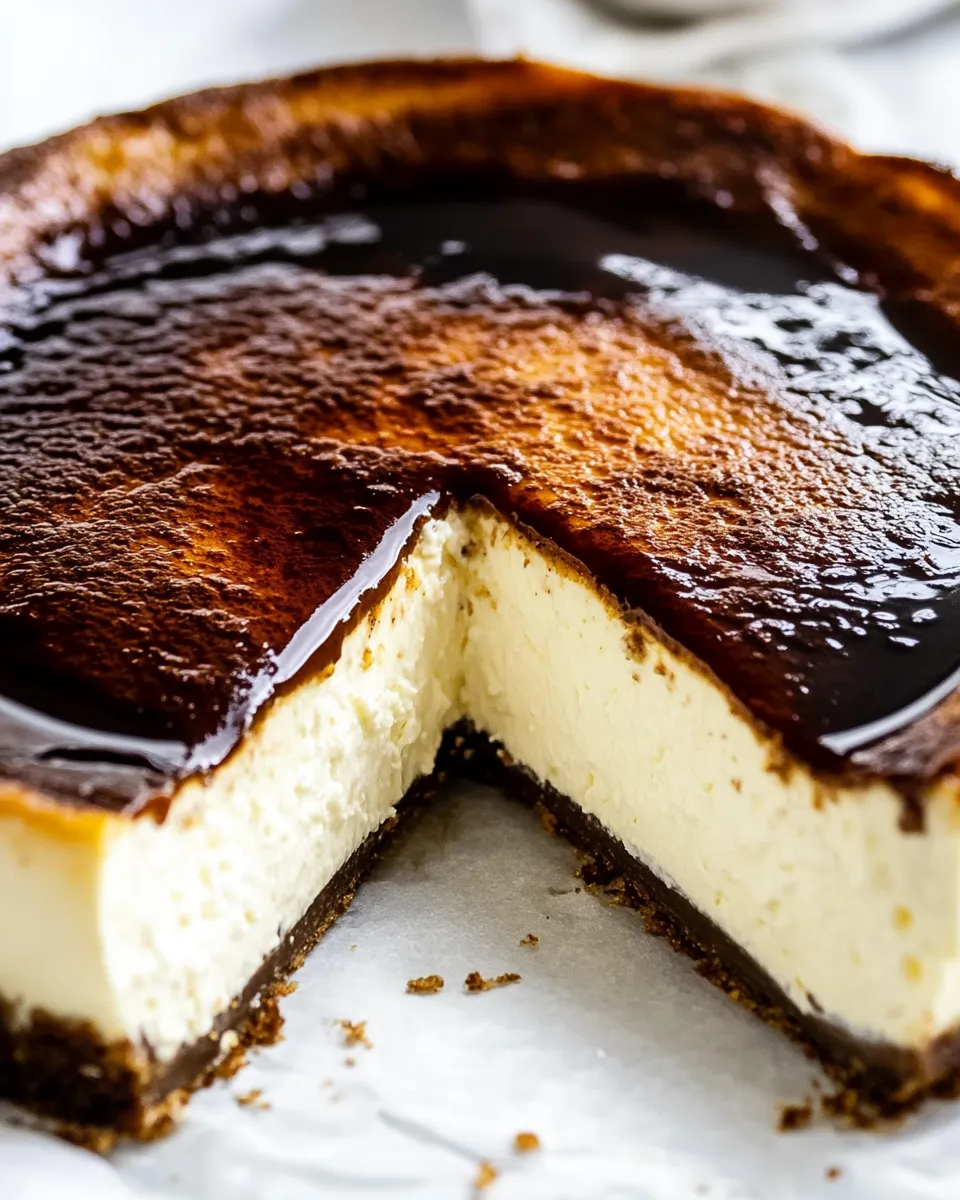
I fell in love with Basque cheesecake the first time its deeply caramelized top cracked just so and revealed a custardy, almost spoonable center. It’s an unfussy cheesecake: no water bath, no elaborate crust, just a few pantry ingredients brought together and baked hot so the exterior darkens and the inside stays velvety.
What I appreciate most is how forgiving the method is. A little parchment, a hot oven, and patience during cooling are the only secrets. You get dramatic color and complex flavor with surprisingly little hands-on time.
Below you’ll find everything I use and every step I follow—clear ingredient notes, the exact method, troubleshooting tips and sensible swaps. If you’re baking this for the first time, follow the instructions closely and read the “Learn from These Mistakes” section before you start.
The Essentials
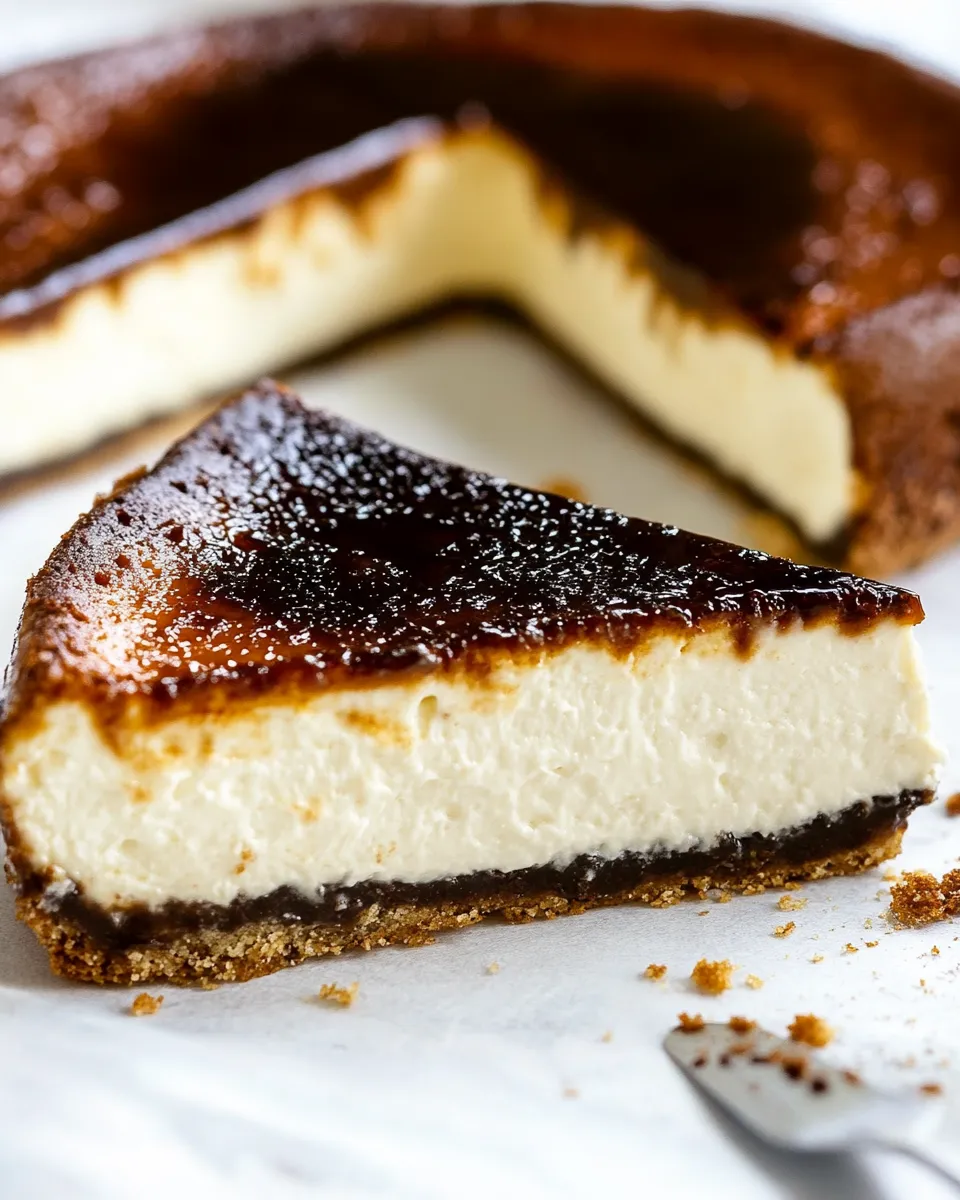
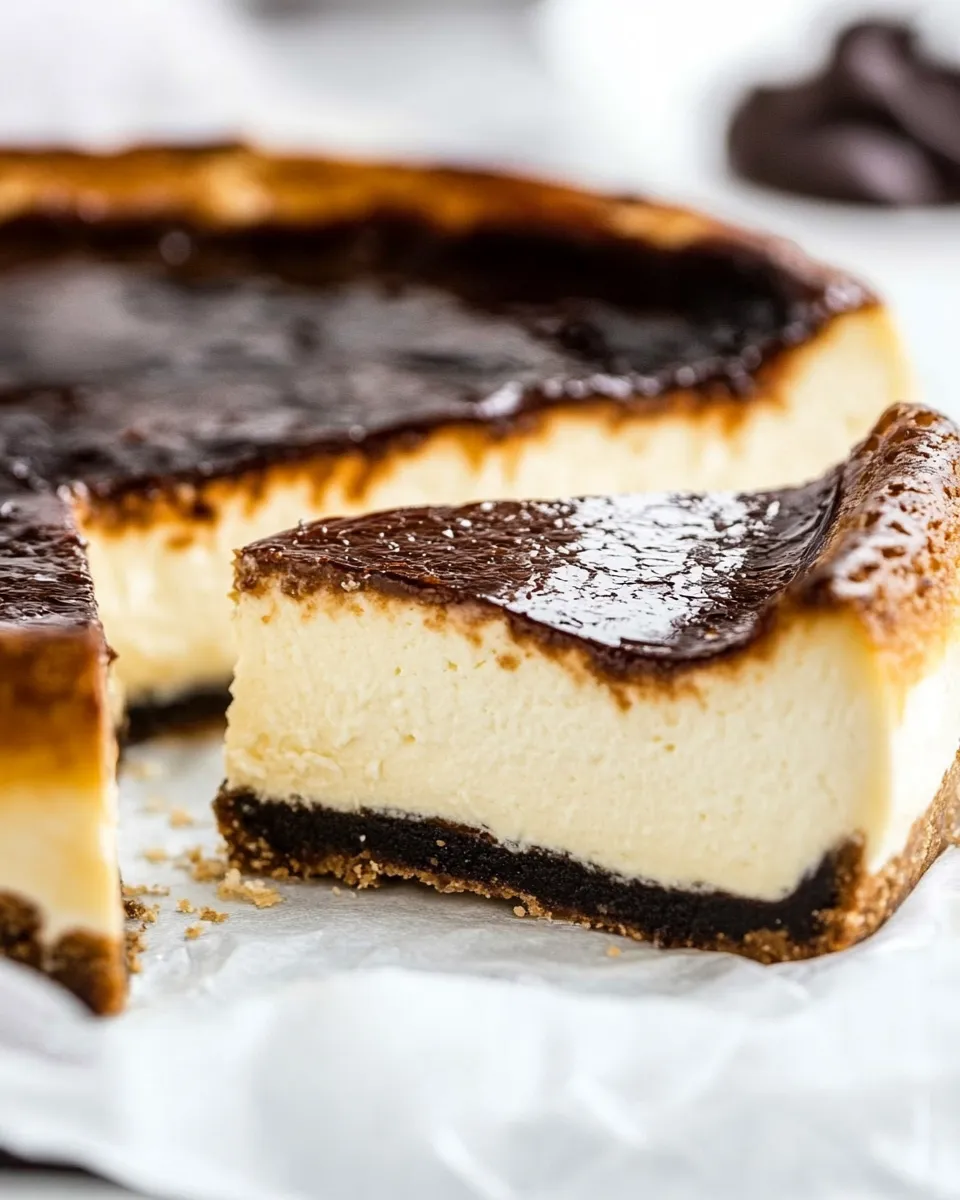
This cake is rustic by design: a deeply browned top, slumped sides and a creamy, slightly wobbly center. The contrast between the charred, caramel-like surface and the soft interior is what makes Basque cheesecake feel special despite its minimalism.
Key points to remember: use room-temperature cream cheese for a lump-free batter, line the pan well with parchment (it’s the handle for removing the cake later), and bake at a high temperature so the outside browns while the middle remains custardy. Cooling in stages is essential—this cake firms up as it cools.
Ingredients
- 1 teaspoon softened butter — for greasing the pan so the parchment sticks and the edges release cleanly.
- 24 ounces cream cheese, at room temperature — the backbone of the cheesecake; room temp prevents lumps and ensures a smooth batter.
- 1 (200 g) cup granulated sugar — sweetens and helps the top caramelize.
- 1 vanilla pod (or 2 teaspoons vanilla extract) — adds warm aromatics; scrape seeds from the pod for the most intense vanilla flavor.
- 3 large eggs — provide structure and silkiness; add them one at a time for even incorporation.
- 1/2 teaspoon kosher salt — balances sweetness and enhances flavor depth.
- 1 1/2 cups heavy cream — creates the custardy texture and adds richness.
- 1/3 (40 g) cup all-purpose flour — a small amount to stabilize the custard without making it cakey.
How to Prepare Basque Cheesecake
- Preheat the oven to 400°F. Place a rack in the center of the oven.
- Rub about 1 teaspoon softened butter over the inside of an 8-inch cake pan (or springform). Press a sheet of parchment into the pan, pressing it up the sides and smoothing it so it adheres; leave excess parchment extending above the rim to use as handles. Set the prepared pan aside.
- In a large bowl using an electric hand mixer or stand mixer, beat 24 ounces cream cheese (at room temperature) until smooth and free of lumps.
- Add 1 cup (200 g) granulated sugar and the vanilla: if using a vanilla pod, split it and scrape the seeds into the bowl; if using extract, add 2 teaspoons. Beat until the mixture is smooth and slightly fluffy, about 1 minute.
- Add the 3 large eggs one at a time, beating briefly after each addition just until the egg is incorporated before adding the next.
- Add 1/2 teaspoon kosher salt. With the mixer running on low, pour in 1 1/2 cups heavy cream in a slow, steady stream and mix until combined, about 1 minute.
- Sift in 1/3 cup (40 g) all-purpose flour and mix on low speed just until the flour is incorporated and the batter is smooth. Do not overmix.
- Pour the batter into the prepared pan and smooth the top with a spatula. Gently tap the pan on the counter a few times to release air bubbles and help the batter settle evenly.
- Put the pan on a baking sheet (to catch any possible spills) and transfer to the oven. Bake 45 to 50 minutes, until the top is deeply browned, the cake is puffed, and the center still jiggles slightly when you gently shake the pan.
- Remove the cheesecake from the oven and let it cool in the pan on a wire rack for about 1 hour.
- After 1 hour, lift the cheesecake out of the pan using the parchment overhang and place it on the rack. Let it cool for 1 more hour at room temperature. As it cools it will deflate and firm up.
- Peel off the parchment, slice, and serve at room temperature.
- Store any leftovers in an airtight container at room temperature or in the refrigerator. If refrigerated, the cheesecake will keep up to three days.
Why It’s Crowd-Pleasing
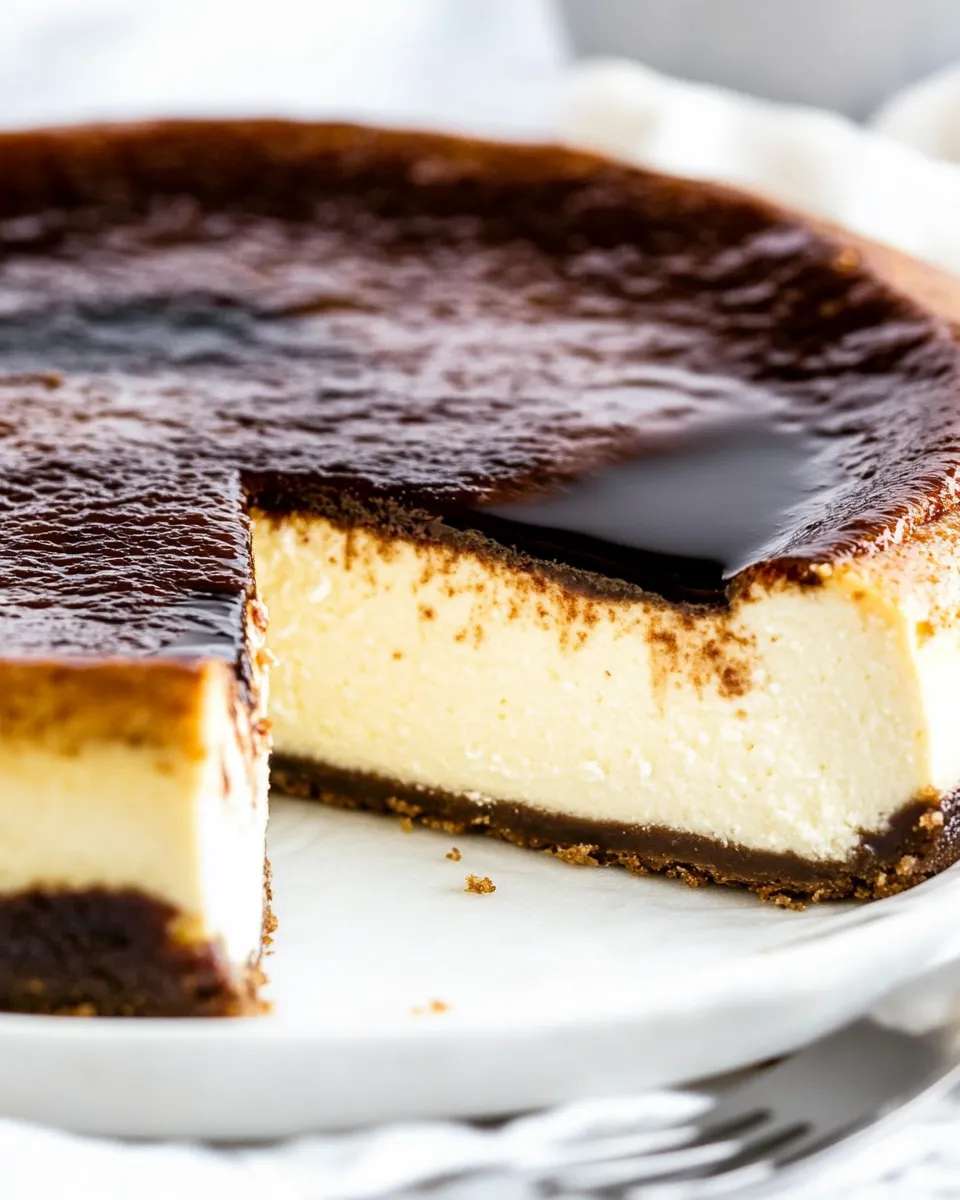
Basque cheesecake hits several pleasure points at once. The deeply caramelized top delivers toasted, almost brûléed flavors that contrast with the luxurious creaminess underneath. People expect delicate, pale cheesecakes; when this one arrives dark and dramatic, it stands out on a dessert table.
It’s also approachable. There’s no crust to worry about, no fiddly water bath, and it’s quick to throw together. Guests often comment on the texture—silky middle, slightly firmer edges—so it feels both indulgent and interesting. It slices cleanly when cooled and is forgiving if you need to make it ahead (see storing tips below).
Dairy-Free/Gluten-Free Swaps
Basque cheesecake is fundamentally dairy-based, but you can make adaptations if needed. Keep in mind that swaps will change texture and flavor.
- For dairy-free: use a full-fat vegan cream cheese and a plant-based cream designed for whipping (some oat or coconut cooking creams work). Expect a different mouthfeel and slightly altered browning.
- For gluten-free: the recipe uses a small amount of all-purpose flour as a stabilizer. Replace the 1/3 cup (40 g) all-purpose flour with an equal weight of a 1:1 gluten-free flour blend that contains xanthan gum, or use 40 g of rice flour if you prefer a single-ingredient swap.
- Vanilla: keep the same flavoring choices—vanilla bean or extract—no quantity change needed.
Appliances & Accessories
- 8-inch cake pan or springform — standard size for the recipe; parchment overhang makes removal easy.
- Electric hand mixer or stand mixer — helps achieve a lump-free cream cheese base quickly.
- Sieve or fine-mesh strainer — for sifting the flour so it incorporates without lumps (optional but useful).
- Baking sheet — to catch any spills from the high-heat bake.
- Wire rack — for staged cooling so the cake sets evenly.
- Spatula — for smoothing the batter and scraping the bowl clean.
Learn from These Mistakes
A few common missteps can make or break the finished cake. I’ll call them out so you can avoid them.
Cold cream cheese
If your cream cheese is not at room temperature, lumps will remain in the batter. Beat it until perfectly smooth before adding the sugar or eggs.
Overmixing after flour
Once you add the flour, mix just until incorporated. Overmixing develops the batter too much and can result in a denser texture.
Skipping parchment or insufficient lining
Parchment is essential here—not only to prevent sticking but to provide the handles you’ll use to lift the cake out of the pan. Press it up the sides and leave a generous overhang.
Undercooking or overcooking
Bake 45 to 50 minutes and look for a deeply browned top with a gently jiggly center. If the center is fully set, it will be dry, not creamy. If the top isn’t dark enough, the signature Basque flavor won’t develop.
Not cooling properly
This cake needs staged cooling. Removing it too soon or chilling it immediately can prevent it from setting properly. Let it cool in the pan for 1 hour, then on a rack for another hour before removing parchment.
Seasonal Ingredient Swaps
While Basque cheesecake is delightful on its own, a few seasonal touches can personalize it without complicating the technique.
- Fresh berries — serve lightly macerated berries alongside slices in spring and summer for brightness.
- Roasted stone fruit — late summer peaches or plums roasted with a touch of sugar make a warm-contrast topping.
- Spiced compote — in fall, think fig or pear compote with a hint of warming spices.
Keep toppings simple so they don’t mask the burnt-sugar notes of the cheesecake’s top.
Chef’s Rationale
I bake Basque cheesecake this way to emphasize contrast and texture. The high oven temperature encourages the Maillard reactions and caramelization that produce the dark, flavorful top. Heavy cream and a modest amount of flour keep the interior custardy and stable, avoiding a soupy center while preventing a cakey crumb.
Using room-temperature ingredients minimizes mixing time and prevents overworking the batter. The simple lineup also keeps the pure dairy flavors forward—vanilla and browned-sugar notes from the top create complexity without needing extra ingredients.
Storing Tips & Timelines
Store leftovers according to how soon you’ll consume them:
- Room temperature — you can keep the cheesecake at room temperature in an airtight container for short-term enjoyment; the recipe notes this option for convenience.
- Refrigerator — if you want to preserve it longer, refrigerate in an airtight container. The cheesecake will keep up to three days in the refrigerator.
- Serving from fridge — Basque cheesecake is best served at room temperature. If chilled, take it out an hour before serving to let it lose the chill and regain that silky mouthfeel.
Basque Cheesecake Q&A
Q: My top isn’t dark enough—what went wrong?
A: Either your oven temperature was too low or the cake didn’t bake long enough. Make sure your oven is fully preheated to 400°F and bake until the top is deeply browned. Every oven runs a little differently, so use color and the gentle jiggle test rather than time alone.
Q: Can I make this in a larger pan?
A: You can, but the baking time and final texture will change. A larger pan will give a thinner cake that cooks faster and may not have the same contrast between deeply browned top and custardy center.
Q: Can I freeze Basque cheesecake?
A: Freezing will affect texture—icy crystals can alter the creamy interior. If you must freeze, wrap slices tightly and freeze for up to one month. Thaw in the refrigerator and bring to room temperature before serving.
Q: Why does it deflate after cooling?
A: The cake puffs during baking because of air and steam. As it cools, the structure settles and the interior firms, which is normal and expected for this style.
Ready, Set, Cook
Make sure your cream cheese is soft, your parchment is generous, and your oven is properly preheated. Follow the steps in order, watch the color, and let the cake cool in stages. The result is one of those desserts that feels sophisticated but is utterly reliable.
When you slice into it and that slightly wobbly center gives way to creamy silk contrasted by a caramelized top, you’ll understand why I keep this recipe in rotation. Happy baking—I’ll be over for a slice.
Basque Cheesecake
Ingredients
Ingredients
- ?1 teaspoonsoftened butter for the pan
- ?24 ouncescream cheese at room temperature
- ?1 200 gcupgranulated sugar
- ?1 vanilla pod (or 2 teaspoons vanilla extract)
- ?3 largeeggs
- ?1/2 teaspoonkosher salt
- ?1 1/2 cupsheavy cream
- ?1/3 40 gcupall-purpose flour
Instructions
Instructions
- Preheat the oven to 400°F. Place a rack in the center of the oven.
- Rub about 1 teaspoon softened butter over the inside of an 8-inch cake pan (or springform). Press a sheet of parchment into the pan, pressing it up the sides and smoothing it so it adheres; leave excess parchment extending above the rim to use as handles. Set the prepared pan aside.
- In a large bowl using an electric hand mixer or stand mixer, beat 24 ounces cream cheese (at room temperature) until smooth and free of lumps.
- Add 1 cup (200 g) granulated sugar and the vanilla: if using a vanilla pod, split it and scrape the seeds into the bowl; if using extract, add 2 teaspoons. Beat until the mixture is smooth and slightly fluffy, about 1 minute.
- Add the 3 large eggs one at a time, beating briefly after each addition just until the egg is incorporated before adding the next.
- Add 1/2 teaspoon kosher salt. With the mixer running on low, pour in 1 1/2 cups heavy cream in a slow, steady stream and mix until combined, about 1 minute.
- Sift in 1/3 cup (40 g) all-purpose flour and mix on low speed just until the flour is incorporated and the batter is smooth. Do not overmix.
- Pour the batter into the prepared pan and smooth the top with a spatula. Gently tap the pan on the counter a few times to release air bubbles and help the batter settle evenly.
- Put the pan on a baking sheet (to catch any possible spills) and transfer to the oven. Bake 45 to 50 minutes, until the top is deeply browned, the cake is puffed, and the center still jiggles slightly when you gently shake the pan.
- Remove the cheesecake from the oven and let it cool in the pan on a wire rack for about 1 hour.
- After 1 hour, lift the cheesecake out of the pan using the parchment overhang and place it on the rack. Let it cool for 1 more hour at room temperature. As it cools it will deflate and firm up.
- Peel off the parchment, slice, and serve at room temperature.
- Store any leftovers in an airtight container at room temperature or in the refrigerator. If refrigerated, the cheesecake will keep up to three days.
Equipment
- 1Stand-up Mixer
- 1Sieve
- 1 8×8-inch cake pan
- 1tea kettle
Notes
If you don’t have a vanilla bean pod, just use 2 teaspoons of extract.
The butter in the pan seems strange because we’re using parchment but it helps with the parchment sticking to the pan and not moving.
Make sure the parchment paper goes up the sides of the cake pan.