
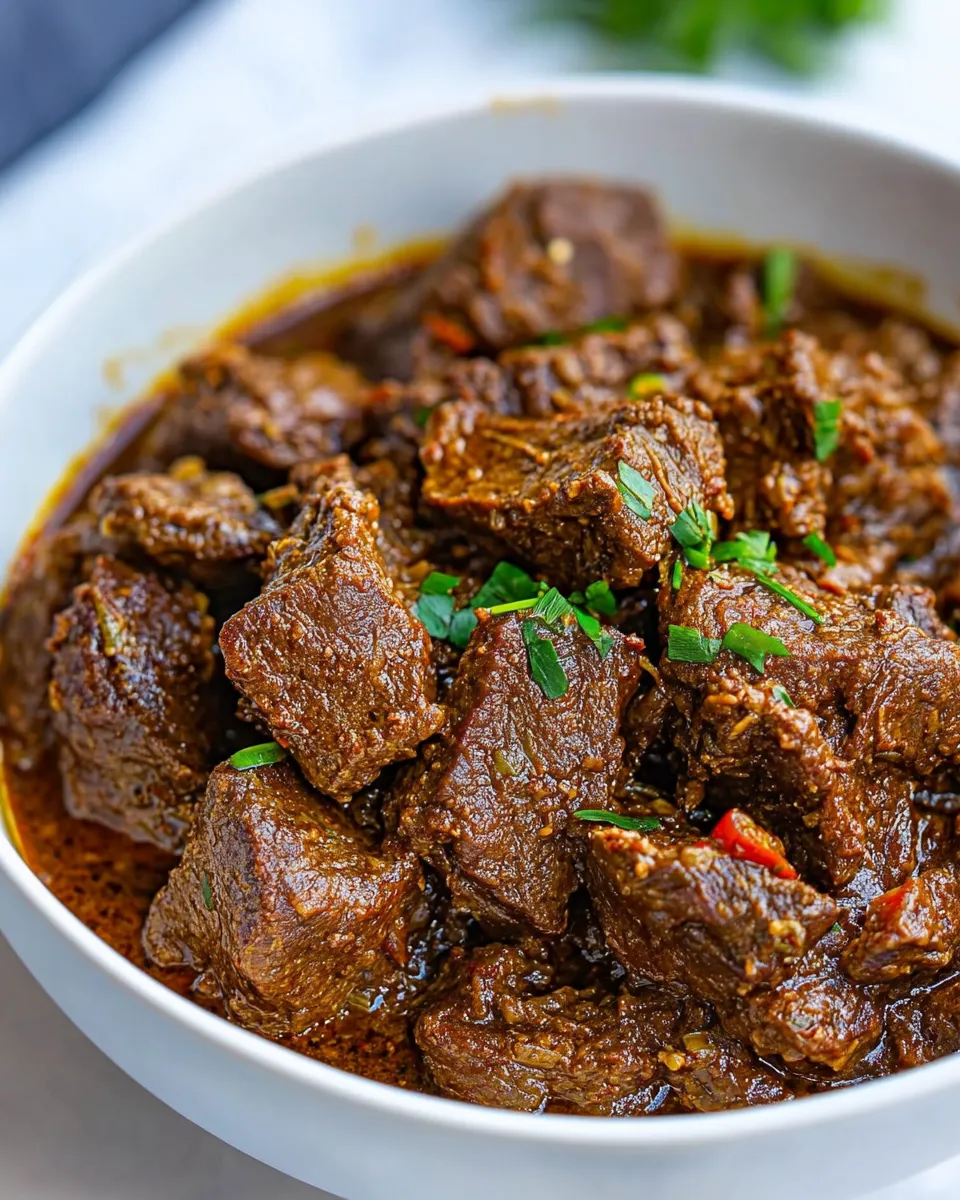
I make Beef Rendang on slow Sundays and when I need a dish that tastes like it took all day, even when most of the work fits into an hour of hands-on time. This is a rich, spiced beef stew from Indonesia that reduces until the coconut milk caramelizes and clings to melt-in-your-mouth chunks of beef. It’s not quick, but it’s worth the patience.
In this post I’ll walk you through the clear steps, ingredient intentions, and a few sensible swaps so you can get the same deep flavor whether you cook it in a Dutch oven, a heavy pot, or a pressure cooker. I’ll also cover what commonly goes wrong and how to fix it on the fly.
Expect practical notes, not theory. I want you to serve an impressive, balanced Beef Rendang without second-guessing halfway through the simmer.
The Essentials
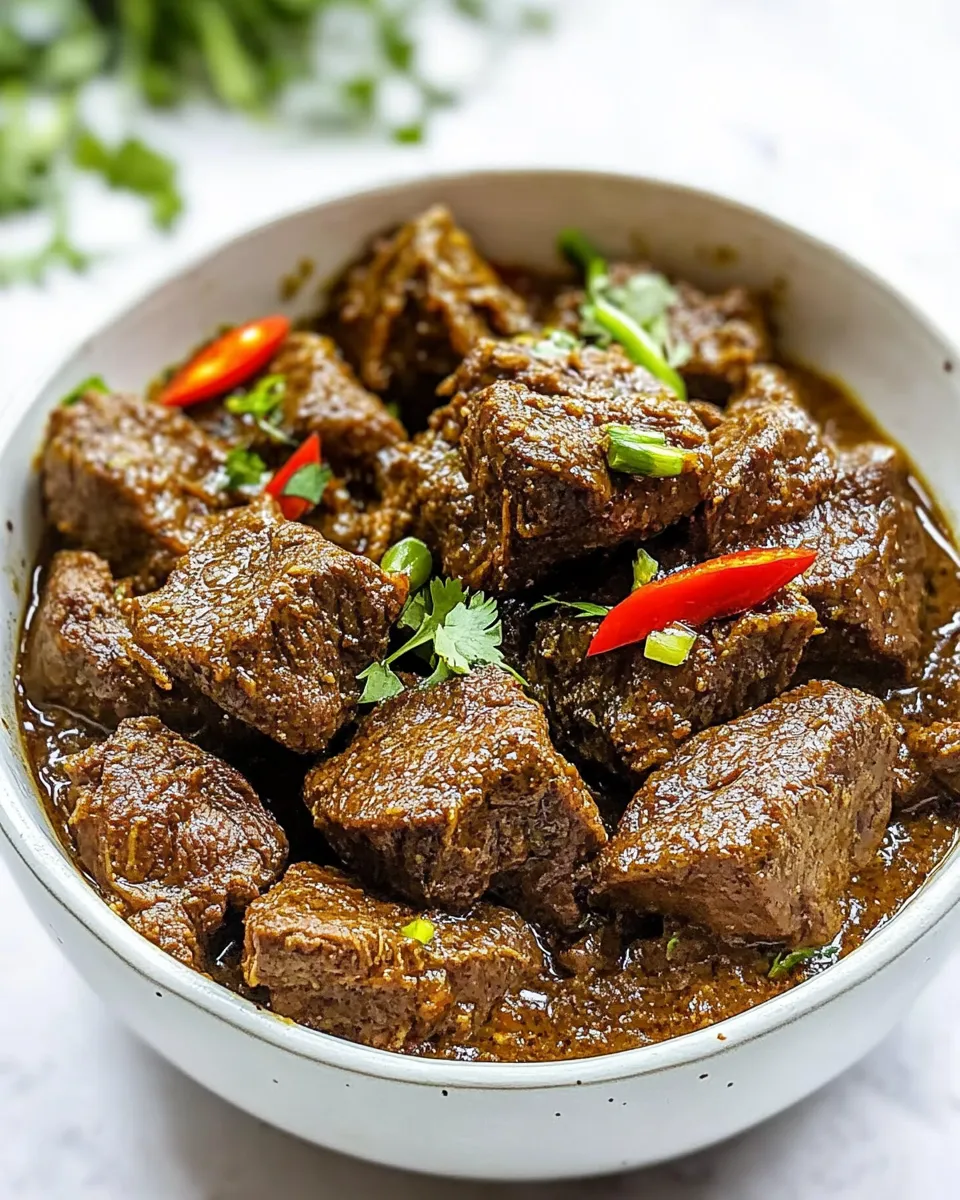
Beef Rendang is all about layering: a pureed spice paste, a good searing, full-fat coconut milk, aromatics, and long, gentle reduction. The paste gives the backbone. Browning the beef adds Maillard complexity. Slow simmering concentrates the coconut and spices until the sauce clings to the meat.
Key pieces to remember as you start: use good stewing beef (chuck is ideal), be patient during the long simmer, and taste for salt toward the end—salt and sugar balance the coconut’s richness and the tamarind’s brightness.
Ingredients
- 10 shallots (peeled and roughly chopped) — form the aromatic base of the spice paste; they add sweetness and depth.
- 6 cloves garlic (peeled) — adds savory punch and rounds the aromatics.
- 4 red chilies (seeded and chopped) — control heat by keeping or removing seeds; they give color and warmth.
- 1 inch piece ginger (peeled and chopped) — bright, peppery note to lift the coconut richness.
- 1 inch piece galangal (peeled and chopped) — earthy, citrusy root that differentiates rendang from other curries.
- 2 stalks lemongrass (white part only, chopped) — white parts are tender and fragrant; they go into the spice paste.
- 3 tablespoons vegetable oil — for searing and cooking the paste; neutral oil prevents burning.
- 2 pounds chuck beef (or stewing meat, cut into bite-size pieces) — tough, marbled cuts break down into tender bites when simmered.
- 28 ounces coconut milk (2 cans) — full-fat coconut milk is essential for the sauce to reduce and caramelize properly.
- 1 cup water — to adjust braising liquid and help the beef cook evenly.
- 2 stalks lemongrass (bruised) — whole bruised stalks add fragrance while simmering; discard before serving.
- 6 kaffir lime leaves (fresh or dry, cut into thin strips) — bright, floral citrus note; thin strips disperse flavor without big leaf pieces.
- 1 cinnamon stick — warm, woody backbone to round the spices.
- 3 star anise — sweet-aniseed lift; use whole and remove later.
- 6 cardamom pods — cracked so their seeds can perfume the sauce without being gritty.
- 1 teaspoon turmeric — earthiness and color; ground form blends easily.
- 1 teaspoon ground coriander — citrusy, nutty warmth that harmonizes with turmeric and cardamom.
- 1 teaspoon tamarind paste — provides the tang to balance fat and sweetness; a little goes a long way.
- 2 tablespoons brown sugar — helps the sauce caramelize and balances tamarind’s tartness.
- salt (to taste) — season at the end; salt makes all flavors pop.
Cooking (Beef Rendang): The Process
- Add the shallots, garlic, seeded red chilies, chopped ginger, chopped galangal, and the white parts of the chopped lemongrass (the 2 stalks labeled “white part only”) to a blender or food processor. Blend until a smooth paste forms, scraping the sides as needed.
- Heat the 3 tablespoons vegetable oil in a large Dutch oven or heavy-bottomed pot over medium-high heat until shimmering.
- Working in two batches, add half of the 2 pounds of beef to the pot and brown on all sides (about 4–6 minutes). Transfer the browned beef to a plate and brown the remaining beef the same way.
- Reduce the heat to medium. Add the spice paste to the pot and cook, stirring frequently, until fragrant and the paste darkens slightly, about 5–7 minutes.
- Return the browned beef and any accumulated juices to the pot. Add the 28 ounces coconut milk, 1 cup water, the 2 bruised stalks of lemongrass, 6 kaffir lime leaves (cut into thin strips), 1 cinnamon stick, 3 star anise, 6 cardamom pods, 1 teaspoon turmeric, 1 teaspoon ground coriander, 1 teaspoon tamarind paste, and 2 tablespoons brown sugar. Stir to combine and season with salt to taste.
- Bring the mixture to a gentle simmer, then reduce the heat to low. Simmer uncovered for 2 to 3 hours, stirring occasionally and scraping the bottom of the pot to prevent sticking, until the beef is very tender and the sauce has thickened.
- Remove and discard the cinnamon stick, star anise, and the bruised lemongrass stalks. Taste and adjust salt if needed.
- Serve the beef warm.
Why I Love This Recipe
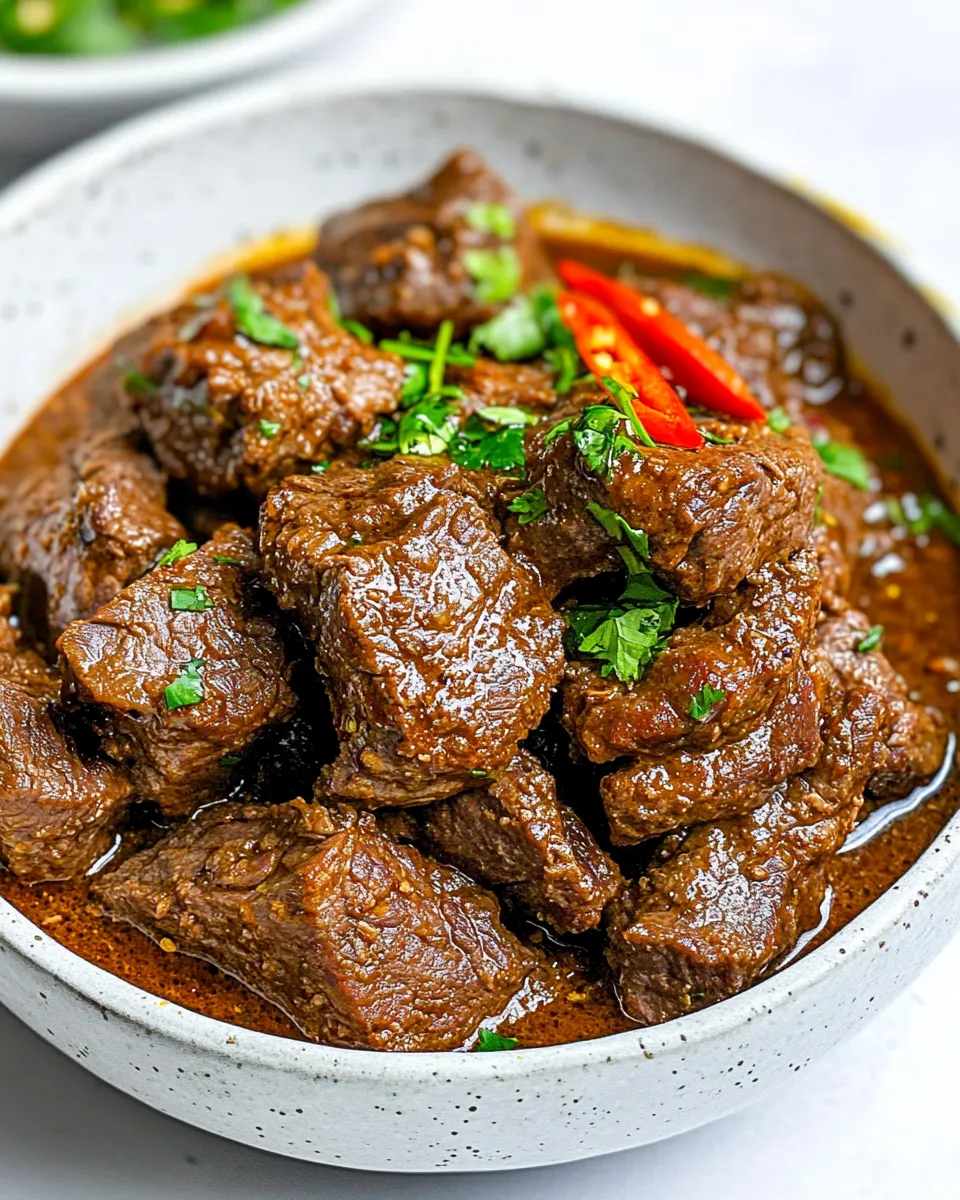
I love this Beef Rendang because its flavors develop with time and attention. The long simmer transforms simple ingredients—onions, garlic, chilies, coconut—into something concentrated and deeply savory. Each bite offers layers: the sweetness from shallots and brown sugar, the tang from tamarind, the brightness from kaffir lime leaves and lemongrass, and the warmth from cinnamon and cardamom.
It’s a show-stopping dish for guests but also forgiving. You can start it in the morning and let it reduce slowly while you do other things. Leftovers are even better; the flavors marry overnight and intensify.
Texture-Safe Substitutions
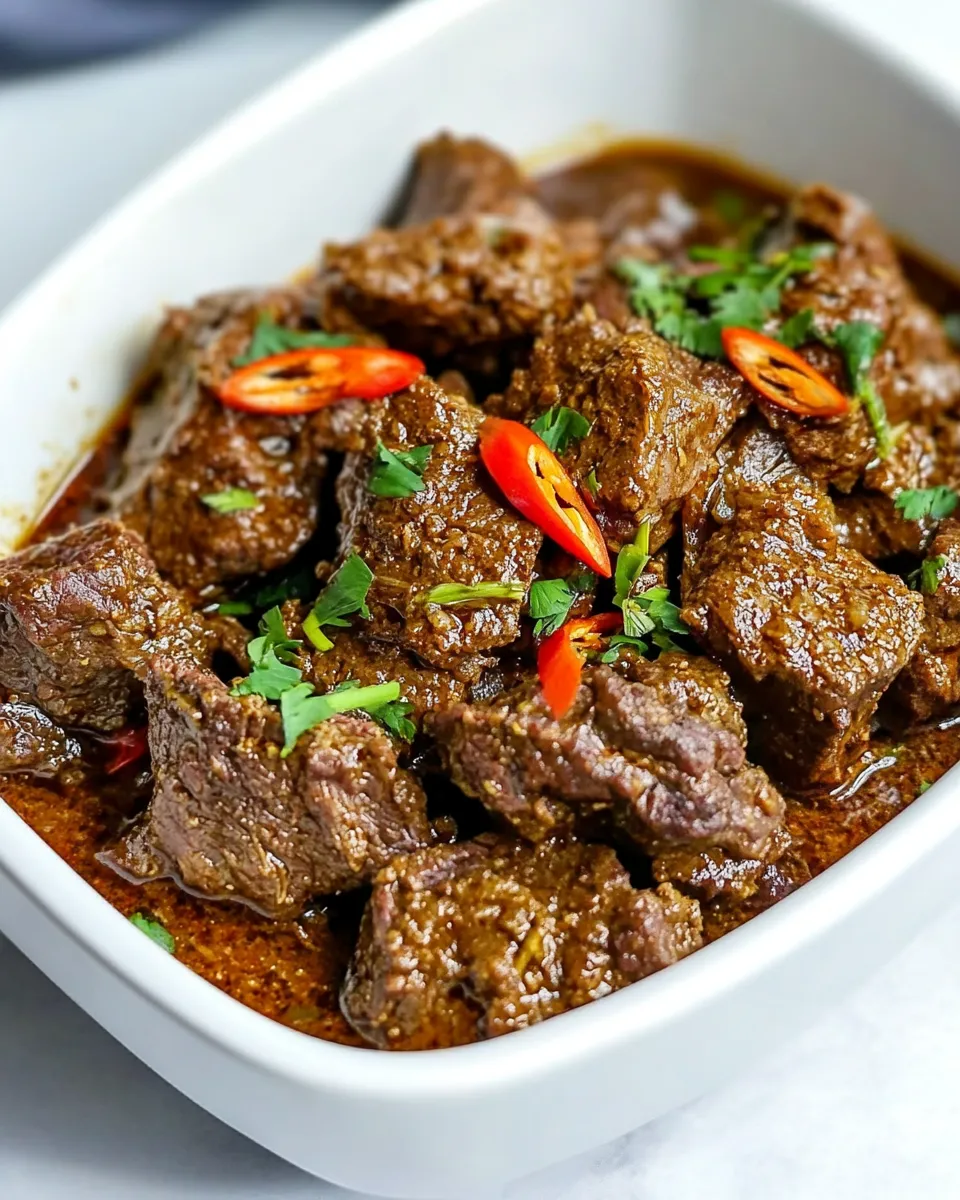
- Beef cut — if you don’t have chuck, use another well-marbled stewing cut. Avoid lean cuts; they dry out during long simmering.
- Coconut milk — do not use low-fat if you want the classic thick, caramelized coating. Full-fat canned coconut milk is preferred.
- Galangal — if unavailable, you can use a little extra ginger, but the flavor will be less floral and slightly different.
- Kaffir lime leaves — if fresh aren’t available, use dried; crush them a bit before adding to release aroma.
Must-Have Equipment
- Large Dutch oven or heavy-bottomed pot — a heavy base prevents scorching during long simmering.
- Blender or food processor — to make a smooth, evenly textured spice paste.
- Wooden spoon or spatula — for scraping the bottom and stirring without scratching the pot.
- Long-handled tongs or a frying spoon — helpful when browning meat in batches to avoid splatter.
Things That Go Wrong
Burning the paste: The spice paste can catch if the heat is too high or if the pot is dry. Cook the paste on medium, stir constantly, and add a splash of water or a little coconut milk if it looks like it’s sticking.
Touching the salt too early: Salt intensifies during reduction. If you over-salt early, there’s little you can do other than add more coconut milk or water, which dilutes flavor. Wait until the sauce has thickened to adjust seasoning.
Tough beef: If you don’t simmer long enough, the beef will remain tough. Keep the heat low and give it the full 2 to 3 hours, checking tenderness with a fork. A pressure cooker can reduce time, but watch for differences in final texture and sauce concentration.
Allergy-Friendly Swaps
- Nut-free — natural coconut is allowed for nut allergies in most cases, but confirm with guest sensitivities; coconut is botanically a drupe, not a true tree nut. If coconut is a concern, this recipe relies heavily on coconut milk and has no simple swap that preserves the same character.
- Garlic/Onion sensitivity — omitting shallots and garlic changes the flavor drastically. If you must, increase ginger and add a little extra tamarind and spice to compensate, though the result will not be traditional.
- Nightshades — red chilies are a core part of the paste. For nightshade sensitivities, omit chilies and add a touch of smoked paprika for color and depth, while acknowledging the flavor will differ.
Flavor Logic
Each ingredient has a job. Shallots and garlic build the savory-sweet base. Chilies give heat and color. Ginger and galangal add fresh spice and an aromatic lift. Lemongrass and kaffir lime leaf contribute citrus top-notes that cut through the coconut’s richness. The whole spices—cinnamon, star anise, cardamom—add warm, complex back-notes that keep the sauce from tasting flat. Turmeric and coriander amplify earthiness and color. Tamarind provides the acid that balances fat and sweetness, and brown sugar helps the sauce reach that glossy, almost caramel-browned finish.
Technically this dish is a slow reduction: as water evaporates, the coconut solids and sugar concentrate and finally caramelize slightly, clinging to the beef and creating that sticky, intensely flavored coating that defines rendang.
Prep Ahead & Store
Make the spice paste a day ahead and keep it refrigerated in an airtight container; it actually gains depth. You can also brown the beef and store it, then finish the dish the next day which shortens hands-on time.
Store leftovers in an airtight container in the refrigerator for up to 4 days. Reheat gently on the stove over low heat with a splash of water if the sauce has solidified. Rendang freezes well for up to 3 months—thaw overnight in the fridge and reheat slowly.
Reader Q&A
Q: Can I use a pressure cooker to speed this up?
A: Yes. Use the sealing function to cook for about 45–60 minutes depending on your model, then finish the sauce over medium heat to reduce and thicken. Watch carefully; the sauce concentrates faster in an uncovered pot, so be ready to reduce less if you used a pressure cooker.
Q: My sauce never thickens—what did I do wrong?
A: Likely three causes: too much liquid relative to heat and time, low fat coconut milk, or you disturbed the simmer with frequent, vigorous stirring that cools the pot. Increase the heat slightly and simmer uncovered until the liquid reduces; full-fat coconut milk helps the sauce thicken properly.
Q: How spicy will this be?
A: Moderately spicy by default. Leaving seeds out of the red chilies controls a lot of heat. If you want milder, reduce the chilies or remove all seeds. For more heat, keep seeds or add a small dried chile or two.
That’s a Wrap
Beef Rendang rewards attention and time. Follow the paste, brown well, and let the pot do the rest. Taste and adjust at the end, and remember: patience is the shortcut to great depth. Serve with plain rice, a side of steamed vegetables, or some quick pickled cucumbers to cut through the richness. Make a pot, enjoy the leftovers, and you’ll see why this slow-cooked dish has such a devoted following.
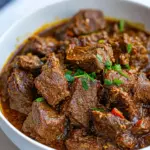
Beef Rendang
Ingredients
Ingredients
- 10 shallots peeled and roughly chopped
- 6 clovesgarlic peeled
- 4 red chilies seeded and chopped
- 1 inch pieceginger peeled and chopped
- 1 inch piecegalangal peeled and chopped
- 2 stalkslemongrass white part only, chopped
- 3 tablespoonsvegetable oil
- 2 poundschuck beef or stewing meat, cut into bite-size pieces
- 28 ouncescoconut milk 2 cans
- 1 cupwater
- 2 stalkslemongrass bruised
- 6 kaffir lime leaves fresh or dry, cut into thin strips
- 1 cinnamon stick
- 3 star anise
- 6 cardamom pods
- 1 teaspoonturmeric
- 1 teaspoonground coriander
- 1 teaspoontamarind paste
- 2 tablespoonsbrown sugar
- salt to taste
Instructions
Instructions
- Add the shallots, garlic, seeded red chilies, chopped ginger, chopped galangal, and the white parts of the chopped lemongrass (the 2 stalks labeled "white part only") to a blender or food processor. Blend until a smooth paste forms, scraping the sides as needed.
- Heat the 3 tablespoons vegetable oil in a large Dutch oven or heavy-bottomed pot over medium-high heat until shimmering.
- Working in two batches, add half of the 2 pounds of beef to the pot and brown on all sides (about 4–6 minutes). Transfer the browned beef to a plate and brown the remaining beef the same way.
- Reduce the heat to medium. Add the spice paste to the pot and cook, stirring frequently, until fragrant and the paste darkens slightly, about 5–7 minutes.
- Return the browned beef and any accumulated juices to the pot. Add the 28 ounces coconut milk, 1 cup water, the 2 bruised stalks of lemongrass, 6 kaffir lime leaves (cut into thin strips), 1 cinnamon stick, 3 star anise, 6 cardamom pods, 1 teaspoon turmeric, 1 teaspoon ground coriander, 1 teaspoon tamarind paste, and 2 tablespoons brown sugar. Stir to combine and season with salt to taste.
- Bring the mixture to a gentle simmer, then reduce the heat to low. Simmer uncovered for 2 to 3 hours, stirring occasionally and scraping the bottom of the pot to prevent sticking, until the beef is very tender and the sauce has thickened.
- Remove and discard the cinnamon stick, star anise, and the bruised lemongrass stalks. Taste and adjust salt if needed.
- Serve the beef warm.
Equipment
- KitchenAid 7-cup Food Processor
Notes
Customize heat level:Adjust the amount of red chilies according to your preferred spice level. If you like your Beef Rendang milder, remove the seeds and membranes from the chilies or use fewer chilies. For a spicier version, add more chilies or even incorporate some Thai bird’s eye chilies.
Toast whole spices:Before adding the cinnamon stick, star anise, and cardamom pods to the pot, lightly toast them in a dry pan over low heat for a couple of minutes. This will help release their natural oils and enhance the flavor of the dish.
Be patient with the cooking process:Beef Rendang is a slow-cooked dish, and the key to achieving tender beef and a rich, flavorful sauce is allowing it to simmer gently for 2-3 hours. Make sure to stir occasionally to prevent the sauce from sticking or burning.
Remove excess fat:For a lighter version of the dish, you can skim off some of the fat that rises to the surface during cooking. Alternatively, you can chill the cooked Beef Rendang overnight in the refrigerator, and the fat will solidify on the surface, making it easy to remove before reheating and serving.
Make it ahead of time:Beef Rendang tastes even better the next day, as the flavors have more time to meld and develop. Make the dish a day in advance, store it in the refrigerator, and reheat gently over low heat before serving.
Garnish for added flavor:Garnish your Beef Rendang with fresh cilantro and a squeeze of lime juice to add a burst of freshness and acidity that complements the rich flavors of the dish.