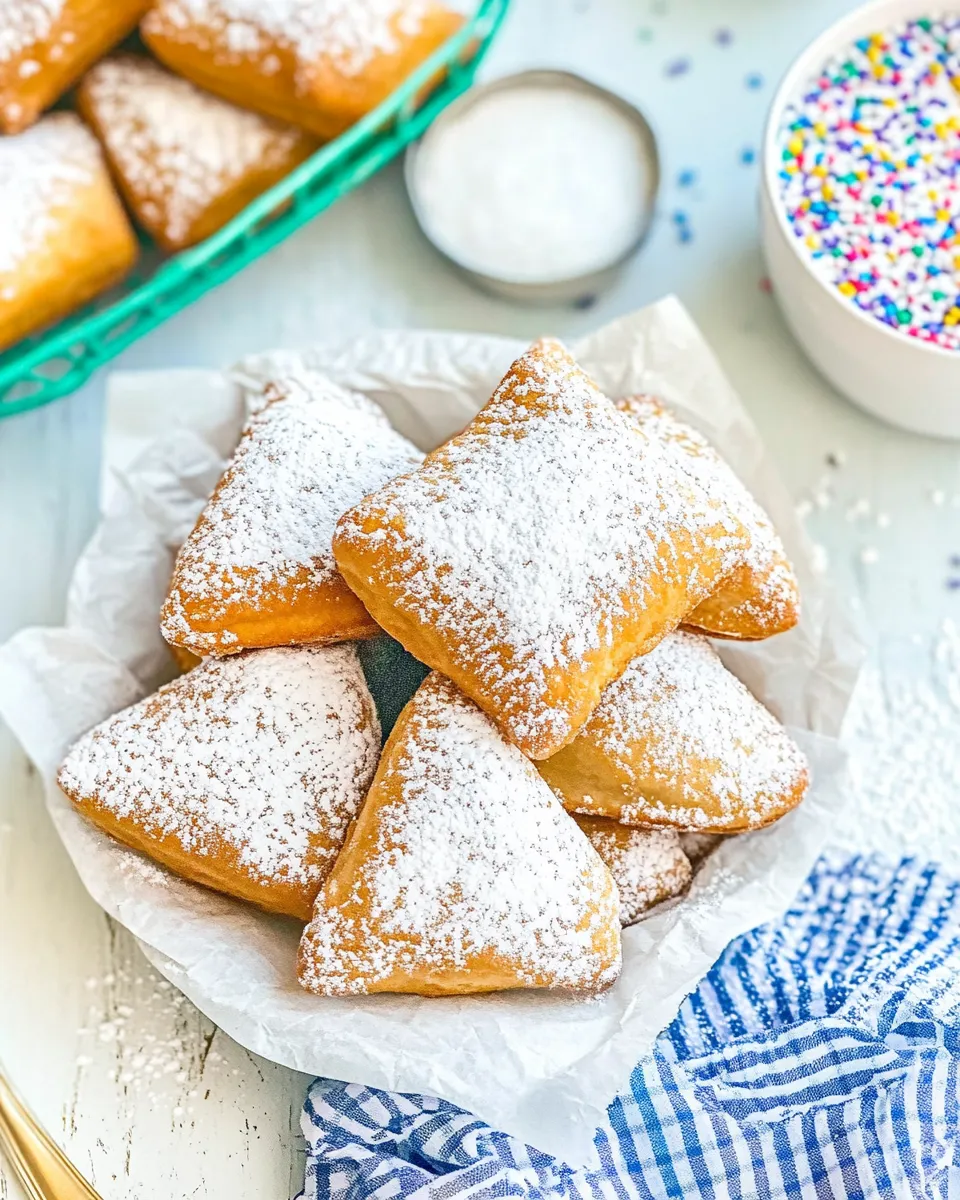
Beignets are one of those treats that make a morning feel like a celebration. Crisp on the outside, pillowy on the inside, and slicked with powdered sugar, they deliver comfort in a few bites. I make these when I want something simple that still feels special — and yes, they come together with pantry-friendly ingredients.
This recipe follows a classic yeast dough technique. Letting the dough rest and rise is the part that does the heavy lifting for you, so plan a little time. The payoff is airy beignets that puff and float in hot oil, finishing with a generous snow of confectioners’ sugar.
I’ll walk you through the exact steps, the gear you’ll want on hand, and the small mistakes that make the difference between a great beignet and a disappointing one. Read through once, set up your station, and you’ll have warm beignets in a couple of hours.
What Goes In
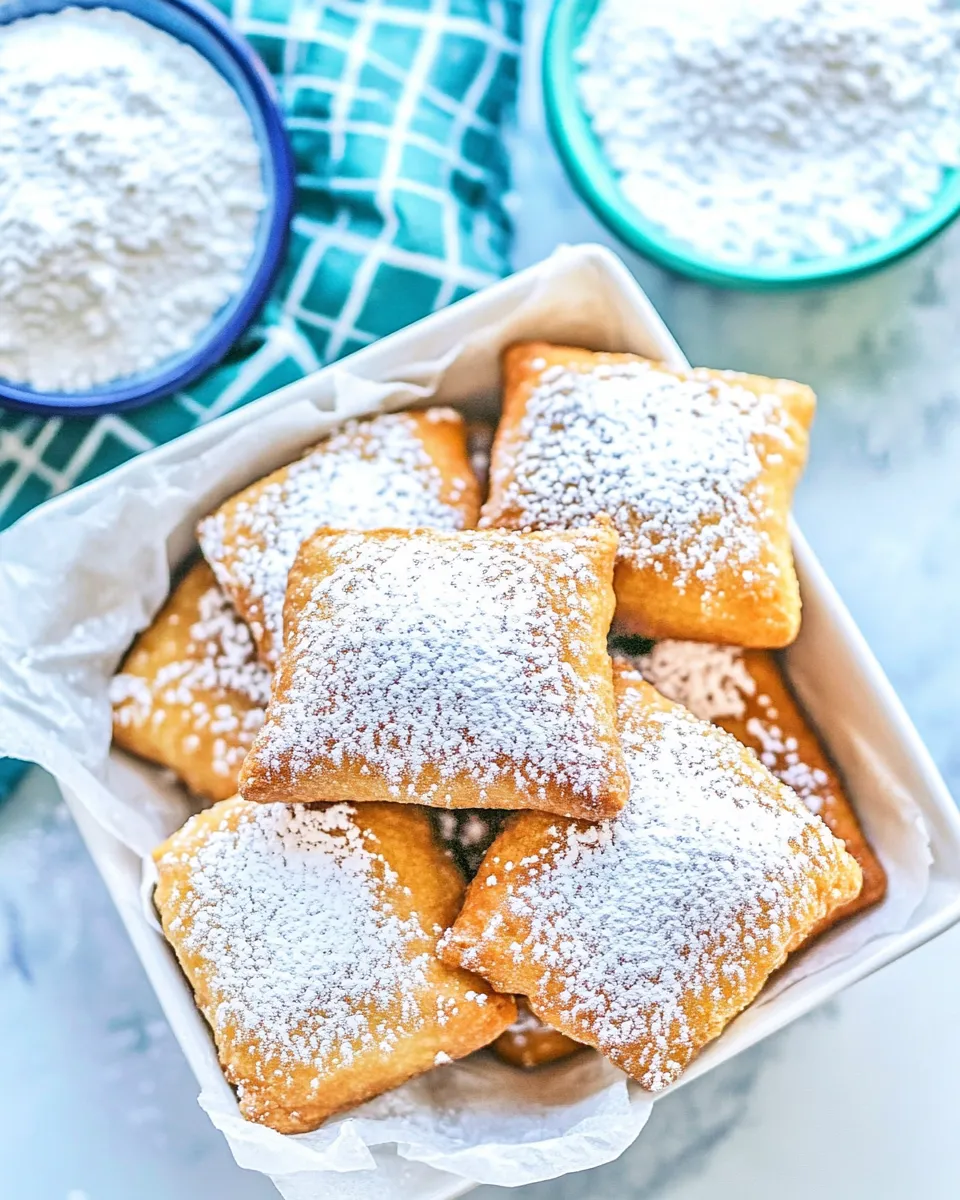
Ingredients
- 3/4 cup warm water (105–110 degrees F) — warms the yeast and starts fermentation; temperature matters.
- 2 1/4 teaspoons active dry yeast — this is one standard size yeast packet; it makes the dough rise.
- 1/3 cup granulated sugar — feeds the yeast and lightly sweetens the dough.
- 2 eggs — room temperature; they enrich the dough and help with structure.
- 1/2 cup whole milk — room temperature; adds richness and tenderness.
- 1/2 teaspoon vanilla — small flavor boost; optional but worth it.
- 4 cups all-purpose flour — have some extra for rolling if needed; provides structure for the beignets.
- 3 tablespoons salted butter — melted; adds flavor and tenderizes the dough.
- 4–8 cups vegetable oil — for frying; use the amount needed to reach 2 inches in your pot.
- 2 cups powdered (confectioners’) sugar — for dusting while the beignets are still warm.
Beignet — Do This Next
- Remove eggs and milk from the refrigerator so they reach room temperature before you start (they are listed as room temperature in the ingredients).
- In a large bowl, pour 3/4 cup warm water (105–110°F). Sprinkle 2 1/4 teaspoons active dry yeast and 1/3 cup granulated sugar over the water and whisk briefly to combine. Cover the bowl loosely with a towel and let sit 5–10 minutes, until the mixture is slightly foamy. If it does not foam, the yeast may be inactive or the water too hot.
- Add 2 eggs (room temperature), 1/2 cup whole milk (room temperature), and 1/2 teaspoon vanilla to the foamy yeast mixture. Whisk until evenly combined.
- Add 2 cups (half) of the 4 cups all-purpose flour to the wet mixture and stir to combine.
- Stir in 3 tablespoons salted butter, melted.
- Add the remaining 2 cups all-purpose flour and mix until a shaggy dough forms.
- Turn the dough out onto a lightly floured surface (use some of the extra flour noted in the ingredients) and knead by hand until the dough is smooth and elastic, about 5–8 minutes. If the dough is too sticky, add additional flour one tablespoon at a time until it is manageable.
- Lightly oil a clean bowl with a small amount of the vegetable oil listed in the ingredients. Place the kneaded dough in the oiled bowl, turning once so the dough surface is lightly coated with oil.
- Cover the bowl with plastic wrap or a warm, damp towel and set it in a warm, draft-free place. Allow the dough to rise until doubled in size, about 1–2 hours.
- After the dough has doubled, gently deflate it (press down to release the air). Turn it out onto a lightly floured surface and roll the dough to 1/4 inch thickness.
- Cut the rolled dough into 2 1/2 inch squares (a pizza cutter works well). Set the cut pieces on the floured surface while you heat the oil. Keep the surface lightly floured so the pieces do not stick.
- Pour 4–8 cups vegetable oil into a large, heavy pot so the oil is at least 2 inches deep (use the amount needed to reach that depth for your pot). Heat the oil to 370°F and monitor the temperature with a thermometer. Maintain 370°F while frying.
- Fry the beignets in batches without crowding the pot. Carefully lower a few pieces into the oil; they should rise to the surface quickly. Fry about 1–2 minutes per side, spooning hot oil over the top as needed, and turn once so both sides are golden (not brown). Adjust heat as needed to keep the oil at 370°F.
- Using a slotted spoon or spider, remove the beignets and drain on a plate lined with paper towels.
- While still warm, generously dust the beignets with 2 cups powdered (confectioners’) sugar. Serve hot.
Reasons to Love Beignet
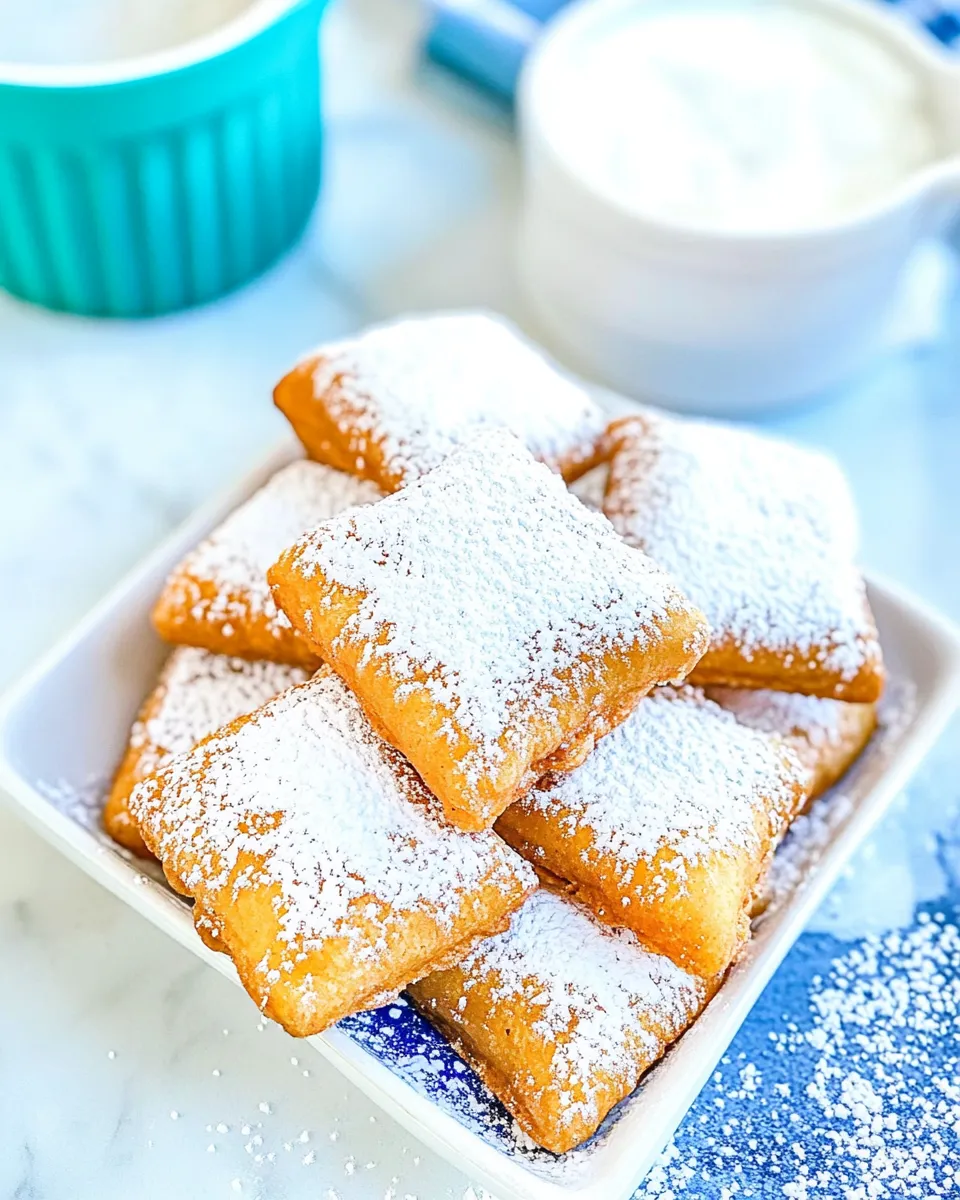
They’re fast to prepare in active time. Mixing and kneading take under 30 minutes; most of the wait is a hands-off rise. That makes this an ideal weekend morning project when you want a treat without fuss.
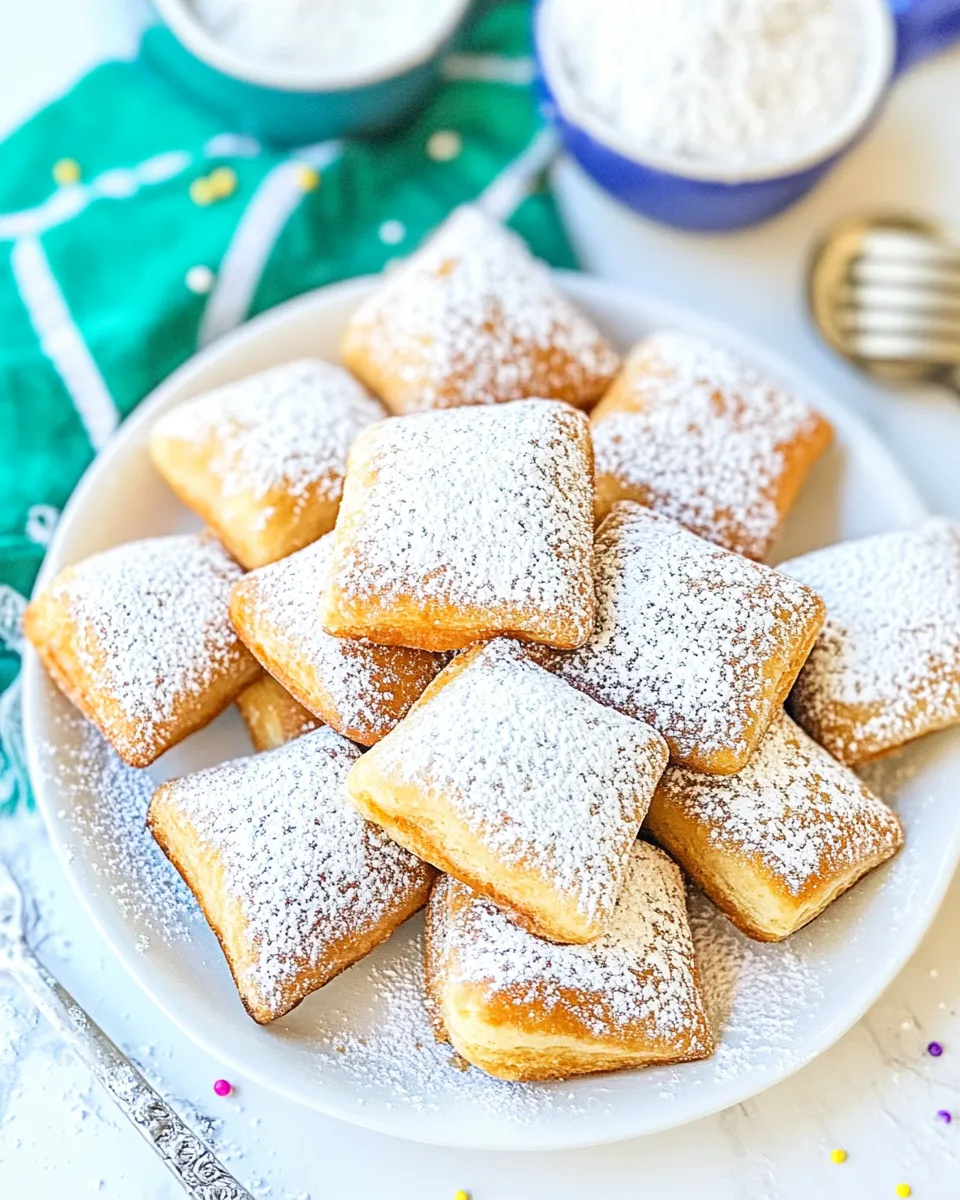
Texture is the headline here: thin, golden crust with an airy interior. The small amount of sugar gives a faint sweetness to the dough, and the powdered sugar finish adds the showy, melting exterior bite. Serve them hot and they’re unforgettable.
Finally, they scale well. Double the dough for a crowd or halve it to test the method. The technique is forgiving if you watch the oil temperature and don’t overbrown.
Budget & Availability Swaps
- Milk: if you don’t have whole milk, use the milk you have on hand at room temperature — results will be slightly less rich but still tasty.
- Butter: if salted butter isn’t available, use unsalted and add a tiny pinch of salt elsewhere or skip; the dough isn’t heavily salted so flavor will still be fine.
- Vegetable oil amount: the range 4–8 cups accounts for pot size. Use what’s needed to reach a 2-inch depth so you don’t waste oil in a small pot.
- Powdered sugar: you can dust less liberally if you want fewer added calories; it won’t harm the structure, only the finish.
What’s in the Gear List
- Large mixing bowl — for proofing and mixing the dough.
- Whisk or fork — to combine the yeast and wet ingredients.
- Measuring cups and spoons — accurate yeast and liquid measures matter.
- Thermometer — to check water and oil temperature (very important for the oil at 370°F).
- Heavy pot (saucepan or Dutch oven) — deep enough for 2 inches of oil and stable on your burner.
- Slotted spoon or spider — to remove the beignets safely from the oil.
- Rolling pin and pizza cutter or sharp knife — to roll the dough and cut 2 1/2 inch squares.
- Paper towels and a plate — for draining fried beignets.
Mistakes That Ruin Beignet
- Using water that’s too hot when activating yeast — it kills the yeast; 105–110°F is the safe window.
- Skipping room-temperature eggs and milk — cold ingredients slow down the rise and make a dense dough.
- Overcrowding the fryer — that drops oil temperature and yields soggy, oily beignets.
- Letting the oil run too hot — if the oil browns the beignets before they cook through, the interior will be underdone.
- Rolling the dough too thin or too thick — 1/4 inch is the target for consistent puff and cooking time.
- Not dusting while warm — waiting until they cool makes the powdered sugar less likely to stick and look less appealing.
Nutrition-Minded Tweaks
- Reduce powdered sugar dusting to save calories; serve with a light dusting and offer extra at the table for those who want it.
- Use the minimum oil depth required for safe frying to reduce total oil used per batch and the amount absorbed.
- Watch portion size — these are rich, so keeping them as occasional treats helps balance a regular diet.
Notes from the Test Kitchen
Timing and proofing
Find a warm, draft-free spot for the first rise. In a cool kitchen the rise can take closer to two hours; in a warmer one it will be faster. The dough should roughly double — don’t over-proof it or the dough will collapse when fried.
Frying notes
Maintain 370°F as closely as possible. A few degrees up or down changes cooking time and oil absorption. I check between batches and adjust the heat so the oil returns to temperature before adding the next round.
Texture tips
Knead until smooth and elastic. This usually takes 5–8 minutes by hand. The dough will be tacky but workable; add flour only one tablespoon at a time if it’s too sticky.
Storage & Reheat Guide
Beignets are best fresh but you can store them for a day.
- Room temperature: Place in a single layer on a wire rack with a loose cover for up to 24 hours. They will soften and lose that freshly-fried crispness.
- Reheating: Reheat gently in a 300°F oven for 5–8 minutes to crisp briefly. Don’t microwave — it makes them gummy.
- Freezing: Not recommended after frying; frozen and reheated fried doughs rarely regain the original texture.
Top Questions & Answers
Why didn’t my yeast foam?
Either the water was too hot or too cool, or the yeast is old. Check the water temperature (105–110°F) and use fresh yeast. If there’s no foam after 10 minutes, start again with new yeast.
How do I know the oil is the right temperature?
Use a thermometer and wait until it stabilizes at 370°F. If you don’t have a thermometer, test with one piece of dough: it should rise to the surface quickly and sizzle steadily without browning too fast.
Can I make the dough ahead of time?
You can refrigerate the dough after the first knead for a slow cold rise overnight, but you’ll need to bring it to room temperature and let it finish rising before rolling and cutting. This changes the timeline but develops flavor.
Why are my beignets greasy?
Oil temperature was likely too low or pieces were crowded. Heat the oil back to 370°F between batches and don’t overcrowd the pot so the temperature stays steady.
Time to Try It
Set aside a morning when you can enjoy the process — the hands-off rising time is perfect for coffee and a kitchen playlist. Follow the steps, respect the temperatures, and you’ll end up with golden, airy beignets that melt under a generous dusting of powdered sugar. Make a small batch first if you like; once you’ve mastered the timing and temperature, you’ll be making them regularly.

Beignet Recipe
Ingredients
Ingredients
- 3/4 cupwarm water105-110 degrees F
- 2 1/4 teaspoonsactive dry yeastthis is one standard size yeast packet
- 1/3 cupgranulated sugar
- 2 eggsroom temperature
- 1/2 cupwhole milkroom temperature
- 1/2 teaspoonvanilla
- 4 cupsall-purpose flourhave some extra for rolling if needed
- 3 tablespoonssalted buttermelted
- 4-8 cupsvegetable oilfor frying
- 2 cupspowdered sugar
Instructions
Instructions
- Remove eggs and milk from the refrigerator so they reach room temperature before you start (they are listed as room temperature in the ingredients).
- In a large bowl, pour 3/4 cup warm water (105–110°F). Sprinkle 2 1/4 teaspoons active dry yeast and 1/3 cup granulated sugar over the water and whisk briefly to combine. Cover the bowl loosely with a towel and let sit 5–10 minutes, until the mixture is slightly foamy. If it does not foam, the yeast may be inactive or the water too hot.
- Add 2 eggs (room temperature), 1/2 cup whole milk (room temperature), and 1/2 teaspoon vanilla to the foamy yeast mixture. Whisk until evenly combined.
- Add 2 cups (half) of the 4 cups all-purpose flour to the wet mixture and stir to combine.
- Stir in 3 tablespoons salted butter, melted.
- Add the remaining 2 cups all-purpose flour and mix until a shaggy dough forms.
- Turn the dough out onto a lightly floured surface (use some of the extra flour noted in the ingredients) and knead by hand until the dough is smooth and elastic, about 5–8 minutes. If the dough is too sticky, add additional flour one tablespoon at a time until it is manageable.
- Lightly oil a clean bowl with a small amount of the vegetable oil listed in the ingredients. Place the kneaded dough in the oiled bowl, turning once so the dough surface is lightly coated with oil.
- Cover the bowl with plastic wrap or a warm, damp towel and set it in a warm, draft-free place. Allow the dough to rise until doubled in size, about 1–2 hours.
- After the dough has doubled, gently deflate it (press down to release the air). Turn it out onto a lightly floured surface and roll the dough to 1/4 inch thickness.
- Cut the rolled dough into 2 1/2 inch squares (a pizza cutter works well). Set the cut pieces on the floured surface while you heat the oil. Keep the surface lightly floured so the pieces do not stick.
- Pour 4–8 cups vegetable oil into a large, heavy pot so the oil is at least 2 inches deep (use the amount needed to reach that depth for your pot). Heat the oil to 370°F and monitor the temperature with a thermometer. Maintain 370°F while frying.
- Fry the beignets in batches without crowding the pot. Carefully lower a few pieces into the oil; they should rise to the surface quickly. Fry about 1–2 minutes per side, spooning hot oil over the top as needed, and turn once so both sides are golden (not brown). Adjust heat as needed to keep the oil at 370°F.
- Using a slotted spoon or spider, remove the beignets and drain on a plate lined with paper towels.
- While still warm, generously dust the beignets with 2 cups powdered (confectioners’) sugar. Serve hot.
Equipment
- Large Bowl
- Whisk
- towel
- Rolling Pin
- Pizza Cutter
- large heavy pot
- Thermometer
- Slotted spoon or spider
- Paper Towels
Notes
Temperature– I highly recommend acandy thermometer. It will help both in getting the temperature where you need it for the water, to activate the yeast, and for the oil. You can pick them up online or find them at your grocery or big box stores. They are inexpensive and extremely helpful.