
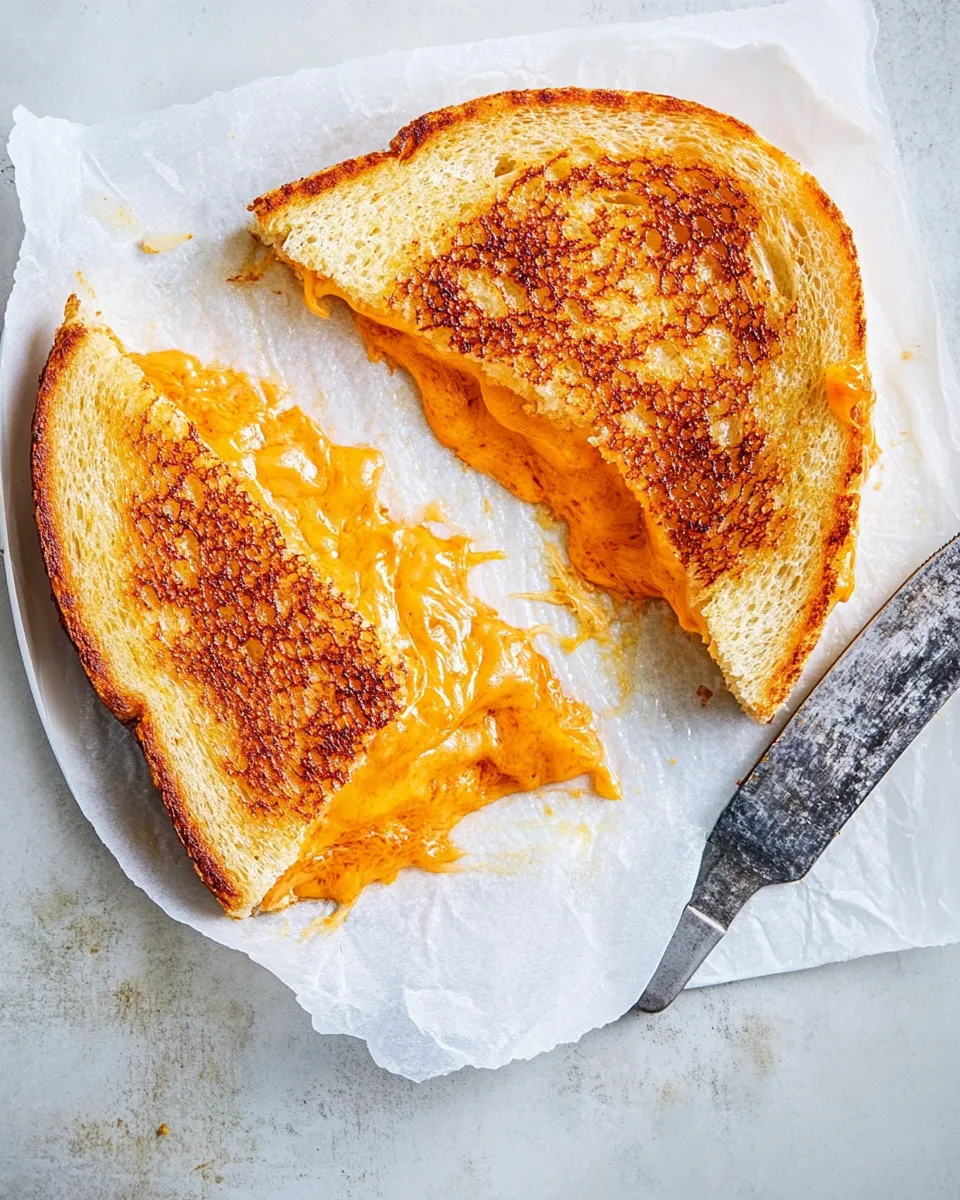
I make grilled cheese like it’s a small daily ritual — straightforward, comforting, and always worth a little intention. No tricks, just technique: heat control, cheese that melts well, and enough butter to get that golden, crisp exterior without sogginess. This version adds a thin Parmesan crust to one side for a crackly, toasty edge that changes everything.
There are recipes that rely on fancy equipment or dozens of add-ins. This one doesn’t. It uses a heavy pan, good bread, and two cheeses. It rewards patience at low heat and a tiny bit of plated theater (making a cheese crust in the pan is oddly satisfying). Follow it exactly and you’ll get a reliably excellent sandwich every time.
Below you’ll find exactly what to buy, the step-by-step instructions I follow, sensible swaps, tools to have on hand, and how to store and reheat leftovers so nothing goes to waste. If you want the short promise: crisp, buttery bread, molten cheddar inside, and a Parmesan crust that ups the texture game.
Ingredients
- 2 slices hearty sourdough bread, or bread of your choice — sturdy slices hold up to melting cheese and give a nice chew; choose slightly thick slices (about ¾”–1″).
- 2 tablespoons salted butter, softened — spreads evenly and browns for flavor; salted butter seasons the sandwich as it cooks.
- 2 tablespoons freshly grated Parmesan cheese — makes the external cheese crust; grate fresh for best melting and browning.
- 2/3 to 1 cup freshly grated cheddar cheese, plus 2 tablespoons for cheese crust* — sharp cheddar melts well and gives flavor; use freshly grated cheddar for smooth melting and avoid pre-shredded blends that resist melting.
Shopping List
For a single sandwich you don’t need much. Buy good bread and real blocks of cheese — that matters more than any tweak. If you’re shopping for several sandwiches, multiply the amounts (roughly 2 slices and ~1 cup cheddar per sandwich). Here’s what to put in your cart:
- Hearty sourdough or other rustic bread (eye on thickness and crumb).
- Salted butter (soften at room temperature before starting).
- Parmesan cheese block for grating.
- Cheddar cheese block (sharp or extra-sharp, depending on your taste).
Grilled Cheese in Steps
- Place a cast-iron or heavy-bottomed skillet over medium-low heat and let it warm until hot to the touch but not smoking.
- Spread 1 tablespoon of the softened salted butter on one side of one slice of bread.
- Sprinkle the 2 tablespoons of freshly grated Parmesan cheese into the hot skillet and spread it to about the same size as the bread.
- Place the buttered slice of bread, buttered side down, directly onto the Parmesan in the skillet.
- Arrange 2/3 to 1 cup of the freshly grated cheddar cheese evenly on top of the bread in the pan.
- Spread the remaining 1 tablespoon of butter on one side of the second slice of bread and place that slice, buttered side up, on top of the cheddar.
- Cook the sandwich over low to medium-low heat until the bottom slice is golden brown and a Parmesan crust has formed and the cheese has begun to melt (do not increase the heat). If the cheese is not melting, cover the skillet briefly to trap heat.
- Carefully remove the sandwich from the pan to a plate.
- Sprinkle the remaining 2 tablespoons of grated cheddar directly into the still-hot skillet, spreading it to about the size of the bread.
- Place the sandwich back in the skillet, uncooked side down (flip so the side that was on top now contacts the cheddar in the pan). Cook until the second side is golden brown, the cheddar in the pan has formed a cheesy crust, and the interior cheese is fully melted.
- Remove the sandwich, let rest for 30–60 seconds, then cut in half with a serrated knife and serve immediately.
Reasons to Love Grilled Cheese
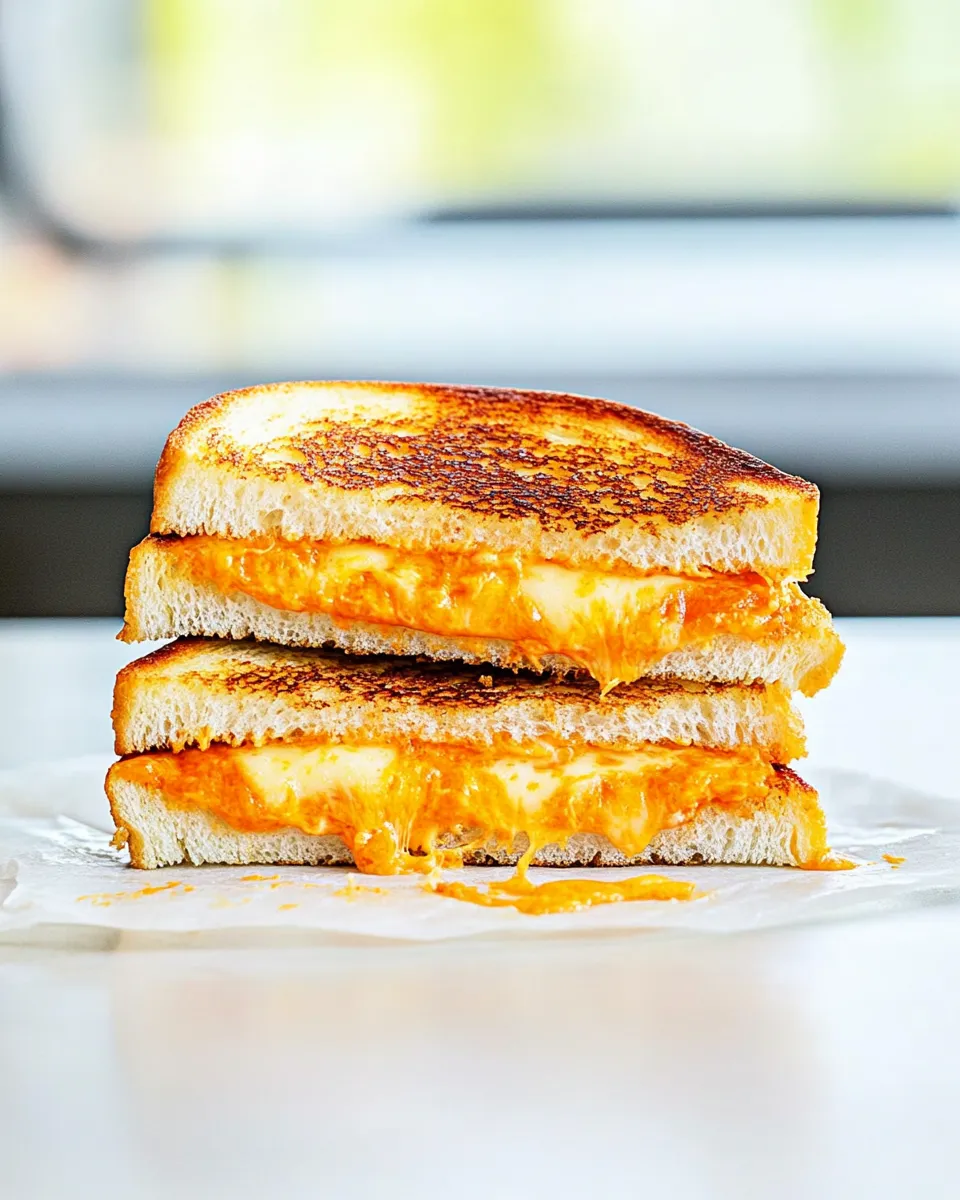
This sandwich hits simple but essential pleasures: crisped buttered bread, gooey cheese, and contrast. The Parmesan crust adds a nutty, salty crunch that turns an everyday sandwich into something slightly celebratory. Other reasons:
- Speed and reliability — once you get the heat right, it’s a ten-minute meal.
- Texture play — the soft interior vs. crisp exterior is universally satisfying.
- Minimal cleanup — one skillet and a cutting board, nothing fussy.
- Customizable — you can dial cheese intensity up or down and switch bread types without breaking the core method.
Ingredient Swaps & Substitutions

If you need to swap, keep the structure: a crisping fat, a melting cheese, and a sturdy bread. Here are logical swaps that preserve intent:
- Bread: Any crusty, sturdy loaf works — country white, whole wheat, or a seeded loaf. Avoid very soft, thin sandwich bread unless you want a different texture.
- Butter: Use unsalted butter plus a pinch of salt if you prefer control over seasoning. For a nuttier note, try a light smear of mayonnaise in place of butter (it browns well), but that is a flavor shift.
- Parmesan: Pecorino Romano can substitute for a sharper, saltier crust — use sparingly if it’s very salty.
- Cheddar: Gouda, gruyère, or fontina will melt nicely and change the flavor profile; blend cheeses if you like more complexity (for example, half cheddar + half gruyère).
Cook’s Kit
Good results come from good tools and a little attention:
- Cast-iron or heavy-bottom skillet — helps maintain even, low heat and gives superior crust formation.
- Microplane or fine grater — freshly grated cheese melts best; avoid pre-shredded cheese if possible.
- Spatula — wide and sturdy for flipping without tearing the sandwich.
- Serrated knife — for clean halves without squashing the sandwich.
- Lid for the skillet (or a baking sheet) — useful if you need to trap heat to encourage melting without raising the pan heat.
Steer Clear of These
A few dead-end approaches I’ve seen that undermine the sandwich:
- High heat to “speed things up.” That burns the bread before the cheese melts. Low and slow is the key.
- Pre-shredded cheese labeled “shredded” — it often contains anti-caking agents that inhibit smooth melting. Freshly grate from a block.
- Overstuffing with too much cheese — it can lead to spillage, uneven melting, and a soggy texture.
- Using very soft, thin bread — it can collapse and become greasy rather than pleasantly toasted.
Holiday & Seasonal Touches
This sandwich is a great canvas for seasonal accents without complicating the technique. Add these sparingly so you don’t break the melt:
- Autumn: A thin spread of fig jam on the inside can play nicely with sharp cheddar.
- Winter: A few roasted chestnuts or caramelized onions add warmth and depth; keep the amount modest so the sandwich still grills well.
- Spring: Fresh herbs (a few torn basil leaves) tucked inside after cooking brighten the flavor.
- Summer: Thinly sliced ripe tomatoes add juiciness; blot them dry first to avoid a soggy sandwich.
Author’s Commentary
I test sandwiches obsessively because small changes matter. The Parmesan crust is the detail that turned this from “good” to “I want this again tomorrow.” It’s not about complexity; it’s about purposeful steps. Spreading the butter on the bread rather than melting it in the pan gives a more even, controlled browning. Making the crust in two stages — Parmesan first, cheddar second — creates contrasting crunchy pockets that keep each bite interesting.
If you’re new to low-and-slow pan cooking, trust the process. The worst thing you can do is crank the heat because a golden exterior is tempting. Take your time. You’ll be rewarded with even melt and a rich, toasted finish.
How to Store & Reheat
Leftover grilled cheese is still worth saving when you treat it right. To store:
- Wrap the sandwich loosely in parchment or store in an airtight container and refrigerate up to 2 days.
To reheat so texture returns:
- Stovetop: Reheat in a skillet over low heat, flipping occasionally, until warmed through and the exterior is re-crisped. This is my preferred method.
- Oven/toaster oven: Warm at 350°F (175°C) on a rack set over a sheet pan for 8–12 minutes until heated through and crisped.
- Avoid microwaving directly — it melts the cheese but makes the bread gummy. If using a microwave, follow with a quick skillet sear.
Reader Questions
What if my cheese isn’t melting?
Keep the pan low and cover it for a minute or two to trap heat, as the steps note. Also make sure your cheddar is freshly grated; pre-shredded is often treated and melts poorly.
Can I make more than one sandwich at once?
Yes, but use a large heavy skillet and give each sandwich enough room. If the pan is overcrowded, the heat drops and you won’t get good crusts.
Why use Parmesan in the pan?
Parmesan forms a crisp, flavorful crust that adds texture and a nutty, salty note. It adheres to the pan and browns quickly, giving that extra layer of crunch.
Can I swap cheddar for a milder cheese?
Yes. The method works with other melting cheeses, but flavor changes. If you prefer milder taste, try young gouda or a mild Muenster. Keep the quantity similar so melting behavior remains consistent.
Is a cast-iron skillet necessary?
It’s not strictly necessary, but cast iron or a heavy-bottomed skillet gives the most even heat and best crust. Thin skillets can have hot spots that burn the bread.
The Takeaway
This is a do-one-thing-well grilled cheese: two cheeses, buttered bread, and a low-and-slow cook that delivers a molten interior and crisp exterior. The Parmesan crust is the small addition that elevates the texture and flavor without complicating the method. Stick to freshly grated cheeses, use a heavy pan, and resist the urge to rush. Do that, and you’ll have a reliably exceptional grilled cheese every time.

Best Grilled Cheese
Ingredients
Ingredients
- 2 sliceshearty sourdough bread or bread of your choice
- 2 tablespoonssalted butter softened
- 2 tablespoonsfreshly grated Parmesan cheese
- 2/3 to 1 cupfreshly grated cheddar cheese plus 2 tablespoons for cheese crust*
Instructions
Instructions
- Place a cast-iron or heavy-bottomed skillet over medium-low heat and let it warm until hot to the touch but not smoking.
- Spread 1 tablespoon of the softened salted butter on one side of one slice of bread.
- Sprinkle the 2 tablespoons of freshly grated Parmesan cheese into the hot skillet and spread it to about the same size as the bread.
- Place the buttered slice of bread, buttered side down, directly onto the Parmesan in the skillet.
- Arrange 2/3 to 1 cup of the freshly grated cheddar cheese evenly on top of the bread in the pan.
- Spread the remaining 1 tablespoon of butter on one side of the second slice of bread and place that slice, buttered side up, on top of the cheddar.
- Cook the sandwich over low to medium-low heat until the bottom slice is golden brown and a Parmesan crust has formed and the cheese has begun to melt (do not increase the heat). If the cheese is not melting, cover the skillet briefly to trap heat.
- Carefully remove the sandwich from the pan to a plate.
- Sprinkle the remaining 2 tablespoons of grated cheddar directly into the still-hot skillet, spreading it to about the size of the bread.
- Place the sandwich back in the skillet, uncooked side down (flip so the side that was on top now contacts the cheddar in the pan). Cook until the second side is golden brown, the cheddar in the pan has formed a cheesy crust, and the interior cheese is fully melted.
- Remove the sandwich, let rest for 30–60 seconds, then cut in half with a serrated knife and serve immediately.
Equipment
- cast-iron or heavy-bottomed skillet
- Spatula
- lid or cover (optional)
- serrated knife
Notes
You can easily double, triple, or quadruple this recipe to make more sandwiches. If If you are making several sandwiches at once, you can use an electric griddle pan. We like to use a griddle when we are making several sandwiches. Make sure you don’t turn the heat up too high.
Instead of spreading the bread with butter, you can use mayonnaise. It will create a nice golden crust too, but we prefer the flavor of butter for our sandwiches.
You can use your favorite cheese. Sharp cheddar, Gouda, Fontina, Monterey Jack, Gruyere, Pepper Jack, and brie are all good options. The amount of cheese you use will depend on the size of your bread. You can do a mix of cheeses. I love sharp Cheddar, Monterey Jack, and Gouda together. Play around to find your perfect combo.