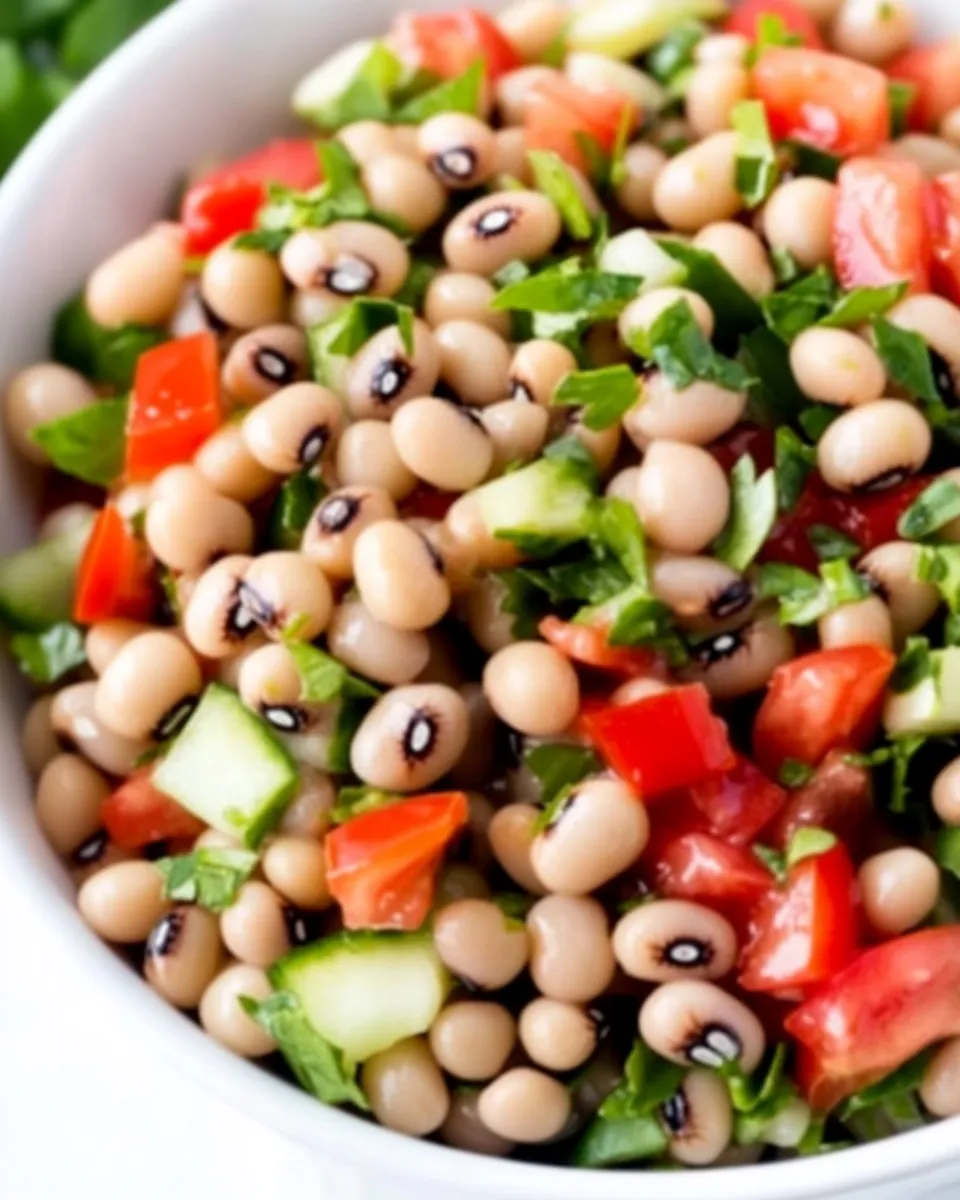
This black-eyed pea salad is one of those weeknight wins that feels like a treat and takes almost no thought. It relies on one canned ingredient, a handful of fresh vegetables, and a bright, vinegar-forward dressing that pulls everything together. I make it when I want something that’s light, colorful, and ready in under 20 minutes.
The salad lands in that sweet spot: simple to throw together, but with layered flavors and satisfying texture. The rice vinegar and stoneground mustard give the dressing a tangy lift, the maple syrup smooths the edges, and the roasted red pepper adds a smoky pop without extra work. You can serve it right away or let it chill so the flavors marry.
Below you’ll find exactly what I use, the step-by-step method, and practical tips for keeping it fresh and flexible. No fuss. Just clear directions and a salad you’ll reach for again and again.
What We’re Using
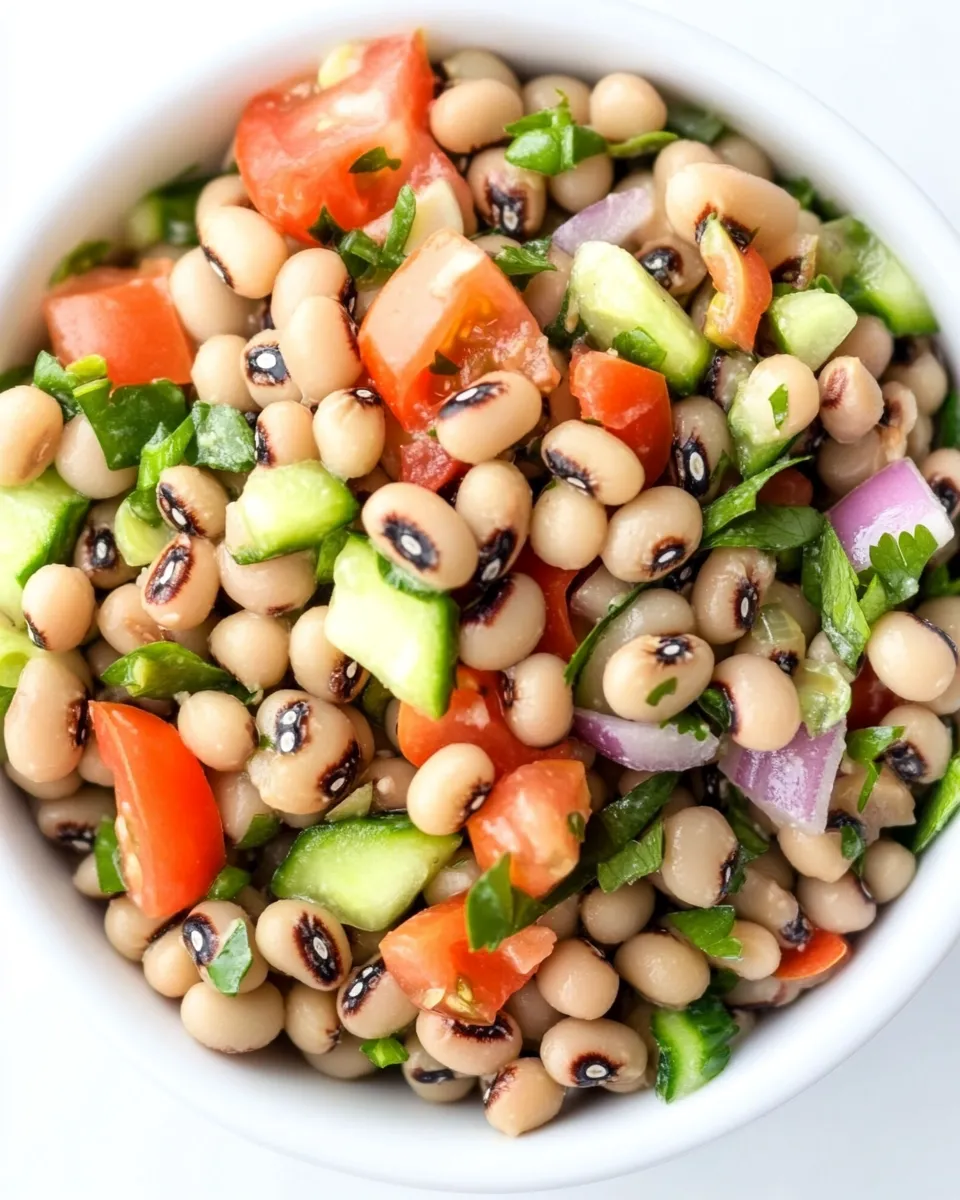
This recipe leans on pantry-friendly staples plus a few fresh items. The canned black-eyed peas keep prep minimal, while roast red pepper and fresh parsley add color and brightness. The dressing is intentionally short — a whisk and five ingredients — because sometimes the simplest vinaigrettes are the most reliable.
Ingredients
- 15 oz. can black-eyed peas — the salad’s protein-packed base; rinse and drain to control salt and texture.
- 1 roasted red pepper — adds sweet, smoky flavor; finely dice for even bites.
- 1/2 English cucumber — crunchy, mild, and refreshing; finely dice to match the other veg.
- 1/4 cup red onion — sharpness and bite; finely dice so it disperses without overpowering.
- 4 oz. grape tomatoes — juicy sweetness; halved (or quartered if large) to release flavor without becoming mushy.
- 1/4 cup fresh parsley — bright herb note; roughly chopped for color and freshness.
- 1/4 cup rice vinegar* — the acid that keeps the salad lively; balances the sweetness of maple syrup.
- 2 tsp. stoneground mustard (or Dijon) — emulsifies the dressing and adds a savory depth.
- 1 1/2 tsp. pure maple syrup — rounds the acid and tames sharpness without sweetness overload.
- 1 clove garlic, minced — small but important; gives savory backbone to the dressing.
- 1/4 tsp. salt — brings out the flavors; adjust at the end if needed.
Step-by-Step: Black-Eyed Pea Salad
- In a small bowl, combine 1/4 cup rice vinegar, 2 tsp stoneground mustard (or Dijon), 1 1/2 tsp pure maple syrup, 1 clove garlic (minced), and 1/4 tsp salt. Whisk until the dressing is smooth and well blended.
- Rinse and drain the 15 oz. can black-eyed peas. Transfer the peas to a medium mixing bowl.
- Prepare the vegetables and herbs:
- Finely dice the 1 roasted red pepper.
- Cut the 4 oz. grape tomatoes in half (or quarter them if they are large).
- Finely dice the 1/2 English cucumber.
- Finely dice the 1/4 cup red onion.
- Roughly chop the 1/4 cup fresh parsley.
- Add the diced peppers, tomatoes, cucumber, red onion, and chopped parsley to the bowl with the black-eyed peas.
- Pour the dressing over the pea and vegetable mixture. Toss gently but thoroughly until everything is evenly coated.
- Serve immediately, or cover and chill in the refrigerator for at least 1 hour to let the flavors meld. Stir again before serving, as some dressing may settle on the bottom.
Why You’ll Keep Making It
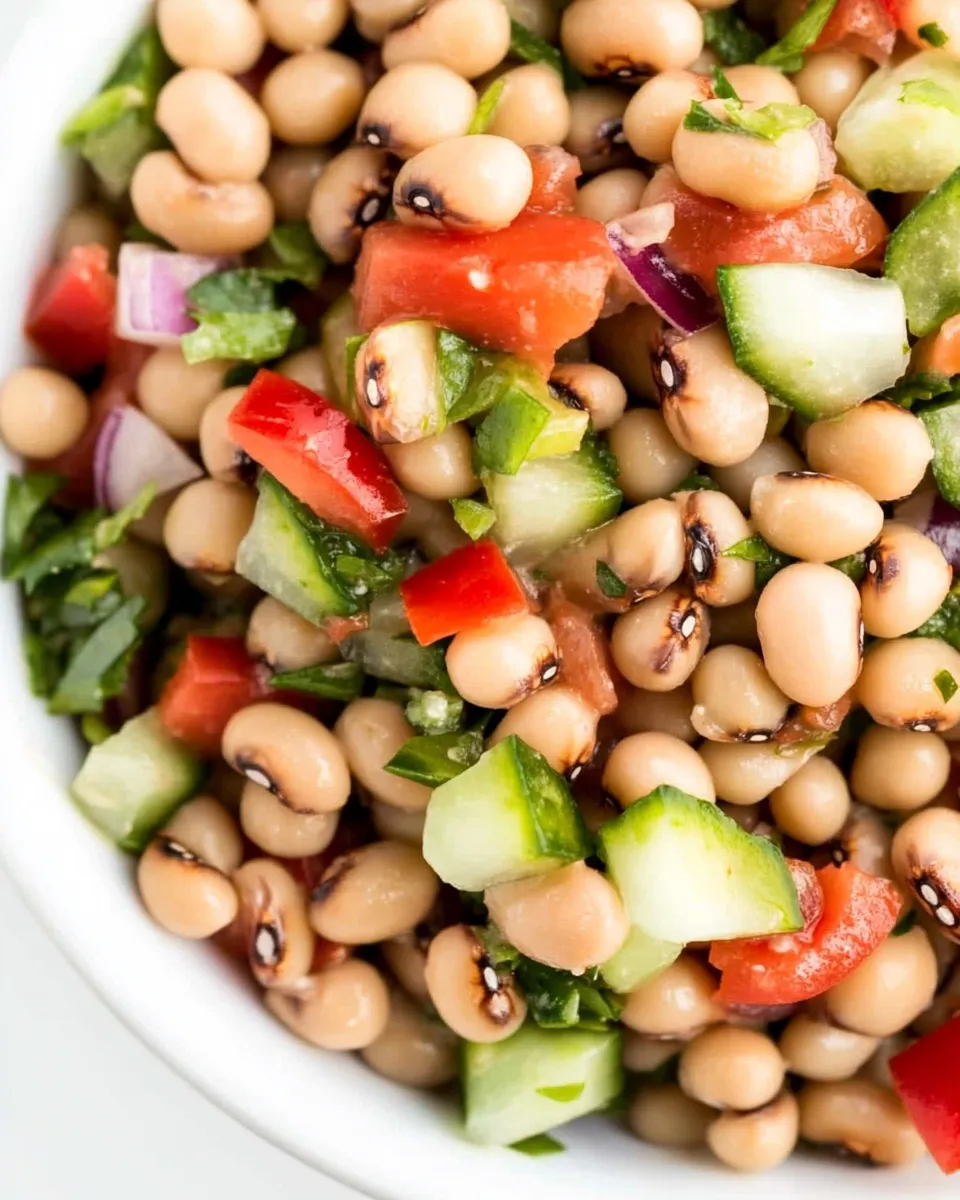
It hits several boxes: fast, forgiving, and satisfying. The canned peas mean you skip soaking and long cooking. The bright dressing is small-batch but balanced, so it never overwhelms the peas or the veg.
This salad adapts to where you are. Make it for lunch with a scoop of grain, serve it alongside grilled proteins, or bring it to a potluck—people always ask for the recipe because it looks cheerful and tastes fresh. It also scales easily without complicated steps.
No-Store Runs Needed
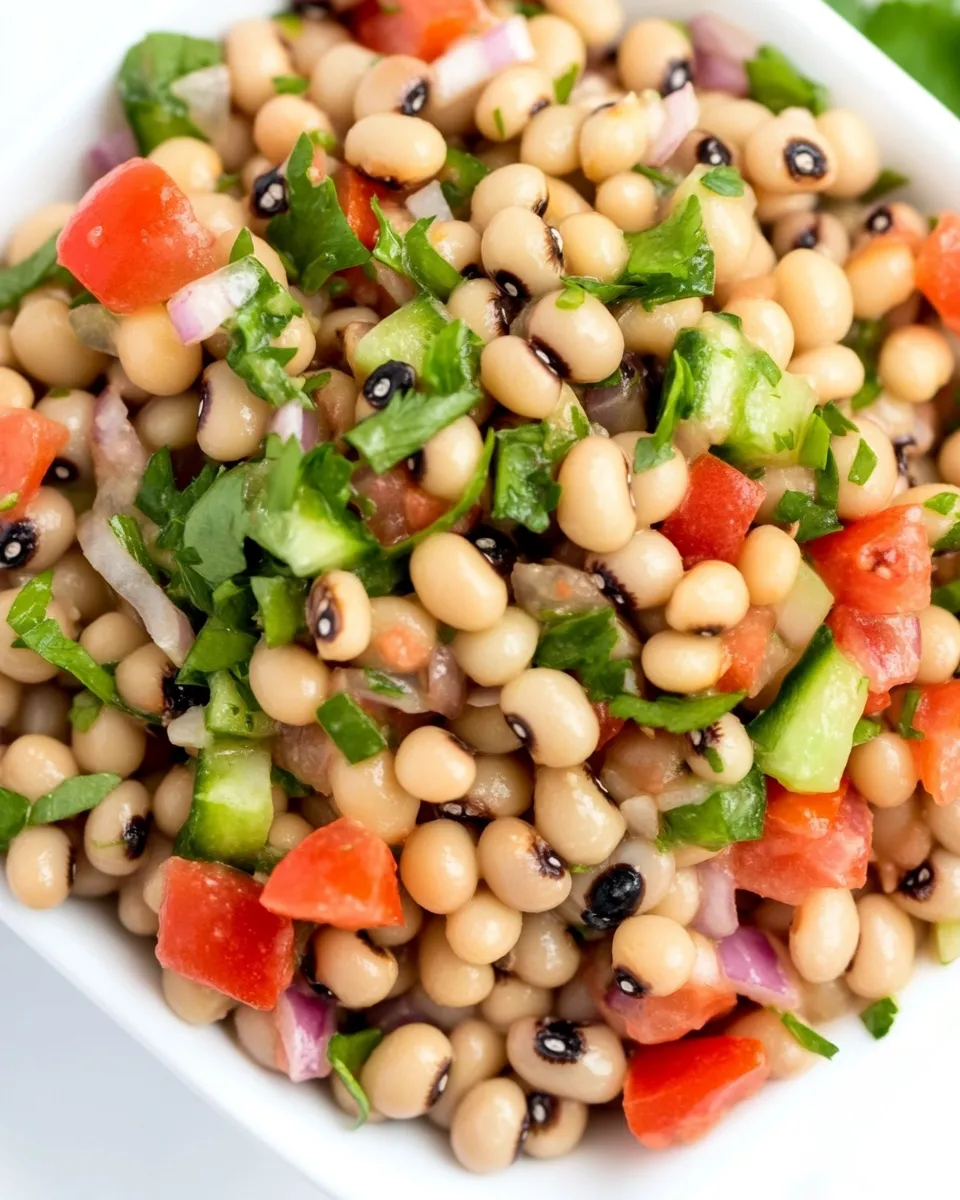
You often already have the essentials. A can of black-eyed peas, a bottle of rice vinegar, mustard, and a touch of maple syrup form a complete dressing. If you have a roasted red pepper jarred in the pantry, that works too. Grape tomatoes and cucumber are common refrigerator staples that last a week when kept cool.
If you’re missing one small item—say, parsley—you can substitute with any fresh herb you have on hand (like cilantro or chives), but only if you already keep them around. The recipe is designed so you can make it with a quick check of your pantry rather than a full grocery run.
Equipment at a Glance
- Small mixing bowl — for the dressing.
- Medium mixing bowl — to combine peas and vegetables.
- Whisk or fork — to emulsify the dressing.
- Cutting board and sharp knife — for dicing the vegetables evenly.
- Colander or sieve — to rinse and drain the canned peas.
- Measuring spoons and 1/4 cup measure — for accuracy in the dressing.
Problems & Prevention
Common issue: watery or soggy salad. Prevention: drain the peas very well and avoid over-ripe tomatoes that release too much juice. If your cucumber is watery, seed it or pat the pieces dry.
Under-seasoned dressing is another frequent complaint. Taste the dressing before tossing. Because the recipe uses a small amount of salt, you might need a tiny pinch more depending on the saltiness of your canned peas and personal preference.
Dressing separation is normal when the salad sits. Just stir or toss again before serving. If you plan to store leftovers, toss again briefly after chilling so the dressing coats everything evenly.
Variations by Season
Spring: Add finely chopped fresh herbs like dill or cilantro if they’re on hand for a green, aromatic lift.
Summer: Use perfectly ripe grape tomatoes and consider serving the salad chilled; the flavors open up with a little rest in the fridge. Add a handful of sweet corn kernels if you have fresh or frozen corn—no precise amount required, just to taste.
Fall/Winter: Swap parsley for heartier herbs like chopped scallion tops or increase the red onion slightly for more bite. Serve alongside roasted squash or hearty grains for a warming plate.
Chef’s Rationale
The dressing’s backbone is rice vinegar for bright acidity without the harshness of white vinegar. Stoneground mustard (or Dijon) performs two jobs: it adds savory complexity and acts as an emulsifier so the vinegar and maple syrup come together smoothly. The maple syrup is deliberate — it’s less cloying than sugar and brings a rounded sweetness that helps balance the vinegar.
Choosing roasted red pepper over raw bell pepper gives a smoky-sweet note without adding extra steps like charring. Finely dicing all the vegetables keeps every bite balanced, so you rarely get a mouthful of one single ingredient. Rinsing the canned peas removes any excess brine and keeps the salad lively, rather than salty and flat.
Storage Pro Tips
Store in an airtight container in the refrigerator. It keeps well for 3–4 days; flavors deepen over the first 24 hours. If you expect to keep leftovers longer, consider storing the dressing separately and tossing it with the salad within a day or two to preserve texture.
When reheating is tempting — don’t. This is a cold salad; warming changes the pea texture and can make the vegetables limp. Instead, let chilled leftovers come to cool room temperature for 10–15 minutes before serving if you don’t want them overly cold.
Quick Questions
Can I use dried black-eyed peas? Yes, but you’ll need to soak and cook them first. The recipe specifically relies on a 15 oz. can for speed.
Is this vegan? Yes — every ingredient in the recipe is plant-based.
Can I double the recipe? Absolutely. Use a larger bowl and scale every ingredient evenly. Taste the dressing as you go; sometimes doubled dressings need a touch more acid or sweet to balance.
Is it gluten-free? Yes, the ingredients listed are gluten-free. If you swap any condiments, check labels.
Next Steps
Make this salad tonight and tuck a portion into your weekday lunches — it keeps well and makes an easy, nutritious meal with a grain or alongside protein. If you like to experiment, try a small portion with a spoonful of plain yogurt or crumbled soft cheese on top when serving for a creamy contrast.
Pin this recipe, and the next time you open the pantry to a can of black-eyed peas, you’ll have a straightforward, dependable plan that rewards minimal work with great flavor.
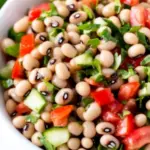
Black-Eyed Pea Salad (Easy!)
Ingredients
Ingredients
- 15 oz.can black-eyed peas
- 1 roasted red pepper
- 1/2 English cucumber
- 1/4 cupred onion
- 4 oz.grape tomatoes
- 1/4 cupfresh parsley
- 1/4 cuprice vinegar*
- 2 tsp.stoneground mustard or Dijon
- 1 1/2 tsp.pure maple syrup
- 1 clovegarlic minced
- 1/4 tsp.salt
Instructions
Instructions
- In a small bowl, combine 1/4 cup rice vinegar, 2 tsp stoneground mustard (or Dijon), 1 1/2 tsp pure maple syrup, 1 clove garlic (minced), and 1/4 tsp salt. Whisk until the dressing is smooth and well blended.
- Rinse and drain the 15 oz. can black-eyed peas. Transfer the peas to a medium mixing bowl.
- Prepare the vegetables and herbs: - Finely dice the 1 roasted red pepper. - Cut the 4 oz. grape tomatoes in half (or quarter them if they are large). - Finely dice the 1/2 English cucumber. - Finely dice the 1/4 cup red onion. - Roughly chop the 1/4 cup fresh parsley.
- Add the diced peppers, tomatoes, cucumber, red onion, and chopped parsley to the bowl with the black-eyed peas.
- Pour the dressing over the pea and vegetable mixture. Toss gently but thoroughly until everything is evenly coated.
- Serve immediately, or cover and chill in the refrigerator for at least 1 hour to let the flavors meld. Stir again before serving, as some dressing may settle on the bottom.
Equipment
- Small Bowl
- Whisk
- Medium Mixing Bowl
- Knife
- Cutting Board
Notes
*Vinegar:
I use
Marukan organic rice vinegar
(unseasoned). Seasoned vinegar typically has sugar and salt added, so omit the maple syrup and salt or use sparingly.
Other veggies:
Add jalapeño, cooked sweet corn, celery, avocado, chives, green onion, etc.
Yield:
Recipe makes about 3.5 cups salad.
Originally published September 2014. Updated April 2023.