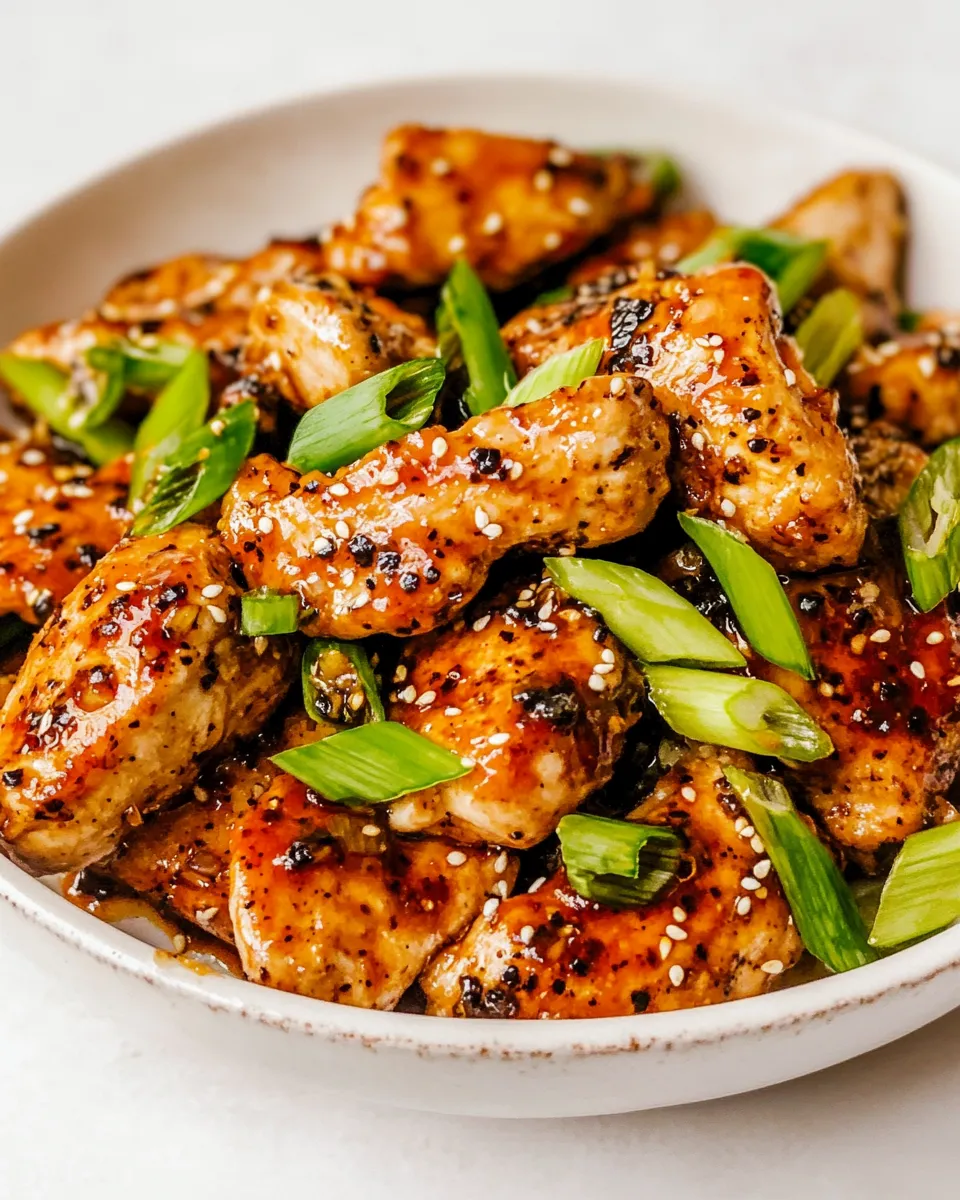
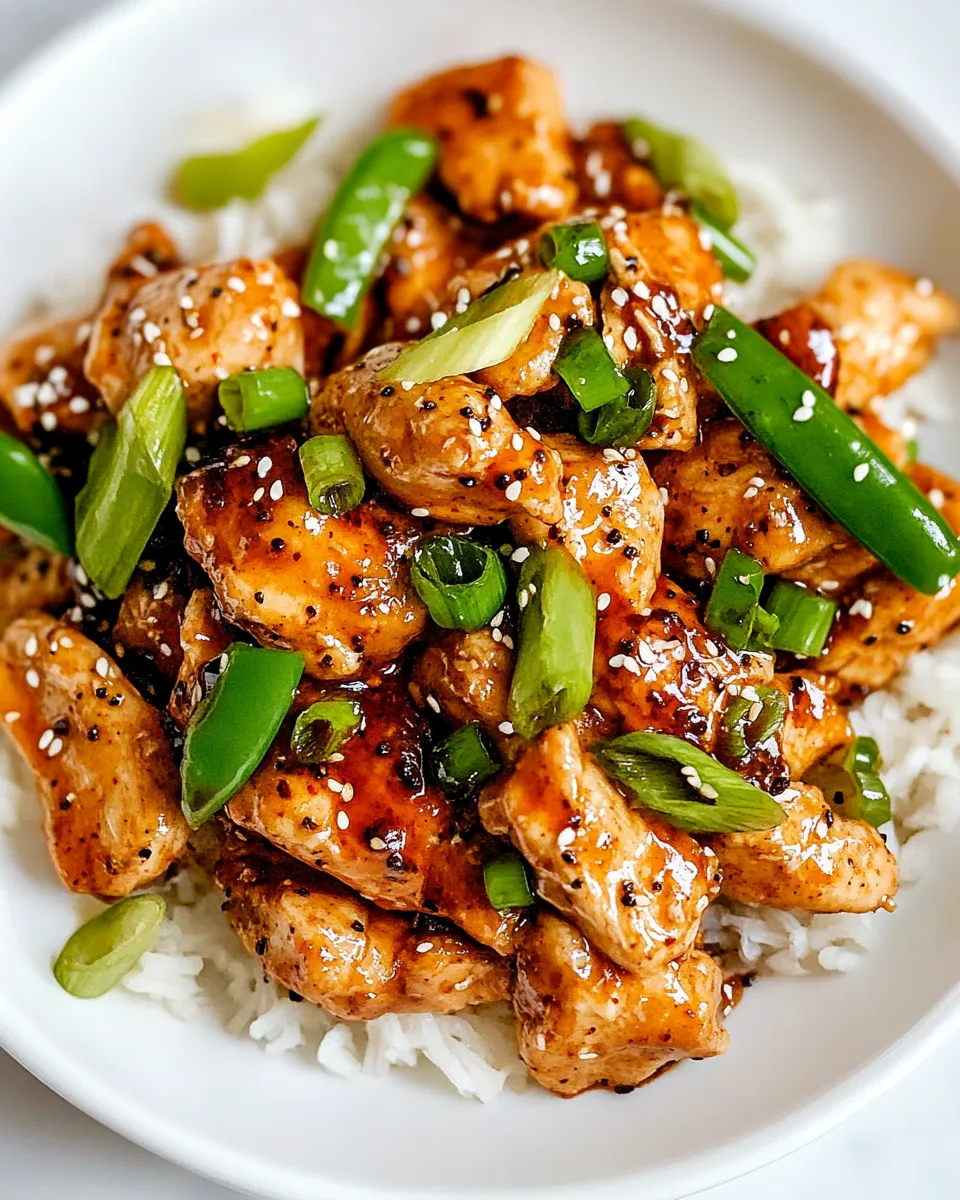
I cook this Black Pepper Chicken when I want dinner that feels lifted but doesn’t steal my evening. It’s straightforward, pepper-forward, and finished in about the time it takes rice to steam. The technique is simple: a quick cornstarch-coating for a silky exterior, a short high-heat sear, then a fast stir-fry with a tangy soy-oyster sauce spiked with plenty of black pepper.
The payoff is a saucy, punchy dish where the pepper is the hero, not an afterthought. Vegetables stay crisp and bright because everything finishes quickly in a hot pan. You’ll notice small details—sesame oil for toasty depth, a touch of honey to balance the vinegar, and reserved pan juices that add flavor back into the sauce.
Read the ingredient notes, follow the stepwise instructions exactly, and I’ll walk you through swaps, tools, troubleshooting, and storage so this becomes a reliable weeknight favorite.
Ingredient Rundown
Ingredients
- 1poundboneless, skinless chicken breastscut into thin strips — Main protein; thin strips cook quickly and soak up the sauce.
- 1tablespooncornstarch — Light coating to slightly thicken the sauce and give the chicken a silky crust.
- 3tablespoonssoy saucedivided — Salty umami backbone; divided so some flavors go into the marinade and some into the sauce.
- 2tablespoonsoyster saucedivided — Rich, savory depth; split between marinade and sauce for layered flavor.
- 2tablespoonsesame oildivided — Aromatic cooking oil; divided so you can sear chicken first and then stir-fry the vegetables.
- 1largegreen bell peppervery thinly sliced — Sweet crunch and color contrast; slice thin so it softens slightly but stays crisp.
- 1cupthinly sliced celerysliced on the bias (2-3 ribs) — Peppery crunch and texture; slicing on the bias gives nice bite-size pieces.
- 1cupthinly sliced yellow onion1/2 large onion — Mild sweetness; sliced thin for even cooking.
- 2teaspoonsginger paste — Warm, bright aromatics; paste saves time and disperses evenly.
- 1tablespoongarlic pasteor minced garlic — Classic aromatic; paste melds into the sauce quickly.
- 1tablespoonrice vinegar — Bright acidity to balance the savory sauces.
- 2tablespoonswater — Thins the sauce so it coats without becoming sticky.
- 1teaspoonhoney — Soft sweetener to round the edges of the sauce.
- 1-3teaspoonspepperadjust to taste — The defining seasoning; use 1 teaspoon for mild, up to 3 for assertive heat and aroma.
- thinly sliced green onionsoptional, for garnish — Fresh finish and color.
- Cooked white riceoptional, for serving — Neutral base that soaks up the peppery sauce.
Black Pepper Chicken Made Stepwise
- In a bowl, toss the chicken strips with the cornstarch, 1 tablespoon soy sauce, and 1 tablespoon oyster sauce until evenly coated. Let marinate 10–15 minutes.
- In a wide-mouth jar or small bowl, combine the remaining 2 tablespoons soy sauce, remaining 1 tablespoon oyster sauce, rice vinegar, 2 tablespoons water, 1 teaspoon honey, and black pepper (use 1–3 teaspoons, to taste). Stir or shake to combine and set aside.
- Heat 1 tablespoon sesame oil in a large skillet or wok over medium-high heat until hot. Add the marinated chicken in a single layer and cook 3–4 minutes, stirring occasionally, until browned and mostly cooked through. Transfer the chicken to a plate and reserve any pan juices.
- Add the remaining 1 tablespoon sesame oil to the same pan. Add the sliced onion, bell pepper, and celery and stir-fry 2–3 minutes, until the vegetables begin to soften but still have some crispness.
- Add the garlic paste and ginger paste to the pan with the vegetables and cook, stirring, about 30 seconds until fragrant.
- Return the chicken to the pan, pour in the prepared sauce, and toss to combine. Cook 2–3 minutes, stirring, until the sauce thickens and coats the chicken and vegetables and the chicken is fully cooked.
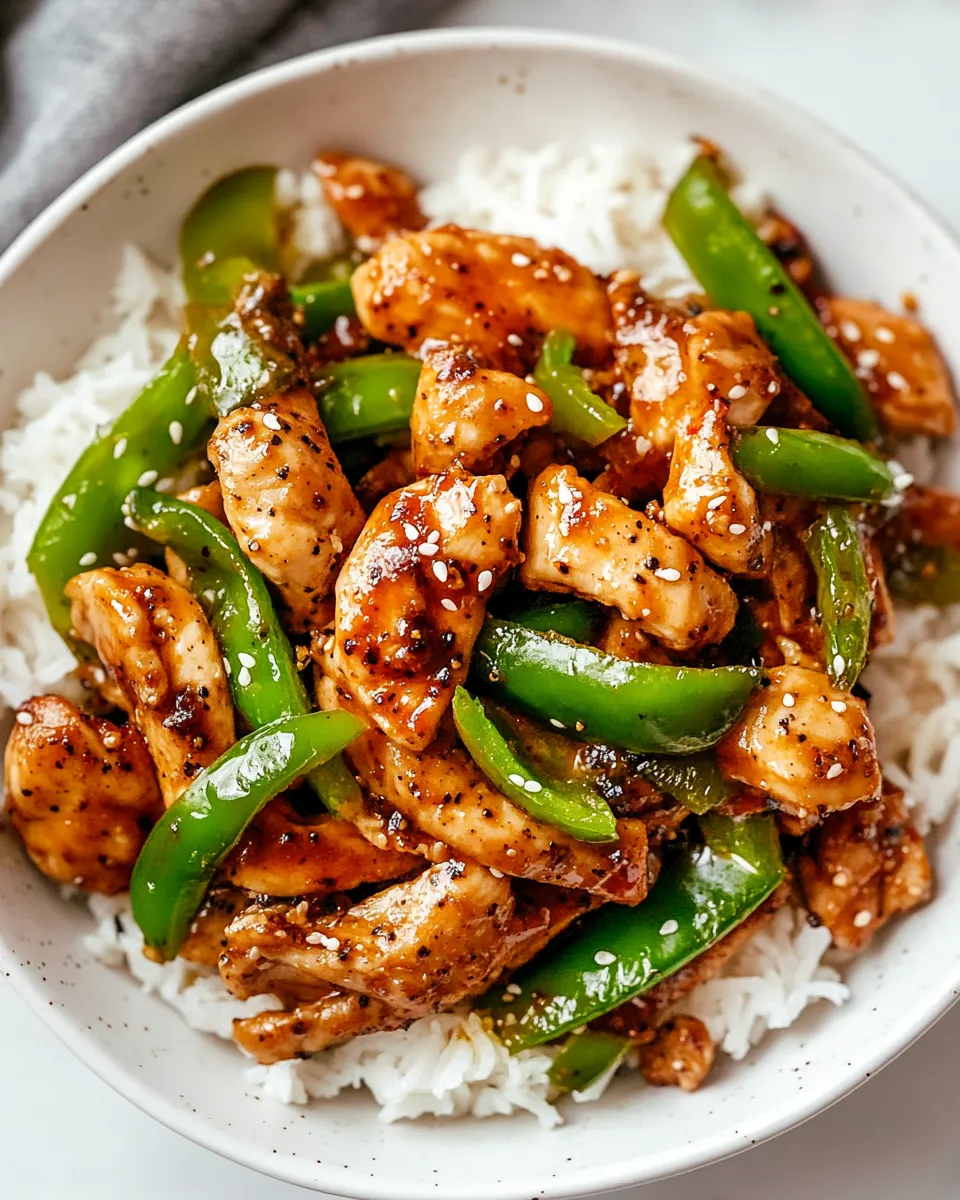
- Taste and adjust black pepper or salt as needed. Serve hot over cooked white rice if using and garnish with thinly sliced green onions, if desired.
Why This Black Pepper Chicken Stands Out
This version is about balance and speed. The cornstarch creates a delicate coating that helps the sauce cling without turning gummy. Dividing the soy and oyster sauce between the marinade and finishing sauce layers the salt and umami instead of dumping it in at the end. Sesame oil gives an immediate toasted aroma, and the quick high-heat cooking keeps vegetables lively.
Black pepper here is prominent by design. It’s not just heat; when toasted and freshly cracked, pepper releases floral, citrusy notes that play beautifully against the savory oyster and soy flavors. Paired with a touch of honey and rice vinegar, the result tastes bright, savory, and satisfyingly peppery.
What to Use Instead
- Cornstarch — Substitute: potato starch or tapioca starch in a 1:1 ratio for a similar glossy finish.
- Soy sauce — Substitute: low-sodium soy or tamari for gluten-free; keep the same amount but taste and adjust salt.
- Oyster sauce — Substitute: hoisin in a pinch (different flavor profile) or a splash more soy and a dash of fish sauce for umami.
- Sesame oil — Substitute: neutral oil (peanut or canola) for cooking, but add a few drops of toasted sesame oil at the end for aroma if you remove it.
- Ginger/garlic paste — Substitute: freshly minced ginger and garlic; use slightly more to match intensity (about 1/2 teaspoon extra each if using fresh).
- Chicken breast — Substitute: boneless thigh meat for juicier results; adjust cooking time until fully cooked (thigh strips may take slightly longer).
- Black pepper — Substitute: white pepper for a milder, different aroma; start with less and taste.
Recommended Tools
- Large skillet or wok — Wide surface area ensures quick evaporation and even searing.
- Mixing bowls — For marinating and for the sauce.
- Wide-mouth jar with lid (optional) — Easy for shaking up the sauce and for quick storage.
- Sharp knife and cutting board — Thin, even strips of chicken and vegetables make cooking times predictable.
- Spatula or wooden spoon — For tossing without tearing the chicken.
- Measuring spoons — Precise salt and pepper control matters here.
Troubleshooting Tips
Chicken turns out dry
Thin strips cook fast. To avoid dryness, don’t overcook during the initial sear—you’re aiming for mostly cooked, not finished. The chicken finishes in the sauce; pulling it off at the right time and returning it later avoids overcooking.
Sauce is too thin or too salty
If too thin, simmer 1–2 more minutes to reduce and thicken; the cornstarch on the chicken will also help. If too salty, add a small splash of water and a touch more honey or rice vinegar to rebalance.
Vegetables limp and mushy
Heat is the key. Use medium-high heat, and add vegetables after you remove the chicken. Stir-fry just until they soften slightly; they should still have a slight crunch.
Not peppery enough
Black pepper is adjustable. Start with 1 teaspoon for subtlety. If you want more aroma and heat, add up to 3 teaspoons total, tasting as you go. Freshly cracked pepper always performs better than pre-ground.
Seasonal Spins
Black Pepper Chicken is flexible. Swap or add seasonal vegetables to keep the dish fresh throughout the year.
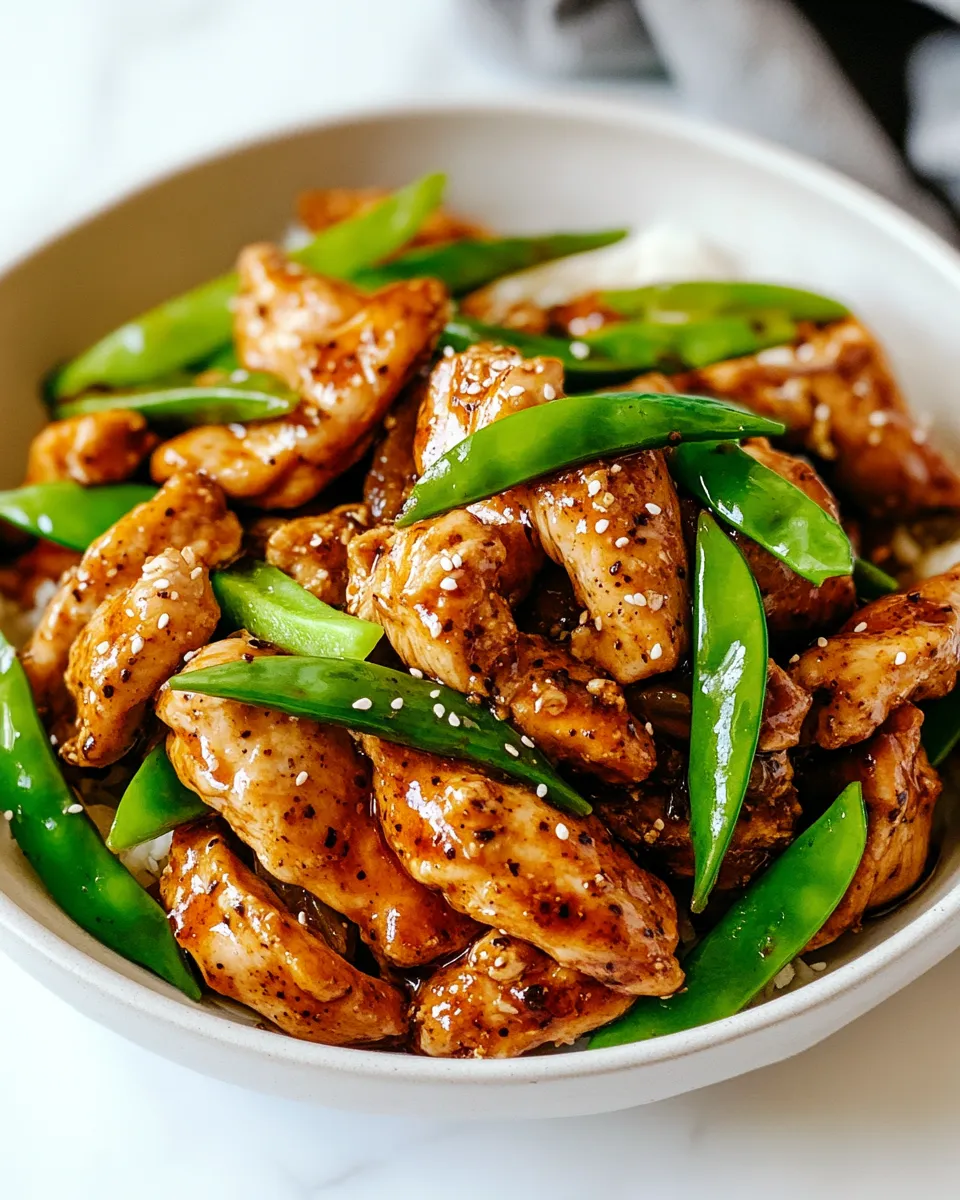
- Spring: Add snow peas or sugar snap peas right at the end for bright crunch.
- Summer: Toss in thinly sliced zucchini or summer squash; they cook quickly and add a delicate sweetness.
- Fall: Swap some of the bell pepper for thinly sliced shiitake mushrooms for earthiness.
- Winter: Use carrots cut on the bias and baby corn for long-simmered texture and color contrast.
Recipe Notes & Chef’s Commentary
Timing and temperature matter more than complicated technique here. Prepare the sauce before you start cooking so it’s ready to pour. Cut everything to similar thickness—this makes the short cooking window predictable. When the recipe says to reserve pan juices, do it; those browned bits carry a lot of flavor and will enrich the sauce.
If you prefer a thicker, glossy coating, dissolve a scant 1/2 teaspoon cornstarch in the 2 tablespoons water used in the sauce before combining—this will slightly thicken the sauce once it hits the hot pan. I don’t always do it, because the cornstarch on the chicken usually thickens the sauce enough, but it’s a handy option.
For a more assertive sesame flavor, stir in a teaspoon of toasted sesame oil at the end rather than using all sesame oil for cooking. It will keep the toasty aroma bright.
Cooling, Storing & Rewarming
Cool the dish to room temperature for no more than two hours, then transfer to an airtight container and refrigerate. It will keep well for 3–4 days. For longer storage, freeze in a freezer-safe container for up to 2 months, though texture of the vegetables will change slightly.
Reheat gently over medium heat in a skillet with a splash of water or a little oil to loosen the sauce. If reheating from frozen, thaw overnight in the fridge first. Avoid microwave reheating where possible; it can make chicken rubbery and vegetables soggy.
Quick Questions
- Can I use chicken thighs? — Yes. Use boneless thighs cut into thin strips; they stay juicier and may need an extra minute or two to finish cooking.
- Is this gluten-free? — Not as written because of soy and oyster sauce. Use tamari for soy and a gluten-free oyster sauce or a substitute blend to adapt it.
- How spicy will it be? — Adjustable. 1 teaspoon black pepper is mild; 3 teaspoons is assertive. Freshly cracked black pepper is more aromatic than pre-ground.
- Can I make it ahead? — Partially. Marinate the chicken and make the sauce up to a day ahead. Cook within 24 hours for best texture.
- What rice should I serve it with? — Classic steamed white rice is neutral and soaks up the sauce. Jasmine is a good match.
Serve & Enjoy
Serve hot over steamed white rice and sprinkle with thinly sliced green onions for freshness and color. A simple cucumber salad on the side brightens the plate and keeps the meal balanced.
This Black Pepper Chicken is quick, flexible, and reliably flavorful. Once you get the balance of pepper to sauce the way you like it, it’s a go-to for busy nights when you want a restaurant-style dish at home. Enjoy—and don’t be shy with the pepper if you love that kick.
Black Pepper Chicken Recipe
Ingredients
Ingredients
- 1 poundboneless skinless chicken breastscut into thin strips
- 1 tablespooncornstarch
- 3 tablespoonssoy saucedivided
- 2 tablespoonsoyster saucedivided
- 2 tablespoonsesame oildivided
- 1 largegreen bell peppervery thinly sliced
- 1 cupthinly sliced celerysliced on the bias 2-3 ribs
- 1 cupthinly sliced yellow onion1/2 large onion
- 2 teaspoonsginger paste
- 1 tablespoongarlic pasteor minced garlic
- 1 tablespoonrice vinegar
- 2 tablespoonswater
- 1 teaspoonhoney
- 1-3 teaspoonspepperadjust to taste
- thinly sliced green onionsoptional for garnish
- Cooked white riceoptional for serving
Instructions
Instructions
- In a bowl, toss the chicken strips with the cornstarch, 1 tablespoon soy sauce, and 1 tablespoon oyster sauce until evenly coated. Let marinate 10–15 minutes.
- In a wide-mouth jar or small bowl, combine the remaining 2 tablespoons soy sauce, remaining 1 tablespoon oyster sauce, rice vinegar, 2 tablespoons water, 1 teaspoon honey, and black pepper (use 1–3 teaspoons, to taste). Stir or shake to combine and set aside.
- Heat 1 tablespoon sesame oil in a large skillet or wok over medium-high heat until hot. Add the marinated chicken in a single layer and cook 3–4 minutes, stirring occasionally, until browned and mostly cooked through. Transfer the chicken to a plate and reserve any pan juices.
- Add the remaining 1 tablespoon sesame oil to the same pan. Add the sliced onion, bell pepper, and celery and stir-fry 2–3 minutes, until the vegetables begin to soften but still have some crispness.
- Add the garlic paste and ginger paste to the pan with the vegetables and cook, stirring, about 30 seconds until fragrant.
- Return the chicken to the pan, pour in the prepared sauce, and toss to combine. Cook 2–3 minutes, stirring, until the sauce thickens and coats the chicken and vegetables and the chicken is fully cooked.
- Taste and adjust black pepper or salt as needed. Serve hot over cooked white rice if using and garnish with thinly sliced green onions, if desired.
Equipment
- Large Pan
Notes
Nutrition Note:
Nutrition Facts do not include rice.
Storage:
Store in an airtight container in the fridge for 3–4 days. Reheat in the microwave or on the stove. To freeze, place in a sealed container or freezer bag for up to 3 months. Thaw in the fridge overnight before reheating.