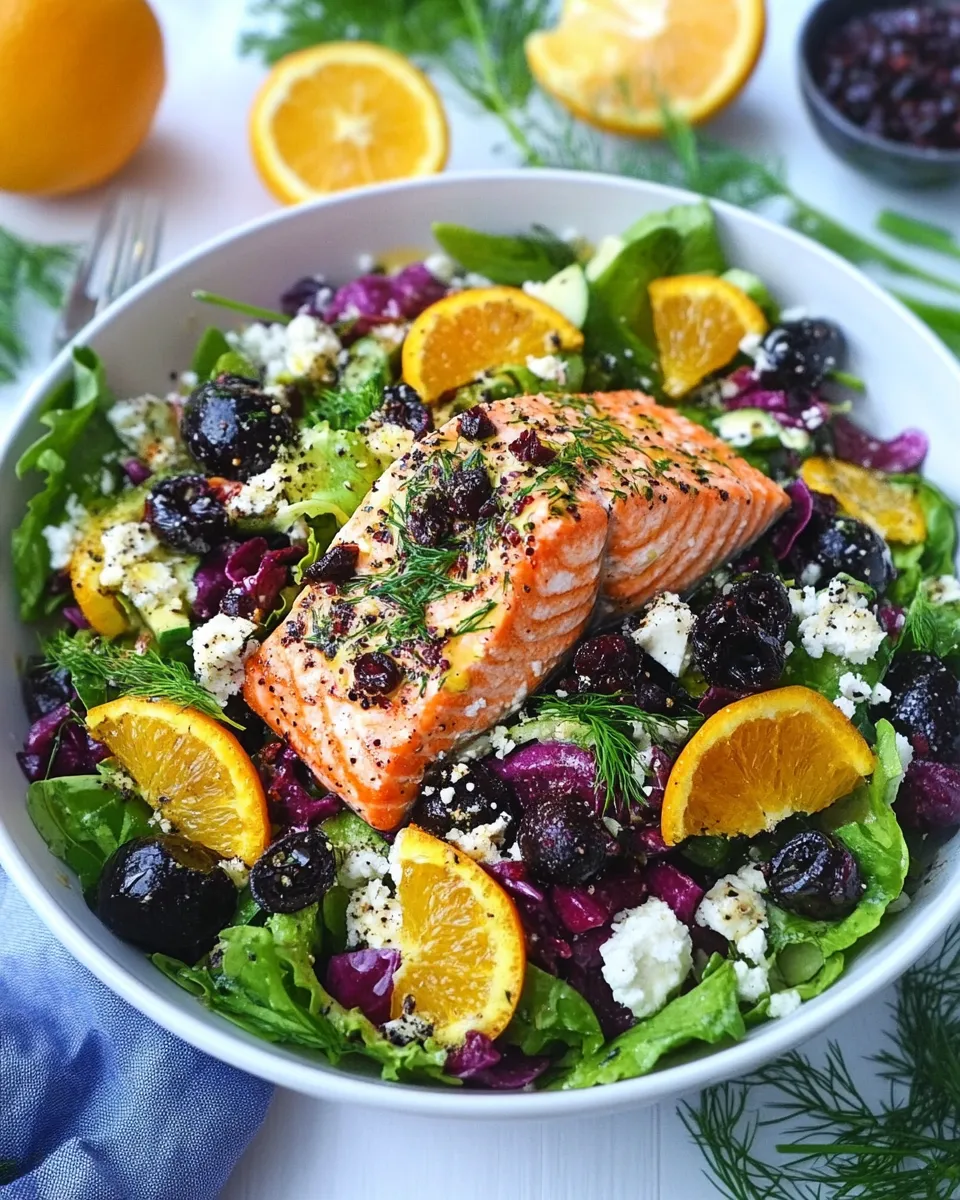
This salad is one of those lunch-or-light-dinner recipes that feels deliberate without being fussy. Citrus brightens rich salmon, while a chewy base of black rice and tender split peas keeps each bite substantial. The orange dill dressing pulls it all together — fresh, herby, and slightly sweet.
I like this dish because it hits a balance: warm grains, cool citrus, flaky fish, and crunchy pine nuts. It travels well for a picnic or makes a composed weekday dinner when you want something nutritious and a little special. The components are straightforward and mostly hands-off once the rice and peas are simmering.
Below you’ll find the exact ingredient list and step-by-step instructions to reproduce this on your first try. Read the watch-outs later in the post if you’re worried about technique; the fixes are practical and quick.
Ingredient List
- 4 salmon fillets with skin on or off depending on your choice — main protein; choose fillets of even thickness for uniform cooking.
- 1/2 teaspoon each of salt and pepper — for seasoning the salmon evenly before searing.
- 1 teaspoon of oregano — adds warm, savory herb notes to the salmon.
- 1/2 teaspoon of garlic powder — background garlic flavor without added moisture.
- 1 tablespoon of olive oil — for searing the salmon; hot oil gives a good crust.
- 1 tablespoon of unsalted butter — for toasting rice and split peas briefly to boost flavor.
- 1 1/2 cups of black rice — chewy, nutty base that holds up to dressing.
- 3/4 cup of green split peas — add body and protein to the grain bed.
- 1/2 teaspoon of salt — for the rice and peas while they cook.
- 2 3/4 cups of water stock or broth — cooking liquid for rice and peas; stock adds extra flavor.
- Juice of 1 blood orange – about 1/3 cup — the citrus backbone of the dressing; use fresh juice.
- 1 shallot minced — gives a mild oniony bite to the dressing.
- 2 Tablespoons of minced fresh dill — bright herbal lift; dill and citrus pair very well.
- 1 teaspoon of lemon juice — balances sweetness and rounds the dressing.
- 1/2 teaspoon of mustard — emulsifies the dressing and adds a touch of tang.
- 1 teaspoon of honey — soft sweetness to balance acidity.
- 1/4 cup of olive oil — the main body of the dressing; whisk into the citrus.
- pinch each of salt and pepper — seasoning for the dressing; adjust to taste.
- 1/2 cup of Blood orange segments cut up — fresh fruit in the salad for bursts of citrus.
- 1/3 cup of crumbled feta cheese — salty, creamy contrast to citrus and fish.
- 1/4 cup of toasted pine nuts — crunchy finish; toast lightly to avoid bitterness.
Blood Orange Salmon Salad With Orange Dill Dressing — Do This Next
- Make the rice and peas: In a 3–4 quart pot, heat 1 tablespoon unsalted butter over medium-high heat. When melted, add 1 1/2 cups black rice and 3/4 cup green split peas and sauté for about 1 minute. Sprinkle in 1/2 teaspoon salt, add 2 3/4 cups water, stock, or broth, and bring to a boil. Once boiling, reduce heat to low, cover, and simmer 30–45 minutes until the liquid is absorbed and the rice and peas are tender. Keep covered off the heat while you finish the rest.
- Make the orange dill dressing: In a small bowl or a jar with a lid, combine the juice of 1 blood orange (about 1/3 cup), 1 minced shallot, 2 tablespoons minced fresh dill, 1 teaspoon lemon juice, 1/2 teaspoon mustard, 1 teaspoon honey, 1/4 cup olive oil, and a pinch each of salt and pepper. Whisk or shake until blended and set aside.
- Season the salmon: Pat 4 salmon fillets dry. Evenly season both sides of the fillets with 1/2 teaspoon salt and 1/2 teaspoon pepper (total), 1 teaspoon oregano, and 1/2 teaspoon garlic powder.
- Cook the salmon: Preheat a skillet over medium-high heat and add 1 tablespoon olive oil. When the oil is hot, add the salmon fillets and sear 2 minutes per side. Reduce the heat to low, cover the skillet, and cook an additional 5–8 minutes, until salmon is cooked through to your liking. Remove from heat.
- Finish the salmon with dressing: After the salmon is cooked, drizzle about 1/2 teaspoon of the prepared dressing over each fillet.
- Assemble the salads: Toss the cooked rice and peas with 2 tablespoons of the dressing. Divide the rice mixture evenly between four plates. Add 1/2 cup blood orange segments (cut up), 1/3 cup crumbled feta cheese, and 1/4 cup toasted pine nuts to the rice on each plate and toss gently to combine.
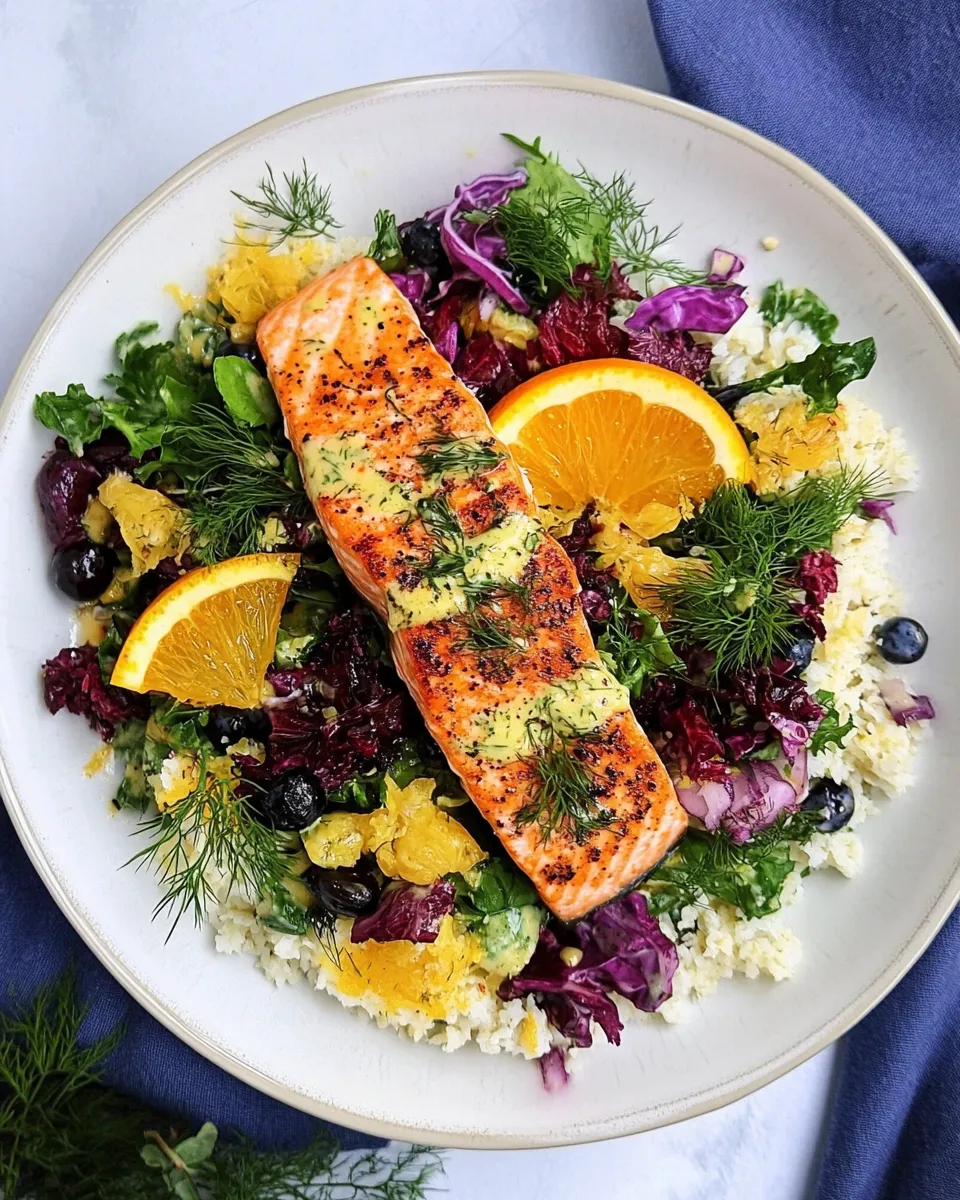
- Serve: Place one salmon fillet on top of each plate of rice and vegetables and drizzle additional dressing over the salads as desired.
Why This Blood Orange Salmon Salad With Orange Dill Dressing Stands Out
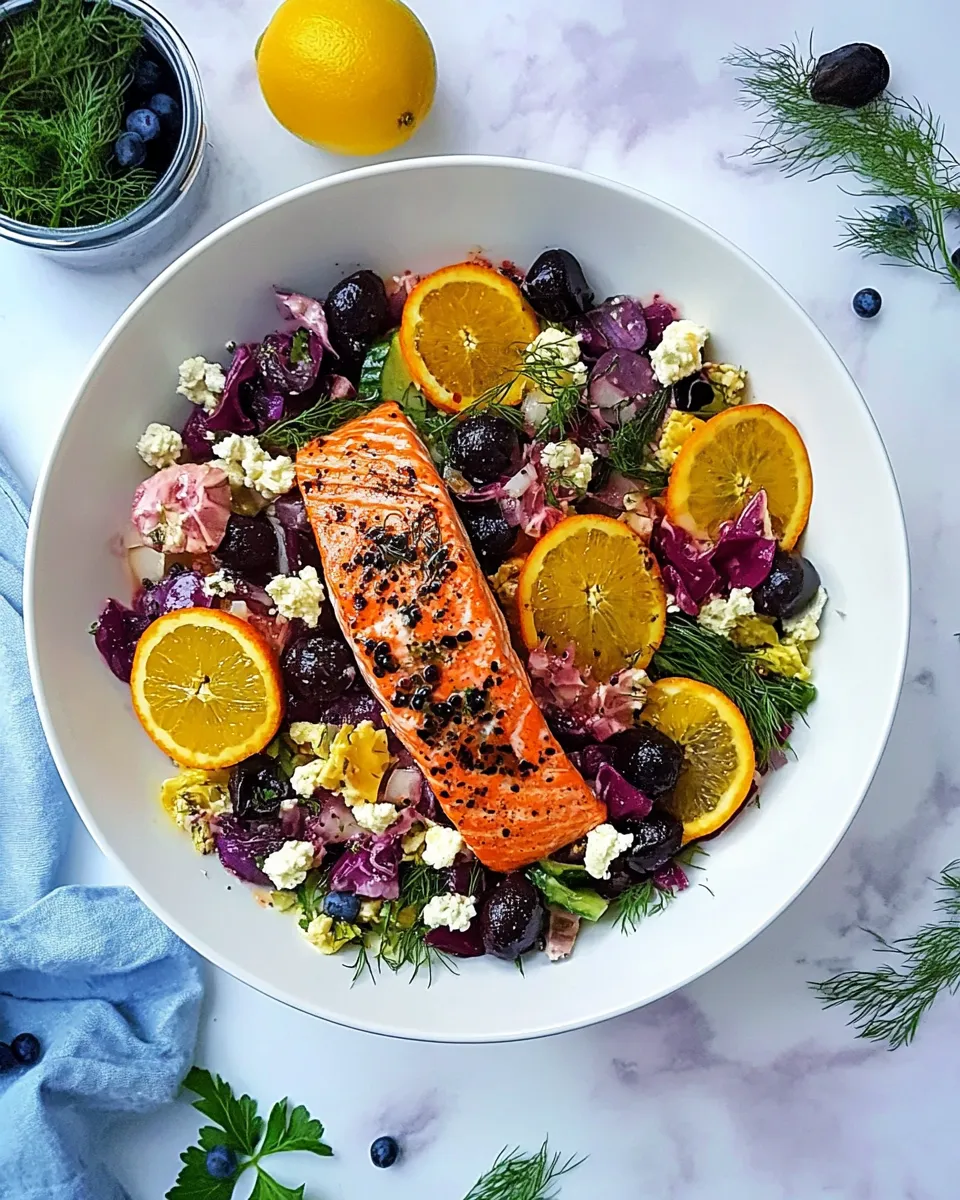
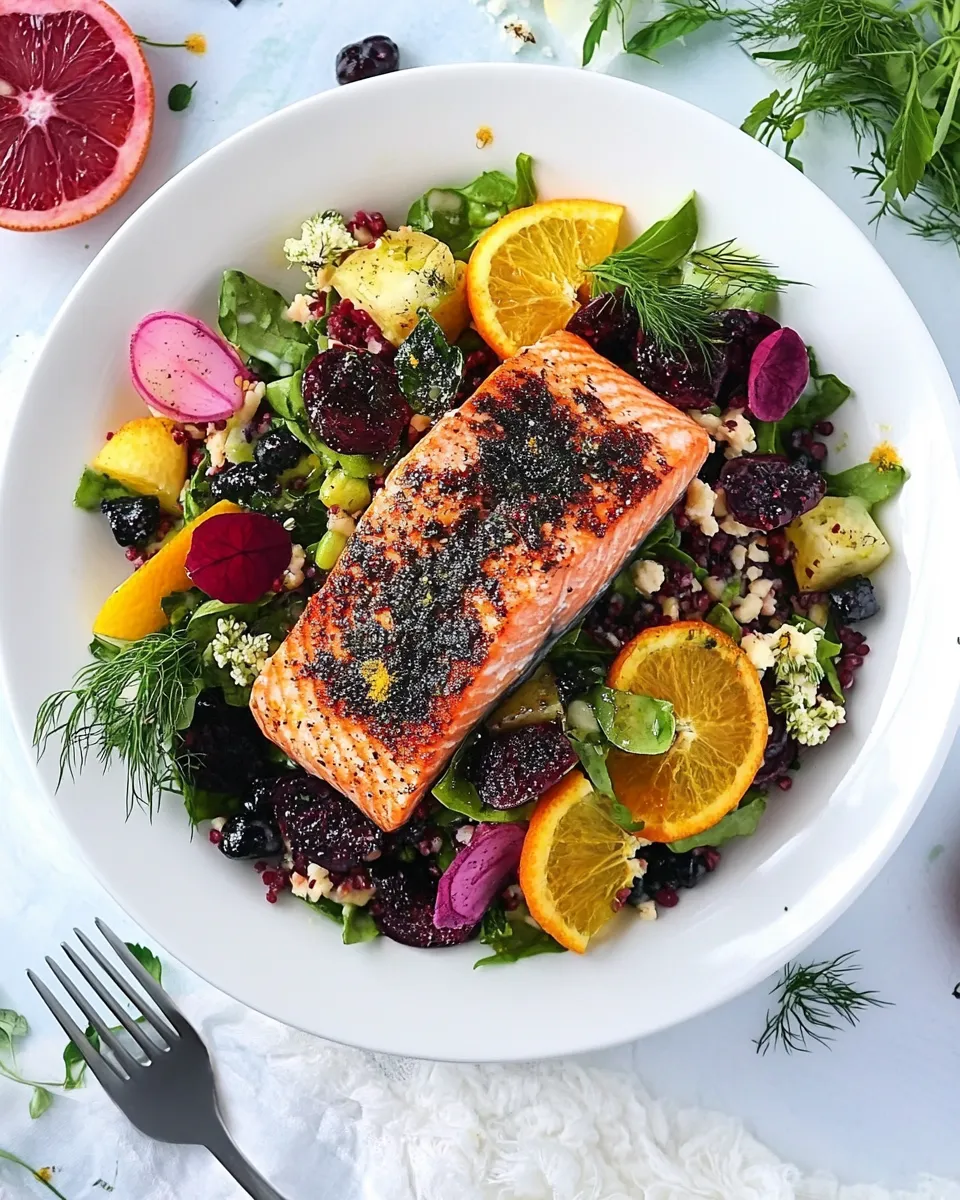
The salad is layered for contrast. Black rice gives a satisfying chew and earthy flavor. Green split peas soften into tender pockets that play off the rice texture. Salmon brings fat and richness while blood orange segments add a clean, juicy brightness.
The orange dill dressing is simple but decisive: acid, oil, mild sweetness, and fresh dill. It ties the citrus in the fruit and the salmon together and lightly seasons the rice without drowning it. The toasted pine nuts provide a toasty crunch that keeps the salad from feeling one-note.
Overall, it’s a composed plate — not a pile of mixed ingredients — so each component keeps its identity while working harmoniously.
Dairy-Free/Gluten-Free Swaps
- Dairy-free — omit the 1/3 cup crumbled feta cheese, or swap it for a store-bought dairy-free crumbled cheese if you keep packaged substitutes on hand.
- Gluten-free — recipe components are naturally gluten-free; ensure the 2 3/4 cups water/stock/broth you use is labeled gluten-free.
- Nut-free option — replace the 1/4 cup toasted pine nuts with toasted sunflower seeds or omit them entirely to avoid nut allergens.
What You’ll Need (Gear)
- 3–4 quart pot — for cooking the black rice and split peas together.
- Large skillet with lid — for searing and finishing the salmon.
- Small bowl or jar with lid — to whisk or shake the orange dill dressing.
- Measuring cups and spoons — accurate measures help the rice and dressing turn out consistently.
- Sharp knife and cutting board — for segmenting the blood orange and mincing the shallot and dill.
Watch Outs & How to Fix
Rice & Peas
- Under-cooked rice or peas: If the grain or peas are still a bit firm after 45 minutes, add 1/4 cup hot water, cover, and simmer for another 10 minutes. Let rest covered off the heat to finish steaming.
- Too mushy: If they overcook, cool them quickly on a sheet tray in a single layer and refrigerate — use the mixture chilled in a composed salad the next day.
Salmon
- Dry, overcooked salmon: Reduce the covered finishing time to 3–5 minutes depending on thickness. Always remove from heat a touch before you think it’s done; carryover will finish it.
- Sticking to the pan: Make sure the skillet is hot and the salmon is patted very dry. A light film of the 1 tablespoon olive oil helps prevent sticking.
Dressing
- Separating dressing: If oil separates from citrus, shake or whisk again just before dressing the salad. Emulsifiers like the 1/2 teaspoon mustard help, but citrus-heavy dressings benefit from a quick re-emulsify.
- Too tart: Add a touch more honey — a small additional pinch — and taste incrementally.
Dietary Customizations
- Lower sodium: Use low-sodium stock and reduce the added salt in the rice and on the salmon; let the feta add the finishing saltiness at the table if desired.
- Higher fiber/vegan option: Replace salmon with a hearty grilled vegetable or a roasted legume component and omit feta; emphasize the rice and split peas and add extra citrus segments for brightness.
- Make it heartier: Stir in a small handful of baby spinach or arugula to the warm rice and peas so it wilts slightly before plating.
Behind-the-Scenes Notes
Black rice is chosen intentionally: it holds shape, has a slightly sweet, nutty profile, and contrasts visually with blood orange segments. Green split peas cook faster than dried beans, so pairing them with black rice keeps the total cook time reasonable while adding plant protein.
Dill and citrus is a classic match for fish; the dill here is minced fresh to keep texture and color. The dressing is deliberately simple so it doesn’t overwhelm the salmon’s natural flavor.
Toast pine nuts briefly and watch them closely. They can go from golden to bitter in seconds, and that would negatively affect an otherwise balanced dish.
Keep-It-Fresh Plan
- Make-ahead components: Cooked black rice and split peas can be stored in an airtight container in the refrigerator for up to 3 days. The dressing will keep for 3–4 days refrigerated in a jar.
- Salmon: Best eaten the day it’s cooked. If you must refrigerate, cool quickly, then store covered for up to 2 days and reheat gently in a 275°F oven until warmed through to avoid drying out.
- Assembling later: Keep dressing, feta, pine nuts, and orange segments separate until serving to preserve textures.
Frequently Asked Questions
- Can I use another grain? Yes. Substitute cooked farro or brown rice if preferred; adjust cooking times and liquid ratios for those grains.
- Is blood orange essential? Blood oranges are preferred for their color and sweetness, but navel or cara cara oranges will work in a pinch; flavor will shift slightly.
- Can I grill the salmon instead? Absolutely. Grill over medium heat, 3–4 minutes per side depending on thickness, then finish with the 1/2 teaspoon dressing per fillet as directed.
- How do I keep the dressing from overpowering the salad? Toss only 2 tablespoons of the dressing into the rice and peas as instructed, then drizzle more sparingly over the plated salads so you control intensity per serving.
- Can I freeze leftovers? Cooked salmon and dressed salad components do not freeze well. Freeze plain cooked black rice only if needed; thaw and refresh with dressing when reheating.
Final Bite
This Blood Orange Salmon Salad With Orange Dill Dressing is straightforward to execute and rewarding to eat. It’s the kind of meal that looks like you put time into it, but most of the labor is passive. Follow the steps in order, keep an eye on the salmon during the final covered cook, and reserve extra dressing so people can adjust to taste. Serve it warm or at room temperature — it’s versatile, bright, and reliably satisfying.
Blood Orange Salmon Salad With Orange Dill Dressing
Ingredients
Ingredients
- 4 salmon filletswith skin on or off depending on your choice
- 1/2 teaspooneach of salt and pepper
- 1 teaspoonof oregano
- 1/2 teaspoonof garlic powder
- 1 tablespoonof olive oil
- 1 tablespoonof unsalted butter
- 1 1/2 cupsof black rice
- 3/4 cupof green split peas
- 1/2 teaspoonof salt
- 2 3/4 cupsof waterstock or broth
- Juice of 1 blood orange-about 1/3 cup
- 1 shallotminced
- 2 Tablespoonsof minced fresh dill
- 1 teaspoonof lemon juice
- 1/2 teaspoonof mustard
- 1 teaspoonof honey
- 1/4 cupof olive oil
- pincheach of salt and pepper
- 1/2 cupof Blood orange segmentscut up
- 1/3 cupof crumbled feta cheese
- 1/4 cupof toasted pine nuts
Instructions
Instructions
- Make the rice and peas: In a 3–4 quart pot, heat 1 tablespoon unsalted butter over medium-high heat. When melted, add 1 1/2 cups black rice and 3/4 cup green split peas and sauté for about 1 minute. Sprinkle in 1/2 teaspoon salt, add 2 3/4 cups water, stock, or broth, and bring to a boil. Once boiling, reduce heat to low, cover, and simmer 30–45 minutes until the liquid is absorbed and the rice and peas are tender. Keep covered off the heat while you finish the rest.
- Make the orange dill dressing: In a small bowl or a jar with a lid, combine the juice of 1 blood orange (about 1/3 cup), 1 minced shallot, 2 tablespoons minced fresh dill, 1 teaspoon lemon juice, 1/2 teaspoon mustard, 1 teaspoon honey, 1/4 cup olive oil, and a pinch each of salt and pepper. Whisk or shake until blended and set aside.
- Season the salmon: Pat 4 salmon fillets dry. Evenly season both sides of the fillets with 1/2 teaspoon salt and 1/2 teaspoon pepper (total), 1 teaspoon oregano, and 1/2 teaspoon garlic powder.
- Cook the salmon: Preheat a skillet over medium-high heat and add 1 tablespoon olive oil. When the oil is hot, add the salmon fillets and sear 2 minutes per side. Reduce the heat to low, cover the skillet, and cook an additional 5–8 minutes, until salmon is cooked through to your liking. Remove from heat.
- Finish the salmon with dressing: After the salmon is cooked, drizzle about 1/2 teaspoon of the prepared dressing over each fillet.
- Assemble the salads: Toss the cooked rice and peas with 2 tablespoons of the dressing. Divide the rice mixture evenly between four plates. Add 1/2 cup blood orange segments (cut up), 1/3 cup crumbled feta cheese, and 1/4 cup toasted pine nuts to the rice on each plate and toss gently to combine.
- Serve: Place one salmon fillet on top of each plate of rice and vegetables and drizzle additional dressing over the salads as desired.
Equipment
- 3-4 quart pot
- Skillet
- Small Bowl or Jar