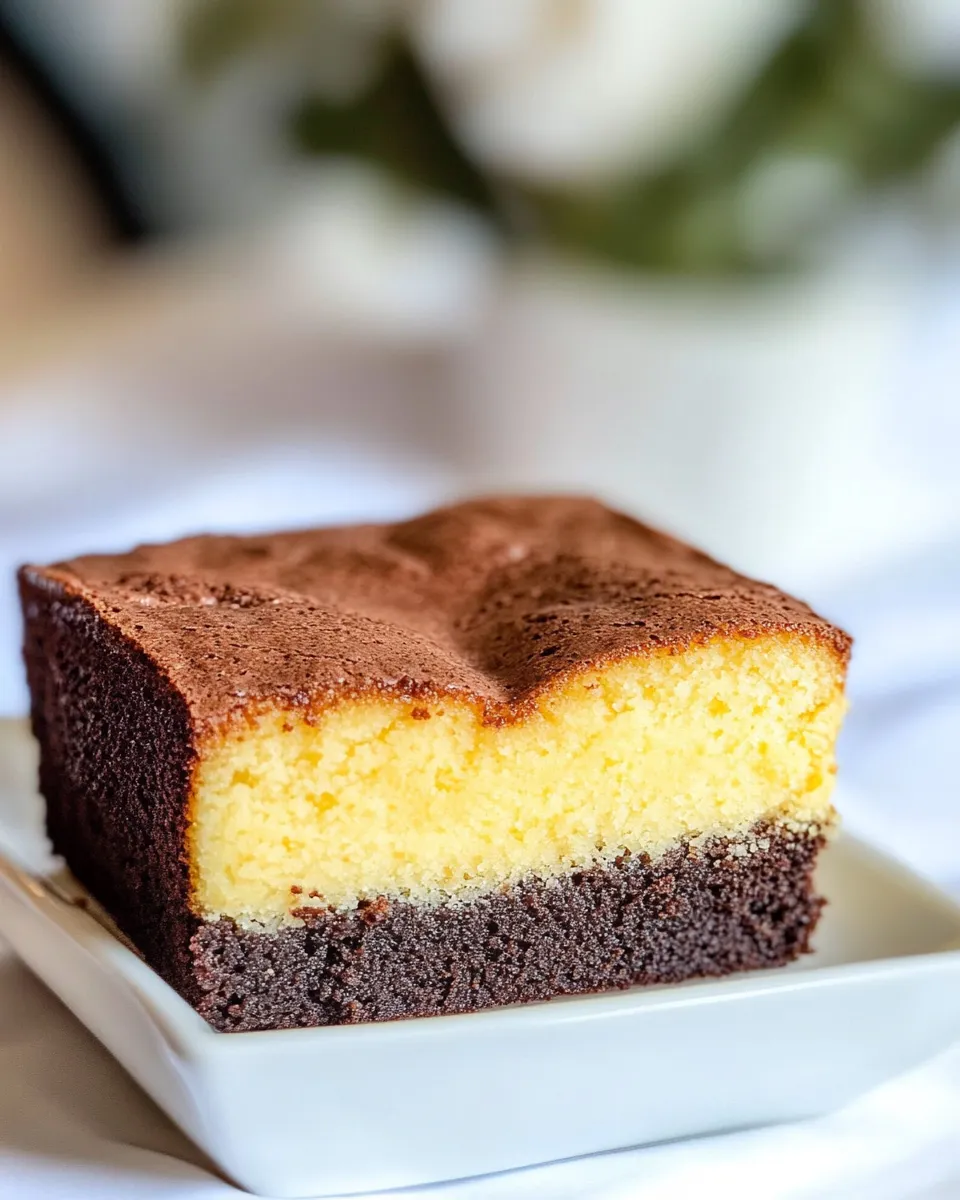
This is the kind of cake I reach for when I want drama without drama. A fudgy brownie base topped with a soft, buttery cake: two textures, one pan, and a result that feels indulgent but straightforward. It’s unfussy to make and reliable to serve, which is exactly what busy home bakers need.
Follow the steps in order and you’ll end up with a neat loaf that slices cleanly and pleases a crowd. Temperatures, timings, and little pauses in the method matter — especially resting the brownie layer before adding the cake batter. Those small pauses are where texture happens.
I’ll walk you through the ingredients, the method, common mistakes, sensible swaps, and storage. Read once, then keep the recipe at eye level while you bake. Let’s get into it.
Gather These Ingredients
- 140g (5 oz) dark chocolate, broken into pieces — provides the fudgy, intense chocolate flavor for the brownie layer; chop or buy small pieces for even melting.
- 50g (1¾ oz) unsalted butter — used in the brownie layer to create shine and help the chocolate melt smoothly; room temperature is fine for melting.
- 50g (1¾ oz) brown sugar — gives the brownie layer extra depth and a touch of chewiness; pack lightly when measuring.
- 1 egg, room temperature — binds the brownie batter and contributes to structure and gloss.
- 35g (1¼ oz) all-purpose flour — keeps the brownie layer tender; fold just until combined.
- 120g (4 oz) unsalted butter — the base of the butter cake; creaming this with sugar creates lift and tender crumb.
- 100g (3½ oz) sugar — sweetens and helps with aeration when creamed into the butter.
- 2 eggs, room temperature — added one at a time to maintain an even emulsion and a smooth cake batter.
- 120g (4 oz) all-purpose flour — main dry ingredient for the butter cake; sifting prevents lumps and ensures even distribution of the baking powder.
- 2g (0.07 oz) baking powder — the leavening that lightens the butter cake; measure carefully for consistent rise.
- 50ml fresh milk — loosens the butter batter and adds moisture; add at room temperature to avoid seizing the butter.
The Method for Brownie Butter Cake
- Preheat the oven to 180°C (350°F). Grease and line a 10 cm x 20 cm (4×8-inch) loaf pan with aluminum foil, leaving an overhang to lift the cake out later.
- Make the brownie layer: place 140 g dark chocolate and 50 g unsalted butter in a heatproof bowl over low heat (or directly in a small saucepan on the lowest setting). Stir gently until fully melted and smooth. Remove from heat.
- Stir 50 g brown sugar into the melted chocolate mixture until combined. Let the mixture cool for 2–3 minutes so it is warm but not hot.
- Add 1 egg to the chocolate mixture and beat or stir until fully incorporated and smooth.
- Fold in 35 g all-purpose flour until just combined and the batter is smooth. Scrape the batter into the prepared loaf pan and smooth the surface.
- Bake the brownie layer at 180°C (350°F) for 15 minutes. Remove the pan from the oven and immediately reduce the oven temperature to 160°C (320°F). Let the brownie layer rest in the pan for 5–10 minutes so it is set but still warm.
- Meanwhile make the butter cake batter: beat 120 g unsalted butter with 100 g sugar until the mixture is creamy and pale. Add the 2 eggs one at a time, beating well after each addition.
- Sift together 120 g all-purpose flour and 2 g baking powder. Fold the sifted dry ingredients into the butter-egg mixture in two additions, alternating with the 50 ml fresh milk (for example: half the flour, all the milk, then the remaining flour). Mix until the batter is smooth and homogeneous.
- Spoon and spread the butter cake batter evenly over the warm brownie layer in the pan, smoothing the top.
- Bake at 160°C (320°F) for 25–30 minutes, or until a skewer or cake tester inserted into the center comes out clean or with a few moist crumbs.
- Remove the pan from the oven and cool on a wire rack for 10–15 minutes. Use the foil overhang to lift the cake from the pan and cool completely on the rack before slicing.
Why It’s Crowd-Pleasing
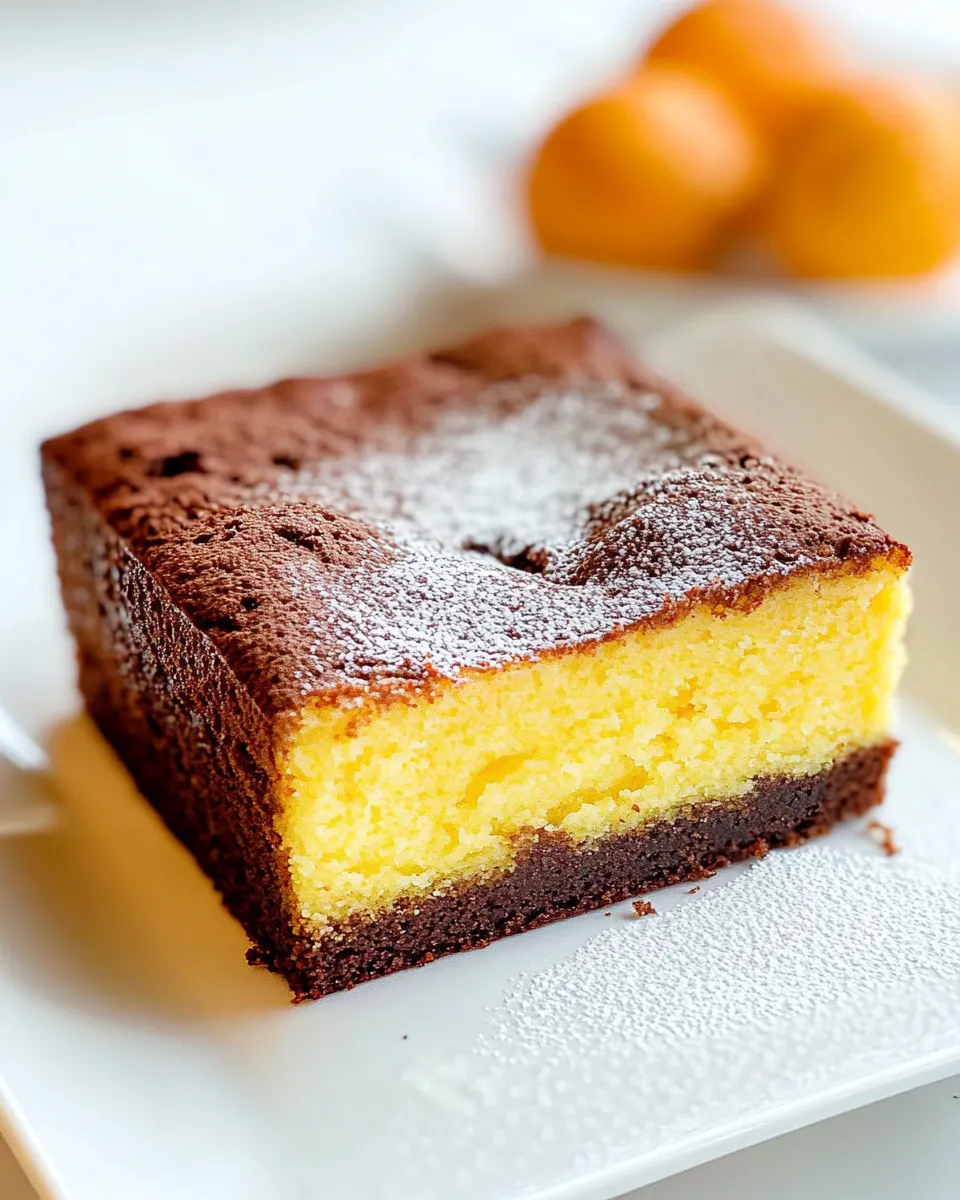
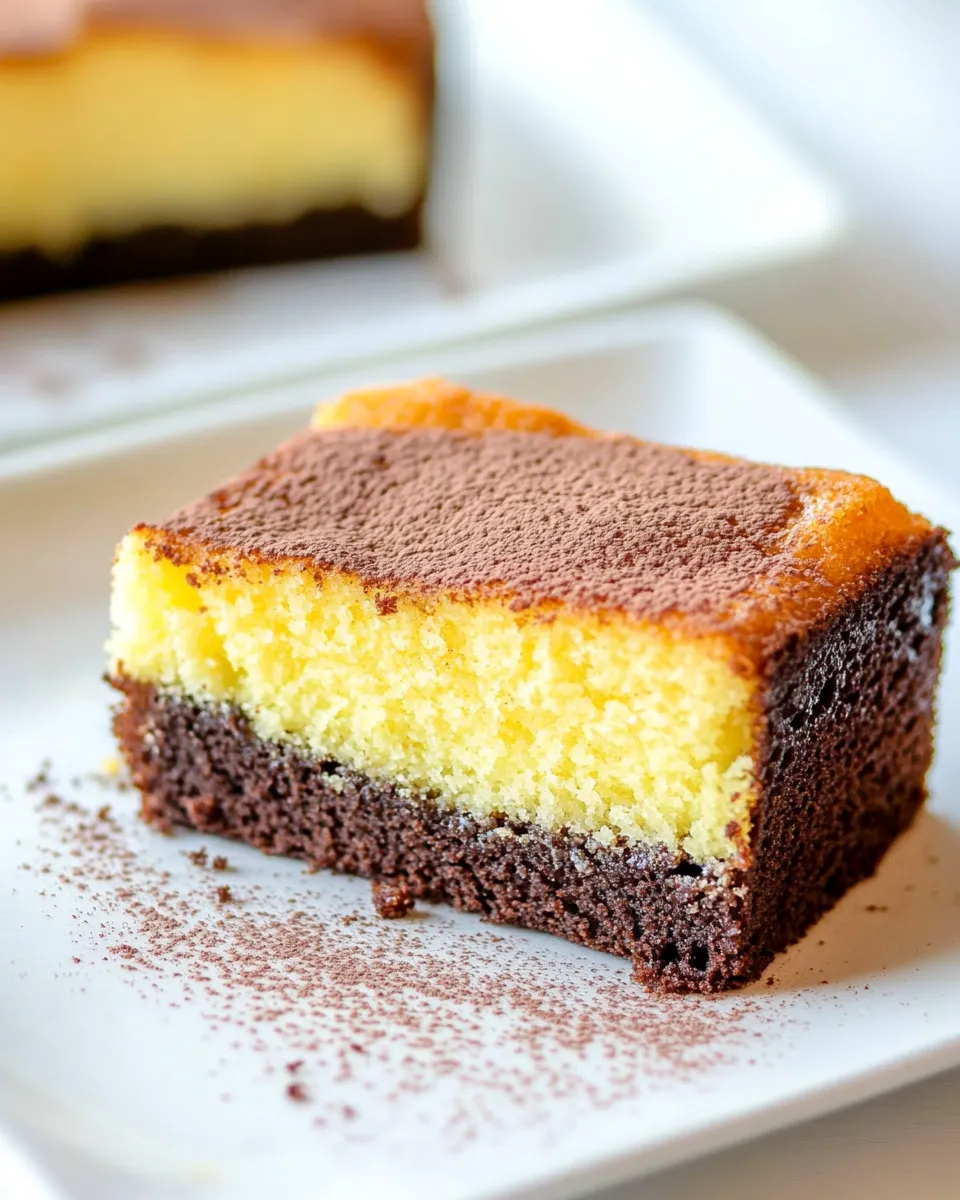
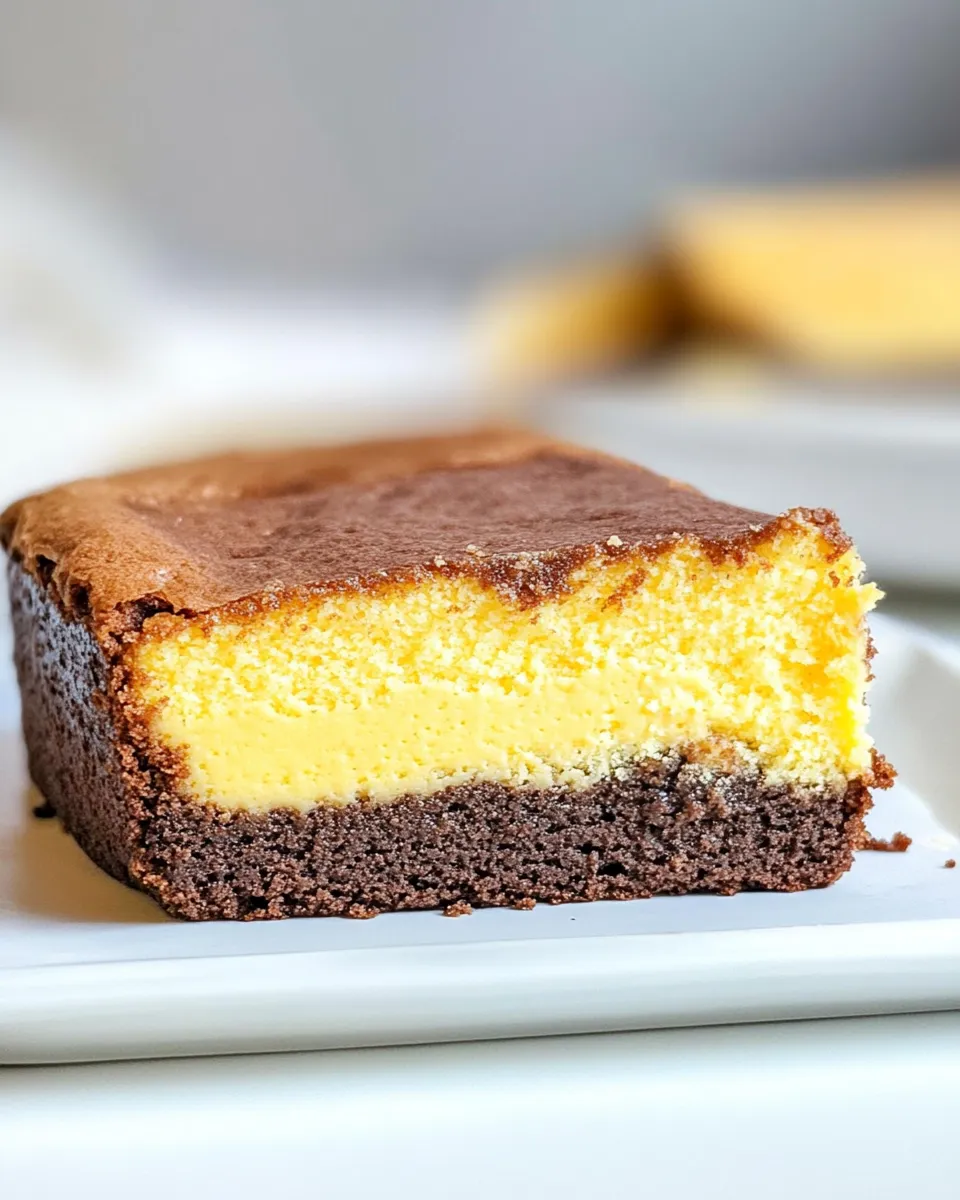
Two textures in one slice create immediate interest. The bottom layer is dense and fudgy; the top is buttery and tender. Together they offer contrast without complexity.
It serves well at coffee hour, potlucks, or as a simple dessert after dinner. People instinctively reach for the slice that looks rich but homey. The chocolate base reads indulgent while the butter cake keeps it approachable.
It also slices neatly and travels well. That makes it ideal for gatherings where you need something that looks composed but doesn’t require last-minute fussing.
Swap Guide
Safe swaps that won’t derail the bake
- Dark chocolate: use a good quality semi-sweet chocolate if that’s what you have. Flavor strength will vary; choose one you like to eat.
- Unsalted butter: you can use salted butter, but omit any extra salt in serving; salted butter will make the cake taste slightly saltier.
- Fresh milk: any neutral dairy milk works. If you must use a plant milk, use an unsweetened version for closest results.
What to avoid unless you’re experienced
- Substituting all the butter in the cake with oil will change texture and crumb significantly, so only do that if you know how oil-based cakes behave.
- Using cocoa powder instead of chopped chocolate for the brownie layer will require changes to fat and sugar; I don’t recommend it for this set of proportions.
Cook’s Kit
- 10 cm x 20 cm (4×8-inch) loaf pan — the recipe is scaled for this size; different pans change bake time and layer thickness.
- Aluminum foil — for lining and a clean lift-out.
- Heatproof bowl and small saucepan — for melting chocolate and butter gently.
- Electric mixer or wooden spoon — for creaming butter and sugar and for beating in eggs.
- Sifter or fine sieve — to combine flour and baking powder without lumps.
- Spatula — for folding and for spreading the batter evenly.
- Wire rack and skewer or cake tester — to check doneness and cool the cake properly.
Mistakes Even Pros Make
Overheating the chocolate. Keep the heat low and remove the bowl as soon as it’s smooth. Chocolate can seize or get grainy if it’s too hot.
Adding eggs cold. Cold eggs can break the emulsion and make the batter look curdled. Bring eggs to room temperature ahead of time.
Overmixing the brownie or cake batter. Especially when folding in flour, mix just until combined. Overworking develops gluten and tightens the crumb.
Ignoring the rest after the brownie bake. If you pour cold cake batter onto a hot, unstable brownie layer you’ll disturb the set. Let it rest 5–10 minutes as directed.
Wrong pan size. This loaf pan is specific. A larger pan will flatten the layers and change bake times — stick to the size or adjust cautiously.
Make It Fit Your Plan
Want this for a week of snacks? Slice and store as outlined below. Want to double for a party? Make two pans rather than scale the recipe up dramatically in one larger pan.
Looking to bring it to a picnic? Bake the cake fully, cool, then slice and pack in a single layer in an airtight container separated by parchment. Travel-friendly and tidy.
Need smaller portions? Cut thin slices. The loaf yields neat servings that plate well alongside whipped cream or a scoop of ice cream for a dessert course.
Notes on Ingredients
Dark chocolate: this is the backbone of the brownie layer. Flavors range widely, so choose something you enjoy eating on its own.
Brown sugar: contains molasses which adds moisture and a hint of caramel to the brownie layer. It also contributes to the chewiness.
Butter: unsalted keeps salt levels under your control. Butter also carries flavor and gives the cake that tender, short crumb.
Eggs: eggs give structure and richness. Adding them one at a time to the butter helps keep the batter stable and prevents curdling.
Flour and baking powder: measure flour properly — spoon into the cup or weigh. The small amount of baking powder in the cake lifts the crumb without producing a domed, airy cake.
Milk: thins the batter for easy spreading and keeps the finished cake moist. Room temperature milk blends more evenly into the butter mixture.
Storing Tips & Timelines
Room temperature: wrapped tightly or in an airtight container, Brownie Butter Cake keeps at room temperature for 1–2 days.
Refrigerator: store in an airtight container and it will last 4–5 days. Bring slices to room temperature before serving for best texture.
Freezer: wrap slices individually in plastic and freeze in a sealed container for up to 2 months. Thaw overnight in the refrigerator or at room temperature for a few hours.
Slicing tip: chill the loaf briefly (15–20 minutes) if you need very clean slices. Use a sharp knife wiped between cuts.
Brownie Butter Cake Q&A
Q: Can I use a different pan size? A: You can, but bake times and layer thickness will change. A larger pan will produce a thinner cake and shorter bake times; a smaller pan will make the layers thicker and require longer baking. Adjust with caution.
Q: Why did the brownie layer crack? A: A few surface cracks are normal. Overbaking or oven hotspots can cause more severe cracking. The top cake layer hides minor imperfections.
Q: How do I know when it’s done? A: The skewer should come out clean or with a few moist crumbs from the center of the top cake layer. The brownie base will remain fudgy; that’s expected.
Q: Can I make this ahead? A: Yes. Bake, cool completely, then wrap or store in an airtight container. It keeps well and can be frozen as noted above.
Q: My cake sank in the middle. What happened? A: That usually means the cake needed longer in the oven or was disturbed when cooling. Make sure the top cake layer is fully set before removing from the pan; follow the cooling times.
Let’s Eat
Take a deep breath and slice confidently. A good loaf looks modest but tastes intentional — fudgy at the base, soft and buttery on top. Serve plain, with a dusting of powdered sugar, or a small spoon of cream if you want to elevate it.
This recipe rewards patience more than technique. Keep everything at hand, follow the steps, and you’ll get a loaf that’s satisfying to bake and to share. Slice, plate, and enjoy with people you like.
Brownie Butter Cake
Ingredients
Ingredients
- 140 g 5 ozdark chocolate, broken into pieces
- 50 g 1 3/4 ozunsalted butter
- 50 g 1 3/4 ozbrown sugar
- 1 egg room temperature
- 35 g 1 1/4 ozall-purpose flour
- 120 g 4 ozunsalted butter
- 100 g 3 1/2 ozsugar
- 2 eggs room temperature
- 120 g 4 ozall-purpose flour
- 2 g 0.07 ozbaking powder
- 50 mlfresh milk
Instructions
Instructions
- Preheat the oven to 180°C (350°F). Grease and line a 10 cm x 20 cm (4×8-inch) loaf pan with aluminum foil, leaving an overhang to lift the cake out later.
- Make the brownie layer: place 140 g dark chocolate and 50 g unsalted butter in a heatproof bowl over low heat (or directly in a small saucepan on the lowest setting). Stir gently until fully melted and smooth. Remove from heat.
- Stir 50 g brown sugar into the melted chocolate mixture until combined. Let the mixture cool for 2–3 minutes so it is warm but not hot.
- Add 1 egg to the chocolate mixture and beat or stir until fully incorporated and smooth.
- Fold in 35 g all-purpose flour until just combined and the batter is smooth. Scrape the batter into the prepared loaf pan and smooth the surface.
- Bake the brownie layer at 180°C (350°F) for 15 minutes. Remove the pan from the oven and immediately reduce the oven temperature to 160°C (320°F). Let the brownie layer rest in the pan for 5–10 minutes so it is set but still warm.
- Meanwhile make the butter cake batter: beat 120 g unsalted butter with 100 g sugar until the mixture is creamy and pale. Add the 2 eggs one at a time, beating well after each addition.
- Sift together 120 g all-purpose flour and 2 g baking powder. Fold the sifted dry ingredients into the butter-egg mixture in two additions, alternating with the 50 ml fresh milk (for example: half the flour, all the milk, then the remaining flour). Mix until the batter is smooth and homogeneous.
- Spoon and spread the butter cake batter evenly over the warm brownie layer in the pan, smoothing the top.
- Bake at 160°C (320°F) for 25–30 minutes, or until a skewer or cake tester inserted into the center comes out clean or with a few moist crumbs.
- Remove the pan from the oven and cool on a wire rack for 10–15 minutes. Use the foil overhang to lift the cake from the pan and cool completely on the rack before slicing.
Equipment
- 10 cm x 20 cm (4×8-inch) loaf pan
- Aluminum Foil
- Heatproof bowl
- Saucepan
- Mixing bowls
- Whisk
- Spatula
- Sifter
- Oven
- Wire Rack
Notes
Once the brownie layer is baked, I pour the butter cake batter quickly onto the hot brownie. The batter melts instantly and spreads evenly over the top.
You can also put the butter cake batter into a piping bag with a large hole at the tip. This makes it easy to quickly pipe the batter onto the brownie layer without making a mess.
Gently tap and shake the pan to smooth out the batter. This gives it a nice, even finish once it’s baked.