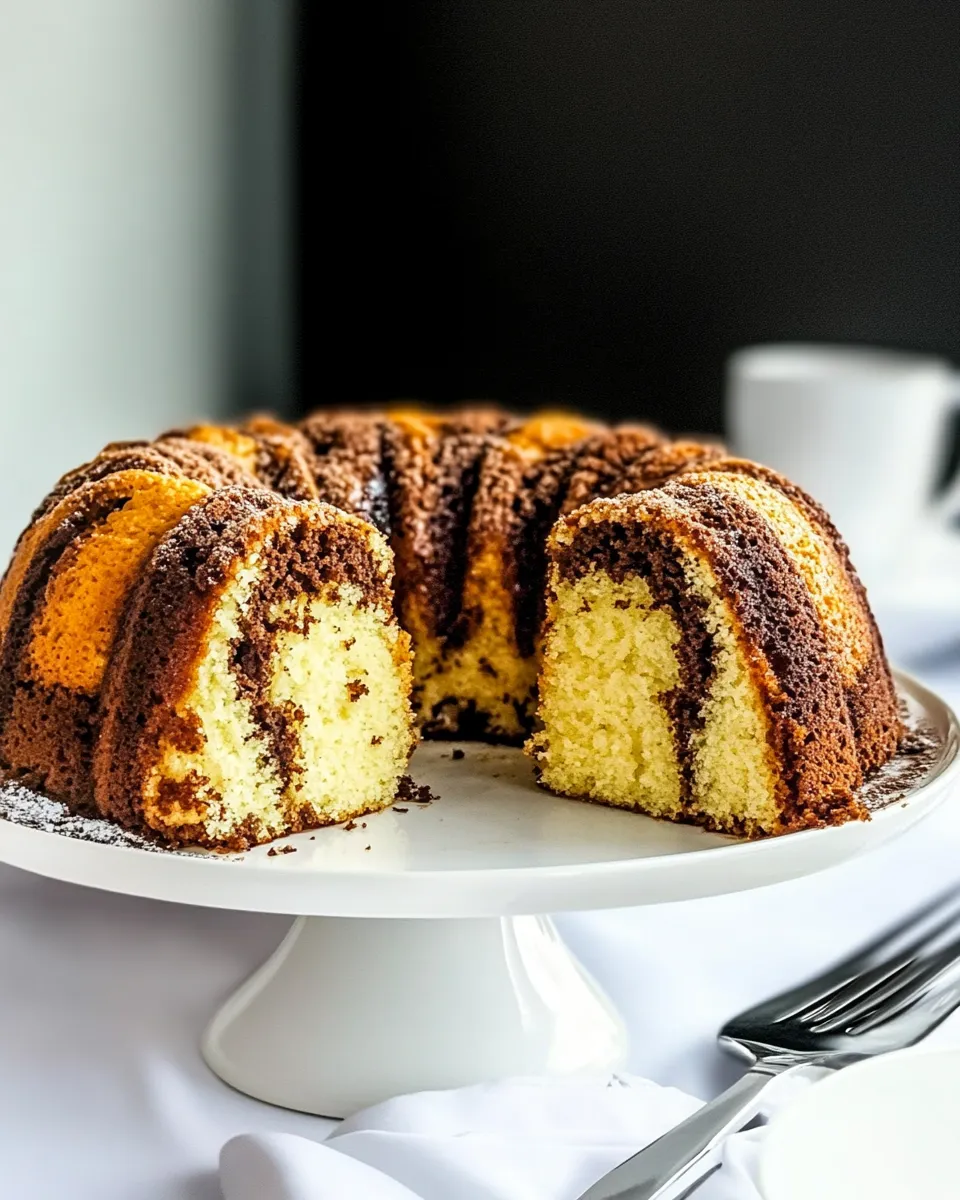
This Bundt Coffee Cake is the one I reach for when I want a cake that feels both homey and a little bit special. It has a tender, sour-cream–rich crumb and a ribbon of cinnamon and chopped walnuts threaded through each slice. It’s the kind of cake that fills the kitchen with a warm, cinnamon-sugar scent and makes a slow morning feel deliberate and good.
It’s straightforward to make and forgiving in the ways that matter: the batter holds up well, the cinnamon–nut ribbon gives texture and flavor without fuss, and the Bundt shape makes an impressive presentation with almost no extra work. I’ll walk you through the exact steps, point out the small shifts that change the outcome, and share storage and timing tips so you can bring this cake to a brunch or keep it around for coffee breaks all week.
No frills, no gimmicks — just a reliable coffee cake that bakes up beautifully in a 10-inch tube or Bundt pan. Read through the ingredients and directions once, gather your tools, and you’ll have a dependable cake in about an hour and a half from start to finish.
The Essentials
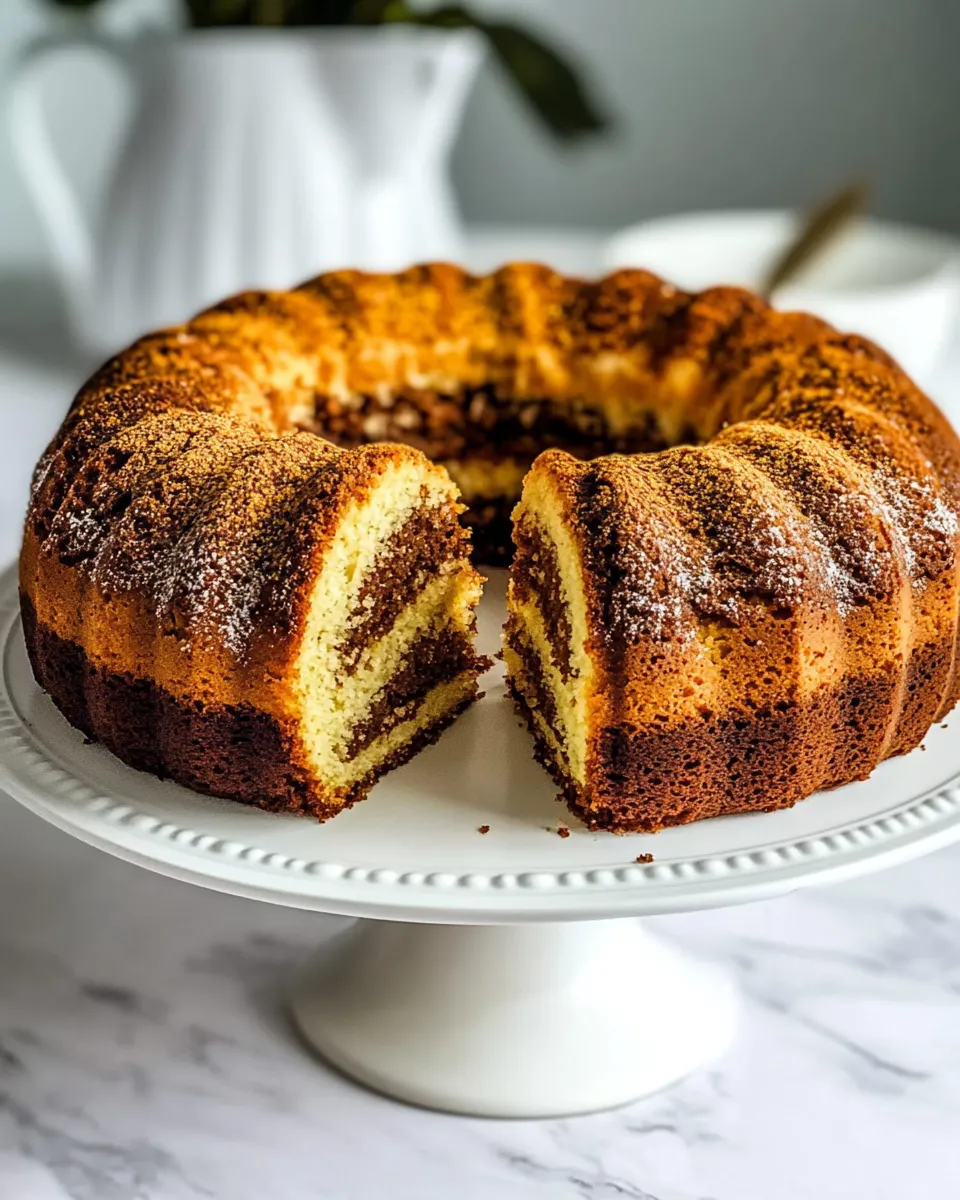
Yield: One 10-inch Bundt cake. Hands-on time: about 20–30 minutes. Bake time: 60–70 minutes. Cooling is important—don’t rush unmolding.
Why this version? The combination of full-fat sour cream and creamed butter/sugar gives the cake a moist, tender crumb with good structure. The cinnamon–nut mixture is split from the total sugar so you get a clear, spiced swirl without drying the cake.
- Texture — Rich crumb from sour cream; sturdy enough to slice cleanly.
- Flavor — Vanilla in the batter and cinnamon in the ribbon make a classic profile that pairs with coffee.
- Presentation — Bundt shape gives slices a defined, elegant look with minimal effort.
Ingredients
- 1 cup butter, softened — Adds richness and structure; bring to room temperature for smooth creaming.
- 2 3/4 cups white sugar, divided — Part goes in the batter, part becomes the cinnamon–nut ribbon; measure and split as instructed.
- 4 eggs, room temperature — Help emulsify and lift the cake; room temp eggs incorporate more evenly.
- 2 teaspoons vanilla extract — Brightens and rounds the cake’s flavor.
- 3 cups all-purpose flour — The main structure; spoon and level for accurate measure.
- 2 teaspoons baking powder — Primary leavening to give lift.
- 1 teaspoon baking soda — Helps with rise and tender crumb when used with sour cream.
- 1 teaspoon salt — Balances the sweetness and amplifies flavor.
- 2 cups sour cream, full fat — Keeps the cake moist and adds a subtle tang.
- 2 tablespoons ground cinnamon — For the cinnamon–nut ribbon; use fresh ground for best aroma.
- 1/2 cup chopped walnuts — Adds crunch and a toasty note; can be lightly toasted if you prefer a deeper flavor.
From Start to Finish: Bundt Coffee Cake
- Preheat the oven to 350°F (175°C). Grease and flour a 10-inch tube or Bundt pan; set aside.
- In a small bowl, combine 3/4 cup white sugar, 2 tablespoons ground cinnamon, and 1/2 cup chopped walnuts; set this cinnamon–nut mixture aside.
- In a large mixing bowl, cream 1 cup softened butter with 2 cups white sugar until light and fluffy.
- Add the 4 eggs one at a time, beating well after each addition. Stir in 2 teaspoons vanilla extract.
- In a separate bowl, whisk together 3 cups all-purpose flour, 2 teaspoons baking powder, 1 teaspoon baking soda, and 1 teaspoon salt.
- Add the flour mixture to the creamed mixture in three additions, alternating with the 2 cups sour cream — begin and end with the flour mixture. Mix just until combined after each addition.
- Spoon one-third of the batter into the prepared pan and spread evenly. Sprinkle one-third of the cinnamon–nut mixture evenly over the batter. Repeat two more times (batter, cinnamon–nut; batter, cinnamon–nut), finishing with the cinnamon–nut mixture on top.
- Bake in the preheated oven for 60–70 minutes, or until a toothpick inserted near the center comes out clean.
- Cool the cake in the pan on a wire rack for 10 minutes. Run a knife around the pan if needed, invert the cake onto the wire rack, remove the pan, and let the cake cool completely before slicing.
Why It Works Every Time
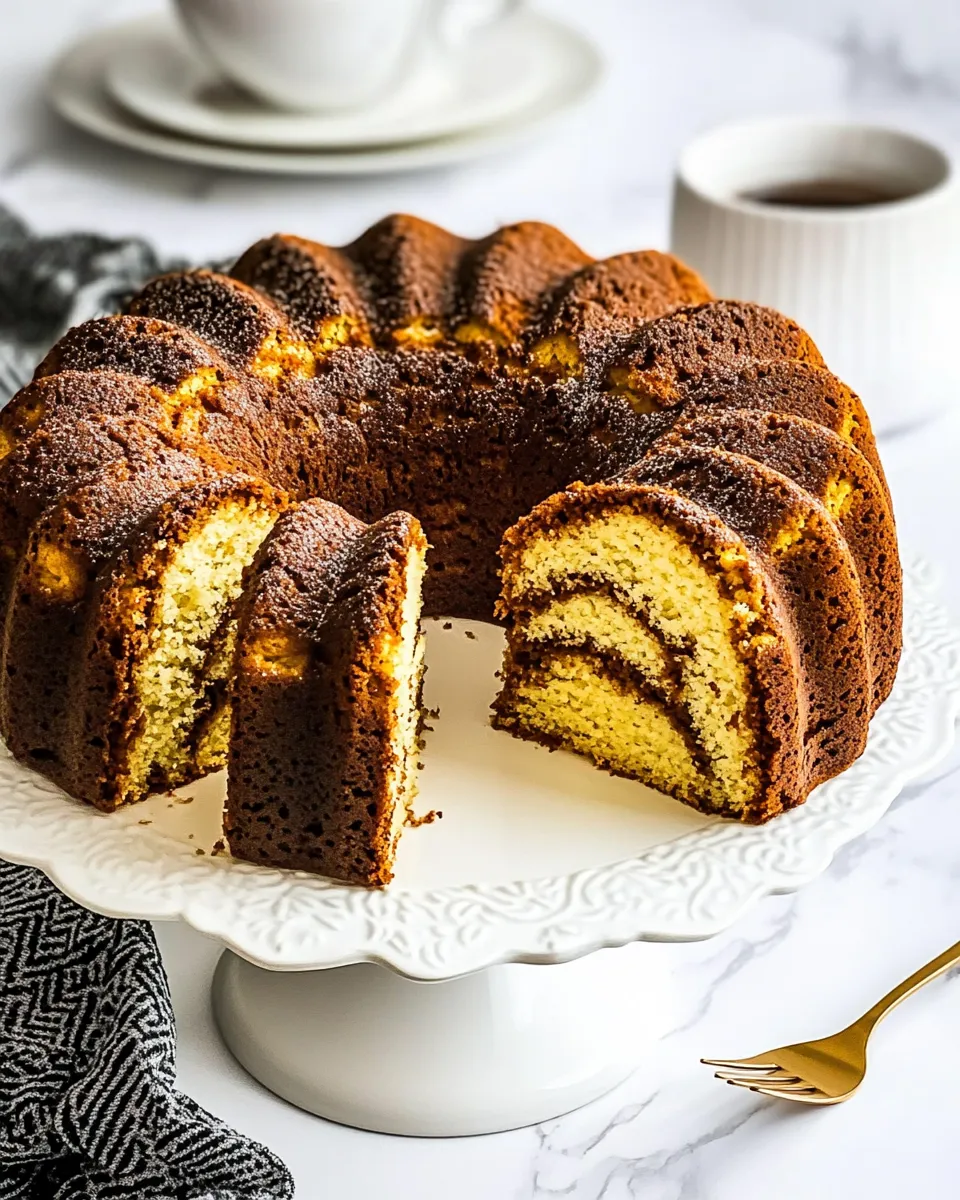
There are a few deliberate choices in this recipe that make it dependable. First, creaming the butter with most of the sugar incorporates air and sets the stage for a tender, well-risen cake. Adding eggs one at a time lets them fully emulsify into the batter so the texture stays even.
The sour cream is crucial. Its fat content keeps the crumb moist, and the slight acidity interacts with the baking soda to fine-tune the leavening. Alternating the flour with the sour cream prevents overmixing and keeps the gluten development in check, which is why the directions emphasize adding the flour mixture in three parts and beginning and ending with it.
Finally, the layer method for the cinnamon–nut mixture gives even distribution so each slice has a consistent ribbon of spiced sweetness rather than pockets or clumps.
Swap Guide
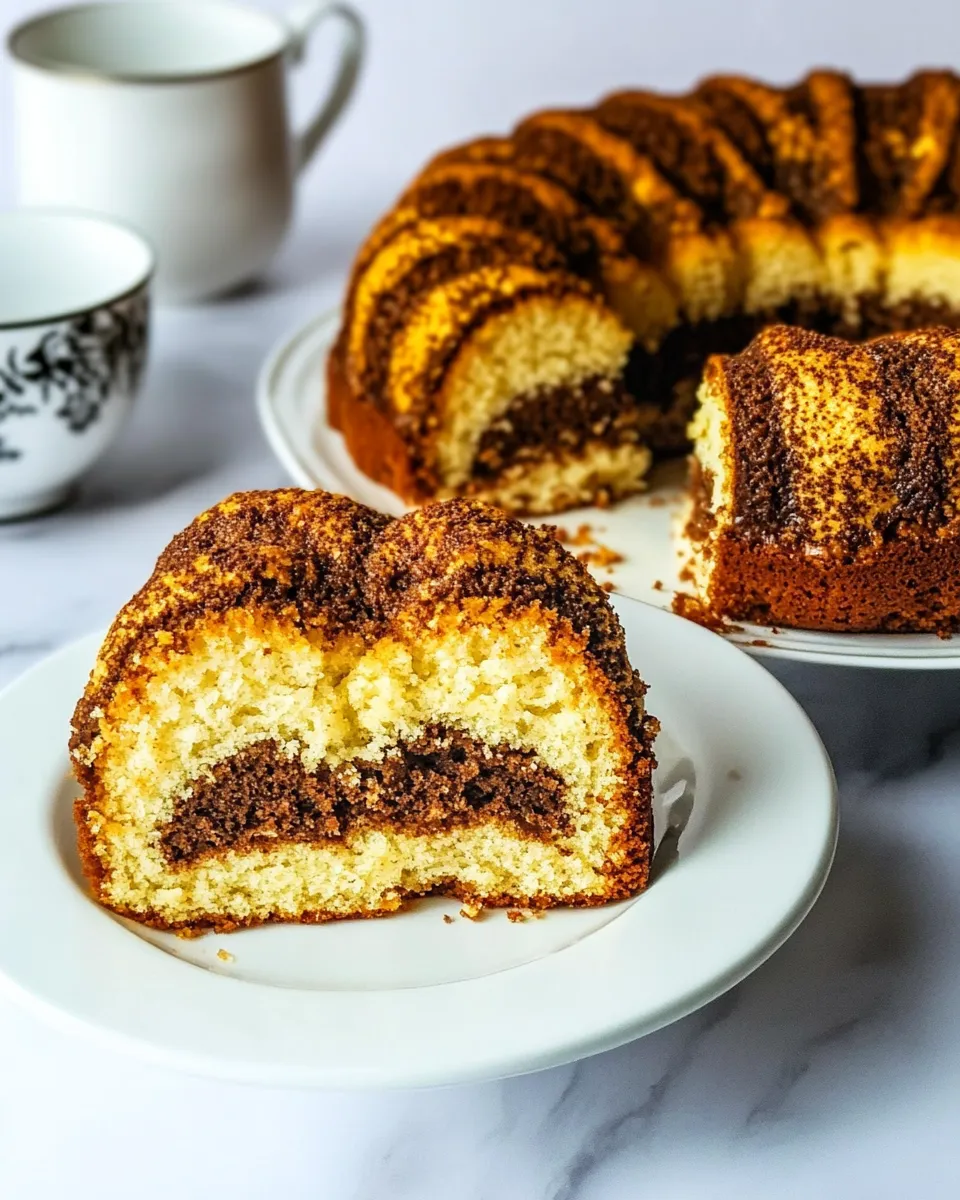
Small swaps can work, but stick close to the structure for best results.
- Butter — You can use European-style butter for a slightly richer flavor; do not substitute all butter with oil because texture will change.
- Sour cream — Full-fat is recommended. If you must substitute, use plain full-fat Greek yogurt, but expect a subtly tangier cake.
- Walnuts — Pecans are a direct swap if you prefer their flavor. Omit nuts for nut-free; consider increasing cinnamon fractionally or adding a teaspoon of vanilla to the cinnamon layer for more depth.
- Sugar — The recipe uses white granulated sugar. Substituting part brown sugar will add moisture and a caramel note but will slightly darken the crumb.
Equipment & Tools
- 10-inch tube or Bundt pan — The recipe and bake time are calibrated to this size; a different pan will change baking dynamics.
- Electric mixer — Hand or stand mixer makes creaming and egg incorporation easier and more consistent.
- Wire rack — For cooling; allow the cake to cool completely before slicing to avoid crumbling.
- Measuring cups and spoons — Accurate measuring keeps the balance of wet and dry correct.
- Spatula and small bowl — For mixing cinnamon–nut layer and for folding batter as needed.
Learn from These Mistakes
Here are the common slips that affect the outcome and how to avoid them.
- Under-greasing the pan — Bundt pans have lots of nooks. Grease and flour thoroughly; use a pastry brush or a spray designed for baking if needed.
- Overmixing after adding flour — Mix just until combined. Overworking develops gluten and can lead to a tough cake.
- Opening the oven too soon — The cake needs steady heat to rise. Wait until at least 50 minutes before checking, then monitor closely.
- Not cooling before unmolding — If you try to invert the cake while it’s too hot, it can break. Ten minutes in the pan, then invert onto a rack and cool fully.
Fresh Takes Through the Year
Small seasonal touches keep this cake interesting across months.
- Fall — Add a pinch of nutmeg or replace half the cinnamon with pumpkin pie spice for a warmer profile.
- Winter — Stir a teaspoon of orange zest into the batter for a citrus lift that brightens the cinnamon.
- Spring — Replace walnuts with slivered almonds and toss them lightly in a teaspoon of sugar before layering for a delicate crunch.
- Summer — Serve thin slices with fresh berries and a dollop of unsweetened whipped cream rather than a glaze.
Testing Timeline
I test this cake with the bake times and temperatures listed. Expect 60–70 minutes in a 10-inch Bundt pan at 350°F. Ovens vary; aim for the toothpick test near the center: it should come out clean or with a few moist crumbs.
Timing notes: if you test earlier because your pan is darker (it absorbs more heat), start checking at 55 minutes. If your oven runs cool, you may need the full 70 minutes. Keep an eye after 50 minutes and test in increments of 3–5 minutes.
Save It for Later
Storage is simple and keeps the cake moist.
Room temperature
Wrap the cooled cake tightly with plastic wrap or store in an airtight cake container. It will keep 2–3 days at room temperature in a cool spot.
Refrigeration
If you prefer to refrigerate, wrap it well to prevent drying and bring slices to room temperature before serving for the best texture. Refrigerated, it will keep 4–5 days.
Freezing
To freeze, wrap the cooled cake in plastic wrap and then a layer of foil. Freeze for up to 2 months. Thaw in the refrigerator overnight and then bring to room temperature before serving.
Your Questions, Answered
Q: Can I halve the recipe? A: Halving for a smaller pan requires recalculating bake time and finding a smaller Bundt or tube pan. This recipe is optimized for a 10-inch tube or Bundt pan.
Q: Can I make this ahead? A: Yes. Bake a day ahead and store at room temperature. The flavor actually settles nicely overnight.
Q: What if my cinnamon layer sinks? A: If the cinnamon–nut layer is too heavy or the batter too thin, it can sink. Make sure you spoon and spread the batter evenly and keep the cinnamon–nut mix dry (don’t add extra liquid).
See You at the Table
Make the cake on a slow morning or the night before a small gathering. It slices well, stores well, and fades into the background in the best way—supporting conversation and coffee instead of stealing the show. If you bake it, take a photo of the cross-section and note whether you prefer more or less cinnamon next time. Little tweaks over a couple of bakes will make it yours.
Thanks for baking along. If you try this Bundt Coffee Cake, tell me which swap you made or how your first slice tasted. There’s something satisfying about a recipe that reliably performs and invites a small, personal change each time.

Bundt Coffee Cake
Ingredients
Ingredients
- 1 cupbuttersoftened
- 2 3/4 cupswhite sugardivided
- 4 eggsroom temperature
- 2 teaspoonsvanilla extract
- 3 cupsall-purpose flour
- 2 teaspoonsbaking powder
- 1 teaspoonbaking soda
- 1 teaspoonsalt
- 2 cupssour creamfull fat
- 2 Tablespoonsground cinnamon
- 1/2 cupchopped walnuts
Instructions
Instructions
- Preheat the oven to 350°F (175°C). Grease and flour a 10-inch tube or Bundt pan; set aside.
- In a small bowl, combine 3/4 cup white sugar, 2 tablespoons ground cinnamon, and 1/2 cup chopped walnuts; set this cinnamon–nut mixture aside.
- In a large mixing bowl, cream 1 cup softened butter with 2 cups white sugar until light and fluffy.
- Add the 4 eggs one at a time, beating well after each addition. Stir in 2 teaspoons vanilla extract.
- In a separate bowl, whisk together 3 cups all-purpose flour, 2 teaspoons baking powder, 1 teaspoon baking soda, and 1 teaspoon salt.
- Add the flour mixture to the creamed mixture in three additions, alternating with the 2 cups sour cream — begin and end with the flour mixture. Mix just until combined after each addition.
- Spoon one-third of the batter into the prepared pan and spread evenly. Sprinkle one-third of the cinnamon–nut mixture evenly over the batter. Repeat two more times (batter, cinnamon–nut; batter, cinnamon–nut), finishing with the cinnamon–nut mixture on top.
- Bake in the preheated oven for 60–70 minutes, or until a toothpick inserted near the center comes out clean.
- Cool the cake in the pan on a wire rack for 10 minutes. Run a knife around the pan if needed, invert the cake onto the wire rack, remove the pan, and let the cake cool completely before slicing.
Equipment
- 10-inch tube or Bundt pan
- Small Bowl
- Large Mixing Bowl
- Wire Rack
- Knife
- toothpick
Notes
Tip for removing from the bundt pan:
First, make sure you grease and flour the pan before baking the cake. This will make it much easier to turn it out. When the cake has cooled for ten minutes, place the baking rack on top and then invert to turn the cake over in the pan. It should slide right out!
Optional Glaze:
Want to sweeten it up even more? Make a powdered sugar glaze to drizzle on top of it. Simply mix together 1 c. powdered sugar, 2 Tbsp milk and 1 tsp vanilla extract and drizzle of the top of cooled coffee cake.