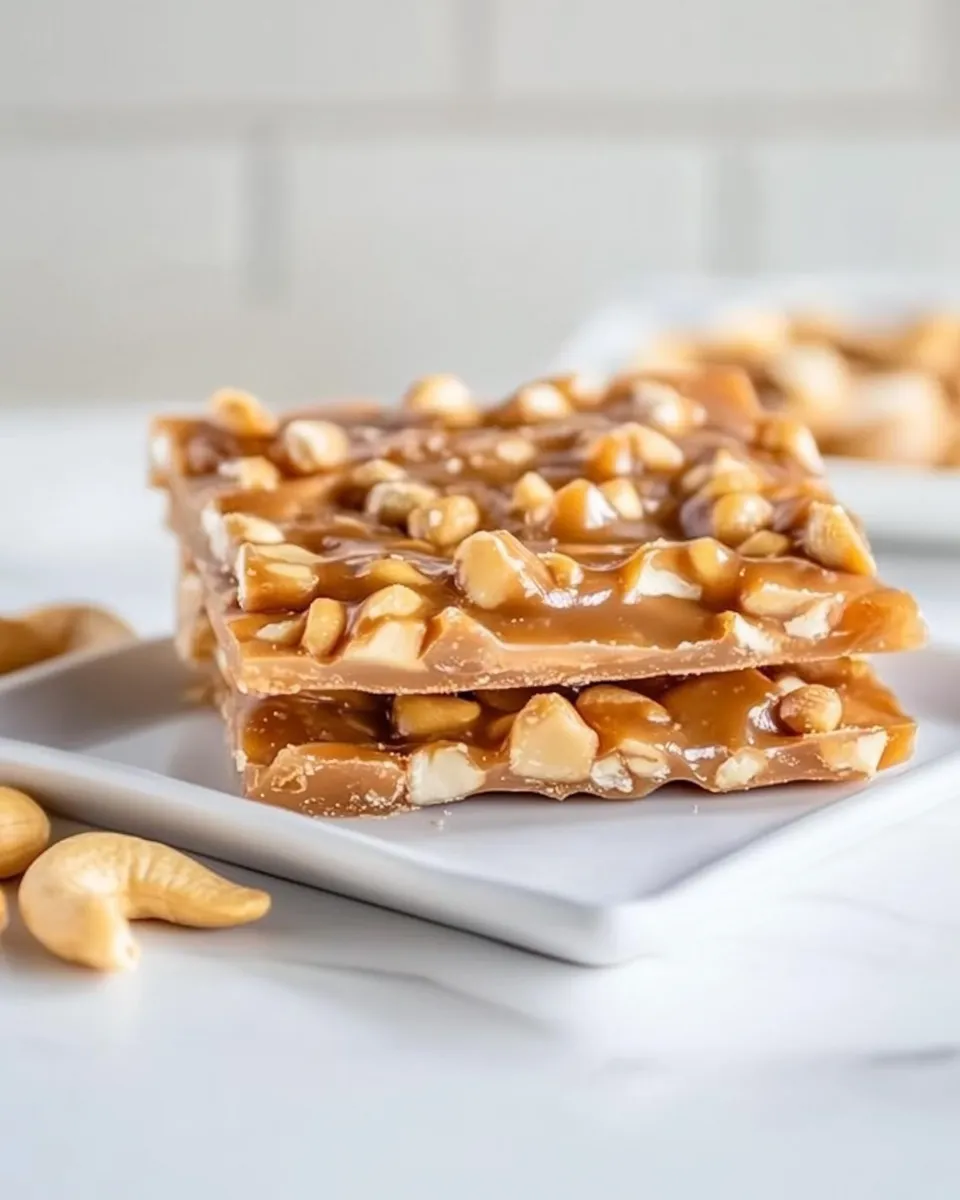
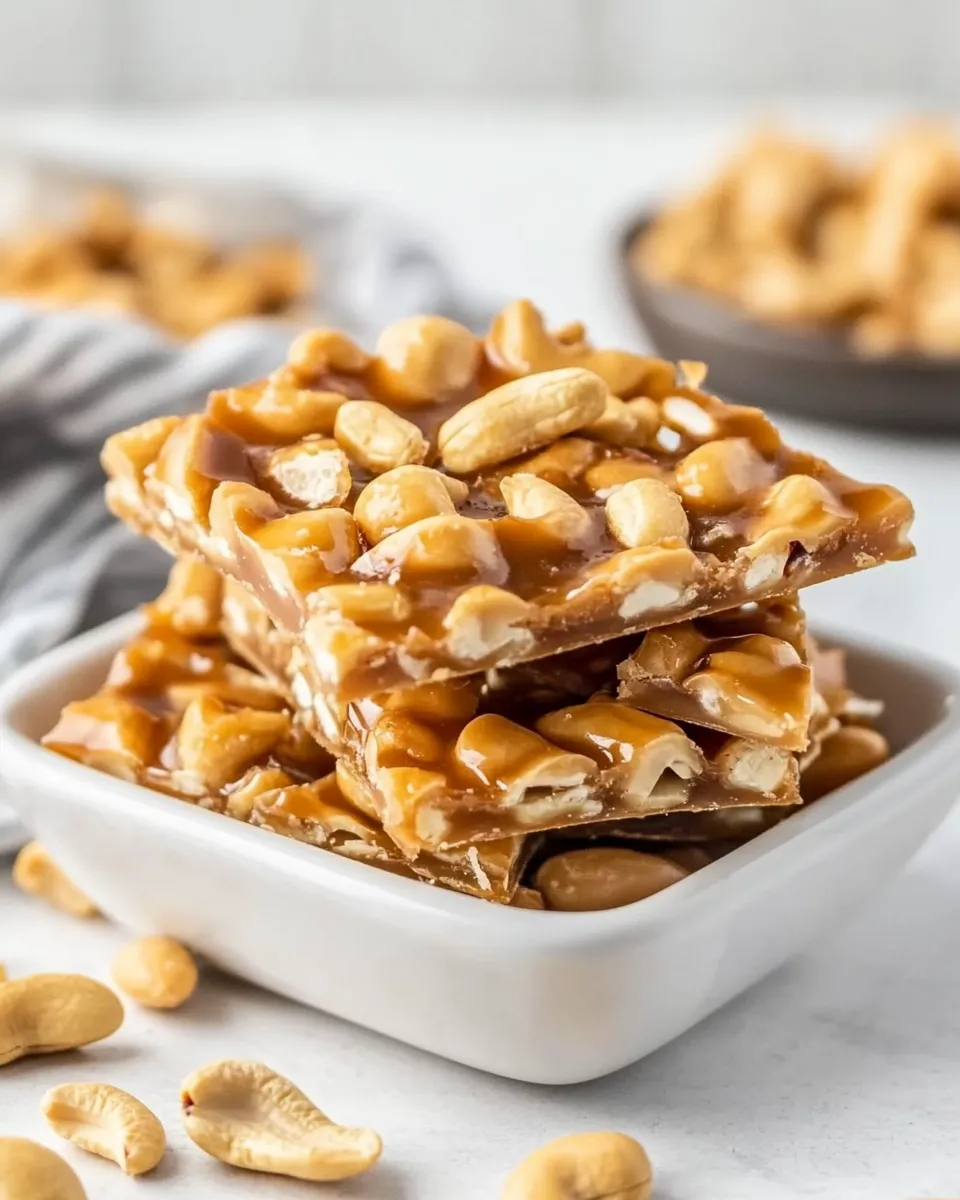
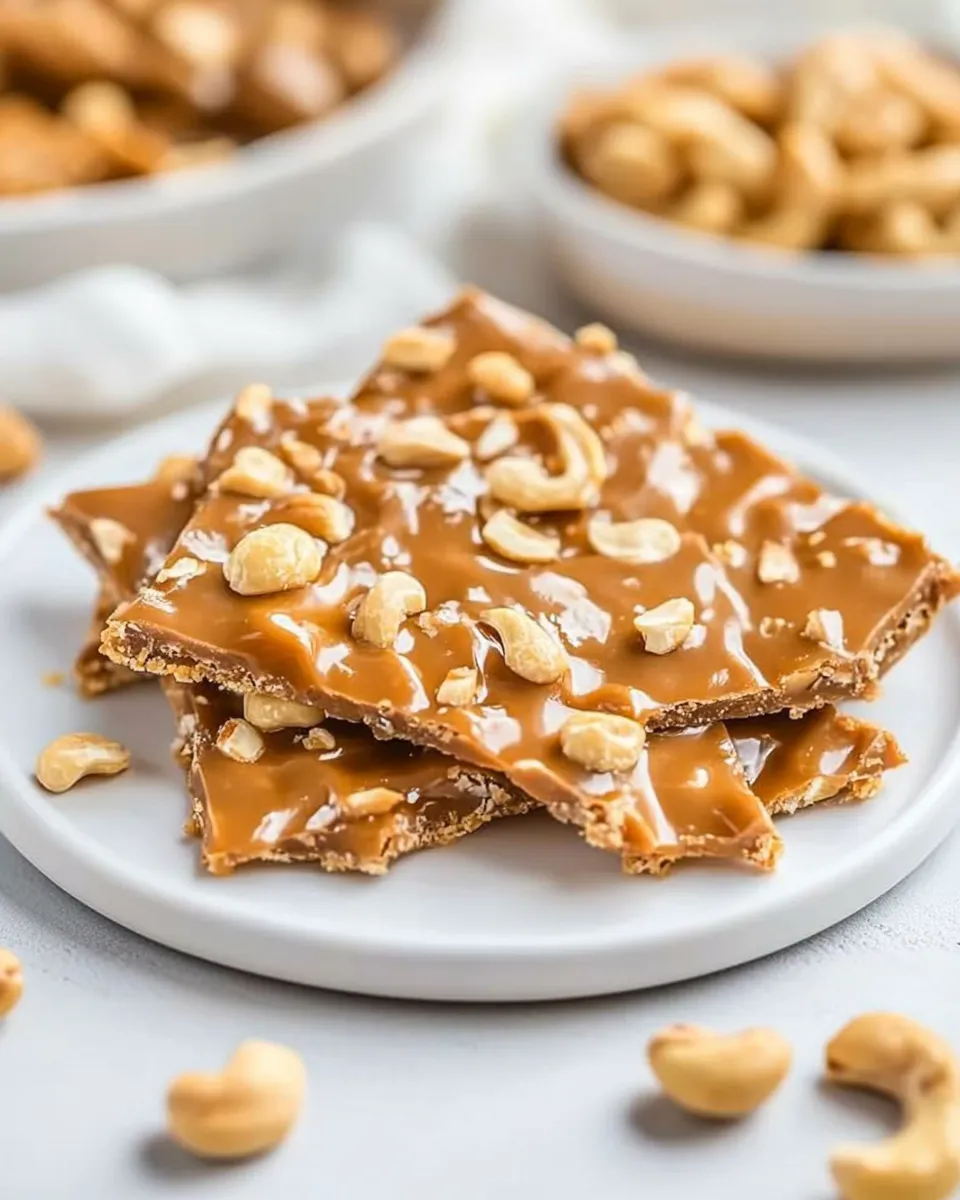
I make this cashew brittle when I want something that feels a little fancy but comes together quickly. It’s one of those recipes that looks impressive in a tin but takes less time than many cookies. The texture is everything: glassy crack, tiny air pockets from the baking soda, and the satisfying crunch of roasted, salted cashews.
It’s forgiving if you respect the heat and move with a little urgency at the end. The list of ingredients is short, the steps are straightforward, and once you’ve done it once the process becomes second nature. You’ll find it’s perfect for holiday gifts, snack bowls, or breaking into shards to scatter over ice cream.
Below I’ll walk you through the exact ingredients and the step-by-step method I use, plus troubleshooting tips, equipment notes, storage advice, and simple serving ideas. No fluff — just the practical know-how so your brittle comes out glossy, crisp, and balanced every time.
What You’ll Need
Ingredients
- 2 cups granulated sugar — the core sweet that caramelizes into the brittle structure.
- ½ cup water — hydrates the sugar so it dissolves evenly as it heats.
- ½ cup light corn syrup ((I used Karo Brand)) — prevents crystallization and keeps the caramel smooth.
- 6 tablespoons unsalted butter — adds richness and a softer, more flavorful finish.
- 1 teaspoon baking soda — reacts and foams the syrup slightly, giving the brittle a lighter texture.
- 2 cups roasted & salted cashews — the star ingredient; use roasted & salted for taste and texture.
- 2 teaspoons vanilla extract — rounds and deepens the caramel flavor.
Method: Cashew Brittle
- Line a large rimmed baking sheet with a silicone baking mat or a piece of parchment paper; set aside.
- In a large, heavy-bottomed stock pot or saucepan combine 2 cups granulated sugar, ½ cup water, ½ cup light corn syrup, and 6 tablespoons unsalted butter. Clip a candy thermometer to the pot with the thermometer tip immersed in the sugar mixture but not touching the bottom.
- Heat the mixture over medium-high heat and bring to a boil. Do not stir or otherwise disturb the cooking sugars while they are coming to temperature. Continue cooking until the mixture begins to turn lightly golden and the thermometer reaches 300°F (hard‑crack stage). This typically takes about 12–16 minutes.
- As soon as the thermometer reads 300°F, immediately turn off the heat and, if you are using an electric stove, remove the pot from the burner so the mixture stops cooking.
- Working quickly and carefully (the mixture will bubble), stir in 1 teaspoon baking soda, 2 teaspoons vanilla extract, and 2 cups roasted & salted cashews. Stir just long enough to distribute the ingredients—the baking soda will cause the mixture to foam.
- Immediately pour the hot brittle onto the prepared baking sheet and, using a heatproof spatula or by tilting the sheet, spread the mixture into an even layer (about a 9 × 12‑inch rectangle). Work quickly—the brittle begins to harden almost immediately.
- Let the cashew brittle cool completely at room temperature until hard, then break into pieces.
Why You’ll Keep Making It
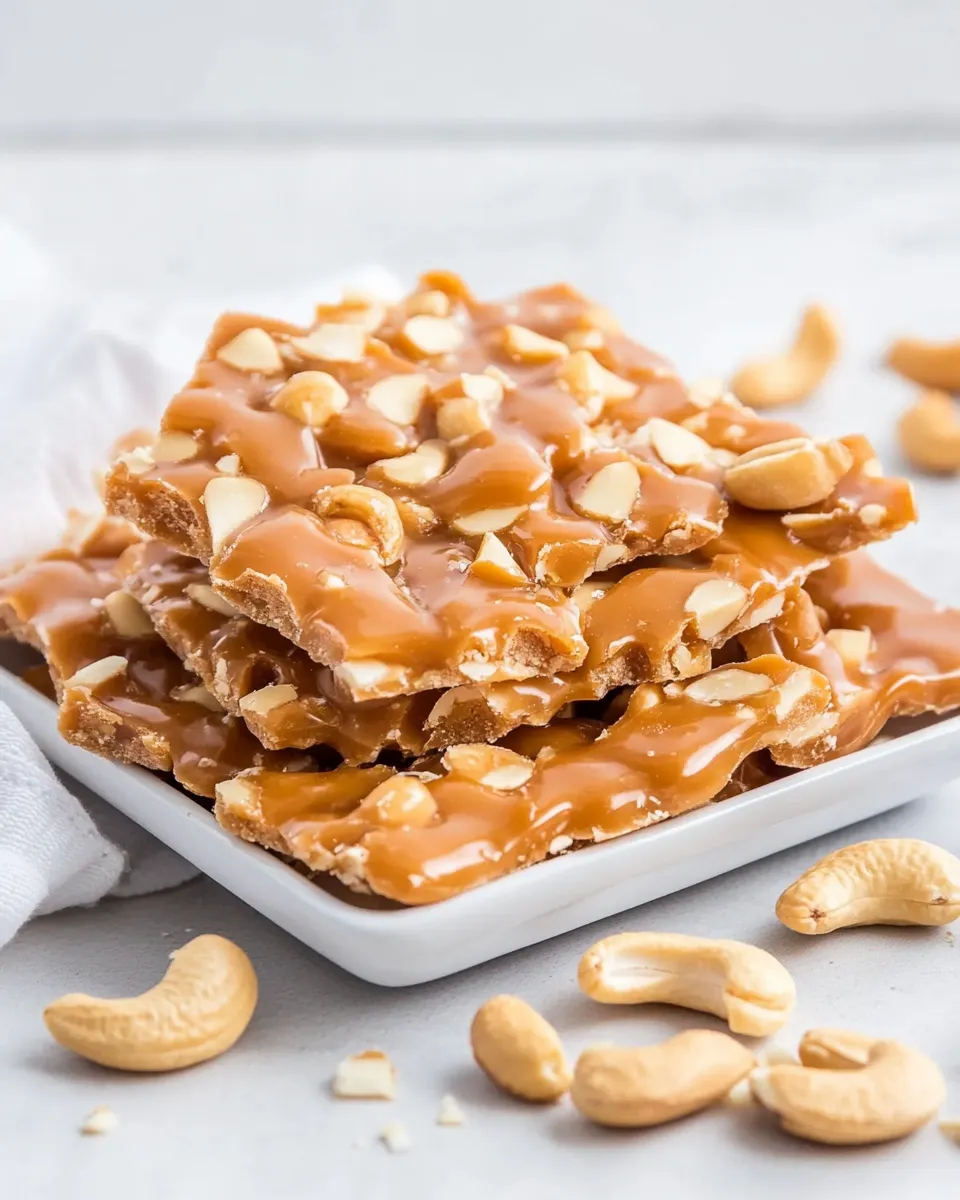
This brittle hits a few satisfying boxes at once: it’s crunchy, salty-sweet, fast, and stores well. You don’t need special techniques or unusual ingredients, yet the result feels celebratory. Once you know how the sugar behaves and how quickly the mixture sets, it becomes a reliable, repeatable treat.
It also scales up easily for gifting — double the batch, make a few pans, and you have gorgeous edible presents. The roasted salted cashews bring a flavor that’s nut-forward without being overly sweet. They give the brittle personality and balance the caramel edge.
Allergy-Friendly Substitutes
- Cashews: Swap with roasted almonds, peanuts, or mixed nuts if there’s a preference for a different nut profile.
- Nut-free option: Use roasted and salted sunflower seeds (pepitas if you prefer) for a nut-free crunchy substitute.
- Corn syrup: If you avoid corn syrup, light glucose syrup or golden syrup can often be substituted, but texture and set may vary slightly.
- Dairy: For butter-free, try a neutral oil like light olive or refined coconut oil — note that flavor and mouthfeel will shift.
Must-Have Equipment
- Large, heavy-bottomed stock pot or saucepan — distributes heat evenly and reduces hot spots that burn sugar.
- Candy thermometer — essential to hit the 300°F hard‑crack stage reliably.
- Rimmed baking sheet — makes pouring and shaping safe and contained.
- Silicone baking mat or parchment paper — prevents sticking and helps you release brittle cleanly.
- Heatproof spatula — for quick spreading without melting the utensil or injuring yourself.
- Oven mitts and a clear workspace — for safety and speed when working with bubbling hot sugar.
Mistakes Even Pros Make
- Stirring too early — agitation while the sugar is melting encourages crystals and a grainy result. Let it boil undisturbed.
- Thermometer tip touching the pan — gives a false high reading and risks undercooked sugar. Clip it so the tip sits in the syrup, not on metal.
- Waiting to add baking soda and nuts — you must work fast once you add them; delaying means the brittle will start to set before you spread it.
- Not removing from heat with an electric stove — heat lingers; briefly lifting the pot off the burner stops carryover cooking.
- Overthinning the layer — pour and spread to about a 9 × 12‑inch rectangle. Too thin and it shatters into dust; too thick and it feels cloying.
Seasonal Serving Ideas
- Holidays: Arrange broken pieces in cellophane bags tied with ribbon for a quick, beautiful edible gift.
- Dessert garnish: Crush and sprinkle over vanilla or coconut ice cream for texture and salt contrast.
- Cheese boards: Offer shards alongside a sharp cheddar and a soft cheese — the brittle’s sweetness complements savory cheeses.
- Party bowls: Break into bite-sized pieces and place in small bowls for cocktail-hour nibbling.
Flavor Logic
Understanding why each ingredient is there helps you adapt the recipe responsibly. Granulated sugar caramelizes and provides the brittle backbone. Water dissolves the sugar for an even boil. Light corn syrup interferes with sugar crystallization so you keep a smooth, glassy finish. Butter brings fat and mouthfeel — it tames the sharpness of straight caramel.
Baking soda is tiny but important: it reacts with the hot acid in the sugar, forming tiny air bubbles that make the brittle less dense and easier to bite. Roasted, salted cashews add crunch and salt that cut sweetness, while vanilla pulls the flavors together and softens the caramel edge.
How to Store & Reheat
Once cooled completely, store pieces in an airtight container at room temperature. Layer with parchment paper so shards don’t stick together. Stored this way, brittle will remain crisp for up to 2 weeks; beyond that it may absorb humidity and lose snap.
Freezing is possible: wrap pieces tightly in plastic and pop into a freezer-safe container. Thaw at room temperature in the sealed container to avoid condensation. Reheating to restore crunch is not recommended — brittle melts when reheated and will not regain its original texture once softened.
Quick Questions
- Can I use salted or unsalted cashews? I use roasted & salted cashews as written; if you use unsalted, consider adding a pinch of flaky salt to the finished brittle for balance.
- What if my sugar doesn’t reach 300°F? Continue heating until it reaches 300°F. If you don’t hit hard‑crack, the brittle will be softer and chewy rather than crisp.
- Why is my brittle grainy? That’s usually crystallized sugar. Prevent it by not stirring while the sugar heats and by using corn syrup which inhibits recrystallization.
- Can I add spices or chocolate? You can dust with a pinch of flaky sea salt or a light sprinkle of cinnamon after pouring. For chocolate, wait until pieces are fully cooled, then dip edges in melted chocolate and let set.
- Is the baking soda optional? Technically yes, but it changes texture. Without it the brittle will be denser and flatter; with it, the structure has tiny bubbles and a lighter bite.
Wrap-Up
This cashew brittle recipe gives you a reliable, crisp, and flavorful confection with minimal fuss. Respect the thermometer, prep your sheet ahead of time, and move quickly once the baking soda goes in. With that, you’ll have glossy, perfectly broken pieces ready for gifting, decorating desserts, or snacking straight from the jar. Try one pan and I promise you’ll be making it again.
Cashew Brittle
Ingredients
Ingredients
- 2 cupsgranulated sugar
- 1/2 cupwater
- 1/2 cuplight corn syrup (I used Karo Brand)
- 6 tablespoonsunsalted butter
- 1 teaspoonbaking soda
- 2 cupsroasted & salted cashews
- 2 teaspoonsvanilla extract
Instructions
Instructions
- Line a large rimmed baking sheet with a silicone baking mat or a piece of parchment paper; set aside.
- In a large, heavy-bottomed stock pot or saucepan combine 2 cups granulated sugar, ½ cup water, ½ cup light corn syrup, and 6 tablespoons unsalted butter. Clip a candy thermometer to the pot with the thermometer tip immersed in the sugar mixture but not touching the bottom.
- Heat the mixture over medium-high heat and bring to a boil. Do not stir or otherwise disturb the cooking sugars while they are coming to temperature. Continue cooking until the mixture begins to turn lightly golden and the thermometer reaches 300°F (hard‑crack stage). This typically takes about 12–16 minutes.
- As soon as the thermometer reads 300°F, immediately turn off the heat and, if you are using an electric stove, remove the pot from the burner so the mixture stops cooking.
- Working quickly and carefully (the mixture will bubble), stir in 1 teaspoon baking soda, 2 teaspoons vanilla extract, and 2 cups roasted & salted cashews. Stir just long enough to distribute the ingredients—the baking soda will cause the mixture to foam.
- Immediately pour the hot brittle onto the prepared baking sheet and, using a heatproof spatula or by tilting the sheet, spread the mixture into an even layer (about a 9 × 12‑inch rectangle). Work quickly—the brittle begins to harden almost immediately.
- Let the cashew brittle cool completely at room temperature until hard, then break into pieces.
Equipment
- large rimmed baking sheet
- Silicone baking mat or parchment paper
- large heavy-bottomed stock pot or saucepan
- Candy thermometer
- heatproof spatula