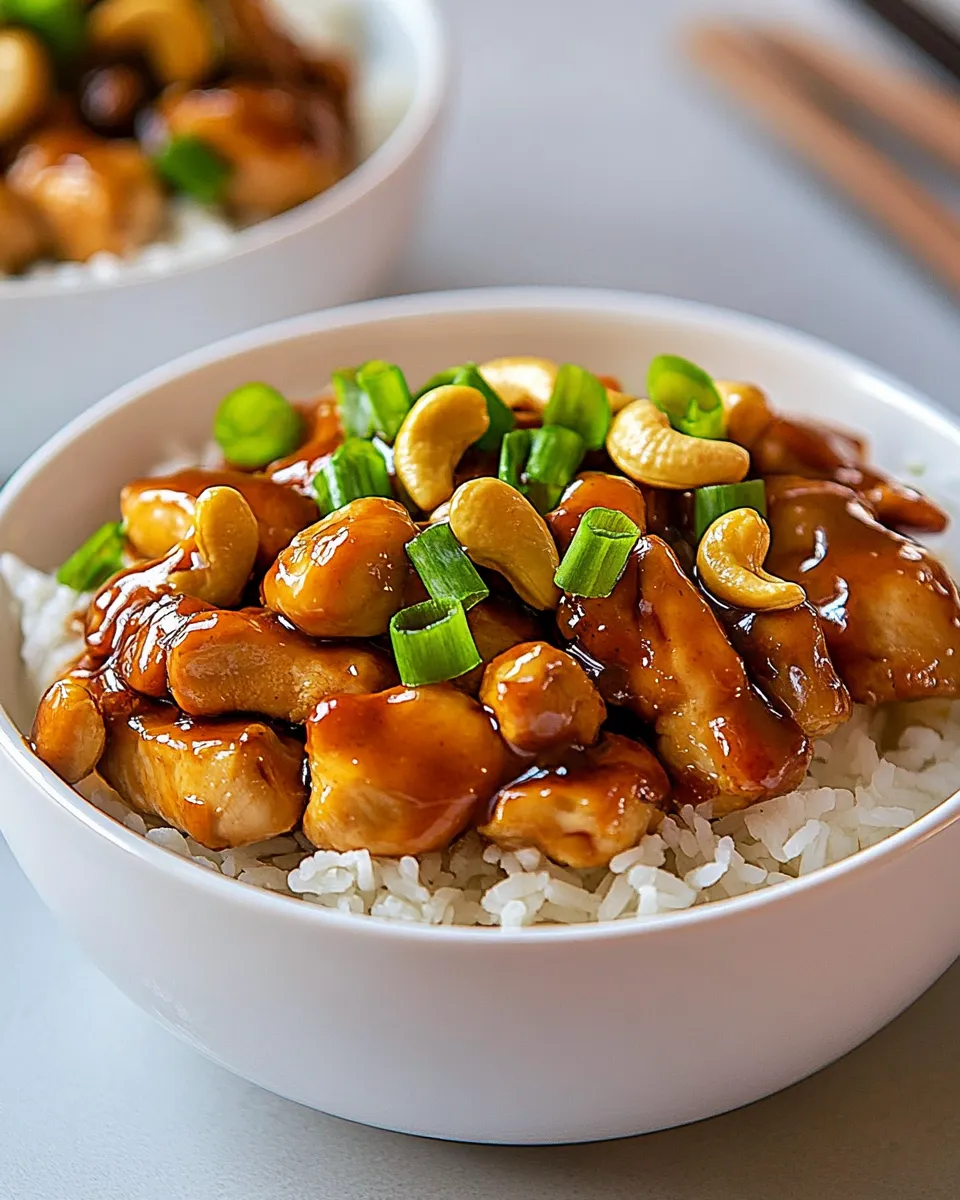
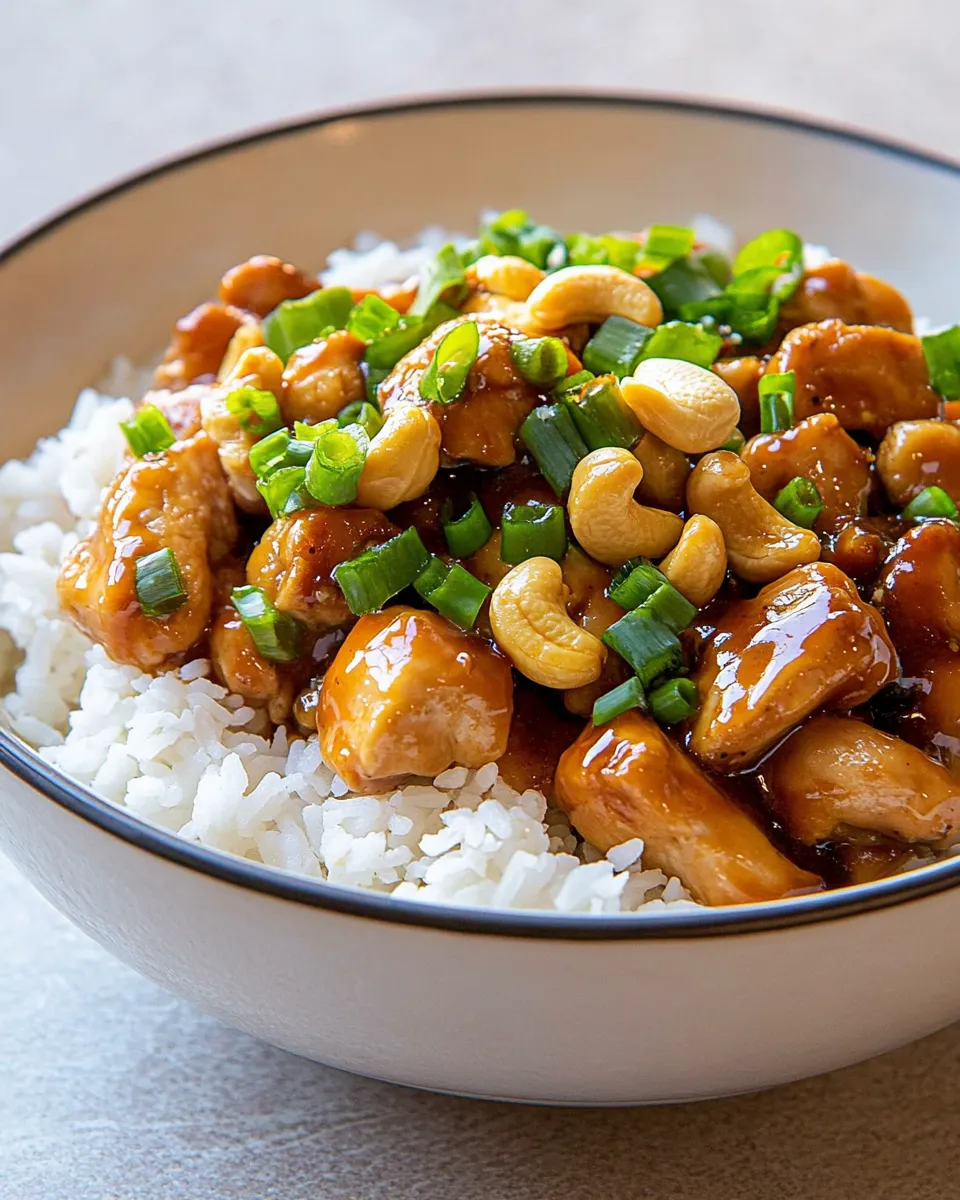
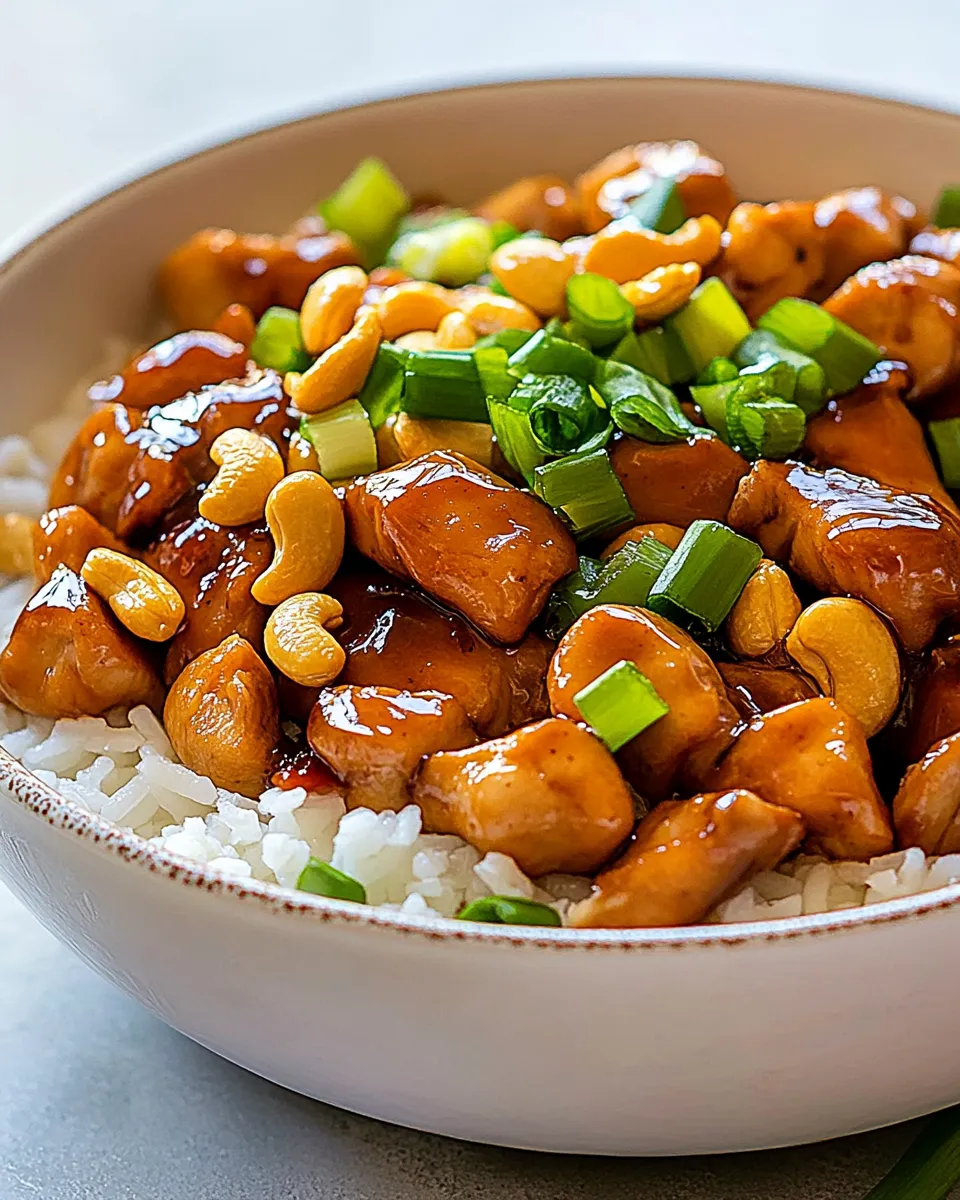
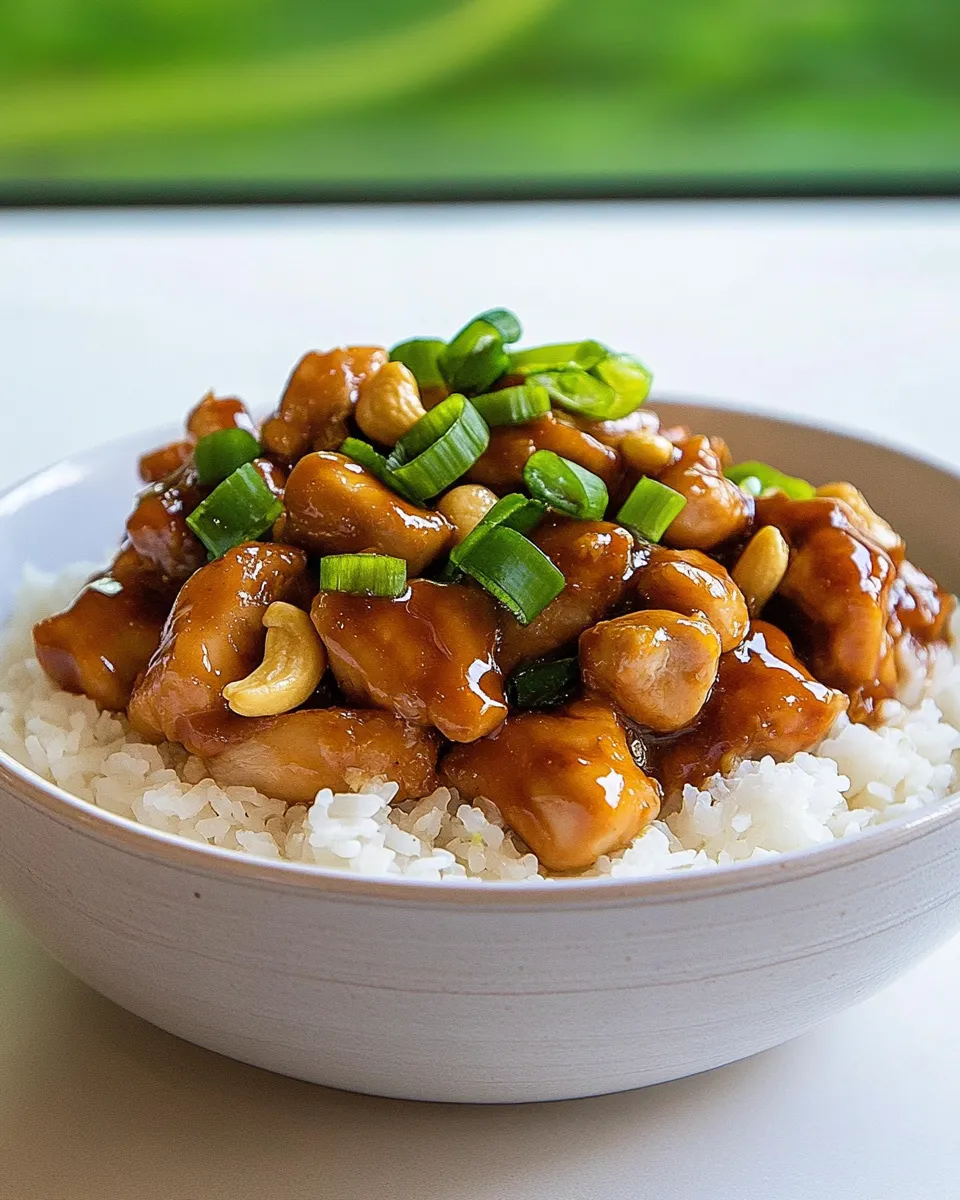
I make this Cashew Chicken at home when I need something that tastes like takeout but comes together quickly and reliably. It hits the satisfying notes: crunchy nuts, a glossy savory-sweet sauce, and tender chicken. The sauce is simple—hoisin-forward with a touch of soy and rice vinegar—so the dish never feels overcomplicated, even on a weeknight.
The method is straightforward: a quick stir-fry in two batches so the chicken browns without steaming, then everything comes together in one pan with the sauce and cashews. You’ll notice how a short rest for the sauce and a final stir bring the flavors into perfect balance. Small details—like separating scallion whites and greens—make a clear difference in texture and aroma.
I write this recipe from the point of view of someone who cooks for family and friends. Expect practical tips on timing, equipment, and how to tweak the dish while staying true to the original ingredients. If you follow the steps, you’ll have a glossy, restaurant-style Cashew Chicken on the table in under 30 minutes of active time.
Ingredients at a Glance
- ¾ cup roasted, unsalted cashews — provides the crunchy contrast; they’re already roasted so no extra toasting needed.
- ¼ cup water — thins the sauce and hydrates the cornstarch for a smooth slurry.
- 2 teaspoons cornstarch — thickens the sauce quickly when heated.
- ¼ cup hoisin sauce, best quality such as Kikkoman or Lee Kum Kee — the primary flavor base; use a good-quality brand for depth.
- 1 tablespoon soy sauce — adds savory saltiness and umami; balance with hoisin and vinegar.
- 1½ pounds boneless, skinless chicken breasts or tenderloins, cut into 1½-in (4-cm) pieces — tender protein; the size ensures quick, even cooking.
- ½ teaspoon salt — seasons the chicken directly; adjust to taste if using low-sodium soy sauce.
- ¼ teaspoon freshly ground black pepper — a touch of warmth and brightness.
- 2 tablespoons vegetable oil — neutral oil for high-heat stir-frying; split into two 1-tablespoon portions in the method.
- 6 medium cloves garlic, minced — aromatic backbone; add in the second batch so it doesn’t burn.
- 8 scallions, white and green parts separated, sliced into 1-in (2.5-cm) pieces — whites go in early for flavor, greens added at the end for freshness and color.
- 2 tablespoons rice vinegar — adds acidity to lift the sauce and balance sweetness.
- ¼ teaspoon sesame oil — finish oil for fragrant depth; a small amount goes a long way.
Cook Cashew Chicken Like This
- In a small bowl, whisk together 1/4 cup water, 2 teaspoons cornstarch, 1/4 cup hoisin sauce, and 1 tablespoon soy sauce until smooth. Set the sauce aside.
- Place the 3/4 cup roasted, unsalted cashews in a small bowl and set aside (no toasting needed since they are already roasted).
- Put the 1 1/2 pounds chicken pieces in a large bowl. Sprinkle with 1/2 teaspoon salt and 1/4 teaspoon freshly ground black pepper and toss to coat evenly.
- Heat a large nonstick skillet over high heat until very hot. Add 1 tablespoon vegetable oil and swirl to coat. Add half of the chicken in a single layer and stir-fry until the pieces are lightly browned but not cooked through, about 3 minutes. Transfer this first batch to a plate.
- Add the remaining 1 tablespoon vegetable oil to the skillet. Add the remaining chicken, the 6 minced garlic cloves, and the white parts of the 8 scallions. Stir-fry until this batch is lightly browned but not cooked through, about 3 minutes.
- Return the first batch of chicken to the skillet. Reduce the heat to medium, add 2 tablespoons rice vinegar, and cook, stirring, until the vinegar has mostly evaporated, about 30 seconds.
- Stir the reserved sauce again (to re-incorporate any settled cornstarch) and pour it into the skillet. Cook, tossing or stirring, until the chicken is cooked through and the sauce has thickened, about 1 minute.
- Remove the skillet from the heat. Stir in the green parts of the scallions, the reserved cashews, and 1/4 teaspoon sesame oil. Serve immediately.
Top Reasons to Make Cashew Chicken
- Speed and reliability: The entire process is built around a fast stir-fry and a simple cornstarch-thickened sauce, which gives you a takeout-style meal in minimal time.
- Texture contrast: The roasted cashews bring a crunchy counterpoint to tender chicken and silky sauce; that contrast is what makes the dish memorable.
- Balanced flavor profile: Hoisin and soy deliver savory-sweet richness while rice vinegar cuts through with brightness—no extra sugar necessary.
- Minimal prep: Ingredients are common and require straightforward prep—cut chicken, mince garlic, slice scallions. It’s approachable for cooks of any level.
- Adaptable: The method scales up easily for more portions and works in any wide, heavy-bottomed skillet or wok you already own.
Ingredient Flex Options
This recipe is written around the ingredients listed above; stick to them for the most predictable result. If you need to be flexible, keep these principles in mind:
- Chicken: The recipe lists boneless, skinless chicken breasts or tenderloins. Use whichever cut you have on hand from that pair—cut to the specified 1½-inch pieces for even cooking.
- Salt and soy: If you are watching sodium, use a low-sodium soy sauce and taste before adding the extra ½ teaspoon salt to the chicken. The final sauce will still be savory thanks to hoisin.
- Cashews: The recipe calls for roasted, unsalted cashews. If your cashews are salted, omit or reduce added salt. If they’re raw and you prefer them warm, you can briefly toast them, but the recipe assumes roasted cashews.
- Hoisin and soy swap: Use a good-quality hoisin as instructed. If your hoisin is particularly sweet or thick, you may want to whisk it with the water a touch longer to ensure a smooth pour.
Equipment Breakdown
- Large nonstick skillet — specified in the method; it helps prevent sticking and allows easy tossing. A heavy wok works too if you prefer, but adjust heat as needed.
- Small mixing bowl — for the sauce slurry and to hold the cashews separately.
- Sharp knife and cutting board — for cutting chicken and scallions into uniform 1½-in and 1-in pieces respectively; consistent size equals even cooking.
- Tongs or a sturdy spatula — for quick stirring and transfer of the partially cooked chicken between pan and plate.
Frequent Missteps to Avoid
- Overcrowding the pan: The recipe calls for cooking the chicken in two batches. Skipping that makes the pieces steam instead of brown. Browning is key for flavor.
- Skipping the cornstarch slurry check: Stir the reserved sauce before pouring it in. Cornstarch settles; re‑mixing ensures the sauce thickens evenly.
- Cooking the garlic too early: Add minced garlic with the second batch so it becomes fragrant but not burned; burned garlic tastes bitter and will dominate the sauce.
- Adding cashews too early: The cashews should be stirred in at the end to retain crunch. If tossed in while sautéing at high heat, they will soften and lose texture.
- Using cold chicken straight from the fridge: Let pieces sit a few minutes at room temperature if you can. Cold chicken can lower the pan temperature and affect browning.
How to Make It Lighter
If you want to reduce calories without losing the core flavor:
- Reduce oil slightly, but not to zero; cutting the two tablespoons to 1½ tablespoons can lower fat while still allowing browning. Heat must be high to compensate.
- Keep the cashews as snack-sized garnish rather than mixing all of them into the sauce; reserving some cashews for topping reduces per‑serving calories while preserving crunch.
- Use low-sodium soy sauce to cut sodium, which helps if lighter means healthier for you. If you go this route, taste and adjust seasoning carefully since hoisin contributes sweetness and salt.
Author’s Commentary
I come back to this Cashew Chicken because it delivers consistent results and a comforting mix of flavors and textures. Separating scallion whites and greens is a small extra step that pays off: the whites soften and flavor the oil, while the greens add a bright finish at the end. The rice vinegar step is another deliberate choice—flash-cooking it off concentrates the tang without leaving a raw acidity.
This recipe is forgiving. If your chicken pieces are slightly larger or smaller, adjust the sauté time by a minute or so. If your hoisin is unusually thick, give the sauce another whisk before adding. The method rewards attention to heat and timing more than culinary finesse; if you keep the pan hot and follow the order closely, the dish comes together every time.
Store, Freeze & Reheat
- Refrigerate: Store cooled Cashew Chicken in an airtight container for 3–4 days. Keep sauce and nuts together; the cashews will soften somewhat in the fridge but retain flavor.
- Freeze: You can freeze the cooked dish for up to 2 months. Use a freezer-safe container and leave a little headspace. Note that the texture of the cashews and scallion greens will change after freezing and reheating.
- Reheat: The best way is a skillet over medium heat. Add a splash of water or a teaspoon of oil if the sauce seems dry, and stir until heated through. Microwaving works in a pinch—cover and use 30–60 second bursts, stirring between intervals.
Cashew Chicken Q&A
- Can I use thighs instead of breasts? The recipe is written for boneless, skinless chicken breasts or tenderloins. If you choose thighs, cut them to the same 1½‑inch size and watch the cooking time; thighs may need slightly longer to reach doneness.
- Why split the oil and chicken into two batches? Splitting prevents crowding. Two batches allow each piece to get a quick, hot sear that builds flavor rather than steaming from overcrowding.
- My sauce didn’t thicken—what happened? Cornstarch can settle at the bottom of the bowl; always re-stir the reserved sauce before adding. Also, the pan should be at medium when you add the sauce so it reaches a simmer and activates the cornstarch thickener.
- Can I prepare components ahead? Yes. Whisk the sauce and store it covered in the fridge for a day. Cut the chicken and mince the garlic the day before. Add cashews and scallion greens only at serving to preserve texture.
Final Thoughts
This Cashew Chicken recipe is built to be practical, fast, and reliable without sacrificing the qualities that make stir-fries great: hot pan, quick cooking, and a balanced sauce. Focus on even cuts, high heat, and the brief vinegar step that brightens everything. Follow the method and you’ll have a glossy, flavorful plate that tastes like takeout—but better because you know exactly what’s in it.
Cashew Chicken
Ingredients
Ingredients
- 3/4 cuproasted unsalted cashews
- 1/4 cupwater
- 2 teaspoonscornstarch
- 1/4 cuphoisin sauce best quality such as Kikkoman or Lee Kum Kee
- 1 tablespoonsoy sauce
- 1 1/2 poundsboneless skinless chicken breasts or tenderloins, cut into 1 1/2-in (4-cm) pieces
- 1/2 teaspoonsalt
- 1/4 teaspoonfreshly ground black pepper
- 2 tablespoonsvegetable oil
- 6 medium cloves garlic minced
- 8 scallions white and green parts separated, sliced into 1-in (2.5-cm) pieces
- 2 tablespoonsrice vinegar
- 1/4 teaspoonsesame oil
Instructions
Instructions
- In a small bowl, whisk together 1/4 cup water, 2 teaspoons cornstarch, 1/4 cup hoisin sauce, and 1 tablespoon soy sauce until smooth. Set the sauce aside.
- Place the 3/4 cup roasted, unsalted cashews in a small bowl and set aside (no toasting needed since they are already roasted).
- Put the 1 1/2 pounds chicken pieces in a large bowl. Sprinkle with 1/2 teaspoon salt and 1/4 teaspoon freshly ground black pepper and toss to coat evenly.
- Heat a large nonstick skillet over high heat until very hot. Add 1 tablespoon vegetable oil and swirl to coat. Add half of the chicken in a single layer and stir-fry until the pieces are lightly browned but not cooked through, about 3 minutes. Transfer this first batch to a plate.
- Add the remaining 1 tablespoon vegetable oil to the skillet. Add the remaining chicken, the 6 minced garlic cloves, and the white parts of the 8 scallions. Stir-fry until this batch is lightly browned but not cooked through, about 3 minutes.
- Return the first batch of chicken to the skillet. Reduce the heat to medium, add 2 tablespoons rice vinegar, and cook, stirring, until the vinegar has mostly evaporated, about 30 seconds.
- Stir the reserved sauce again (to re-incorporate any settled cornstarch) and pour it into the skillet. Cook, tossing or stirring, until the chicken is cooked through and the sauce has thickened, about 1 minute.
- Remove the skillet from the heat. Stir in the green parts of the scallions, the reserved cashews, and 1/4 teaspoon sesame oil. Serve immediately.
Equipment
- Small Bowl
- Large Bowl
- large nonstick skillet
- Plate