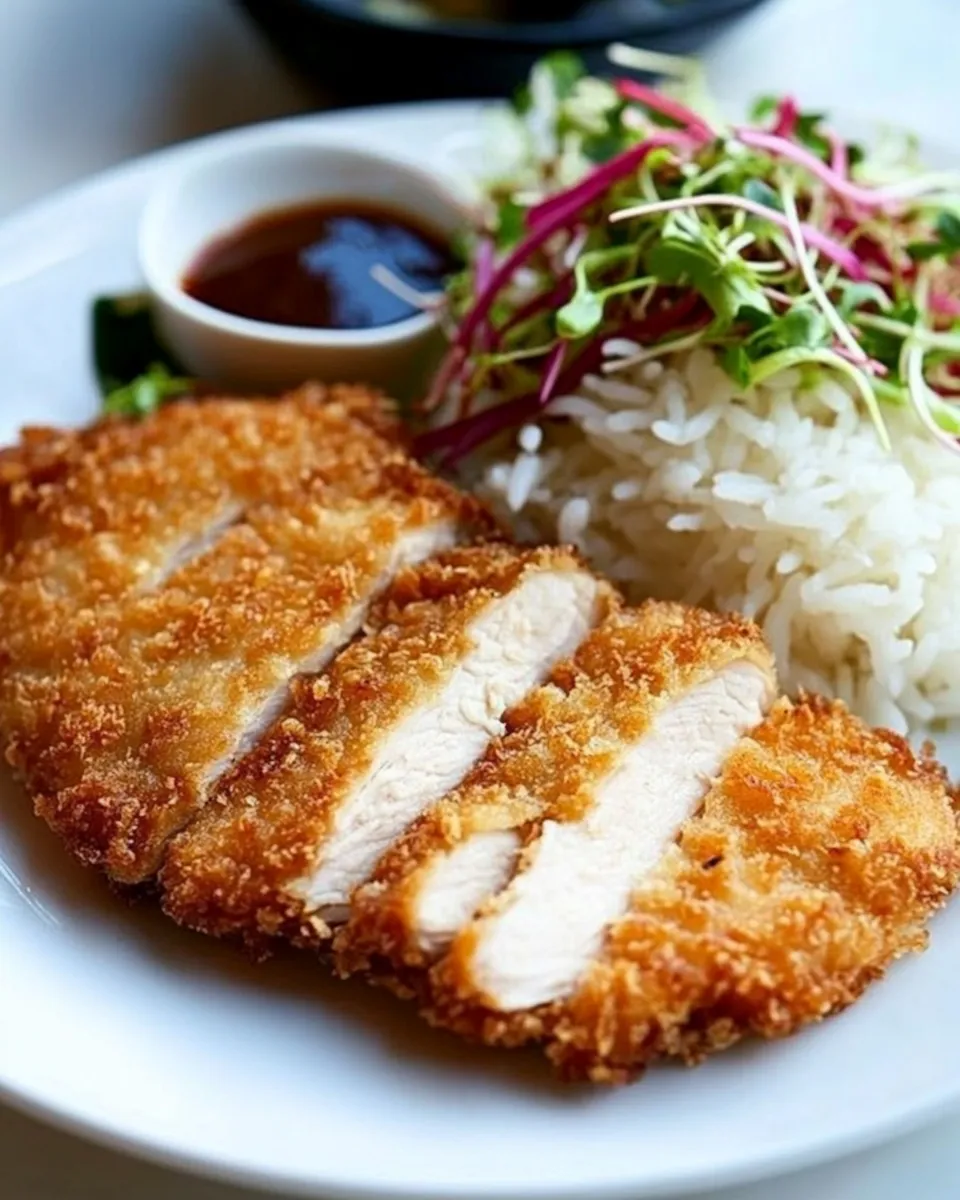
This is the kind of recipe I turn to when I want something reliably crunchy, fast, and crowd-pleasing. Chicken katsu gives you that golden, crisp crust with tender, juicy chicken inside and a tangy sauce that ties it all together. The technique is forgiving and the results feel restaurant-worthy without needing fancy equipment.
I always keep the sauce simple and make it first so it’s ready the moment the cutlets come out of the oil. The double-panko dip builds a satisfyingly thick crust that stays crisp for a few minutes on the plate—enough time to slice and serve. If you follow the steps below in order, you’ll avoid the most common setbacks.
No tricks, no frills—just clear steps, sensible tips, and a short ingredient list you can shop for in one run. Let’s get your oil heating and your panko ready.
The Ingredient Lineup
- 10oz (280g) boneless and skinless chicken breast — two pieces after slicing; the lean protein and the main component to pound and bread.
- 1/2 teaspoons salt — seasons the meat; helps bring out flavor before breading.
- 3 dashes black pepper — light seasoning; adds a gentle bite to the chicken.
- 1 large egg, lightly beaten — binder to hold the panko; use it room temperature for even coating.
- 1 cup Japanese panko, or bread crumbs — gives the signature crunch; press firmly for a thicker crust.
- oil, for deep-frying — neutral oil with a high smoke point works best; enough to mostly submerge the cutlets.
- 1 1/2 tablespoons ketchup — base for the katsu sauce; brings sweetness and color.
- 2 tablespoons Worcestershire sauce — adds tang and umami to the sauce.
- 1 tablespoon soy sauce — salt and depth for the katsu sauce.
- 1 tablespoon mirin — a touch of sweet acidity; balances the Worcestershire.
- 1 tablespoons sugar — sweetens and helps round the sauce; dissolves when you stir.
- 1/2 teaspoon Dijon mustard — a small sharp note to lift the sauce.
Directions: (Chicken Katsu (Fried Chicken Cutlet))
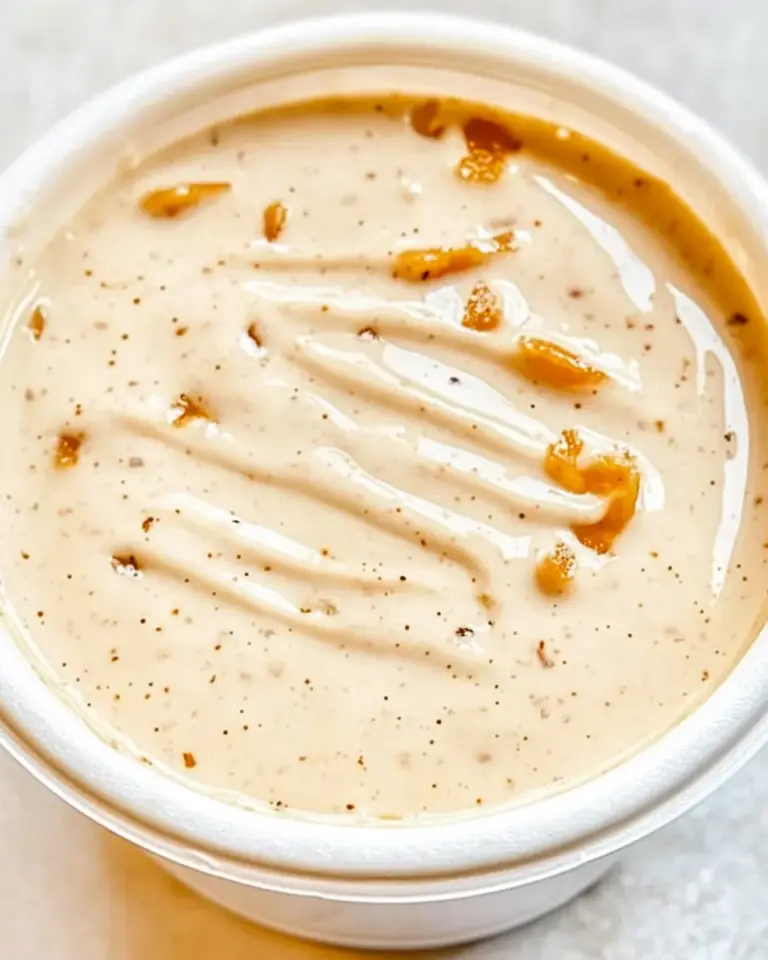
- Make the katsu sauce: in a small bowl combine 1 1/2 tablespoons ketchup, 2 tablespoons Worcestershire sauce, 1 tablespoon soy sauce, 1 tablespoon mirin, 1 tablespoon sugar, and 1/2 teaspoon Dijon mustard. Stir until the sugar is dissolved and set aside.
- Prepare the chicken: slice the 10 oz (280 g) boneless, skinless chicken breast horizontally into two even pieces. If needed, place each piece between plastic wrap and gently pound to an even thickness so both pieces are similar.
- Season the chicken: sprinkle both sides of each chicken piece with 1/2 teaspoon salt and 3 dashes black pepper. Let the seasoned chicken rest for 10 minutes.
- Set up a breading station: pour the lightly beaten 1 large egg into a shallow dish. Place 1 cup Japanese panko (or bread crumbs) in a second shallow dish.
- First coat: working with one piece at a time, dip the chicken into the beaten egg, allowing excess to drip off, then press it into the panko to coat evenly. Shake off excess panko.
- Second coat: dip the panko-coated chicken back into the beaten egg, then press again into the panko to build a thicker, even crust. Shake off any excess. Repeat steps 5–6 for the second piece.
- Heat the oil: pour enough oil into a deep pot to allow the cutlets to be mostly submerged and heat to about 350°F (180°C). Use a thermometer if available.
- Fry the cutlets: gently lower the breaded chicken into the hot oil and fry until the exterior is golden brown and the chicken is cooked through (about 3–5 minutes, depending on thickness). If needed, turn once for even color.
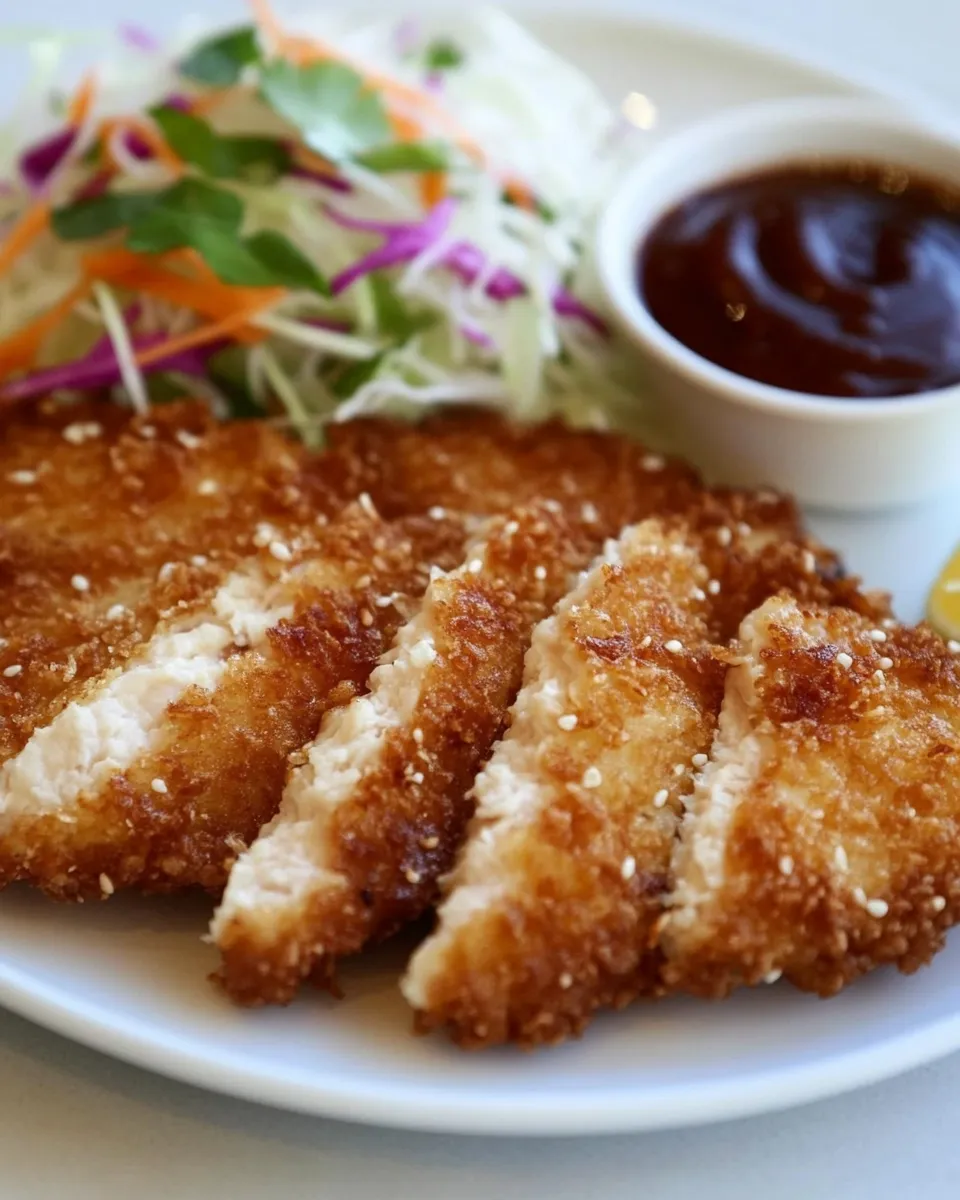
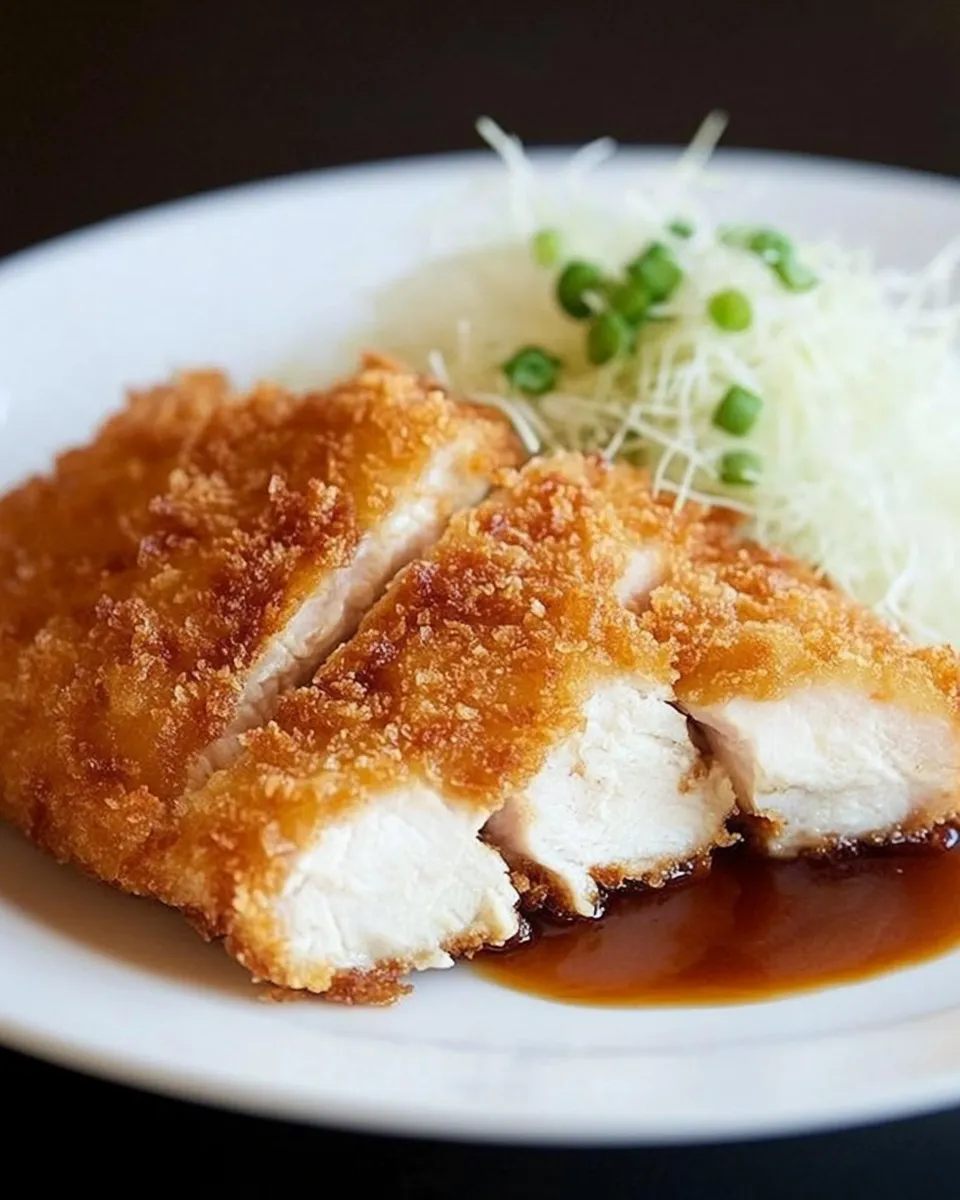
- Drain and slice: transfer the fried cutlets to a plate lined with paper towels to drain excess oil. Let rest 1 minute, then cut each cutlet into strips.
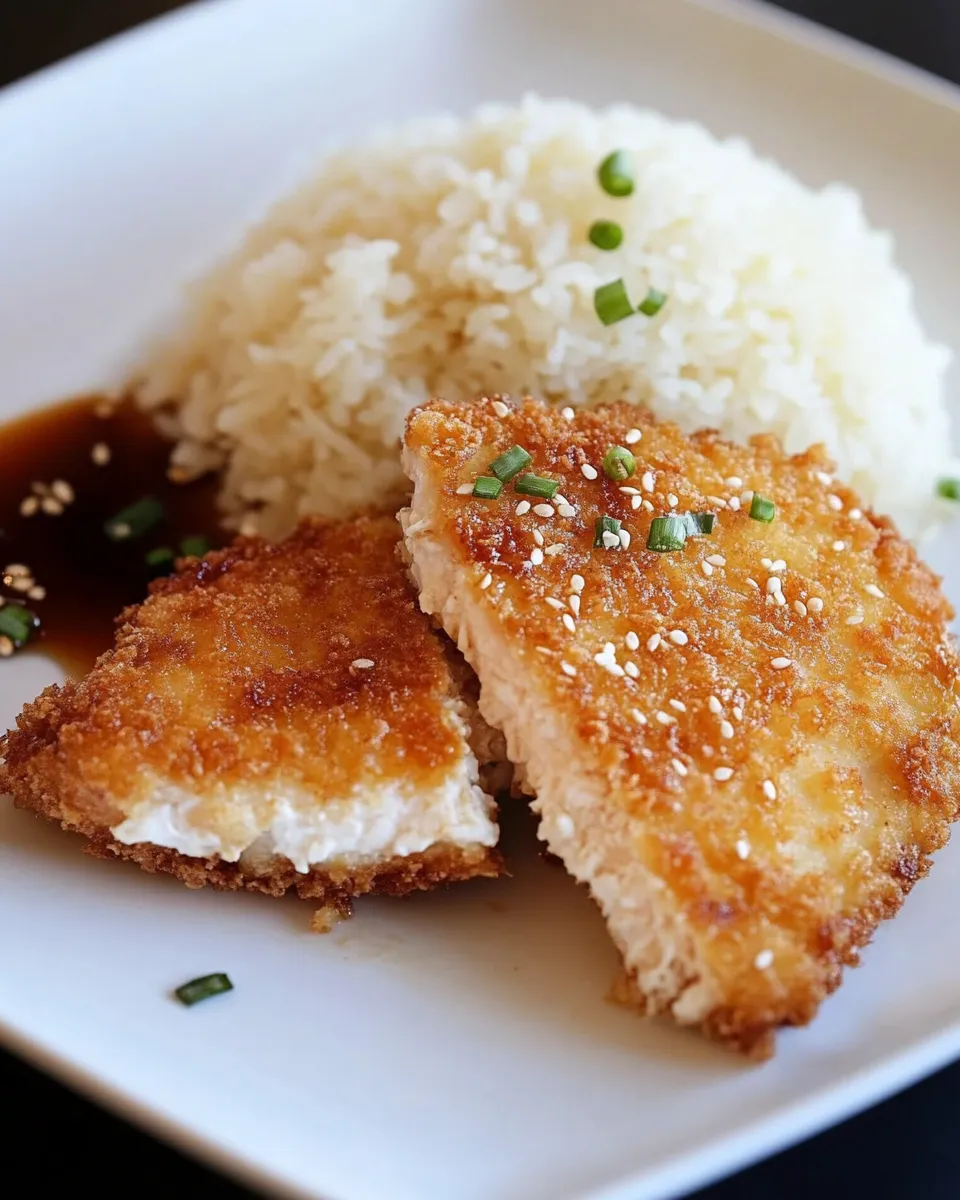
- Serve immediately with the prepared katsu sauce.
Why It’s Crowd-Pleasing
Crunch plus tender meat is a universal win. The panko crust makes a loud, satisfying bite; the chicken inside stays moist because the pieces are pounded and fried quickly. The sauce is balanced—sweet, tangy, and savory—which complements the neutral-fried flavor without overpowering it.
It’s also very approachable. Kids can manage dipping a strip in sauce. Guests can pick up pieces with chopsticks, forks, or fingers if you serve it as finger food. And because each piece is individually breaded and fried, it’s easy to scale up for a small dinner party without changing the chemistry of the dish.
Substitutions by Category
Protein: If you prefer darker meat, use boneless chicken thighs cut and pounded to similar thickness—thighs stay juicier but may need an extra minute in the oil.
Coating: The recipe lists Japanese panko or bread crumbs. Regular breadcrumbs work in a pinch but won’t be as airy-crisp as panko. Press the crumbs firmly to build a thicker crust if you skip panko.
Frying fat: The recipe calls for oil for deep-frying. Use a neutral, high-smoke-point oil you trust. The oil choice affects neither the amount nor the technique described in the directions.
Sauce adjustments: Keep the same balance—sweet, acidic, salty. You can reduce the sugar slightly if you want a less sweet sauce; keep the proportions for ketchup and Worcestershire to preserve the flavor profile.
Setup & Equipment
Clear a workspace before you begin. You’ll need a shallow dish for the egg and another for the panko, a small bowl for the sauce, a deep pot for frying, a thermometer (recommended), tongs or a spider/skimmer for turning and removing the cutlets, and paper towels to drain them.
Plastic wrap and a meat mallet or rolling pin help even out the chicken—consistent thickness equals even cooking. Use a plate or cutting board for the finished slices, and have small bowls or ramekins for the sauce if you’re serving family-style.
Troubles You Can Avoid
Oil too hot or too cool. If the oil is much hotter than 350°F/180°C the panko will brown quickly while the inside remains undercooked. Too cool and the crust soaks up oil and becomes greasy. A thermometer removes guesswork.
Uneven thickness. If the chicken is uneven, thin areas will overcook while thick areas finish late. Pound or slice carefully and aim for consistent thickness across each piece.
Panko falling off. Press the panko firmly into the egg-dipped chicken and do the double-coat step exactly as written. Shake off only the loose surface crumbs; don’t wipe the pressed panko away.
Soggy crust. Don’t stack cutlets immediately after frying. Let them rest on a rack or paper towels for a minute to drain, then slice and serve.
Better-for-You Options
To reduce oil without losing crunch, try shallow-frying in a skillet with a few millimeters of oil, turning more often for even color. You can also finish in a hot oven for a few minutes to ensure doneness while keeping a crisp exterior.
For a lighter sauce profile, cut the sugar by a third and increase the ketchup fraction slightly to keep body. The double-coating method gives a good crust even if you trim a little fat from the chicken or use smaller portions.
Pro Tips & Notes
On the katsu sauce
Make the sauce first and taste it. The sauce is forgiving: if it feels too sharp, a tiny pinch more sugar smooths it; if it’s too sweet, a splash more Worcestershire will lift it.
On breading
Work with dry hands when handling the panko to keep the coating consistent. Press the crumbs into the surface firmly—this is how you get a crust that holds up to slicing.
On frying
Gently lower the chicken into the oil to avoid splatter and temperature drop. If you’re frying multiple batches, let the oil come back to temperature between batches for even color and texture.
Storage Pro Tips
Store leftover katsu and sauce separately. Place the sliced cutlets in an airtight container and refrigerate for up to 2 days. Reheat in a 375°F (190°C) oven on a wire rack for 6–8 minutes to refresh the crust. Microwaving will soften the panko.
The sauce keeps well in the fridge for several days—transfer it to a small jar with a tight lid. Bring it back to room temperature before serving for the best flavor.
Ask & Learn
Q: Can I use chicken thighs instead of breast? A: Yes; thighs are more forgiving and stay juicy. Just adjust frying time slightly and make sure they’re an even thickness.
Q: Can I make this ahead? A: You can bread the chicken and refrigerate for a short while, but fry just before serving for best texture. Sauce can be made ahead and refrigerated.
Q: How do I know the chicken is cooked through? A: The safest method is an instant-read thermometer—165°F (74°C) in the thickest part. If you don’t have one, cut into the thickest piece to check for clear juices and no pink.
See You at the Table
Chicken katsu is a small investment of time with a big payoff: crunchy texture, comforting flavor, and a quick sauce that pulls it all together. Follow the steps in order, mind the oil temperature, and press the panko firmly. You’ll end up with a cutlet that’s crisp on the outside and tender on the inside—perfect for a weeknight dinner or an easy weekend treat. Serve with rice, shredded cabbage, or a simple salad, and enjoy the way everyone reaches for one more strip.
Chicken Katsu (Fried Chicken Cutlet)
Ingredients
Ingredients
- 10 oz 280 gboneless and skinless chicken breast
- 1/2 teaspoonsalt
- 3 dashesblack pepper
- 1 largeegg lightly beaten
- 1 cupJapanese panko or bread crumbs
- oil for deep-frying
- 1 1/2 tablespoonsketchup
- 2 tablespoonsWorcestershire sauce
- 1 tablespoonsoy sauce
- 1 tablespoonmirin
- 1 tablespoonsugar
- 1/2 teaspoonDijon mustard
Instructions
Instructions
- Make the katsu sauce: in a small bowl combine 1 1/2 tablespoons ketchup, 2 tablespoons Worcestershire sauce, 1 tablespoon soy sauce, 1 tablespoon mirin, 1 tablespoon sugar, and 1/2 teaspoon Dijon mustard. Stir until the sugar is dissolved and set aside.
- Prepare the chicken: slice the 10 oz (280 g) boneless, skinless chicken breast horizontally into two even pieces. If needed, place each piece between plastic wrap and gently pound to an even thickness so both pieces are similar.
- Season the chicken: sprinkle both sides of each chicken piece with 1/2 teaspoon salt and 3 dashes black pepper. Let the seasoned chicken rest for 10 minutes.
- Set up a breading station: pour the lightly beaten 1 large egg into a shallow dish. Place 1 cup Japanese panko (or bread crumbs) in a second shallow dish.
- First coat: working with one piece at a time, dip the chicken into the beaten egg, allowing excess to drip off, then press it into the panko to coat evenly. Shake off excess panko.
- Second coat: dip the panko-coated chicken back into the beaten egg, then press again into the panko to build a thicker, even crust. Shake off any excess. Repeat steps 5–6 for the second piece.
- Heat the oil: pour enough oil into a deep pot to allow the cutlets to be mostly submerged and heat to about 350°F (180°C). Use a thermometer if available.
- Fry the cutlets: gently lower the breaded chicken into the hot oil and fry until the exterior is golden brown and the chicken is cooked through (about 3–5 minutes, depending on thickness). If needed, turn once for even color.
- Drain and slice: transfer the fried cutlets to a plate lined with paper towels to drain excess oil. Let rest 1 minute, then cut each cutlet into strips.
- Serve immediately with the prepared katsu sauce.
Equipment
- Small Bowl
- Shallow Dish
- deep pot
- Thermometer
- Plate
- Paper Towels
- Plastic Wrap
Notes
You can buy the bottled Katsu Sauce or Tonkatsu Sauce from Japanese or Asian food stores.