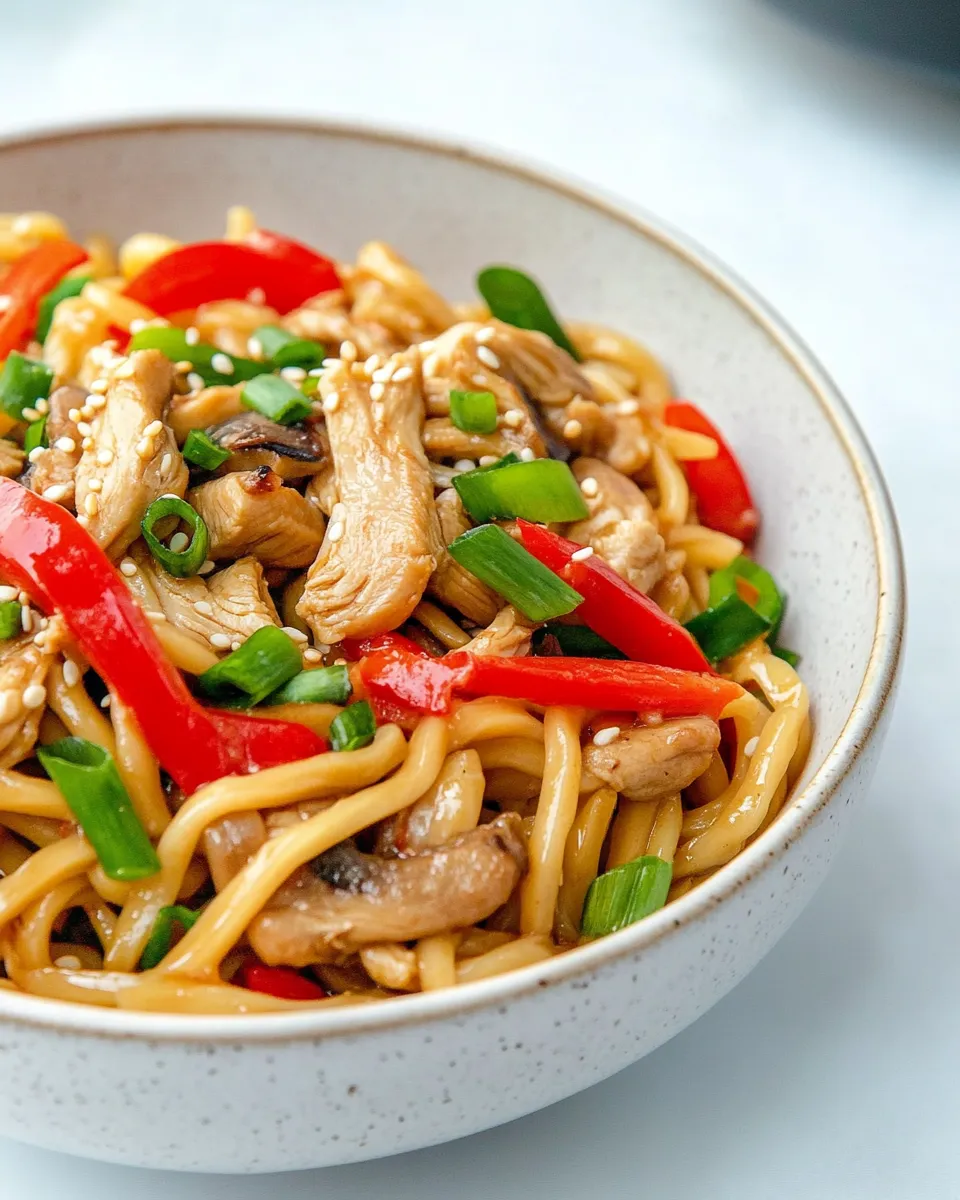
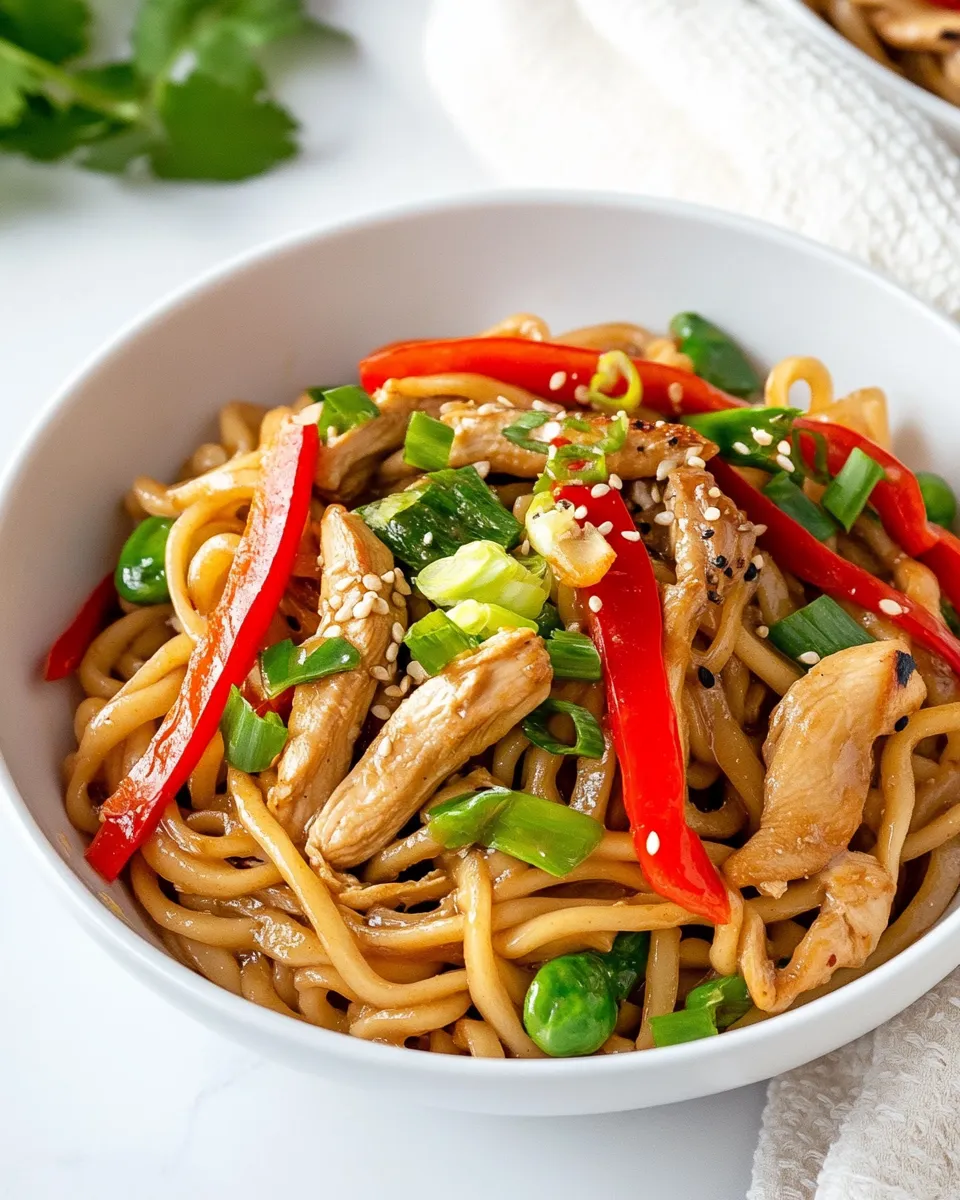
I make Chicken Yaki Udon when I want something fast, satisfying, and a little bit restaurant-level without the restaurant price. It’s one of those weeknight wins: a single pan, minimal clean-up, and bold flavors that come together in under 30 minutes. The texture contrast between glossy udon, crisp-tender vegetables, and browned ground chicken is what keeps me coming back to this recipe.
This version uses a simple, well-balanced sauce of soy and oyster sauce with a touch of lime (or rice vinegar) and brown sugar for brightness and depth. The technique focuses on quick, high-heat cooking and gentle handling of the udon so the noodles separate without tearing. Follow the order and you’ll get a silky, sticky coating on the noodles and perfectly cooked chicken.
Below you’ll find clear ingredient notes, a step-by-step method taken straight from the recipe, and practical tips I use in my kitchen to avoid common mistakes. Read the whole post if you like, or jump to the parts you need — the instructions are ready to run with as soon as your wok is hot.
Ingredient Notes
Before you start, glance through the ingredients so you understand what each one does. A quick read prevents pauses while you’re cooking and helps you spot easy swaps if you need them.
Ingredients
- ¾ cup water — thins the sauce so it coats the noodles rather than becomes a pool on the pan.
- 3 tablespoons soy sauce — the main salty, savory backbone.
- 3 tablespoons oyster sauce — adds umami and a touch of sweetness; it deepens the flavor beyond soy alone.
- 1 tablespoon lime juice or rice vinegar — brightens the sauce and balances the salt and sweet.
- 1 tablespoon brown sugar — rounds the edges and helps the sauce caramelize slightly on the hot noodles.
- 1 tablespoon sesame oil — used for stir-frying; gives a toasty note and helps with quick browning.
- 1 pound ground chicken — quick-cooking protein that soaks up the sauce and adds body to the dish.
- 8 ounces sliced mushrooms — add meatiness and soak up sauce; slice if they aren’t pre-sliced.
- 1 bell pepper, seeded and sliced thin — keeps a little crunch and adds sweet, fresh flavor and color.
- 1 bunch scallions, chopped and separated into white and greens — whites add the base flavor to the stir-fry; greens finish the dish with freshness.
- 1 cup mung bean sprouts — add crunch and a bright, clean texture at the end.
- 18–20 ounces vacuum-packed udon noodles — thick, chewy noodles that carry the sauce; vacuum-packed udon is already cooked and soft to the touch.
The Method for Chicken Yaki Udon
- In a small bowl, whisk together 3/4 cup water, 3 tablespoons soy sauce, 3 tablespoons oyster sauce, 1 tablespoon lime juice (or rice vinegar), and 1 tablespoon brown sugar until the sugar dissolves. Set the sauce aside.
- Prep the produce and noodles: remove the seeds from 1 bell pepper and slice it into thin strips; slice the mushrooms if needed (8 ounces); slice or chop 1 bunch scallions into 1-inch segments and separate the white parts from the green parts; measure out 1 cup mung bean sprouts. Have the 18–20 ounces vacuum-packed udon noodles ready to open.
- Heat a large wok or large sauté pan over medium-high heat. Add 1 tablespoon sesame oil and heat until shimmering.
- Add the scallion whites, sliced mushrooms, and bell pepper strips to the hot pan. Stir-fry 3–4 minutes, until the vegetables are mostly cooked but still have some bite. Transfer the vegetables to a plate and set aside.
- Add 1 pound ground chicken to the pan. Break the chicken into small pieces with a wooden spoon or spatula and cook, stirring, until the chicken is well browned and cooked through.
- Open the udon noodle packets and add the noodles to the pan with the browned chicken. Pour all of the prepared sauce over the noodles and chicken.
- Gently fold the chicken and sauce into the noodles, easing the noodles apart as needed. Do not tear the noodles; gently tug and fold until the noodles loosen enough to separate.
- When the noodles begin to separate, return the stir-fried vegetables to the pan. Add the 1 cup mung bean sprouts and the scallion greens. Toss everything together and simmer 1–2 minutes more to heat through.
- Remove from heat and serve immediately.
Why You’ll Love This Recipe
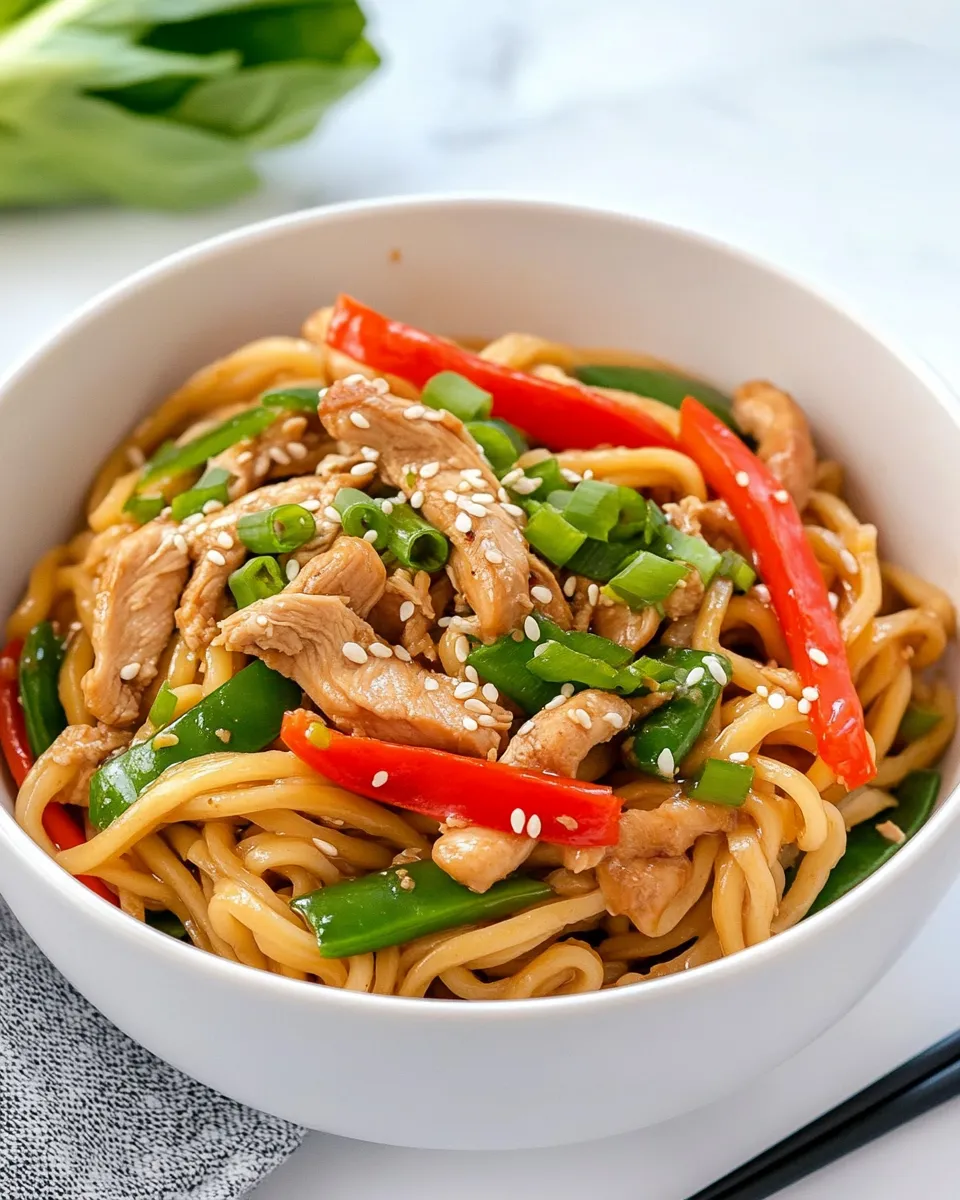
This dish delivers on texture and flavor without fuss. The udon are thick and chewy, the ground chicken provides quick, even browning, and the sauce clings to every strand for maximum flavor in each bite. The balance of salty soy, sweet brown sugar, and bright acid (lime or rice vinegar) keeps the whole dish lively rather than flat.
It’s fast. From prep to plate you can be done in about 25–30 minutes if your produce is ready. It’s flexible. Use what you have in the fridge for vegetables or switch proteins. And because it cooks in a single pan, cleanup stays manageable — a big plus on busy nights.
Allergy-Friendly Substitutes
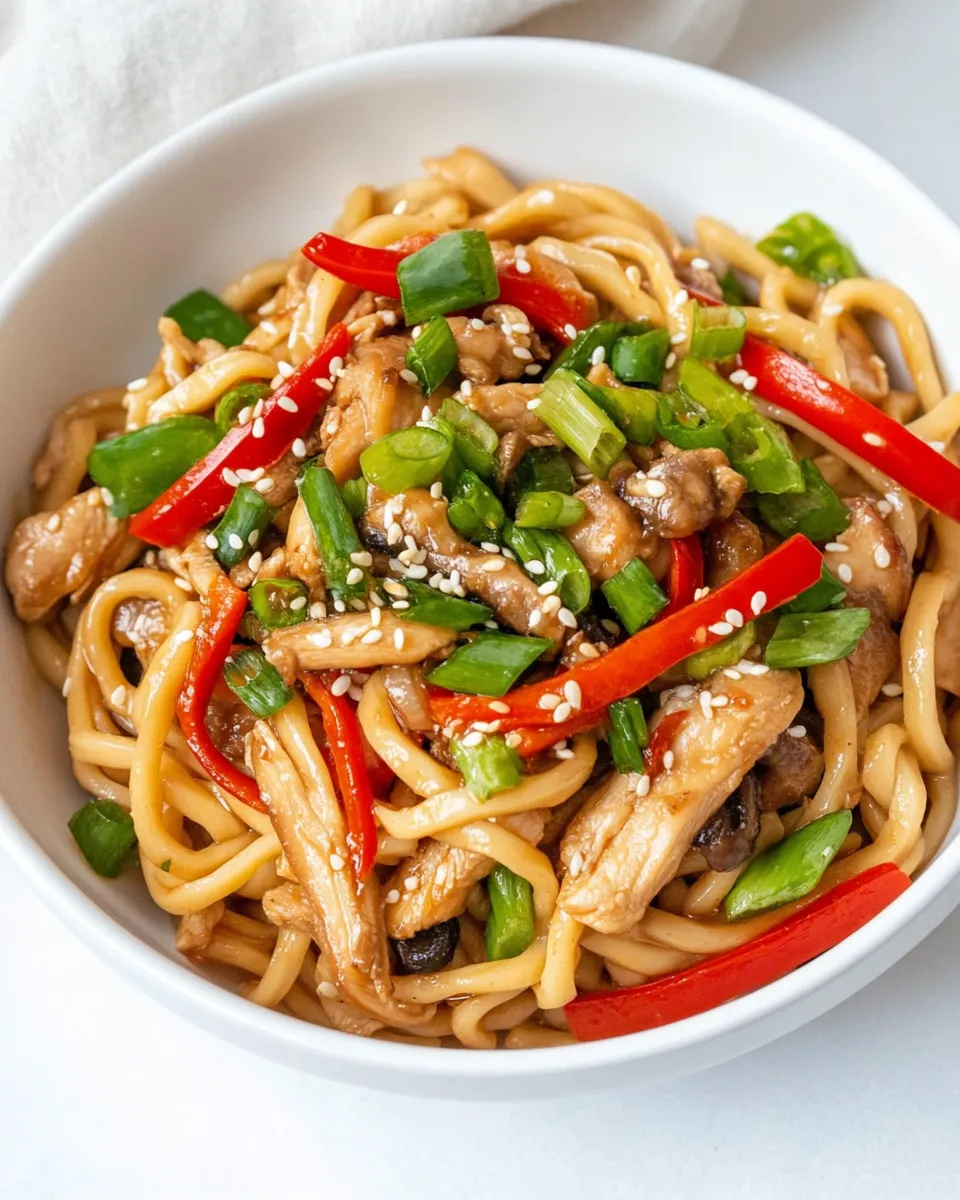
- Soy allergy: Use tamari-free alternatives or coconut aminos in place of soy sauce. Note the flavor will be slightly sweeter and less salty; adjust brown sugar to taste.
- Shellfish allergy (oyster sauce): Omit oyster sauce and increase soy sauce by 1 tablespoon, then add a teaspoon of mushroom powder or a splash of Worcestershire sauce for extra umami if tolerated.
- Gluten-free: Use gluten-free tamari and confirm the udon noodles are made from rice or another gluten-free grain — traditional udon contains wheat, so substitute with thick rice noodles or gluten-free udon alternatives.
- Vegetarian: Swap the ground chicken for firm tofu (pressed and crumbled) or a plant-based ground substitute and use vegetarian oyster sauce (mushroom-based) or extra soy and mushroom seasoning.
Essential Tools for Success
- Large wok or wide sauté pan: Provides high heat and room to toss without crowding.
- Wooden spoon or sturdy spatula: For breaking up the ground chicken and folding the noodles gently.
- Small bowl: To mix the sauce so it’s ready when you need it.
- Tongs (optional): Helpful for lifting and separating udon without tearing.
Avoid These Traps
There are a few easy missteps that can turn this into a soggy or unevenly cooked dish. First, don’t overcrowd the pan when browning the chicken. If the pan is too full the meat will steam instead of brown. Browned chicken adds flavor through caramelization.
Second, handle the udon gently. They’re soft already, so forceful stirring can tear them. Use a gentle folding motion and let the heat loosen them before pulling them apart. Third, add the sprouts and scallion greens last. They need only a minute to warm through; overcooking kills their crunch and brightness.
Health-Conscious Tweaks
If you want to reduce sodium, start with low-sodium soy sauce and taste before adding more. You can also cut the brown sugar in half — the dish will be less glossy but still satisfying. To boost fiber and nutrients, increase the vegetable ratio: add shredded carrots, snap peas, or baby bok choy along with the mushrooms and bell pepper.
For a leaner protein profile, stick with the ground chicken but drain any excess fat if it releases during cooking. Alternatively, use ground turkey or a mix of finely chopped chicken breast and thigh for slightly different textures.
Behind-the-Scenes Notes
I treat the sauce like a concentrated flavor booster. Mixing it in advance ensures even distribution and prevents you from scrambling with measuring spoons at the stove. The water in the sauce helps create a glossy coating and prevents saltiness from becoming overpowering. The oyster sauce is small in volume but large in impact — it gives a savory depth you won’t get from soy alone.
Vacuum-packed udon comes pre-cooked and soft. That’s intentional: the recipe aims to reheat and loosen, not to cook from raw. If you use dry udon, follow the package instructions for cooking first, then toss into the pan as directed here.
Meal Prep & Storage Notes
Leftovers store well in the fridge for 3–4 days. Cool completely and transfer to an airtight container. Reheat gently in a skillet over medium heat with a splash of water or stock to loosen the noodles, stirring until heated through. Microwaving works too — add a teaspoon or two of water, cover, and heat in 30-second bursts, stirring between them.
For meal prep, keep sauce separate and only combine before reheating if possible; this prevents the noodles from soaking up all the sauce and becoming dry. Vegetables like bell pepper and sprouts can be prepped and stored in the fridge so assembly is fast on the day you cook.
Your Top Questions
- Can I use frozen udon? Yes. Thaw slightly or add directly to the pan; they will separate as they warm. Be gentle to avoid tearing.
- Can I make this spicier? Absolutely. Add a drizzle of chili oil, a teaspoon of gochujang, or sliced fresh chilies when you add the sauce.
- Is oyster sauce necessary? It’s not mandatory, but it provides a deeper umami. If you don’t have it, increase soy sauce slightly and add a pinch of mushroom powder or a dash of Worcestershire if you tolerate it.
- What if my udon sticks together? Gently loosen them in the pan by pushing them apart with tongs or a spatula; adding the sauce helps them separate without tearing.
- How can I make this gluten-free? Use gluten-free tamari and substitute the udon for thick rice noodles or a certified gluten-free udon alternative.
Final Thoughts
Chicken Yaki Udon is one of those reliably tasty midweek dinners that feels composed without requiring a long shopping list or complicated steps. Stick to the order: sauce first, quick veg, brown the meat, gentle noodle handling, then finish with the fresh elements. It keeps your pan tidy and your flavors bright. Cook once, tweak to your taste, and this will become a repeat in your rotation.
Chicken Yaki Udon
Ingredients
Ingredients
- 3/4 cupwater
- 3 tablespoonssoy sauce
- 3 tablespoonsoyster sauce
- 1 tablespoonlime juiceor rice vinegar
- 1 tablespoonbrown sugar
- 1 tablespoonsesame oil
- 1 poundground chicken
- 8 ouncessliced mushrooms
- 1 bell pepperseeded and sliced thin
- 1 bunch scallionschopped and separated into white and greens
- 1 cupmung bean sprouts
- 18-20 ouncesvacuum-packed udon noodles
Instructions
Instructions
- In a small bowl, whisk together 3/4 cup water, 3 tablespoons soy sauce, 3 tablespoons oyster sauce, 1 tablespoon lime juice (or rice vinegar), and 1 tablespoon brown sugar until the sugar dissolves. Set the sauce aside.
- Prep the produce and noodles: remove the seeds from 1 bell pepper and slice it into thin strips; slice the mushrooms if needed (8 ounces); slice or chop 1 bunch scallions into 1-inch segments and separate the white parts from the green parts; measure out 1 cup mung bean sprouts. Have the 18–20 ounces vacuum-packed udon noodles ready to open.
- Heat a large wok or large sauté pan over medium-high heat. Add 1 tablespoon sesame oil and heat until shimmering.
- Add the scallion whites, sliced mushrooms, and bell pepper strips to the hot pan. Stir-fry 3–4 minutes, until the vegetables are mostly cooked but still have some bite. Transfer the vegetables to a plate and set aside.
- Add 1 pound ground chicken to the pan. Break the chicken into small pieces with a wooden spoon or spatula and cook, stirring, until the chicken is well browned and cooked through.
- Open the udon noodle packets and add the noodles to the pan with the browned chicken. Pour all of the prepared sauce over the noodles and chicken.
- Gently fold the chicken and sauce into the noodles, easing the noodles apart as needed. Do not tear the noodles; gently tug and fold until the noodles loosen enough to separate.
- When the noodles begin to separate, return the stir-fried vegetables to the pan. Add the 1 cup mung bean sprouts and the scallion greens. Toss everything together and simmer 1–2 minutes more to heat through.
- Remove from heat and serve immediately.
Equipment
- Small Bowl
- large wok or large sauté pan
- Wooden Spoon or Spatula
- Plate
Notes
Cool the dish completely before transferring to an airtight container. Keep in the fridge for
up to 3 days
.