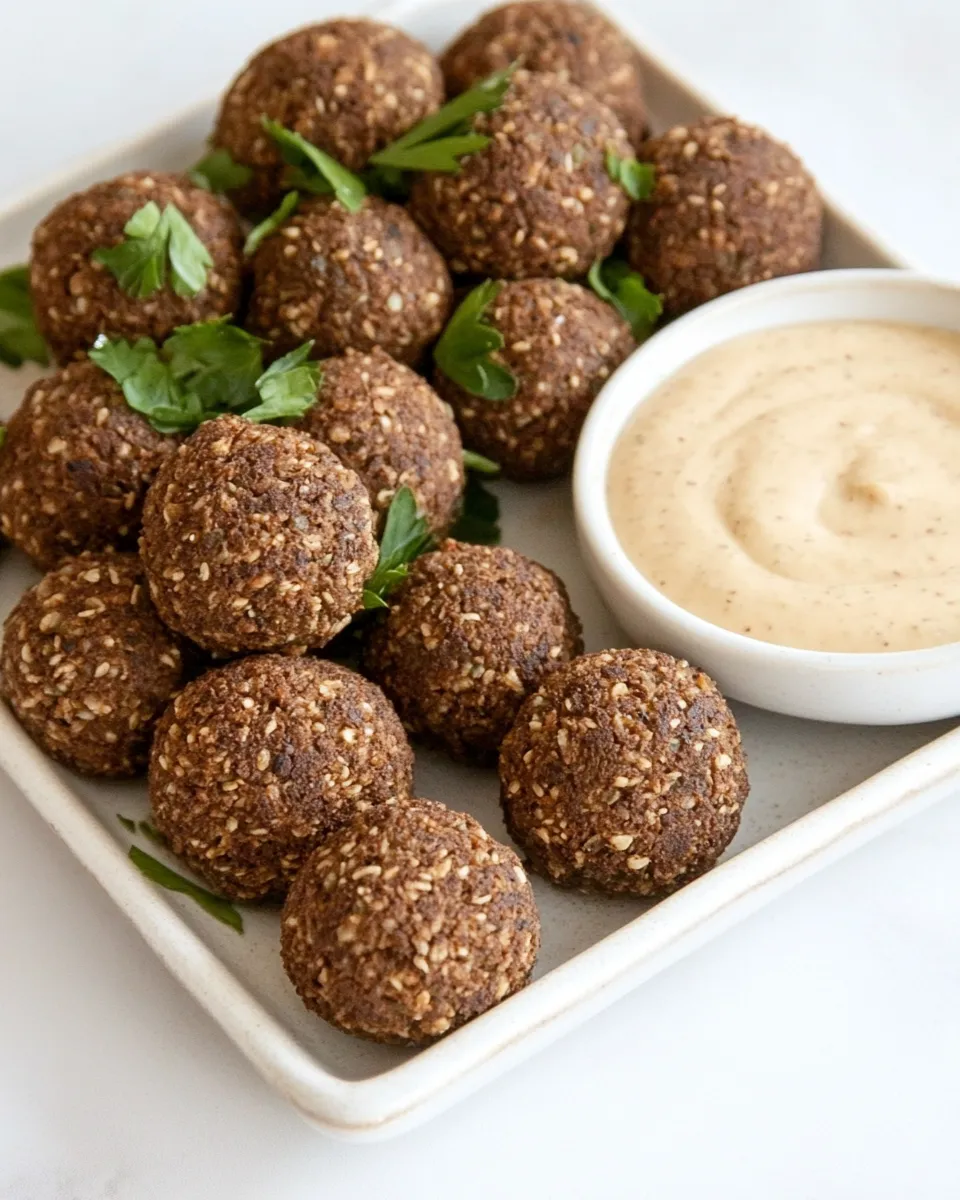
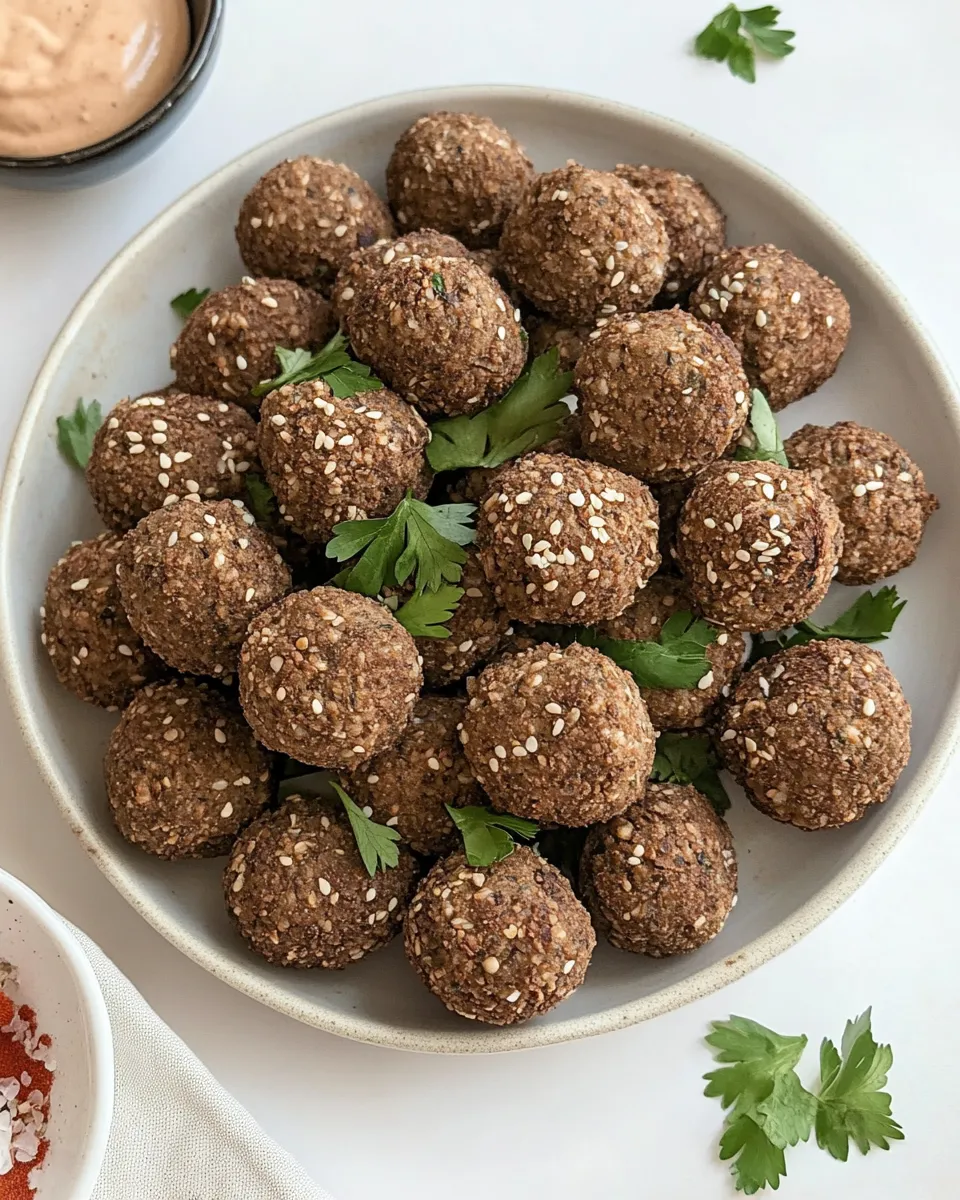
These falafels are the kind I make when I want a crunchy, herb-scented bite that’s entirely plant-based and reliably crisp. They’re not fussy: soaked chickpeas, bright parsley and cilantro, warming cumin, and a little baking soda make the texture light while sesame seeds give a subtle nutty crunch. The result is golden outside, tender and grainy inside — exactly what falafel should be.
I test this version when I’m feeding friends who expect the real thing, not a dense, dry patty. The key is patience: soaking the chickpeas overnight, pulsing to the right consistency, and chilling the mix so the balls hold their shape. It’s worth the wait.
Below you’ll find a practical shopping guide, the exact ingredient list, step-by-step instructions (kept exactly to the tested method), and all the troubleshooting tips I’ve learned from frying dozens of batches. If you want a dependable, crispy, vegan falafel you can make at home, this is it.
Your Shopping Guide
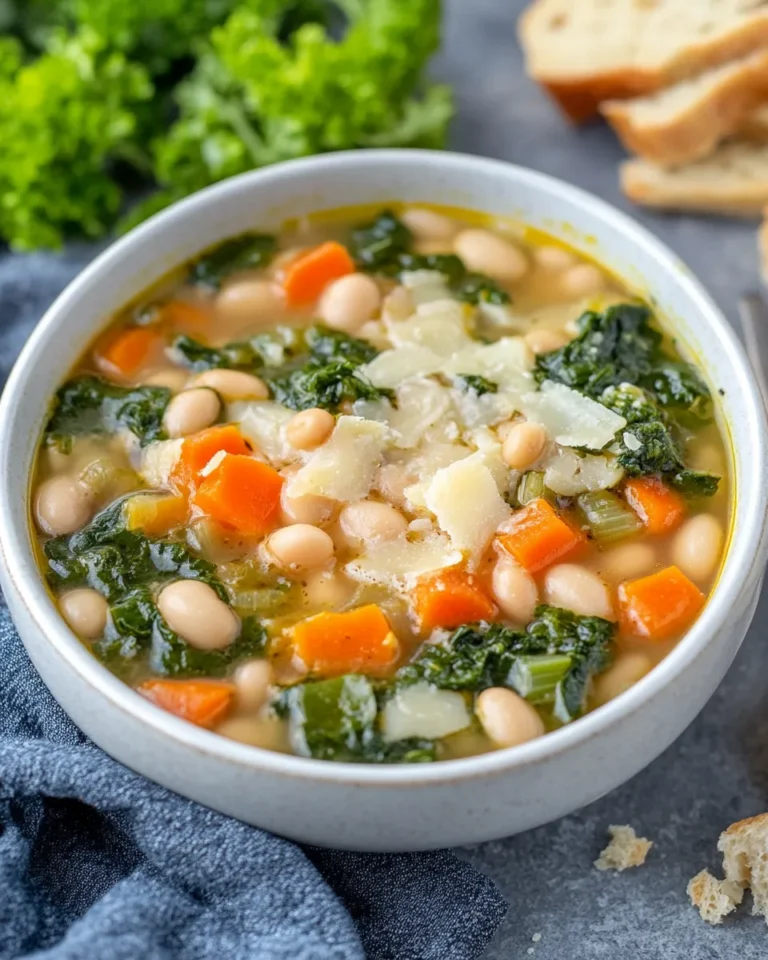
Shop with a plan and you won’t be making extra trips mid-recipe. Buy the dry chickpeas — this recipe depends on their texture after soaking, not on canned beans. Grab a bunch of fresh parsley and cilantro; their combined brightness is non-negotiable here. You’ll also want whole spices or ground cumin, sesame seeds, and the small pantry items: salt, black pepper, and baking soda.
- Chickpeas (dry) — buy a bag; they keep for months and are far cheaper than canned.
- Fresh herbs — parsley and cilantro, look for vibrant green stems and leaves.
- Onion and garlic — standard aromatics; choose firm, unblemished bulbs.
- Sesame seeds — for texture and flavor; toasted is optional but not required here.
- Neutral oil for deep frying — enough for a deep pot so the falafel can float.
Mastering Classic Crispy Vegan Falafel: How-To
Ingredients
- 1+½cup Chickpeas (dry not canned), dried, uncooked — the base: soak overnight to get the proper texture.
- 1 Onion (medium) — adds moisture, flavor, and helps bind when processed.
- 4 cloves Garlic — sharp aromatics that mellow when fried.
- 0.8oz Fresh parsley — bright, herbaceous lift for the mixture.
- 0.6oz Fresh cilantro — a fresh, citrusy counterpoint to the parsley.
- 1+½tsp Ground cumin seeds — the warm spice that makes the falafel unmistakable.
- 2Tbsp Sesame seeds — mixed in before chilling for even distribution and surface crunch.
- 1tsp Salt — seasons throughout so the interior isn’t bland.
- ¼tsp Black pepper — just enough pepper for subtle heat.
- 1tsp Baking soda — lightens the mixture for a slightly airier interior.
- ½cup Cold water — helps the processor blend while keeping mixture firm after chilling.
- Place 1+½cup Chickpeas (dry not canned), dried, uncooked in a large bowl and cover with plenty of cold water. Soak overnight (about 8–12 hours). Drain and rinse the chickpeas thoroughly before using. No cooking is needed.
- Wash the 0.8oz Fresh parsley and 0.6oz Fresh cilantro. Strip the leaves from the stems and roughly chop the leaves.
- Peel the 4 cloves Garlic and roughly chop or leave whole for easier processing.
- Peel and roughly chop the 1 Onion (medium).
- Measure the remaining ingredients: 1+½tsp Ground cumin seeds, 1tsp Salt, ¼tsp Black pepper, 1tsp Baking soda, and ½cup Cold water.
- In a food processor, add the drained chickpeas, chopped onion, garlic, chopped parsley and cilantro, salt, black pepper, ground cumin, baking soda, and ½cup Cold water.
- Pulse the food processor in short bursts until the mixture holds together when squeezed but still has small, grainy bits of chickpea (creamy and grainy but not completely pureed). Stop before the mixture becomes smooth.
- Transfer the mixture to a large bowl. Add 2Tbsp Sesame seeds and mix them in by hand until evenly distributed.
- Cover the bowl and chill the falafel mixture in the refrigerator for at least 1 hour to firm up; this makes shaping easier.
- Using a spoon or your palms, form the chilled mixture into balls. For more even cooking, lightly flatten each ball so it is slightly compact.
- Preheat a deep pot over medium heat and add enough oil for deep frying so the balls can float. Heat until the oil is hot and shimmering.
- Gently place a few falafel balls into the hot oil without overcrowding. Fry for approximately 5 minutes, turning as needed, until the exterior is golden brown and crisp.
- Use a slotted spoon to remove the fried falafel and place them on paper towels to drain any excess oil. Allow to cool slightly before serving.
Why This Recipe is a Keeper
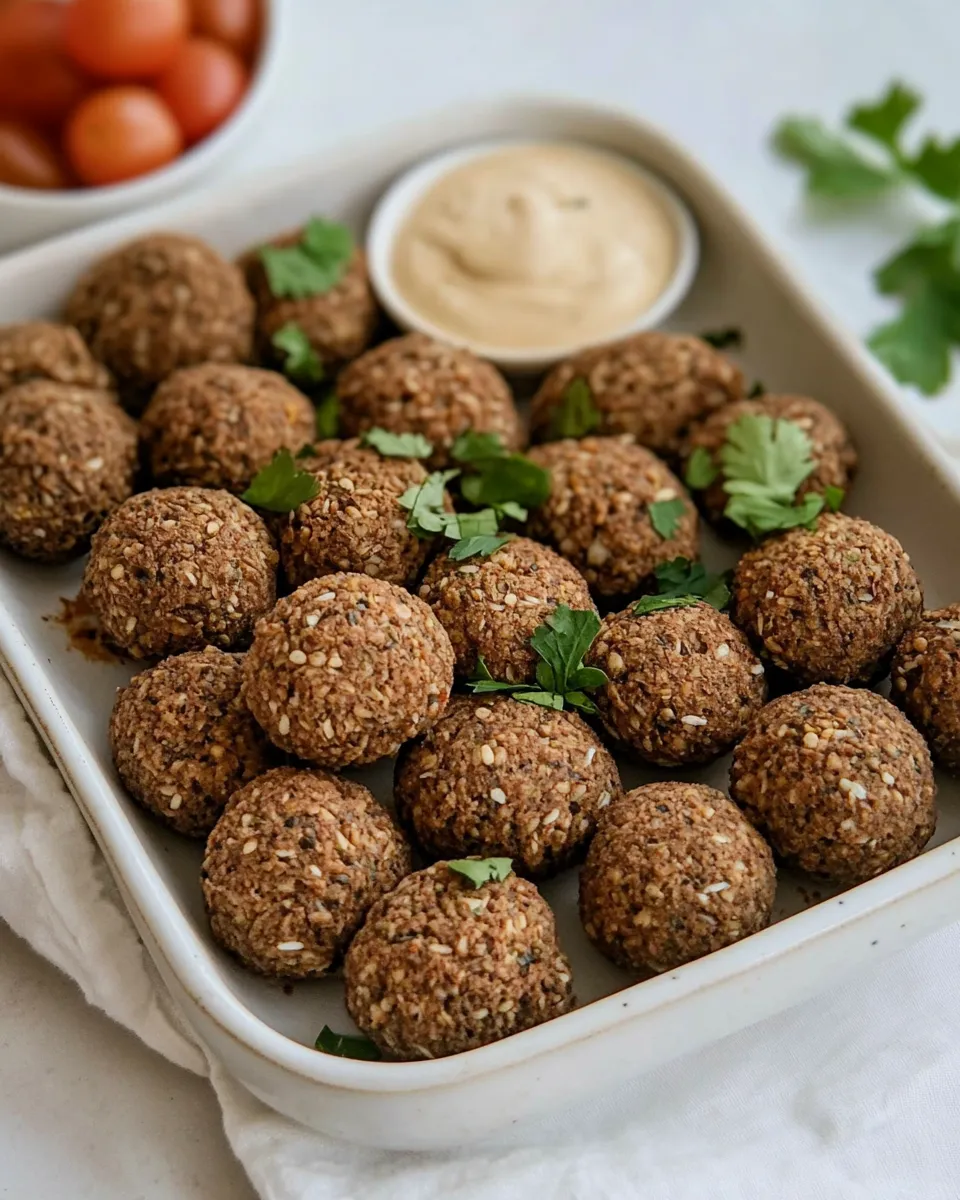
This version nails the balance between crunchy exterior and tender, grainy inside. Using dry, soaked chickpeas (not canned) preserves the classic texture — canned chickpeas are too soft and make for a dense, pasty mixture. The small amount of baking soda loosens the interior so the falafel isn’t heavy. Sesame seeds folded in before chilling distribute flavor and provide tiny bursts of toasted nuttiness.
It’s simple, forgiving, and scales well. The ingredients are pantry-friendly, and once you get the pulse rhythm in the food processor you’ll find the texture is easy to reproduce. The process is also flexible: if you want to double the batch, keep the ratio and chill time similar — chilling is the trick to handling a larger quantity without fall-apart balls.
Dairy-Free/Gluten-Free Swaps
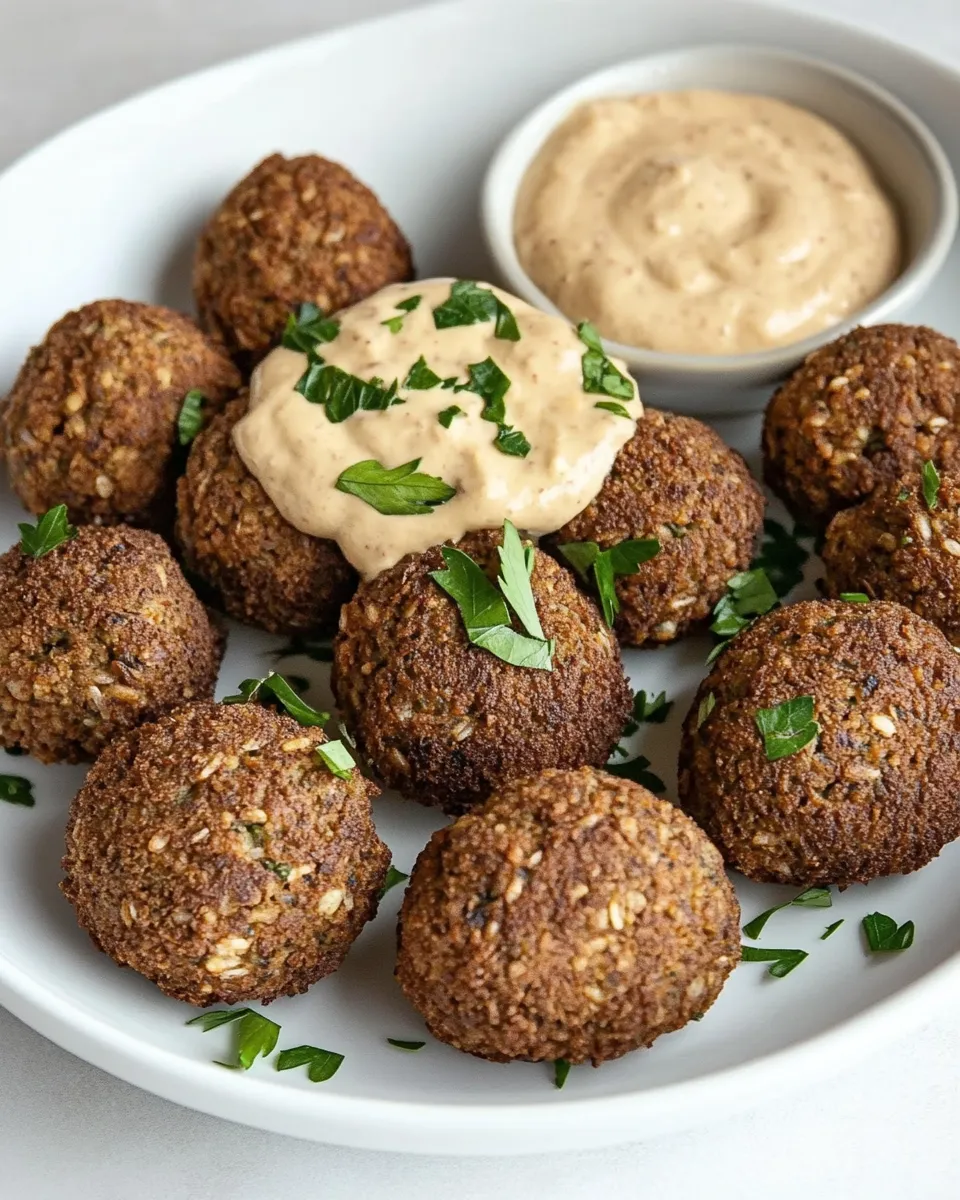
This recipe is naturally dairy-free. For gluten-free needs, the falafel mixture itself contains no gluten ingredients, so it’s safe — assuming your frying oil and any sides are gluten-free. Instead of serving in a wheat pita, use a gluten-free wrap, a corn-based flatbread, or simply tuck the falafel into lettuce cups. If you want a binder for a different variation, use a small amount of chickpea flour, but note that the base recipe works without added flours.
Cook’s Kit
- Food processor — essential for pulsing the mixture to the right consistency.
- Large bowls — for soaking the chickpeas and for chilling the mixture.
- Deep pot or Dutch oven — for frying with enough oil for the falafel to float.
- Slotted spoon — to lift fried falafel and let oil drain.
- Paper towels — for draining excess oil after frying.
- Spoons or a small ice cream scoop — for shaping even balls.
Pitfalls & How to Prevent Them
Too wet or too smooth: If you over-process the chickpeas you’ll get a paste that won’t hold a grainy interior. Pulse in short bursts and stop while the mixture still shows small bits of chickpea. Under-seasoned balls: Season the mix thoroughly; a bland interior is the most common complaint. Chill before shaping: warmed mix or a wet mix will fall apart in the oil. Resting for at least an hour tightens the consistency and makes frying predictable.
Oil temperature: If the oil isn’t hot enough the falafel will soak oil and get greasy; if it’s too hot the exterior will brown before the center cooks through. Aim for oil that’s hot and shimmering. Fry a test ball first: it should sizzle steadily and come out golden in roughly five minutes. Avoid overcrowding the pot; it drops the oil temperature sharply and leads to uneven cooking.
Variations for Dietary Needs
Low-oil option: For a lighter version, you can shallow-fry or bake falafel, but results differ — you’ll lose some of the deep-fried crisp. Air-frying is another option if you prefer less oil; expect a slightly drier surface and a longer cook time. For nut-free kitchens, sesame seeds can be omitted, though they add a pleasant texture.
Flavor tweaks: Add a pinch of smoked paprika or cayenne to the base if you want heat or smokiness. Fold in finely diced vegetables like red bell pepper sparingly — too much moisture changes the mixture and may require extra chill time.
Cook’s Commentary
I make batches of this on weekends and serve them warm with a quick cucumber-tomato salad and a bright tahini sauce. The smell of frying falafel takes me right back to street markets and seaside stands. A quick sensory check: the exterior should be audible when you bite — a satisfying crunch — and the interior should be moist but not wet, with distinguishable chickpea grains.
When friends ask for a make-ahead plan, I always recommend shaping the balls and freezing them on a sheet tray, then transferring to a freezer bag. Fry from frozen; they’ll take a little longer but hold together beautifully if frozen solid first.
Storing Tips & Timelines
Refrigerate cooked falafel in an airtight container for up to 3 days. Reheat in a 375°F (190°C) oven for 8–10 minutes to restore crunch, or briefly re-fry for 1–2 minutes per side. For longer storage, freeze cooked falafel in a single layer on a tray, then transfer to a bag for up to 3 months. Reheat from frozen in a hot oven or directly fry from frozen — they’ll need a few extra minutes.
If you have leftover uncooked falafel mixture, shape into balls and freeze on a tray, then bag and keep frozen for up to 1 month. Fry from frozen, adding a couple of minutes to the cook time so interiors reach the right temperature.
Your Questions, Answered
Can I use canned chickpeas? The short answer: not for this recipe. The soaked dry chickpeas give a firmer, grainier texture that canned chickpeas cannot replicate. Canned produce a softer mixture that tends to become too dense or pasty.
How do I know when the oil is ready? Look for a shimmering surface and a gentle ripple when you carefully add a small piece of bread or a tiny drop of batter — it should sizzle steadily. If you have a thermometer, aim for roughly 350–375°F (175–190°C).
Why chill the mixture? Chilling firms the fats and helps bind the mixture so the balls hold shape during frying. It also lets flavors meld.
Next Steps
Make the recipe once exactly as written to get the texture dialed in. After that, experiment with small flavor additions or try baking a portion if you want a lighter version. Serve simply with lemon wedges, sliced vegetables, and your favorite sauce. If you love playing with plates, assemble a falafel bowl with greens, pickles, grain, and a drizzle of tahini.
When you’ve made a batch, come back and tweak. Little changes — a touch more cumin, a faster pulse in the processor, an extra hour in the fridge — will show up in the final bite. Enjoy the process: falafel rewards attention more than complexity.
Classic Crispy Vegan Falafel
Ingredients
Ingredients
- 1 +1/2 cupChickpeas dry not canneddried, uncooked
- 1 Onion medium
- 4 clovesGarlic
- 0.8 ozFresh parsley
- 0.6 ozFresh cilantro
- 1 +1/2 tspGround cumin seeds
- 2 TbspSesame seeds
- 1 tspSalt
- 1/4 tspBlack pepper
- 1 tspBaking soda
- 1/2 cupCold water
Instructions
Instructions
- Place 1+½cup Chickpeas (dry not canned), dried, uncooked in a large bowl and cover with plenty of cold water. Soak overnight (about 8–12 hours). Drain and rinse the chickpeas thoroughly before using. No cooking is needed.
- Wash the 0.8oz Fresh parsley and 0.6oz Fresh cilantro. Strip the leaves from the stems and roughly chop the leaves.
- Peel the 4 cloves Garlic and roughly chop or leave whole for easier processing.
- Peel and roughly chop the 1 Onion (medium).
- Measure the remaining ingredients: 1+½tsp Ground cumin seeds, 1tsp Salt, ¼tsp Black pepper, 1tsp Baking soda, and ½cup Cold water.
- In a food processor, add the drained chickpeas, chopped onion, garlic, chopped parsley and cilantro, salt, black pepper, ground cumin, baking soda, and ½cup Cold water.
- Pulse the food processor in short bursts until the mixture holds together when squeezed but still has small, grainy bits of chickpea (creamy and grainy but not completely pureed). Stop before the mixture becomes smooth.
- Transfer the mixture to a large bowl. Add 2Tbsp Sesame seeds and mix them in by hand until evenly distributed.
- Cover the bowl and chill the falafel mixture in the refrigerator for at least 1 hour to firm up; this makes shaping easier.
- Using a spoon or your palms, form the chilled mixture into balls. For more even cooking, lightly flatten each ball so it is slightly compact.
- Preheat a deep pot over medium heat and add enough oil for deep frying so the balls can float. Heat until the oil is hot and shimmering.
- Gently place a few falafel balls into the hot oil without overcrowding. Fry for approximately 5 minutes, turning as needed, until the exterior is golden brown and crisp.
- Use a slotted spoon to remove the fried falafel and place them on paper towels to drain any excess oil. Allow to cool slightly before serving.
Equipment
- Food Processor
- Cast-iron Dutch Oven (3-quart / 2.8 liter)
Notes
Preheat a large frying pan or acast-iron skilletover medium-high heat. Add sunflower or coconut oil (not olive oil, but high-heat resistant and suitable for deep-frying).
Gently place a couple of patties. Leave enough space to flip them easily with a slotted turner.
Pan-fry them for approx. 2-3 minutes on both sides. Fried patties should be brown with a greenish ribbon around the side. We usually place them on a paper towel to capture any excess oil.