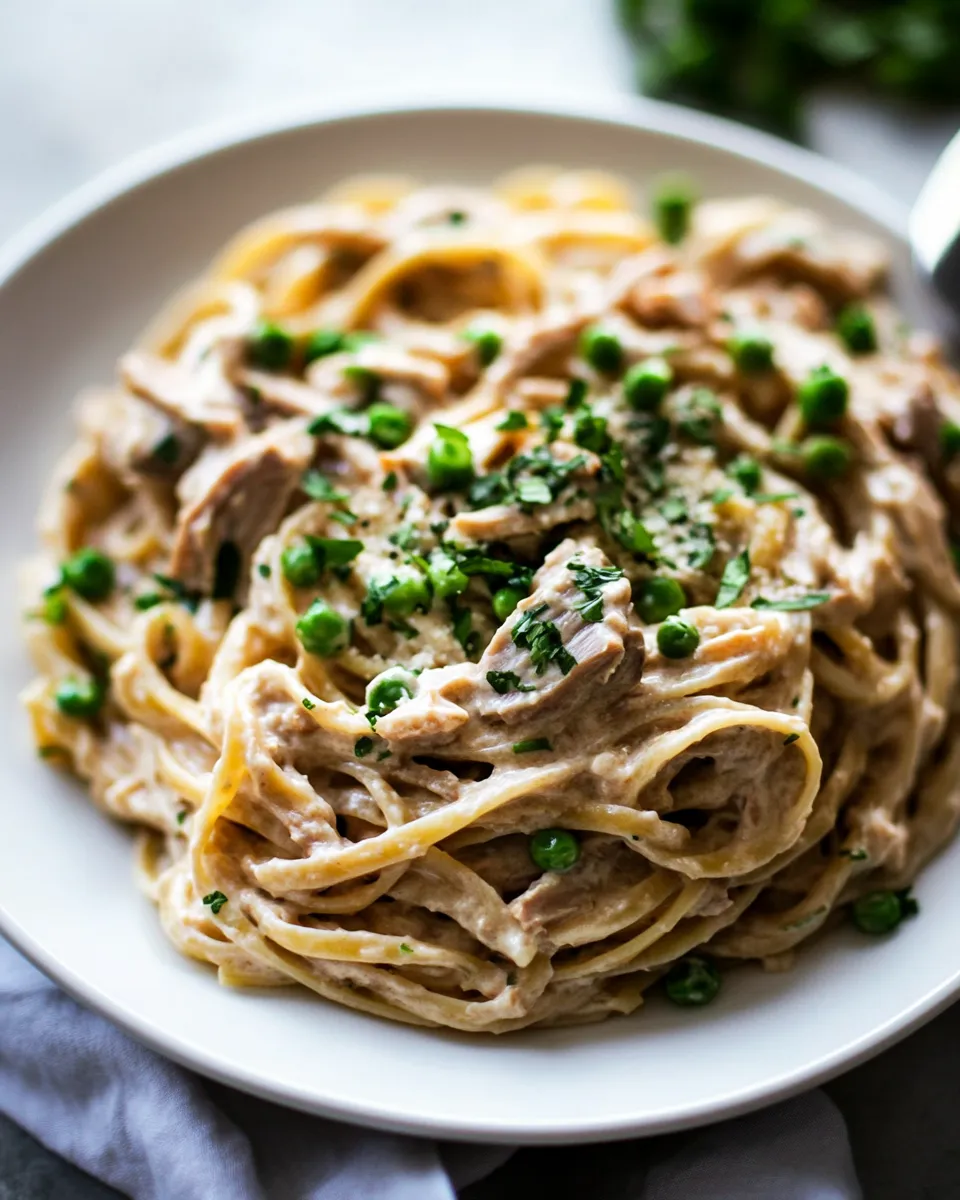
I make this Creamy Tuna Pasta on busy weeknights when I want comfort without fuss. It comes together quickly, uses pantry staples, and feels like a proper dinner — creamy, bright, and satisfying. The tuna keeps it simple and protein-packed, while the peas and parsley add a fresh lift.
The method leans on one-pan sauce work plus a pot of pasta, so cleanup stays reasonable. Small techniques — like reserving pasta water and adding the peas near the end of the boil — make the difference between a gluey bowl and a silky, balanced sauce. Follow those steps and you’ll have a restaurant-style plate in about 25–30 minutes.
Gather These Ingredients
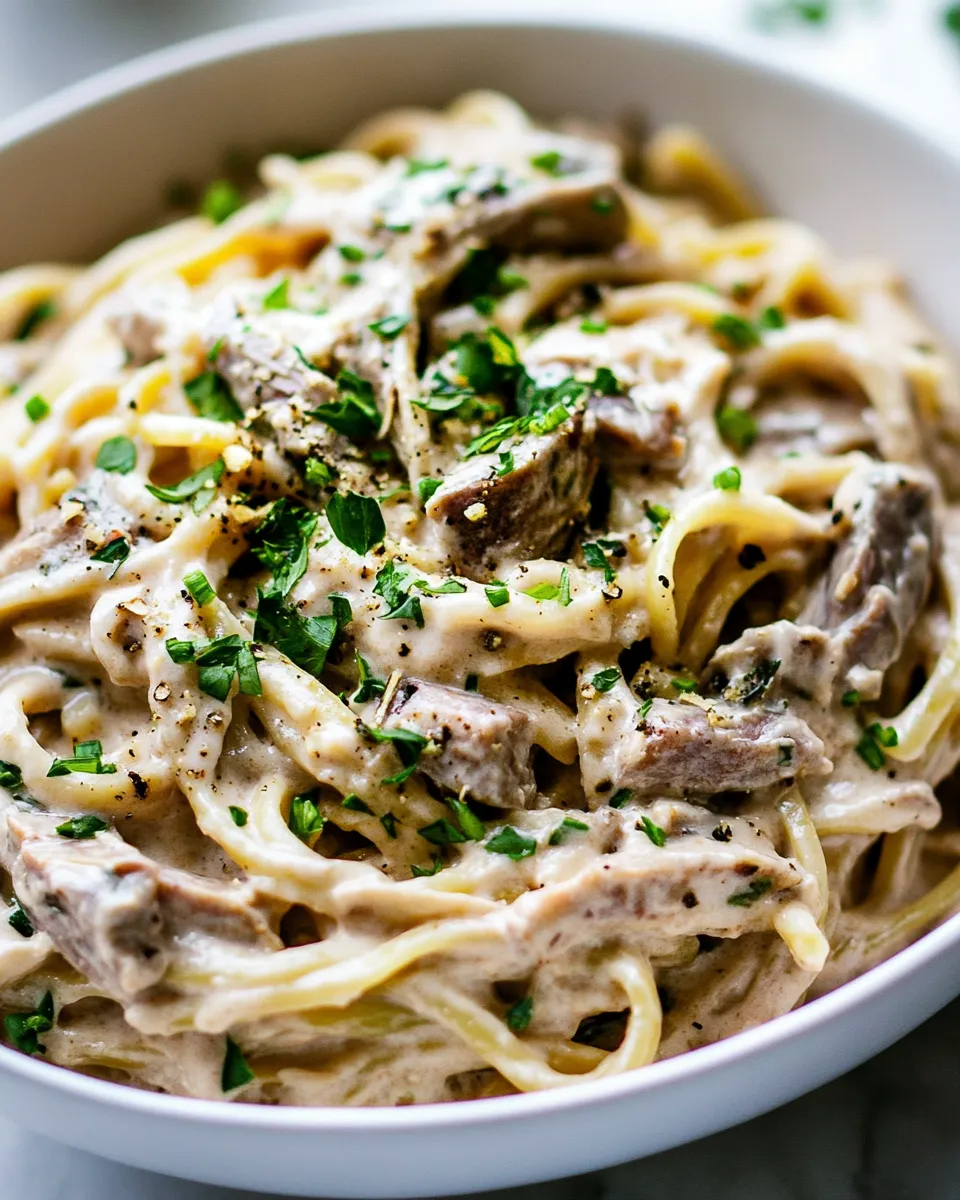
Before you turn on the heat, pull everything together. Measure the liquids and grate the Parmesan so you can move quickly. That small bit of prep keeps the sauce smooth and prevents overcooking the pasta or flattening the tuna flakes.
Ingredients
- 6 ounces fettuccine or linguine — not the whole box; the amount keeps the sauce-to-pasta ratio right.
- 3/4 cup frozen peas — add at the end of the pasta boil for color and brief sweetness.
- Salt and pepper — salt the pasta water and finish the dish to taste.
- 3 tablespoons unsalted butter — builds the base of the sauce and browns the aromatics gently.
- 1 cup minced onion (1 small onion) — softens into sweetness and adds body to the sauce.
- 2 teaspoons minced garlic (3 cloves) — gives immediate savory lift; mince fine so it disperses evenly.
- 1 cup chicken broth (divided) — used in two stages to deglaze and then to build the sauce.
- 3/4 cup heavy cream — creates a silky, clingy sauce; don’t omit if you want richness.
- 1/3 cup freshly grated Parmesan cheese — melts into the sauce and adds salty, nutty depth.
- 1/4 teaspoon ground mustard — subtle background tang that rounds the cream.
- 1/4 teaspoon onion powder — boosts onion flavor without extra chopping.
- 1/4 teaspoon garlic powder — layers garlic flavor with the fresh cloves.
- 2 (4 to 5-ounce) cans tuna in olive oil (drained) — flaked in at the end so the tuna stays tender; drain well.
- 1/2 up to 1 teaspoon Dijon-style mustard (optional) — start at 1/2 teaspoon and increase if you like a sharper edge.
- 1 lemon (optional) — wedges to brighten the finished dish at the table.
- Fresh flat-leaf parsley (optional) — chopped and stirred in or sprinkled on top for color and freshness.
Cook Creamy Tuna Pasta Like This
- Bring a large pot of water to a rolling boil. Salt the water to taste. Add 6 ounces fettuccine or linguine and cook for 1 minute less than the lowest time listed on the package. When that time is up, add 3/4 cup frozen peas and cook 1 more minute. Before draining, reserve 1 cup of the pasta cooking water, then drain the pasta and peas and set them aside.
- While the pasta cooks, melt 3 tablespoons unsalted butter in a large skillet over medium heat. Add 1 cup minced onion and 2 teaspoons minced garlic; cook, stirring occasionally, until the onion is softened and just starting to turn golden, about 3–5 minutes.
- Pour in 1/2 cup of the chicken broth and scrape any browned bits from the pan. Let the broth simmer until most of it has evaporated, about 1–2 minutes.
- Add the remaining 1/2 cup chicken broth, 3/4 cup heavy cream, 1/3 cup freshly grated Parmesan, 1/4 teaspoon ground mustard, 1/4 teaspoon onion powder, and 1/4 teaspoon garlic powder. If using Dijon-style mustard, add between 1/2 and 1 teaspoon (start at 1/2 teaspoon and increase to taste). Stir to combine, bring to a gentle simmer, and cook 1–2 minutes, stirring regularly, until the Parmesan is mostly dissolved. Season with black pepper to taste and hold off on adding salt until the end.
- Add the drained pasta and peas to the skillet. Toss or stir gently for 1–2 minutes until the sauce thickens and coats the pasta. If the sauce becomes too thick, loosen it with small splashes of the reserved pasta cooking water until you reach the desired consistency.
- Drain the two cans (4–5 oz each) of tuna in olive oil and flake the tuna with a fork. Add the tuna to the skillet along with chopped fresh flat-leaf parsley if using. Gently fold to combine, trying to keep the tuna flakes intact.
- Taste and adjust seasoning, adding salt and more pepper if needed. Serve immediately with lemon wedges and extra grated Parmesan if desired.
Why This Recipe is a Keeper
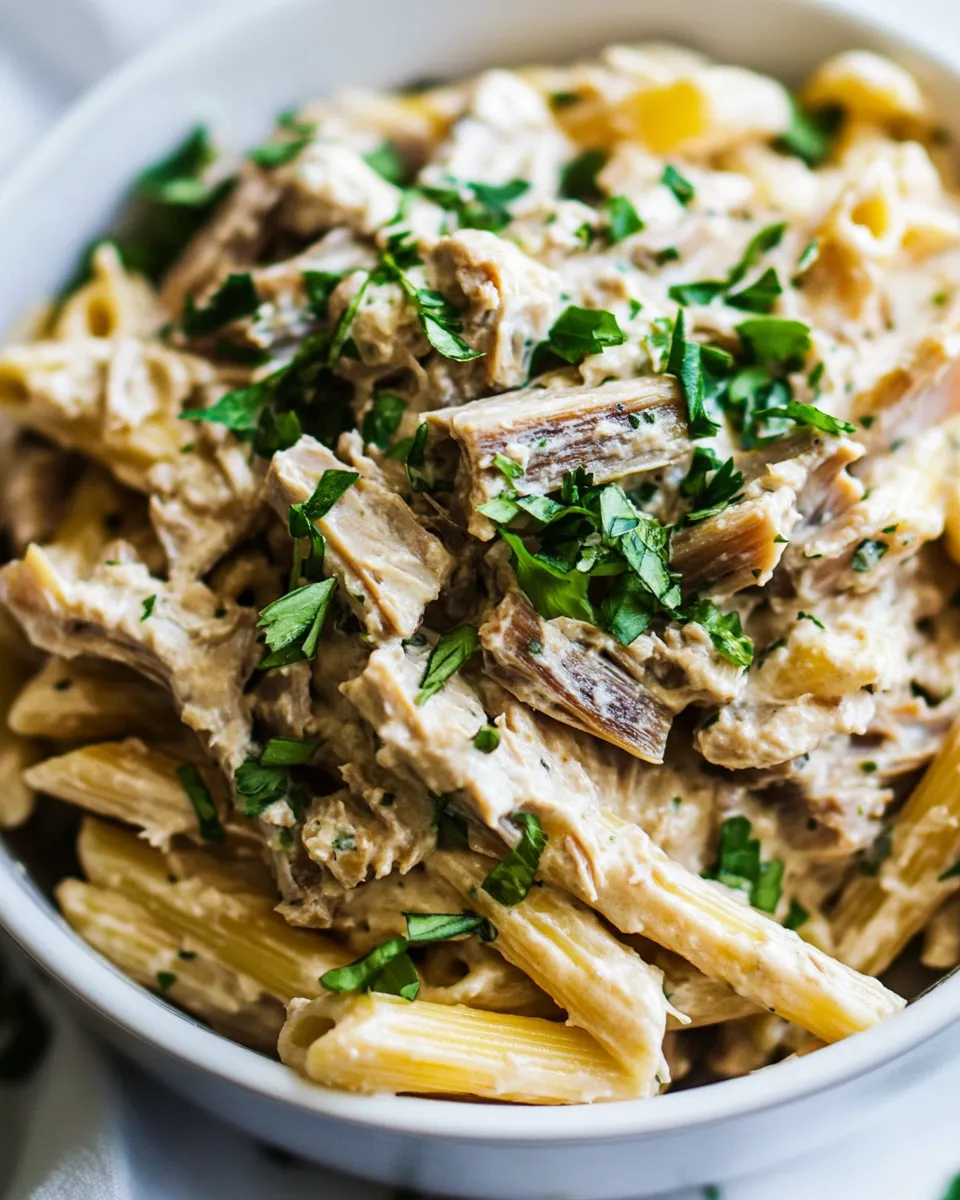
This dish balances speed, flavor, and pantry-friendliness. It’s weeknight-friendly: the bulk of the work happens while the pasta boils. Tuna keeps prep minimal — no defrosting or poaching — and canned tuna in olive oil gives richer flavor than packed in water.
The sauce is creamy but not heavy because the cooking method uses small amounts of broth and reserved pasta water to reach silkiness without making the pan greasy. Parmesan and a hint of mustard create a rounded, layered taste that pairs perfectly with the delicate tuna flakes.
Flavor-Forward Alternatives
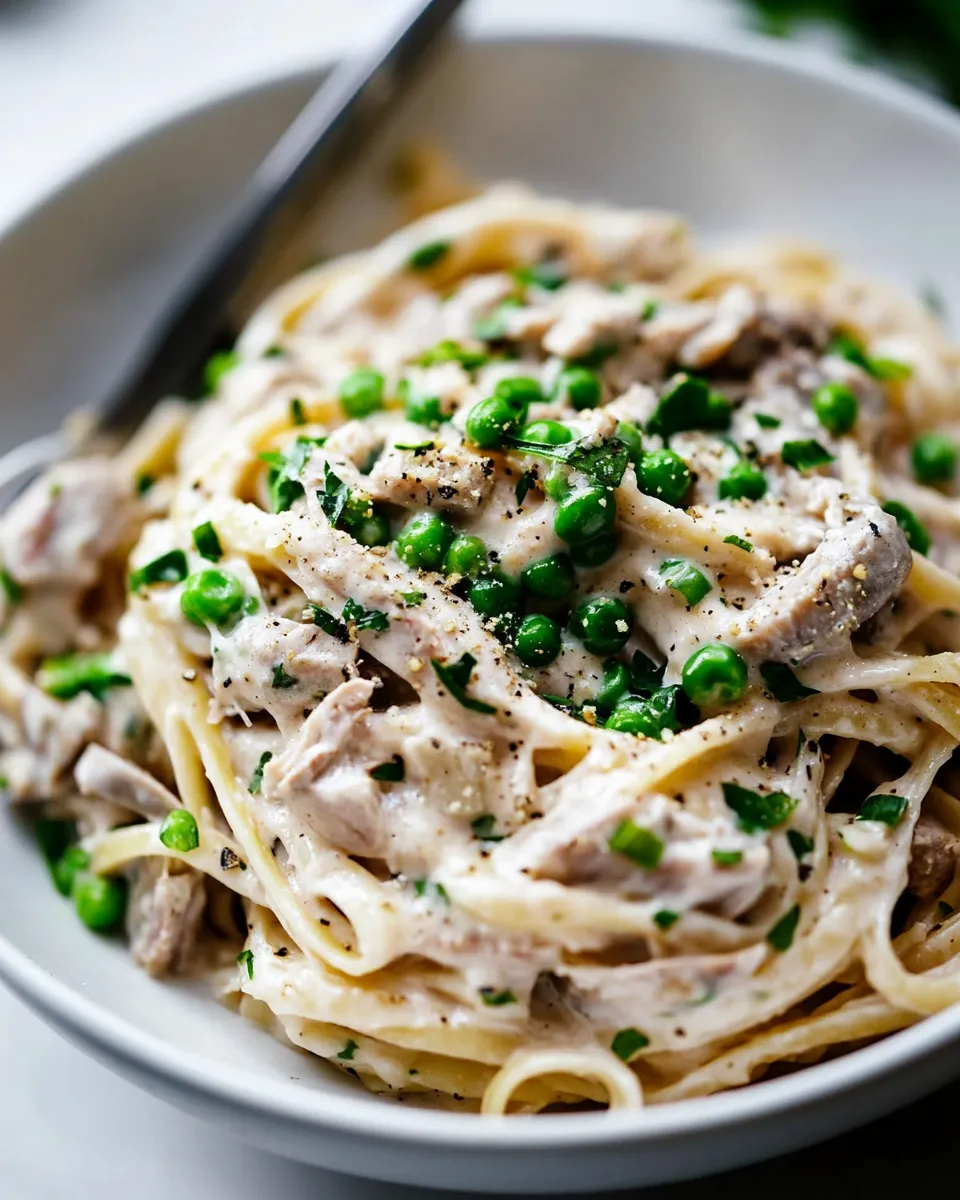
- Spicy kick: Stir in 1/4–1/2 teaspoon red pepper flakes when you add the garlic.
- Herb swap: Use chopped basil instead of parsley for a sweet, aromatic twist.
- Cheese change: Replace half the Parmesan with Pecorino for a sharper finish.
- Vegetable boost: Add sautéed mushrooms or zucchini in step 2 if you want more body and texture.
What’s in the Gear List
You don’t need anything exotic. A large pot for boiling, a sturdy skillet (10–12 inches is ideal), a fine grater for the Parmesan, and tongs for tossing pasta are the essentials. Keep a measuring cup handy for the reserved pasta water so you can loosen the sauce precisely.
Errors to Dodge
Common slips that turn a good meal into a soggy one:
- Overcooking pasta: Follow the “1 minute less” rule and add the peas late. That gives perfect al dente noodles and tender, not mushy, peas.
- Dumping tuna too early: Add the tuna at the end and fold gently. Over-stirring will shred the flakes.
- Skipping reserved pasta water: If the sauce tightens up, small splashes of that starchy water rescue the texture without thinning the flavor.
- Salting too early: The Parmesan and tuna add salt — taste before you finish seasoning.
Seasonal Spins
Spring: Use fresh peas in season; blanch them in the pasta water and add with the pasta for extra sweetness. Summer: Fold in halved cherry tomatoes and fresh basil after you finish the dish for a brighter, fresher plate. Fall/Winter: Swap in a handful of sautéed kale or roasted root vegetables for heartier comfort.
Chef’s Rationale
I keep the technique straightforward on purpose. Browning the onions in butter builds a toasty base, a brief deglaze with broth captures those browned bits for flavor, and then the second addition of broth plus cream creates the sauce body. Parmesan dissolves into that mix and thickens without curdling.
Reserving pasta water is a chef trick: the starch binds the sauce to the noodles so you get a cohesive mouthfeel rather than a sauce that slides off. The controlled timing of peas and tuna ensures vivid color and texture. That’s the logic behind each short step.
Keep-It-Fresh Plan
Store leftovers in an airtight container in the refrigerator for up to 3 days. Reheat gently in a skillet over low heat, adding a splash of water or milk to loosen the sauce. Avoid reheating in the microwave on high; it can dry out the tuna and separate the cream.
If you plan to meal-prep, undercook the pasta by a minute and keep sauce separate. Combine and finish with a quick toss when you reheat to preserve texture.
FAQ
Q: Can I use pasta shapes other than fettuccine or linguine?
A: Yes. Short shapes like penne or fusilli work, but adjust the total amount so the pasta-to-sauce ratio remains balanced.
Q: My sauce split when reheating. What went wrong?
A: High heat causes cream to separate. Reheat slowly on low, adding small amounts of reserved pasta water or milk to bring it back together.
Q: Can I use tuna packed in water?
A: You can, but drain it well and consider adding an extra teaspoon of olive oil or butter to the skillet for added richness.
Q: Is there a dairy-free version?
A: Use a full-bodied non-dairy cream alternative and a dairy-free parmesan substitute, but expect a different flavor profile. The technique still applies.
Serve & Enjoy
Serve straight from the skillet or portion onto warmed plates. Offer lemon wedges and extra grated Parmesan at the table. A simple green salad and a crisp white wine make nice companions.
This Creamy Tuna Pasta is the kind of recipe I return to when I want something quick that still feels thoughtfully cooked. It’s forgiving, fast, and reliably delicious. Make a double batch of the base if you like leftovers; a little care in reheating keeps the texture and flavor at their best.
Creamy Tuna Pasta
Ingredients
Ingredients
- 6 ouncesfettuccineor linguine not the whole box, see note 1
- 3/4 cupfrozen peas
- Saltandpepper
- 3 tablespoonsunsalted butter
- 1 cupminced onion1 small onion
- 2 teaspoonsminced garlic3 cloves
- 1 cupchicken brothdivided see note 2
- 3/4 cupheavy creamsee note 3
- 1/3 cupfreshly grated Parmesan cheesesee note 4
- 1/4 teaspoonground mustard
- 1/4 teaspoononion powder
- 1/4 teaspoongarlic powder
- 2 4 to 5-ounce canstuna in olive oildrained, see note 5
- 1/2 up to 1 teaspoonDijon-style mustardoptional
- 1 lemonoptional
- Fresh flat-leaf parsleyoptional
Instructions
Instructions
- Bring a large pot of water to a rolling boil. Salt the water to taste. Add 6 ounces fettuccine or linguine and cook for 1 minute less than the lowest time listed on the package. When that time is up, add 3/4 cup frozen peas and cook 1 more minute. Before draining, reserve 1 cup of the pasta cooking water, then drain the pasta and peas and set them aside.
- While the pasta cooks, melt 3 tablespoons unsalted butter in a large skillet over medium heat. Add 1 cup minced onion and 2 teaspoons minced garlic; cook, stirring occasionally, until the onion is softened and just starting to turn golden, about 3–5 minutes.
- Pour in 1/2 cup of the chicken broth and scrape any browned bits from the pan. Let the broth simmer until most of it has evaporated, about 1–2 minutes.
- Add the remaining 1/2 cup chicken broth, 3/4 cup heavy cream, 1/3 cup freshly grated Parmesan, 1/4 teaspoon ground mustard, 1/4 teaspoon onion powder, and 1/4 teaspoon garlic powder. If using Dijon-style mustard, add between 1/2 and 1 teaspoon (start at 1/2 teaspoon and increase to taste). Stir to combine, bring to a gentle simmer, and cook 1–2 minutes, stirring regularly, until the Parmesan is mostly dissolved. Season with black pepper to taste and hold off on adding salt until the end.
- Add the drained pasta and peas to the skillet. Toss or stir gently for 1–2 minutes until the sauce thickens and coats the pasta. If the sauce becomes too thick, loosen it with small splashes of the reserved pasta cooking water until you reach the desired consistency.
- Drain the two cans (4–5 oz each) of tuna in olive oil and flake the tuna with a fork. Add the tuna to the skillet along with chopped fresh flat-leaf parsley if using. Gently fold to combine, trying to keep the tuna flakes intact.
- Taste and adjust seasoning, adding salt and more pepper if needed. Serve immediately with lemon wedges and extra grated Parmesan if desired.
Equipment
- Large Skillet
Notes
Note 1:
We’re using just 6 ounces of pasta—if you’ve got a food scale, it’s a great tool for nailing the perfect amount.
Note 2:
Chicken broth contributes a depth of flavor to the sauce. Opt for a quality brand for a richer, more robust flavor—I’m a fan of Swanson’s! If you’re worried about saltiness, use low-sodium, then add any extra salt as needed.
Note 3:
Heavy cream is the key ingredient that lends the sauce its creamy texture. Other milks simply won’t thicken the same way.
Note 4:
Grab a
block of Parmesan cheese
, grate it on the small holes of a cheese grater, and gently pack it into a measuring cup. Avoid jarred Parmesan—it’s too salty and will overpower the flavor!
Note 5:
Tuna packed in olive oil is richer and has a fresher flavor. My favorite is Genova’s® albacore tuna. There is a lot of tuna in this dish (just how I like it!). If you’d prefer less, reduce according to preference.
Storage:
As with most pasta dishes, this recipe is best enjoyed immediately. When reheating, you’ll likely need to add a splash more chicken broth to thin the sauce. This dish doesn’t freeze well.