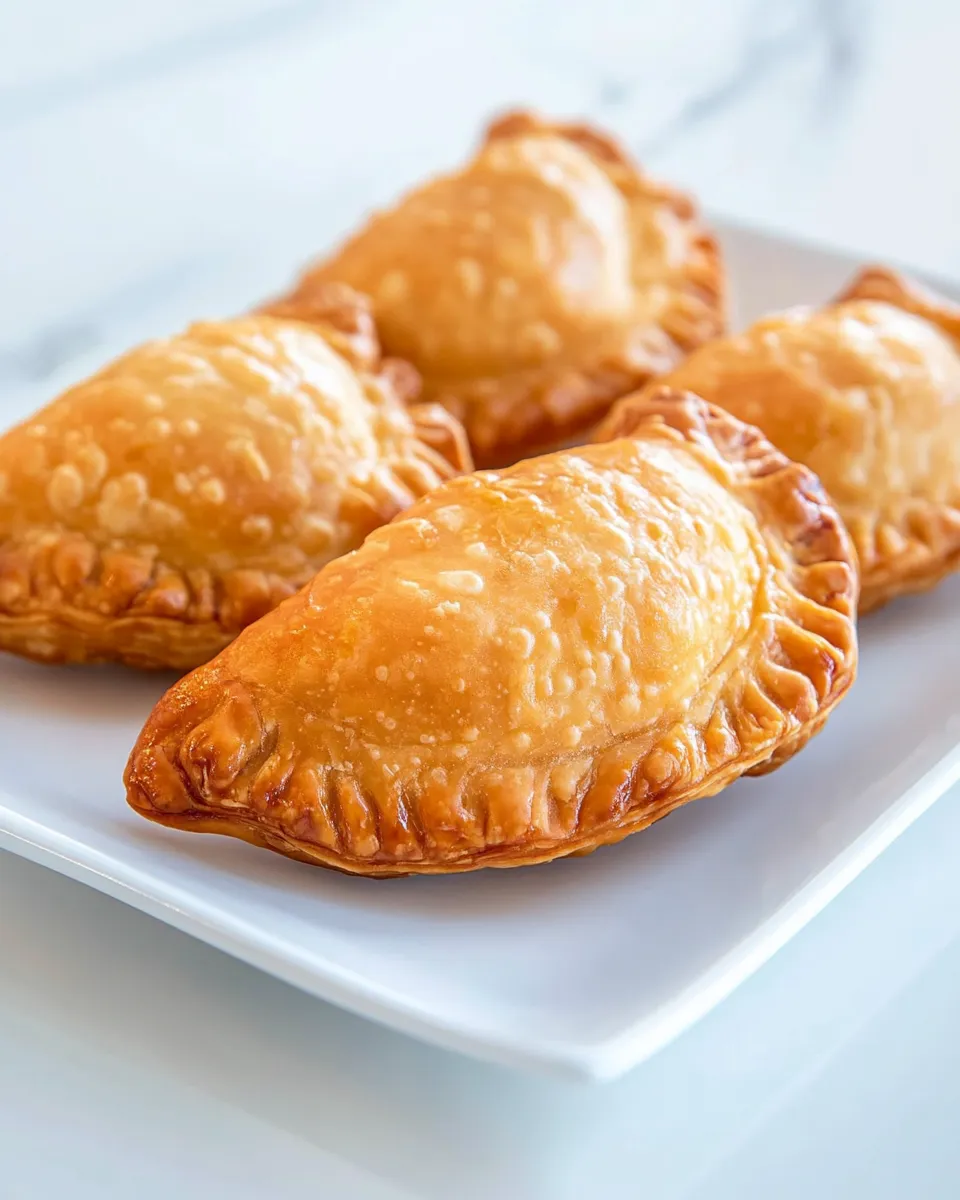
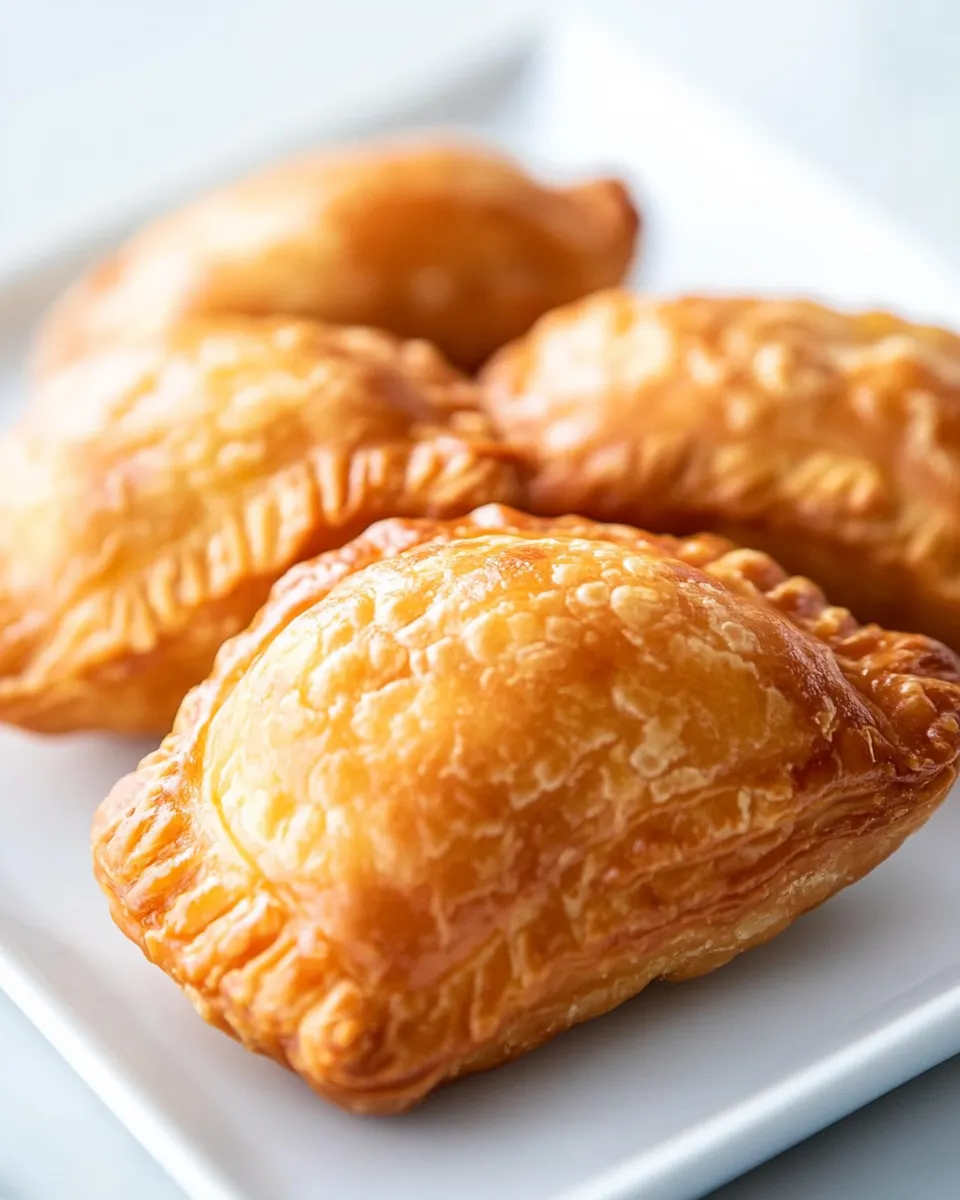
This curry puff recipe gives you crisp, flaky pastry wrapped around a warmly spiced chicken-and-potato filling. The method is deliberately hands-on: you make two doughs (a water dough and an oil dough), wrap one inside the other, laminate, and shape. The result is layers that break with a pleasant crunch and a filling that’s savory, slightly sweet, and fragrant with curry powder and red chili.
I share this version because it scales—there’s a lot of dough and filling here, so you’ll come away with many puffs to serve, freeze, or share. Follow the steps in order, pay attention to resting times, and don’t skip cooling the filling. Small, specific choices (like the amount of curry powder or how tightly you roll the logs) change texture and flavor in reliable ways.
Read the ingredients notes carefully, then follow the step-by-step instructions. I’ll also include practical tips for assembly, frying, storage, and small troubleshooting points so your batch turns out consistently well.
Ingredient Breakdown
Ingredients
- 15 dried red chilies, seeded — provide the heat and color for the paste; seeding cuts harsh bitterness.
- 8 shallots, peeled — add sweetness and body to the chili-shallot paste.
- 2-3 tablespoons meat curry powder — primary spice for the filling; adjust within the range to taste.
- 5 tablespoons oil — for sautéing the paste and frying; reserve enough for frying later.
- 5 curry leaves — aromatic leaves that lift the filling; remove if unavailable but they give classic flavor.
- 1 kg (2 lb) chicken, breasts preferred, cut into small pieces — main protein in the filling; small pieces cook evenly and blend with potatoes.
- 1 kg (2 lb) potatoes, cut into small pieces — bulk and texture for the filling; choose waxy potatoes that hold shape.
- 500 g (1 lb) yellow onions, peeled and diced — adds sweetness and moisture to the filling.
- 125 ml water — used to simmer the filling so ingredients cook through and flavors concentrate.
- salt, to taste — for seasoning the filling at the end.
- sugar, to taste — balances the heat and acidity; a small pinch brightens flavors.
- 1.5 teaspoons salt — for dissolving into the saltwater solution used in the water dough.
- 335 g (11.8 oz) water — combined with salt to make the saltwater solution for the water dough.
- 900 g (1.9 lb) all purpose flour — for the water dough; provides structure and chew.
- 340 g (11.9 oz) unsalted butter — folded into the oil dough to create flaky layers.
- 20 g (¾ oz) ghee, optional — optional fat for richer flavor in the oil dough.
- 730 g (1⅓ lb) flour — used for the oil dough; works with the fats to form the lamination layer.
Curry Puff — Do This Next
- Soak 15 dried red chilies (seeded) in hot water for 5 minutes. Drain, rinse, then place the chilies and 8 peeled shallots in a blender and process until smooth. Transfer the smooth paste to a bowl and stir in 2–3 tablespoons meat curry powder. Set the chili paste aside.
- Heat 5 tablespoons oil in a wok over medium heat. Add the chili paste and 5 curry leaves and sauté until fragrant (about 1–2 minutes), stirring so the paste does not burn.
- Add 1 kg chicken (cut into small pieces) and 1 kg potatoes (cut into small pieces) to the wok. Stir-fry for 3 minutes to coat with the paste.
- Add 500 g diced yellow onions and 125 ml water. Reduce the heat to medium-low and simmer, stirring occasionally, until the mixture is almost dry (about 5 minutes). Season to taste with salt and sugar. Remove the filling from the heat and allow it to cool completely before using.
- Dissolve 1.5 teaspoons salt in 335 g water to make the saltwater solution.
- Make the water dough: place 900 g all-purpose flour in a large bowl. Gradually add the saltwater solution while mixing/kneading until a smooth, cohesive, white dough forms. Divide this dough into portions of 85 g each and roll each portion into a ball. Set these water-dough balls aside.
- Make the oil dough: put 730 g flour in a separate bowl. Add 340 g unsalted butter and 20 g ghee (optional) to the flour and work the fat into the flour until a cohesive dough forms (the fat should be fully incorporated). Divide this oil dough into portions of 70 g each and roll each portion into a ball.
- Assemble wrapped doughs: take one 85 g water-dough ball, flatten it into a disc with your palm or a rolling pin. Place one 70 g oil-dough ball in the center of the disc, wrap the water dough around the oil dough completely, and pinch the edges to seal. Repeat for all dough balls.
- Let the sealed dough balls rest for 10 minutes.
- For each rested sealed ball, use a rolling pin to roll it into a rectangle approximately 20 x 11 cm (8″ x 4″). Starting from the short edge, roll the rectangle tightly into a log. Flatten that log slightly and roll it again from the short edge to form a second, tighter roll. Repeat for all sealed balls.
- Let the rolled logs rest for 10–15 minutes.
- Cut each rolled log into 4 equal pieces.
- Working with one piece at a time, use a rolling pin to roll it into a flat circle large enough to hold 1 tablespoon of filling.
- Place 1 tablespoon of the cooled filling in the center of the circle. Moisten the rim of the dough with a little water. Fold the dough over to form a half-moon and press the edges to seal.
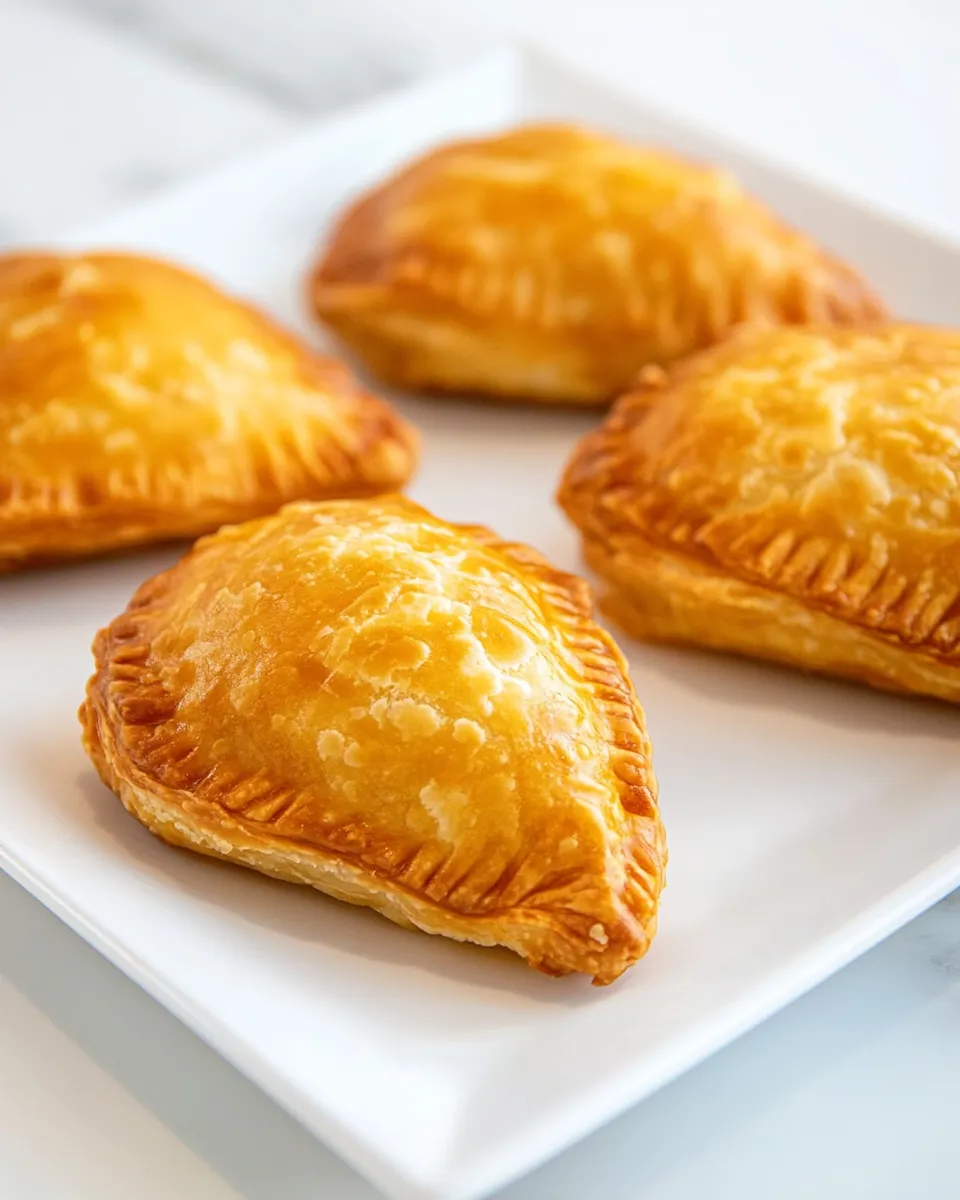
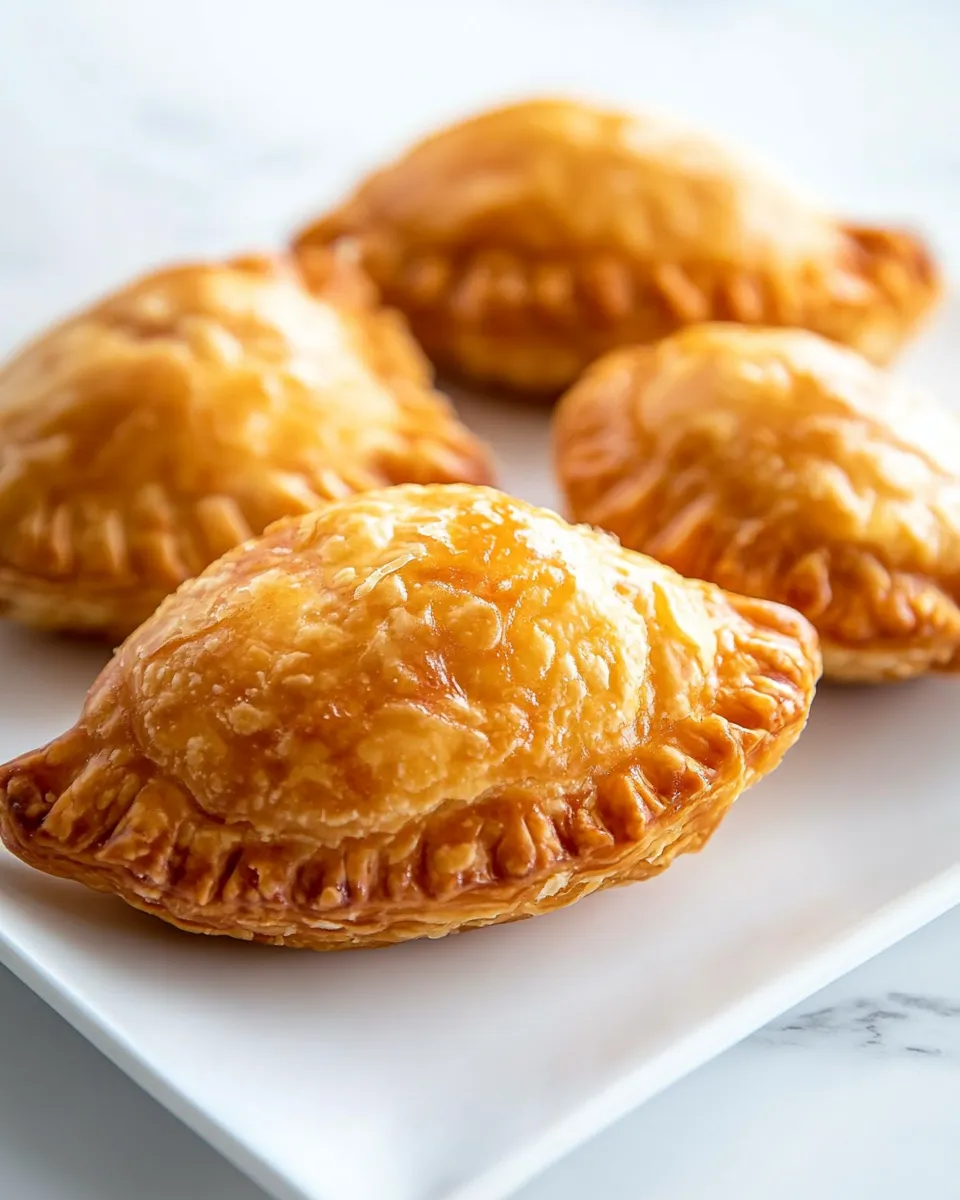
- Create pleats along the sealed edge: starting at one end of the half-moon, make about 8–9 small pleats by folding a small section of the back side forward and pressing to join with the front, working toward the other end until the edge is neatly pleated and fully sealed. Repeat for all pieces.
- Heat enough oil in a wok or deep fryer to fully submerge the curry puffs. When the oil is hot (medium heat), deep-fry the curry puffs in batches until golden brown on both sides. Remove with a slotted spoon or strainer and drain on a cooling rack or paper towels.
- Let the curry puffs cool slightly and serve warm.
Why Cooks Rave About It
This curry puff balances sturdy, savory filling with delicate layered pastry. The two-dough technique creates laminated layers without specialized equipment; the oil dough pockets inside the water dough melt into pockets of richness as they fry, giving you visible flakiness. The filling cooks quickly but finishes with concentrated flavor because the liquid is reduced until almost dry.
People love them because they travel well and hold their shape. They’re also forgiving: small differences in rolling pressure or oil temperature change texture, not the entire outcome. That makes this a great recipe for weekend baking or for making ahead and freezing.
Ingredient Flex Options
If you want to change texture or intensity without changing core ingredients, focus on these variables:
- Spice level — use 2 tablespoons curry powder for milder flavor, 3 for bolder taste; same goes for the red chilies: remove seeds for less heat.
- Filling moisture — simmer slightly longer to dry the filling more for a firmer center; shorten time for a softer, saucier bite.
- Laminate strength — work the oil dough until the fat is fully incorporated; heavier butter creates flakier layers, less gives a tighter crumb.
- Rolling tightness — the tighter the log rolls, the finer the layers; looser rolling gives more open, flaky separation when fried.
Cook’s Kit
- Large wok or heavy skillet — for sautéing the paste and cooking the filling.
- Blender or food processor — to make the smooth chili-shallot paste.
- Two large mixing bowls — one for the water dough and one for the oil dough.
- Rolling pin — essential for shaping and laminating the logs.
- Deep pan, wok, or deep fryer and a thermometer (if available) — for deep-frying at consistent medium heat.
- Slotted spoon, cooling rack, and paper towels — for draining and cooling fried puffs.
Easy-to-Miss Gotchas
Watch these points closely — small oversights cause the most common failures.
- Chili paste burning — sauté the paste only until fragrant and keep it moving. Burnt paste gives a bitter edge.
- Filling temperature — always cool the filling completely before spooning into dough. Hot filling softens dough and makes sealing messy.
- Fat incorporation in oil dough — the fat must be fully worked into the flour. Visible chunks will make uneven lamination.
- Rest times — the dough rests (before shaping and between rolls) are short but necessary; skipping them tightens the gluten and makes rolling harder.
- Oil temperature — medium heat is specified. Too hot and the exterior browns before layers form; too cool and the puffs soak up oil.
Dietary Swaps & Alternatives
You can adapt this recipe using only the listed ingredients in different proportions if needed:
- Vegetarian-friendly fold — omit the chicken and increase the potatoes and onions slightly; the paste, curry powder, and technique remain the same.
- Dairy-light approach — reduce unsalted butter in the oil dough and rely more on the 5 tablespoons oil where practical for frying; the recipe already includes oil and optional ghee, so adjust to preference.
- Lower-sodium tweaks — cut back on the “salt, to taste” seasoning in the filling and on the 1.5 teaspoons used in the water dough if you prefer a lighter salt profile.
Author’s Commentary
I make these when I want a snack that’s both comforting and shareable. The process is repetitive but meditative: rolling, wrapping, and pleating becomes satisfying once you find your rhythm. My first attempts were clumsy, but after a few batches I learned to judge dough feel and how long to simmer the filling until it held together without being dry.
My favorite moment is right after frying, when the layers are crisp and the filling smells of curry and caramelised shallot. Serve them warm and watch how fast they disappear.
Storage Pro Tips
Cool completely before storing.
- Short-term: keep in an airtight container in the refrigerator for up to 3 days. Reheat in a 180°C (350°F) oven until warmed through and crisped.
- Freezing: freeze assembled, uncooked curry puffs on a tray until solid, then transfer to a freezer bag. Fry from frozen, adding a minute or two to the frying time, or bake from frozen in a preheated oven until cooked through and golden.
- After frying: let cool fully, then freeze or refrigerate on a rack. Re-crisp in a hot oven rather than a microwave to preserve flakiness.
FAQ
- Can I make the filling ahead of time? Yes. Make it, cool it completely, then refrigerate for up to 3 days. It’s easier to portion and assemble once chilled.
- Why is my oil dough greasy and crumbly? If the fat is not fully worked into the flour, the dough can feel greasy or separate. Work it until cohesive; the fat should be fully incorporated, not in visible lumps.
- How do I know the oil is the right temperature? The recipe calls for medium heat. If the puffs brown very quickly but remain raw inside, the oil is too hot. If they take too long and absorb oil, it’s too cool.
- Can I bake these instead of frying? You can bake them, but frying gives the classic texture and color. If baking, brush with a little oil and bake at a moderately high temperature until golden, watching closely to avoid drying.
Let’s Eat
Serve these curry puffs warm, straight from the fryer or oven. They pair beautifully with a simple cucumber relish or a yogurt dip, but they’re also satisfying on their own. If you’ve made a large batch, freeze extras and reheat in a hot oven for the best texture. Enjoy the flaky layers and the savory, spiced filling—you’ve earned a delicious, hand-held treat.

Curry Puff
Ingredients
Ingredients
- 15 dried red chilies seeded
- 8 shallots peeled
- 2-3 tablespoonsmeat curry powder
- 5 tablespoonsoil
- 5 curry leaves
- 1 kg 2 lbchicken, breasts preferred, cut into small pieces
- 1 kg 2 lbpotatoes, cut into small pieces
- 500 g 1 lbyellow onions, peeled and diced
- 125 mlwater
- salt to taste
- sugar to taste
- 1.5 teaspoonssalt
- 335 g 11.8 ozwater
- 900 g 1.9 lball purpose flour
- 340 g 11.9 ozunsalted butter
- 20 g 3/4 ozghee, optional
- 730 g 1 1/3 lbflour
Instructions
Instructions
- Soak 15 dried red chilies (seeded) in hot water for 5 minutes. Drain, rinse, then place the chilies and 8 peeled shallots in a blender and process until smooth. Transfer the smooth paste to a bowl and stir in 2–3 tablespoons meat curry powder. Set the chili paste aside.
- Heat 5 tablespoons oil in a wok over medium heat. Add the chili paste and 5 curry leaves and sauté until fragrant (about 1–2 minutes), stirring so the paste does not burn.
- Add 1 kg chicken (cut into small pieces) and 1 kg potatoes (cut into small pieces) to the wok. Stir-fry for 3 minutes to coat with the paste.
- Add 500 g diced yellow onions and 125 ml water. Reduce the heat to medium-low and simmer, stirring occasionally, until the mixture is almost dry (about 5 minutes). Season to taste with salt and sugar. Remove the filling from the heat and allow it to cool completely before using.
- Dissolve 1.5 teaspoons salt in 335 g water to make the saltwater solution.
- Make the water dough: place 900 g all-purpose flour in a large bowl. Gradually add the saltwater solution while mixing/kneading until a smooth, cohesive, white dough forms. Divide this dough into portions of 85 g each and roll each portion into a ball. Set these water-dough balls aside.
- Make the oil dough: put 730 g flour in a separate bowl. Add 340 g unsalted butter and 20 g ghee (optional) to the flour and work the fat into the flour until a cohesive dough forms (the fat should be fully incorporated). Divide this oil dough into portions of 70 g each and roll each portion into a ball.
- Assemble wrapped doughs: take one 85 g water-dough ball, flatten it into a disc with your palm or a rolling pin. Place one 70 g oil-dough ball in the center of the disc, wrap the water dough around the oil dough completely, and pinch the edges to seal. Repeat for all dough balls.
- Let the sealed dough balls rest for 10 minutes.
- For each rested sealed ball, use a rolling pin to roll it into a rectangle approximately 20 x 11 cm (8" x 4"). Starting from the short edge, roll the rectangle tightly into a log. Flatten that log slightly and roll it again from the short edge to form a second, tighter roll. Repeat for all sealed balls.
- Let the rolled logs rest for 10–15 minutes.
- Cut each rolled log into 4 equal pieces.
- Working with one piece at a time, use a rolling pin to roll it into a flat circle large enough to hold 1 tablespoon of filling.
- Place 1 tablespoon of the cooled filling in the center of the circle. Moisten the rim of the dough with a little water. Fold the dough over to form a half-moon and press the edges to seal.
- Create pleats along the sealed edge: starting at one end of the half-moon, make about 8–9 small pleats by folding a small section of the back side forward and pressing to join with the front, working toward the other end until the edge is neatly pleated and fully sealed. Repeat for all pieces.
- Heat enough oil in a wok or deep fryer to fully submerge the curry puffs. When the oil is hot (medium heat), deep-fry the curry puffs in batches until golden brown on both sides. Remove with a slotted spoon or strainer and drain on a cooling rack or paper towels.
- Let the curry puffs cool slightly and serve warm.
Equipment
- Wok
- Blender
- Rolling Pin
- Deep Fryer or Large Pot
- Slotted spoon
Notes
When rolling the pastry dough, ensure the water dough and oil dough are spread out evenly, especially when shaping it into a rectangle. This way, you’ll get those flaky layers everyone loves!
Let your filling cool before wrapping it. This makes the whole process much easier and prevents the dough from getting soggy.
When you fold the dough over the filling, press the edges together firmly so nothing leaks out when frying.