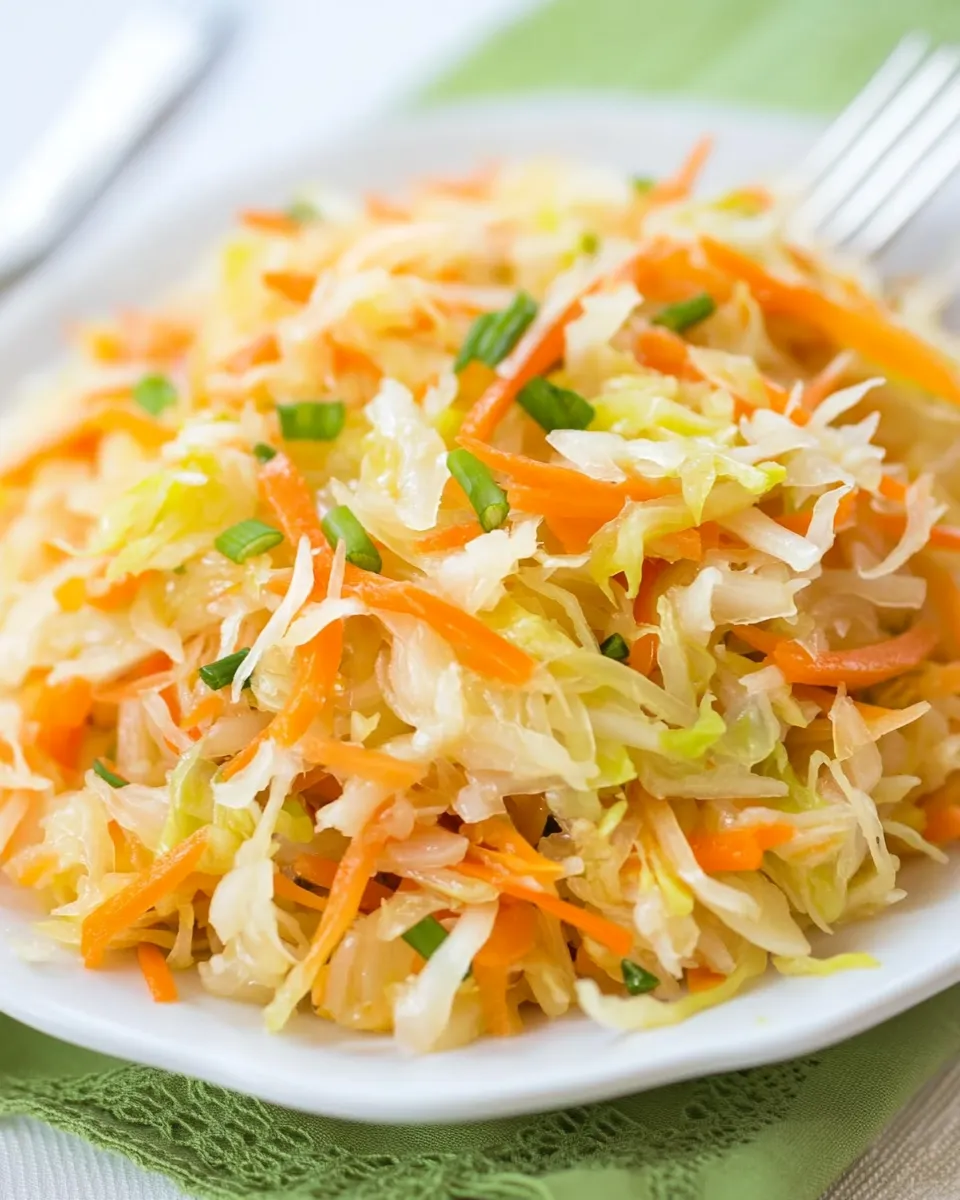
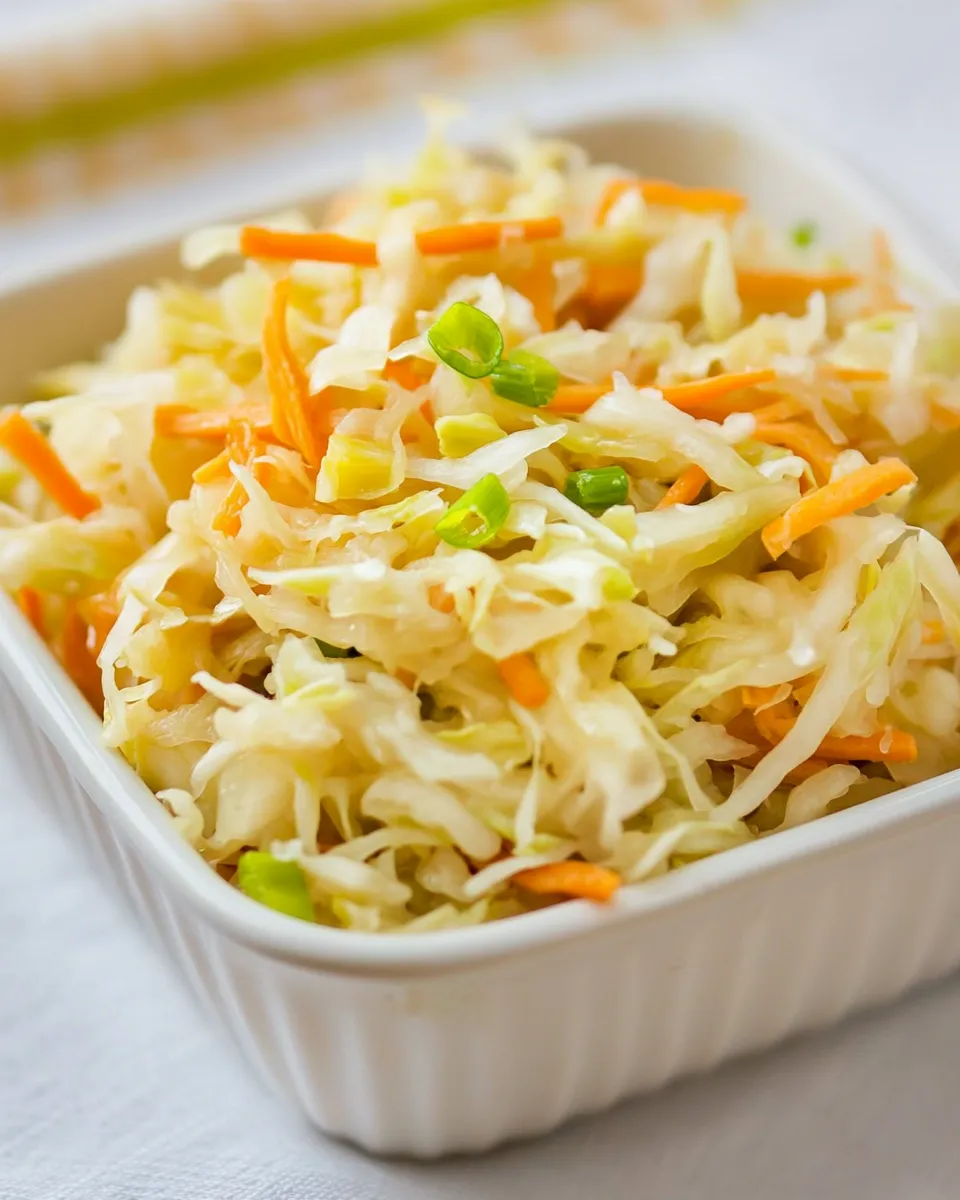
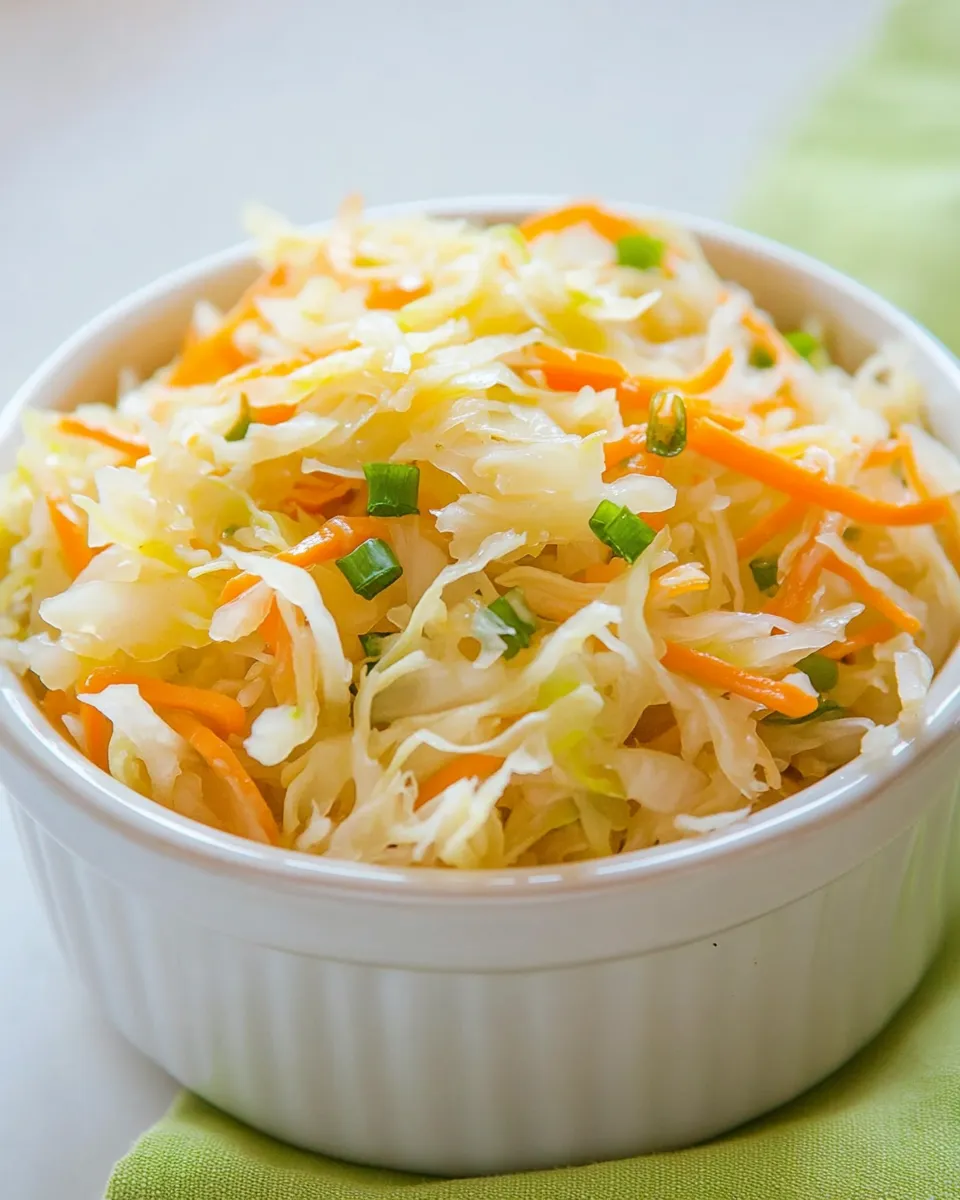
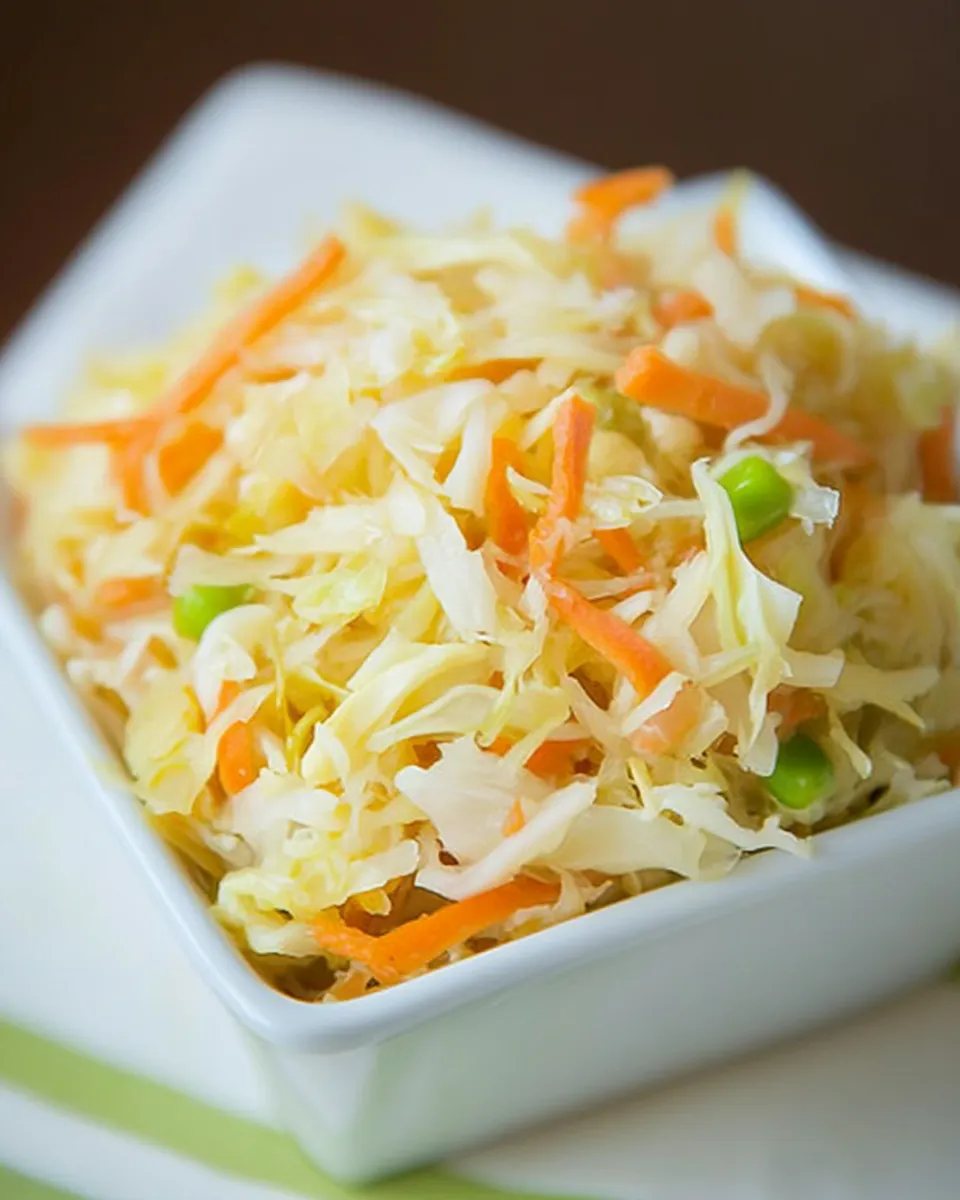
I make this sauerkraut when I want something bright, crunchy, and hands-off to add to meals all week. It’s the kind of recipe that rewards a little prep with a lot of payoff: a fridge staple that livens up bowls, sandwiches, and simple dinners. The method is straightforward and forgiving, which is exactly what I want on a busy evening.
This version leans on a quick brine seasoned with whole spices and garlic, then cooled and pressed into a jar overnight. You don’t need fancy equipment, and the texture stays refreshingly crisp. Read through once, gather your tools, and you’ll be surprised how quickly it comes together.
If you’ve never made sauerkraut at home, this is a gentle introduction. I’ll walk you through the ingredients, step-by-step directions, common pitfalls, and sensible substitutions so you get a consistently good batch the first time.
What Goes In
Ingredients
- 2 medium heads of cabbage, 4lb — the base of the sauerkraut; remove outer leaves and core before shredding.
- 3 carrots — add color, a little sweetness, and texture; grate them finely.
- 4-5 large garlic cloves — for savory depth; mince or press to release flavor.
- 4 cups water — used to make the brine that preserves and flavors the vegetables.
- 1/2 cup granulated sugar — balances acidity and helps fermentation notes; you can reduce it slightly if you prefer less sweet.
- 2 1/2 Tbsp of sea salt — essential for drawing out liquid and creating the right environment; measure carefully.
- 10 pepper corns — whole, for a gentle peppery note; they’re strained out later.
- 5-6 whole cloves — warm aromatic spice; also strained out before packing.
- 4 bay leaves — add savory background flavor; will be removed with other whole spices.
- 1/2 cup olive oil — stirred into the brine for mouthfeel and richness.
- 2/3 cup white vinegar, 5% — the acid that brightens and preserves; exact strength helps predict flavor.
From Start to Finish: Overnight Sauerkraut Recipe
- Remove and discard the outermost leaves of both cabbage heads. Cut each cabbage into quarters and remove and discard the cores. Finely shred the cabbage (a mandoline or sharp knife works well). Place the shredded cabbage in a large mixing bowl.
- Peel and grate the 3 carrots and mince 4–5 large garlic cloves. Add the grated carrots and minced garlic to the bowl with the shredded cabbage.
- In a medium saucepan combine 4 cups water, 1/2 cup granulated sugar, 2 1/2 tablespoons sea salt, 10 peppercorns, 5–6 whole cloves, and 4 bay leaves.
- Bring the saucepan to a boil over medium-high heat, then reduce heat and simmer for 10 minutes.
- After 10 minutes, stir in 1/2 cup olive oil and 2/3 cup white vinegar (5%). Remove the pan from the heat and let the mixture cool for 10 minutes.
- Strain the liquid through a fine-mesh sieve into a bowl or measuring cup to remove the peppercorns, whole cloves, and bay leaves. Discard the solids.
- Pour the strained liquid over the shredded cabbage, carrots, and garlic. Stir thoroughly to combine and distribute the liquid evenly.
- Place a weight on top of the vegetable mixture to press it down while it cools (for example: a flat dinner plate that fits inside the bowl, then a heavy bowl of water on top of the plate). Leave the weight in place until the mixture is fully cool to the touch.
- Pack the cooled sauerkraut tightly into a large jar, pouring any remaining liquid over it so the vegetables are fully submerged. Seal the jar and refrigerate for 24 hours before serving.
Reasons to Love Overnight Sauerkraut Recipe
- Speed: you can prep it in 30–45 minutes and have it ready to eat after a single day in the fridge.
- Crunch: shredding and the quick cool-press method keep the cabbage crisp, not mushy.
- Balance of flavor: the brine combines salt, sugar, and vinegar with warm spices, garlic, and olive oil for depth.
- Versatility: serve it on sausages, in grain bowls, on sandwiches, or alongside roasted meats and vegetables.
- Low barrier to entry: no specialized fermentation crock needed—just a jar and a weight.
Healthier Substitutions
- Reduce sugar: cut the 1/2 cup granulated sugar by half if you prefer a less sweet kraut. The vinegar and salt still preserve the vegetables.
- Lower sodium: use slightly less sea salt than 2 1/2 tablespoons, but remember salt controls texture and safety—don’t omit it completely.
- Oil swap: if you want to reduce fat, omit the 1/2 cup olive oil. The kraut will be brighter and a little leaner, though a touch less silky.
- Vinegar options: white vinegar (5%) is in the recipe for predictable acidity. You can use apple cider vinegar at the same 5% strength for a fruitier note—match acid percentage.
- Garlic light: use 2–3 cloves instead of 4–5 if you’re sensitive to raw garlic’s bite.
Essential Tools for Success
- Large mixing bowl — to combine the shredded cabbage, carrots, and brine.
- Mandoline or sharp chef’s knife — for even, fine shredding of cabbage.
- Box grater or food processor — for quick grating of the carrots.
- Medium saucepan — to bring the brine to a simmer and extract spice flavors.
- Fine-mesh sieve — to strain out whole spices so the brine is clear.
- Flat plate and a weight (or a smaller jar filled with water) — to press the vegetables while the brine cools.
- Large jar with a tight-fitting lid — to pack the sauerkraut and refrigerate it.
Pitfalls & How to Prevent Them
- Problem: Soggy cabbage. Fix: Shred finely and press firmly so the brine and weight remove trapped air. Don’t skip the cooling-and-pressing step before packing.
- Problem: Not enough liquid to cover vegetables. Fix: Pour all remaining liquid over the packed kraut and press down until fully submerged. If needed, top with extra cooled brine made at the same ratio.
- Problem: Over-salty or under-salty final product. Fix: Measure the 2 1/2 tablespoons sea salt accurately; if you cut salt, expect different texture and preservation—reduce only slightly.
- Problem: Unpleasant spice bits in mouth. Fix: Strain the brine through a fine-mesh sieve to remove the peppercorns, cloves, and bay leaves as directed.
- Problem: Mold or off smells. Fix: Ensure everything is clean. Keep the vegetables submerged under brine; discard if you ever see mold or an unmistakably rotten smell.
Smart Substitutions
- Carrot swaps: If you don’t have carrots, thinly sliced apple works for sweetness and texture—use sparingly to avoid over-sweetness.
- Acid adjustments: If you have only a different vinegar on hand, match acidity (5%) and use the same 2/3 cup amount to maintain balance.
- Fat alternatives: Swap the olive oil for a neutral oil like grapeseed if you want a less assertive olive flavor.
- Spice variations: If you prefer heat, add a small pinch of crushed red pepper to the brine before cooling. Keep whole warm spices if you want to strain them out later for a subtle background note.
Little Things that Matter
- Shred size: finer shreds pack better and absorb brine more evenly; thick ribbons stay crunchier but might trap air.
- Cooling the brine: don’t pour boiling liquid directly over the vegetables. Let it cool about 10 minutes as directed so it doesn’t cook the cabbage.
- Weights: use a flat plate that fits inside the mixing bowl, then a heavy bowl full of water on top; consistent pressure keeps everything submerged and releases juices.
- Jar packing: press the cabbage down firmly to eliminate air pockets. The goal is full submersion beneath the liquid to avoid surface spoilage.
- Taste timing: refrigerating for 24 hours is the baseline. The kraut will mellow and develop more complexity after a few days; taste periodically.
Refrigerate, Freeze, Reheat
Refrigerate: Seal the jar and refrigerate for 24 hours before serving, as the recipe directs. After that, keep the sauerkraut refrigerated. It will typically keep well for several weeks in the refrigerator when kept submerged and the jar is clean.
Freeze: I don’t recommend freezing if you want the crisp texture to remain. Freezing will soften the cabbage considerably. If you must freeze, expect textural changes; freeze in a sealed container for up to 3 months and thaw in the fridge.
Reheat: Sauerkraut is often served cold or at room temperature. If you prefer it warm, gently heat a portion in a skillet with a tablespoon of butter or oil until just warmed through. Avoid boiling—high heat can turn crisp cabbage limp and brown the garlic aggressively.
Popular Questions
- Can I make this without vinegar? The recipe relies on 2/3 cup white vinegar (5%) for preservation and brightness. Omitting it changes the flavor profile and preservation needs; not recommended for this quick method.
- Why do I need sugar? The 1/2 cup sugar balances the acidity and supports a pleasant flavor. You can reduce it, but do so gradually and taste as you go.
- Is this a true fermented sauerkraut? This recipe uses a hot brine and vinegar approach, then chills and stores in the fridge. It is a quick, refrigerator-style sauerkraut rather than a long, wild fermentation at room temperature.
- How crunchy will it be? Expect a crisp texture thanks to the quick cool-and-press method and the short fridge time; it won’t be as soft as long-fermented kraut.
- Can I scale this recipe down? Yes. Keep the brine ingredient ratios the same if you reduce quantities. Be mindful of jar size so the cabbage is properly submerged.
Time to Try It
Gather your cabbage, carrots, and the pantry staples, and set aside an hour for prep and cooling. Follow the steps in order: shred, brine, cool, press, pack, and refrigerate 24 hours. After that, taste and decide how you’ll use it—on a sandwich, beside baked fish, or stirred into grain salads.
Once you’ve made one jar, you’ll know how you like the texture and seasoning. Tweak sugar, garlic, or spice levels next time. This is an approachable, rewarding recipe that keeps well and elevates everyday meals. Let me know how yours turns out and what you pair it with—I love swapping serving ideas.

Easy Overnight Sauerkraut Recipe
Ingredients
Ingredients
- 2 medium heads of cabbage 4 lb
- 3 carrots
- 4-5 large garlic cloves
- 4 cupswater
- 1/2 cupgranulated sugar
- 2 1/2 Tbspof sea salt
- 10 pepper corns
- 5-6 whole cloves
- 4 bay leaves
- 1/2 cupolive oil
- 2/3 cupwhite vinegar 5%
Instructions
Instructions
- Remove and discard the outermost leaves of both cabbage heads. Cut each cabbage into quarters and remove and discard the cores. Finely shred the cabbage (a mandoline or sharp knife works well). Place the shredded cabbage in a large mixing bowl.
- Peel and grate the 3 carrots and mince 4–5 large garlic cloves. Add the grated carrots and minced garlic to the bowl with the shredded cabbage.
- In a medium saucepan combine 4 cups water, 1/2 cup granulated sugar, 2 1/2 tablespoons sea salt, 10 peppercorns, 5–6 whole cloves, and 4 bay leaves.
- Bring the saucepan to a boil over medium-high heat, then reduce heat and simmer for 10 minutes.
- After 10 minutes, stir in 1/2 cup olive oil and 2/3 cup white vinegar (5%). Remove the pan from the heat and let the mixture cool for 10 minutes.
- Strain the liquid through a fine-mesh sieve into a bowl or measuring cup to remove the peppercorns, whole cloves, and bay leaves. Discard the solids.
- Pour the strained liquid over the shredded cabbage, carrots, and garlic. Stir thoroughly to combine and distribute the liquid evenly.
- Place a weight on top of the vegetable mixture to press it down while it cools (for example: a flat dinner plate that fits inside the bowl, then a heavy bowl of water on top of the plate). Leave the weight in place until the mixture is fully cool to the touch.
- Pack the cooled sauerkraut tightly into a large jar, pouring any remaining liquid over it so the vegetables are fully submerged. Seal the jar and refrigerate for 24 hours before serving.
Equipment
- Large Mixing Bowl
- mandoline or sharp knife
- Grater
- Medium Saucepan
- Fine Mesh Sieve
- large jar
- plate or weight