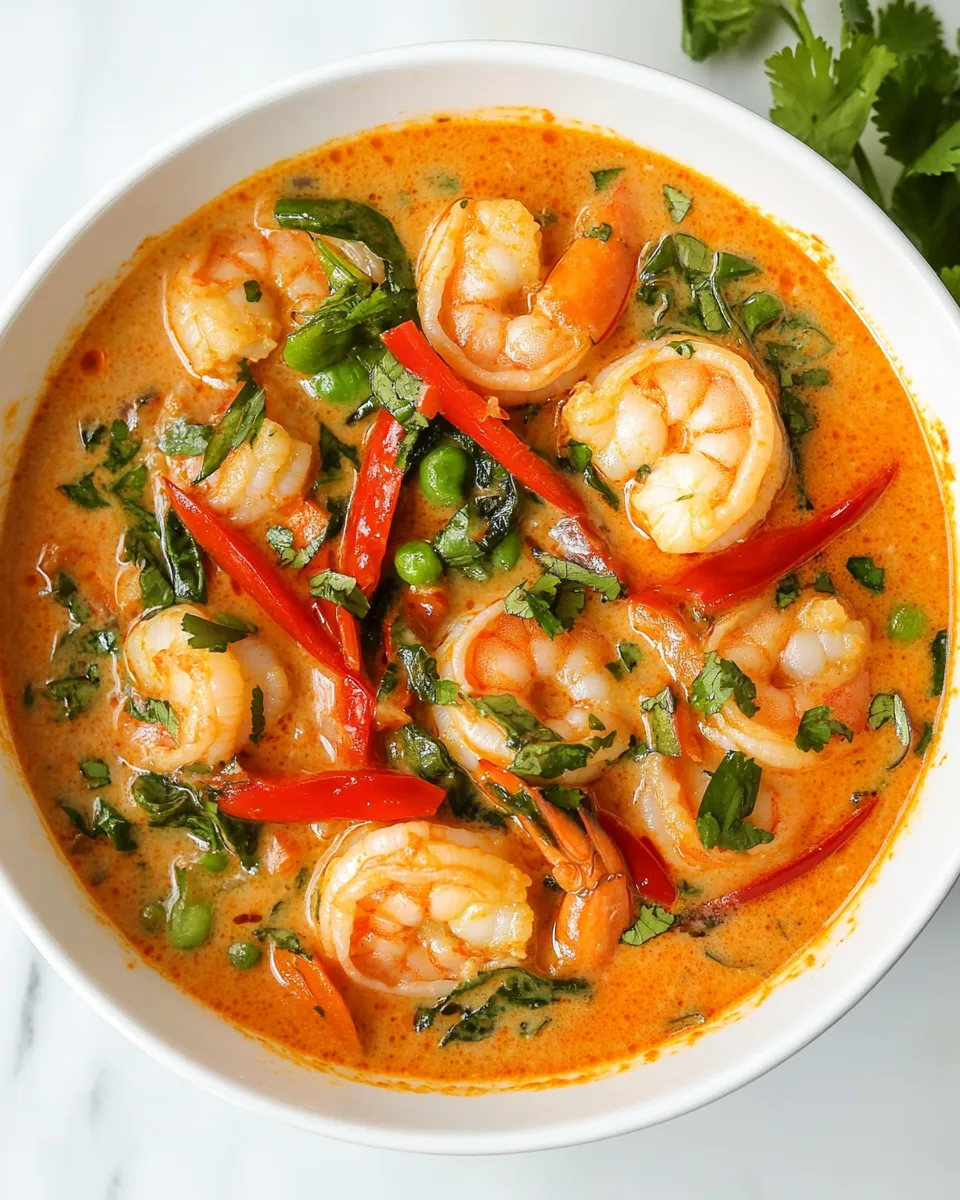
I fell in love with this dish the first time I let its fragrant steam hit my face — warm coconut, bright lime, and that whisper of red curry paste that makes a kitchen smell like a holiday. It’s the kind of weeknight meal I turn to when I want something impressive but not fussy. It comes together quickly, uses a short ingredient list, and delivers bright, layered flavors without demanding a lot of technique.
This recipe is perfect when you want dinner on the table fast. Shrimp cooks in minutes, and the coconut-chicken-broth base carries everything: curry paste, fish sauce, and fresh herbs. If you plan to serve rice, the whole meal can finish at the same time with very little babysitting.
I write recipes I actually cook. This one is practical, forgiving, and forgivingly delicious. Below I’ll walk you through what to buy, exactly how to make it (step-by-step), smart swaps, the gear that helps, storage notes, and a few common questions I get from readers.
Ingredients
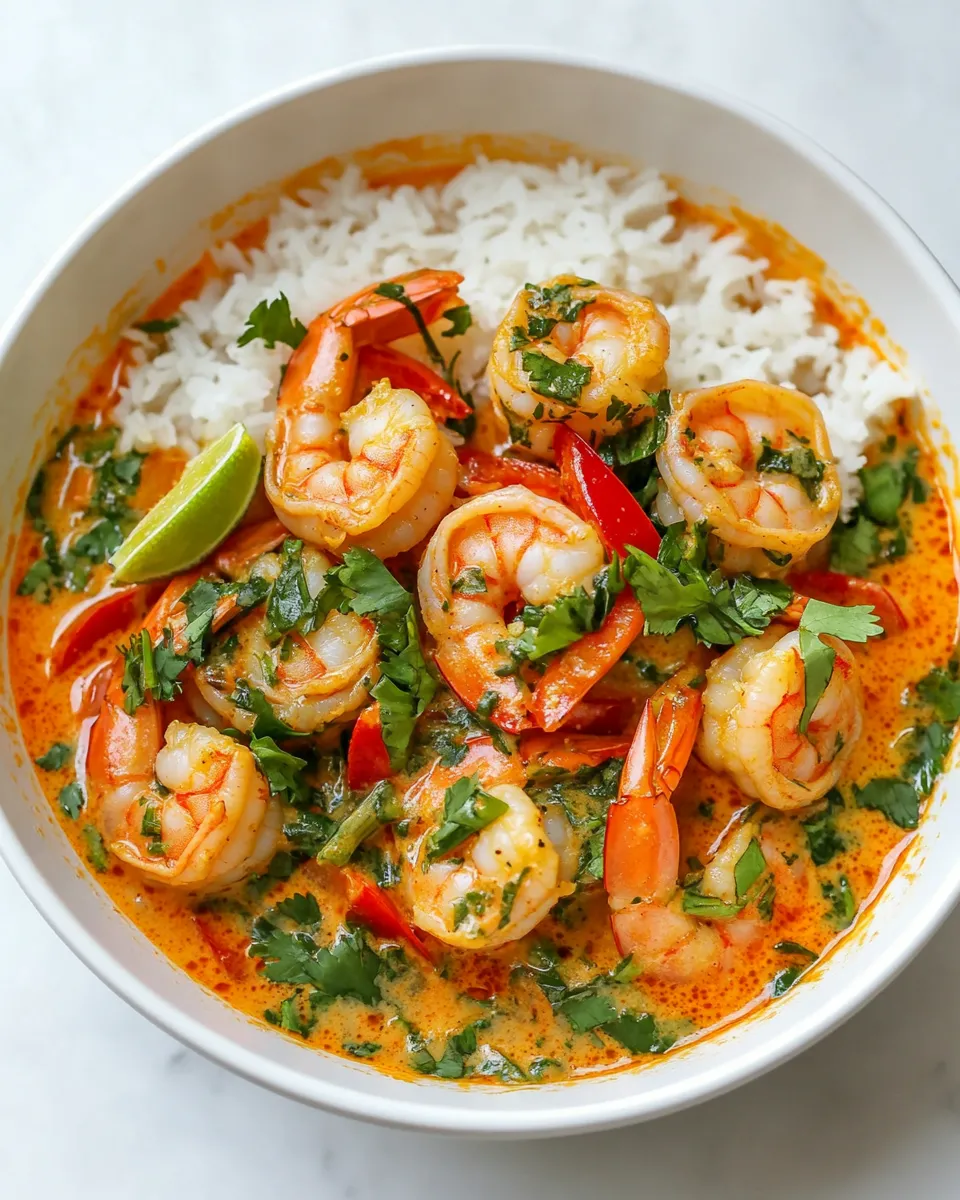
- 1 pound uncooked (31-40/pound size) shrimp, thawed, peeled (can remove tails if desired) — Main protein; pat dry for best texture before cooking.
- 1/2 tablespoon olive oil — For sautéing the onion; a neutral oil that carries flavor without overpowering.
- 1/2 medium onion, chopped — Builds savory sweetness; chop finely so it softens in about 5 minutes.
- 3 cloves garlic, minced — Aroma and depth; add after the onion softens to avoid burning.
- 3 heaped tablespoons Thai red curry paste — The spicy, aromatic backbone; use this amount for bold flavor.
- 1 cup chicken broth — Adds savory body and thins the curry; low-sodium works well if you want to control salt.
- 1/2 tablespoon fish sauce — Umami and salty depth; a little goes a long way.
- 1 (13.5-ounce) can full-fat coconut milk — Richness and creaminess; full-fat yields the best texture and flavor.
- 1/2 red bell pepper, chopped — Color, crunch, and sweetness; slice into bite-sized pieces.
- Lime juice, to taste — Brightens and balances the richness; add at the end so acidity stays fresh.
- Salt & pepper, to taste — Final seasoning; adjust after tasting with lime juice.
- 1 handful fresh cilantro, chopped — Fresh herbal finish; stir in at the end to keep it bright.
- 1 handful fresh basil, chopped/torn — Sweet, floral notes; Thai basil if you can get it, regular basil works too.
- Scallions, chopped, to taste — Mild oniony crunch; scatter on top just before serving.
Your Shopping Guide
Buy shrimp that’s already peeled and thawed if you want the fastest prep. If you buy frozen, thaw it overnight in the fridge or under cold running water for a quick defrost. Check the sell-by date and aim for a firm texture and fresh smell. For curry paste, a good-quality jar from the Asian aisle will do — you don’t need the most expensive brand, but avoid ones filled with preservatives or odd additives.
Look for full-fat coconut milk in a can; the cartons are often thinner and less rich. Fresh herbs make a big difference — cilantro and basil give the curry brightness and lift. If you have access to Thai basil, it’s ideal, but regular sweet basil works fine.
For staples like fish sauce and chicken broth, spend a little extra for better flavor if you cook Asian food often. Fish sauce brands differ in intensity, so start with the amount in the recipe and taste, adding more if you prefer a stronger umami note.
Cooking (Thai Shrimp Curry): The Process
- If you plan to serve with rice, start the rice now so it finishes around the same time as the curry.
- Pat 1 pound thawed, peeled shrimp dry; remove tails if desired and set the shrimp aside.
- Heat 1/2 tablespoon olive oil in a soup pot or Dutch oven over medium heat. Add 1/2 medium onion, chopped, and sauté for about 5 minutes until softened and translucent.
- Add 3 cloves garlic, minced, and 3 heaped tablespoons Thai red curry paste. Cook, stirring, about 30 seconds until fragrant.
- Pour in 1 cup chicken broth and add 1/2 tablespoon fish sauce. Bring to a boil, then boil gently for about 2 minutes.
- Reduce heat to low–medium and stir in 1 (13.5-ounce) can full-fat coconut milk until combined.
- Add the shrimp and 1/2 red bell pepper, chopped. Simmer gently (do not let it boil vigorously) for about 5 minutes, or until the shrimp are opaque, pink, and cooked through.
- Remove from heat. Add lime juice to taste and season with salt and pepper to taste. Stir in 1 handful fresh cilantro, chopped; 1 handful fresh basil, chopped or torn; and scallions (chopped) to taste. Serve immediately.
Why It Works Every Time
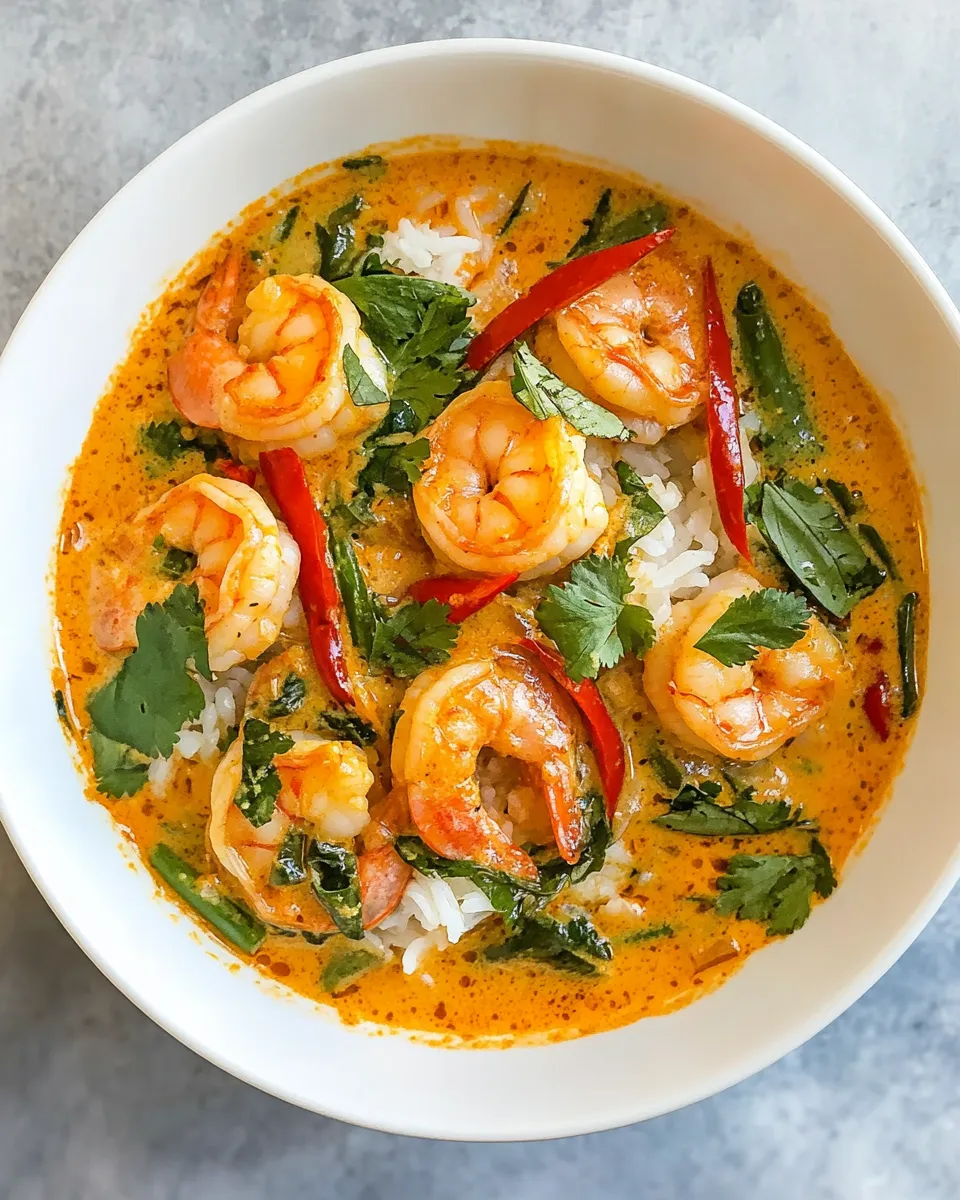
This dish balances fat, acid, heat, and aromatics in a predictable way. The coconut milk provides a rich base that mellows and carries the curry paste; the fish sauce and chicken broth bring umami and depth; lime juice brightens everything up at the finish. Shrimp is forgiving — it cooks fast and signals doneness clearly (opaque and pink) — so timing is easy to control.
Sautéing the onion slowly brings natural sweetness that complements the curry paste instead of competing with it. Boiling the broth briefly with the curry paste lets the paste bloom and distribute its flavors. Reducing the heat before adding coconut milk prevents splitting and keeps the sauce silky.
Easy Ingredient Swaps
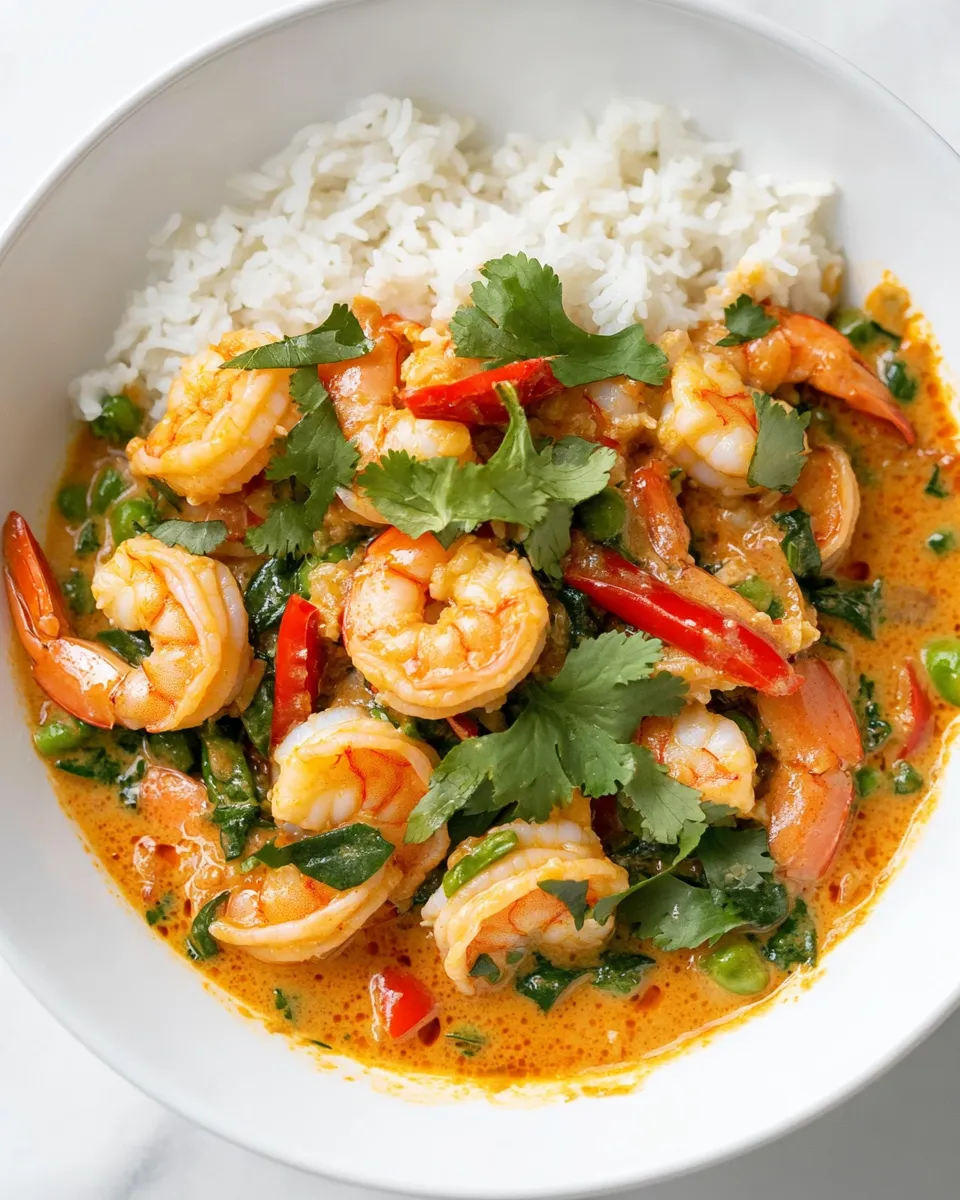
Need to swap something? No problem — here are safe substitutions that keep the spirit of the dish:
- Protein: Swap shrimp for firm white fish or cubed firm tofu (adjust cooking time; tofu needs no extra time, fish may need similar cook time).
- Coconut milk: If you prefer lighter, use light coconut milk, but the sauce will be thinner and less rich.
- Chicken broth: Vegetable broth works for a pescatarian version.
- Herbs: If you don’t have basil, add a little extra cilantro and a squeeze more lime for brightness.
- Curry paste: If Thai red curry paste is hard to find, use a spoonful less of any red curry concentrate and taste as you go.
Gear Up: What to Grab
You don’t need fancy equipment. Here’s what I reach for every time:
- A medium-large soup pot or Dutch oven — gives even heat and space for stirring.
- A sharp chef’s knife — for chopping the onion and bell pepper quickly and evenly.
- A sturdy wooden spoon or heatproof spatula — to stir curry paste without scratching your pot.
- Measuring spoons and a measuring cup — for reliable results, especially with curry paste and fish sauce.
- A fine mesh strainer (optional) — useful if you rinse shrimp or want to remove any stray bits.
Don’t Do This
Don’t let the curry boil hard after you add the coconut milk or the sauce can separate and become oily. Also, don’t overcook the shrimp — they only need a few minutes; overcooked shrimp turn rubbery and dry. Don’t skip tasting at the end: the right balance of lime and salt will transform the sauce.
In-Season Swaps
When local produce is at its peak, adjust your add-ins accordingly. In summer, throw in snap peas or thinly sliced zucchini for crunch and color. In cooler months, substitute diced sweet potato or butternut squash (par-cook them first) to add body and a sweet counterpoint to the curry spice.
Author’s Commentary
I make this recipe on repeat. It’s fast, satisfying, and scales well. For weeknight dinners I often halve the recipe for two, or double it for a small gathering. The fresh herbs are non-negotiable for me — they lift the whole dish. I’ll admit I sometimes stir in a little extra curry paste if I’m craving heat, but the base measurements make a reliably balanced curry that suits most palates.
Presentation tip: serve in shallow bowls over jasmine rice, scatter scallions and a few whole cilantro leaves on top, and hand everyone extra lime wedges at the table. It looks pretty and feels cohesive — like a meal that had company, even if you cooked it alone.
Storage Pro Tips
This curry stores well for 2–3 days in the refrigerator in an airtight container. Reheat gently on the stove over low heat so the coconut milk doesn’t split; add a splash of water or broth if it seems too thick. Freezing is possible, but coconut-based sauces can change texture when frozen and thawed — if you freeze it, expect a slightly grainier sauce. If you plan to meal prep, store the rice separately so it doesn’t soak up all the sauce.
Popular Questions
- Can I use frozen shrimp? — Yes. Thaw fully and pat dry before cooking. If you add shrimp straight from frozen, it will release extra water and lower the sauce temperature, which can affect texture.
- How spicy is this? — It depends on the curry paste. The recipe uses 3 heaped tablespoons for bold, restaurant-style heat. Reduce to taste if you prefer milder heat.
- Can I make this vegetarian? — Substitute vegetable broth for chicken broth and use tofu instead of shrimp. Omit the fish sauce or replace it with a vegetarian umami seasoning.
- Why did my coconut milk split? — High heat and boiling can separate the coconut milk. Reduce heat to low–medium before adding coconut milk and keep the simmer gentle.
- Can I add vegetables earlier? — Heartier vegetables like sweet potato or carrot should be added earlier and par-cooked. Tender vegetables like bell pepper are best added with the shrimp so they stay crisp-tender.
The Takeaway
This Thai Shrimp Curry is a fast, forgiving weeknight dish that rewards minimal effort with big flavors. Follow the sequence — soften the onion, bloom the paste, briefly boil the broth, then gently finish with coconut milk and shrimp — and you’ll have a silky, balanced curry every time. Keep fresh herbs and lime on hand to brighten the finish. It’s quick, homey, and one of my go-to dinners when I want something that tastes like care without the fuss.
Easy Thai Shrimp Curry
Ingredients
Ingredients
- 1 pounduncooked 31-40/pound size shrimpthawed, peeled, can remove tails if desired
- 1/2 tablespoonolive oil
- 1/2 mediumonionchopped
- 3 clovesgarlicminced
- 3 heaped tablespoonsThai red curry paste
- 1 cupchicken broth
- 1/2 tablespoonfish sauce
- 1 13.5 ounces canfull-fat coconut milk
- 1/2 red bell pepperchopped
- Lime juiceto taste
- Salt & pepperto taste
- 1 handful fresh cilantrochopped
- 1 handful fresh basilchopped/torn
- Scallionschopped to taste
Instructions
Instructions
- If you plan to serve with rice, start the rice now so it finishes around the same time as the curry.
- Pat 1 pound thawed, peeled shrimp dry; remove tails if desired and set the shrimp aside.
- Heat 1/2 tablespoon olive oil in a soup pot or Dutch oven over medium heat. Add 1/2 medium onion, chopped, and sauté for about 5 minutes until softened and translucent.
- Add 3 cloves garlic, minced, and 3 heaped tablespoons Thai red curry paste. Cook, stirring, about 30 seconds until fragrant.
- Pour in 1 cup chicken broth and add 1/2 tablespoon fish sauce. Bring to a boil, then boil gently for about 2 minutes.
- Reduce heat to low–medium and stir in 1 (13.5-ounce) can full-fat coconut milk until combined.
- Add the shrimp and 1/2 red bell pepper, chopped. Simmer gently (do not let it boil vigorously) for about 5 minutes, or until the shrimp are opaque, pink, and cooked through.
- Remove from heat. Add lime juice to taste and season with salt and pepper to taste. Stir in 1 handful fresh cilantro, chopped; 1 handful fresh basil, chopped or torn; and scallions (chopped) to taste. Serve immediately.
Equipment
- soup pot
- Dutch Oven
Notes
Anything from 3/4 pound to 1 pound of shrimp will work.
If you want a thicker broth, add less chicken broth.