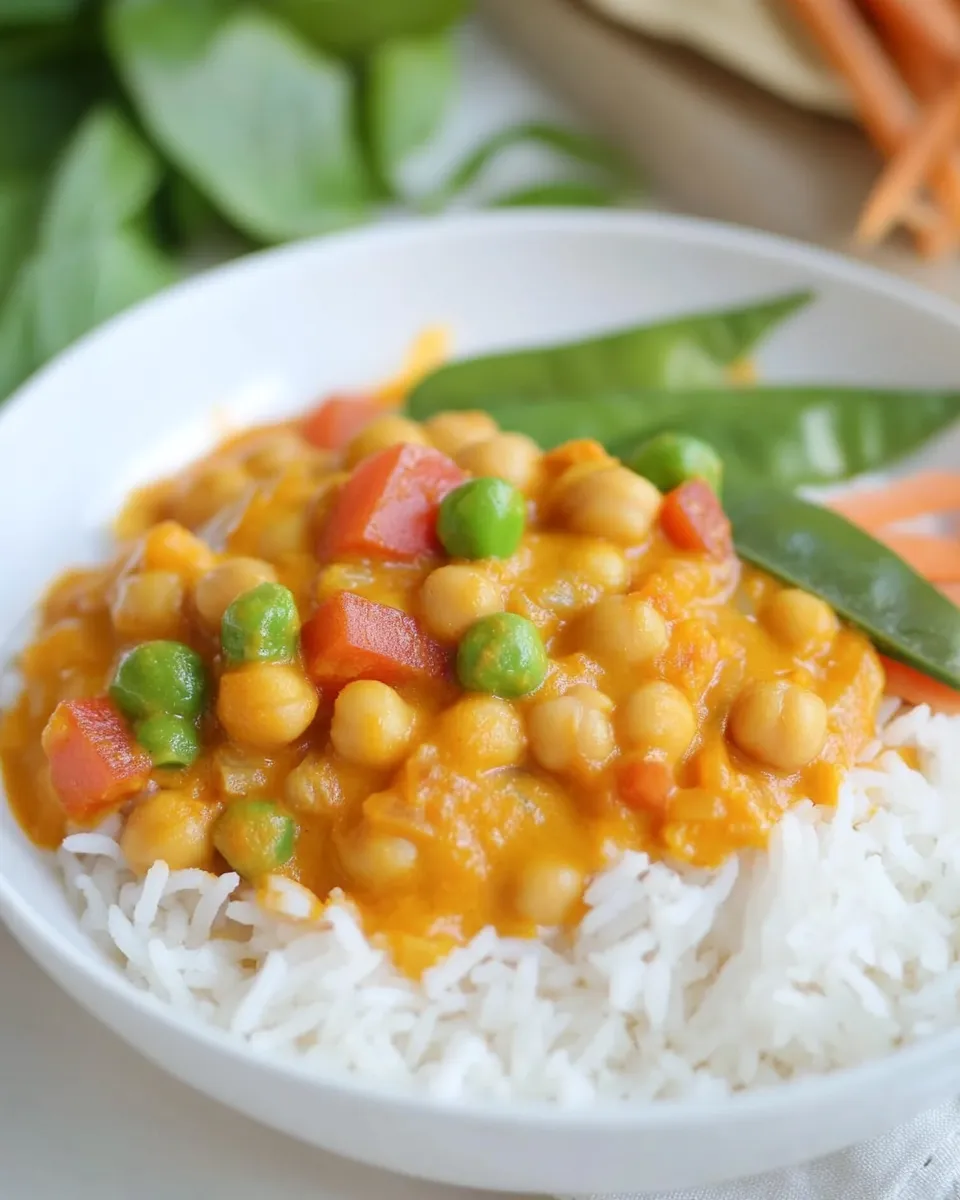
This is a weeknight dinner that feels intentional without any drama. The curry is bright, comforting, and forgiving — built from pantry-friendly chickpeas, bold red curry paste, and two kinds of coconut milk for silkiness. The coconut rice is quick and fragrant, so one pot finishes while the curry simmers. No specialized ingredients, no long marinades, and great for leftovers.
I cook this when I need something vibrant and plant-forward that still satisfies. The balance of aromatics (leeks, garlic, ginger), snap peas for crunch, and cilantro at the end keeps the dish lively. It’s fast enough for a weeknight but pretty enough to serve to friends.
This post walks through exactly what goes into the bowl, the step-by-step method from start to finish, and practical notes — what to watch for, substitutions, storage, and a few common mistakes to avoid. Read straight through for the recipe, or jump to the sections you need.
What’s in the Bowl
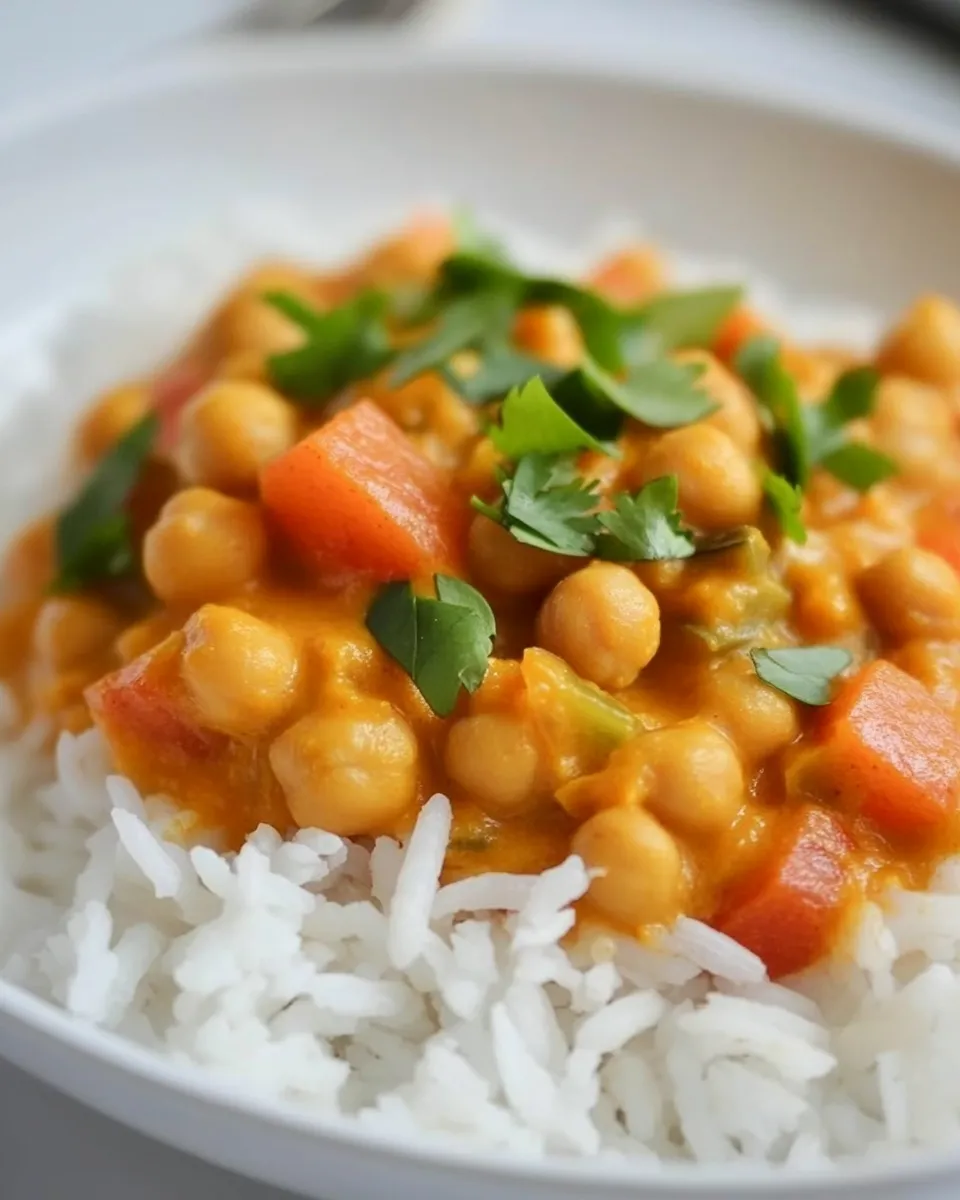
Ingredients
- 1 1/2 cups jasmine rice — fragrant base for the coconut rice; rinsing is optional if you prefer slightly sticky rice.
- 1 1/2 cups light canned coconut milk — adds coconut flavor and reduces total fat compared with full-fat in the rice.
- 1/2 cup coconut water — stretches the coconut flavor and lightens the cooking liquid.
- 1 tablespoon coconut oil — stirred into the rice at the end for shine and subtle coconut aroma.
- 1/4 teaspoon salt — seasons the rice during cooking.
- 1 1/2 tablespoons coconut oil — used to sauté the vegetables for the curry.
- 2 leeks, cleaned, trimmed + sliced — provide mild onion-like sweetness; clean well between layers.
- 1/2 red pepper, sliced — bright color and sweetness; adjust amount to taste.
- 1/2 teaspoon salt — initially seasons the vegetables as they soften.
- 1/2 teaspoon pepper — background heat and seasoning for the veg.
- 2 garlic cloves, minced — aromatic backbone; add when the leeks and pepper have softened.
- 1/2 teaspoon freshly grated ginger — warm, slightly spicy lift; fresh is best here.
- 2 tablespoons red curry paste — the main flavor driver; use mild or hot depending on your preference.
- 1/3 cup sugar snap peas, cut into thirds — quick-cooking green for texture and color.
- 1 (14-ounce) can full-fat coconut milk — makes the curry rich and silky; the contrast with light coconut milk in the rice is intentional.
- 1 1/2 cups cooked chickpeas — hearty protein and bulk; canned or pre-cooked both work.
- 3 tablespoons freshly torn cilantro — stirred in at the end for brightness; add more to garnish if you like.
Thai-Style Chickpea Curry with Coconut Rice: How It’s Done
- Combine 1 1/2 cups jasmine rice, 1 1/2 cups light canned coconut milk, 1/2 cup coconut water and 1/4 teaspoon salt in a medium saucepan. Stir, bring to a boil over medium-high heat, then reduce heat to low, cover, and simmer for 15–18 minutes, until the liquid is absorbed. Remove from heat, fluff with a fork, and stir in 1 tablespoon coconut oil. Keep covered and warm.
- While the rice cooks, heat a large skillet over medium heat and add 1 1/2 tablespoons coconut oil.
- Add 2 leeks (cleaned, trimmed and sliced), 1/2 red pepper (sliced), 1/2 teaspoon salt and 1/2 teaspoon pepper to the skillet. Stir to combine, cover, and cook about 5 minutes, until the vegetables have slightly softened.
- Add 2 garlic cloves (minced), 1/2 teaspoon freshly grated ginger, and 2 tablespoons red curry paste to the skillet. Stir to coat the vegetables and cook for 5 minutes, stirring occasionally.
- Stir in 1/3 cup sugar snap peas (cut into thirds) and 1 (14-ounce) can full-fat coconut milk. Increase heat to bring the mixture to a boil, then reduce heat to low, cover, and simmer for 5 minutes.
- Stir in 1 1/2 cups cooked chickpeas and 3 tablespoons freshly torn cilantro. Cook uncovered for 5 minutes more to heat through and let flavors meld. Taste and adjust seasoning if desired.
- Serve the chickpea curry immediately with the coconut rice.
Why This Thai-Style Chickpea Curry with Coconut Rice Stands Out
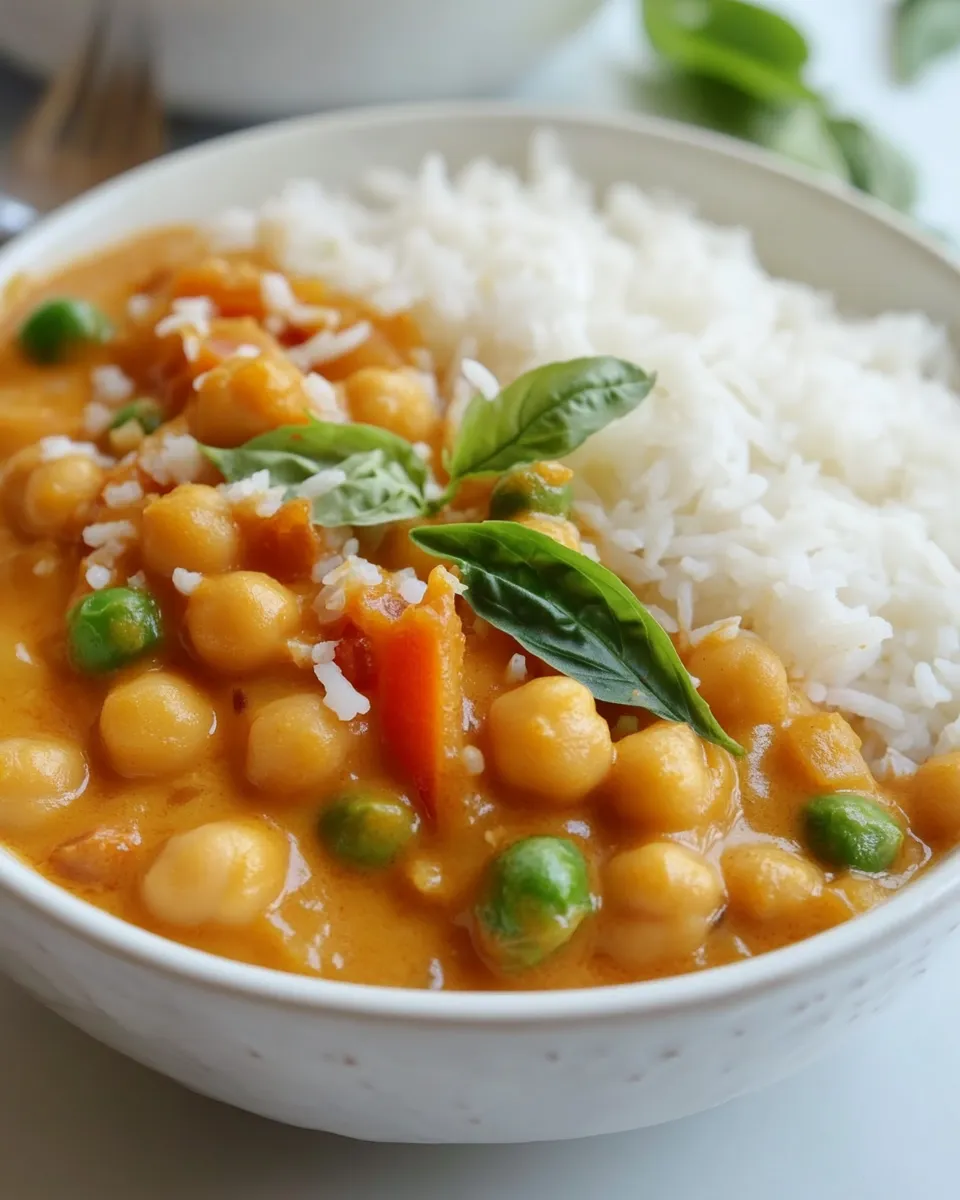
It’s about contrast and simplicity. The rice is fragrant and subtly sweet from light coconut milk and coconut water, while the curry is rich, savory, and bright. Using both light and full-fat coconut milk gives you a balanced mouthfeel: the rice is lighter, and the curry remains luxuriously creamy without feeling greasy.
The recipe is intentionally forgiving: chickpeas hold up well, curry paste provides instant depth, and leeks soften into a gentle sweetness that pairs with the red pepper’s brightness. It’s fast, pantry-forward, and easily scaled for meal prep.
Low-Carb/Keto Alternatives
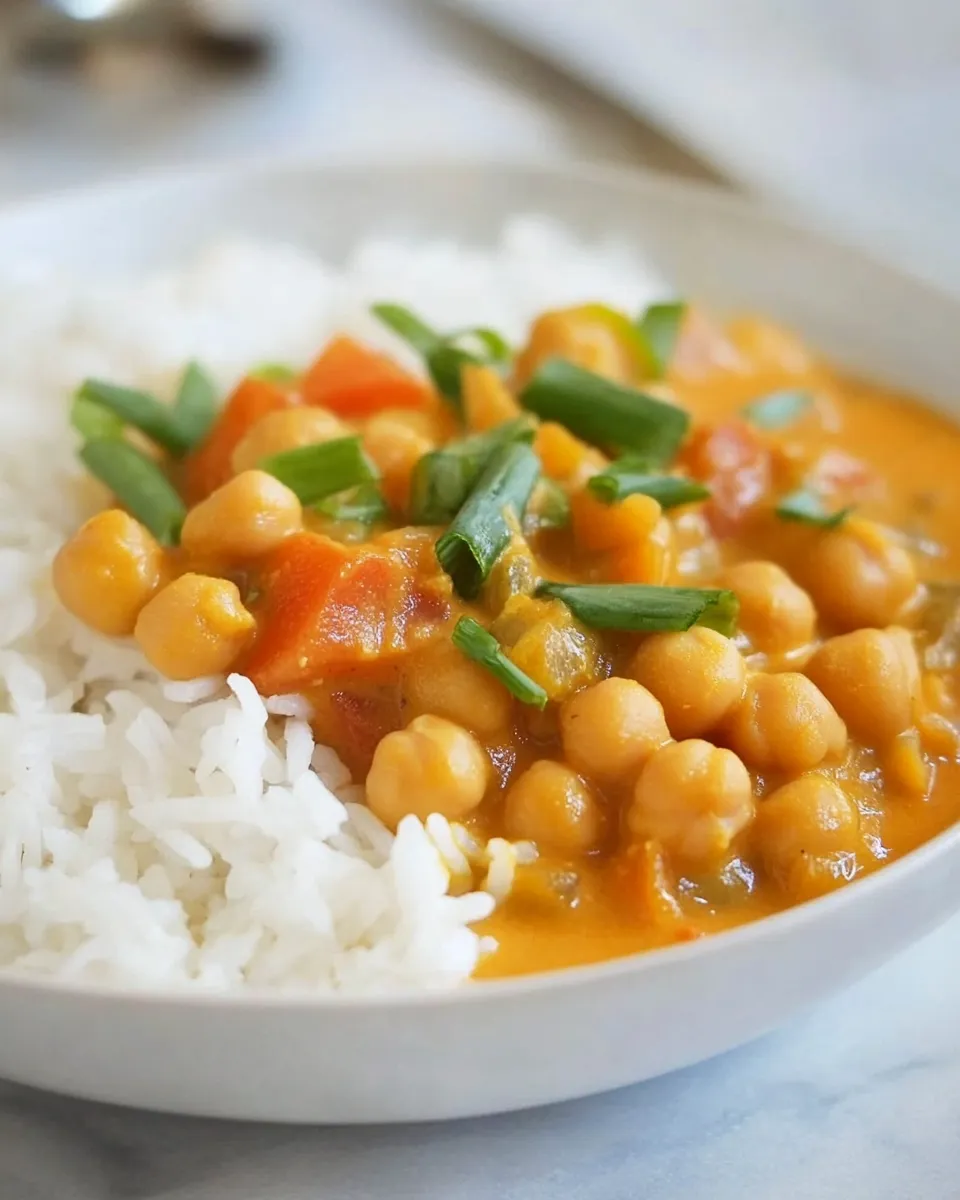
- Replace jasmine rice with cauliflower rice. Pulse raw cauliflower florets briefly until rice-sized, then sauté in a pan with 1 tablespoon coconut oil and a pinch of salt for 4–6 minutes. Stir in a splash of light coconut milk at the end for extra coconut flavor.
- Skip the chickpeas and add cubed, firm tofu or seared chicken breast for lower carbs and higher protein.
- Use a lighter vegetable base: double the snap peas or add zucchini to keep volume while trimming starchy elements.
Kitchen Gear Checklist
- Medium saucepan with a tight-fitting lid — for the coconut rice.
- Large skillet (10–12 inches preferred) with lid — for sautéing and simmering the curry.
- Measuring cups and spoons — for accurate liquid ratios in the rice and curry.
- Sharp knife and cutting board — for trimming and slicing leeks, pepper, and prepping cilantro.
- Fork or rice paddle — to fluff the rice without crushing grains.
Frequent Missteps to Avoid
- Overcooking the rice: keep to the 15–18 minute window. If it cooks longer with the lid off, the texture will become mushy.
- Not cleaning leeks thoroughly: grit can hide between layers. Slice leeks and rinse in a bowl of water if needed.
- Adding the curry paste too late: cooking it with the aromatics for 5 minutes mellows raw edges and deepens flavor — don’t skip that step.
- Simmering too hot after adding coconut milk: keep to a gentle simmer to avoid splitting the coconut milk and to maintain a silky sauce.
- Under-seasoning: taste at the end. The curry paste and coconut milk add a lot of flavor, but a final pinch of salt or squeeze of lime (optional) can lift the dish.
Adaptations for Special Diets
Vegetarian and vegan: the recipe as written is plant-based and vegan-friendly. Ensure your red curry paste doesn’t contain shrimp paste if strictly vegan; many store-bought pastes are vegan but always check the label.
Gluten-free: the recipe is naturally gluten-free, but confirm your curry paste is certified gluten-free if you have celiac disease or a high sensitivity.
Nut allergies: this dish doesn’t call for nuts. If you substitute nut-based garnishes, skip them and use extra cilantro or toasted sesame seeds (if sesame is safe for you).
Low-sodium: reduce the added salt and use a low-sodium canned coconut milk if available; taste and adjust at the end.
Cook’s Notes
- Rice water ratio: the combination of light coconut milk and coconut water approximates the hydration jasmine rice needs. If your rice is older or the grains drier, add a tablespoon of water or coconut water to the saucepan before cooking.
- Curry paste heat: red curry paste varies by brand. Start with 2 tablespoons as written — if you prefer milder curry, use 1–1 1/2 tablespoons and add more to taste at the end.
- Legume texture: chickpeas are hearty but can be slightly dry if overcooked. Use canned chickpeas rinsed well, or cook dried chickpeas until tender but not falling apart.
- Herb timing: add most of the cilantro at the end to preserve freshness. Reserve a little for garnish to add bright green contrast on the plate.
- Make it a bowl: serve with lime wedges, extra cilantro, and a scattering of crushed peanuts or toasted coconut flakes if you like extra texture (omit for allergies).
Storing, Freezing & Reheating
Cool both curry and rice to room temperature within two hours of cooking, then refrigerate in separate airtight containers for up to 4 days. Keeping them separate preserves texture: rice can firm up in the fridge, and the curry will be saucier.
Freezing: the curry freezes well. Transfer to a freezer-safe container, leaving headspace, and freeze for up to 3 months. Thaw overnight in the refrigerator before reheating. The coconut rice can be frozen, but texture may change — thaw and reheat gently.
Reheating: reheat curry in a saucepan over medium-low heat with a splash of water or coconut milk to loosen the sauce. Reheat rice in the microwave covered with a damp paper towel, or steam briefly on the stove with a splash of water to revive moisture.
Quick Questions
- Can I use brown rice? — Yes. Brown rice needs longer cooking time and a higher liquid ratio; adjust cooking time and liquid accordingly, and expect a firmer texture.
- Are canned chickpeas okay? — Absolutely. Rinse and drain them before adding; they save time and work well here.
- Can I make the curry oil-free? — You can sauté the vegetables in a couple tablespoons of water or vegetable broth instead of coconut oil, but the finished flavor will be slightly different.
- My coconut milk separated — is it ruined? — Not necessarily. If it split, gently whisk while warming and add a splash of coconut water or broth; keep heat moderate to recombine texture.
- How spicy is it? — Heat depends on your red curry paste. Start conservative and add more at the end if needed.
Wrap-Up
This Thai-style chickpea curry with coconut rice is a dependable, weeknight-friendly recipe that delivers on flavor and texture without demanding exotic pantry items. It’s flexible, forgiving, and keeps well — perfect for batch cooking or an easy dinner when you want something satisfying and bright. Make the rice and curry together, taste and adjust, and enjoy a bowl that’s both simple and soulful.
Easy Thai-Style Chickpea Curry with Coconut Rice.
Ingredients
Ingredients
- 1 1/2 cupsjasmine rice
- 1 1/2 cupslight canned coconut milk
- 1/2 cupcoconut water
- 1 tablespooncoconut oil
- 1/4 teaspoonsalt
- 1 1/2 tablespoonscoconut oil
- 2 leeks cleaned, trimmed + sliced
- 1/2 red pepper sliced
- 1/2 teaspoonsalt
- 1/2 teaspoonpepper
- 2 garlic cloves minced
- 1/2 teaspoonfreshly grated ginger
- 2 tablespoonsred curry paste
- 1/3 cupsugar snap peas cut into thirds
- 1 14-ounce can full-fat coconut milk
- 1 1/2 cupscooked chickpeas
- 3 tablespoonsfreshly torn cilantro
Instructions
Instructions
- Combine 1 1/2 cups jasmine rice, 1 1/2 cups light canned coconut milk, 1/2 cup coconut water and 1/4 teaspoon salt in a medium saucepan. Stir, bring to a boil over medium-high heat, then reduce heat to low, cover, and simmer for 15–18 minutes, until the liquid is absorbed. Remove from heat, fluff with a fork, and stir in 1 tablespoon coconut oil. Keep covered and warm.
- While the rice cooks, heat a large skillet over medium heat and add 1 1/2 tablespoons coconut oil.
- Add 2 leeks (cleaned, trimmed and sliced), 1/2 red pepper (sliced), 1/2 teaspoon salt and 1/2 teaspoon pepper to the skillet. Stir to combine, cover, and cook about 5 minutes, until the vegetables have slightly softened.
- Add 2 garlic cloves (minced), 1/2 teaspoon freshly grated ginger, and 2 tablespoons red curry paste to the skillet. Stir to coat the vegetables and cook for 5 minutes, stirring occasionally.
- Stir in 1/3 cup sugar snap peas (cut into thirds) and 1 (14-ounce) can full-fat coconut milk. Increase heat to bring the mixture to a boil, then reduce heat to low, cover, and simmer for 5 minutes.
- Stir in 1 1/2 cups cooked chickpeas and 3 tablespoons freshly torn cilantro. Cook uncovered for 5 minutes more to heat through and let flavors meld. Taste and adjust seasoning if desired.
- Serve the chickpea curry immediately with the coconut rice.
Notes
[inspired by + adapted from
eat live run
]