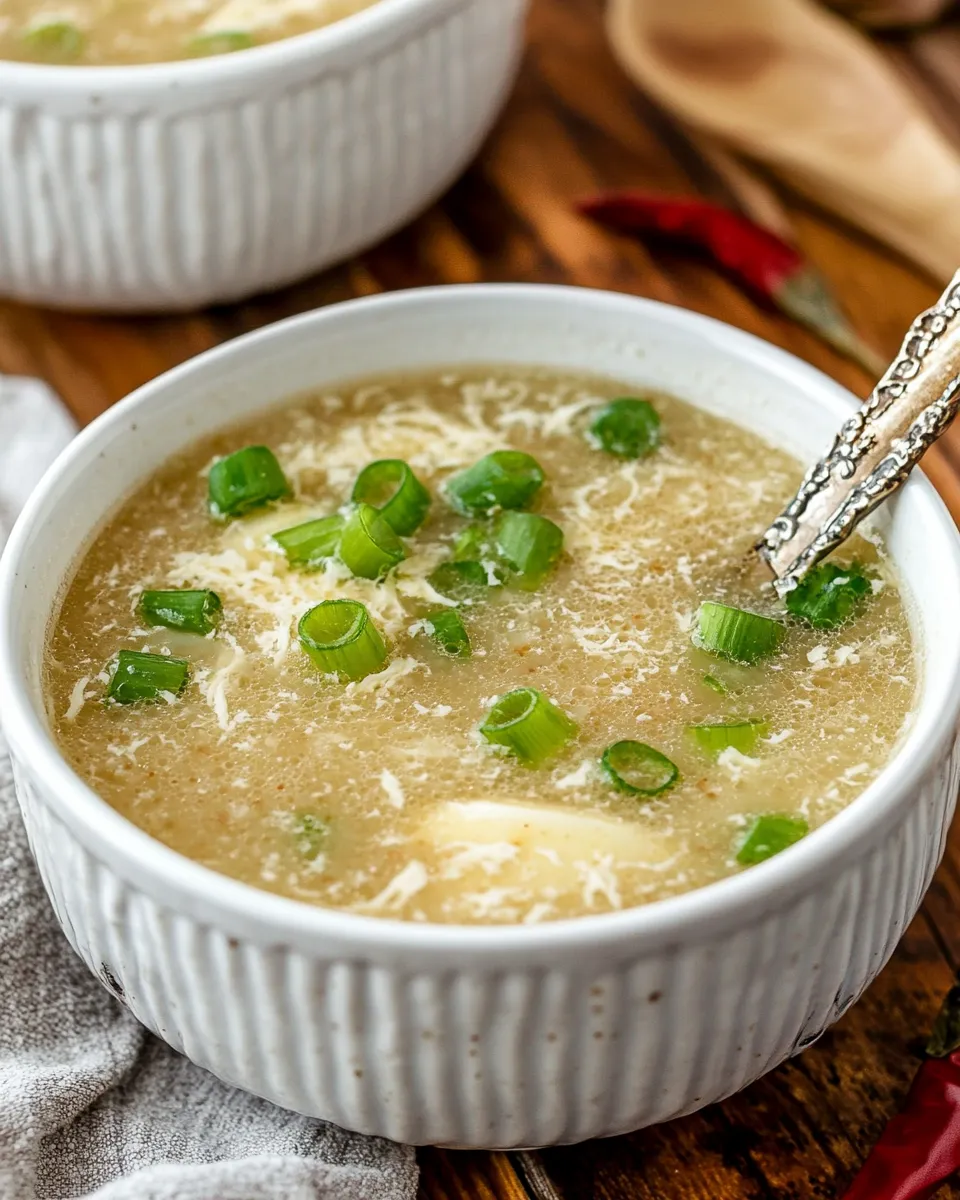
Comfort in a bowl doesn’t have to be complicated. Egg drop soup is the kind of recipe I turn to when I want something quick, soothing, and reliably good — whether I’m chasing away a cold, feeding a tired household, or building a simple weeknight meal around steamed rice and vegetables. It’s mostly technique: a fragrant broth, a touch of thickener, and the gentle ribboning of beaten eggs into the hot liquid.
Over the years I’ve refined the small things that make each bowl sing: a little sesame oil for depth, fresh ginger at the start to brighten the broth, and a fine-mesh sieve to turn the eggs into silk rather than clumps. None of it is fancy, and all of it is practical. This post walks you through the exact steps I use, why they matter, and how to avoid the little mistakes that trip people up.
There’s room to make this your own — more heat, less salt, a sprinkle of extra green onions. Read through the method and the tips before you start; by the time your pot is steaming, you’ll be moving through the steps with confidence.
Shopping List
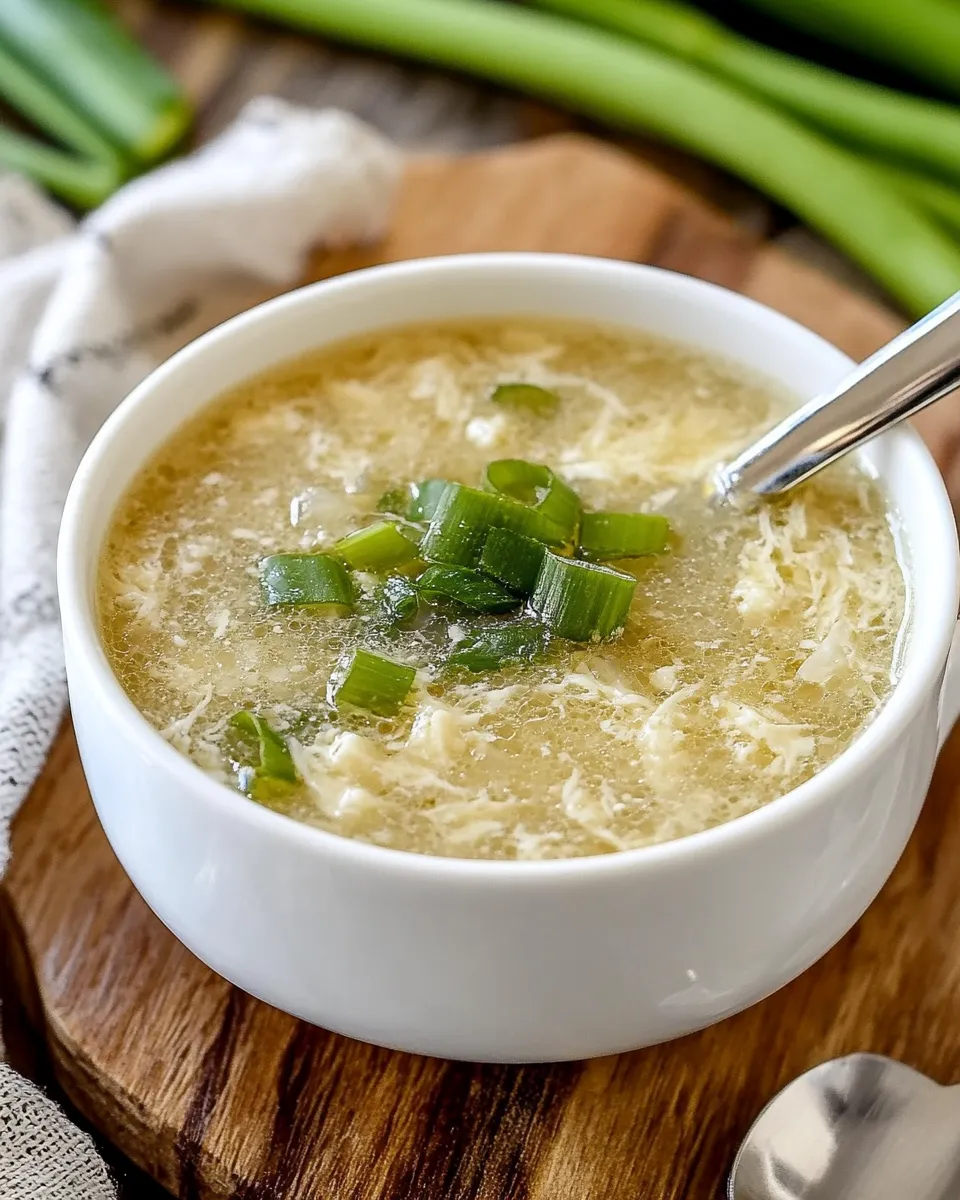
Keep your shopping simple: fresh ginger, green onions, eggs, and reliable chicken broth are the main players. The rest are pantry items in most kitchens. Pick the best-quality chicken broth you can or a low-sodium version if you want tighter control over salt; it changes the soup more than most people expect.
Ingredients
- 1 tablespoon olive oil — for sautéing aromatics and building the flavor base.
- ½ cup green onions, chopped — adds fresh, oniony brightness; reserve a little for garnish if you like.
- 2 tablespoons finely minced fresh ginger — brings warmth and a clean, spicy lift to the broth.
- 5 cups (1200 ml) chicken broth, divided — the backbone of the soup; use divided as noted in the method.
- 2 tablespoons cornstarch — creates a silky texture when mixed into the broth as a slurry.
- ½ teaspoon garlic powder — rounds the flavor without adding raw garlic bite.
- ½ teaspoon sesame oil — a finishing note that adds nutty depth; used sparingly.
- 2 large eggs, beaten — the star that becomes delicate ribbons throughout the soup.
- ¼ teaspoon salt — seasons the finished soup; adjust to taste.
- ¼ teaspoon ground black pepper — brightens and balances the flavors.
- red pepper flakes — optional garnish for heat and color.
Mastering Egg Drop Soup: How-To
- Heat a Dutch oven or medium stockpot over medium-high heat and add 1 tablespoon olive oil.
- Add the ½ cup chopped green onions and 2 tablespoons finely minced fresh ginger; cook, stirring, about 1 minute or until fragrant. (Reserve a little of the chopped green onions for garnish if you like.)
- Pour in 4 cups of the chicken broth and add ½ teaspoon sesame oil; stir to combine.
- In a small bowl or jar, whisk the remaining 1 cup chicken broth with 2 tablespoons cornstarch until smooth and lump-free.
- Stir the cornstarch slurry into the pot, add ½ teaspoon garlic powder, increase heat to high and bring just to a simmer. Reduce heat to medium-low and simmer 5 minutes, stirring occasionally, until slightly thickened.
- Meanwhile beat the 2 large eggs in a small bowl until evenly combined.
- Reduce the soup heat to low. Hold a fine-mesh sieve over the pot, pour the beaten eggs into the sieve, and gently push them through with the back of a spoon to create thin egg ribbons. Stir the soup gently and cook about 1 minute.
- Remove the pot from the heat and stir in ¼ teaspoon salt and ¼ teaspoon ground black pepper.
- Ladle into bowls and garnish with reserved green onions and red pepper flakes, if desired.
What Sets This Recipe Apart
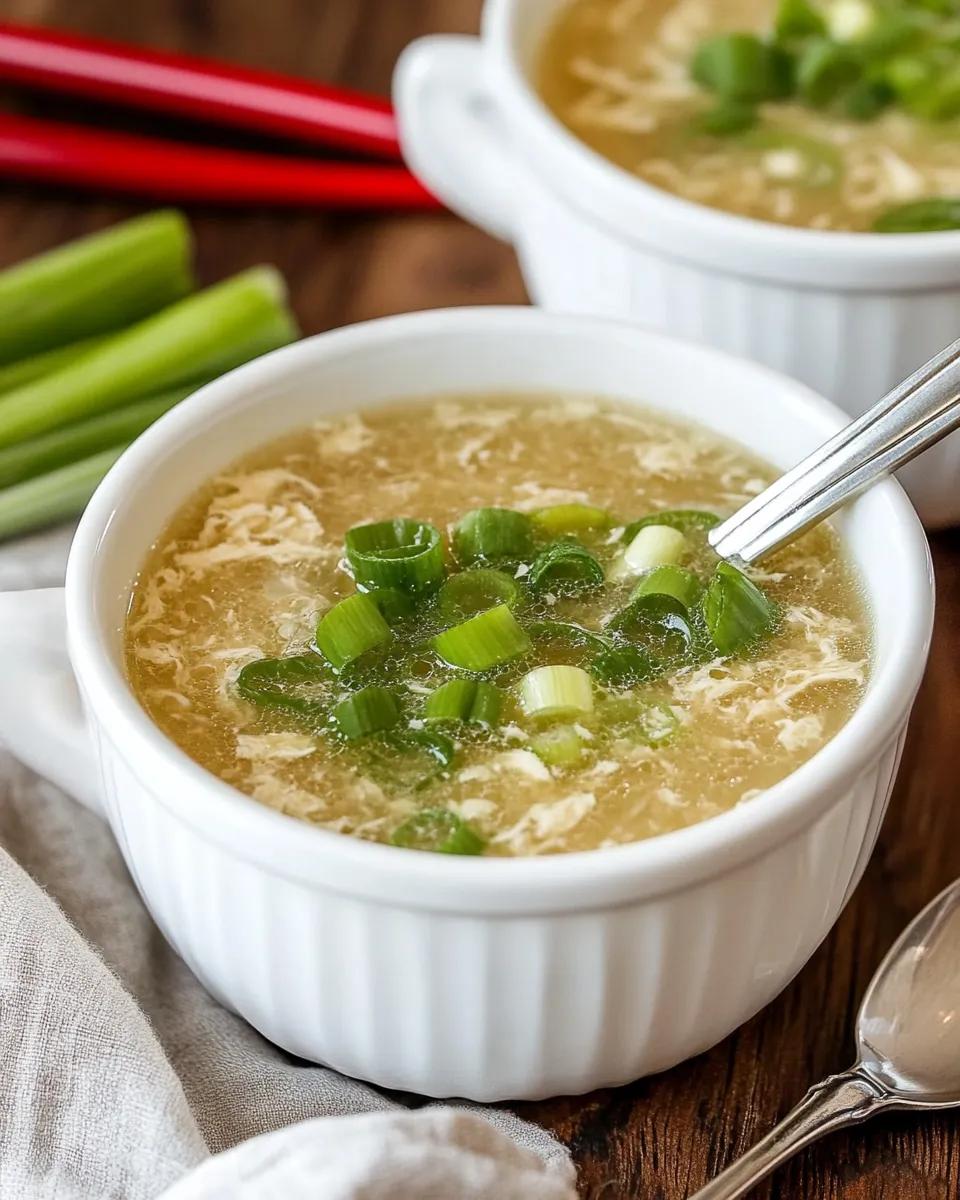
Three practical choices elevate this version. First, the ginger and sesame oil give the broth a balance of warmth and aroma without overpowering the eggs. Second, the cornstarch slurry — mixed with part of the broth instead of water — yields a silky, slightly viscous texture that coats the spoon and makes each mouthful feel satisfying. Third, pushing the beaten eggs through a fine-mesh sieve is a small extra step that pays off: instead of big, uneven chunks you get thin, delicate ribbons that distribute evenly through the bowl.
This recipe is designed for speed and clarity. It hits comforting flavors quickly, requires minimal equipment, and the technique is repeatable. Once you understand the timing — when to thicken, when to lower the heat, and how slowly to add the eggs — you’ll get consistently elegant results.
Dairy-Free/Gluten-Free Swaps
Good news: this recipe is naturally dairy-free. For gluten-free, cornstarch is already a gluten-free thickener, so the main thing is to confirm your chicken broth is labeled gluten-free. If you’re strictly avoiding gluten, check the bottle for additives like soy sauce or flavorings that may include wheat.
If you need to avoid cornstarch for any reason, choose a gluten-free thickener you trust and follow its package guidance for slurry ratios — but note that cornstarch is what gives this soup its characteristic glossy texture.
Before You Start: Equipment
- Medium stockpot or Dutch oven — roomy enough for whisking and stirring without spilling.
- Small bowl or jar — to whisk the cornstarch and extra broth for the slurry.
- Whisk — for the slurry and to lightly beat the eggs.
- Fine-mesh sieve — optional but recommended for creating thin egg ribbons.
- Ladle and spoon — a ladle for serving and a spoon to push eggs through the sieve.
Avoid These Mistakes
- Pouring the eggs in too quickly or at high heat — this makes large clumps instead of ribbons. Keep heat low and push eggs through a sieve slowly.
- Skipping the slurry step or not whisking it smooth — lumps of cornstarch will leave chalky pockets. Whisk the cornstarch with cold broth until lump-free before adding.
- Over-thickening the soup — it should be slightly thickened, not like a gravy. Stick to the 2 tablespoons cornstarch called for and simmer briefly, then remove if it feels right.
- Using a low-quality broth — broth is the backbone here. Too-salty or bland broth will dominate the final bowl; taste and adjust with care.
Tailor It to Your Diet
Want to reduce sodium? Use a low-sodium chicken broth and taste before adding the ¼ teaspoon salt at the end. Looking to make this vegetarian? Swap in a well-seasoned vegetable stock, but remember the flavor will shift away from the classic chicken profile. Want more protein? Stir in leftover shredded cooked chicken at the end to warm through after the eggs have set.
For more vegetables, add quick-cooking greens like baby spinach in the last minute of cooking, or thinly sliced mushrooms when you sauté the ginger and green onions; both change the character of the soup but keep the core technique intact.
Method to the Madness
1. Build the aromatics
Start with olive oil, green onions, and ginger. This is where the broth picks up its personality. Cook just until fragrant — you don’t want browned ginger, you want brightness.
2. Make the body
Adding 4 cups of the broth and a touch of sesame oil creates the liquid base. The cornstarch slurry follows to give the soup some body without heaviness. Bringing the soup to a brief simmer activates the cornstarch; simmer for about 5 minutes and you’ll see the texture change.
3. Create the eggs
Beat the eggs and use a fine-mesh sieve to break them into thin strands as you push them through with the back of a spoon. Lower heat first, and stir gently after the eggs enter the pot so the ribbons stay delicate.
4. Finish and season
Remove from heat and finish with salt and pepper, then garnish. The final seasoning can be adjusted to taste — do this off the heat so the eggs don’t overcook.
Save for Later: Storage Tips
Store leftover soup in an airtight container in the refrigerator for up to 3 days. Reheat gently on the stovetop over low heat; bring to a gentle simmer and stir occasionally. Be aware that the eggs will firm up a bit in the fridge, and the texture may be a touch denser when reheated. Freezing is not ideal — the egg ribbons and the thickened broth can change texture after thawing.
Handy Q&A
- Q: Can I use less cornstarch?
A: Yes, you can reduce the thickener if you prefer a lighter broth, but the soup will be less glossy and slightly thinner. Start with 1 tablespoon and check the texture after simmering. - Q: Why push the eggs through a sieve?
A: The sieve breaks the eggs into very fine streams, which become the delicate ribbons that are characteristic of this soup. Skipping the sieve tends to produce larger, uneven egg curds. - Q: Can I make this spicier?
A: Yes. Add a pinch of red pepper flakes to the finished bowl or a dash of chili oil if you like more heat. - Q: Is sesame oil necessary?
A: It’s not mandatory, but the ½ teaspoon adds a nutty note that lifts the broth. Use it sparingly — it’s potent.
Bring It to the Table
Serve this soup hot, garnished with the reserved green onions and a light sprinkle of red pepper flakes if you like heat. It’s wonderful on its own as a starter or light lunch, and it pairs easily with steamed rice, simple dumplings, or a crisp green salad for a fuller meal. The bowls will come together in 20 minutes from start to finish, making this an ideal quick comfort recipe for busy nights.
Make a double batch of broth on a cold weekend and you’ll have a shortcut for weeknight bowls all week long. Keep a small jar of cornstarch and a few extra eggs in the pantry and this becomes one of those reliable recipes you’ll return to again and again.
Egg Drop Soup
Ingredients
Ingredients
- ?1 tablespoonolive oil
- ?1/2 cupgreen onionschopped
- ?2 tablespoonsfinely minced fresh ginger
- ?5 cups 1200 mlchicken brothdivided
- ?2 tablespoonscornstarch
- ?1/2 teaspoongarlic powder
- ?1/2 teaspoonsesame oil
- ?2 largeeggsbeaten
- ?1/4 teaspoonsalt
- ?1/4 teaspoonground black pepper
- ?red pepper flakesoptional garnish
Instructions
Instructions
- Heat a Dutch oven or medium stockpot over medium-high heat and add 1 tablespoon olive oil.
- Add the ½ cup chopped green onions and 2 tablespoons finely minced fresh ginger; cook, stirring, about 1 minute or until fragrant. (Reserve a little of the chopped green onions for garnish if you like.)
- Pour in 4 cups of the chicken broth and add ½ teaspoon sesame oil; stir to combine.
- In a small bowl or jar, whisk the remaining 1 cup chicken broth with 2 tablespoons cornstarch until smooth and lump-free.
- Stir the cornstarch slurry into the pot, add ½ teaspoon garlic powder, increase heat to high and bring just to a simmer. Reduce heat to medium-low and simmer 5 minutes, stirring occasionally, until slightly thickened.
- Meanwhile beat the 2 large eggs in a small bowl until evenly combined.
- Reduce the soup heat to low. Hold a fine-mesh sieve over the pot, pour the beaten eggs into the sieve, and gently push them through with the back of a spoon to create thin egg ribbons. Stir the soup gently and cook about 1 minute.
- Remove the pot from the heat and stir in ¼ teaspoon salt and ¼ teaspoon ground black pepper.
- Ladle into bowls and garnish with reserved green onions and red pepper flakes, if desired.
Equipment
- 6-quart Dutch Ovenor stock pot
- Fine-mesh strainer
- Whisk
Notes
Prepare the ingredients ahead of time. This recipe moves quickly, so be sure to have everything prepped and ready before you start cooking.
To add more protein, try stirring in small pieces of extra firm tofu, shredded chicken, or small shrimp.
Veggies such as cooked mushrooms, sliced baby bok choi, leafy greens, or corn kernels could make a nice addition to egg drop soup as well.
You can infuse lemongrass, peppercorns, closes, or star anise into the broth for extra depth.
To Store:refrigerate egg drop soup for up to 4 days in an airtight container. Reheat gently over the stove, or use the microwave.