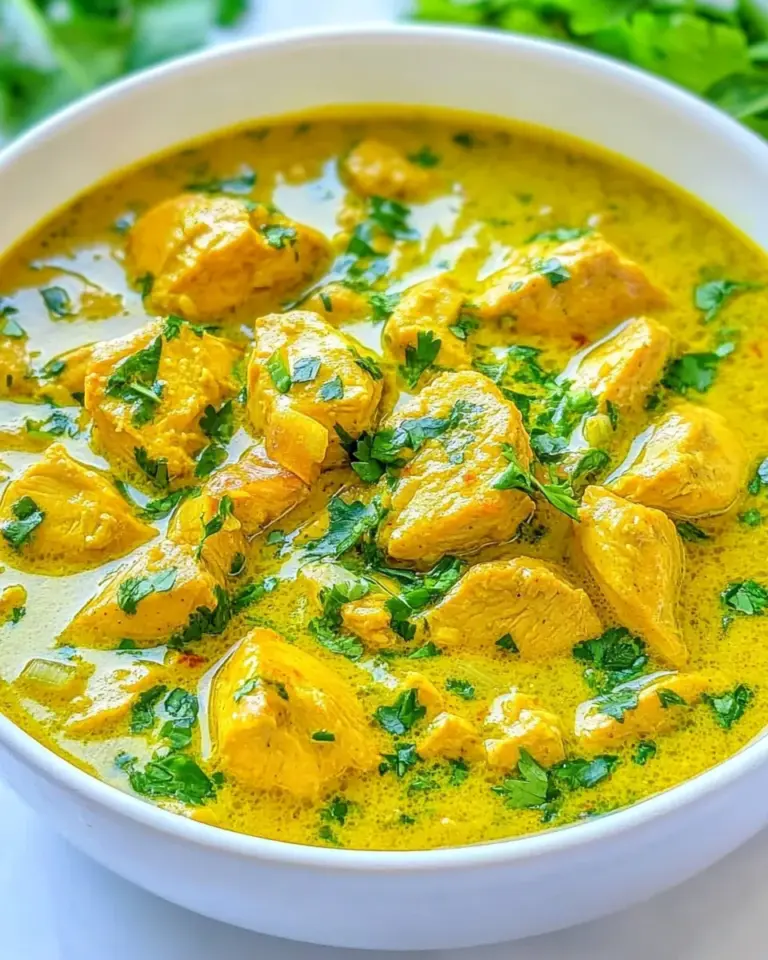
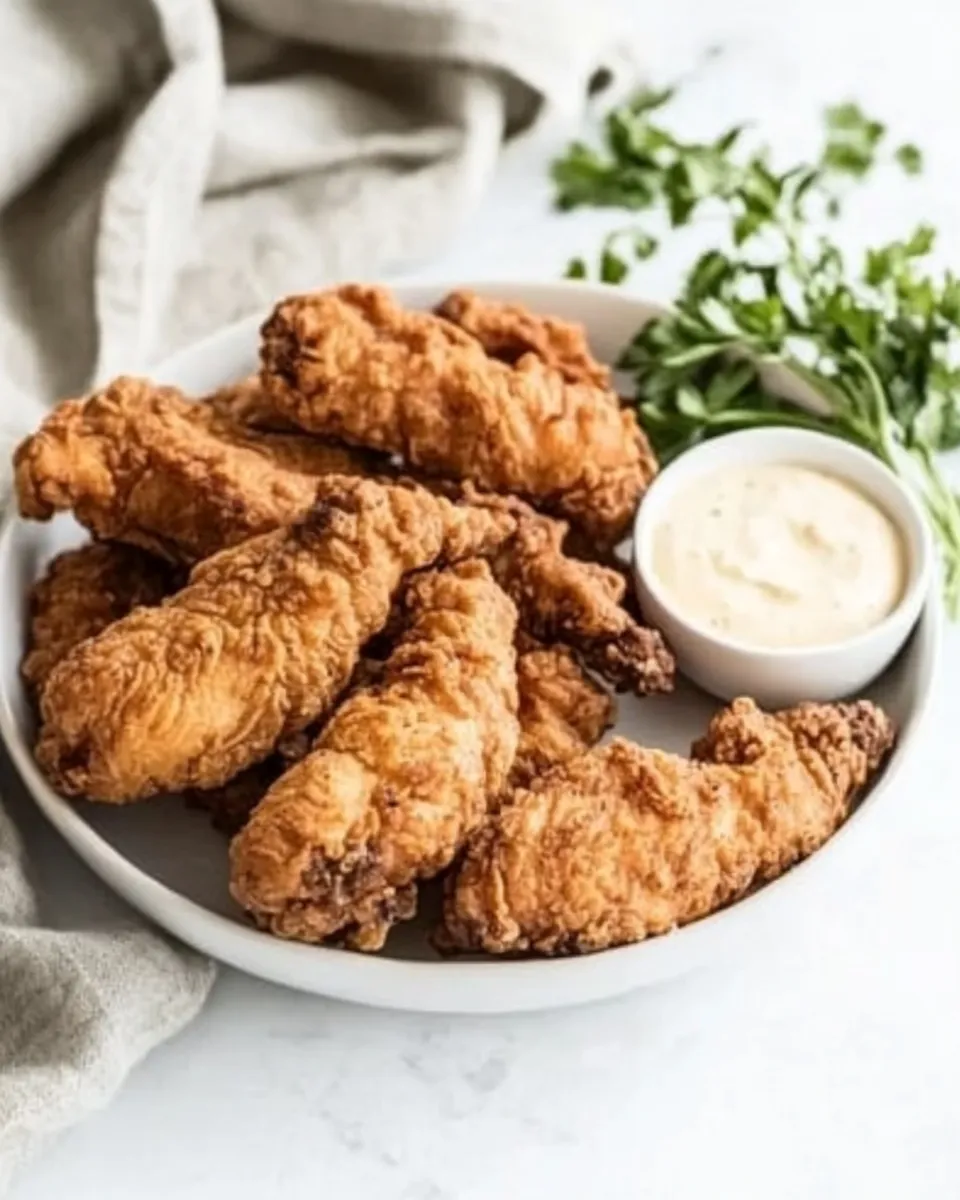
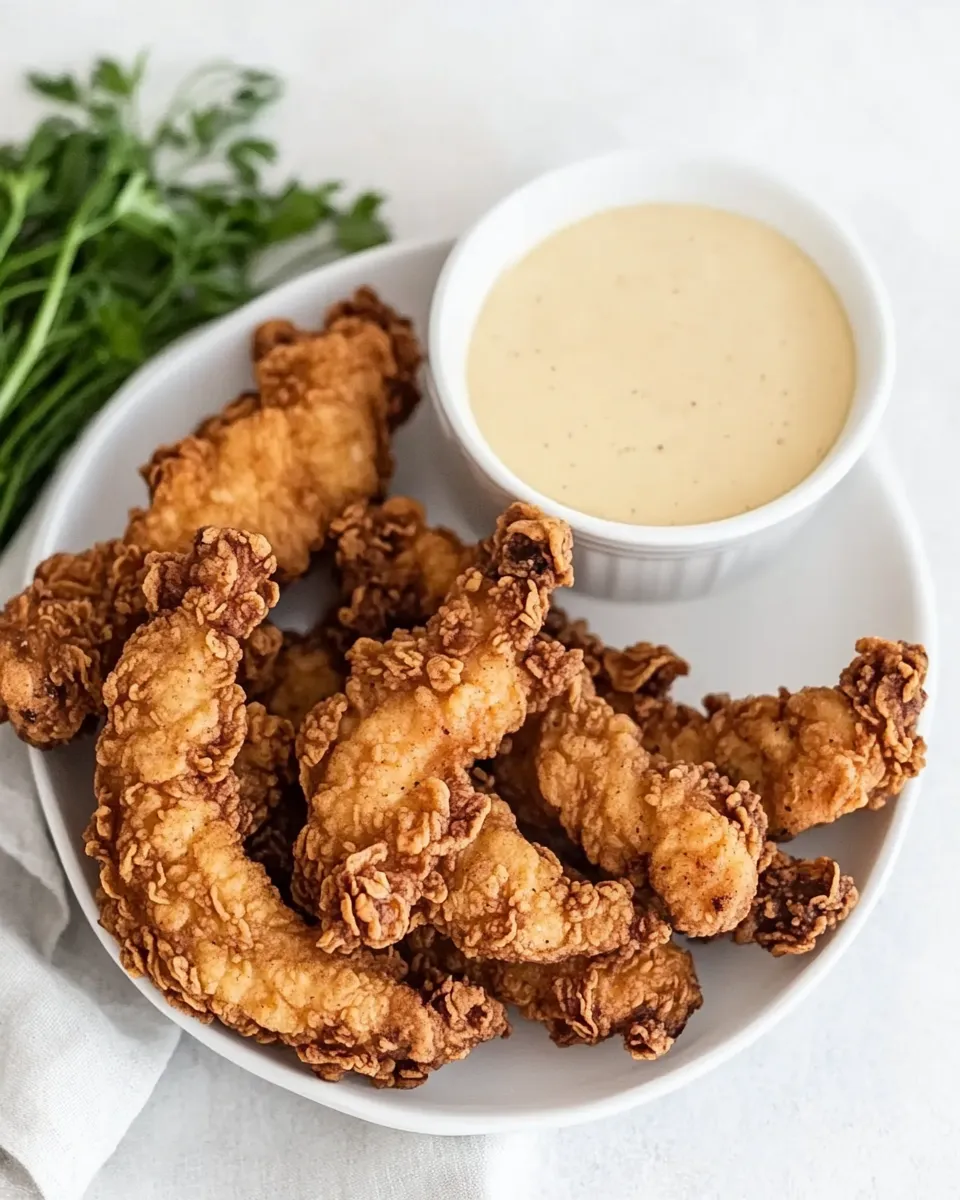
These fried chicken tenders are my go-to when I want something crunchy, satisfying, and quick to disappear from the plate. There’s a straightforward marinade that gives tenderness and a mild tang, and a two-step dredge that builds a cracker-crisp crust. The result is reliably juicy chicken inside and a crunchy exterior that holds up for serving family-style or packing for a picnic.
I like recipes that have clear stages: a marinade that can be done ahead, a simple dredging station, and a steady frying routine. This one works whether you’re making dinner for a weeknight or frying up a batch for guests. It’s forgiving, and a few small practices—temperature control, resting the breaded tenders, and not overcrowding the pot—make a big difference.
Below you’ll find the ingredients (exact amounts from the recipe), the step-by-step process, practical reasons to love these tenders, smart swaps, and troubleshooting tips. Read the instructions through once before you begin, set up your stations, and you’ll be frying confidently in no time.
What We’re Using
Ingredients
- 2 pounds chicken tenders — the primary protein; trim any excess fat for even cooking.
- 1 ½ cups buttermilk — for the marinade; tenderizes and adds tang.
- ¼ cup pickle juice, or white distilled vinegar — acid for brightening the marinade.
- 1 tablespoon hot sauce — flavor and a touch of heat; optional if you prefer mild.
- 1 ½ tablespoons garlic granules — used in the marinade for savory depth.
- 1 ½ tablespoons onion granules — aromatic base in the marinade.
- 2 teaspoons paprika — color and mild smoky sweetness in the marinade.
- 2 teaspoons coarse salt — seasons the meat during marination.
- 1 teaspoon ground black pepper — gentle bite in the marinade.
- 1 cup all-purpose flour — part of the dry dredge for structure.
- 1 cup cornstarch — adds extra crisp to the coating.
- 1 tablespoon baking powder — helps create a lighter, crisp crust.
- 2 teaspoons garlic granules — additional savory note in the dry mix.
- 2 teaspoons onion granules — layered flavor in the coating.
- 2 teaspoons paprika — seasoning and color for the dredge.
- 3 teaspoons coarse salt — seasons the crust; adjust for taste.
- 1 teaspoon ground pepper — for a balanced background heat in the coating.
- 4 large eggs — the egg wash that helps the dry mix adhere.
- ½ cup buttermilk — added to the eggs to loosen the wash and add tang.
- oil for frying — neutral-flavored oil with a high smoke point; amount depends on pot size.
Cooking (Fried Chicken Tenders Recipe): The Process
- In a large bowl combine 1 ½ cups buttermilk, ¼ cup pickle juice (or ¼ cup white distilled vinegar), 1 tablespoon hot sauce, 1 ½ tablespoons garlic granules, 1 ½ tablespoons onion granules, 2 teaspoons paprika, 2 teaspoons coarse salt, and 1 teaspoon ground black pepper. Add the 2 pounds chicken tenders, turn to coat, cover, and refrigerate for 2 to 24 hours.
- When ready to cook, set up a dredging station with three containers: a wide shallow bowl for the dry dredge, a second wide shallow bowl for the egg wash, and a sheet tray fitted with a wire rack for the breaded tenders.
- In the dry-dredge bowl whisk together 1 cup all-purpose flour, 1 cup cornstarch, 1 tablespoon baking powder, 2 teaspoons garlic granules, 2 teaspoons onion granules, 2 teaspoons paprika, 3 teaspoons coarse salt, and 1 teaspoon ground black pepper. Set aside.
- In the egg-wash bowl whisk together 4 large eggs and ½ cup buttermilk until smooth. Set aside.
- Pour oil for frying into a 4- or 5-quart pot until it is about halfway full. Heat the oil over medium heat until it reaches 375°F, using a thermometer to monitor temperature.
- Remove the marinated tenders from the refrigerator. Working a few at a time, lift each tender from the marinade and let excess drip back into the bowl—do not rinse.
- Dredge each tender in the dry mix, pressing the flour mixture onto all sides so it adheres. Shake off excess dry mix.
- Dip the floured tender into the egg wash, coating completely. Allow excess egg to drip off.
- Return the tender to the dry mix and press the dry mix onto all sides to form an even, complete coating. Transfer the breaded tender to the wire rack on the sheet tray.
- Repeat steps 6–9 until all tenders are breaded. Let the breaded tenders rest on the rack for up to 15 minutes before frying.
- Maintain the oil at 375°F. Fry the tenders in batches of 4 to 6 (do not overcrowd) so the oil temperature remains steady. Cook each batch for 3½ to 4 minutes, flipping once about halfway through (around 2 minutes), until the coating is golden brown and the chicken is cooked through.
- Remove cooked tenders with a slotted spoon or tongs and transfer to the wire rack to drain. Continue frying remaining batches.
- Let the tenders rest briefly on the rack, then serve hot.
Reasons to Love (Fried Chicken Tenders Recipe)
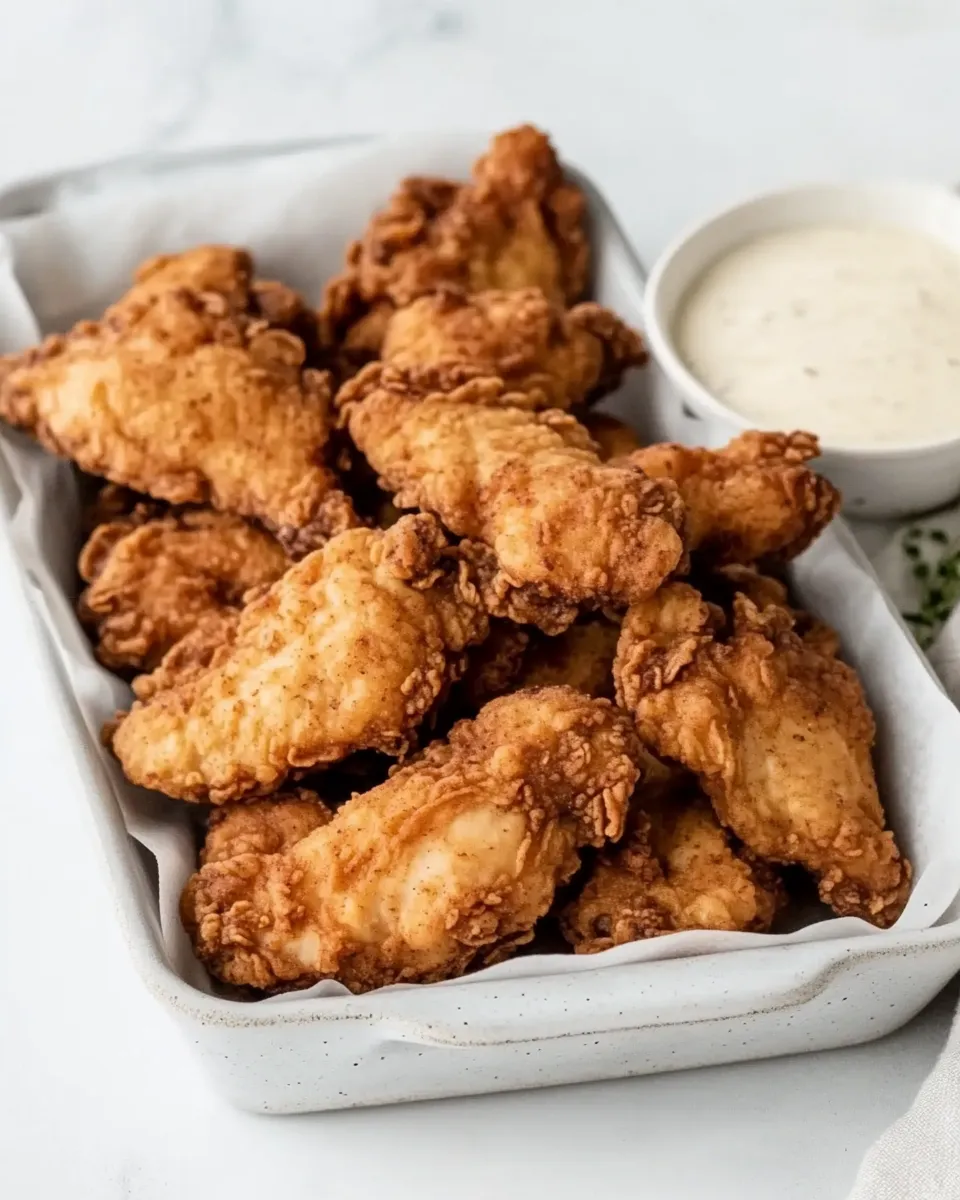
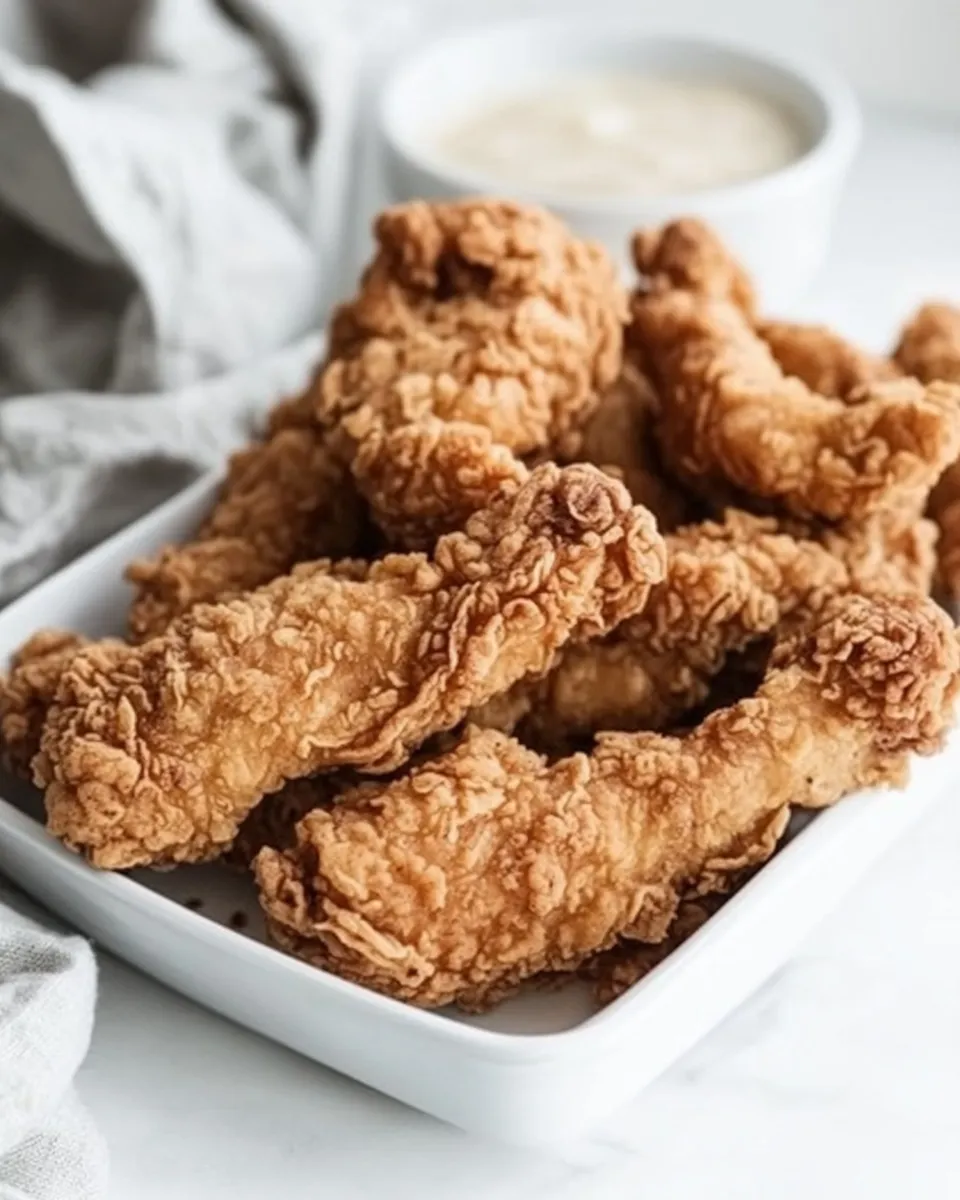
These tenders hit the usual musts: crunchy outside, juicy inside, and straightforward technique. The buttermilk-plus-acid marinade does the heavy lifting for tenderness while the two-stage flour–egg–flour method builds a substantial, clingy crust that doesn’t dissolve in sauce. Using cornstarch and baking powder in the dry mix is the little trick that gives extra crunch without making the coating heavy.
They’re also versatile: they’re great plain, dipped in your favorite sauce, or used in sandwiches and salads. Because the recipe allows a long marinade window (2–24 hours), you can prep the night before and finish them when you need them. For entertaining, you can keep the finished tenders warm on a rack in a low oven so everyone can graze.
Smart Substitutions
- Buttermilk — If you’re out of buttermilk, use milk + a tablespoon of lemon juice or vinegar per cup as a quick substitute for the marinade or egg wash, but note the recipe lists exact buttermilk amounts.
- Pickle juice or vinegar — Use one or the other as listed. Pickle juice adds a subtle brine note; vinegar is a clean acid. Don’t skip the acid entirely.
- Hot sauce — Omit if you prefer no heat, or swap for a teaspoon of smoked paprika for a milder smoky flavor.
- Oil for frying — Use neutral oils with a high smoke point (peanut, canola, or vegetable oil). Quantity depends on pot, but the recipe instructs to fill a 4- or 5-quart pot about halfway.
Tools of the Trade
- 4- or 5-quart pot — deep enough for safe frying and to hold oil to the halfway mark.
- Deep-fry thermometer — essential to maintain 375°F; don’t guess the temperature.
- Wide shallow bowls — two for the dry dredge and egg wash to make breading efficient.
- Sheet tray and wire rack — keep breaded tenders off flat trays so coating stays crisp and oil drains properly.
- Slotted spoon or tongs — for safe removal and minimal oil retention.
Frequent Missteps to Avoid
Temperature is the biggest opponent here. If oil is too cool, the coating soaks up oil and becomes greasy; if it’s too hot, the exterior browns before the chicken cooks through. Keep the oil at a steady 375°F and fry in small batches.
Another common mistake is overcrowding the pot. Adding too many tenders drops the oil temperature abruptly and yields uneven cooking. Also, don’t skip pressing the dry mix into the tender at both passes—this ensures an even, adherent crust that won’t fall off while frying.
Finally, avoid rinsing the tenders after marinating. The recipe specifies lifting and letting excess drip off—rinsing washes away seasoning and changes the surface needed for the crust to stick.
Variations for Dietary Needs
For a gluten-free option, replace the all-purpose flour with a 1:1 gluten-free flour blend labeled for baking and use a gluten-free cornstarch. Ensure all spice blends and baking powder are certified gluten-free.
For a lower-fat version, bake at 425°F on a wire rack over a sheet pan for about 12–18 minutes, flipping halfway; results won’t match deep-frying crispness but will be satisfying. For a dairy-free marinade, use a nondairy milk mixed with a tablespoon of vinegar per cup instead of buttermilk—note that this alters tenderizing behavior slightly.
Chef’s Rationale
I use a buttermilk-based marinade plus a splash of acid because it both tenderizes and seasons the meat from within. The two-step breading (flour → egg wash → flour) traps air pockets and creates texture; cornstarch and baking powder in the dry mix promote extra crispness and lightness. The resting step allows the coating to set so it adheres during frying.
Maintaining 375°F is deliberate: it’s a balance point where the coating crisps quickly and the interior cooks without overbrowning. Flipping once keeps handling to a minimum while ensuring even coloration and cook-through.
Storing, Freezing & Reheating
Store leftover tenders in an airtight container in the refrigerator for up to 3 days. To re-crisp, place them on a wire rack over a sheet pan and reheat in a 375°F oven for 8–12 minutes until warmed through and crisped. Avoid microwaving unless you accept a softer crust.
To freeze, cool completely, then flash-freeze on a tray until solid and transfer to a freezer bag. Frozen cooked tenders keep well for up to 2 months. Reheat from frozen in a 375°F oven for 15–20 minutes, flipping halfway, until hot throughout and the coating is crisp again.
(Fried Chicken Tenders Recipe) Q&A
- Q: Can I use chicken breasts cut into strips instead of tenders? A: Yes—cut boneless chicken breast into uniform strips so cooking time remains consistent. Adjust thickness to avoid under- or overcooking.
- Q: How do I know the chicken is done? A: Internal temperature should reach 165°F. For tenders, the 3½–4 minute fry time specified is reliable when oil is at 375°F and pieces are similar in size.
- Q: Why both cornstarch and flour? A: Flour gives structure; cornstarch lends a lighter, glassy crisp. Together they create a robust but delicate crust.
- Q: My crust falls off—what went wrong? A: Common causes: too much excess marinade on the chicken (let drip), insufficient pressing of the dry mix, or frying before the breading has had a short rest to set. Also ensure egg wash is beaten well so it helps binding.
Time to Try It
Set aside time to marinate (2–24 hours), then plan roughly 30–45 minutes for setup and frying depending on how many batches you make. Read the process through once, assemble your dredging station, and keep the thermometer at hand. Take your time with the dredge and frying temp—those small steps make the difference between a good tender and a great one. When they come out golden and sizzling, serve immediately with your favorite dips and watch them disappear.
Fried Chicken Tenders Recipe
Ingredients
Ingredients
- 2 poundschicken tenders
- 1 1/2 cupsbuttermilk
- 1/4 cuppickle juice or white distilled vinegar
- 1 tablespoonhot sauce
- 1 1/2 tablespoonsgarlic granules
- 1 1/2 tablespoonsonion granules
- 2 teaspoonspaprika
- 2 teaspoonscoarse salt
- 1 teaspoonground black pepper
- 1 cupall-purpose flour
- 1 cupcornstarch
- 1 tablespoonbaking powder
- 2 teaspoonsgarlic granules
- 2 teaspoonsonion granules
- 2 teaspoonspaprika
- 3 teaspoonscoarse salt
- 1 teaspoonground pepper
- 4 large eggs
- 1/2 cupbuttermilk
- oil for frying
Instructions
Instructions
- In a large bowl combine 1 ½ cups buttermilk, ¼ cup pickle juice (or ¼ cup white distilled vinegar), 1 tablespoon hot sauce, 1 ½ tablespoons garlic granules, 1 ½ tablespoons onion granules, 2 teaspoons paprika, 2 teaspoons coarse salt, and 1 teaspoon ground black pepper. Add the 2 pounds chicken tenders, turn to coat, cover, and refrigerate for 2 to 24 hours.
- When ready to cook, set up a dredging station with three containers: a wide shallow bowl for the dry dredge, a second wide shallow bowl for the egg wash, and a sheet tray fitted with a wire rack for the breaded tenders.
- In the dry-dredge bowl whisk together 1 cup all-purpose flour, 1 cup cornstarch, 1 tablespoon baking powder, 2 teaspoons garlic granules, 2 teaspoons onion granules, 2 teaspoons paprika, 3 teaspoons coarse salt, and 1 teaspoon ground black pepper. Set aside.
- In the egg-wash bowl whisk together 4 large eggs and ½ cup buttermilk until smooth. Set aside.
- Pour oil for frying into a 4- or 5-quart pot until it is about halfway full. Heat the oil over medium heat until it reaches 375°F, using a thermometer to monitor temperature.
- Remove the marinated tenders from the refrigerator. Working a few at a time, lift each tender from the marinade and let excess drip back into the bowl—do not rinse.
- Dredge each tender in the dry mix, pressing the flour mixture onto all sides so it adheres. Shake off excess dry mix.
- Dip the floured tender into the egg wash, coating completely. Allow excess egg to drip off.
- Return the tender to the dry mix and press the dry mix onto all sides to form an even, complete coating. Transfer the breaded tender to the wire rack on the sheet tray.
- Repeat steps 6–9 until all tenders are breaded. Let the breaded tenders rest on the rack for up to 15 minutes before frying.
- Maintain the oil at 375°F. Fry the tenders in batches of 4 to 6 (do not overcrowd) so the oil temperature remains steady. Cook each batch for 3½ to 4 minutes, flipping once about halfway through (around 2 minutes), until the coating is golden brown and the chicken is cooked through.
- Remove cooked tenders with a slotted spoon or tongs and transfer to the wire rack to drain. Continue frying remaining batches.
- Let the tenders rest briefly on the rack, then serve hot.
Equipment
- Large Bowl
- wide shallow bowls
- sheet tray
- Wire Rack
- 4- or 5-quart pot
- Thermometer
- Slotted spoon or tongs
- Whisk
Notes
Try not to let your oil temperature drop too much while you’re frying the tenders. The cold tenders will naturally lower the temperature from 375°F to 350°F, which is also the ideal temperature for fried chicken. Use a candy thermometer or instant-read thermometer to help you track, manage, and adjust the temperature as you go.
Marinating time:
I recommend marinating the chicken tenders for at least 2 hours, although soaking them overnight will yield the most tender and flavorful results.
Don’t overcrowd the pot:
This will surely drop the oil temperature and lead to greasy, soggy tenders. Always fry the chicken in batches for the best results.
Rest the chicken before and after cooking
: Resting the double-dredged chicken for 15 minutes before frying will help the flour coating adhere to the meat. After frying, rest the chicken on a wire rack (not on paper towels) to allow the natural juices time to reabsorb into the meat. This will make every bite nice and juicy.
Make-Ahead:
Deep-fried chicken tenders are best served right away. However, you can keep them warm by placing the wire rack with the chicken in a 200ºF oven for up to 30 minutes before serving.
How to Store:
Once cooled, transfer the leftover tenders to an airtight container and refrigerate them for up to 4 days. Keep them crispy by placing a paper towel underneath the chicken in the container; it will absorb any excess moisture.
How to Reheat:
Reheat the chicken tenders in a 375°F oven or air fryer until warmed through and crispy again.