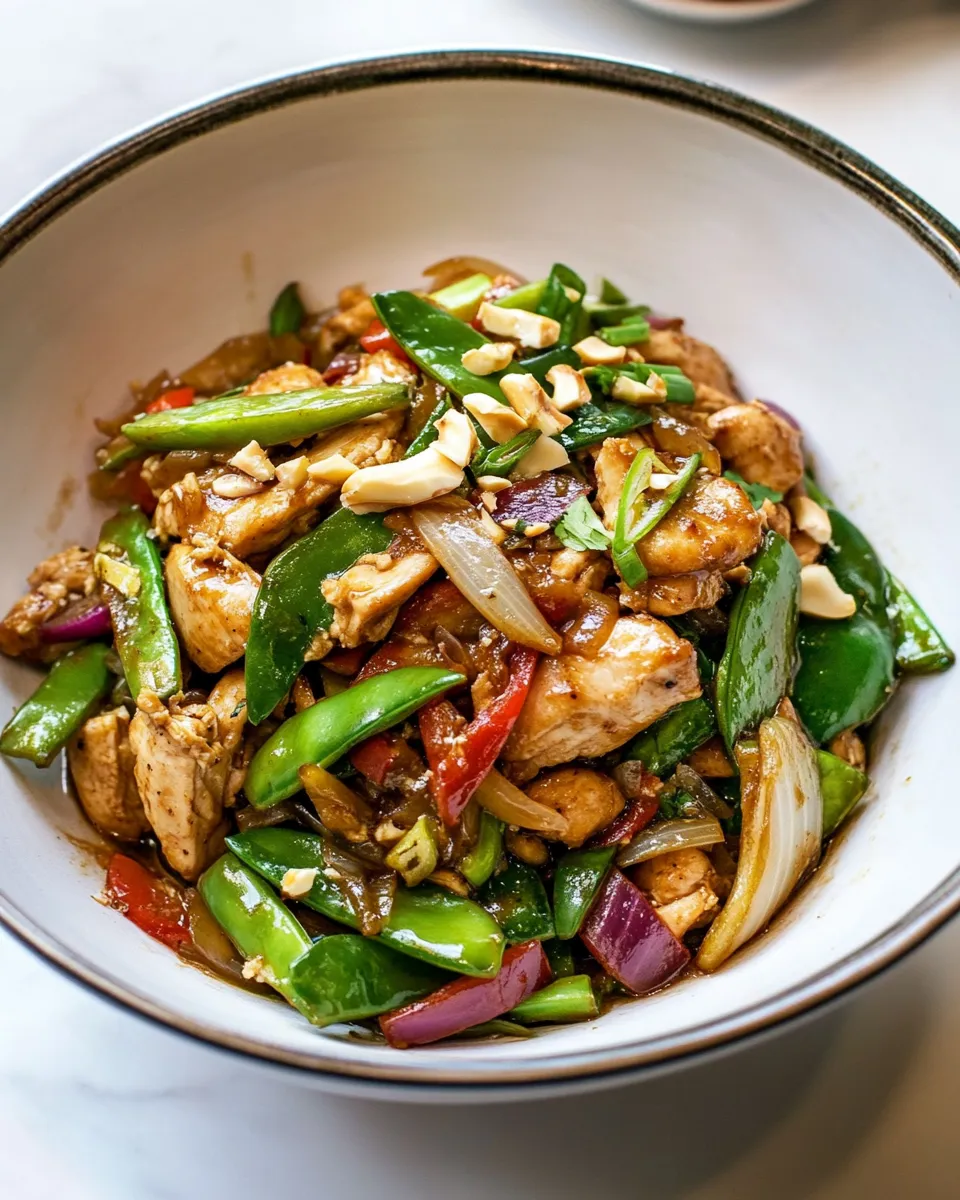
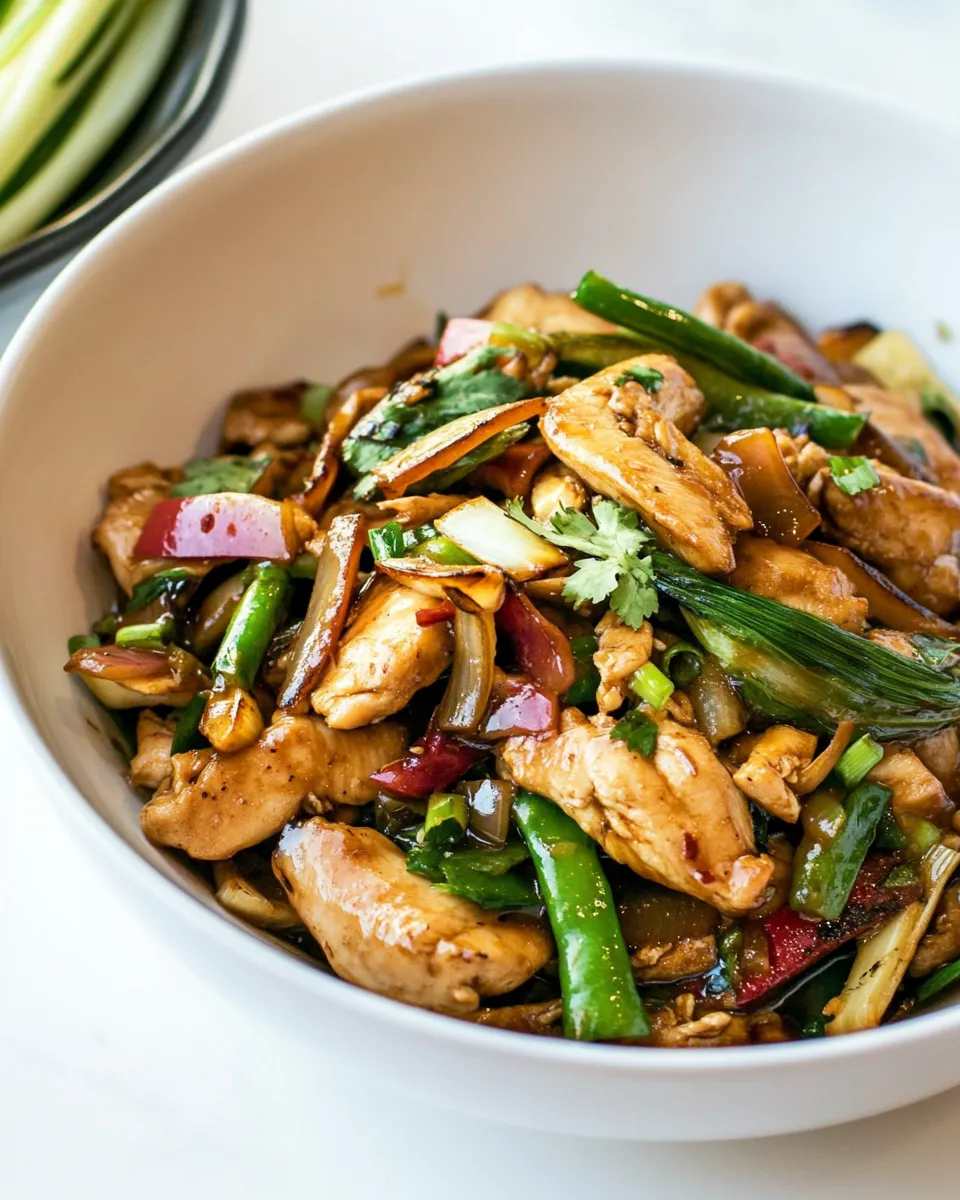
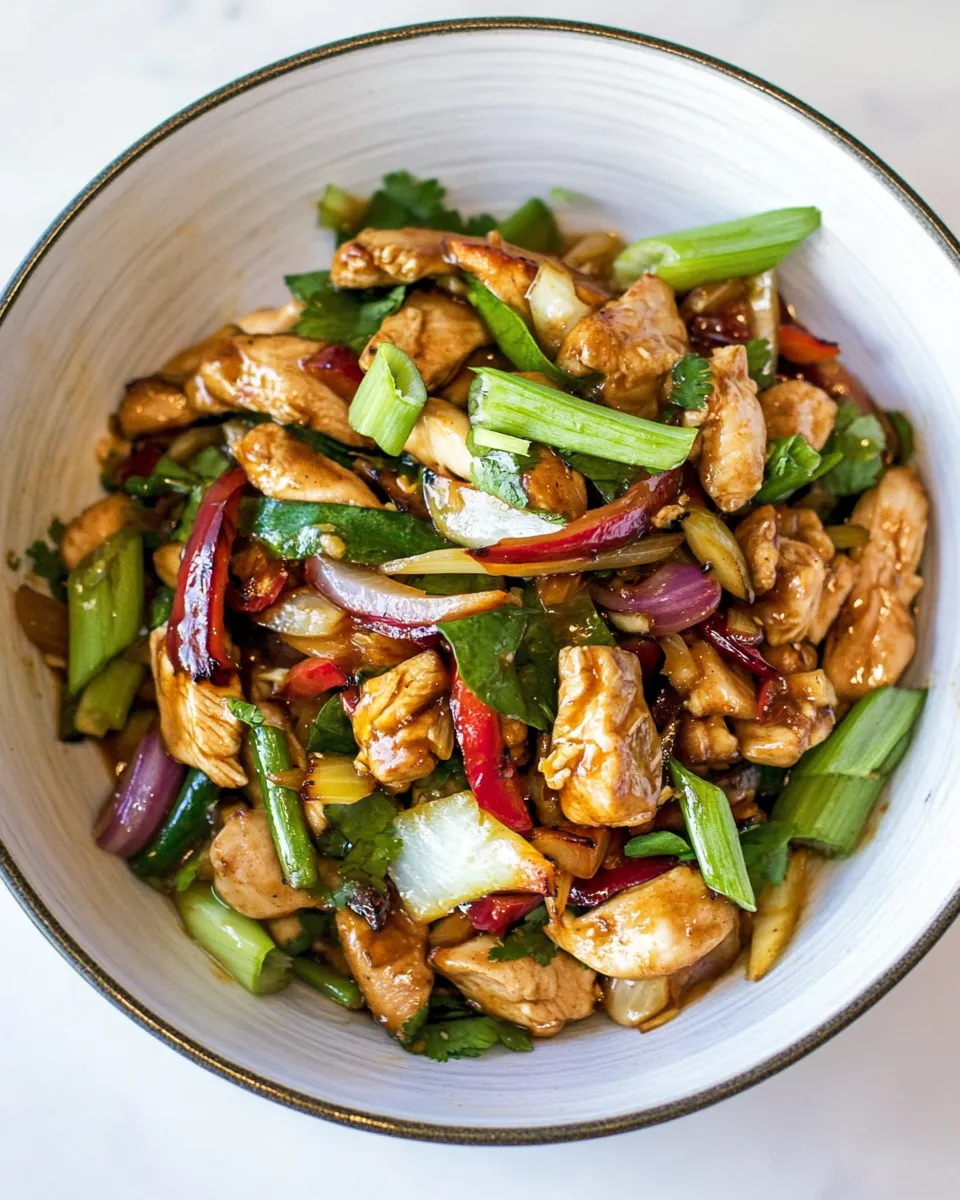
This version of garlic-ginger chicken is the kind of weeknight dinner I rely on when I want big flavor without spending hours in the kitchen. It’s bright from ginger and rice vinegar, savory from reduced-sodium soy sauce, and a little smoky thanks to toasted sesame oil. The stir-fry moves fast, but the sauce does the heavy lifting: you marinate, sear, wilt the greens, and finish with a glossy, slightly spicy sauce and crunchy peanuts.
I like to keep the mise en place simple: mince the garlic and ginger, slice the chicken thinly, and rough-chop the bok choy. The method uses one skillet and a small reserved portion of the marinade to finish the sauce, so cleanup is minimal. If you’re short on time, the 15-minute room-temperature marinade is forgiving; if you have more time, you can refrigerate up to 4 hours.
Below you’ll find a clear ingredients list with quick notes, the step-by-step method pulled from the recipe, and practical tips for swaps, tools, and common mistakes to avoid. Read through once, then cook confidently. You’re about to make a dinner that tastes restaurant-level but feels homey.
Ingredients at a Glance
- 11-inch knob fresh ginger (minced) — the backbone of the stir-fry’s bright, warm flavor; mince finely so it disperses.
- ⅓ cup reduced sodium soy sauce (or GF tamari) — salty umami base; reduced sodium keeps it balanced with the other flavors.
- 2 tablespoons rice vinegar — adds acidity to brighten the sauce.
- 6 cloves garlic (minced) — aromatic and savory; mince to match the ginger size for even flavor.
- 1 tablespoon granulated sugar (or sugar substitute like monk fruit) — balances the salt and acid and helps the sauce caramelize.
- 2 tablespoons toasted sesame oil — gives a toasty, nutty finish; a little goes a long way.
- 1 1/2 tablespoons cornstarch — thickens the sauce so it clings to the chicken and bok choy.
- 2 to 3 teaspoons chili paste, to taste — adds heat and depth; start with less if you prefer milder heat.
- 1 1/2 pounds thin sliced boneless chicken breast cutlets (sliced into thin strips) — cooks quickly when sliced thin; pat strips dry before adding to the skillet if wet.
- 1 tablespoon vegetable oil — divided into three 1-teaspoon portions for high-heat searing without smoking.
- 1 medium red onion (cut into 1/2-inch chunks) — adds sweetness and a little crunch when lightly charred.
- 15 ounces baby bok choy, roughly chopped (about 6 cups) — wilts quickly and keeps texture; stems soften while leaves wilt.
- 1/3 cup dry-roasted peanuts (crushed), for garnish — crunch and roasted nuttiness to finish the dish.
- ½ cup fresh Thai or traditional basil (torn) — bright, herbaceous finish; add just before serving.
- Coconut jasmine rice, or cauliflower rice, optional for serving — coconut jasmine rice is richer; cauliflower rice keeps it lighter.
Step-by-Step: Garlic-Ginger Chicken Stir-Fry
- In a medium bowl whisk together the 11-inch knob fresh ginger (minced), ⅓ cup reduced sodium soy sauce (or GF tamari), 2 tablespoons rice vinegar, 6 cloves garlic (minced), 1 tablespoon granulated sugar (or substitute), 2 tablespoons toasted sesame oil, 1 1/2 tablespoons cornstarch, and 2 to 3 teaspoons chili paste until smooth. Stir to combine.
- Remove and reserve 1/3 cup of the mixture into a small bowl (set aside for the sauce).
- Add the 1 1/2 pounds thin sliced boneless chicken breast cutlets (sliced into thin strips) to the remaining marinade in the first bowl. Toss to coat, then let sit at room temperature for at least 15 minutes or refrigerate up to 4 hours.
- Divide the 1 tablespoon vegetable oil into three 1-teaspoon portions.
- Heat a large, heavy skillet (cast-iron or stainless steel) over high heat until hot.
- Add 1 teaspoon vegetable oil, swirl to coat the pan. Using a slotted spoon, add half the chicken to the hot skillet (leave excess marinade in the bowl). Stir and scrape the bottom frequently; cook about 2 to 3 minutes per side until golden brown and cooked through. Transfer the cooked chicken to a plate and set aside. Cover briefly as needed to reduce splatter.
- Wipe the skillet dry with a paper towel if there are excessive stuck bits. (If only light fond has formed, continue; do not add additional ingredients not listed.)
- Add the second 1 teaspoon vegetable oil, heat until shimmering, then add the remaining chicken using a slotted spoon. Cook about 2 to 3 minutes per side until golden and cooked through. Transfer to the plate with the first batch and set aside.
- Wipe the skillet dry again if needed. Add the last 1 teaspoon vegetable oil and heat until hot. Add the 1 medium red onion (cut into 1/2-inch chunks) and sauté, stirring occasionally, until the edges are lightly charred but the onion still has some crunch, about 2 minutes.
- Return all the cooked chicken to the skillet with the onions. Pour in the reserved 1/3 cup marinade and bring to a simmer, stirring to dissolve and thicken the sauce, about 1 minute.
- Add the 15 ounces baby bok choy (roughly chopped, about 6 cups) and stir until wilted and tender, about 1 to 2 minutes.
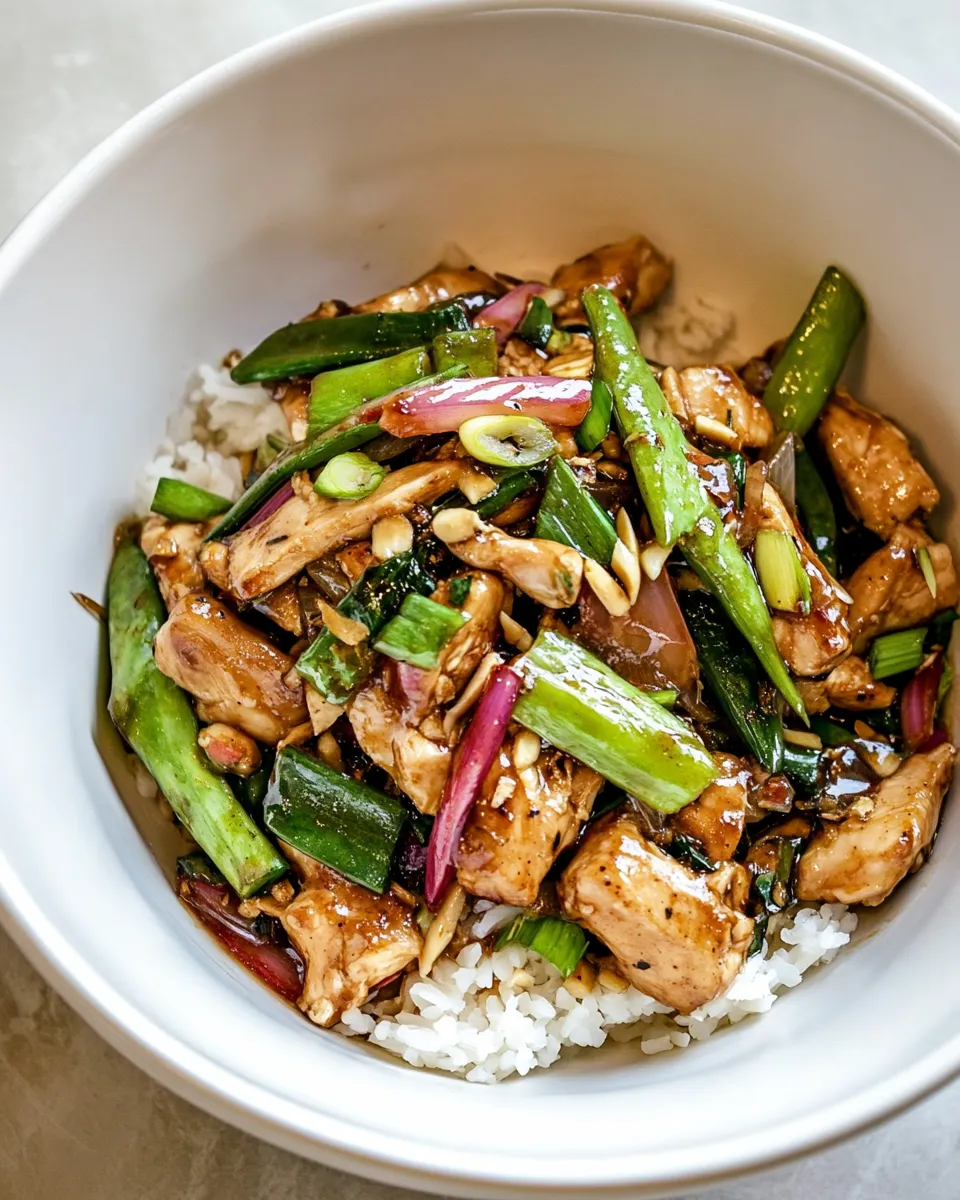
- Transfer the stir-fry to a serving platter. Sprinkle with 1/3 cup dry-roasted peanuts (crushed) and ½ cup fresh Thai or traditional basil (torn). Serve over coconut jasmine rice or cauliflower rice, if desired.
Why You’ll Keep Making It
This stir-fry is reliably quick and satisfying. The marinade doubles as a cooking sauce, which means fewer bowls and a deeper, integrated flavor. Thin-sliced chicken cooks in minutes and stays juicy thanks to the cornstarch in the sauce. Baby bok choy gives you both tender leaves and slightly crisp stems, so the dish feels balanced and not one-note.
It’s also flexible without losing identity. Swap heat levels with the chili paste. Use basil to inject a fresh, aromatic finish. It’s one of those meals that performs well for a weeknight dinner and scales up for a casual weekend gathering.
Vegan & Vegetarian Swaps
To keep the spirit of the dish but make it plant-based, replace the chicken with firm tofu or tempeh. Press extra-firm tofu to remove moisture, slice thinly, and pat dry so it sears. Marinate the tofu in the same mixture; you can increase the cornstarch slightly to help the sauce cling. Sear in the same three-stage approach so you get browning without crowding the pan.
For a heartier veggie option, thick-sliced king oyster mushrooms or seitan work well. Keep the bok choy and onion as written. Use GF tamari in place of soy sauce if you need gluten-free.
Equipment & Tools
A few pieces of equipment make this recipe easy and consistent:
- Large, heavy skillet (cast-iron or stainless steel) — holds heat and gives a good sear.
- Medium bowl — for mixing the marinade and marinating the chicken.
- Small bowl — to reserve 1/3 cup of the marinade for finishing the sauce.
- Slotted spoon — lets you transfer chicken while leaving most excess marinade behind.
- Paper towels — for wiping the skillet between batches to avoid burning the fond.
Don’t Do This
Don’t crowd the pan. It’s tempting to toss everything in at once, but that prevents proper browning. The recipe’s two-batch method for the chicken prevents steaming and gives you that golden crust.
Don’t dump all the marinade into the pan at once. You reserve 1/3 cup to finish the sauce; the rest is for marinating the chicken and should stay in the bowl. Adding excess raw marinade to the skillet will dilute the sear and can result in an unevenly cooked sauce.
Don’t skip wiping the skillet if excessive stuck bits build up. Burnt bits give a bitter taste. A quick wipe and re-oil keeps flavors clean and allows you to char the onion properly.
Warm & Cool Weather Spins
Warm weather: Serve the stir-fry on top of chilled coconut jasmine rice that’s been cooled and slightly fluffed, or spoon it over a bed of lightly dressed chilled cucumber ribbons for a refreshing contrast. Use more basil and a squeeze of lime to brighten the dish and make it taste lighter.
Cool weather: Add a splash more toasted sesame oil or a small handful of roasted cashews for richness. Serve over steaming coconut jasmine rice and consider stirring in a spoonful of hoisin for a sweeter, more comforting finish—though keep portions small to avoid overpowering the ginger and garlic.
Cook’s Notes
Timing
Marinate at room temperature for at least 15 minutes to let the flavors penetrate thin slices. If you refrigerate, bring the chicken back to near-room temperature before searing so it cooks evenly. Total active cook time is about 10–12 minutes on the stovetop once the pan is hot.
Heat Control
High heat is important for a quick sear. But if your pan smokes excessively, lower the heat slightly. The recipe divides the oil into three tiny portions to control heat and prevent smoking while still allowing you to build up browning in stages.
Thickness of Chicken
Slice chicken thin and uniform. Uneven pieces will overcook or undercook. If you only have thicker breasts, butterfly and thin-slice them to match the recipe’s intent.
Storing, Freezing & Reheating
Store leftover stir-fry in an airtight container in the refrigerator for up to 3 days. Keep any rice separate if you want the best texture.
Freezing is possible but not ideal for the bok choy’s texture; the chicken and sauce freeze fine for up to 2 months in a tightly sealed container. Thaw overnight in the refrigerator before reheating.
Reheat gently on the stovetop over medium-low heat, adding a splash of water or reserved coconut jasmine rice cooking liquid if the sauce has thickened. Microwave reheating works too—use short bursts and stir between intervals to warm evenly.
Frequently Asked Questions
Q: Can I use chicken thighs instead of breast?
A: Yes. Boneless skinless thighs work well and are more forgiving if slightly overcooked. Keep them thinly sliced and follow the same searing times as a guide; thighs may take a minute or two longer depending on thickness.
Q: Is the reserved marinade safe to use raw?
A: The recipe specifically instructs to reserve 1/3 cup of the mixture before adding chicken to the main marinade. That reserved portion never touches raw chicken and is used to finish the sauce. Do not add the remaining raw marinade from the bowl directly to the pan unless you bring it to a boil for safety; the method avoids that by reserving beforehand.
Q: My sauce didn’t thicken—what went wrong?
A: Make sure you whisked the cornstarch fully into the marinade so there are no lumps. When you simmer the reserved 1/3 cup marinade with the pan juices, stir constantly; cornstarch thickens quickly once simmering.
Let’s Eat
Bring the platter to the table while the basil is still fragrant and the peanuts are crunchy. Scoop the stir-fry over warm coconut jasmine rice for a lush, comforting meal, or choose cauliflower rice to keep it light. Either way, expect a pop of garlic and ginger, a silky sauce, and enough crunch from peanuts and onions to keep every bite interesting.
Enjoy the contrast of textures and the quick turnaround. This is the kind of dinner I make when I want something that feels intentional but comes together fast. Set a timer, follow the steps, and savor the simplicity.
Garlic-Ginger Chicken Stir-Fry
Ingredients
Ingredients
- 11- inchknob fresh ginger minced
- 1/3 cupreduced sodium soy sauce or GF tamari
- 2 tablespoonsrice vinegar
- 6 clovesgarlic minced
- 1 tablespoongranulated sugar or sugar substitute like monk fruit
- 2 tablespoonstoasted sesame oil
- 1 1/2 tablespoonscornstarch
- 2 to 3 teaspoonschili paste to taste
- 1 1/2 poundsthin sliced boneless chicken breast cutlets sliced into thin strips
- 1 tablespoonvegetable oil
- 1 mediumred onion cut into 1/2-inch chunks
- 15 ouncesbaby bok choy roughly chopped (about 6 cups)
- 1/3 cupdry-roasted peanuts crushed, for garnish
- 1/2 cupfresh Thai or traditional basil torn
- Coconut jasmine rice orcauliflower rice, optional for serving
Instructions
Instructions
- In a medium bowl whisk together the 11-inch knob fresh ginger (minced), ⅓ cup reduced sodium soy sauce (or GF tamari), 2 tablespoons rice vinegar, 6 cloves garlic (minced), 1 tablespoon granulated sugar (or substitute), 2 tablespoons toasted sesame oil, 1 1/2 tablespoons cornstarch, and 2 to 3 teaspoons chili paste until smooth. Stir to combine.
- Remove and reserve 1/3 cup of the mixture into a small bowl (set aside for the sauce).
- Add the 1 1/2 pounds thin sliced boneless chicken breast cutlets (sliced into thin strips) to the remaining marinade in the first bowl. Toss to coat, then let sit at room temperature for at least 15 minutes or refrigerate up to 4 hours.
- Divide the 1 tablespoon vegetable oil into three 1-teaspoon portions.
- Heat a large, heavy skillet (cast-iron or stainless steel) over high heat until hot.
- Add 1 teaspoon vegetable oil, swirl to coat the pan. Using a slotted spoon, add half the chicken to the hot skillet (leave excess marinade in the bowl). Stir and scrape the bottom frequently; cook about 2 to 3 minutes per side until golden brown and cooked through. Transfer the cooked chicken to a plate and set aside. Cover briefly as needed to reduce splatter.
- Wipe the skillet dry with a paper towel if there are excessive stuck bits. (If only light fond has formed, continue; do not add additional ingredients not listed.)
- Add the second 1 teaspoon vegetable oil, heat until shimmering, then add the remaining chicken using a slotted spoon. Cook about 2 to 3 minutes per side until golden and cooked through. Transfer to the plate with the first batch and set aside.
- Wipe the skillet dry again if needed. Add the last 1 teaspoon vegetable oil and heat until hot. Add the 1 medium red onion (cut into 1/2-inch chunks) and sauté, stirring occasionally, until the edges are lightly charred but the onion still has some crunch, about 2 minutes.
- Return all the cooked chicken to the skillet with the onions. Pour in the reserved 1/3 cup marinade and bring to a simmer, stirring to dissolve and thicken the sauce, about 1 minute.
- Add the 15 ounces baby bok choy (roughly chopped, about 6 cups) and stir until wilted and tender, about 1 to 2 minutes.
- Transfer the stir-fry to a serving platter. Sprinkle with 1/3 cup dry-roasted peanuts (crushed) and ½ cup fresh Thai or traditional basil (torn). Serve over coconut jasmine rice or cauliflower rice, if desired.
Equipment
- Medium Bowl
- Small Bowl
- large heavy skillet (cast-iron or stainless steel)
- Slotted spoon
- paper towel