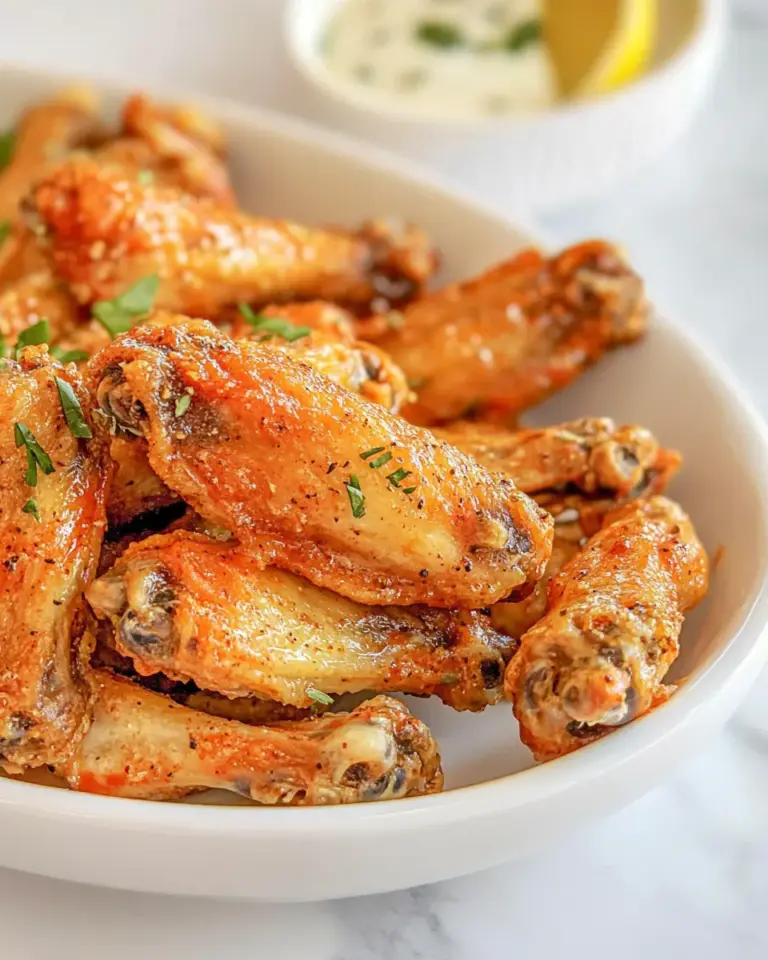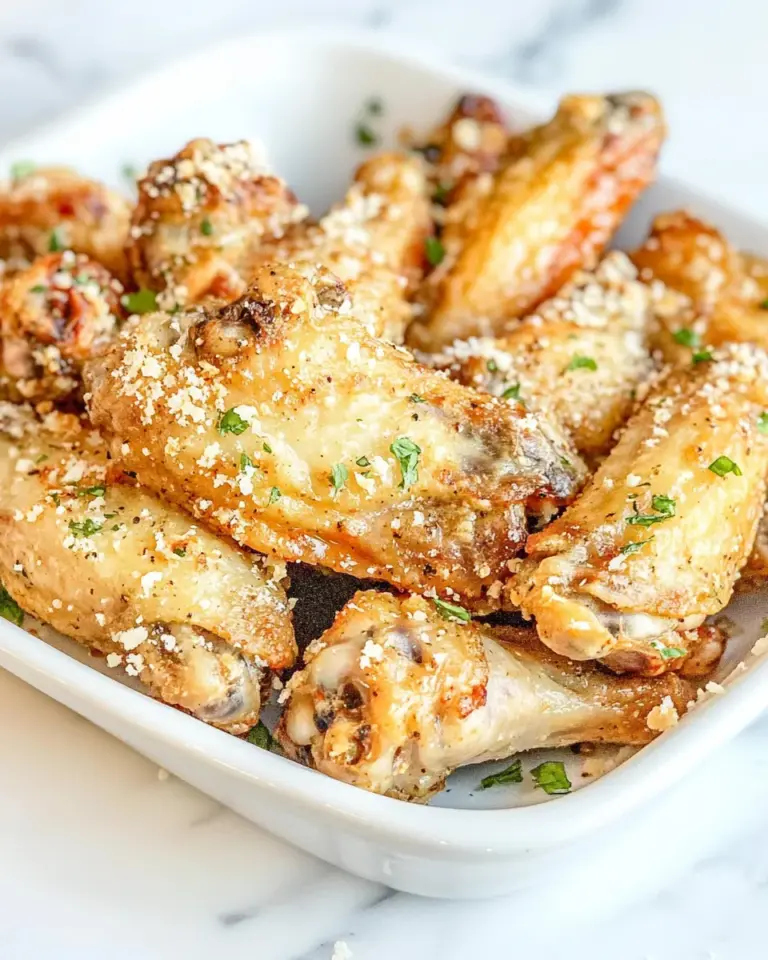
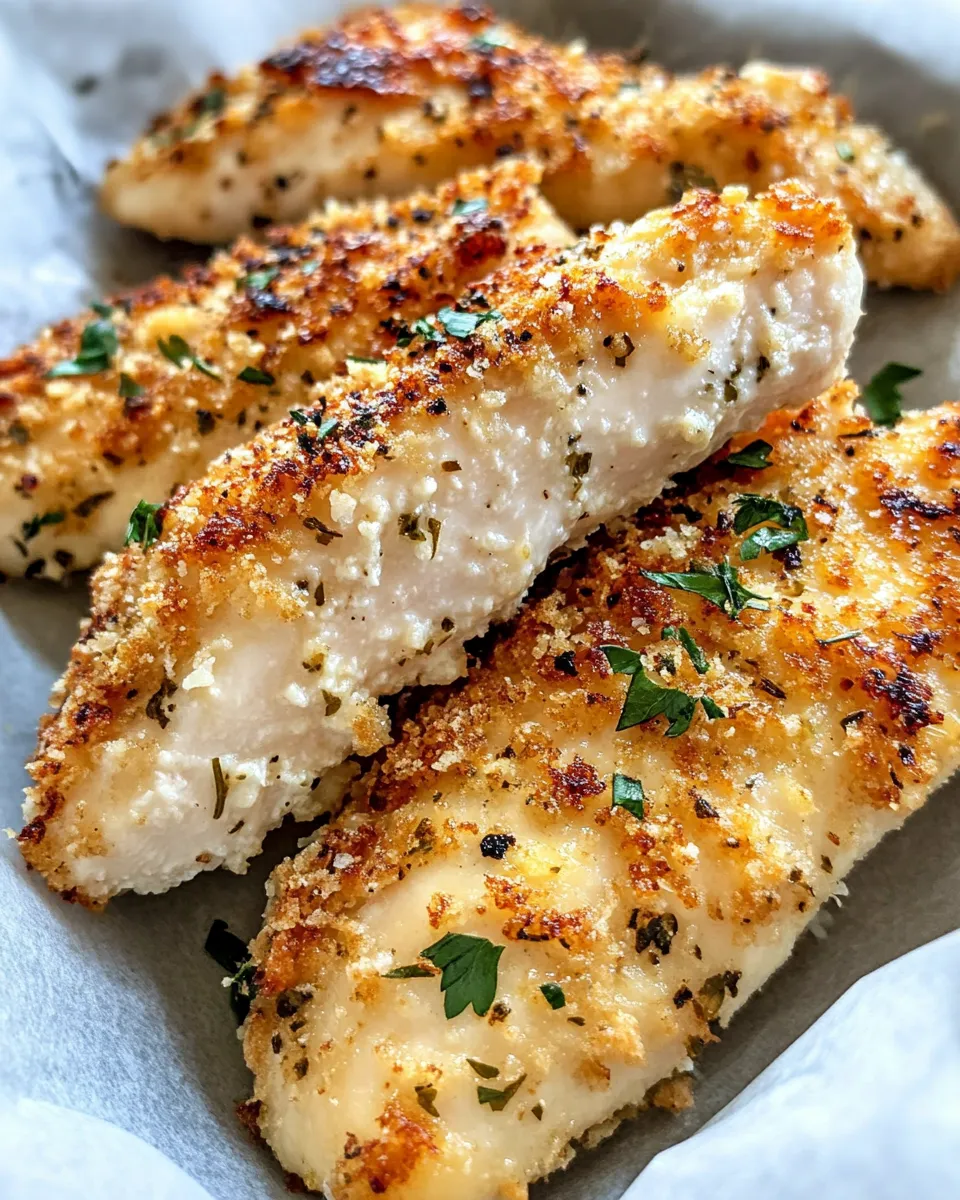
These tenders are my go-to when I want something that feels indulgent but doesn’t require a full evening in the kitchen. Crunchy, garlicky, and finished with a buttery Parmesan coating, they hit that sweet spot between comfort food and something you can serve to guests without fuss.
The method is straightforward: a tangy buttermilk-pickle marinade, a seasoned flour dredge, hot oil, and a quick toss in a butter-Parmesan mixture while the chicken is still hot. The steps are forgiving, so you can focus on timing and a good thermometer rather than perfect technique.
Below you’ll find clear ingredient notes, an exact step-by-step using the recipe’s measurements, troubleshooting tips, and practical storage and reheating advice. If you’re short on time, there are small, honest shortcuts that still keep the texture and flavor you want.
Ingredient Notes
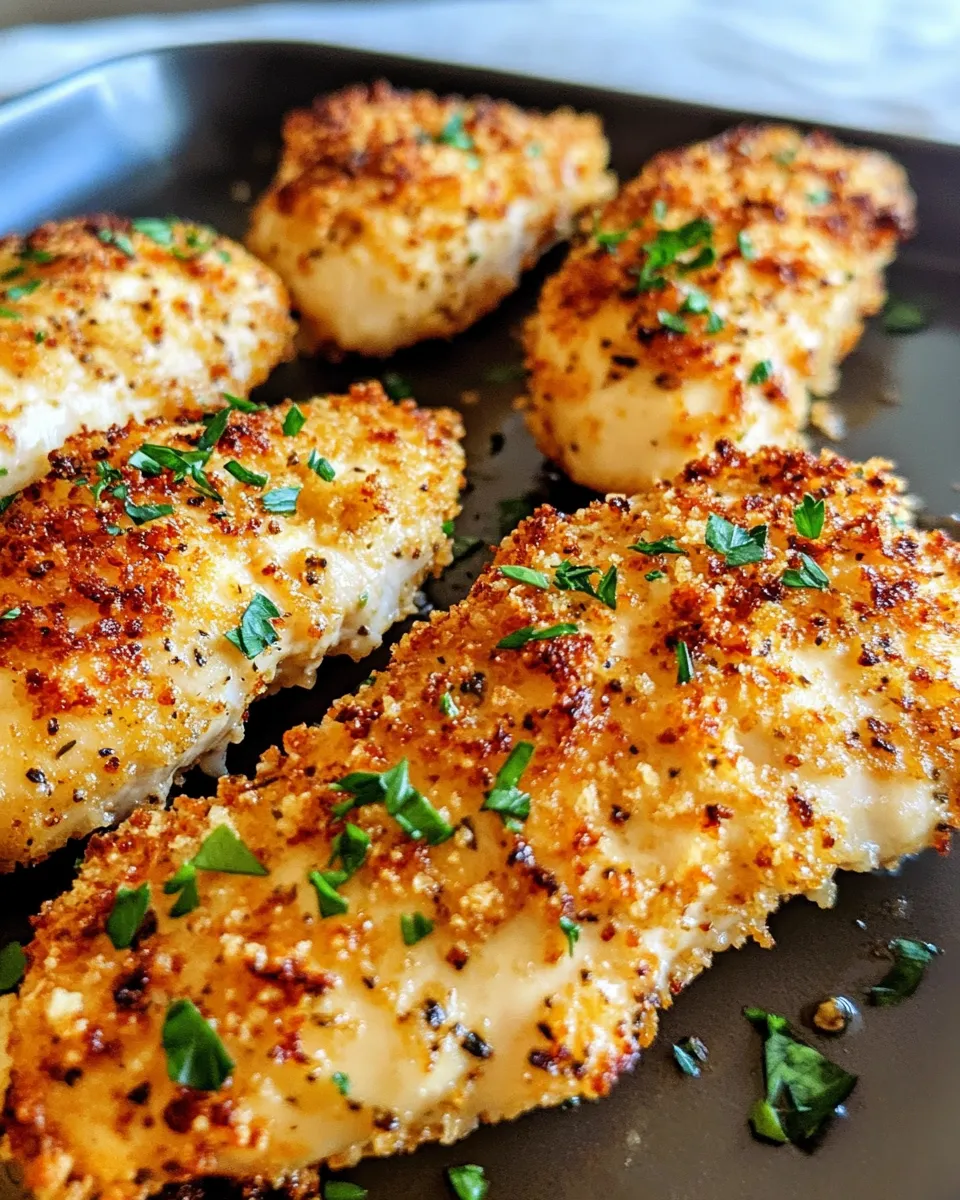
Before you start, here’s why each group of ingredients matters so you can prioritize what to buy or keep on hand.
- Buttermilk + dill pickle juice — The buttermilk tenderizes; the pickle juice adds acidity and a subtle savory tang that lifts the chicken’s flavor.
- All-purpose flour + seasonings — The flour mix creates the crunchy exterior. The combination of Lawry’s, garlic, onion, and cayenne gives layered savory notes and a touch of heat.
- Vegetable oil — Neutral oil that tolerates high heat for frying. The recipe calls for enough oil to reach about 2 inches deep for even frying.
- Butter, Parmesan, parsley — Melted butter carries the Parmesan onto the tenders and adds shine. Parsley brightens the finish so the bites don’t feel heavy.
Ingredients
- 2 lbs chicken tenders — The main protein; uniform pieces cook evenly.
- vegetable oil — For frying; use enough to reach about 2 inches in the skillet.
- 1 cup buttermilk — Tenderizes and adds moisture in the marinade.
- ¼ cup dill pickle juice — Adds acidity and savory tang to the marinade.
- 1 tsp garlic powder — In the marinade; provides base garlic flavor.
- 1 tsp salt — Seasoning in the marinade to penetrate the meat.
- ½ tsp Black Pepper — Ground black pepper in the marinade for mild spice.
- ½ tsp Paprika — Adds color and a mild smoky note in the marinade.
- 4 cups all-purpose flour — Main dry coating for crispness.
- 1 tsp garlic powder — In the flour mix for extra garlic flavor on the crust.
- 1 tsp onion powder — Adds savory depth to the breading.
- 1 tsp Cayenne pepper — Provides heat in the flour mixture; adjust next time if you want more or less.
- 1 tsp garlic and herb seasoning — A herb-forward seasoning to layer on top of the garlic notes.
- 1 tbsp Lawry’s seasoning — Adds a seasoned salt profile and umami.
- ½ tsp ground black pepper — Additional pepper in the flour for balanced heat.
- 1 stick butter, melted — For the finishing sauce that helps the Parmesan stick.
- ⅓ cup grated Parmesan Cheese — The main finishing flavor; coats the tenders when mixed with butter.
- 2 tbsp chopped fresh parsley — Brightens the finished tenders and adds color.
- 1 tsp garlic powder — Final garlic boost in the butter-Parmesan mix.
Step-by-Step: Garlic Parmesan Chicken Tenders
- In a large bowl whisk together 1 cup buttermilk, 1/4 cup dill pickle juice, 1 tsp garlic powder, 1 tsp salt, 1/2 tsp ground black pepper, and 1/2 tsp paprika. Add the 2 lbs chicken tenders and toss to coat. Let the chicken sit in the bowl and marinate while you prepare the flour mixture.
- In a separate large bowl combine 4 cups all-purpose flour, 1 tbsp Lawry’s seasoning, 1 tsp garlic powder, 1 tsp onion powder, 1 tsp cayenne pepper, 1 tsp garlic and herb seasoning, and 1/2 tsp ground black pepper. Mix thoroughly.
- Remove the chicken tenders from the marinade one at a time and dredge each in the flour mixture, pressing the flour onto both sides so each piece is well coated. Shake off any excess flour and place the coated tenders on a wire rack set over a baking sheet. Let them rest on the rack while you heat the oil.
- Pour vegetable oil into a large skillet to a depth of about 2 inches. Heat the oil over medium until it is hot and shimmering.
- Working in batches to avoid overcrowding, carefully add a batch of coated tenders to the hot oil. Fry, turning once, until golden brown on both sides and the internal temperature reaches 165°F (use a meat thermometer), about 6–8 minutes total per batch. If they brown too quickly, reduce the heat.
- Transfer cooked tenders to a paper towel–lined plate or wire rack to drain. Continue frying remaining batches.
- In a bowl combine 1 stick melted butter, 1/3 cup grated Parmesan cheese, 2 tbsp chopped fresh parsley, and 1 tsp garlic powder. Stir until evenly mixed.
- While the tenders are still hot, either dredge them in the butter-Parmesan mixture or use a pastry brush to coat each tender evenly.
- Serve the chicken tenders immediately.
Why This Recipe Belongs in Your Rotation
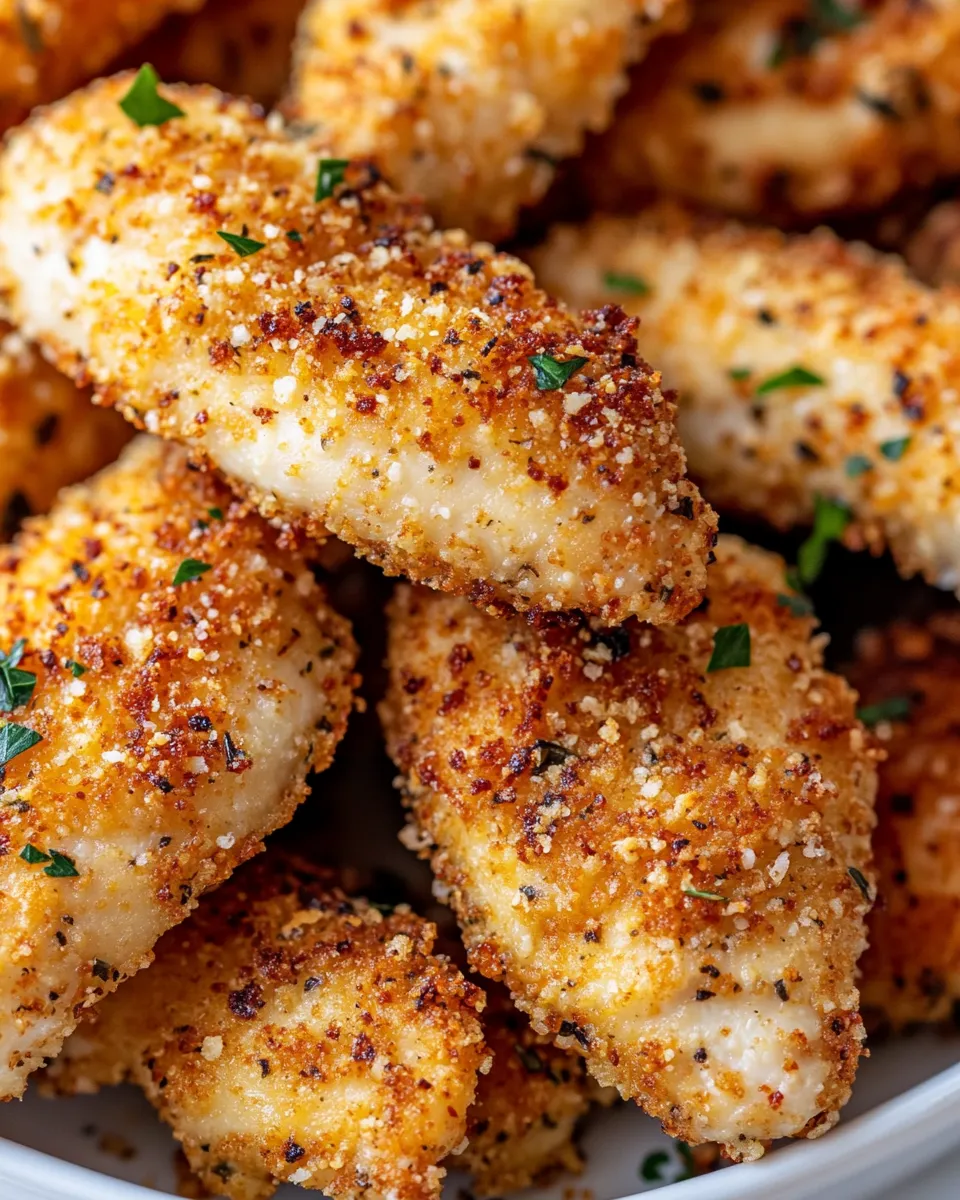
These tenders are fast enough for a weeknight and polished enough for company. The combo of a tangy buttermilk-pickle marinade and a heavily seasoned flour coating delivers flavor throughout, not just on the surface.
They also scale easily: double the batch, fry in more batches, and keep finished tenders warm in the oven on a wire rack. The finishing butter-Parmesan step turns simple fried chicken into something that feels thoughtfully composed.
No-Store Runs Needed
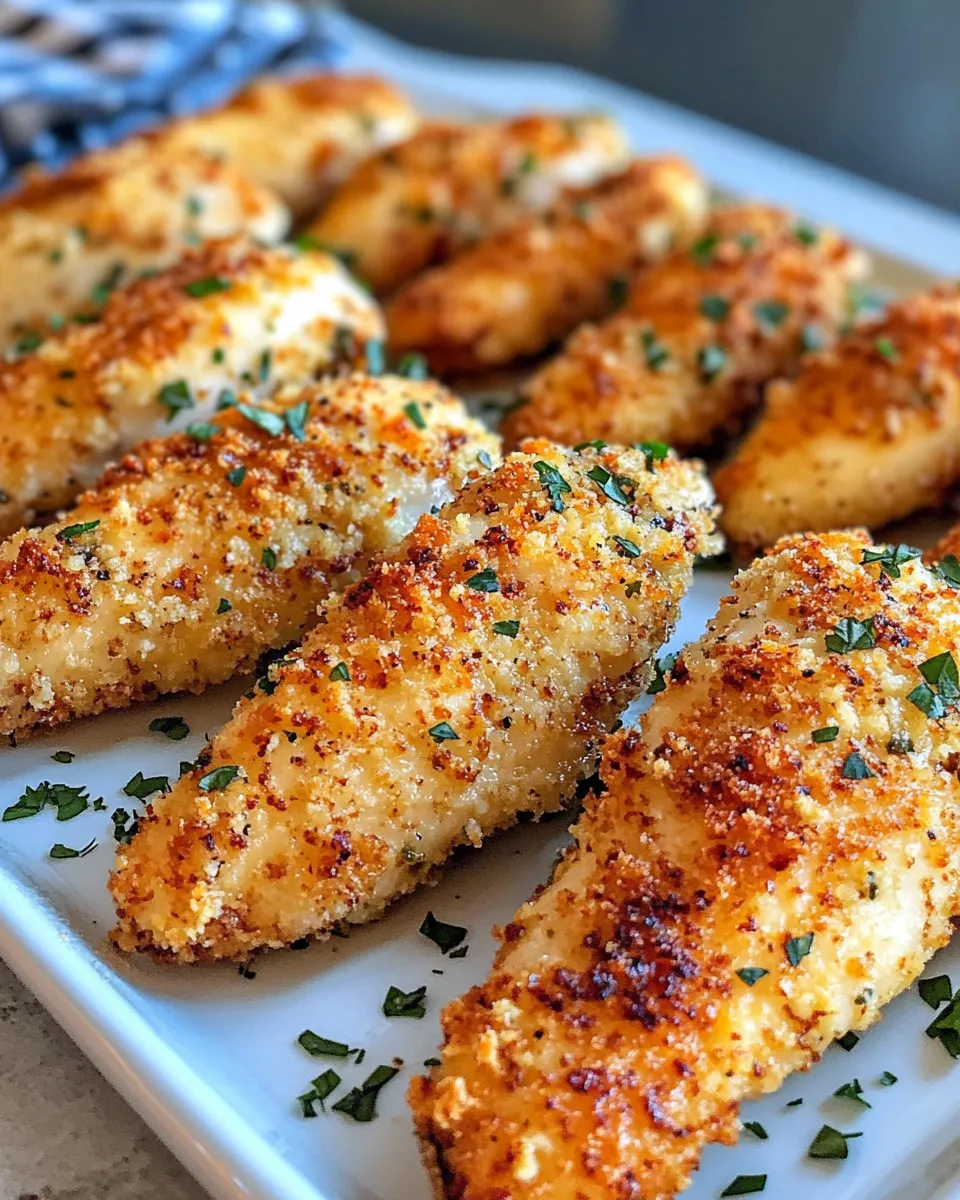
If you already have the items listed above, you won’t need to run to the store. The recipe relies on pantry staples—flour, spices, oil—and a few fridge items—buttermilk, butter, Parmesan, and parsley. You can prepare everything with basic kitchen tools and the ingredients on the list.
If you find you’re missing parsley or Parmesan, the tenders will still be tasty; the butter and garlic powder alone will give a rich finish. The pickle juice is small in volume but big on impact—skip it only if you must and expect a milder tang.
Before You Start: Equipment
- Large mixing bowls — One for the marinade, one for the flour mix.
- Wire rack and baking sheet — For the dredged tenders to rest and shed excess flour.
- Large skillet or heavy-bottomed pan — For frying with about 2 inches of oil.
- Meat thermometer — To verify internal temperature reaches 165°F for safe, juicy chicken.
- Paper towels or another wire rack — For draining the fried tenders.
- Pastry brush (optional) — For evenly coating tenders with the butter-Parmesan mix.
Learn from These Mistakes
Overcrowding the pan. This is the top offender. If you add too many tenders at once the oil temperature will crash and the coating will absorb oil, becoming soggy. Fry in batches and let the oil recover between batches.
Not pressing the flour. If you skip pressing the flour onto the tenders, the crust will flake off while frying. Press and shake off only the excess.
Oil too hot or too cool. If it browns instantly before the interior cooks, lower the heat. If the coating soaks up oil, the temperature is too low. Aim for steady shimmering oil—adjust the heat and test with one tender first.
Skipping the thermometer. Relying on color alone can under- or overcook the chicken. Check for 165°F in the thickest part of a tender for reliable doneness without dryness.
In-Season Flavor Ideas
Work with what the recipe already offers: increase the chopped fresh parsley in the butter-Parmesan mix for a fresher pop, or add a touch more grated Parmesan for punchier umami. If you like heat, a dusting of extra cayenne in the flour mix will carry through after frying.
For a brighter finish without new ingredients, reserve a small spoonful of the dill pickle juice to sprinkle lightly over the finished tenders right before serving. The acid will wake up the flavors.
Behind the Recipe
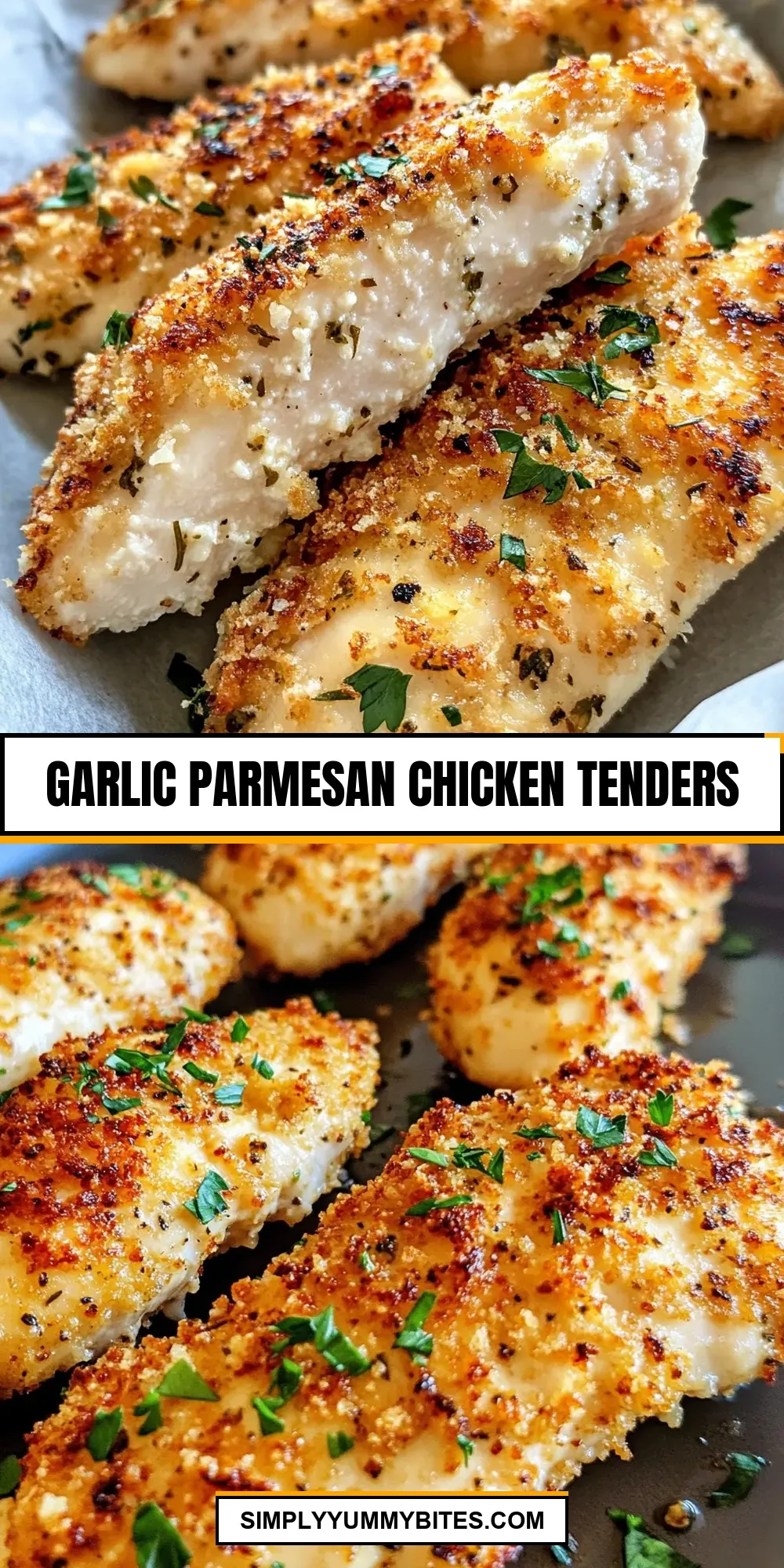
This recipe balances texture and seasoning. The buttermilk brings moisture and gentle acidity that helps proteins unwind slightly so the meat cooks tender. A splash of pickle juice pushes that acidity toward a distinctive savory brightness that contrasts the deep-fried crust.
The seasoned flour is intentionally bold: Lawry’s seasoning gives seasoned-salt depth, garlic and onion powders add savory backbone, and cayenne brings an approachable heat. The finishing butter-Parmesan mixture provides a slick surface for the Parmesan to cling to, so each bite is savory and glossy rather than dry.
Storage & Reheat Guide
Refrigerate cooled tenders in an airtight container for up to 3 days. To re-crisp, place them on a wire rack set over a baking sheet in a preheated oven at moderate heat (around 350°F) until warmed through and the crust is crisp again, about 8–12 minutes depending on size. Avoid microwaving if you want to keep the crust crunchy—microwaves soften the coating.
If you want to freeze, flash-freeze the fried, cooled tenders on a baking sheet until firm, then transfer to a freezer bag. Reheat from frozen in a moderate oven until heated through and crisp, adding a few extra minutes as needed.
Ask & Learn
Common question: Can I make this less spicy? Yes. Reduce or omit the cayenne in the flour mix and keep the rest the same. The coating will stay flavorful but milder.
Common question: Can I bake instead of fry? You can, but expect a different texture—the crust won’t brown and blister the same way. If you bake, spray the coated tenders with a little oil and bake on a wire rack so air circulates around each piece.
Have other questions—about timing, scaling, or swapping seasonings? Ask and I’ll answer with practical tweaks that keep the original intent of the recipe intact.
Ready, Set, Cook
Follow the steps above, keep an eye on oil temperature, and finish the tenders with the butter-Parmesan while they’re still hot. You’ll end up with golden, garlicky, Parmesan-kissed tenders that are crispy, tender, and reliably delicious every time.
Garlic Parmesan Chicken Tenders
Ingredients
Ingredients
- 2 lbs.chicken tenders
- vegetable oil
- 1 cupbuttermilk
- 1/4 cupdill pickle juice
- 1 tsp.garlic powder
- 1 tsp.salt
- 1/2 tsp.Black Pepper
- 1/2 tsp.Paprika
- 4 cupsall-purpose flour
- 1 tsp.garlic powder
- 1 tsp.onion powder
- 1 tsp.Cayenne pepper
- 1 tsp.garlic and herb seasoning
- 1 tbsp.Lawry's seasoning
- 1/2 tsp.ground black pepper
- 1 stickbuttermelted
- 1/3 cupgrated Parmesan Cheese
- 2 tbsp.chopped fresh parsley
- 1 tsp.garlic powder
Instructions
Instructions
- In a large bowl whisk together 1 cup buttermilk, 1/4 cup dill pickle juice, 1 tsp garlic powder, 1 tsp salt, 1/2 tsp ground black pepper, and 1/2 tsp paprika. Add the 2 lbs chicken tenders and toss to coat. Let the chicken sit in the bowl and marinate while you prepare the flour mixture.
- In a separate large bowl combine 4 cups all-purpose flour, 1 tbsp Lawry's seasoning, 1 tsp garlic powder, 1 tsp onion powder, 1 tsp cayenne pepper, 1 tsp garlic and herb seasoning, and 1/2 tsp ground black pepper. Mix thoroughly.
- Remove the chicken tenders from the marinade one at a time and dredge each in the flour mixture, pressing the flour onto both sides so each piece is well coated. Shake off any excess flour and place the coated tenders on a wire rack set over a baking sheet. Let them rest on the rack while you heat the oil.
- Pour vegetable oil into a large skillet to a depth of about 2 inches. Heat the oil over medium until it is hot and shimmering.
- Working in batches to avoid overcrowding, carefully add a batch of coated tenders to the hot oil. Fry, turning once, until golden brown on both sides and the internal temperature reaches 165°F (use a meat thermometer), about 6–8 minutes total per batch. If they brown too quickly, reduce the heat.
- Transfer cooked tenders to a paper towel–lined plate or wire rack to drain. Continue frying remaining batches.
- In a bowl combine 1 stick melted butter, 1/3 cup grated Parmesan cheese, 2 tbsp chopped fresh parsley, and 1 tsp garlic powder. Stir until evenly mixed.
- While the tenders are still hot, either dredge them in the butter-Parmesan mixture or use a pastry brush to coat each tender evenly.
- Serve the chicken tenders immediately.
Equipment
- Cast-Iron Skillet
Notes
Dips that go well with chicken strips:
Ranch, Honey Mustard, Buffalo Sauce, Barbeque Sauce, and Tzatziki.