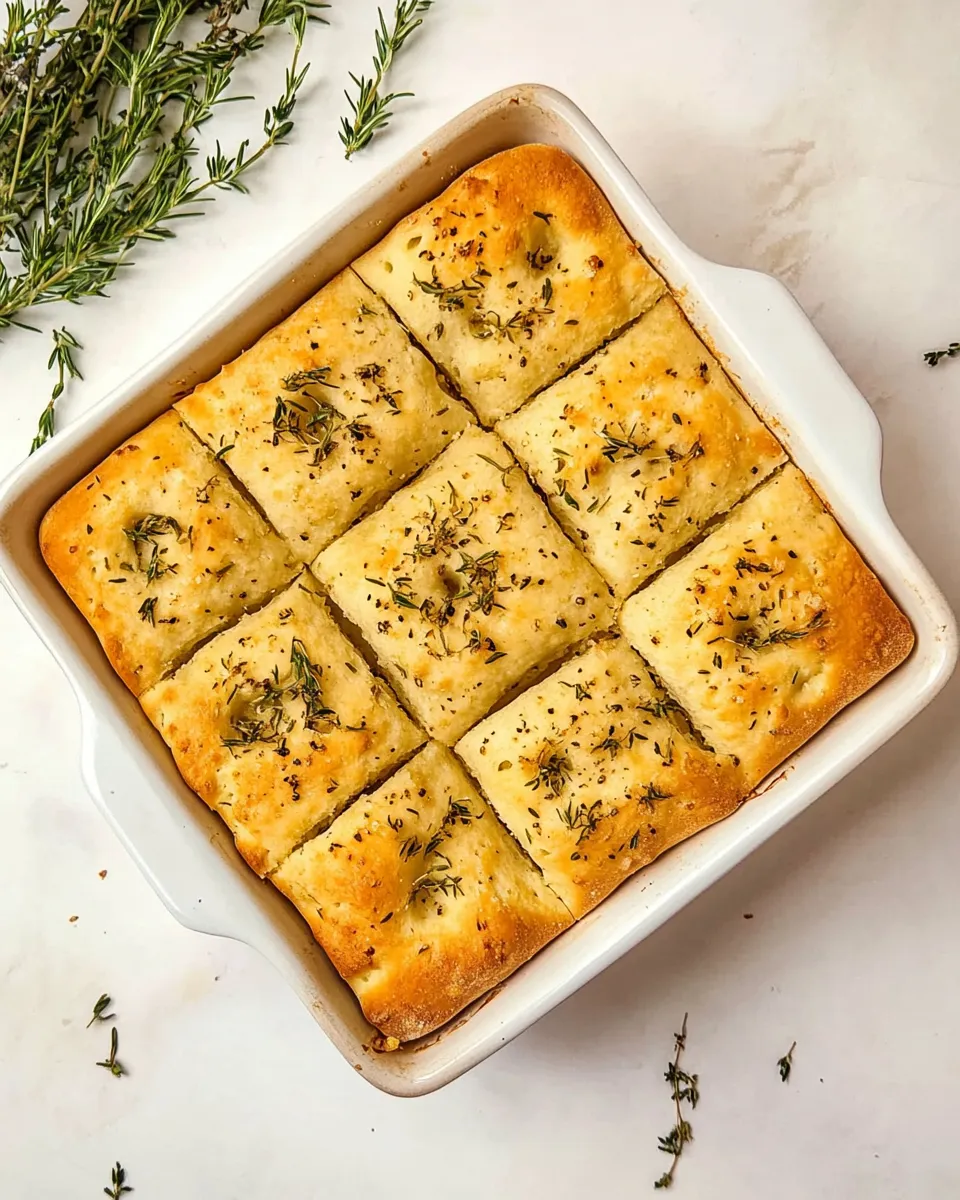
This gluten-free focaccia is my go-to when I want bread with a crisp top, tender crumb, and lots of olive oil flavor—without gluten. It’s straightforward, forgiving, and makes a great side for weeknight dinners or a base for quick sandwiches. I test it until the texture felt right for people who miss the chew of traditional focaccia but need gluten-free options.
The method uses instant yeast and a gluten-free all-purpose blend that contains xanthan gum, so the dough behaves more like a batter than a springy wheat dough. That sticky batter is what gives the focaccia a soft interior and a dimpled, golden surface after baking. Timing is simple: a single rise, a short rest, and about 25 minutes in a hot oven.
Below you’ll find the exact ingredient list and the step-by-step directions I follow every time. I include tips for tools, sensible substitutions that preserve texture, and answers to common questions. If you’re new to gluten-free baking, take a breath and read through once—then get your hands a little oily and press those dimples in.
What We’re Using
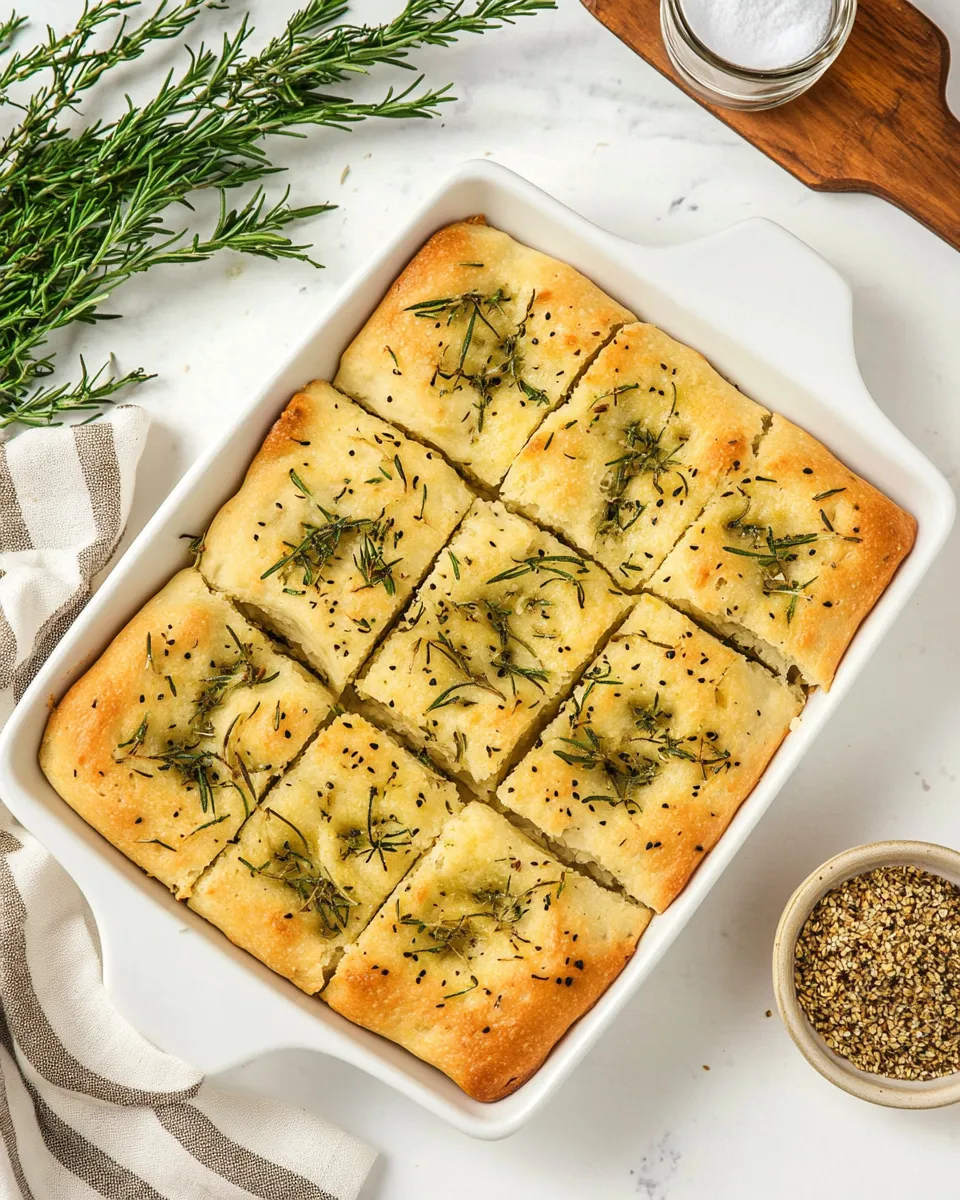
Ingredients
- 1 1/2 cups warm water (110°F to 115°F) — temperature activates the instant yeast; too hot will kill it, too cool slows it down.
- 1 tablespoon sugar — feeds the yeast and helps the rise.
- 2 1/4 teaspoons instant yeast — the leavening agent; instant yeast mixes directly without proofing first.
- 2 1/2 cups gluten-free all-purpose flour blend (with xanthan gum) — forms the structure; make sure the blend contains xanthan gum as stated.
- 1 1/2 teaspoons baking powder — adds lift alongside yeast for a lighter crumb.
- 1 teaspoon salt, divided — balances flavor; some goes in the dough, some is sprinkled on top.
- 3 tablespoons olive oil, divided — keeps the crumb tender and gives that classic focaccia richness; a little more on top crisps the edge.
- 2 teaspoons chopped fresh rosemary — aromatic topping; fresh is preferable for brightness.
- 2 cloves garlic, optional, minced — boosts savory notes if you like a garlic-forward crust.
How to Prepare Gluten-Free Focaccia
- In a small bowl, combine 1 1/2 cups warm water (110°F–115°F), 1 tablespoon sugar, and 2 1/4 teaspoons instant yeast. Stir lightly to combine and set aside briefly.
- In a large bowl, whisk together 2 1/2 cups gluten-free all-purpose flour blend (with xanthan gum), 1 1/2 teaspoons baking powder, and 1/2 teaspoon of the salt. Add the yeast mixture and 2 tablespoons of the olive oil. Stir until a sticky batter forms.
- Cover the bowl with a clean towel and let the batter rise in a warm, draft-free spot for about 30–60 minutes, or until it has roughly doubled in size.
- Lightly oil an 8-inch or 9-inch square baking pan using some of the remaining olive oil. Transfer the risen batter to the pan. Using an oiled spatula or oiled fingertips, gently spread the batter into an even layer and press oiled fingertips into the surface to create dimples across the dough.
- Drizzle the remaining reserved olive oil over the dough. Sprinkle with 2 teaspoons chopped fresh rosemary, the remaining 1/2 teaspoon salt, and 2 cloves minced garlic if using. Let the dough rest for 15 minutes while you preheat the oven.
- Preheat the oven to 400°F. When preheated, place the pan in the oven and bake the focaccia for about 25 minutes, or until the top is lightly golden.
- Remove the focaccia from the oven and let it cool for a few minutes (about 5 minutes). Slice into squares and serve warm.
What Makes This Recipe Special
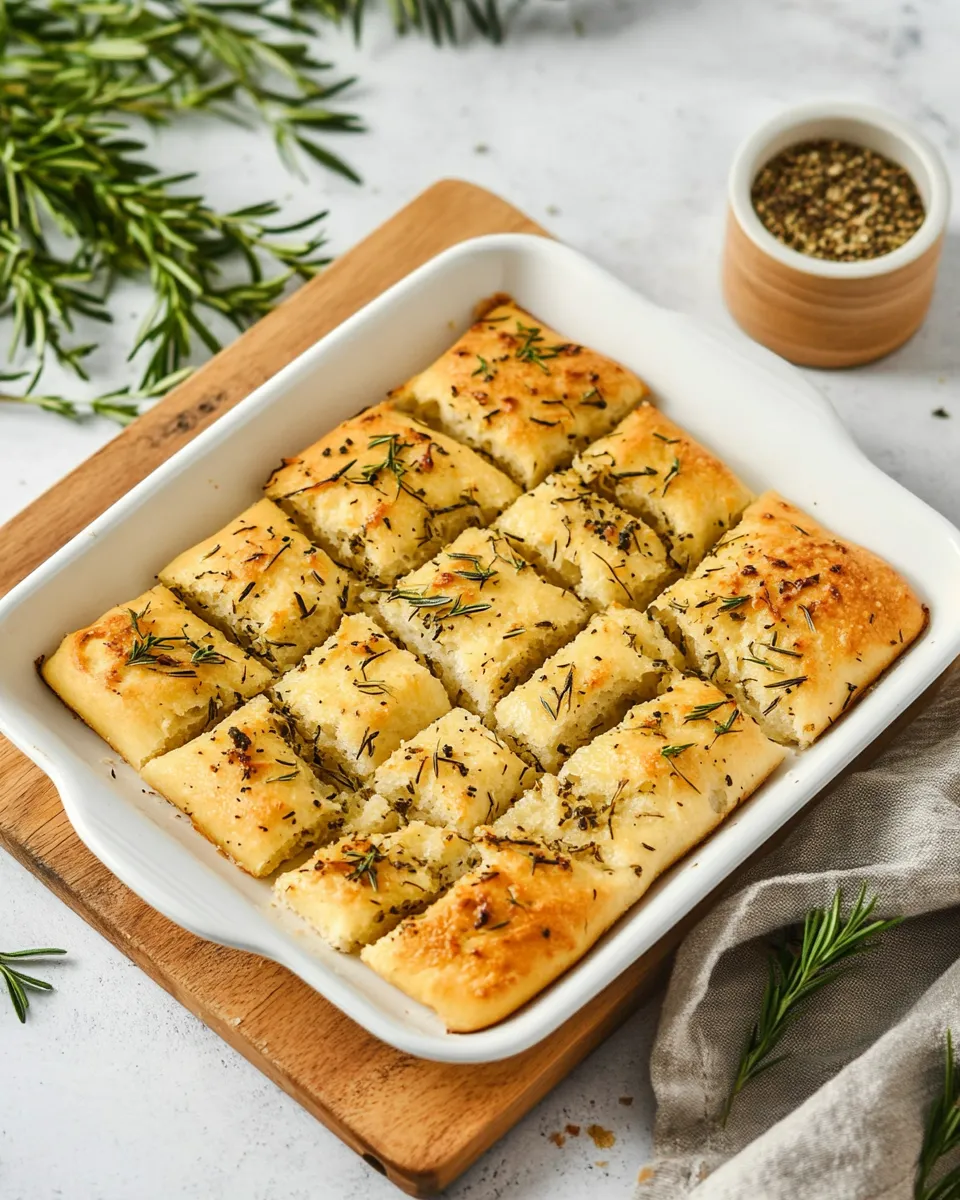
This focaccia is purposeful rather than fussy. The combination of instant yeast and baking powder produces lift quickly, which is useful for a single-rise gluten-free bread. The batter consistency—sticky and spreadable—gives you big, oil-filled dimples that caramelize in the oven and create a crisp, savory surface. Using an all-purpose blend with xanthan gum avoids the gummy, crumbly pitfalls common in gluten-free baking.
The flavor balance is simple: olive oil for richness, rosemary for herbal brightness, and a touch of garlic if you want more punch. Because the recipe is compact and uses a small pan, it bakes through evenly and comes out with a pleasing proportion of crust to interior. It’s a great match for soups, salads, and sandwiches.
Texture-Safe Substitutions
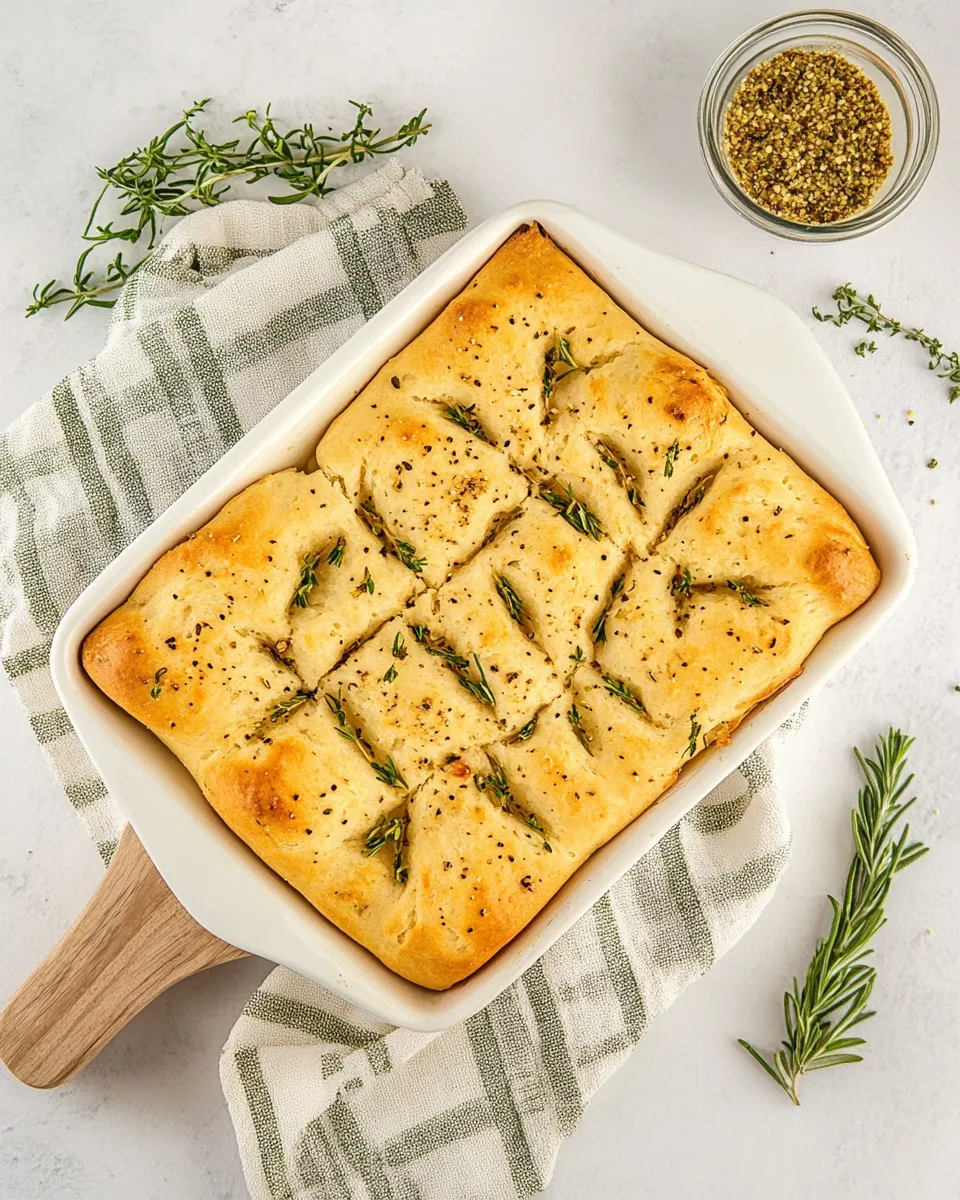
Substitutions can change how gluten-free batters behave. If you need to make swaps, choose options that preserve moisture and binding:
Flour
If your blend doesn’t contain xanthan gum, use a blend specifically formulated for yeast breads or add the gum according to the blend’s instructions. Do not replace the measured flour volume with a single grain (like 2 1/2 cups of rice flour); that will alter texture and structure.
Fat
You can use a neutral oil instead of olive oil, but you’ll lose some flavor. For a nuttier note, light-tasting avocado oil works well. Avoid solid fats (butter, coconut oil) without adjusting the method—melted butter will work but changes the flavor profile.
Herbs & Aromatics
Thyme, sage, or oregano can replace rosemary. If you use dried herbs, reduce the quantity by half since dried are more concentrated.
Toolbox for This Recipe
Keep the list short and practical. You don’t need specialized equipment to succeed.
- Large mixing bowl — for whisking dry ingredients and mixing the batter.
- Small bowl — to dissolve sugar and yeast in warm water.
- 8-inch or 9-inch square baking pan — the size affects thickness and bake time; use what’s listed for best results.
- Oiled spatula or oiled fingertips — for spreading sticky batter and creating dimples.
- Instant-read thermometer — optional, but helpful to confirm water temperature (110°F–115°F).
Steer Clear of These
A few common missteps throw off gluten-free focaccia. Watch for them.
- Hot water — water hotter than 115°F can kill the yeast. If you’re unsure, let boiling water cool for a minute before measuring.
- Using a flour blend without xanthan gum — the batter will lack structure and may crumble after baking.
- Overworking the batter — this recipe uses a sticky batter; vigorous mixing won’t help and can deflate the rise.
- Skipping the oil on your fingers or spatula — the batter sticks; oiling prevents tearing and helps make the classic dimples.
Seasonal Serving Ideas
Focaccia is versatile. Here are quick pairings that match the seasons and make the bread shine.
- Spring: Serve warm with a lemony pea soup or topped with shaved asparagus and fresh ricotta.
- Summer: Use as a base for a caprese sandwich—tomato, basil, fresh mozzarella, and balsamic drizzle.
- Fall: Pair with roasted squash and a thyme-sage butter, or serve alongside a bowl of creamy mushroom soup.
- Winter: Toast slices and serve with warm olive tapenade or alongside a hearty stew.
Chef’s Rationale
I built this recipe to be predictable and forgiving. Gluten-free batters can be temperamental; combining instant yeast with a mechanical leavener (baking powder) shortens proofing time and gives consistent rise. Using a compact pan concentrates heat and helps the surface caramelize without drying the interior. Dividing the salt—some in the dough and some on top—keeps the interior balanced while highlighting flavors on the crust.
The oil is essential. It does more than flavor: it keeps the crumb tender and helps create those signature olive pools that crisp and brown. The 15-minute rest after dimpling lets the batter settle into the pan so dimples hold their shape during the initial oven spring.
Store, Freeze & Reheat
Store cooled focaccia wrapped tightly at room temperature for up to 2 days. For longer storage, slice and freeze the squares in an airtight container or zip-top bag for up to 1 month.
To reheat from room temperature: place slices in a preheated 350°F oven for 5–8 minutes to refresh the crust. From frozen: thaw at room temperature for 30–45 minutes and then reheat in a 350°F oven for 8–12 minutes. For a crisper top, finish under the broiler for 30–60 seconds—watch carefully to avoid burning.
Popular Questions
Q: Can I use active dry yeast instead of instant yeast?
A: Yes. If substituting active dry yeast, proof it in the warm water with the sugar for 5–10 minutes until foamy before adding to the dry ingredients. The measurements remain the same for a standard packet.
Q: My focaccia came out dense—what happened?
A: Common causes: water too cool (yeast slow), old yeast (not active), flour blend without xanthan gum, or underproofing. Ensure water is 110°F–115°F, yeast is fresh, and allow 30–60 minutes for the batter to roughly double.
Q: Can I make this in a round pan or sheet pan?
A: You can, but bake time and thickness will change. A larger sheet pan yields a thinner focaccia and may bake faster; start checking at 18–20 minutes. The 8– or 9-inch square pan in the recipe gives the intended thickness and texture.
Q: Is the garlic required?
A: No. It’s optional. Minced garlic on top gives a stronger savory note; omit if you want a milder, herb-forward focaccia.
Time to Try It
Gather your ingredients. Warm the water, measure your flour, oil your pan, and give the batter the little rest it needs. This focaccia rewards a gentle hand more than a strict schedule—press those dimples, drizzle the oil, and let the oven work. Slice it warm, enjoy with a bowl of soup, or use it to elevate a sandwich. Then, if you like, come back and tell me how you topped it.
Gluten-Free Focaccia Recipe
Ingredients
Ingredients
- 1 1/2 cupswarm water110°F to 115°F
- 1 tablespoonsugar
- 2 1/4 teaspoonsinstant yeast
- 2 1/2 cupsgluten-free all-purpose flour blendwith xanthan gum
- 1 1/2 teaspoonsbaking powder
- 1 teaspoonsaltdivided
- 3 tablespoonsolive oildivided
- 2 teaspoonschopped fresh rosemary
- 2 cloves garlicoptional minced
Instructions
Instructions
- In a small bowl, combine 1 1/2 cups warm water (110°F–115°F), 1 tablespoon sugar, and 2 1/4 teaspoons instant yeast. Stir lightly to combine and set aside briefly.
- In a large bowl, whisk together 2 1/2 cups gluten-free all-purpose flour blend (with xanthan gum), 1 1/2 teaspoons baking powder, and 1/2 teaspoon of the salt. Add the yeast mixture and 2 tablespoons of the olive oil. Stir until a sticky batter forms.
- Cover the bowl with a clean towel and let the batter rise in a warm, draft-free spot for about 30–60 minutes, or until it has roughly doubled in size.
- Lightly oil an 8-inch or 9-inch square baking pan using some of the remaining olive oil. Transfer the risen batter to the pan. Using an oiled spatula or oiled fingertips, gently spread the batter into an even layer and press oiled fingertips into the surface to create dimples across the dough.
- Drizzle the remaining reserved olive oil over the dough. Sprinkle with 2 teaspoons chopped fresh rosemary, the remaining 1/2 teaspoon salt, and 2 cloves minced garlic if using. Let the dough rest for 15 minutes while you preheat the oven.
- Preheat the oven to 400°F. When preheated, place the pan in the oven and bake the focaccia for about 25 minutes, or until the top is lightly golden.
- Remove the focaccia from the oven and let it cool for a few minutes (about 5 minutes). Slice into squares and serve warm.
Equipment
- Mixing Bowl
- Small Bowl
- 8-inch or 9-inch square baking pan
- Spatula
- Oven
- clean towel