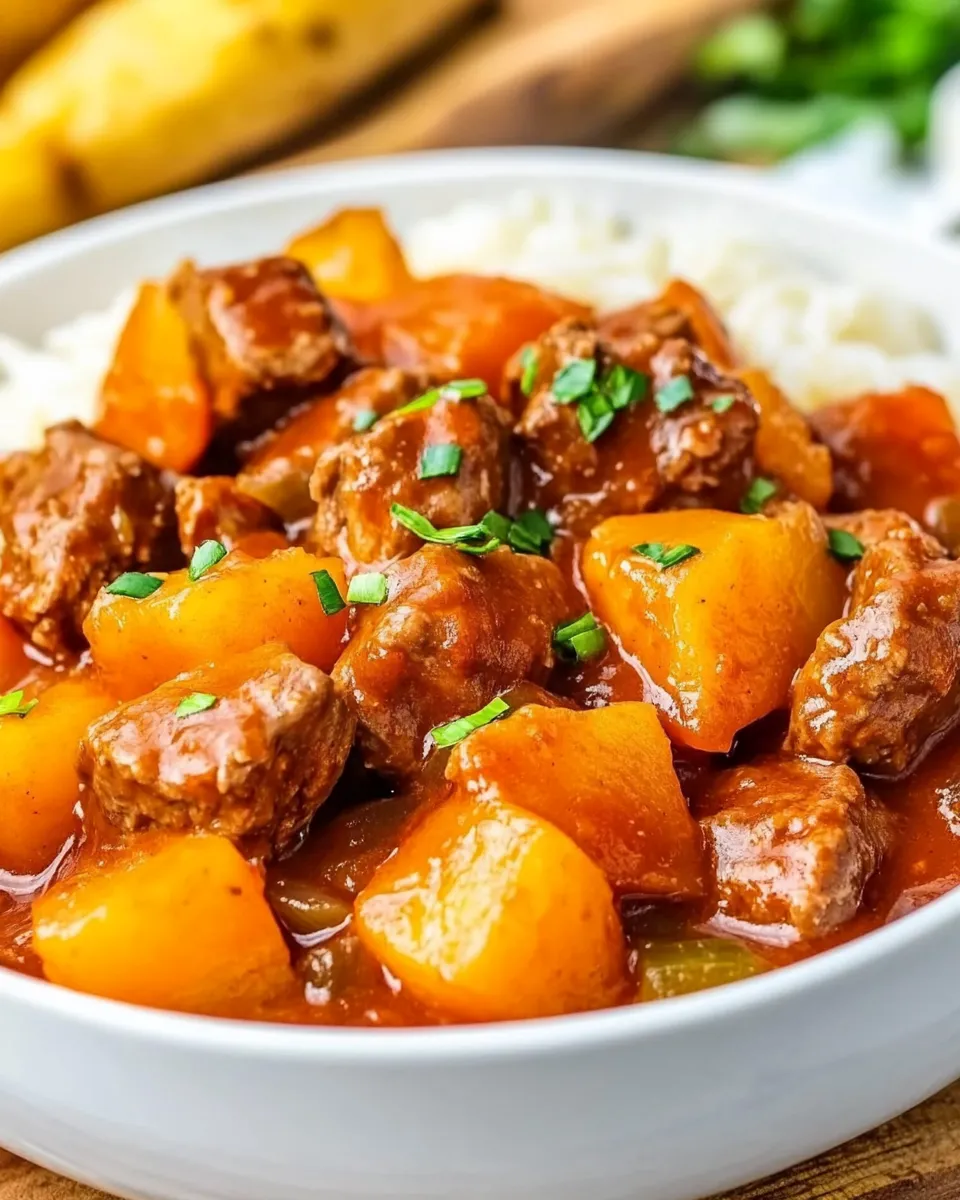
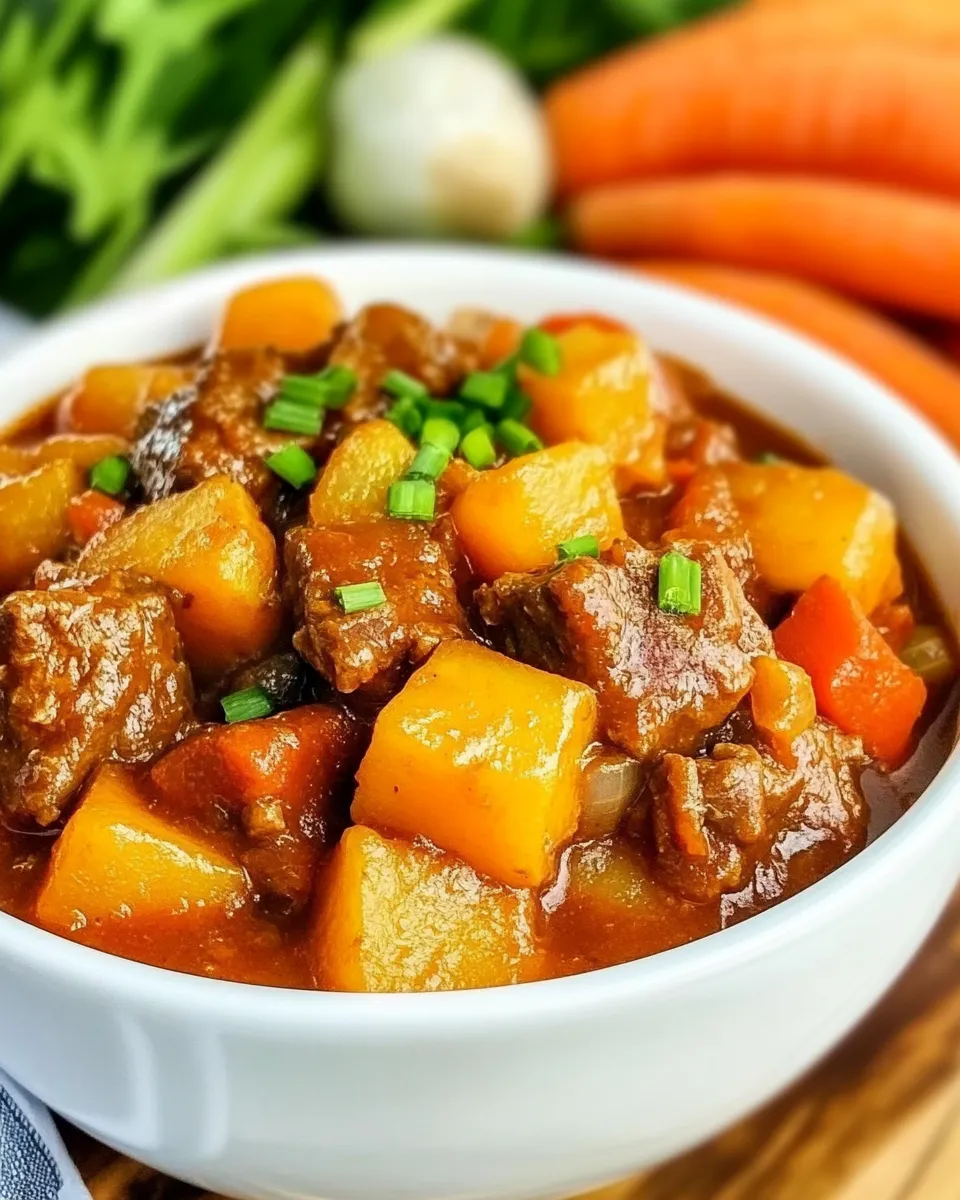
This Hawaiian Beef Stew is a hands-on, slow-simmered meal that balances rich beef flavor with a touch of sweet-tang from tomatoes and the deep umami of soy and Worcestershire. It’s the kind of pot you can start in the afternoon, carry on with your day, and come back to a kitchen that smells like comfort. It’s robust without being fussy, and it rewards patience more than technique.
I like it for weeknights when I want something substantial and for weekends when I want something forgiving. The method is straightforward: brown the beef for flavor, sweat the aromatics, then let the pot do the rest. Small steps up front—coating the beef, deglazing properly—make a big difference in the final bowl.
Below you’ll find the exact ingredient list and step-by-step instructions I use. I also share why each step matters, how to prevent common problems, and sensible swaps that keep the spirit of the dish intact. No fluff, just practical tips to get it right every time.
What We’re Using
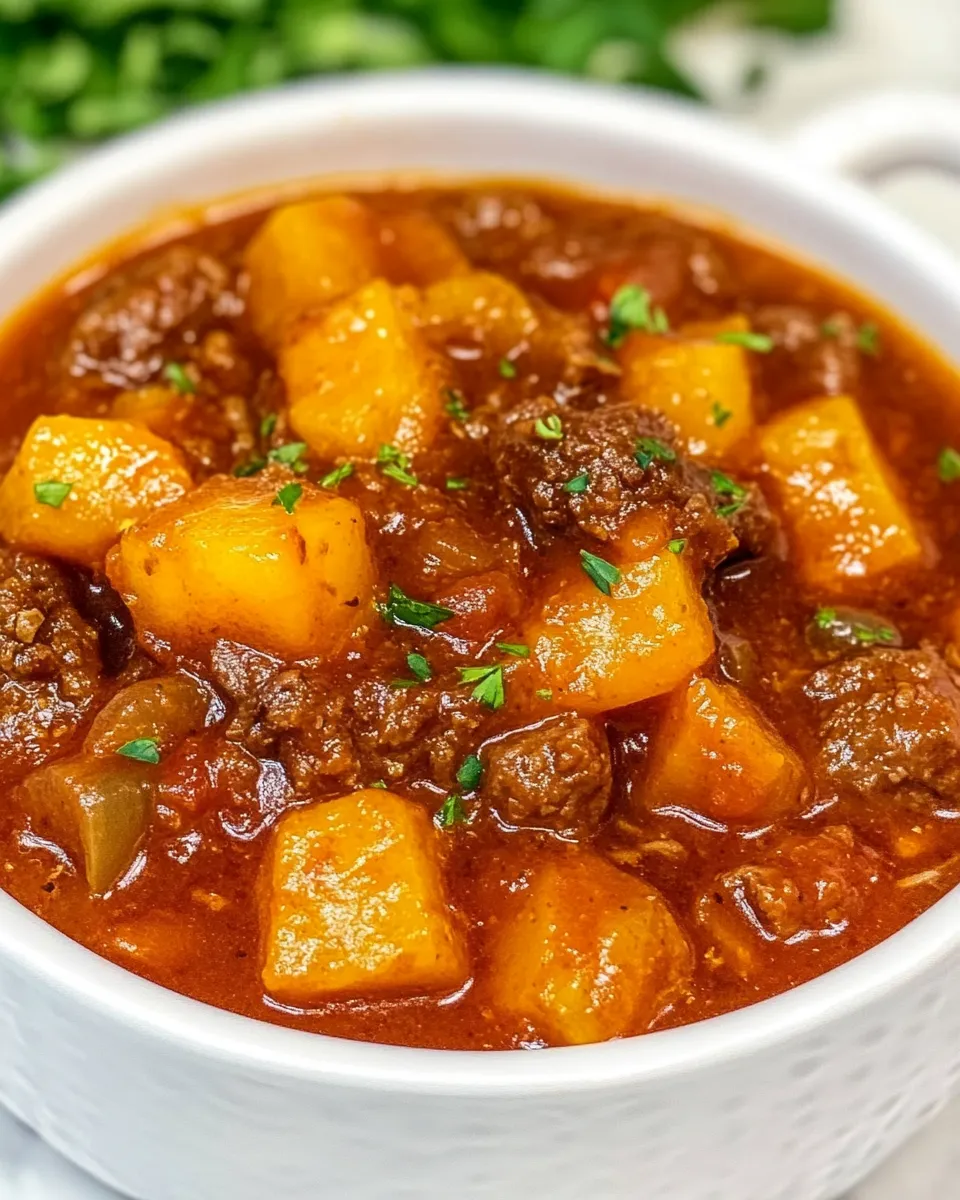
Ingredients
- 2 pounds beef chuck — trimmed, patted dry with paper towels and diced into 1 inch pieces; the primary source of flavor and collagen for a silky stew texture.
- 1 teaspoon salt — seasons the beef and the pot; start here and adjust at the end.
- ¼ teaspoon ground black pepper — a basic background spice to balance the savory notes.
- ½ cup all purpose flour — coats the beef to encourage browning and helps slightly thicken the stew as it cooks.
- 2 tablespoons olive oil — for browning the meat and cooking the vegetables; choose a neutral-tasting oil if you prefer.
- 1 medium yellow onion — diced; adds sweetness and aromatic depth when softened.
- 2 stalks celery — diced; contributes savory aromatics and texture.
- 1 medium carrot — peeled and diced; brings sweetness and body to the braising liquid.
- 2 cups beef broth — the braising liquid base; carries beef flavor and deglazed fond into the stew.
- 3 medium potatoes — peeled and diced into 1 inch cubes; they bulk the stew and soak up the sauce.
- 2 tablespoons tomato paste — concentrates tomato flavor and adds savory acidity.
- 1 15-ounce can diced tomatoes — do not drain; provides juice, acidity, and texture.
- 2 tablespoons soy sauce — preferably Hawaiian shoyu sauce; brings salty, umami depth to the stew.
- 2 tablespoons Worcestershire sauce — adds a complex, savory tang that complements the beef.
- 1 bay leaf — infuses subtle herbal background; remove before serving.
- 2 tablespoons cornstarch mixed with 2 tablespoons of water — the slurry used at the end to thicken the stew quickly and gently.
How to Prepare (Hawaiian Beef Stew)
- In a large bowl, toss the diced beef with 1 teaspoon salt and 1/4 teaspoon ground black pepper. Add 1/2 cup all-purpose flour and toss again to coat the beef evenly; shake off any excess flour.
- Heat 2 tablespoons olive oil in a Dutch oven over medium-high heat until shimmering. Working in batches so you do not overcrowd the pan, add some of the floured beef and brown on all sides (about 2–4 minutes per batch) until a crispy outer layer forms. Transfer browned beef to a plate and repeat with remaining beef.
- Reduce heat to medium. Add 1 medium diced yellow onion, 2 stalks diced celery, and 1 medium peeled and diced carrot to the Dutch oven. Cook, stirring occasionally, until the onion is tender, about 3 minutes.
- Pour in 2 cups beef broth and use a wooden spoon to scrape any browned bits from the bottom of the pot (deglaze).
- Return the browned beef to the pot. Add 3 medium peeled and diced potatoes (1-inch cubes), 2 tablespoons tomato paste, the entire 15-ounce can candiced (diced) tomatoes with their juices (do not drain), 2 tablespoons soy sauce, 2 tablespoons Worcestershire sauce, and 1 bay leaf. Stir to combine so the liquids from the broth and tomatoes come close to covering the solids; press ingredients down gently if needed so they are mostly submerged.
- Bring the mixture to a boil, then reduce heat to low (a gentle simmer). Cover the Dutch oven and simmer for 1½ to 2 hours, stirring occasionally, until the beef is very tender and nearly falling apart.
- Remove and discard the bay leaf.
- Stir the cornstarch slurry (2 tablespoons cornstarch mixed with 2 tablespoons water) so it is smooth, then gradually stir it into the hot stew. Simmer for 1 minute, until the stew thickens.
- Taste and adjust seasoning as desired with additional salt or soy sauce (use only ingredients listed). Serve the stew hot.
Why It Works Every Time
Three simple scientific ideas keep this stew reliable: browning, deglazing, and slow, moist heat. Browning the beef creates Maillard flavors—those toasted, savory notes you taste in every great stew. Deglazing with beef broth pulls those flavor-packed browned bits from the pot into the liquid. Finally, long, gentle simmering breaks down connective tissue in the chuck until the meat becomes tender and contributes gelatin to the sauce, which improves mouthfeel.
The flour coating performs double duty: it promotes a better crust while browning and contributes a little body as the stew simmers. The tomato paste and canned tomatoes add acidity to balance the fat, while soy and Worcestershire sauces layer umami so the stew never tastes flat even after long cooking.
Substitutions by Category
Keep changes conservative so the stew maintains its character. Use the categories below rather than inventing unfamiliar swaps.
- Beef: Use another well-marbled braising cut if you must—anything labeled for stewing or braising will behave similarly.
- Liquids: If you’re short on beef broth, increase the amount of canned tomatoes’ juice slightly and reduce simmer time; the stew will be tomato-forward but still work.
- Seasonings: The recipe already uses both soy sauce and Worcestershire. If you want a different balance, reduce one and increase the other in small steps to taste.
- Thickener: This recipe uses a cornstarch slurry. If you prefer, you can rely on the flour-coated beef and long simmer to thicken naturally (just skip the slurry).
Setup & Equipment
Plan for one heavy-bottomed pot: a 5–7 quart Dutch oven is ideal. Its thick walls give even heat for browning and maintain a gentle simmer. Other equipment I reach for: a sturdy wooden spoon for deglazing, a chef’s knife and cutting board for prepping, a mixing bowl for coating the beef, and a plate to hold browned meat between batches.
Workstation tip: prep all vegetables and measure sauces before you start browning. Browning goes fast; having ingredients at the ready prevents burned garlic or overcooked aromatics.
Problems & Prevention
Common issues are avoidable with a few straightforward steps.
Tough beef
If the meat stays tough, it likely needed more time at a low simmer. Increase the simmer by 20–30 minutes and test a few pieces. The goal is meat that flakes with gentle pressure, not firm resistance.
Watery stew
If it’s too thin after the total cooking time, either simmer uncovered to reduce liquid or add the cornstarch slurry in small increments until you reach the desired thickness. If you add too much slurry, thin it with a splash of beef broth.
Burnt bits or bitter taste
Burn can happen if you cook aromatics too hot once the beef is out of the pot. Keep the heat at medium when softening onions and stirring frequently. Proper deglazing with broth will pull the good browned flavor off the bottom; scrape thoroughly.
Nutrition-Minded Tweaks
If you want to nudge this stew toward lighter or more nutrient-dense without changing ingredients, focus on portions and technique.
- Use less oil when browning: wipe the pan lightly between batches or reduce olive oil to 1 tablespoon and add a bit of broth if sticking begins.
- Reduce sodium by halving added salt at the start and relying on the 2 tablespoons soy sauce and 2 tablespoons Worcestershire for seasoning; taste at the end and add salt only if needed.
- Boost vegetable content without changing the ingredient list by increasing the ratio of celery and carrot (if you have them on hand)—they’ll add fiber and micronutrients while absorbing stew flavor.
Recipe Notes & Chef’s Commentary
This stew highlights balanced savory flavors rather than overt sweetness. The inclusion of soy sauce (Hawaiian shoyu, ideally) nods to the islands’ flavor profile and plays well with Worcestershire to create a deeper-savory baseline. Use the tomato paste sparingly but don’t skip it; it anchors the acidity without making the stew taste like tomato soup.
Brown the beef in batches. I can’t say that enough. Overcrowding cools the pan and causes steaming rather than browning. A good brown crust is flavor currency in this dish.
For texture contrast, you can finish bowls with a sprinkle of freshly cracked black pepper. The recipe calls for only 1/4 teaspoon in the initial seasoning so a final twist brightens the serving.
Make-Ahead & Storage
This stew stores and reheats beautifully.
- Refrigerate: Cool to room temperature within two hours and store in an airtight container for up to 4 days.
- Freeze: Divide into meal-sized portions and freeze for up to 3 months. Thaw in the refrigerator overnight before reheating.
- Reheating: Warm gently over low heat on the stove, stirring occasionally. If refrigerated, you may want to add a splash of beef broth to loosen the sauce. If frozen, thaw first to ensure even reheating.
Questions People Ask
Q: Can I use a pressure cooker for this?
A: You can, but I recommend following a trusted pressure-cooker adaptation for timing. The core technique—browning the beef first, softening aromatics, and adding the same liquids—remains the same. Pressure cooking will cut the simmer time dramatically.
Q: Is there a way to make it more ‘island’ authentic?
A: Hawaiian approaches vary widely. Using Hawaiian shoyu (as suggested) and keeping the balance of soy and Worcestershire will evoke that regional umami note. Avoid adding unfamiliar spices if you want to keep the dish straightforward.
Q: My potatoes fall apart—what happened?
A: If potatoes break down, they were either cut too small or cooked too long. The recipe calls for 1-inch cubes and a long simmer; choose firm, waxy potatoes if you want pieces that hold shape, and check for doneness earlier in the simmer.
Ready to Cook?
If you’ve read this far, you know what to do: prep, brown, deglaze, simmer low and slow, finish with the slurry, and taste. The recipe’s steps are reliable—follow them, and you’ll have a bowl that’s rich, tender, and satisfying. When you serve it, remember: a good stew improves with a little time to rest, so if you can make it a day ahead, it will taste even better.
Gather the ingredients listed above, set your Dutch oven on the stove, and enjoy the process. This Hawaiian Beef Stew is forgiving, flavorful, and built to feed a hungry table—no fuss, just good cooking.

Hawaiian Beef Stew
Ingredients
Ingredients
- ?2 poundsbeef chucktrimmed patted dry with paper towels and diced into 1 inch pieces
- ?1 teaspoonsalt
- ?1/4 teaspoonground black pepper
- ?1/2 cupall purpose flour
- ?2 tablespoonsolive oil
- ?1 medium yellow oniondiced
- ?2 stalks celerydiced
- ?1 medium carrotspeeled and diced
- ?2 cupsbeef broth
- ?3 medium potatoespeeled and diced 1 inch cubes
- ?2 tablespoonstomato paste
- ?115-ounce candiced tomatoesdo not drain
- ?2 tablespoonssoy saucepreferably hawaiian shoyu sauce
- ?2 tablespoonsworcestershire sauce
- ?1 bay leaf
- ?2 tablespoonscornstarchmixed with 2 tablespoons of water
Instructions
Instructions
- In a large bowl, toss the diced beef with 1 teaspoon salt and 1/4 teaspoon ground black pepper. Add 1/2 cup all-purpose flour and toss again to coat the beef evenly; shake off any excess flour.
- Heat 2 tablespoons olive oil in a Dutch oven over medium-high heat until shimmering. Working in batches so you do not overcrowd the pan, add some of the floured beef and brown on all sides (about 2–4 minutes per batch) until a crispy outer layer forms. Transfer browned beef to a plate and repeat with remaining beef.
- Reduce heat to medium. Add 1 medium diced yellow onion, 2 stalks diced celery, and 1 medium peeled and diced carrot to the Dutch oven. Cook, stirring occasionally, until the onion is tender, about 3 minutes.
- Pour in 2 cups beef broth and use a wooden spoon to scrape any browned bits from the bottom of the pot (deglaze).
- Return the browned beef to the pot. Add 3 medium peeled and diced potatoes (1-inch cubes), 2 tablespoons tomato paste, the entire 15-ounce can candiced (diced) tomatoes with their juices (do not drain), 2 tablespoons soy sauce, 2 tablespoons Worcestershire sauce, and 1 bay leaf. Stir to combine so the liquids from the broth and tomatoes come close to covering the solids; press ingredients down gently if needed so they are mostly submerged.
- Bring the mixture to a boil, then reduce heat to low (a gentle simmer). Cover the Dutch oven and simmer for 1½ to 2 hours, stirring occasionally, until the beef is very tender and nearly falling apart.
- Remove and discard the bay leaf.
- Stir the cornstarch slurry (2 tablespoons cornstarch mixed with 2 tablespoons water) so it is smooth, then gradually stir it into the hot stew. Simmer for 1 minute, until the stew thickens.
- Taste and adjust seasoning as desired with additional salt or soy sauce (use only ingredients listed). Serve the stew hot.
Equipment
- 6 Quart Dutch Oven
Notes
Be sure to remove the bay leaf before serving. It’s not edible.
To make this recipe gluten-free:Replace the flour with all-purpose gluten-free flour, and use tamari instead of soy sauce. You should also be sure that your Worchestershire sauce is gluten-free.
To Store:Keep leftover beef stew in an airtight container in the fridge for up to 4 days. I don’t suggest freezing beef stew with potatoes, as the texture of the potatoes will change, giving the stew a grainy consistency.