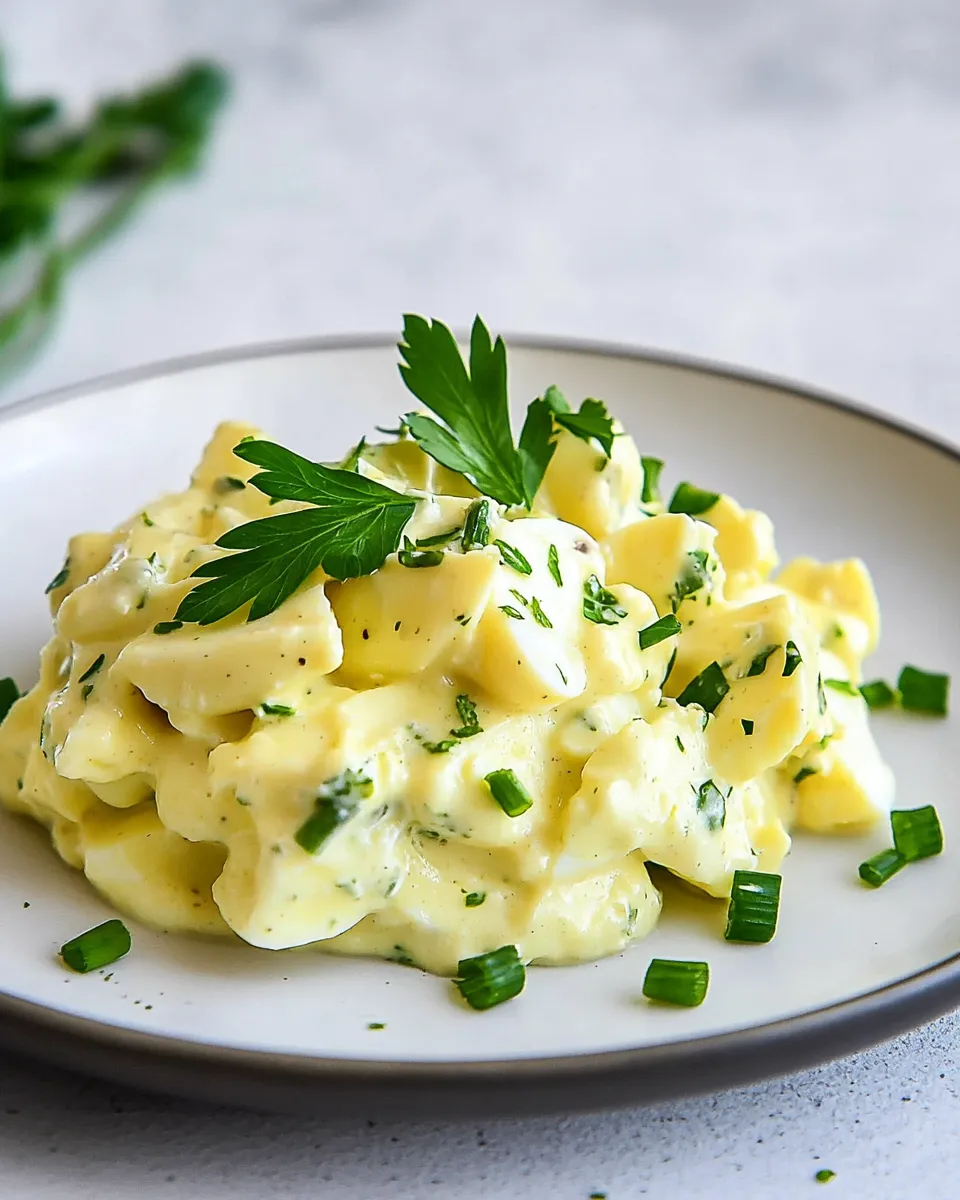
This is my no‑nonsense take on egg salad: bright, creamy, and built around plain Greek yogurt instead of heavier dressings. It keeps the classic eggy comfort while trimming unnecessary fat and adding protein. The texture is just as important as the seasoning, so I’ll walk you through simple steps that deliver consistent results.
It’s the kind of recipe you can make on a weeknight and reach for all week long — sandwiches, quick lettuce wraps, or spooned over a bed of greens. I rely on a few pantry staples and basic technique to keep it healthy without losing flavor.
Below you’ll find the exact ingredient list and step‑by‑step directions, plus practical tips for swapping ingredients, troubleshooting, storage, and serving. No frills, just useful guidance so your egg salad comes out reliably good every time.
Gather These Ingredients
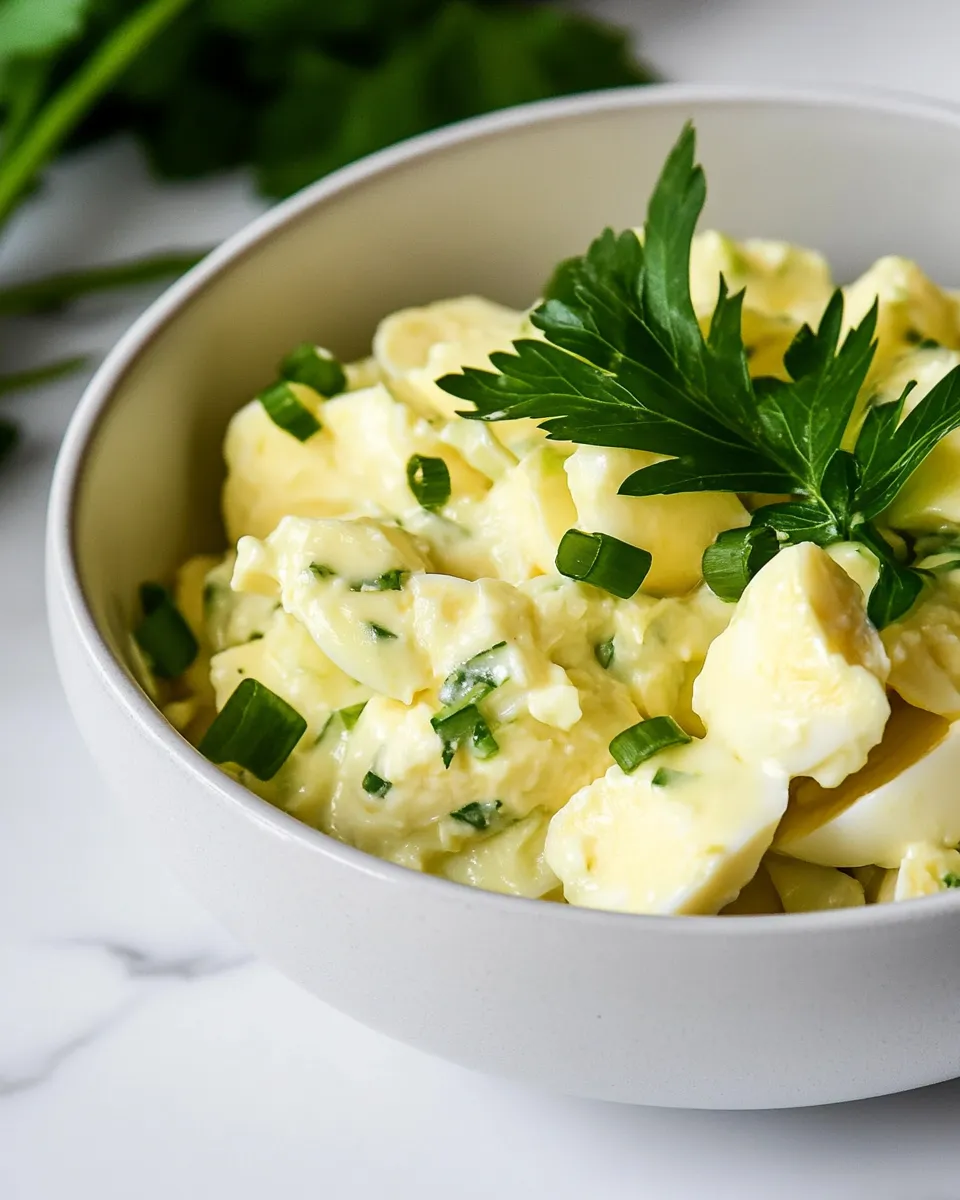
- 6 large eggs — hard‑boiled and peeled. Use eggs cooked to your preferred yolk firmness; this quantity yields multiple servings.
- 1/3 cup plain Greek yogurt — provides creaminess with protein and less fat than heavier dressings.
- 1 tablespoon Dijon mustard — adds tang and a little bite; it balances the richness of the yolks.
- 1/4 cup celery — finely chopped. Adds crunch and freshness to offset the soft eggs.
- 1 tablespoon chives — chopped. Mild onion flavor that brightens the whole mix.
- 1/4 teaspoon salt — essential for bringing out flavors; add small increments to taste.
- 1/4 teaspoon black pepper — freshly ground if possible, for a sharper finish.
Step-by-Step: Healthy Egg Salad
- Place the peeled hard‑boiled eggs on a cutting board and chop them into small pieces; transfer the chopped eggs to a large mixing bowl.
- Add 1/3 cup plain Greek yogurt, 1 tablespoon Dijon mustard, 1/4 cup finely chopped celery, 1 tablespoon chopped chives, 1/4 teaspoon salt, and 1/4 teaspoon black pepper to the bowl with the eggs.
- Gently fold the ingredients together with a spoon or rubber spatula until the mixture is evenly combined and the eggs reach your preferred texture.
- Taste the egg salad and, if desired, adjust the seasoning with small additional amounts of the salt or pepper you already have.
- Serve the egg salad on whole‑grain bread, in lettuce wraps, or as a side with your favorite greens.
Why You’ll Love This Recipe
This version balances flavor and health without compromising texture. Plain Greek yogurt gives a tangy, creamy base while keeping calories and saturated fat lower than heavier dressings. Dijon mustard pulls the flavors together so each bite feels bright and seasoned.
It’s also very fast to put together. If your eggs are already cooked, the active time is mostly chopping and mixing. That makes it perfect for meal prep: make a batch, portion it into containers, and you’ve got ready protein for sandwiches, bowls, or quick snacks.
The final salad has pleasing contrasts — soft eggs, crisp celery, and delicate chive bites. That contrast matters. When textures are right, the salad feels more satisfying and less heavy.
Easy Ingredient Swaps
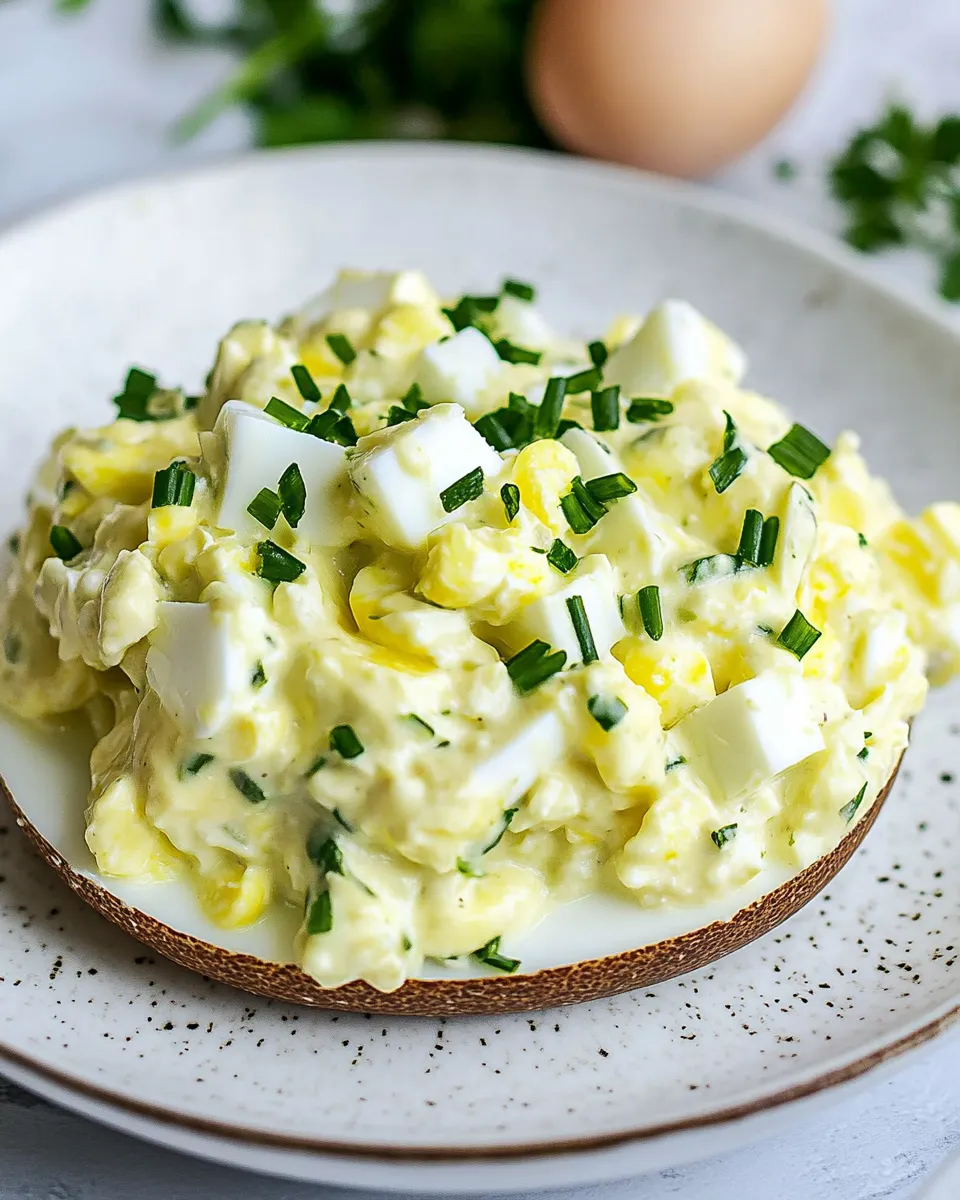
Keep swaps simple and stay within the ingredients listed if you want to preserve the original nutrition profile. Here are safe, practical adjustments using what’s already in the recipe:
- Adjust the yogurt amount up or down to change creaminess — add little by little until you reach the texture you like.
- Use more or less Dijon mustard to tweak tanginess. A touch more will brighten the mix; reduce it for a milder result.
- If you prefer more crunch, increase the celery slightly. For softer texture, chop the celery finer or use less.
- Double the chives if you want a stronger onion note, or chop them finer for a subtler distribution throughout the salad.
- Modify salt and pepper in small increments when tasting rather than adding a lot up front.
Equipment at a Glance
- Cutting board — for chopping eggs, celery, and chives safely.
- Sharp chef’s knife — it makes clean cuts through eggs and vegetables.
- Large mixing bowl — gives you room to fold ingredients without overworking them.
- Spoon or rubber spatula — for gentle folding and scraping the bowl.
- Measuring spoons/cups — to keep the yogurt and seasonings consistent, especially the first few times you make it.
Errors to Dodge
A few common missteps can change this salad from bright and satisfying to bland or mushy. Here’s what to watch for:
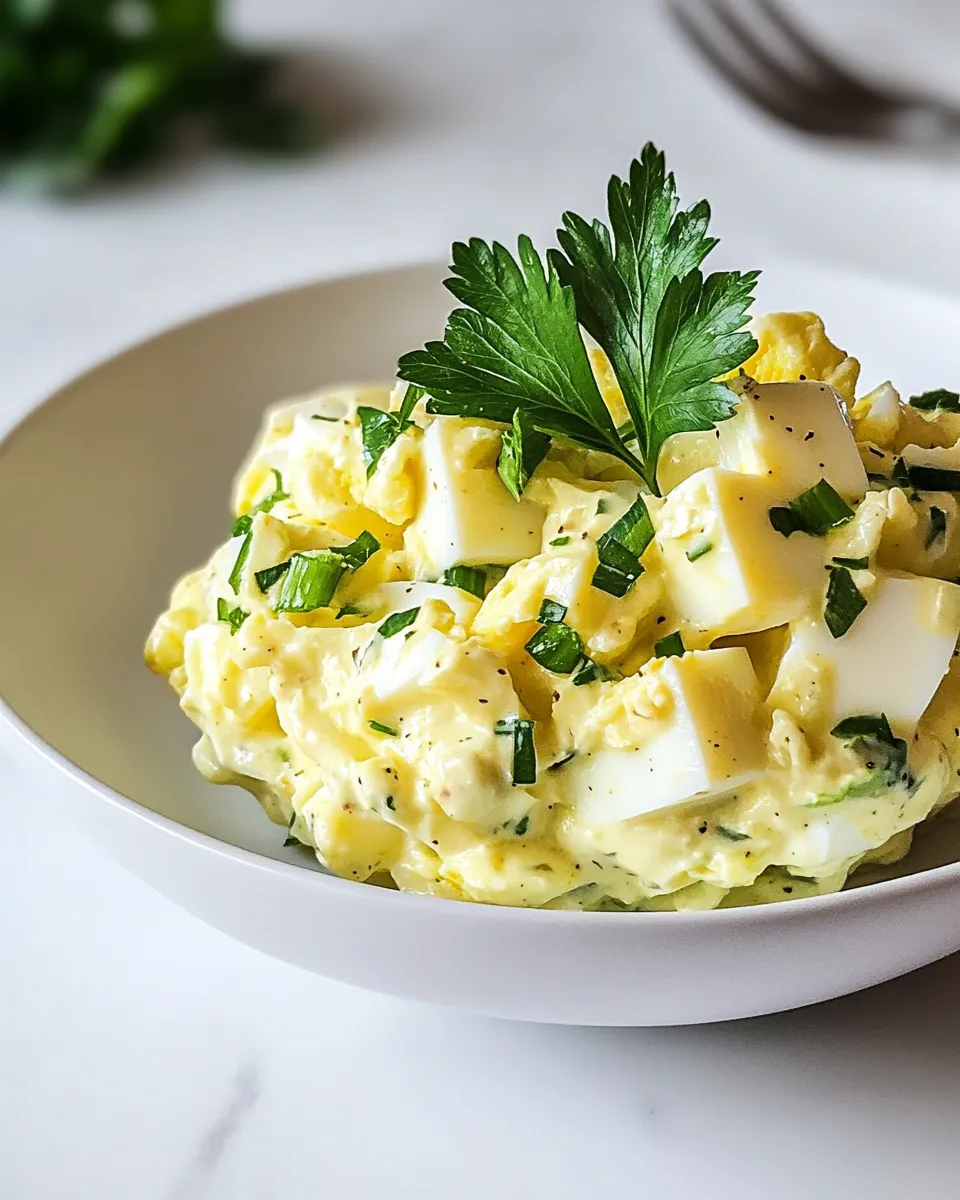
Overmixing: Fold gently. Overworking the eggs turns them into a pasty mash. Aim for a mix where the yolk and white pieces remain distinct.
Underseasoning: Eggs need salt to shine. Start with the 1/4 teaspoon, then taste and add tiny amounts more if needed. Seasoning after folding is better than guessing up front.
Too much liquid: Adding yogurt in large amounts at once can make the salad too wet. Add it gradually if you’re unsure and stop when the texture pleases you.
Uneven chopping: Large, uneven egg pieces give an inconsistent mouthfeel. Chop the eggs into similarly sized small pieces so each bite is balanced.
Fresh Seasonal Changes
Seasonality can be reflected mostly in how you serve the salad rather than changing core ingredients. When greens are in season, use them as a crisp bed or wrap instead of bread. That keeps the preparation light and showcases the egg salad as the centerpiece.
Chives are a simple seasonal touch that amplify fresh flavor when they’re at their best. If you have a harvest of chives, increase the amount slightly and use them both in the mix and as a finish for color and aroma.
Celery texture can vary with seasons; choose crisp stalks for better crunch in warmer months and chop a bit finer in winter when stalks are softer.
Behind-the-Scenes Notes
Technique matters more than special ingredients here. Start with eggs cooled and peeled cleanly — that’s half the battle. For even pieces, slice the eggs down the center and then make crosswise cuts. Transfer to the bowl and use a few gentle passes with a spatula to break the yolks to your liking.
Greek yogurt does the heavy lifting for creaminess and tang. It handles seasoning differently than oil‑based dressings, so start with conservative amounts of salt and mustard and correct after you combine the mix. Tasting as you go prevents over-salting.
If you make a larger batch, store it in a shallow container so you can cool it evenly and portion it easily. Divide into single‑serve containers for grab‑and‑go lunches; they hold up well in the fridge for a few days.
Refrigerate, Freeze, Reheat
Refrigerate: Store the egg salad covered in an airtight container in the refrigerator. It keeps well for up to 3 days; beyond that the texture and flavor begin to degrade. Always use a clean utensil when scooping to prevent contamination.
Freeze: Freezing egg salad is not recommended. The yogurt and egg whites suffer in texture after thawing and usually become watery and mealy.
Reheat: This salad is designed to be eaten cold or at room temperature. If you prefer a warmer element, serve it on toasted bread rather than reheating the salad itself.
Common Questions
How many servings does this make? With 6 large eggs and the listed quantities, you’ll generally get about 3–4 sandwich-sized servings or 4–6 smaller servings for sides or wraps, depending on portion size.
Can I make it ahead? Yes. Assemble the salad and keep it refrigerated for up to 3 days. If you plan to use it over several days, consider keeping the celery slightly under‑chopped and adding the final chop or chives just before serving to retain crunch.
How do I adjust texture? For chunkier salad, chop the eggs a bit larger and fold fewer times. For a smoother feel, chop finer and stir gently until the yolks are more evenly distributed through the yogurt.
What if the salad tastes flat? Taste and add tiny pinches of salt and a little more black pepper as needed. Dijon mustard also lifts the flavor; add a touch more if the mix needs brightness. Make adjustments gradually and taste after each small addition.
Is this a good option for meal prep? Yes. Portion it into containers and assemble sandwiches or wraps the morning you eat them to keep bread from getting soggy. It’s a reliable, protein‑rich option for lunches throughout the week.
That’s a Wrap
This Healthy Egg Salad is straightforward, flexible, and dependable. It leans on Greek yogurt and Dijon for bright, clean flavor, and the chopped celery and chives give the texture and lift that make each bite interesting. With a few small adjustments to seasoning and texture, it’ll become one of your go‑to quick meals.
Make a batch, taste carefully, and tweak only in small amounts. Once you find the balance you like, it’s a repeatable, healthy formula that works for sandwiches, wraps, and bowls. Enjoy — and don’t be afraid to make it your own within the framework above.

Healthy Egg Salad
Ingredients
Ingredients
- 6 large eggshard-boiled and peeled
- 1/3 cupplain Greek yogurt
- 1 tablespoonDijon mustard
- 1/4 cupceleryfinely chopped
- 1 tablespoonchiveschopped
- 1/4 teaspoonsalt
- 1/4 teaspoonblack pepper
Instructions
Instructions
- Place the peeled hard‑boiled eggs on a cutting board and chop them into small pieces; transfer the chopped eggs to a large mixing bowl.
- Add 1/3 cup plain Greek yogurt, 1 tablespoon Dijon mustard, 1/4 cup finely chopped celery, 1 tablespoon chopped chives, 1/4 teaspoon salt, and 1/4 teaspoon black pepper to the bowl with the eggs.
- Gently fold the ingredients together with a spoon or rubber spatula until the mixture is evenly combined and the eggs reach your preferred texture.
- Taste the egg salad and, if desired, adjust the seasoning with small additional amounts of the salt or pepper you already have.
- Serve the egg salad on whole‑grain bread, in lettuce wraps, or as a side with your favorite greens.
Equipment
- Cutting Board
- Large Mixing Bowl
- Spoon or rubber spatula