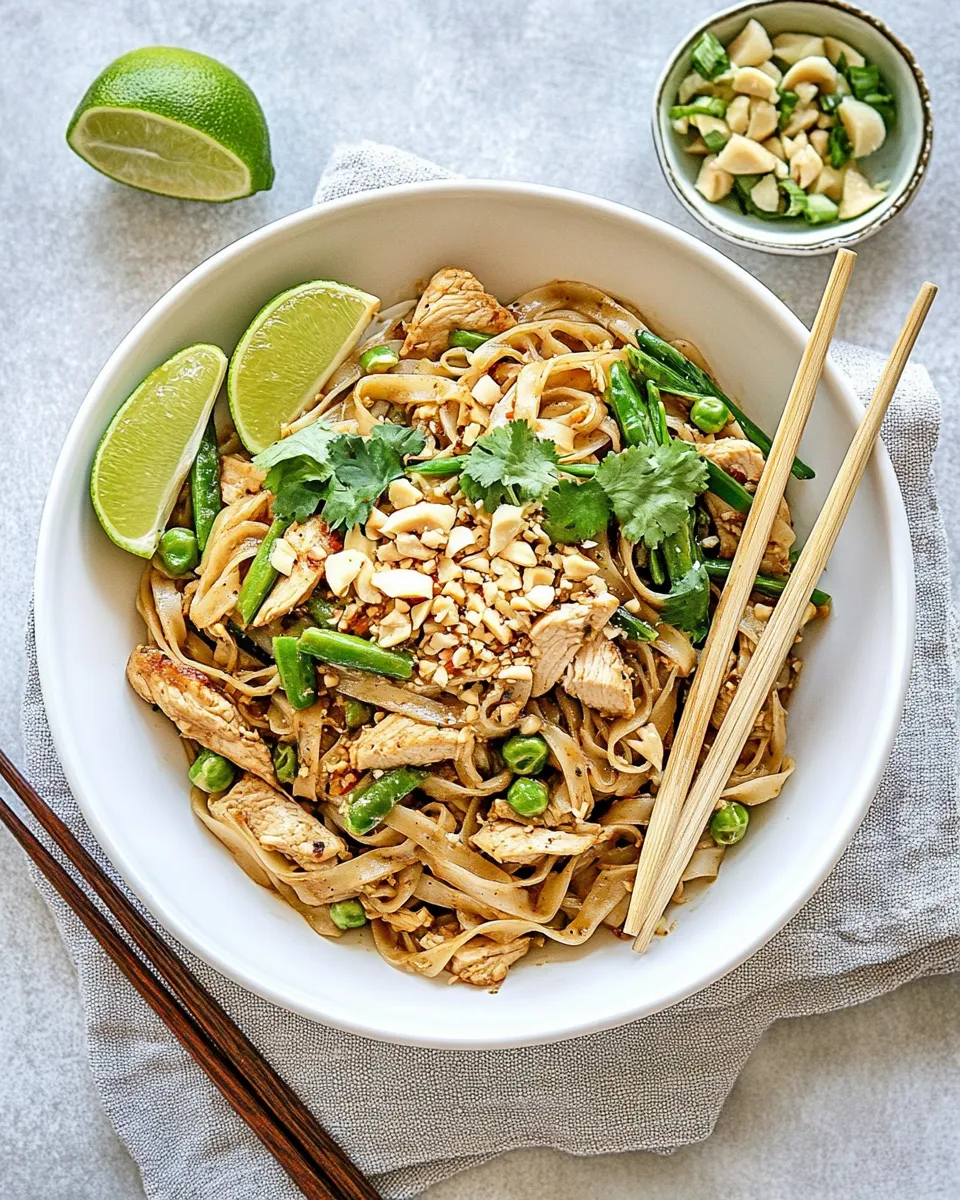
Pad Thai is one of those dishes I reach for when I want dinner that feels special but comes together fast. It’s a balance of sweet, salty, tangy, and crunchy — and this chicken-and-tofu version gives you protein plus the classic textures that make it so addictive. I love that the components are simple, and you can mostly do the prep ahead so the final toss in the wok is quick.
There’s a little technique that changes everything: get the sauce ready, soak or cook the noodles until very soft, and keep your mise en place organized. Once the wok is hot, the whole meal is done in minutes. In this recipe I stick to clear steps so you can follow along without guessing on timing.
This post covers the ingredients, a step-by-step directions list, and practical tweaks — how to make it your own, what to watch for, and answers to the questions I get most. If you want big flavor in a weeknight-friendly package, this Homemade Chicken Pad Thai is a reliable winner.
Ingredient Notes
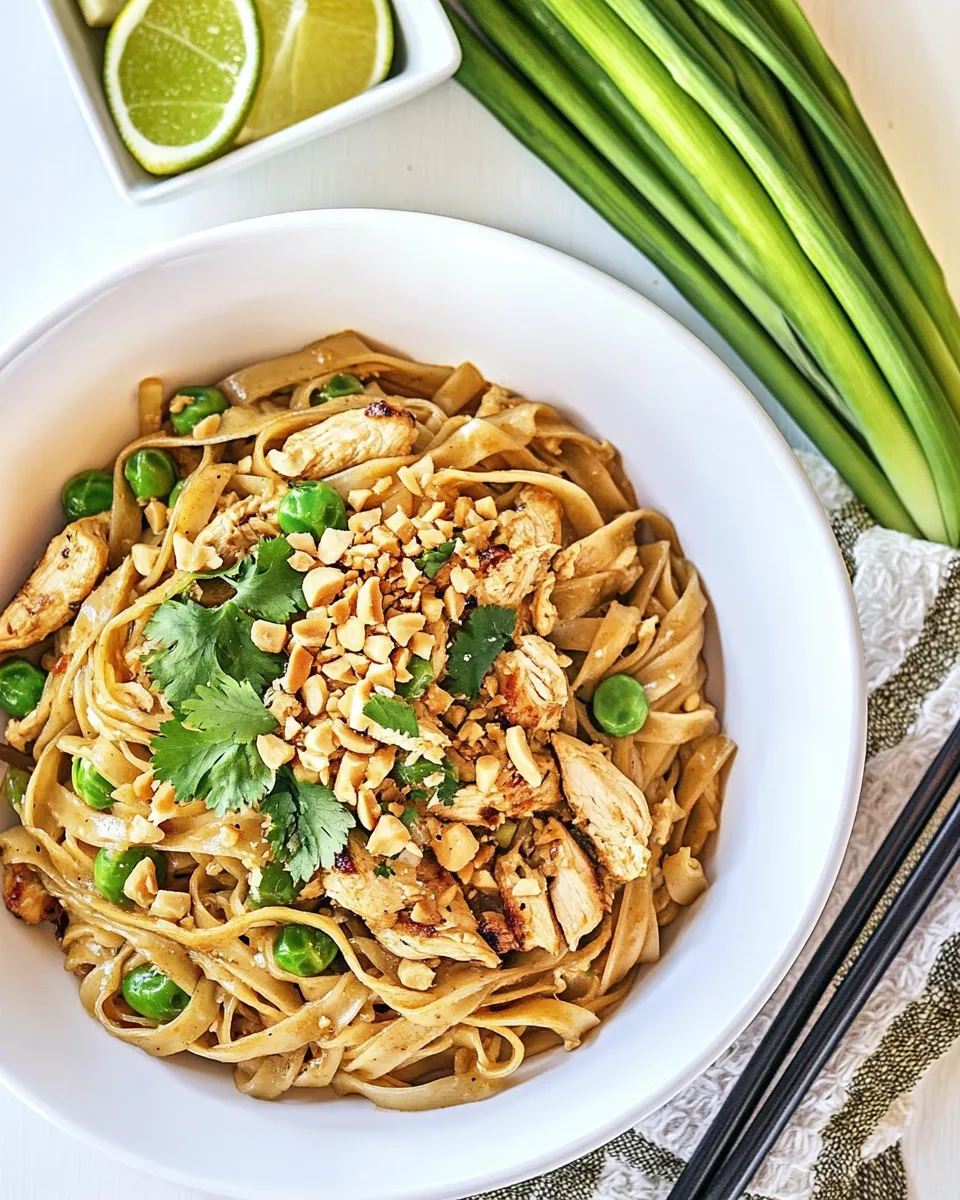
Below I explain the main parts of the dish and how they work together. If you’re short on time, focus on the sauce, the noodles, and keeping the heat high when you stir-fry.
Ingredients
- 3tablespoontamarind paste — Provides the bright, tangy backbone of the sauce; measure carefully for balance.
- 3tablespoonfish sauce — Salty, umami depth; it’s the savory counterpoint to the tamarind.
- 2tablespoonsoy sauce — Adds color and savory notes; use regular soy sauce as called for here.
- 1tablespoonrice vinegar — A touch of acidity to brighten the sauce without making it sharp.
- 3tablespoonbrown sugar — Sweetness to round the sauce; brown sugar also gives a slight molasses note.
- 6ozrice noodles — The noodle base; cook until very soft so they soak up the sauce and stay tender.
- 2tablespoonvegetable oil — Neutral oil for high-heat stir-frying; heats quickly and won’t overpower flavors.
- ½onion — Thinly sliced; adds sweetness and structure when stir-fried briefly.
- 2clovesgarlicminced — Garlic gives immediate savory aroma; add once the onion has softened a bit.
- 6ozchicken breastcut into strips — Lean protein; slice thin so it cooks fast and stays tender.
- 6ozextra-firm tofucut into bite-sized cubes — Adds texture and bulk; extra-firm holds up during tossing.
- 2largeeggs — Scrambled in the wok for richness and small pockets of silkiness.
- 1cupbean sproutsdivided — Crisp, fresh element; divide so some are cooked in and some remain crunchy as garnish.
- 5scallionscut into 1-inch strips — Mild oniony freshness added at the end for brightness.
- ½cuproasted peanutsroughly chopped, divided — Crunch and savory-nutty contrast; reserve some for topping.
- 1tablespoonsriracha saucemore for extra heat — Adds heat and a touch of brightness; stir in to taste.
- 1limecut into wedges, for garish — Acid to finish each plate; squeeze over right before eating.
Directions: Homemade Chicken Pad Thai
- Whisk together the sauce ingredients in a small bowl: 3 tablespoons tamarind paste, 3 tablespoons fish sauce, 2 tablespoons soy sauce, 1 tablespoon rice vinegar, and 3 tablespoons brown sugar. Set aside.
- Bring a large pot of water to a boil. Add the 6 oz rice noodles and cook about 5 minutes, or until very soft, stirring occasionally. Drain the noodles and rinse with cool water to stop cooking. Set aside.
- Heat 2 tablespoons vegetable oil in a wok or large skillet over high heat until shimmering.
- Add the ½ onion (thinly sliced) and stir-fry about 2 minutes, until it just begins to soften. Add the 2 cloves garlic (minced) and cook about 30 seconds, stirring constantly.
- Add the 6 oz chicken breast (cut into strips) and the 6 oz extra-firm tofu (cut into bite-sized cubes). Stir-fry until the chicken is cooked through, about 2 to 4 minutes.
- Push the chicken and tofu to one side of the wok. Crack in the 2 large eggs on the empty side and scramble them, stirring constantly until just set. Mix the scrambled eggs into the chicken and tofu.
- Stir in half of the 1 cup bean sprouts. Add the cooked rice noodles and toss or stir to combine, cooking about 1 minute to heat through.
- Pour in the prepared sauce, add half of the ½ cup roasted peanuts (roughly chopped), and add the 5 scallions (cut into 1-inch strips). Stir everything together and cook 1 to 2 more minutes so the sauce coats the noodles. Stir in the 1 tablespoon sriracha sauce.
- Transfer to plates and serve immediately. Garnish each serving with the remaining peanuts and remaining bean sprouts, and serve with lime wedges. (Extra sriracha can be offered for more heat.)
Why It’s My Go-To
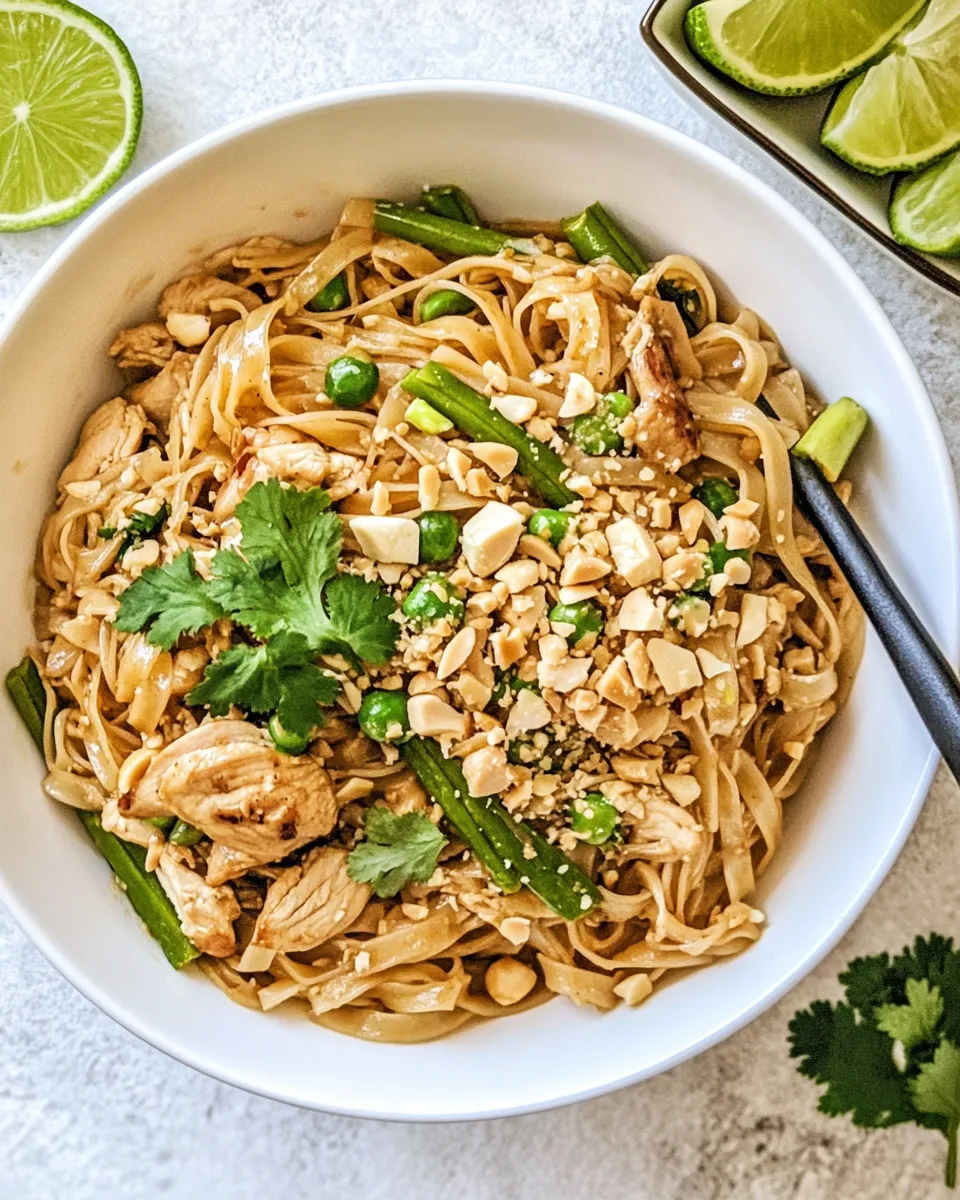
This version checks a few boxes I always look for: fast cook time, minimal equipment, pantry-friendly sauce ingredients, and crowd-pleasing flavors. The combination of chicken and tofu provides both lean meat and the soft, chewy texture tofu brings. The sauce is built to be bold and balanced — tamarind for tang, fish sauce and soy for umami, brown sugar for sweetness, and rice vinegar to brighten.
I also appreciate how forgiving the recipe is. If you slightly overcook the chicken or the noodles are a touch clumpy, the bold sauce and crunchy peanuts rescue the dish. It’s dinner that still feels restaurant-worthy without a stack of complicated steps.
Flavor-Forward Alternatives
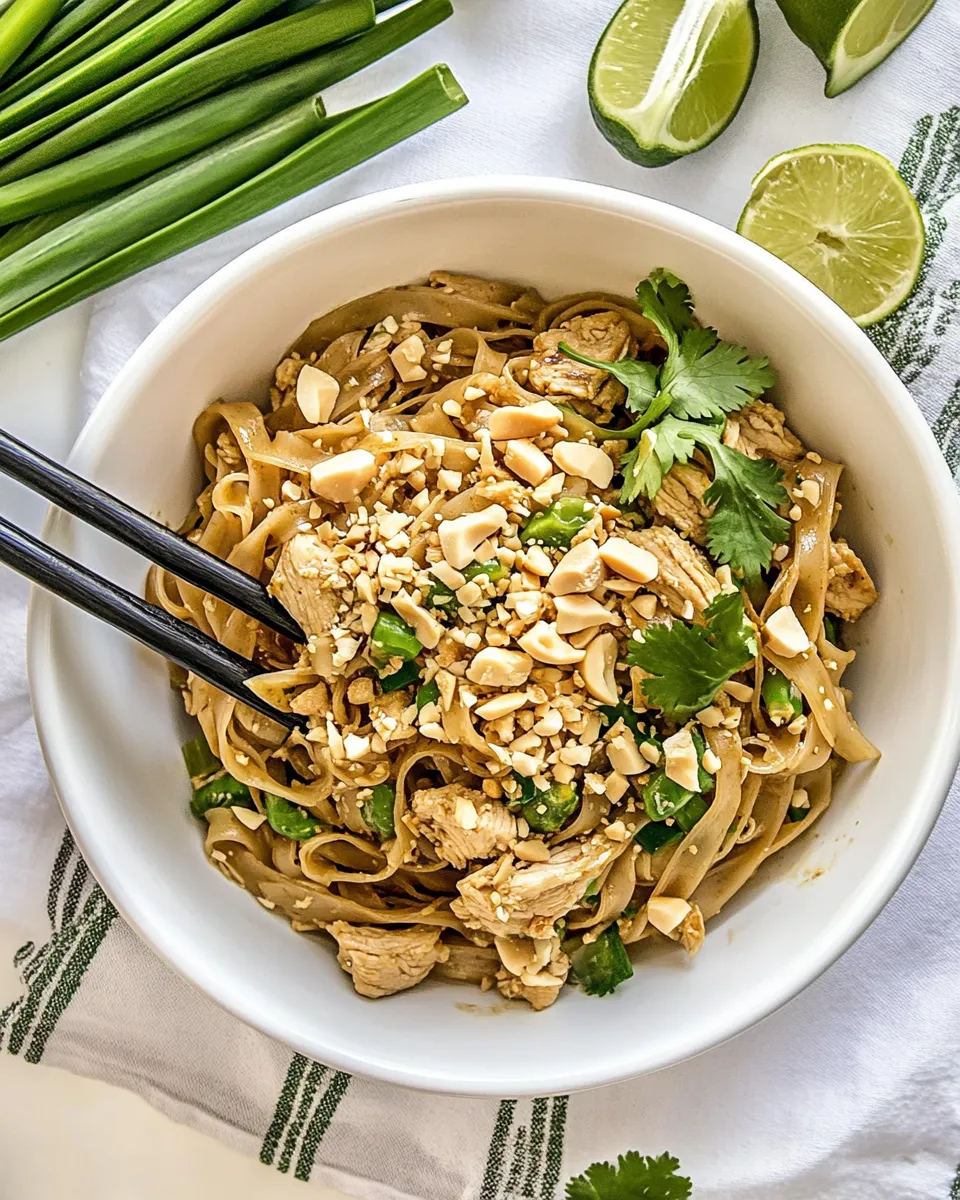
- Swap the chicken for thinly sliced pork or shrimp if you prefer seafood; adjust the cook time for shrimp so it doesn’t overcook.
- Add a splash of toasted sesame oil at the end for a nutty finish if you want extra aroma.
- If you like it sweeter, add another teaspoon or two of brown sugar; for more tang, squeeze extra lime on the finished dish.
- For a deeper savory hit, stir a teaspoon of shrimp paste into the sauce when whisking (use cautiously — it’s potent).
Prep & Cook Tools
- Wok or large skillet — High sides help toss everything without spilling.
- Large pot — For boiling the rice noodles.
- Mixing bowl and whisk — To combine the sauce quickly and evenly.
- Sharp knife and cutting board — For slicing chicken, scallions, and prepping tofu.
- Spider or slotted spoon — Helpful for lifting the noodles into the wok if you prefer not to drain too much water.
Slip-Ups to Skip
- Overcooking the noodles: They should be very soft before going into the wok so they don’t get gummy when tossed with the sauce.
- Low heat: Pad Thai thrives on high heat. If your pan isn’t hot, ingredients steam instead of stir-fry, and you lose that slight char and wok flavor.
- Skipping the sauce balance: The sauce needs sweet, sour, and salty in harmony. Taste your sauce before adding and adjust if one component dominates.
- Adding too many extras at once: Keep the cook order — onions and garlic first, then proteins, then eggs, then noodles — to keep textures distinct.
Seasonal Twists
Pad Thai adapts well to seasonal produce. In spring and summer, add lightly blanched asparagus tips or snap peas for color and crunch. In fall, include thin strips of roasted bell pepper or a handful of chopped roasted pumpkin for sweetness. Winter calls for sturdy greens — toss in baby bok choy or thinly sliced cabbage right at the end so they wilt slightly but keep texture.
Notes on Ingredients
A few quick notes to help you source and sub without losing the character of the dish:
- Tamarind paste: There are concentrated and more diluted versions — measure by taste if yours is especially tart. The recipe amount gives an assertive tang.
- Rice noodles: Different widths change mouthfeel; this recipe uses a typical medium-width that soaks up sauce well.
- Extra-firm tofu: Press briefly if it feels very wet, so it browns a touch and won’t fall apart in the wok.
- Peanuts: Roast them if your store-bought peanuts are raw; roasted add more immediate flavor and crunch.
Freezer-Friendly Notes
Cooked Pad Thai isn’t perfect after freezing because the noodle texture changes. If you want to prep ahead, freeze cooked chicken and tofu separately in airtight containers for up to 2 months, and keep the sauce frozen in small portions. Better option: cook components and refrigerate for 2–3 days — noodles, sauce, and proteins stored separately — then reheat quickly in a hot pan and combine for near-fresh results.
Frequently Asked Questions
- Can I make this vegetarian? — Omit the chicken and increase the tofu, or substitute with more mushrooms. Note: fish sauce is traditional; for vegetarian, use a soy-based umami substitute.
- My noodles stuck together. Help? — Rinse them with cool water and toss with a little oil before using, or loosen them gently in hot water for 20–30 seconds.
- Can I use brown rice noodles? — Yes. Watch the cook time; they can be a touch firmer and need adjustment.
- How spicy is this? — The base includes 1 tablespoon sriracha. Offer extra at the table to let everyone control heat.
Save & Share
If you make this Homemade Chicken Pad Thai and love it, save the recipe and share the photo of your plate. Tag friends who need a quick, bold dinner idea — it’s a great recipe to pass along because it scales easily and is forgiving for busy cooks. When I post pictures, I like to show the lime wedges and extra peanuts on the side so everyone can customize their bowl.
Finally, a reminder: keep your mise en place organized and your wok hot. Those two things are the difference between good and great Pad Thai at home. Enjoy — and squeeze that lime right before you dig in.
Homemade Chicken Pad Thai
Ingredients
Ingredients
- 3 tablespoontamarind paste
- 3 tablespoonfish sauce
- 2 tablespoonsoy sauce
- 1 tablespoonrice vinegar
- 3 tablespoonbrown sugar
- 6 ozrice noodles
- 2 tablespoonvegetable oil
- 1/2 onion
- 2 clovesgarlicminced
- 6 ozchicken breastcut into strips
- 6 ozextra-firm tofucut into bite-sized cubes
- 2 largeeggs
- 1 cupbean sproutsdivided
- 5 scallionscut into 1-inch strips
- 1/2 cuproasted peanutsroughly chopped divided
- 1 tablespoonsriracha saucemore for extra heat
- 1 limecut into wedges for garish
Instructions
Instructions
- Whisk together the sauce ingredients in a small bowl: 3 tablespoons tamarind paste, 3 tablespoons fish sauce, 2 tablespoons soy sauce, 1 tablespoon rice vinegar, and 3 tablespoons brown sugar. Set aside.
- Bring a large pot of water to a boil. Add the 6 oz rice noodles and cook about 5 minutes, or until very soft, stirring occasionally. Drain the noodles and rinse with cool water to stop cooking. Set aside.
- Heat 2 tablespoons vegetable oil in a wok or large skillet over high heat until shimmering.
- Add the ½ onion (thinly sliced) and stir-fry about 2 minutes, until it just begins to soften. Add the 2 cloves garlic (minced) and cook about 30 seconds, stirring constantly.
- Add the 6 oz chicken breast (cut into strips) and the 6 oz extra-firm tofu (cut into bite-sized cubes). Stir-fry until the chicken is cooked through, about 2 to 4 minutes.
- Push the chicken and tofu to one side of the wok. Crack in the 2 large eggs on the empty side and scramble them, stirring constantly until just set. Mix the scrambled eggs into the chicken and tofu.
- Stir in half of the 1 cup bean sprouts. Add the cooked rice noodles and toss or stir to combine, cooking about 1 minute to heat through.
- Pour in the prepared sauce, add half of the ½ cup roasted peanuts (roughly chopped), and add the 5 scallions (cut into 1-inch strips). Stir everything together and cook 1 to 2 more minutes so the sauce coats the noodles. Stir in the 1 tablespoon sriracha sauce.
- Transfer to plates and serve immediately. Garnish each serving with the remaining peanuts and remaining bean sprouts, and serve with lime wedges. (Extra sriracha can be offered for more heat.)
Equipment
- ▢Wok, or large sturdy skillet/pan
Notes
See the video near the top of the blog post for visual guidance. If you liked the video, please
subscribe to our YouTube channel
.
Tamarind sauce (or paste) can be found at your local Asian market or online (see link in the blog post). The fish sauce can be substituted with 2 tablespoon soy sauce and 1 tablespoon oyster sauce. (no need to add additional soy sauce).
For added heat, increase the sriracha sauce and add 1 to 3 tablespoon of hot chili oil.
Leftovers will keep for several days, although this dish is definitely best served freshly from the wok. We don't recommend freezing pad Thai.