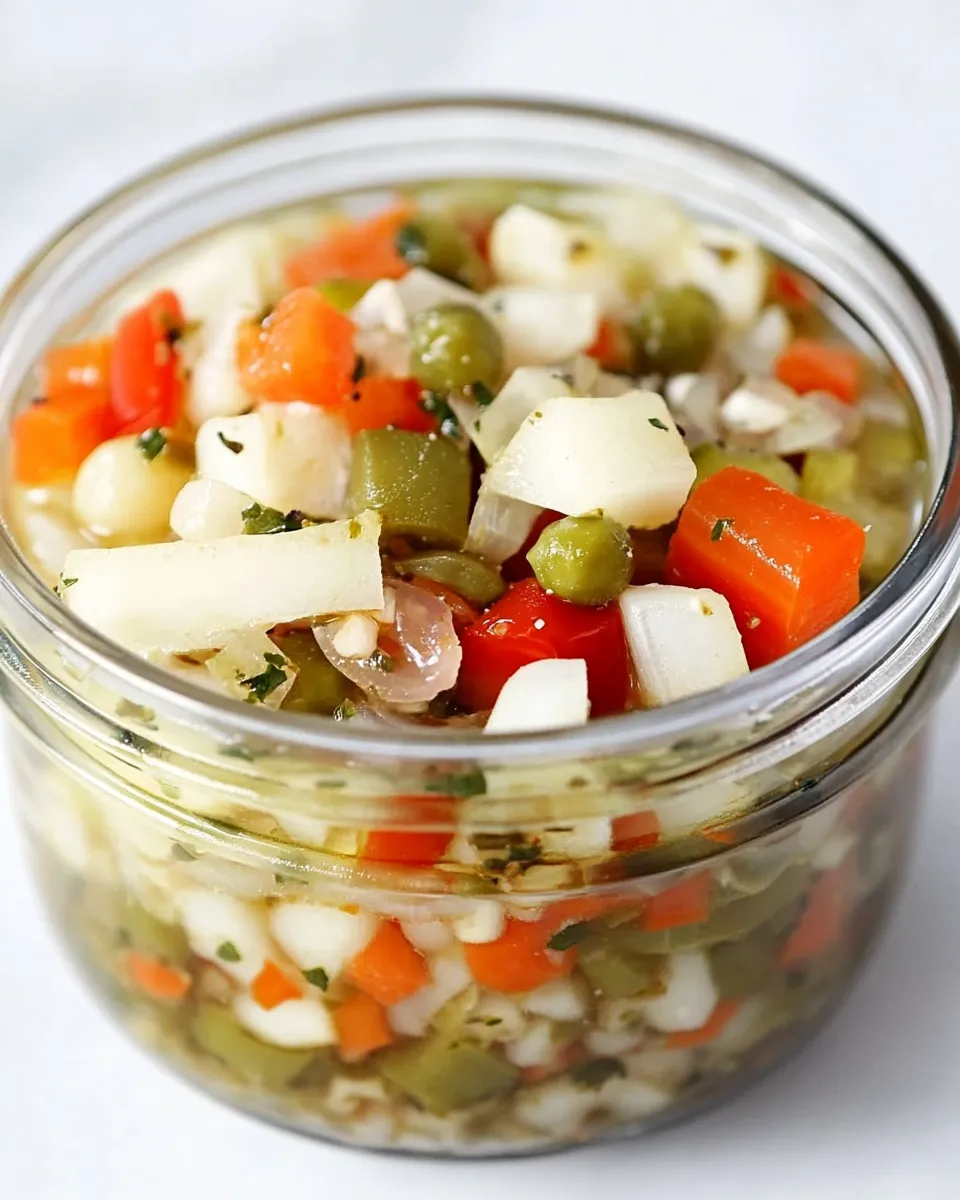
I make giardiniera year-round, but it really sings in late summer when peppers are at their peak. It’s a crisp, salty, tangy mix that wakes up sandwiches, salads, and antipasti plates. This version is straightforward: no canning pressure baths, just salt-brining, a generous olive- and avocado-oil dressing, and time for the flavors to settle in.
This recipe folds bold elements together—garlic, celery seed, oregano, olives, and a mix of crunchy vegetables—so each bite has layers. You’ll find it forgiving, too. Follow the steps, give it that overnight salt rest, and the results will reward you with bright, balanced pickles.
Below I’ll walk you through what to buy, step-by-step directions, smart substitutions for texture or diet needs, and real-world tips I use in my test kitchen. Let’s get your jars lined up and the knife out.
What to Buy
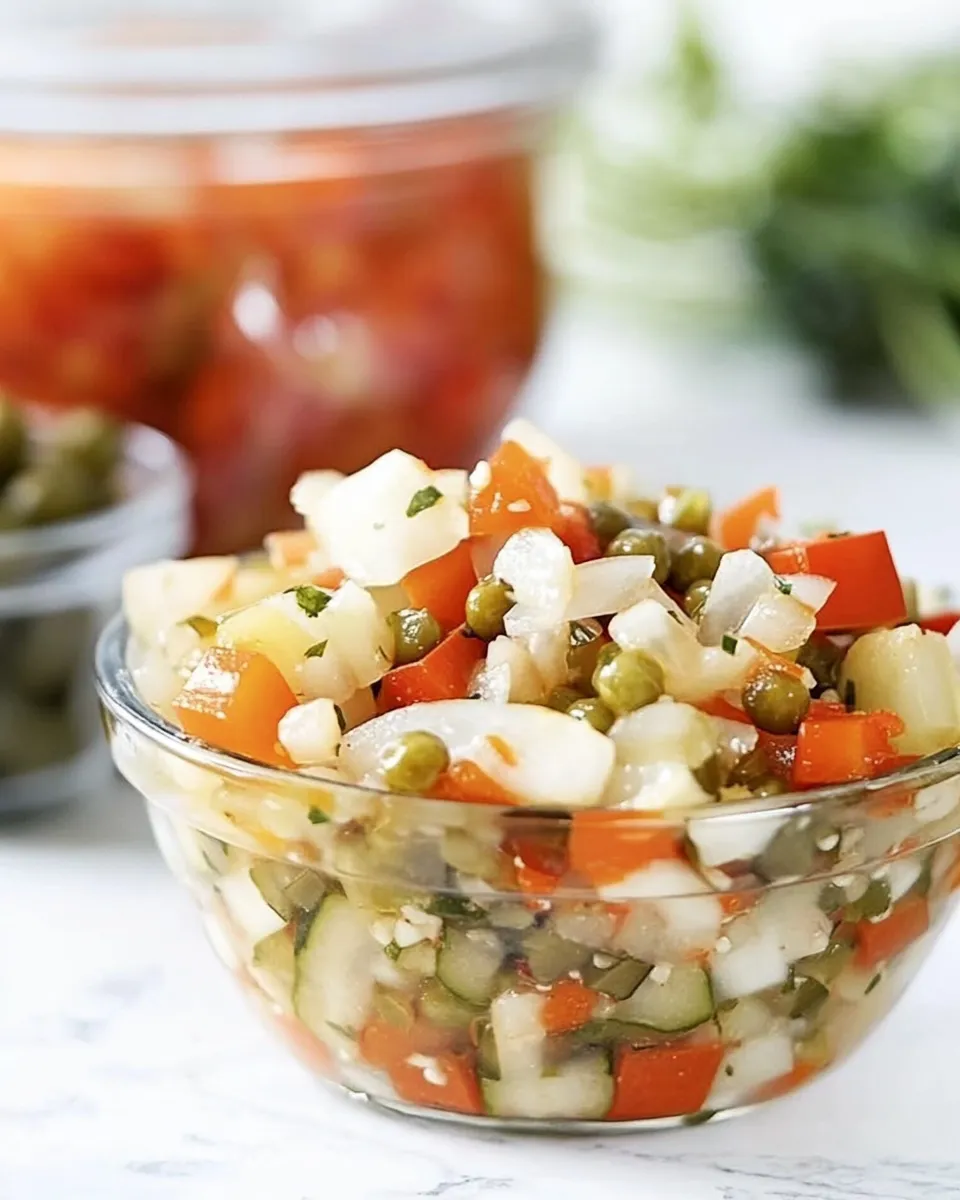
Shop for the freshest vegetables you can find. Look for firm cauliflower and carrots without soft spots. Choose bell peppers with glossy skins and olives packed in brine (you’ll use that brine). If you have a choice, pick a neutral oil like avocado or a mild olive oil so the vegetables remain the stars.
Some ingredients are pantry staples—vinegar, oregano, celery seed—so check those before you head out. I also recommend buying the olives in a can rather than a jar; the brine is easier to measure and typically clearer.
Ingredients
- 1small head of cauliflower,trimmed into small florets — the main crunchy base; trim to uniform bite-sized pieces.
- 3small-diced ribs of celery — adds savory crunch and celery notes; small-dice for even texture.
- 4peeled and small diced carrots — sweetness and color; peel so the dressing clings better.
- 1seeded and small diced red bell pepper — bright color and mild sweetness; seed to control heat.
- 1seeded and small diced green bell pepper — adds vegetal balance and contrast to the red pepper.
- 1seeded and small diced jalapeño — brings gentle heat; seed if you want less spice.
- 1seeded and small diced serrano pepper — another layer of heat; small-dice so it distributes evenly.
- 4finely minced garlic cloves — aromatic backbone; mince finely so it mellows into the mix.
- 15ouncecan green olives,reserve the olive juice brine which should be 1 cup — olives add salty, umami pop; reserve the brine for the dressing.
- 1cupwhite vinegar — acid for brightness and preservation; keeps the mix lively.
- 1cupolive oil — flavor and clinging body; use a good-quality olive oil.
- 1cupavocado or neutral-flavored oil — softens and lightens the olive oil; use avocado oil for a cleaner finish.
- 1tablespoondry oregano — herbaceous lift; dry works best here for a prolonged shelf life.
- 2teaspoonscelery seed — concentrated celery flavor; crush slightly if you want it to bloom more.
- 1/3cupcoarse salt — for the overnight brine; coarse salt draws out moisture without over-salting quickly.
Stepwise Method: Homemade Giardiniera Recipe
- Trim the cauliflower into small florets. Peel and small-dice the 4 carrots. Small-dice the 3 ribs of celery. Seed and small-dice the red bell pepper, the green bell pepper, the jalapeño, and the serrano pepper. Set all prepared vegetables aside in a large bowl.
- Add 1/3 cup coarse salt to the bowl with the prepared vegetables and mix thoroughly so the salt is evenly distributed.
- Cover the bowl with plastic wrap and refrigerate overnight or for at least 6 hours to season and draw out moisture.
- The next day, drain the vegetables in a colander and rinse them under cold running water to remove excess salt. Drain well and gently press or pat the vegetables to remove excess water.
- Open the 15-ounce can of green olives and reserve the olive juice brine (should be about 1 cup). Slice or small-dice the olives to match the size of the vegetables.
- In a large, clean bowl combine the drained, rinsed vegetables, the diced olives, 4 finely minced garlic cloves, 1 tablespoon dry oregano, and 2 teaspoons celery seed. Toss to combine.
- Add the reserved 1 cup olive brine, 1 cup white vinegar, 1 cup olive oil, and 1 cup avocado or neutral-flavored oil to the bowl. Stir until everything is evenly coated.
- Pack the giardiniera mixture into jars, leaving a little headspace, and seal the jars.
- Refrigerate the jars for 24 hours before consuming to allow the flavors to develop.
Why You’ll Keep Making It
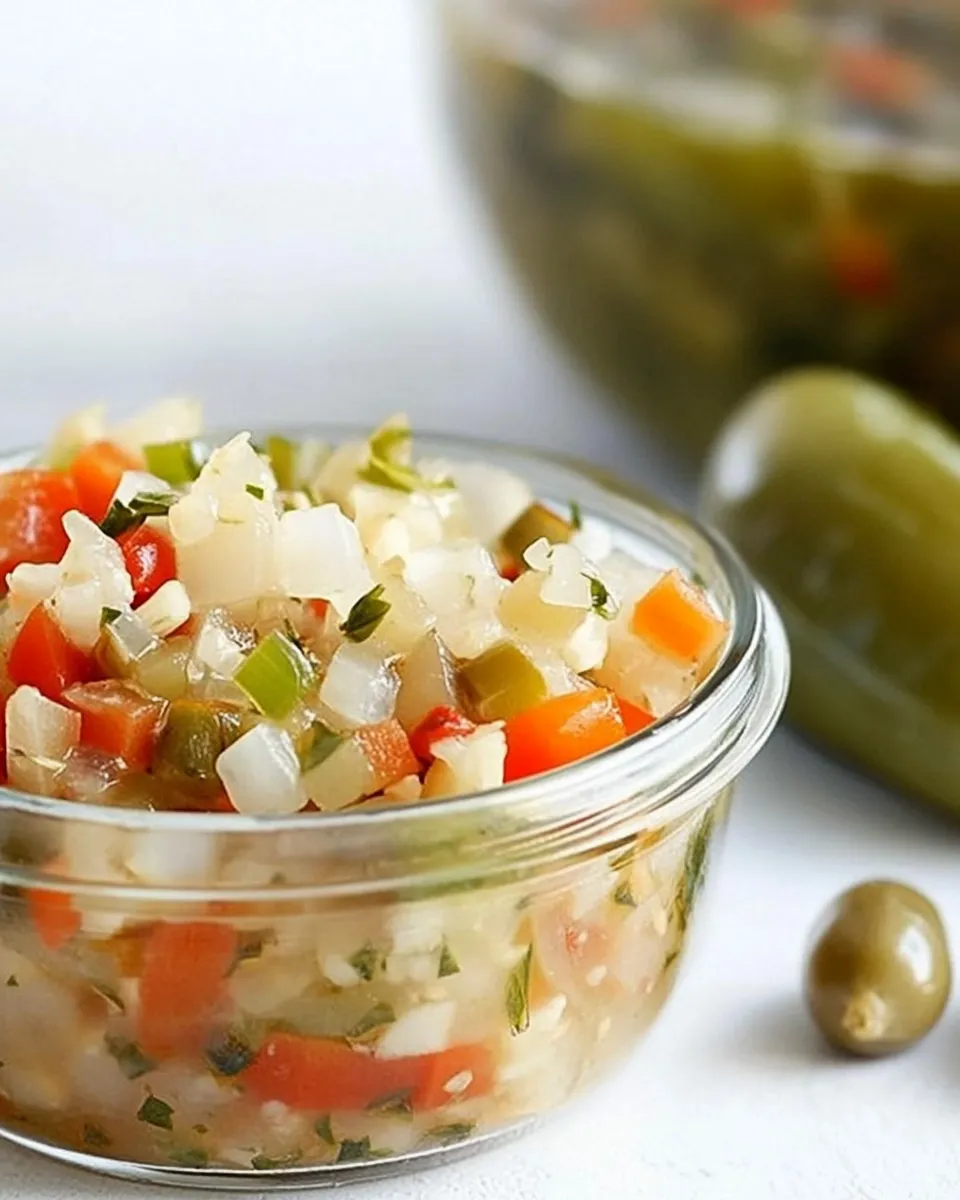
Giardiniera is endlessly useful. It brightens a muffuletta, lends crunch to tuna or chicken salad, and wakes up a plain roast vegetable dish. I keep a jar in the fridge for sandwiches and last-minute salads. It’s a condiment that transforms rather than just seasons.
The flavor improves over a few days as the oil and vinegar marry the vegetables and aromatics. That means every time you scoop some out you get a deeper, more integrated bite. Once you get comfortable with the process, you’ll find yourself tweaking heat level or herb balance to match the season.
Texture-Safe Substitutions
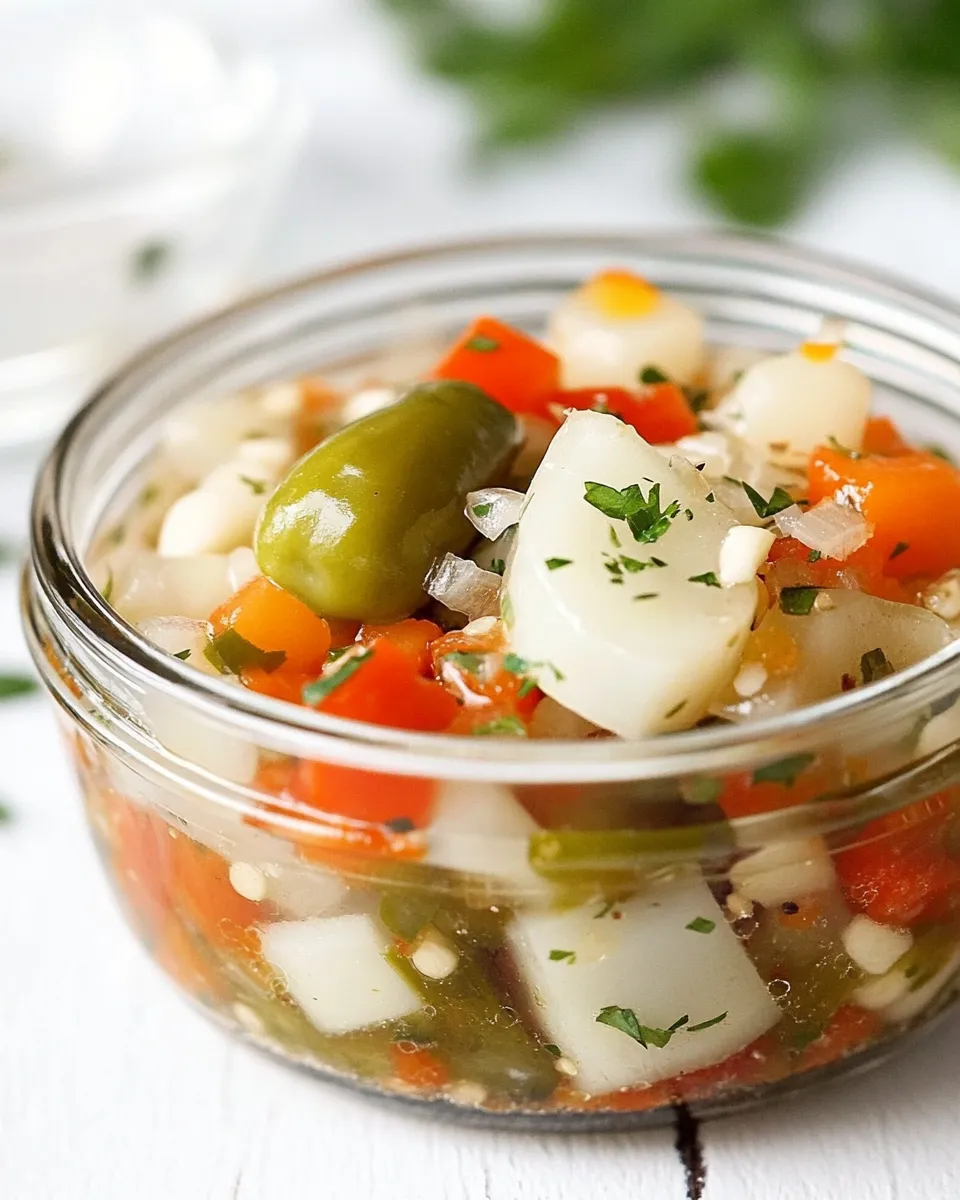
Need to adjust textures? I’ve tested these swaps so you can keep the spirit of giardiniera without losing mouthfeel.
- For softer vegetables: Blanch cauliflower and carrots briefly before the salt rest. It softens them without making them mushy after pickling.
- To reduce heat: Omit the serrano and use half the jalapeño seeds, or remove seeds entirely. The peppers still add their character without overpowering.
- Oil alternatives: If you can’t use avocado oil, a light vegetable oil or grapeseed works. Keep the olive oil for flavor—don’t replace it entirely.
- Olives: If you only have pitted olives in jars, reserve and use their brine similarly. Just taste as brine salinity can vary.
Setup & Equipment
You need only basic tools: a sharp chef’s knife, cutting board, large mixing bowl, colander, measuring cups, and clean jars with lids. I like wide-mouth mason jars for easy packing and serving. Use plastic wrap to cover the bowl during the overnight salt step.
If you have a mandoline and feel comfortable with it, you can thinly slice some peppers for more surface area, but small-dicing by knife is safer and creates a better texture for giardiniera.
Steer Clear of These
Do not skip the overnight salt step. That rest is what pulls moisture from the vegetables and concentrates flavor. If you skip it, your giardiniera will end up watery and flat.
Avoid highly fragrant or bitter oils (extra-robust olive oil or sesame oil) as they compete with the vegetables. Also, don’t add sugar—this is a savory pickle profile; sugar will shift the balance away from the bright, acidic character this recipe is meant to have.
Fresh Takes Through the Year
Giardiniera adapts to seasonal produce. In winter, swap in radishes or blanched broccoli crowns. In summer, keep the peppers and even add thin slices of young fennel for an anise note.
Herb swaps are easy: try a teaspoon of crushed red pepper flakes for extra heat, or a teaspoon of dried thyme instead of oregano for a different herbal profile. Fresh herbs like parsley or basil can be stirred in just before serving for a fresh lift.
Cook’s Notes
Taste as you go. Because olive brine salinity varies, the final saltiness of the mix can fluctuate. If it tastes overly salty after mixing, rinse the vegetables a touch more or add a splash more oil and vinegar to dial it back.
If you prefer a more homogenized texture, pulse half the olives in a food processor before dicing and mixing—this creates little pockets of olive paste that melt into the dressing. For a sharper vinegar punch, use a bright white wine vinegar instead of plain white vinegar.
Label your jars with the date. Flavors continue to develop, but for best texture and flavor eat within 3–4 weeks refrigerated. Always use a clean fork to remove servings to avoid contamination.
Save It for Later
Giardiniera keeps best in the refrigerator. The high vinegar and oil content, plus the initial salt draw, preserve the vegetables for several weeks. Store in airtight jars and try to keep the vegetables submerged under oil when possible; this minimizes oxidation and keeps colors vibrant.
Freezing isn’t recommended. The water in the vegetables will create ice crystals and ruin the crisp texture when thawed. Instead, vacuum-seal or tightly cap jars and store in the fridge.
Ask & Learn
Common questions I see: How long before I can eat it? The recipe calls for 24 hours refrigeration before eating—this is the minimum. For best flavor wait 3–4 days. How spicy will it be? That depends on the serrano and jalapeño seeds. Removing seeds dramatically reduces heat.
If you want a milder brine, reduce the olive brine by a quarter cup and make up the volume with water. Taste before packing and adjust vinegar or oil as you prefer. Don’t be afraid to experiment a little; giardiniera is meant to be personalized.
Let’s Eat
Serve giardiniera spooned over grilled cheese, piled on Italian beef sandwiches, or tossed with simply dressed pasta for a crunchy, savory finish. It’s excellent alongside cold meats and cheeses on a picnic board. I also love it stirred into potato salad to replace some of the mayo and add zip.
Open a jar, let it come a few minutes to room temperature if it’s cold, and spoon it onto whatever needs a bright, crunchy lift. When friends ask for the recipe, I tell them it’s more about technique than exactness—respect the salt rest, keep the dices even, and balance oil and vinegar to taste. That’s all you need to make this staple a regular in your fridge.
Homemade Giardiniera Recipe
Ingredients
Ingredients
- 1 small head of cauliflower trimmed into small florets
- 3 small-diced ribs of celery
- 4 peeled and small diced carrots
- 1 seeded and small diced red bell pepper
- 1 seeded and small diced green bell pepper
- 1 seeded and small diced jalapeño
- 1 seeded and small diced serrano pepper
- 4 finely minced garlic cloves
- 15 ouncecan green olives reserve the olive juice brine which should be 1 cup
- 1 cupwhite vinegar
- 1 cupolive oil
- 1 cupavocado or neutral-flavored oil
- 1 tablespoondry oregano
- 2 teaspoonscelery seed
- 1/3 cupcoarse salt
Instructions
Instructions
- Trim the cauliflower into small florets. Peel and small-dice the 4 carrots. Small-dice the 3 ribs of celery. Seed and small-dice the red bell pepper, the green bell pepper, the jalapeño, and the serrano pepper. Set all prepared vegetables aside in a large bowl.
- Add 1/3 cup coarse salt to the bowl with the prepared vegetables and mix thoroughly so the salt is evenly distributed.
- Cover the bowl with plastic wrap and refrigerate overnight or for at least 6 hours to season and draw out moisture.
- The next day, drain the vegetables in a colander and rinse them under cold running water to remove excess salt. Drain well and gently press or pat the vegetables to remove excess water.
- Open the 15-ounce can of green olives and reserve the olive juice brine (should be about 1 cup). Slice or small-dice the olives to match the size of the vegetables.
- In a large, clean bowl combine the drained, rinsed vegetables, the diced olives, 4 finely minced garlic cloves, 1 tablespoon dry oregano, and 2 teaspoons celery seed. Toss to combine.
- Add the reserved 1 cup olive brine, 1 cup white vinegar, 1 cup olive oil, and 1 cup avocado or neutral-flavored oil to the bowl. Stir until everything is evenly coated.
- Pack the giardiniera mixture into jars, leaving a little headspace, and seal the jars.
- Refrigerate the jars for 24 hours before consuming to allow the flavors to develop.
Equipment
- Large Bowl
- Colander
- Plastic Wrap
- jars
- Knife
- Cutting Board
Notes
Make-Ahead:
Whether storing in the refrigerator or canning, you can make this up to several days ahead.
How to Store:
If making refrigerator giardiniera, it can last up to 3 weeks covered in the refrigerator. When canning, it can last sealed and stored in a cool, dark place for up to 6 months.
This will
get more intense in flavor with time as the flavors will begin to come out and marry.
You can
also make this recipe by processing them in sterilized jars and submerging them in water for 20 minutes.
There does
not need to be an exact measurement of the vegetables, so their size does not matter and will not alter the flavor. In addition, if you happen to like a certain ingredient that’s used, then I encourage you to use more of it.