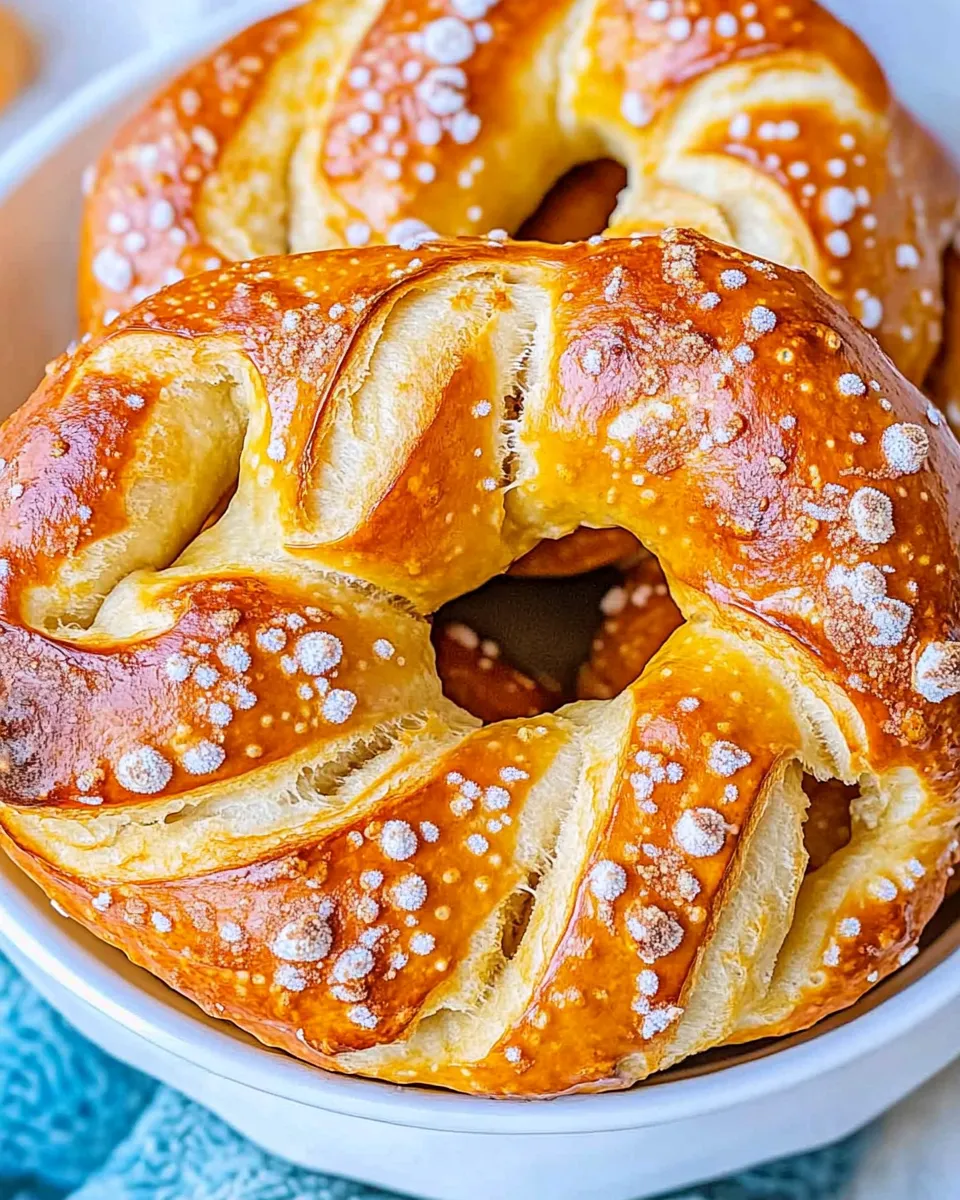
I make a batch of these homemade pretzels whenever I want a warm, chewy snack that feels like a little celebration straight from my oven. They take a bit of hands-on time, but the steps are straightforward and forgiving. Once you get the rope-rolling rhythm, the whole process becomes calming—almost therapeutic.
This recipe makes ten generous pretzels and relies on a simple baking-soda bath to give them that signature crust and deep color. The dough is enriched just enough with butter and brown sugar to be soft and a little sweet, while the coarse sea salt on top keeps each bite well balanced.
Below I give the exact steps I follow every time, the essential tools I reach for, and practical fixes for the small mistakes that usually show up when you try this at home. No fluff—just clear, usable tips that help you turn out consistently great pretzels.
The Ingredient Lineup
Ingredients
- 1 1/2 cups warm milk (approximately 110 degrees) — warms the dough and activates the yeast without killing it.
- 1 packet rapid rise yeast — gives a quick, reliable rise; the recipe relies on its fast activity.
- 1 tablespoon brown sugar — feeds the yeast and adds subtle caramel flavor to the dough.
- 1 teaspoon salt — balances sweetness and strengthens gluten for better texture.
- 1 tablespoon salted butter, melted — adds tenderness and a touch of richness to the crumb.
- 4 cups all-purpose flour — the structure of the pretzels; measure by spooning into the cup and leveling for consistency.
- 1/3 cup baking soda — dissolved into the boiling water bath to create the signature pretzel crust and color.
- 8 cups water — used for the boiling baking-soda bath; enough to allow pretzels to submerge and move freely.
- 1/4 cup coarse sea salt — finishing salt for large, crunchy crystals on top.
From Start to Finish: Homemade Pretzels
Dough & Rise
- Pour 1 1/2 cups warm milk (about 110°F) into a large mixing bowl and sprinkle 1 packet rapid rise yeast over the milk. Let sit 2–3 minutes until the yeast begins to foam.
- Whisk in 1 tablespoon brown sugar, 1 teaspoon salt, and 1 tablespoon melted salted butter until combined.
- Gradually add 4 cups all-purpose flour to the bowl, about 1 cup at a time, mixing after each addition. Use a stand mixer with a dough hook or a wooden spoon; when the dough becomes too stiff to stir, use your hands to finish incorporating the flour.
- Turn the dough out onto a lightly floured surface and knead for 5 minutes, until smooth and elastic.
- Shape the dough into a ball and place it into a lightly greased bowl. Cover with plastic wrap and let rise in a warm place until doubled in size, about 30–45 minutes.
Shaping, Boil & Bake
- Meanwhile preheat the oven to 400°F. Line 2 baking sheets with parchment paper and lightly spray the parchment. In a large pot bring 8 cups water and 1/3 cup baking soda to a boil.
- Punch down the risen dough and turn it out onto a lightly floured surface. Divide the dough into 10 equal pieces. Roll each piece into an 18-inch rope and shape each rope into a pretzel, pressing the ends to seal.
- Using a slotted spoon, carefully lower each pretzel into the boiling baking soda water for about 30 seconds (flip once so both sides submerge). Remove, let excess water drip off, and place the pretzel on a prepared baking sheet. Repeat with remaining pretzels. Evenly sprinkle the pretzels with the 1/4 cup coarse sea salt.
- Bake the pretzels at 400°F for 15 minutes or until golden brown. Remove from the oven and serve immediately.
Why It’s My Go-To
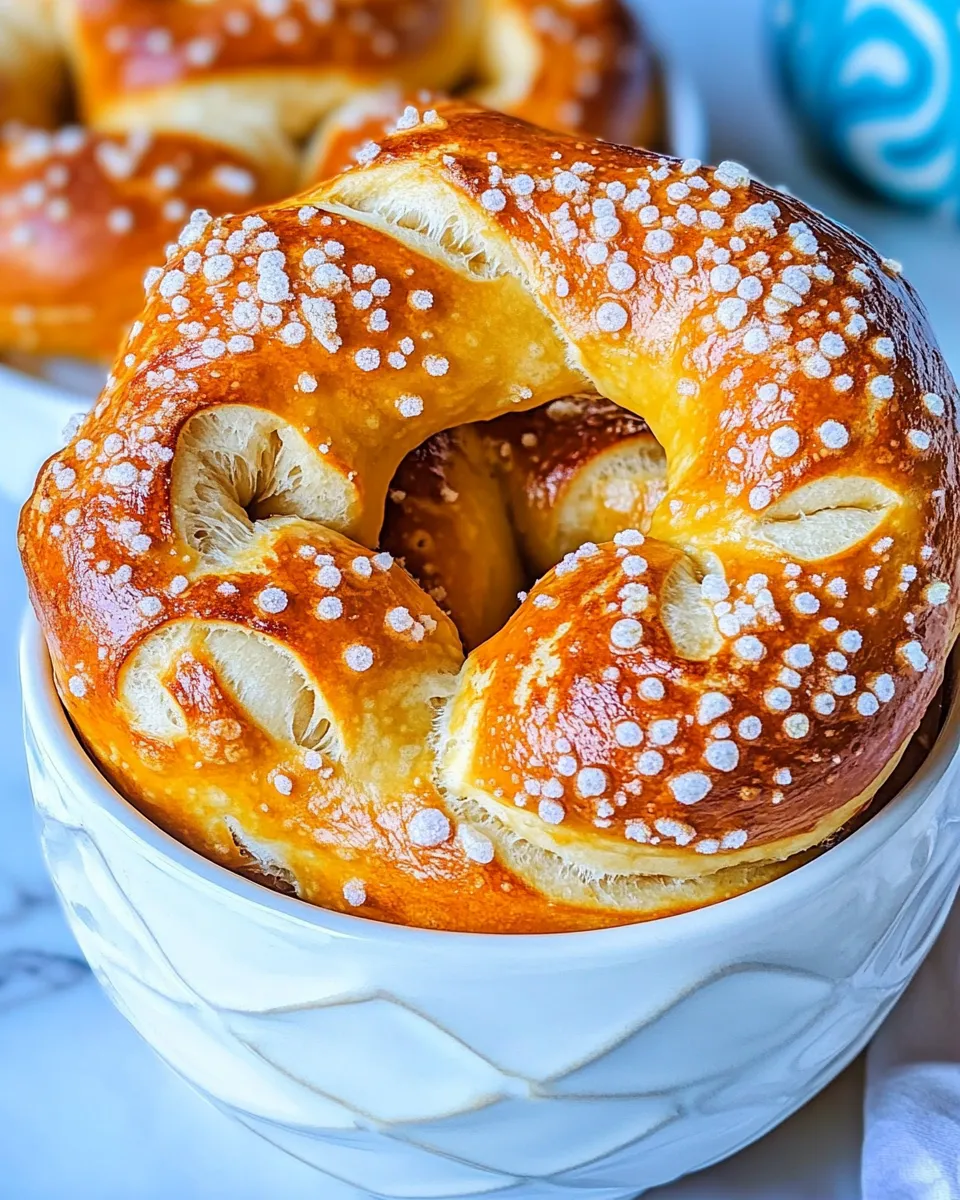
I reach for this Homemade Pretzels recipe when I want something reliably satisfying that also impresses friends and family. The ingredients are pantry staples, and most of the time is hands-off while the dough rises. The baking-soda bath is the single step that lifts these from good to great: it gives the crust the sheen and the deep color we associate with classic pretzels.
The texture is the other reason I keep coming back. The dough is soft and elastic, which yields a tender interior with the right amount of chew. The coarse sea salt on top gives a contrast to the slightly sweet dough. For weekday afternoons, movie nights, or casual entertaining, this recipe provides a tactile, homemade snack without complicated techniques.
Dairy-Free/Gluten-Free Swaps
If you need a dairy-free version, swap the warm milk for an equal amount of unsweetened plant milk warmed to the same temperature, and use a tablespoon of neutral oil (like vegetable or sunflower) instead of the melted salted butter. If you eliminate the salt in butter, keep the 1 teaspoon of salt in the dough as written, or taste may suffer.
For gluten-free, you’ll need a reliable 1-to-1 gluten-free flour blend that includes xanthan gum or add it separately according to the blend’s instructions. Gluten-free dough behaves differently: it won’t develop the same elasticity, so handle shaping gently. The baking-soda bath and bake steps stay the same, but expect differences in chew and color. I recommend testing a small batch first to tweak hydration—some blends absorb more liquid.
Toolbox for This Recipe
- Large mixing bowl — for proofing the dough and mixing.
- Stand mixer with dough hook or sturdy wooden spoon — speeds up mixing and saves your arms.
- Large pot — for the baking-soda water bath; it needs to hold 8 cups of water comfortably.
- Slotted spoon — to transfer pretzels safely from bath to baking sheet.
- Baking sheets and parchment paper — hot, non-stick surface for baking.
- Kitchen scale or measuring cups — measure flour accurately for consistent results.
- Instant-read thermometer (optional) — to check milk temperature if you’re unsure about 110°F.
Common Errors (and Fixes)
- Dough too sticky: Sprinkle a little flour when kneading, but add it sparingly. Sticky dough often leads to better chew after baking.
- Dough won’t rise: Check the milk temperature; it should be warm, not hot. Yeast dies above about 130°F. Also make sure your yeast isn’t expired.
- Pretzels flatten during boil: Make sure the ropes have a good seal where you join the ends. A weak seal can open in the water.
- Pretzels are pale after baking: Ensure your baking soda bath is at a rolling boil and that you flip the pretzels once while boiling. A longer bath (without soaking) can darken the crust slightly.
- Salt clumps or melts in spots: Sprinkle coarse salt right after the bath while the pretzels are wet so crystals stick; avoid over-salting one spot.
In-Season Swaps
Seasonal toppings can make these feel new without changing the method. In autumn, try sprinkling a cinnamon-sugar blend on a few pretzels right after the baking-soda bath for a sweet twist—brush lightly with melted butter first so the sugar adheres. In late summer, a light sprinkle of finely grated lemon zest mixed with sea salt brightens each bite.
For winter gatherings, add a coarse-grain mustard dip served warm, or swap the coarse sea salt for flaky finishing salt combined with cracked black pepper for a savory option. None of these swaps affect the core steps—shape, boil, bake—so your technique stays consistent.
What Could Go Wrong
Pretzels sound straightforward, but a few small missteps change the result. Too-hot milk kills the yeast and yields dense dough. Under-kneading prevents gluten from developing, which affects chew and shape. Too much flour during shaping makes ropes difficult to roll and can choke the texture. Overcrowding the boiling bath prevents proper submersion and can lead to uneven color. Finally, baking at the wrong temperature will either underbake interiors or overbrown exteriors—stick to 400°F.
Meal Prep & Storage Notes
These pretzels are best served the day they’re baked, when crust and crumb are at their peak. If you need to make them ahead, let them cool completely, then store in an airtight container at room temperature for up to 24 hours. To refresh stale pretzels, wrap them in foil and heat in a 300°F oven for 5–10 minutes.
For longer storage, freeze fully cooled pretzels individually on a tray, then transfer to a sealed bag for up to 2 months. Reheat from frozen by wrapping in foil and baking at 350°F for 12–18 minutes, or thaw overnight in the fridge and warm at 300°F for 8–10 minutes.
Top Questions & Answers
- Can I use active dry yeast instead of rapid rise? Yes. If using active dry yeast, proof it in the warm milk for 5–10 minutes until foamy before proceeding; you may see a slightly slower rise.
- Do I have to use a baking-soda bath? The soda bath is important for the classic pretzel crust and deep color. If you skip it, you’ll still get a tasty bread roll, but it won’t have the same exterior.
- Why is the baking soda amount so high? Pretzel baths need a strongly alkaline solution. 1/3 cup baking soda in 8 cups water creates that effect safely when boiled—don’t substitute with baking powder.
- How thin should I roll the ropes? Roll to about 18 inches as directed. If they’re too thin they can over-brown; too thick and they’ll take longer to bake and lose crispness.
- Can I make smaller or larger pretzels? Yes. Adjust the number of pieces you divide the dough into, but remember to adjust boiling and baking space so they aren’t crowded.
- Can I add toppings like seeds or cheese? Yes—press toppings gently onto the wet surface after the baking-soda bath so they adhere. For cheese, a light sprinkle bakes well; heavier cheese may spread.
Serve & Enjoy
Serve these pretzels warm with grainy mustard, melted butter, or a simple cheese sauce. They pair wonderfully with a cold beer or a warm cup of tea—depending on the occasion. Bite into one right out of the oven if you can; you’ll notice the contrast between the shiny, deep-brown crust and the tender, slightly sweet interior. That’s the reward for a little time and attention in the kitchen.

Homemade Pretzels
Ingredients
Ingredients
- 1 1/2 cupswarm milkapproximately 110 degrees
- 1 packetrapid rise yeast
- 1 tablespoonbrown sugar
- 1 teaspoonsalt
- 1 tablespoonsalted butter melted
- 4 cupsall-purpose flour
- 1/3 cupbaking soda
- 8 cupswater
- 1/4 cupcoarse sea salt
Instructions
Instructions
- Pour 1 1/2 cups warm milk (about 110°F) into a large mixing bowl and sprinkle 1 packet rapid rise yeast over the milk. Let sit 2–3 minutes until the yeast begins to foam.
- Whisk in 1 tablespoon brown sugar, 1 teaspoon salt, and 1 tablespoon melted salted butter until combined.
- Gradually add 4 cups all-purpose flour to the bowl, about 1 cup at a time, mixing after each addition. Use a stand mixer with a dough hook or a wooden spoon; when the dough becomes too stiff to stir, use your hands to finish incorporating the flour.
- Turn the dough out onto a lightly floured surface and knead for 5 minutes, until smooth and elastic.
- Shape the dough into a ball and place it into a lightly greased bowl. Cover with plastic wrap and let rise in a warm place until doubled in size, about 30–45 minutes.
- Meanwhile preheat the oven to 400°F. Line 2 baking sheets with parchment paper and lightly spray the parchment. In a large pot bring 8 cups water and 1/3 cup baking soda to a boil.
- Punch down the risen dough and turn it out onto a lightly floured surface. Divide the dough into 10 equal pieces. Roll each piece into an 18-inch rope and shape each rope into a pretzel, pressing the ends to seal.
- Using a slotted spoon, carefully lower each pretzel into the boiling baking soda water for about 30 seconds (flip once so both sides submerge). Remove, let excess water drip off, and place the pretzel on a prepared baking sheet. Repeat with remaining pretzels. Evenly sprinkle the pretzels with the 1/4 cup coarse sea salt.
- Bake the pretzels at 400°F for 15 minutes or until golden brown. Remove from the oven and serve immediately.
Equipment
- Large Mixing Bowl
- stand mixer (optional)
- dough hook (optional)
- Wooden Spoon
- Baking Sheets
- Parchment Paper
- Large Pot
- Slotted spoon
- Plastic Wrap
Notes
Make sure your milk isn’t too warm, which can kill the yeast. 110 degrees is a good temperature.
Remember, you might not use all of the flour – that’s okay!