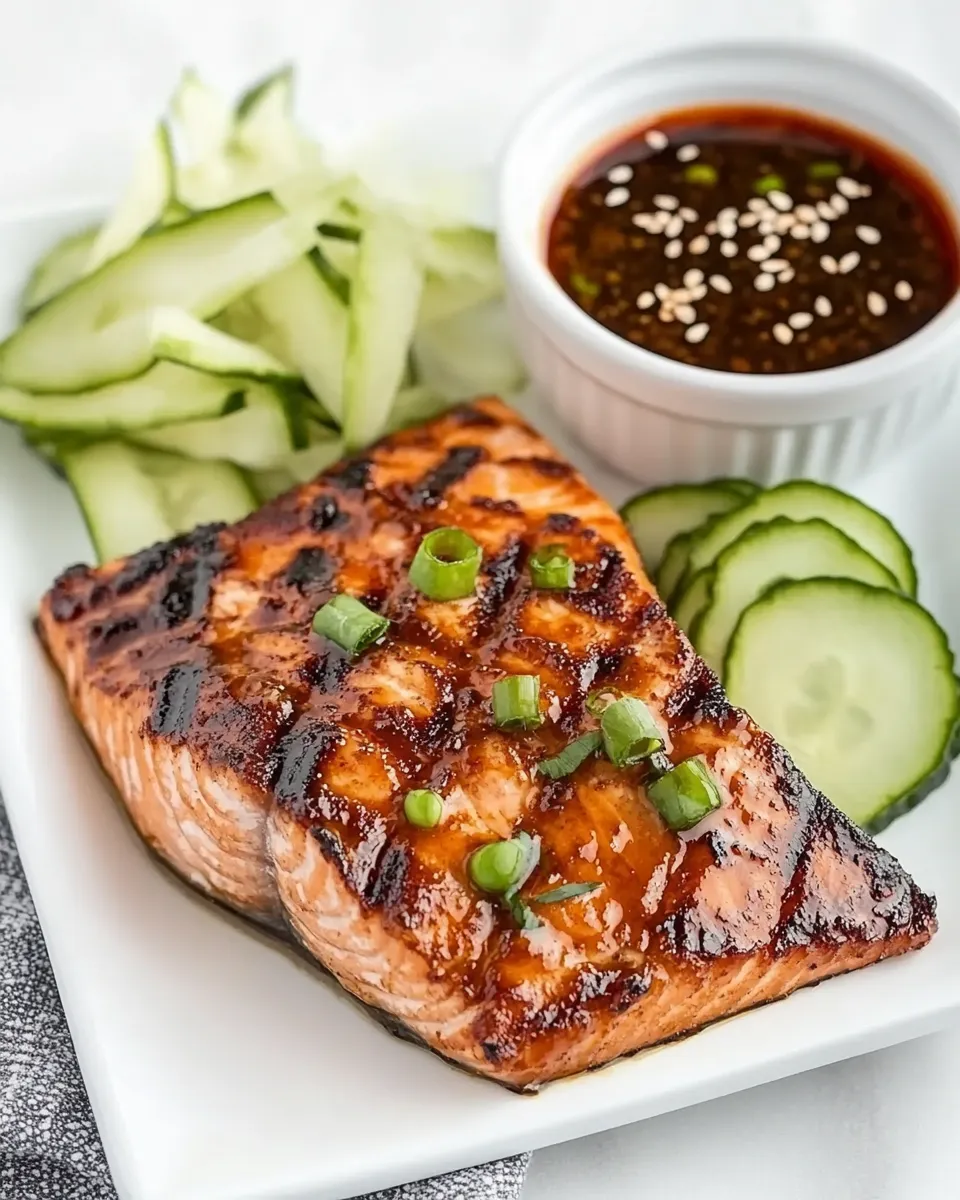
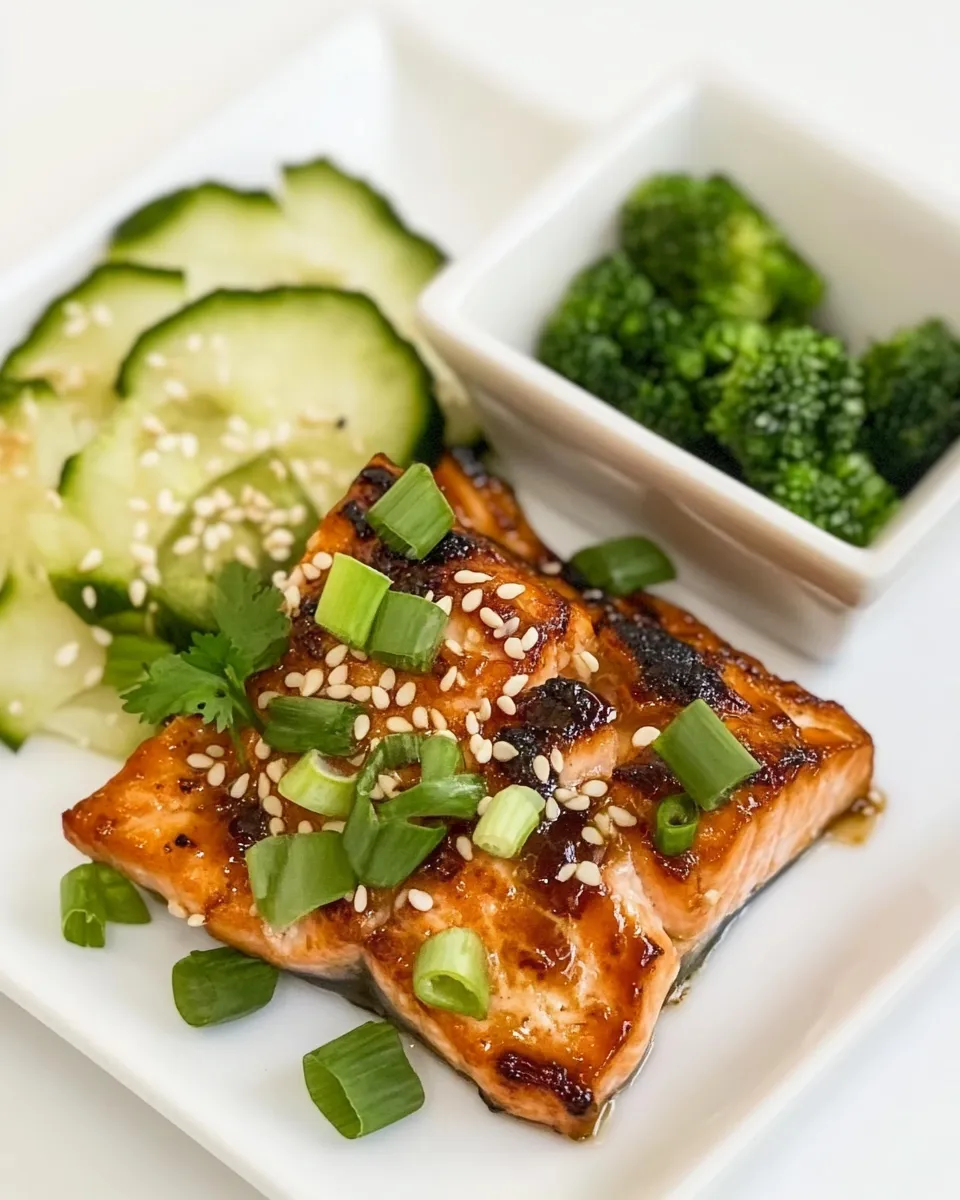
I love the contrast of a hot, charred fillet and a cool dipping sauce. Korean salmon is all about that snap of a properly seared exterior, the silky interior, and the bright finish a sauce adds when you dip each bite. This recipe is straightforward: a short marinate (optional), a hot grill, and a quick rest before serving.
No complicated prep. No long lists of pantry items. If you already have a favorite Korean-style sauce or a store-bought dipping sauce, this method will highlight the salmon without swallowing the flavors. If you prefer to skip a sauce, the cooking technique alone makes excellent salmon.
Below I walk you through exactly what you need, the step-by-step grilling method I test and trust, and practical notes for swapping gear, troubleshooting, and storing leftovers. Read the whole thing or jump to the section you need — it’s all set up for real cooking, not just scrolling.
What Goes Into Korean Salmon with Dipping Sauce
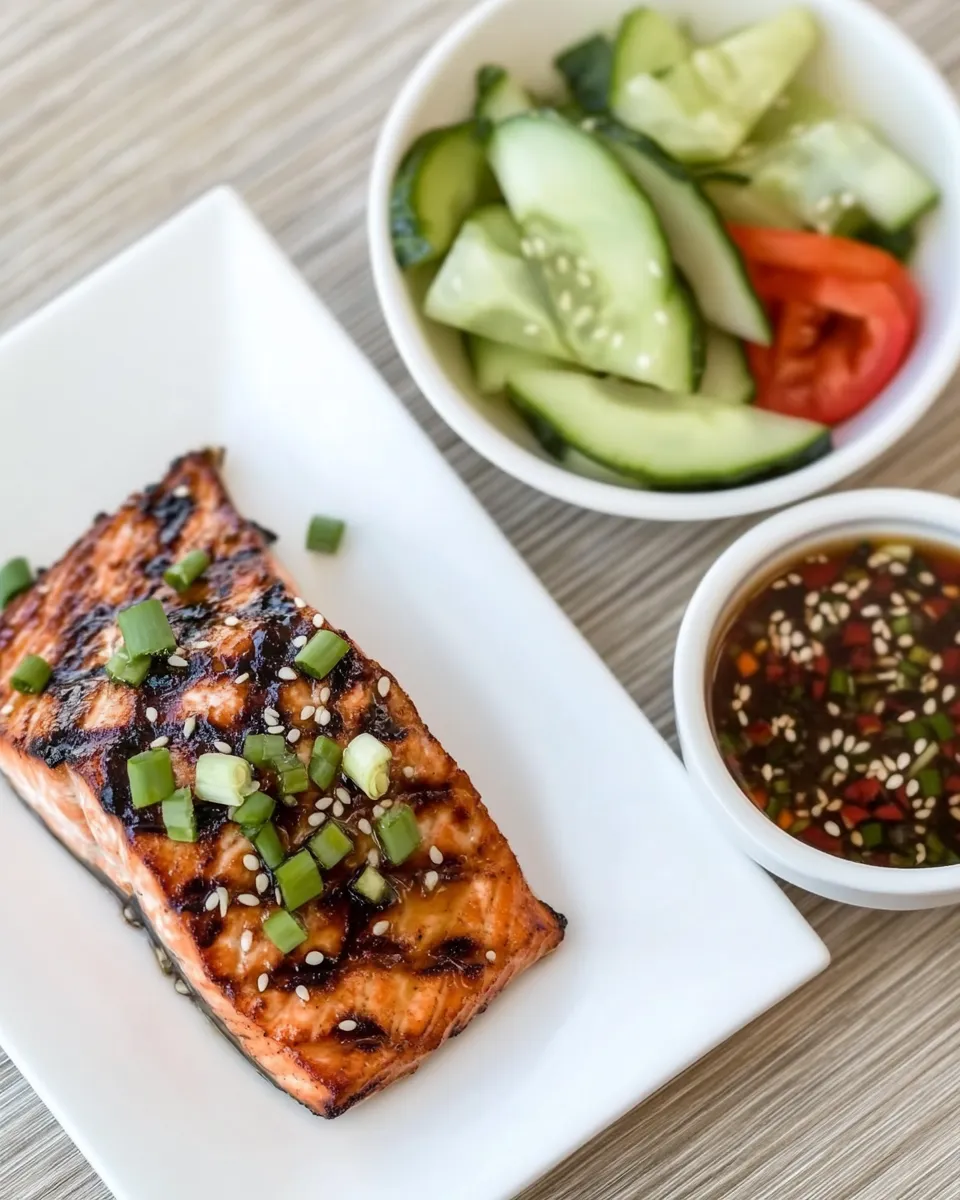
This is a lean, technique-forward recipe. The star is the salmon, and the rest is about supporting it: a short marinate if you want more flavor and a dipping sauce to finish. Keep the seasoning simple and let a hot grill do the work — you’re aiming for those crisp grill marks and tender flakes inside.
Ingredients
- 4 salmon fillets — the main protein; pat dry before marinating or grilling for the best sear.
Korean Salmon with Dipping Sauce, Made Easy
- If the salmon is frozen, thaw it in the refrigerator overnight. Drain any liquid and pat the fillets dry with paper towels.
- If you plan to use a marinade or a prepared dipping sauce, divide that mixture in half now: reserve one half for serving and use the other half to marinate the fish. (If you are not using a marinade or sauce, skip to step 4.)
- Place the salmon fillets in a zip-top bag or a plastic container with a snap-tight lid. Pour the half reserved for marinating over the fillets, seal the container, and refrigerate for about 1 hour. A little longer is fine; avoid marinating for many hours unless your marinade is mild.
- When ready to cook, remove the salmon from the refrigerator and let it sit at room temperature for 10–15 minutes.
- Prepare the grill: clean the grates, then apply a thin coating of cooking oil or nonstick spray to the grates to help prevent sticking. Preheat the grill to medium-high (test: you should only be able to hold your hand about 2–3 seconds over the heat).
- Lightly coat the top surface of each fillet with a thin layer of cooking oil or spray (optional, if you prefer to baste or to help prevent sticking).
- Place each fillet on the preheated grill with the top side down and positioned at an angle to the grill grates. Grill 2–3 minutes, until you can see clear grill marks forming.
- Carefully lift and rotate each fillet 90 degrees (to the opposite angle) without flipping, and grill another 2–3 minutes to create criss-cross marks.
- Lightly oil the other side of the fillets if desired, then flip each fillet and grill the second side about 3–4 minutes, or until the salmon feels just firm and flakes easily.
- If using an instant-read thermometer, remove the salmon when it reaches approximately 130°F (55°C) for medium doneness. Total cooking time should be about 8–10 minutes depending on thickness — avoid overcooking.
- Transfer the fillets to a serving plate and let rest 1–2 minutes.
- Serve hot. If you prepared a dipping sauce in step 2, place the reserved half of the sauce on the side for serving.
What Sets This Recipe Apart
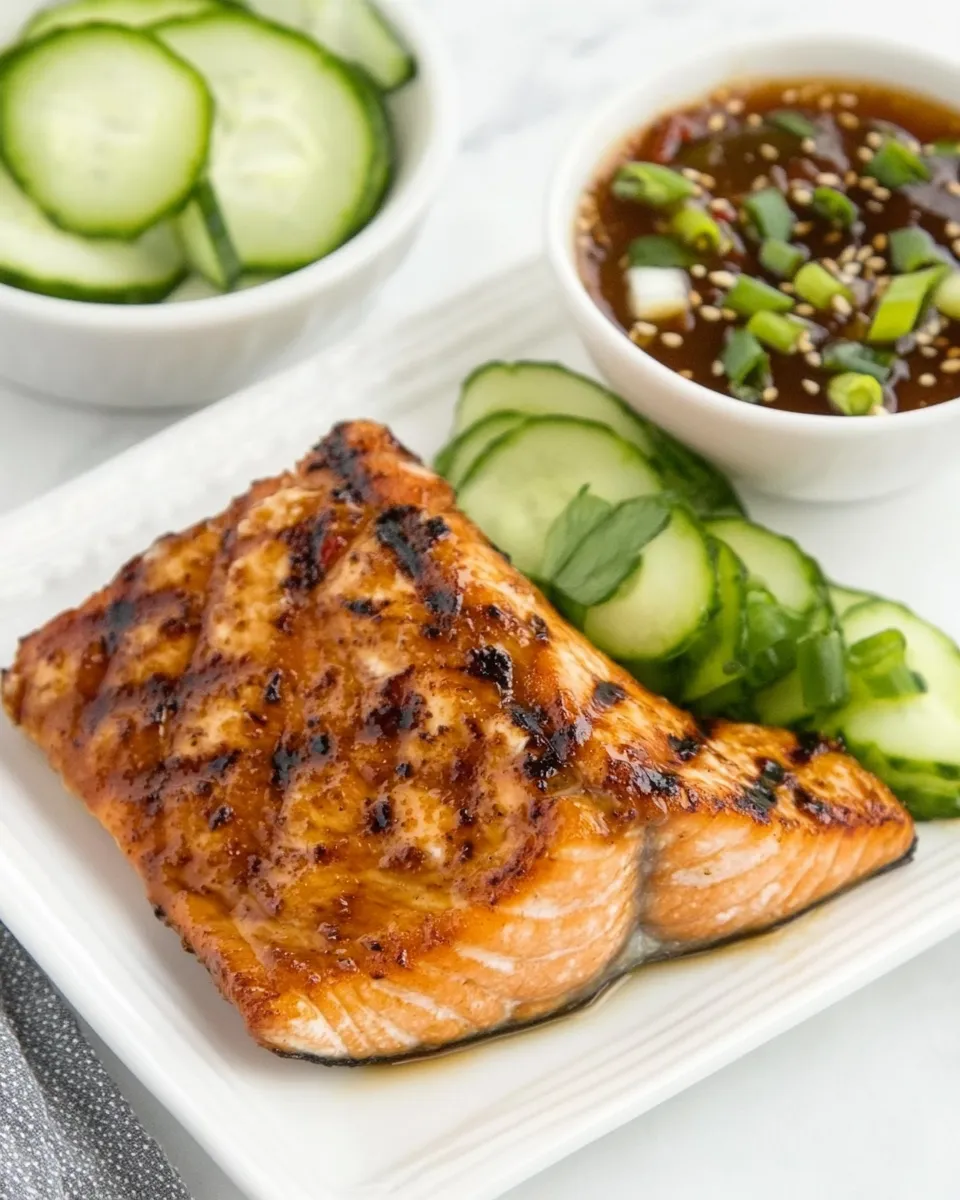
There are plenty of salmon recipes, but this one focuses on two things: timing and control. The short marinating window infuses flavor without breaking down the flesh. The grill-mark technique — placing fillets at an angle and rotating to form criss-cross marks — gives you that restaurant-grade presentation and concentrated caramelization in only a few minutes per side.
Another difference is flexibility. You can use a prepared dipping sauce or a simple, homemade one; the recipe is deliberately sauce-agnostic. The idea is to keep the salmon’s texture and flavor center stage, with the sauce as an accent rather than a cover-up.
If You’re Out Of…
- Grill — use a hot cast-iron skillet or a heavy stainless-steel pan. Heat it until very hot, oil the pan or the fish lightly, and follow the same timing as the grill steps. You’ll get a great sear and similar cook times.
- Outdoor space — use your oven broiler on high, close to the heat source. Watch closely: broiling can give a charred top quickly. Use the same internal temperature target to avoid overcooking.
- Prepared dipping sauce — any bold, tangy sauce works. If you don’t have one, serve the salmon simply with a wedge of citrus or a neutral condiment and let the texture speak for itself.
What’s in the Gear List
Keep the tools simple and reliable. You don’t need any specialty gadgets.
- Grill with clean grates — for the classic char and quick, even heat.
- Zip-top bag or plastic container with a snap-tight lid — for easy marinating and cleanup.
- Paper towels — to dry fillets before cooking; critical for a good sear.
- Cooking oil or nonstick spray — to oil grates and fillets so the fish doesn’t stick.
- Tongs or a thin spatula — to turn the fillets carefully without tearing.
- Instant-read thermometer — optional, but the most reliable way to hit that 130°F (55°C) target for medium doneness.
- Serving plate — let the fillets rest briefly before plating.
Slip-Ups to Skip
Small mistakes make a big difference with salmon because it cooks quickly. Avoid these common errors:
- Skipping the pat-dry step — wet fish steams instead of sears. Pat thoroughly.
- Marinating too long with a strong acid — this can make the flesh mushy. Stick to the suggested hour or use a mild mixture.
- Cooking on a low grill — you want a hot surface so the exterior sears fast and the inside stays tender.
- Flipping too often — let the fish develop one side properly. Flip once for best texture and presentation.
- Skipping the rest — even a minute or two lets the juices settle and prevents a dryer bite.
Year-Round Variations
Salmon is versatile. Here are practical ways to adapt this method across seasons and kitchens.
Summer — outdoor grill
When it’s warm, grill outside. The hot direct heat is ideal. Keep the fillets out of the sun until the last minute so they stay firm and manageable on the grates.
Winter — indoor options
In colder months, switch to a hot skillet or broiler. Cast iron gives you the sear you’re after; the broiler gives quick top char. Both are fast and keep the cooking time short so the salmon remains tender.
Make-ahead sauce strategy
If you prepare a dipping sauce, make it early in the day. Marinate in the fridge as directed, saving half for serving so flavors stay bright when the salmon hits the table.
What I Learned Testing
I tested this recipe several ways: thin fillets, thick fillets, skin-on, skin-off, and with different resting times. The most consistent results came from focusing on timing rather than trying to “eyeball” doneness. The 2–3 minute initial sear, rotation for gridded marks, then 3–4 minutes on the second side produced fillets that were charred but still tender inside for a wide range of thicknesses.
The instant-read thermometer was a revelation in consistency. When the center hit approximately 130°F (55°C), the salmon was moist, flaky, and had a slight translucency that I prefer. Remove it at that point, and the residual heat sets the texture to perfect during the short rest.
Also: don’t let the fillets sit cold on the grill. Bringing them to room temperature for 10–15 minutes before cooking helps them cook more evenly and reduces sticking.
Refrigerate, Freeze, Reheat
Leftover cooked salmon keeps well if you handle it correctly. Cool it quickly and store in an airtight container:
- Refrigerator: 3–4 days for cooked salmon.
- Freezer: up to 2 months if wrapped tightly to prevent freezer burn.
To reheat, use a low oven (about 275–300°F) just until warm to avoid drying it out. Alternatively, a quick pan reheat over gentle heat with a splash of liquid or a lid to steam briefly will refresh the texture. If you have a sauce reserved, serve it chilled or at room temperature alongside reheated fillets.
Reader Q&A
Q: How do I know when the salmon is done?
A: Use an instant-read thermometer and target roughly 130°F (55°C) for medium doneness. Visually, look for the flesh to be opaque on the outside and just starting to flake when you press gently with a fork. It will continue to cook a bit during the short rest.
Q: Can I skip the marinating step?
A: Yes. The marinate is optional. The grilling technique alone yields a very satisfying result. If you do marinate, follow the timing in the instructions and reserve half of the sauce for serving.
Q: Should I cook skin-on or skin-off?
A: Either works. Skin-on helps hold the fillet together and crisps up nicely on a hot grill or pan. If you prefer skin-off, just handle the fillets a bit more gently when flipping.
Q: My fillet stuck to the grill — what went wrong?
A: Most often, the grill wasn’t hot enough or the fish wasn’t dry. Clean, well-oiled grates and a preheated grill are your friends. Also, give the fish time to release naturally before trying to move it; a proper sear will let it come off cleanly.
Hungry for More?
If you liked this method, try the same approach with other firm-fleshed fish or with different finishing sauces and sides. The technique scales up or down with portion size and fits weeknight dinners, small gatherings, and casual outdoor meals.
If you want more tips, sign up for the newsletter on the blog or poke around the archives for more grilling guides and quick seafood meals. I test everything until it’s reliable, and I’ll keep sharing what works in real kitchens.
Korean Salmon with Dipping Sauce
Ingredients
Ingredients
- 4 salmon fillets
Instructions
Instructions
- If the salmon is frozen, thaw it in the refrigerator overnight. Drain any liquid and pat the fillets dry with paper towels.
- If you plan to use a marinade or a prepared dipping sauce, divide that mixture in half now: reserve one half for serving and use the other half to marinate the fish. (If you are not using a marinade or sauce, skip to step 4.)
- Place the salmon fillets in a zip-top bag or a plastic container with a snap-tight lid. Pour the half reserved for marinating over the fillets, seal the container, and refrigerate for about 1 hour. A little longer is fine; avoid marinating for many hours unless your marinade is mild.
- When ready to cook, remove the salmon from the refrigerator and let it sit at room temperature for 10–15 minutes.
- Prepare the grill: clean the grates, then apply a thin coating of cooking oil or nonstick spray to the grates to help prevent sticking. Preheat the grill to medium-high (test: you should only be able to hold your hand about 2–3 seconds over the heat).
- Lightly coat the top surface of each fillet with a thin layer of cooking oil or spray (optional, if you prefer to baste or to help prevent sticking).
- Place each fillet on the preheated grill with the top side down and positioned at an angle to the grill grates. Grill 2–3 minutes, until you can see clear grill marks forming.
- Carefully lift and rotate each fillet 90 degrees (to the opposite angle) without flipping, and grill another 2–3 minutes to create criss-cross marks.
- Lightly oil the other side of the fillets if desired, then flip each fillet and grill the second side about 3–4 minutes, or until the salmon feels just firm and flakes easily.
- If using an instant-read thermometer, remove the salmon when it reaches approximately 130°F (55°C) for medium doneness. Total cooking time should be about 8–10 minutes depending on thickness — avoid overcooking.
- Transfer the fillets to a serving plate and let rest 1–2 minutes.
- Serve hot. If you prepared a dipping sauce in step 2, place the reserved half of the sauce on the side for serving.
Equipment
- zip-top bag or plastic container with lid
- Paper Towels
- Grill
- Instant-read thermometer