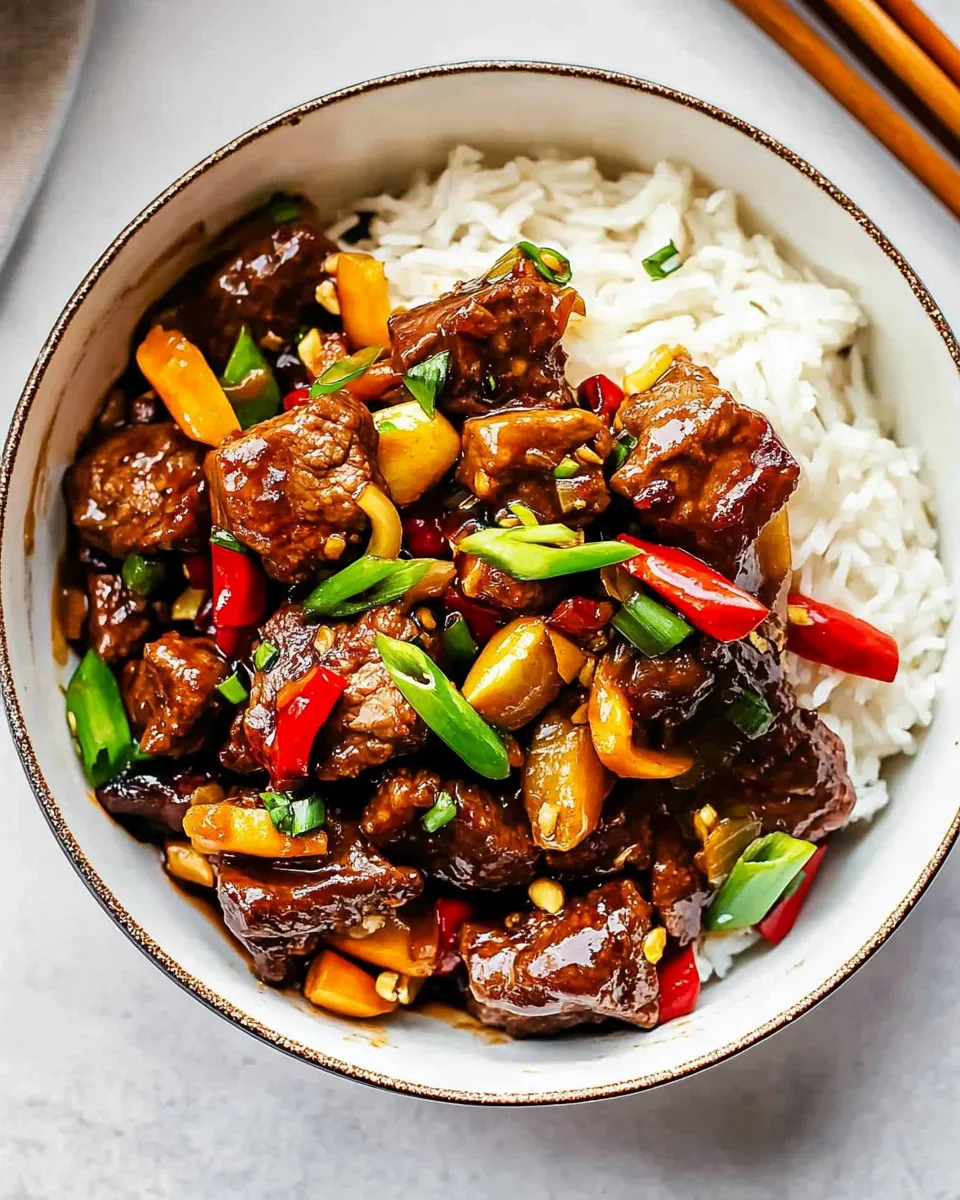
I make Kung Pao Beef when I want something bold, fast, and reliably comforting. This version leans on a straightforward marinade and a bright, tangy sauce that clings to tender strips of flank steak. It moves quickly on the stove, so prep and mise en place are worth the few extra minutes.
What I love about this recipe is the play of textures: crisp-tender bell peppers, toasty peanuts, and meat that stays juicy because of the cornstarch in the marinade. The heat is from dried chilis and chili paste, but you control it—add or subtract as your palate prefers.
Below you’ll find a clear ingredients list drawn from the recipe, step-by-step cooking directions taken directly from the source, and practical tips for avoiding common mistakes. Read through once, measure everything, and the skillet will do the rest.
What’s in the Bowl
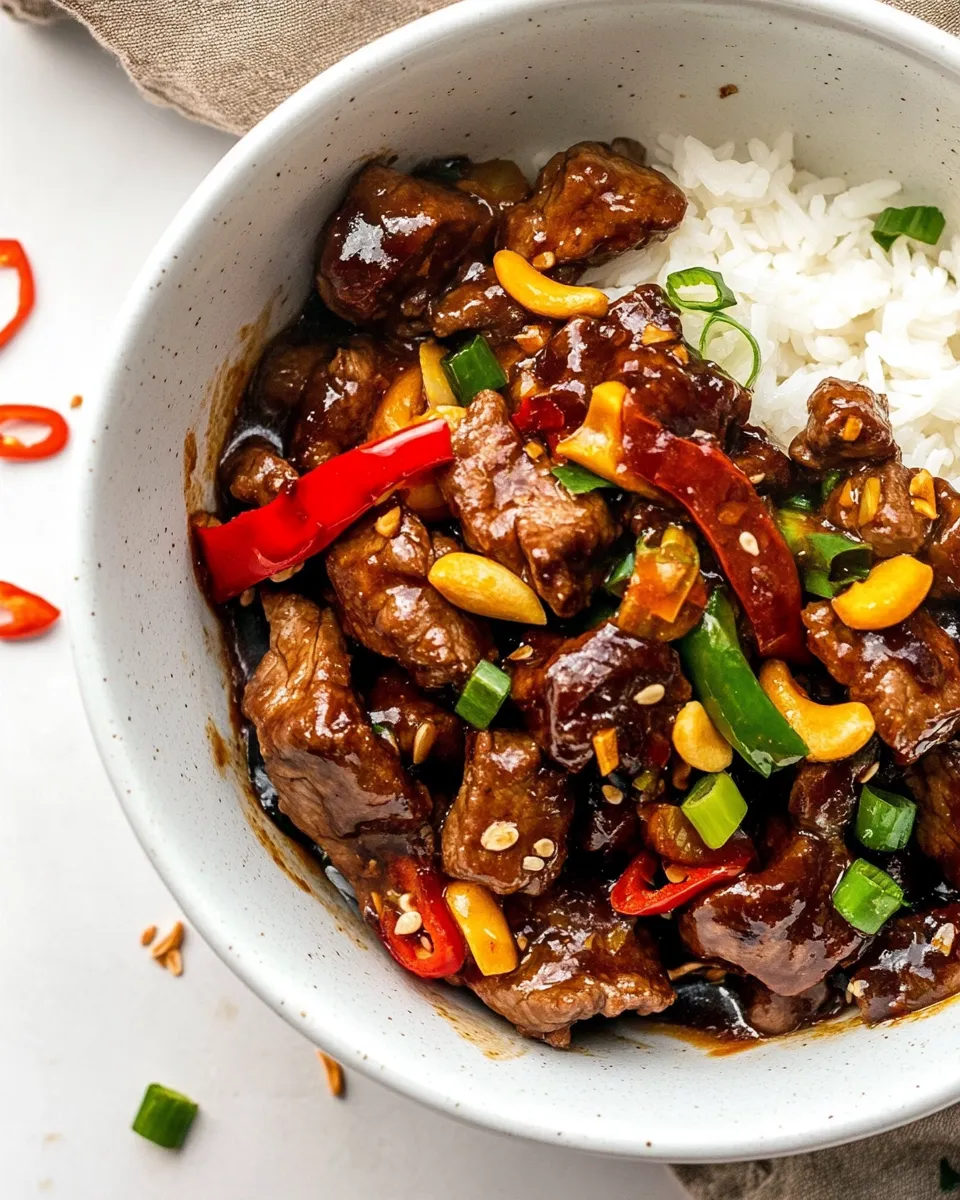
Ingredients
- 1 ½ pounds flank steak, sliced into ½-inch by 2-inch slices — the main protein; slice against the grain for tender bites.
- ¼ cup soy sauce — used twice in the recipe; provides savory saltiness and umami.
- ¼ cup beef broth — used twice; adds depth and a bit of meaty richness to both the marinade and sauce.
- 1 tablespoon cornstarch — used in the marinade; helps seal juices and makes the beef glossy.
- 1 tablespoon chili paste — in the marinade; builds a baseline of heat and flavor.
- 2 teaspoons minced garlic, about 2 cloves — in the marinade; aromatic backbone.
- 2 tablespoons vegetable oil — used for the marinade and for stir-frying; neutral high-heat oil.
- 1 dried red chili, minced — in the sauce; concentrated chili flavor.
- 1 tablespoon ginger paste, or grated ginger — bright, warm spice in the sauce.
- 2 teaspoons minced garlic, about 2 cloves — additional garlic in the sauce; layer the aroma.
- ¼ cup rice vinegar — in the sauce; adds acidity to balance sweet and salty notes.
- 2 tablespoons Chinkiang vinegar — dark rice vinegar for tang and a hint of molasses-like depth.
- 2 tablespoons brown sugar — sweetens and balances the vinegars and chili.
- 1 tablespoon red chili paste — more chili heat and color in the sauce.
- 1 tablespoon cornstarch — in the sauce; thickens it so it clings to beef and vegetables.
- 2 tablespoons vegetable oil — for the hot skillet or wok; keeps everything moving without burning.
- 1 red bell pepper, sliced into 2-inch pieces — for color and sweetness; slice thick enough to stay crisp-tender.
- 1 green bell pepper, sliced into 2-inch pieces — adds a slightly bitter counterpoint and crunch.
- 4 dried red chilis, diced — for stir-fry heat and texture.
- ¼ cup chopped peanuts — toasty crunch and nutty flavor; stir-fried with the peppers.
- ¼ cup chopped green onions, more for garnish — freshness and a mild onion finish when scattered on top.
Kung Pao Beef: How It’s Done
- Make the marinade: in a bowl whisk together ¼ cup soy sauce, ¼ cup beef broth, 1 tablespoon cornstarch, 1 tablespoon chili paste, 2 teaspoons minced garlic, and 2 tablespoons vegetable oil.
- Put the 1 ½ pounds flank steak slices in a bowl or sealable bag, pour the marinade over the beef, toss to coat, and marinate at least 30 minutes.
- While the beef marinates, make the sauce: in a separate bowl whisk together 1 dried red chili (minced), 1 tablespoon ginger paste, 2 teaspoons minced garlic, ¼ cup soy sauce, ¼ cup rice vinegar, ¼ cup beef broth, 2 tablespoons Chinkiang vinegar, 2 tablespoons brown sugar, 1 tablespoon red chili paste, and 1 tablespoon cornstarch. Set the sauce aside.
- When ready to cook, heat 2 tablespoons vegetable oil in a large skillet or wok over medium-high heat.
- Remove the beef from the marinade (discard the marinade). Add the beef to the hot skillet in a single layer (work in batches if needed) and cook, stirring or tossing, until evenly browned and cooked through, about 4–5 minutes. Transfer the cooked beef to a plate.
- Add the 1 red bell pepper and 1 green bell pepper (each sliced into 2-inch pieces), 4 dried red chilis (diced), ¼ cup chopped peanuts, and ¼ cup chopped green onions to the skillet. Stir-fry, tossing frequently, until the peppers are tender-crisp and the peanuts are lightly toasted, about 2–4 minutes.
- Return the beef to the skillet, pour in the sauce, and stir to combine. Cook, stirring, until the sauce thickens and coats the beef and vegetables, about 1–2 minutes.
- Remove from heat and serve garnished with additional chopped green onions.
Why You’ll Love This Recipe
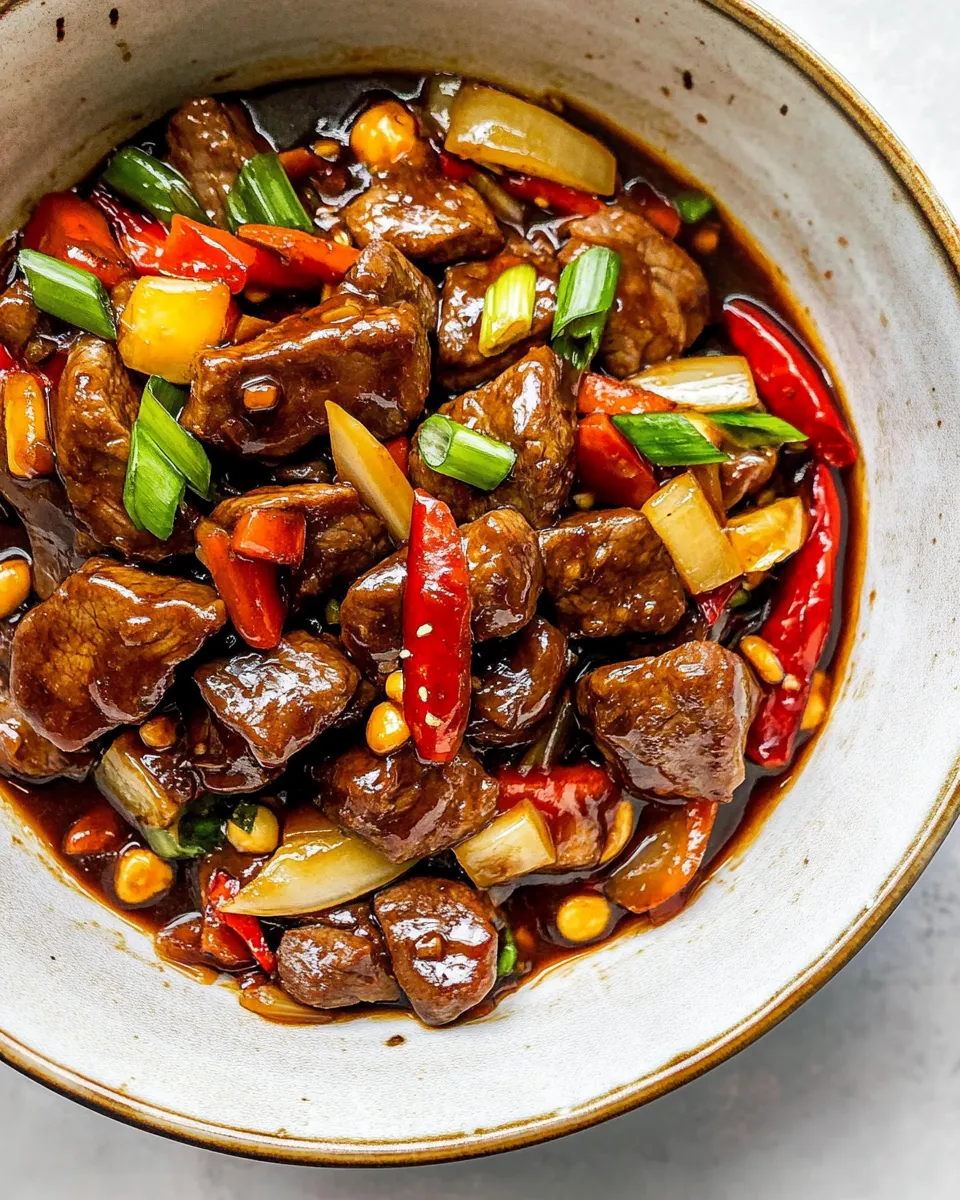
This Kung Pao Beef checks a lot of boxes: bold flavors, quick cooking, and a great contrast of textures. The method is built around a simple marinade that tenderizes and seasons the meat before it ever hits the pan. The sauce is layered with vinegars and sugar so each bite has sweet, salty, sour, and spicy notes that keep you reaching for the next forkful.
It’s also flexible. You can scale the heat up or down, serve it over steamed rice or noodles, and make most of it ahead—the sauce comes together beforehand and the marinade is forgiving. For weeknights where time matters, it’s a winner.
Dairy-Free/Gluten-Free Swaps
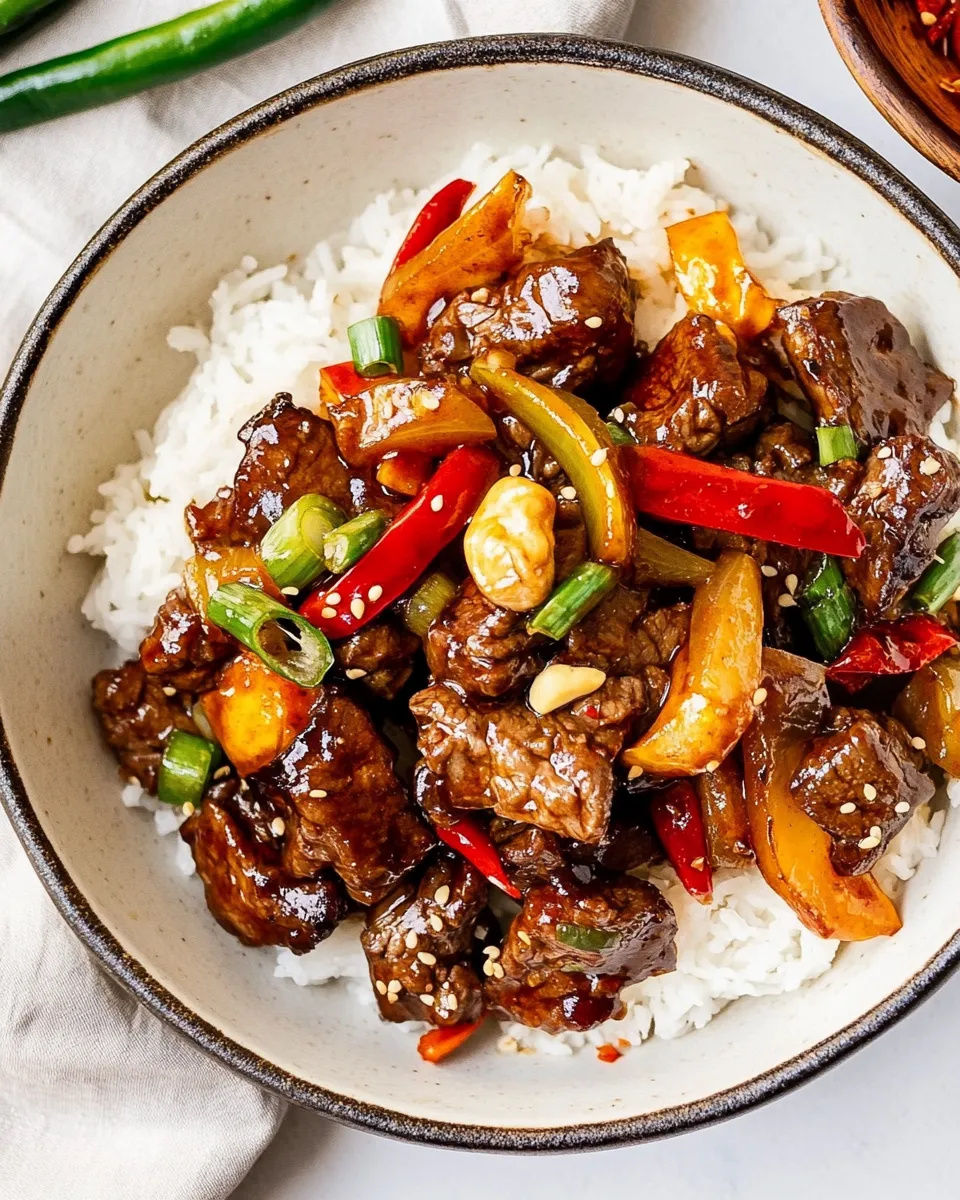
- Gluten-free: substitute tamari or a certified gluten-free soy sauce for soy sauce (both the marinade and sauce).
- Dairy-free: the recipe contains no dairy; it’s naturally dairy-free as written.
- Lower-sodium: use a low-sodium soy sauce and adjust saltiness at the end.
Must-Have Equipment
- Large skillet or wok — needed for high-heat, quick stir-frying and even browning.
- Mixing bowls — at least two: one for the marinade and one for the sauce.
- Sharp chef’s knife and cutting board — for quick, consistent slicing of steak and vegetables.
- Spatula or tongs — for tossing the beef and vegetables without splashing oil.
Learn from These Mistakes
- Overcrowding the pan — if you add too much beef at once the meat steams instead of browns. Work in batches for a proper sear.
- Skipping the cornstarch in the marinade — it’s the secret to a silky glaze and to keeping the beef juicy.
- Adding the sauce too early — add the sauce only after you’ve returned the beef so it reduces and thickens correctly.
- Not toasting the peanuts — a minute in the hot pan makes a big difference in flavor and crunch.
Season-by-Season Upgrades
Spring: Add a handful of snow peas or thinly sliced asparagus for freshness and crunch. Brighten the end with a squeeze of lemon or lime if you like extra acidity.
Summer: Swap bell peppers for a mix of colorful heirloom peppers and throw in some thinly sliced zucchini for lighter texture. Fresh chilies can be used instead of dried for brighter heat.
Fall: Stir in small broccoli florets or roasted chestnuts for earthier notes. A drizzle of sesame oil at the end deepens the aroma.
Winter: Use more robust vegetables like sliced carrots or baby bok choy. Serve over warm, comforting bowls of steamed rice or even mashed potatoes for a cozy twist.
Insider Tips
Prep and Timing
- Slice the flank steak thin and against the grain; it shortens the muscle fibers for more tender bites.
- Mix the sauce while the beef marinates so everything is ready when you’re cooking. The sauce thickens quickly; have it at hand.
Cooking and Heat Control
- Use a hot skillet or wok and keep the ingredients moving. High heat plus quick tossing equals glossy sauce and crisp-tender vegetables.
- If the sauce thickens too much, add a tablespoon of beef broth and stir to loosen it before serving.
Keep It Fresh: Storage Guide
Cool leftovers quickly to room temperature and refrigerate in an airtight container for up to 3 days. The sauce can tighten in the fridge; gently reheat in a skillet over medium heat with a splash of beef broth or water to bring it back to saucy consistency. For freezing, place cooled portions in freezer-safe containers for up to 2 months—thaw overnight in the refrigerator before reheating.
Common Qs About Kung Pao Beef
Q: Can I use a different cut of beef?
A: Yes. Flank steak is ideal for slicing thin and cooking fast. Skirt steak or a thin sirloin will also work; adjust cook time slightly based on thickness.
Q: How spicy is this as written?
A: It has moderate heat from the dried chilis and chili pastes. Reduce the number of dried chilis or use mild chili paste to make it more family-friendly. Increase chiles or add fresh hot peppers for more kick.
Q: Can I make this vegetarian?
A: This specific recipe centers on beef, but you can mimic the flavors with extra-firm tofu or seitan and vegetable broth in place of beef broth. Keep in mind texture and cooking times will change.
Q: Why are there two cornstarch additions?
A: One tablespoon in the marinade helps the beef retain juices and creates a slight velvety coat. The tablespoon in the sauce thickens it so it clings to meat and vegetables.
In Closing
Kung Pao Beef is a dependable weeknight star when you want a restaurant-worthy stir-fry without fuss. The recipe’s structure—marinade, quick sear, high-heat stir-fry, and a fast-reducing sauce—keeps the kitchen moving and the flavors focused. Follow the steps, prep everything first, and you’ll be rewarded with beef that’s tender, a sauce that’s balanced, and a dish that sings with texture.
Make it your own: adjust the heat, swap the veggies, or double the peanuts. Either way, serve it hot and enjoy the contrast of savory, sweet, tangy, and spicy in every bite.
Kung Pao Beef
Ingredients
Ingredients
- 1 1/2 poundsflank steak sliced into 1/2-inch by 2-inch slices
- 1/4 cupsoy sauce
- 1/4 cupbeef broth
- 1 tablespooncornstarch
- 1 tablespoonchili paste
- 2 teaspoonsminced garlic about 2 cloves
- 2 tablespoonsvegetable oil
- 1 dried red chili minced
- 1 tablespoonginger paste or grated ginger
- 2 teaspoonsminced garlic about 2 cloves
- 1/4 cupsoy sauce
- 1/4 cuprice vinegar
- 1/4 cupbeef broth
- 2 tablespoonsChinkiang vinegar
- 2 tablespoonsbrown sugar
- 1 tablespoonred chili paste
- 1 tablespooncornstarch
- 2 tablespoonsvegetable oil
- 1 red bell pepper sliced into 2-inch pieces
- 1 green bell pepper sliced into 2-inch pieces
- 4 dried red chilis diced
- 1/4 cupchopped peanuts
- 1/4 cupchopped green onions more for garnish
Instructions
Instructions
- Make the marinade: in a bowl whisk together ¼ cup soy sauce, ¼ cup beef broth, 1 tablespoon cornstarch, 1 tablespoon chili paste, 2 teaspoons minced garlic, and 2 tablespoons vegetable oil.
- Put the 1 ½ pounds flank steak slices in a bowl or sealable bag, pour the marinade over the beef, toss to coat, and marinate at least 30 minutes.
- While the beef marinates, make the sauce: in a separate bowl whisk together 1 dried red chili (minced), 1 tablespoon ginger paste, 2 teaspoons minced garlic, ¼ cup soy sauce, ¼ cup rice vinegar, ¼ cup beef broth, 2 tablespoons Chinkiang vinegar, 2 tablespoons brown sugar, 1 tablespoon red chili paste, and 1 tablespoon cornstarch. Set the sauce aside.
- When ready to cook, heat 2 tablespoons vegetable oil in a large skillet or wok over medium-high heat.
- Remove the beef from the marinade (discard the marinade). Add the beef to the hot skillet in a single layer (work in batches if needed) and cook, stirring or tossing, until evenly browned and cooked through, about 4–5 minutes. Transfer the cooked beef to a plate.
- Add the 1 red bell pepper and 1 green bell pepper (each sliced into 2-inch pieces), 4 dried red chilis (diced), ¼ cup chopped peanuts, and ¼ cup chopped green onions to the skillet. Stir-fry, tossing frequently, until the peppers are tender-crisp and the peanuts are lightly toasted, about 2–4 minutes.
- Return the beef to the skillet, pour in the sauce, and stir to combine. Cook, stirring, until the sauce thickens and coats the beef and vegetables, about 1–2 minutes.
- Remove from heat and serve garnished with additional chopped green onions.
Equipment
- Large skillet or wok
- Bowl
- sealable bag
- Plate
Notes
Marinate the beef for at least 30 minutes but no longer than 2 hours.
If you can’t find chinkiang vinegar, use more rice vinegar in its place.
In place of the flank steak, you can use skirt steak or tri-tip.