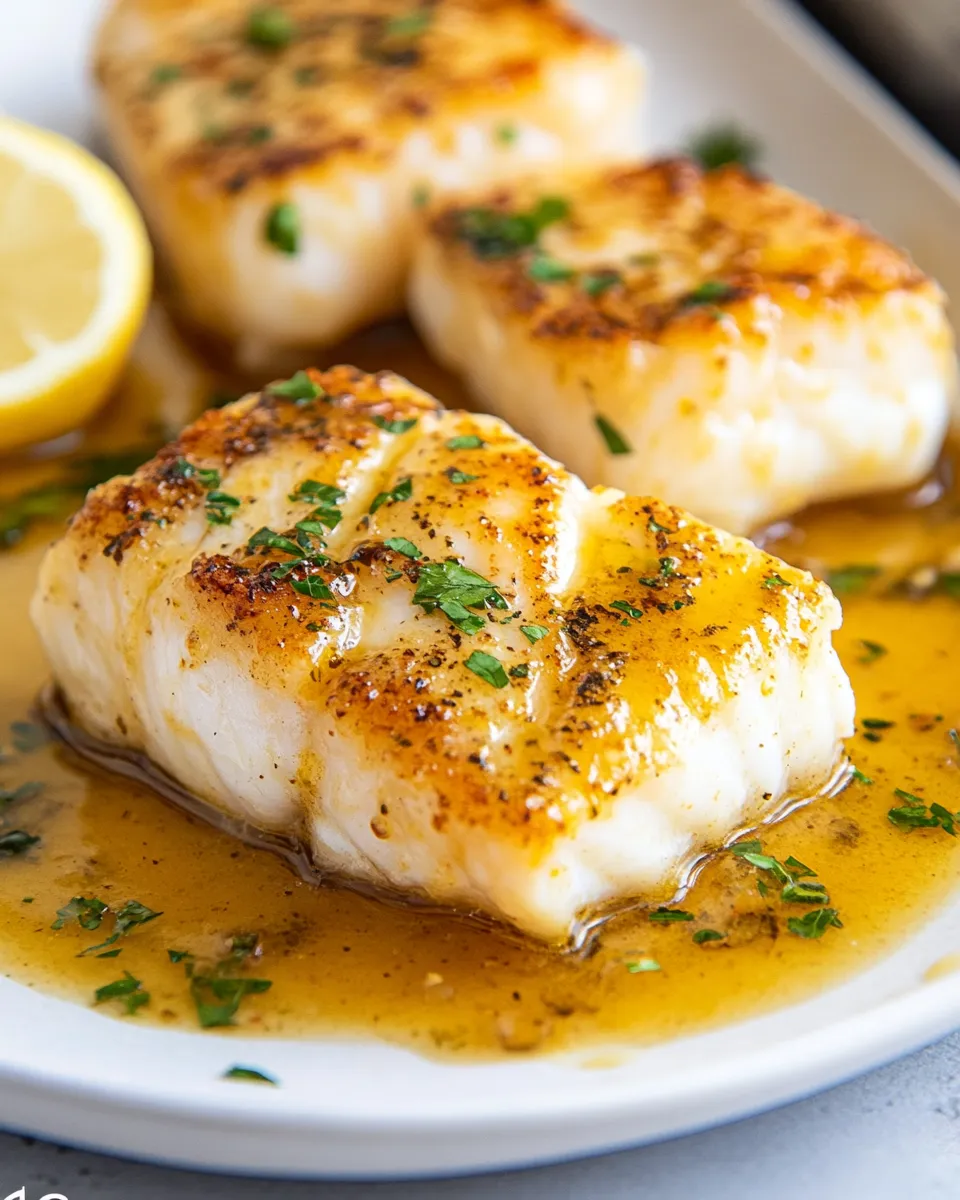
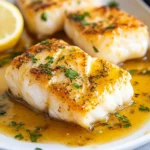
This pan-seared cod is one of those weeknight winners: fast, forgiving, and reliably delicious. The fish gets a light seasoned crust, then finishes in a glossy lemon-butter sauce that’s bright without being sharp. It’s the kind of dinner you can make after work and still feel like you cooked something thoughtful.
I use minimal ingredients and a single skillet so cleanup is painless. The method focuses on dry cod, a dry dredge, and hot pan time to get color without overcooking. Then a quick pan sauce built from the fond brings the whole plate together in under 30 minutes.
If you like a clean seafood flavor with a buttery, citrusy finish, this is the recipe to keep in rotation. Read the ingredient notes, follow the step-by-step directions, and I’ll point out the small adjustments that make a big difference.
What Goes Into Lemon Butter Pan Seared Cod
Ingredients
- 4 6-ounce (170g) cod fillets about 1 inch thick — Choose firm, dry fillets for best sear; similar thickness cooks evenly.
- 1 tablespoon all-purpose flour — Light dredge to help the spices cling and give a thin crust.
- ½ teaspoon garlic powder — Adds subtle garlic background without raw-burn risk in the crust.
- ½ teaspoon onion powder — Rounds the savory profile of the coating.
- ½ teaspoon smoked paprika — Gives color and a faint smoky note; not overwhelming here.
- ½ teaspoon dried oregano — Earthy herb balance for the lemon and butter.
- ¾ teaspoon salt — Season the coating so the fish isn’t bland; adjust to taste.
- ¾ teaspoon ground black pepper — Freshly ground is best for a brighter finish.
- 2 tablespoons olive oil — High-heat oil to get a good sear without burning the butter.
- 3 tablespoons (40g) unsalted butter cold, divided — Cold butter staged for searing and emulsifying the sauce.
- 4 cloves garlic finely minced — Adds immediate aroma to the sauce; don’t let it brown.
- 1 cup (240ml) chicken stock — Base for the pan sauce; reduces to concentrate flavor.
- 2 tablespoons fresh lemon juice — Brightens and balances the butter in the finished sauce.
- 1 tablespoon chopped fresh parsley — Fresh herb finish for color and a light herbal lift.
How to Prepare Lemon Butter Pan Seared Cod
- Pat the cod fillets dry with paper towels.
- In a small bowl, combine 1 tablespoon all-purpose flour, ½ teaspoon garlic powder, ½ teaspoon onion powder, ½ teaspoon smoked paprika, ½ teaspoon dried oregano, ¾ teaspoon salt, and ¾ teaspoon ground black pepper.
- Lightly dredge each cod fillet in the flour-spice mixture, pressing gently so the coating adheres; shake off any excess.
- Heat a large nonstick skillet over medium-high heat. Add 2 tablespoons olive oil and 1 tablespoon of the cold unsalted butter; heat until the butter melts and the oil shimmers (but does not smoke).
- Add the cod to the hot skillet and sear 3–4 minutes on the first side without moving it, then carefully flip and sear the other side 3–4 minutes, until golden brown and the internal temperature reaches 145°F (63°C). Transfer the cooked fillets to a serving plate and tent loosely to keep warm.
- Reduce the heat to medium. Add the 4 cloves minced garlic to the same skillet and sauté about 30 seconds, until fragrant but not browned.
- Pour in 1 cup (240 ml) chicken stock and bring to a simmer. Cook over medium heat about 6–7 minutes, until the stock reduces and the sauce is slightly thickened.
- Cut the remaining 2 tablespoons cold unsalted butter into pieces, add them to the skillet, and stir continuously until the butter melts and the sauce is emulsified and coats the back of a spoon.
- Remove the skillet from the heat. Stir in 2 tablespoons fresh lemon juice and 1 tablespoon chopped fresh parsley. Taste and add additional salt and/or ground black pepper if desired.
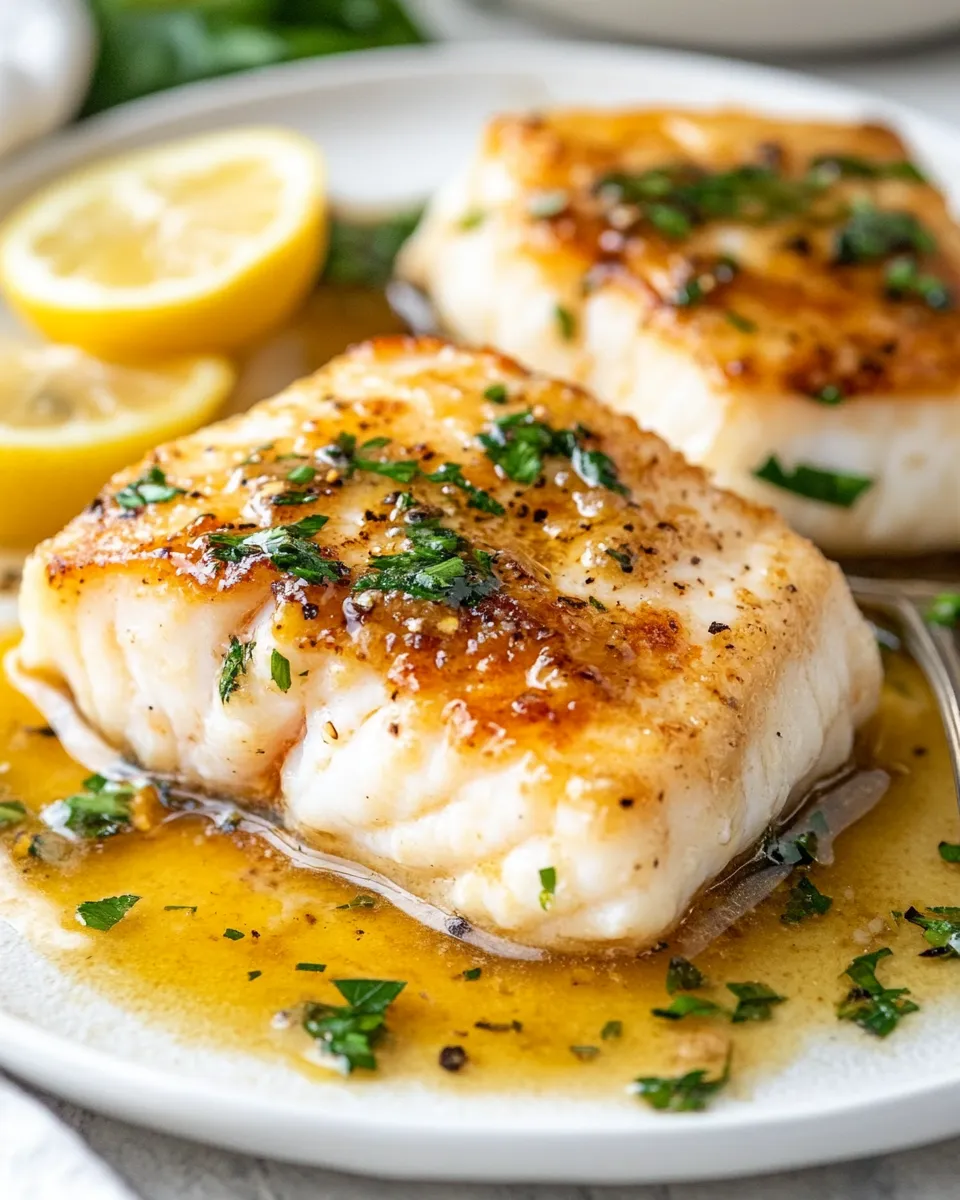
- Spoon the sauce over the cooked cod fillets and serve immediately.
What Makes This Recipe Special
There are two simple tricks that lift this from everyday to memorable. First, the brief flour-spice dredge gives the fish a thin, seasoned crust that contrasts the tender interior. It’s not a heavy breading, just enough texture and flavor.
Second, finishing the sauce by cutting cold butter into the reduced stock creates a glossy, slightly thickened emulsion that clings to the fish. That technique—emulsifying cold butter in a warm reduction—produces a sauce that tastes rich but clean, especially once you add lemon juice right at the end.
Finally, timing matters. The fish sears quickly, so the sauce is built in the same pan while the fillets rest. You keep the skillet flavors integrated and avoid wiping out the fond that adds depth to the sauce.
Budget & Availability Swaps
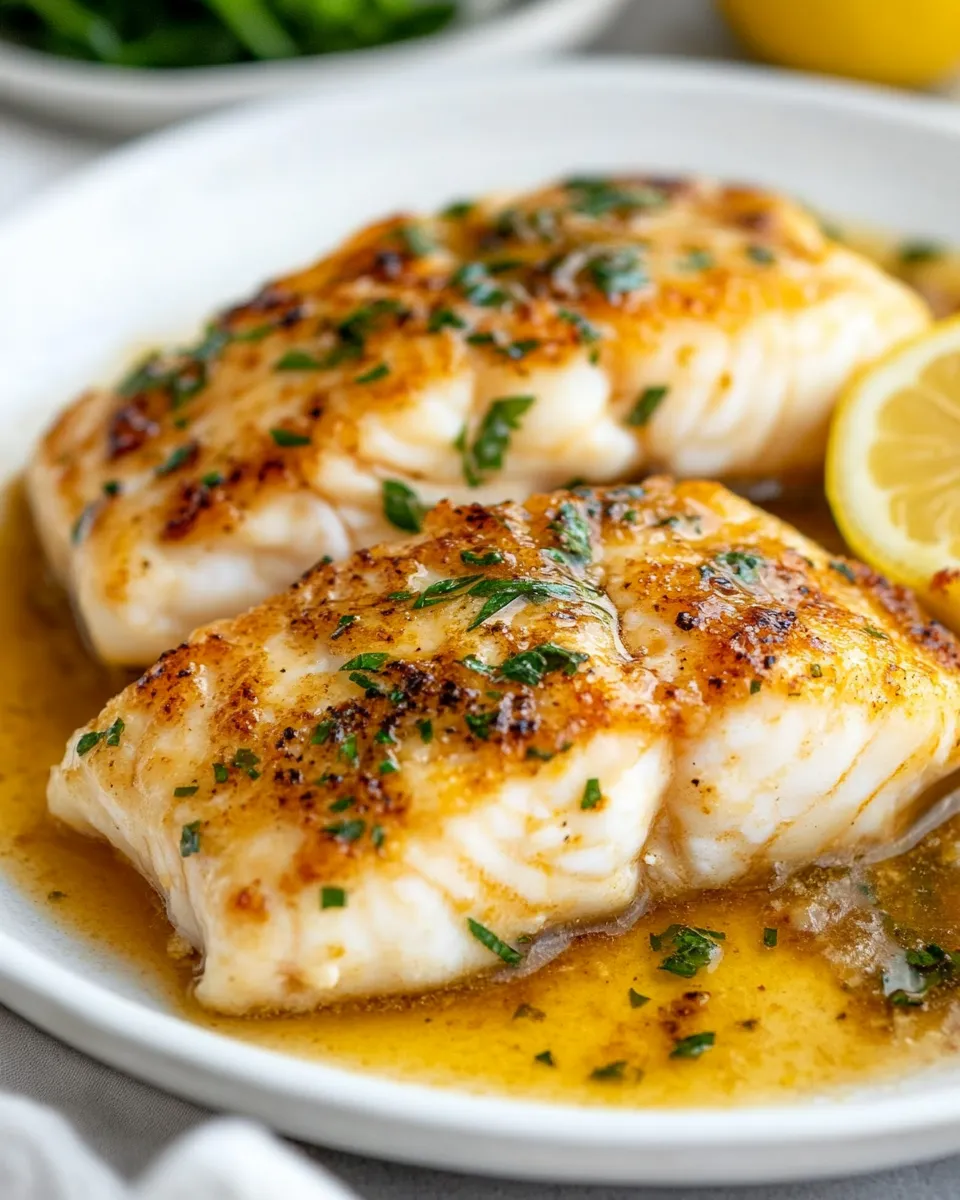
Cod is widely available but can be pricier than other white fish. Here are practical swaps without changing method or amounts:
- Haddock or pollock: Very similar texture and flavor; use same cook times for 1-inch fillets.
- Tilapia: Lighter and thinner; reduce sear time by a minute per side if fillets are thinner than 1 inch.
- Stock alternative: If you don’t have chicken stock, low-sodium vegetable stock works. Keep the same volume.
Before You Start: Equipment
A few reliable tools make this straightforward.
- Large nonstick skillet: The recipe specifies a nonstick surface to sear without sticking and to use less fat. Choose one at least 10–12 inches so fillets fit comfortably.
- Tongs or fish spatula: For gentle flipping to keep fillets intact.
- Instant-read thermometer: Helpful to hit 145°F (63°C) without overcooking.
- Small bowl and whisk/fork: To mix the flour-spice dredge evenly.
Troubles You Can Avoid
Common issues and quick fixes
- Fish sticking to the pan: Make sure fillets are very dry before dredging and the pan is hot. Adding oil and the first tablespoon of cold butter right before the fish prevents sticking.
- Browned garlic: Garlic burns fast and turns bitter. Reduce heat to medium before adding minced garlic and watch for just about 30 seconds until fragrant.
- Sauce breaking (separating): When you add cold butter, stir continuously off the heat to encourage emulsification. If the sauce separates, lower the heat and whisk in a tablespoon of warm stock to bring it back.
- Overcooked cod: Use an instant-read thermometer; pull the fish at 145°F (63°C). If you don’t have one, check that the fish flakes easily and is still moist—don’t wait for it to fall apart.
How to Make It Lighter
To reduce calories without losing much flavor, make a few small swaps:
- Use 1 tablespoon olive oil instead of 2: The initial sear still works with a little less oil if your pan is truly nonstick.
- Skip one tablespoon of butter in the sauce: Use 2 tablespoons instead of 3; finish with lemon juice to keep brightness.
- Serve with steamed vegetables or a salad: Replace starchy sides with greens to keep the plate light and balanced.
Behind-the-Scenes Notes
This recipe is deliberately built for speed and reliability. Searing is a dry-heat technique that’s best when the surface to be seared is dry; that’s why patting the fillets is step one. The flour-spice mixture is small—just enough to create a savory minute crust without making the cod feel heavy.
I prefer unsalted butter here because the seasoning mix already has measured salt. Adjust at the end if your stock is salty or your taste prefers more brightness. The lemon is added off heat to preserve the bright, fresh acidity rather than a cooked, muted lemon flavor.
Freezer-Friendly Notes
Cooked cod isn’t the best candidate for freezing because the texture changes after thawing. If you must stash portions:
- Freeze raw fillets: Wrap each fillet tightly in plastic wrap and then foil. Freeze up to 2 months. Thaw in the refrigerator before cooking and proceed with the recipe.
- Do not freeze the finished sauce: Emulsified butter sauces can separate on thawing and won’t re-emulsify well. Make the sauce fresh when serving.
Your Top Questions
Q: Can I use frozen cod?
A: Yes. Thaw overnight in the fridge and pat very dry before dredging. Excess moisture prevents a proper sear.
Q: What if my fillets are thicker or thinner than 1 inch?
A: For thicker fillets, add 1–2 minutes per side and verify with a thermometer. For thinner fillets, reduce sear time by a minute per side to avoid overcooking.
Q: Can I swap lemon juice for lemon zest?
A: Zest adds aromatic oil but won’t give the same acidity. If you skip juice, add a teaspoon or so of white wine vinegar or a splash of extra chicken stock and a teaspoon of zest to keep balance.
Q: My sauce is thin—how do I thicken it?
A: Reduce the stock a bit longer before adding butter so it concentrates more. Alternatively, finish with a small pat of cold butter and whisk to emulsify; that will slightly thicken the sauce.
Q: Is there a non-dairy alternative for butter?
A: You can use a high-quality vegan butter for a similar mouthfeel, but flavor and emulsification can vary. Use the same amounts and watch the sauce as you finish it.
Final Bite
This Lemon Butter Pan Seared Cod is approachable and elegant. It balances a quick, crisp sear with a simple pan sauce that showcases the fish. Follow the steps, respect the timing, and don’t rush the sauce—those short reductions and the cold butter finish are what make this dish feel restaurant-quality at home. Serve immediately and enjoy the bright, buttery finish.
Lemon Butter Pan Seared Cod
Ingredients
Ingredients
- ?46-ounce 170 gcod filletsabout 1 inch thick
- ?1 tablespoonall-purpose flour
- ?1/2 teaspoongarlic powder
- ?1/2 teaspoononion powder
- ?1/2 teaspoonsmoked paprika
- ?1/2 teaspoondried oregano
- ?3/4 teaspoonsalt
- ?3/4 teaspoonground black pepper
- ?2 tablespoonsolive oil
- ?3 tablespoons 40 gunsalted buttercold, divided
- ?4 clovesgarlicfinely minced
- ?1 cup 240 mlchicken stock
- ?2 tablespoonsfresh lemon juice
- ?1 tablespoonchopped fresh parsley
Instructions
Instructions
- Pat the cod fillets dry with paper towels.
- In a small bowl, combine 1 tablespoon all-purpose flour, ½ teaspoon garlic powder, ½ teaspoon onion powder, ½ teaspoon smoked paprika, ½ teaspoon dried oregano, ¾ teaspoon salt, and ¾ teaspoon ground black pepper.
- Lightly dredge each cod fillet in the flour-spice mixture, pressing gently so the coating adheres; shake off any excess.
- Heat a large nonstick skillet over medium-high heat. Add 2 tablespoons olive oil and 1 tablespoon of the cold unsalted butter; heat until the butter melts and the oil shimmers (but does not smoke).
- Add the cod to the hot skillet and sear 3–4 minutes on the first side without moving it, then carefully flip and sear the other side 3–4 minutes, until golden brown and the internal temperature reaches 145°F (63°C). Transfer the cooked fillets to a serving plate and tent loosely to keep warm.
- Reduce the heat to medium. Add the 4 cloves minced garlic to the same skillet and sauté about 30 seconds, until fragrant but not browned.
- Pour in 1 cup (240 ml) chicken stock and bring to a simmer. Cook over medium heat about 6–7 minutes, until the stock reduces and the sauce is slightly thickened.
- Cut the remaining 2 tablespoons cold unsalted butter into pieces, add them to the skillet, and stir continuously until the butter melts and the sauce is emulsified and coats the back of a spoon.
- Remove the skillet from the heat. Stir in 2 tablespoons fresh lemon juice and 1 tablespoon chopped fresh parsley. Taste and add additional salt and/or ground black pepper if desired.
- Spoon the sauce over the cooked cod fillets and serve immediately.
Equipment
- 12-inch Non-Stick Skillet
- Fish spatula
Notes
If you have more time, you can also thaw frozen fish fillets in the fridge overnight.
Dry the fish with paper towelsbefore seasoning and cooking. This will ensure that you get beautiful browning on the fillets.
The best type of skillet to use when cooking fish is a non-stick skillet.Cod can very easily get stuck to other types of pans, and that can make this recipe difficult.
Avoid overcooking the fish, as it will be tough and rubbery.
To Store:You can store leftover cooked fish in the refrigerator for up to 3 days. Be sure that it is in a well-sealed container.