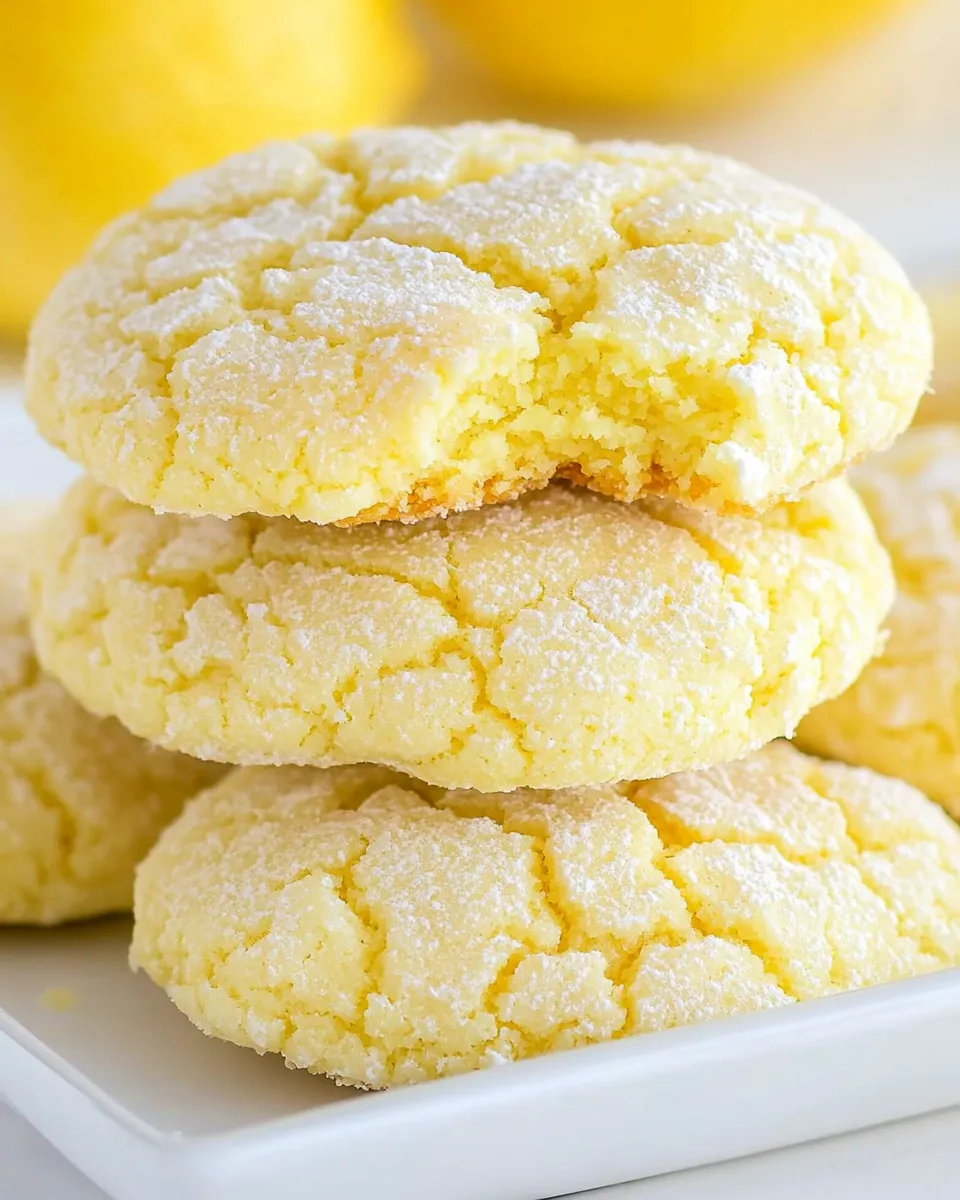
I make these lemon crinkle cookies on mornings when the house needs a lift. They bake fast, smell bright, and they’re strangely comforting — like sunshine in cookie form. No fuss, reliable results, and a crackled powdered-sugar finish that looks special without extra effort.
The tune-up here is all in technique: zest for real lemon flavor, chill the dough so the cookies hold their shape, and roll thoroughly in sifted powdered sugar so each cookie gets those classic crinkles. I keep everything simple so you can bake after work, on a weekend, or when guests pop in unannounced.
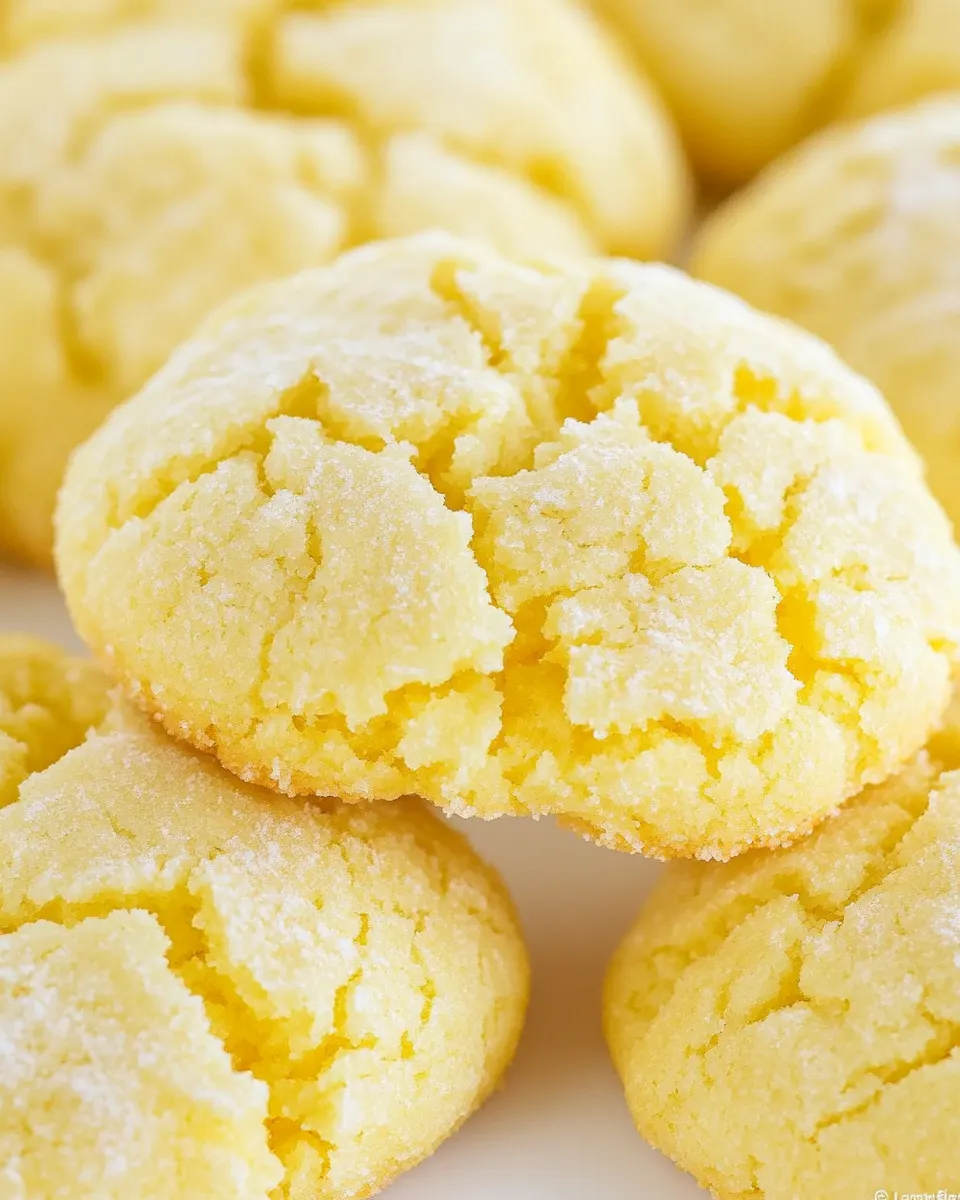
This recipe yields tender, slightly crisp-edged cookies with a soft center and a clear lemon punch. Read through the steps once, set up your station, and the rest is straightforward. Below I break the recipe, gear, troubleshooting, seasonal ideas, and storage tips into practical pieces so you can get baking with confidence.
Ingredient Checklist
Ingredients
- 1 3/4 cups (210 g) all-purpose flour — the structure; measure by spooning into the cup and leveling or use a scale for accuracy.
- 1/2 teaspoon baking powder — helps a light rise and the crackled surface.
- 1/2 teaspoon baking soda — balances the acidity and gives a tender crumb.
- 1/4 teaspoon kosher salt — enhances the lemon and balances sweetness.
- 3/4 cup white sugar — primary sweetener and helps the cookies spread.
- Zest from three lemons — pure lemon flavor; zest only the yellow part for the best aroma.
- 1/4 cup unsalted butter, at room temperature — adds richness and flavor; bring to soft but not melted.
- 1/4 cup neutral oil — keeps the cookies tender and moist; choose a light-tasting oil.
- 2 large eggs — binder and moisture; room temperature eggs mix more smoothly.
- 1 teaspoon pure vanilla extract — rounds the lemon and deepens overall flavor.
- 2 drops yellow food coloring gel — optional, for a sunny look; gel gives color without thinning the dough.
- 3/4 cup powdered sugar, sifted — for rolling; sifted sugar gives the classic crinkle contrast.
Make Lemon Crinkle Cookies: A Simple Method
- In a medium bowl, whisk together 1 3/4 cups (210 g) all-purpose flour, 1/2 teaspoon baking powder, 1/2 teaspoon baking soda, and 1/4 teaspoon kosher salt. Set the bowl aside.
- In the bowl of a stand mixer (or using an electric hand mixer), combine 3/4 cup white sugar, the zest from three lemons, 1/4 cup unsalted butter (room temperature), 1/4 cup neutral oil, and 1 teaspoon pure vanilla extract. Beat on medium speed until very smooth and fluffy, about 1 minute.
- Add 2 drops yellow food coloring gel and mix until evenly distributed.
- Add the 2 large eggs and beat just until incorporated.
- Pour the dry ingredients into the wet mixture and mix on low speed until no visible flour streaks remain and the dough is uniform.
- Cover the dough and chill in the refrigerator for 30 minutes to firm up.
- Meanwhile, preheat the oven to 350°F (175°C). Line two baking sheets with parchment paper. Place the sifted 3/4 cup powdered sugar in a shallow bowl for rolling.
- Using a medium cookie scoop, portion dough into balls. Roll each ball thoroughly in the sifted powdered sugar so it is well coated.
- Place up to 6 coated dough balls per prepared baking sheet, leaving space between them for spreading.
- Bake one sheet at a time for 12–13 minutes, until the cookie centers are set. The cookies will puff in the oven and then fall slightly as they cool.
- Remove the baking sheet from the oven and let the cookies cool on the sheet until firm enough to transfer, then move them to a wire rack to cool completely. Repeat coating and baking with the remaining dough.
Why You’ll Keep Making It
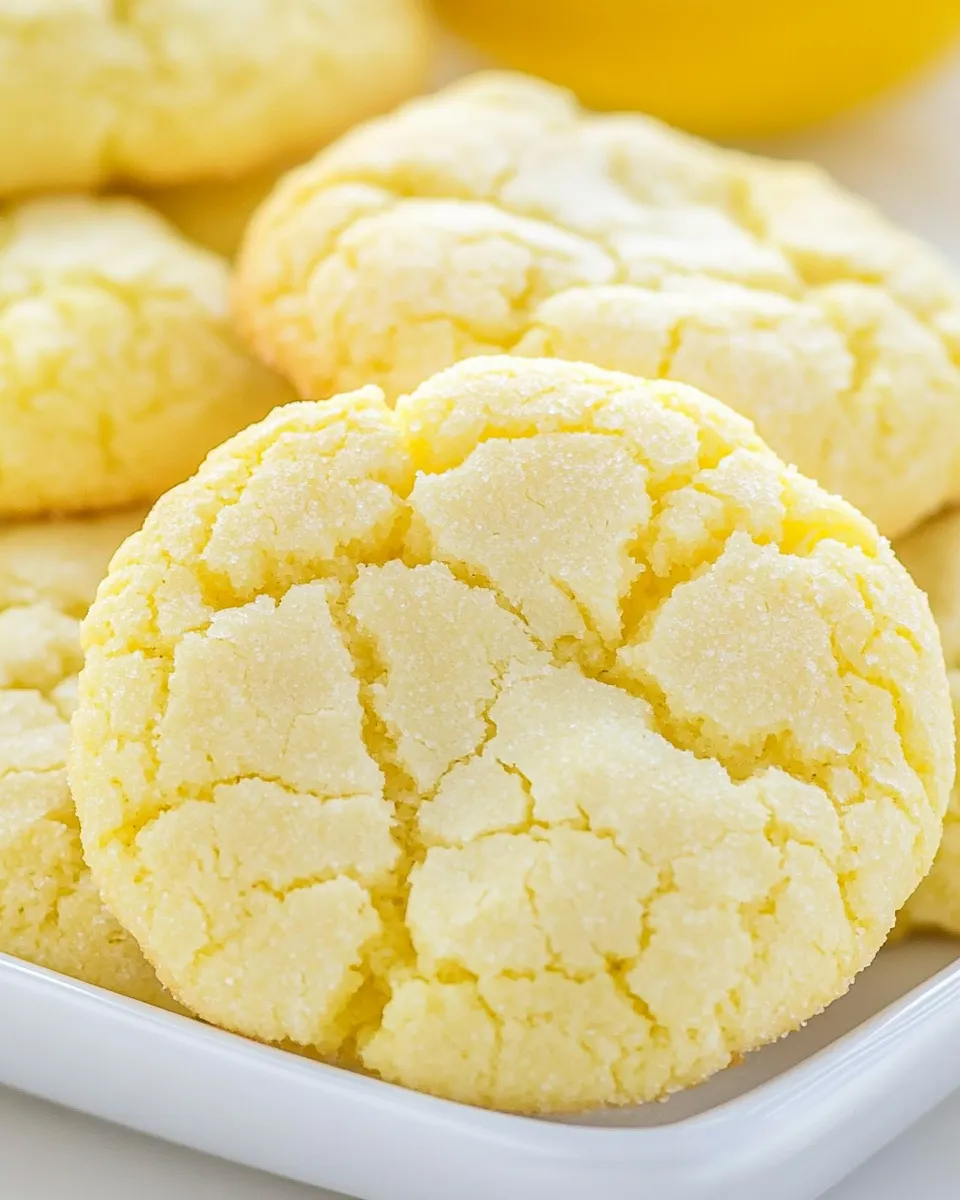
These cookies come together quickly with pantry-friendly ingredients. The lemon zest gives a fresh, bright profile that doesn’t rely on complicated steps or special equipment. They look impressive — the crinkled, powdered-sugar top reads festive — yet require minimal decoration or finishing.
They’re adaptable. You can prep dough in the morning and bake in the evening, or freeze dough balls for a later batch. Texture is forgiving: slightly crisp on the edges, tender inside, reliably satisfying. For anyone who wants a citrus cookie that isn’t a shortbread or a dense bar, this hits the sweet spot.
Healthier Substitutions
If you want to nudge this recipe toward lighter choices, swap in options that keep the technique the same. Use a mild-flavored oil like extra-light olive oil instead of neutral oil if you prefer a single fat. Replace part of the white sugar with a natural granulated sweetener that behaves like sugar (test small batches first). For reduced fat, you can cut back on the butter and add a spoonful of plain yogurt to maintain moisture — but expect small shifts in texture.
A note on lemon flavor: fresh zest is irreplaceable. If you need lower sodium, choose a finer-grain salt alternative and taste as you go. Keep in mind changes will tweak rise and crumb; the method is the stabilizing factor.
What’s in the Gear List
- Stand mixer or electric hand mixer — for easy creaming and smooth dough.
- Medium mixing bowls — one for dry, one for wet.
- Measuring cups and spoons or kitchen scale — accuracy helps with consistency.
- Microplane or fine grater — for zesting lemons cleanly.
- Medium cookie scoop — for uniform cookies and even baking.
- Parchment paper and baking sheets — prevent sticking and promote even browning.
- Sifter or fine-mesh sieve — to sift powdered sugar for rolling.
- Wire rack — for cooling without soggy bottoms.
Troubles You Can Avoid
- Cookies spreading too much: Chill the dough the full 30 minutes and avoid over-soft butter. Use parchment and leave space between balls.
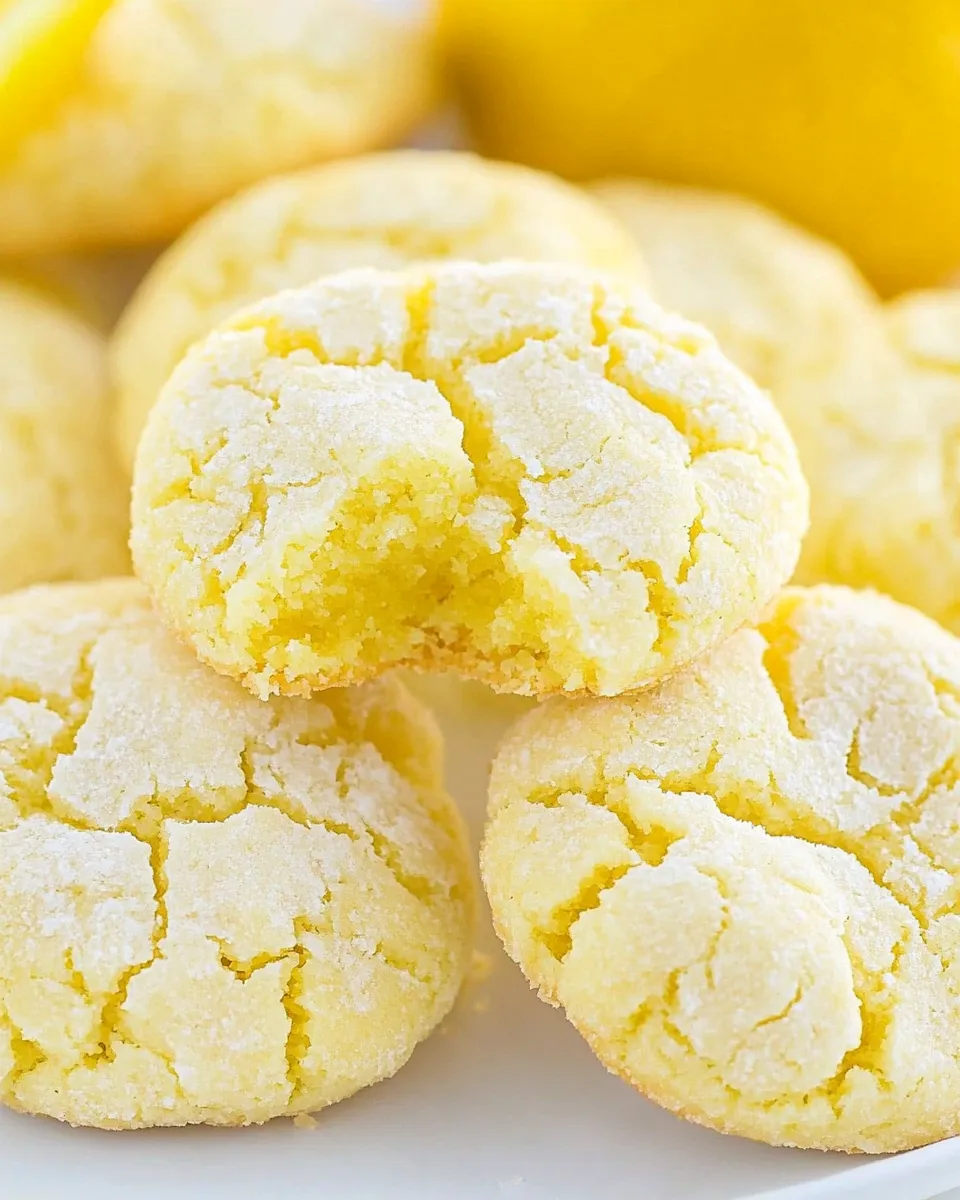
- No crinkle effect: Roll very thoroughly in sifted powdered sugar so the surface sets and cracks as centers expand and contract.
- Taste is bland: Don’t skip the lemon zest — it’s the primary flavor. Use fresh lemons, not bottled extract.
- Too dense: Measure flour correctly. Spoon and level or weigh. Overpacking flour makes heavy cookies.
- Underdone centers: Bake until centers are set; they should puff then fall slightly. If underbaked, add a minute at a time, checking closely.
Spring–Summer–Fall–Winter Ideas
Spring and summer: serve warm with iced tea or lemonade. Add a tiny stalk of candied lemon peel if you want a garnish for guests.
Fall: pair these with a cup of Earl Grey or black tea; the bergamot notes complement lemon nicely. Consider folding a pinch of ground cardamom into the dough for warmth.
Winter: these cookies are excellent alongside a rich mulled drink. Swap the yellow coloring for none or a very light tint if you prefer a softer appearance, and gift in small tins — they travel well.
Cook’s Commentary
Timing & Texture
Thirty minutes in the fridge is about the minimum to firm the dough enough to handle and to help the cookies spread evenly. I’ve tested shorter chills and found more irregular shapes. The 12–13 minute bake gives a soft center with a firm outer set; go longer only if you like them crispier.
Flavor & Zest
Use the zest from three lemons. It’s tempting to skip zesting if you’re in a hurry, but I’ve learned that zest is where the cookie gets its personality. If you want a stronger lemon hit, a teaspoon of fresh lemon juice can be added, but that may alter dough softness slightly.
Two drops of yellow gel are purely aesthetic. The cookies are delicious without it; use it only if you like a sunny color that photographs well.
Freezer-Friendly Notes
For easy make-ahead: Portion dough into scooped balls, freeze them on a sheet until solid, then transfer to a sealed container or freezer bag. When ready to bake, roll the frozen balls in sifted powdered sugar and add a minute or two to the baking time; they’ll take slightly longer from frozen.
Baked cookies freeze well too. Cool completely, layer with parchment in an airtight container, and freeze for up to 2 months. Thaw on the counter; they soften back to a pleasant texture without losing the crinkle look.
Ask the Chef
- Q: Can I make these without eggs? A: I haven’t tested an egg-free version with this exact method. Eggs contribute structure and moisture; a substitute will change texture. If you need egg-free, try a tested vegan lemon-crinkle recipe instead.
- Q: Can I use powdered sugar in the dough? A: The dough relies on granulated sugar for proper spread and texture. Powdered sugar in the dough alters the texture and can make cookies denser.
- Q: What if my lemons are small? A: Zest three lemons regardless; if they’re tiny, zest until you reach a generous amount — fresh zest matters more than the exact count.
- Q: Why sift the powdered sugar? A: Sifting prevents lumps and ensures even coating so the crinkles form nicely during baking.
See You at the Table
These Lemon Crinkle Cookies are the kind I pull out when I want something bright, quick, and unfussy. They look better than they feel to make and they vanish faster than I expect. If you try them, start with the recipe as written, note any small personal tweaks, and bake again. Leave cooling racks full and share — they’re happiest when someone else reaches for them first.

Lemon Crinkle Cookies
Ingredients
Ingredients
- ?1 3/4 all-purpose flour (210 g)
- ?1/2 teaspoonbaking powder
- ?1/2 teaspoonbaking soda
- ?1/4 teaspoonkosher salt
- ?3/4 cupwhite sugar
- ?Zest from three lemons
- ?1/4 cupunsalted butter at room temperature
- ?1/4 cupneutral oil
- ?2 large eggs
- ?1 teaspoonpure vanilla extract
- ?2 drops yellow food coloring gel
- ?3/4 cuppowdered sugar sifted
Instructions
Instructions
- In a medium bowl, whisk together 1 3/4 cups (210 g) all-purpose flour, 1/2 teaspoon baking powder, 1/2 teaspoon baking soda, and 1/4 teaspoon kosher salt. Set the bowl aside.
- In the bowl of a stand mixer (or using an electric hand mixer), combine 3/4 cup white sugar, the zest from three lemons, 1/4 cup unsalted butter (room temperature), 1/4 cup neutral oil, and 1 teaspoon pure vanilla extract. Beat on medium speed until very smooth and fluffy, about 1 minute.
- Add 2 drops yellow food coloring gel and mix until evenly distributed.
- Add the 2 large eggs and beat just until incorporated.
- Pour the dry ingredients into the wet mixture and mix on low speed until no visible flour streaks remain and the dough is uniform.
- Cover the dough and chill in the refrigerator for 30 minutes to firm up.
- Meanwhile, preheat the oven to 350°F (175°C). Line two baking sheets with parchment paper. Place the sifted 3/4 cup powdered sugar in a shallow bowl for rolling.
- Using a medium cookie scoop, portion dough into balls. Roll each ball thoroughly in the sifted powdered sugar so it is well coated.
- Place up to 6 coated dough balls per prepared baking sheet, leaving space between them for spreading.
- Bake one sheet at a time for 12–13 minutes, until the cookie centers are set. The cookies will puff in the oven and then fall slightly as they cool.
- Remove the baking sheet from the oven and let the cookies cool on the sheet until firm enough to transfer, then move them to a wire rack to cool completely. Repeat coating and baking with the remaining dough.
Equipment
- Medium Bowl
- stand mixer (or electric hand mixer)
- Baking Sheets
- Parchment Paper
- shallow bowl
- Cookie Scoop
- Wire Rack
Notes
Store them in an airtight container for up to 3 days.