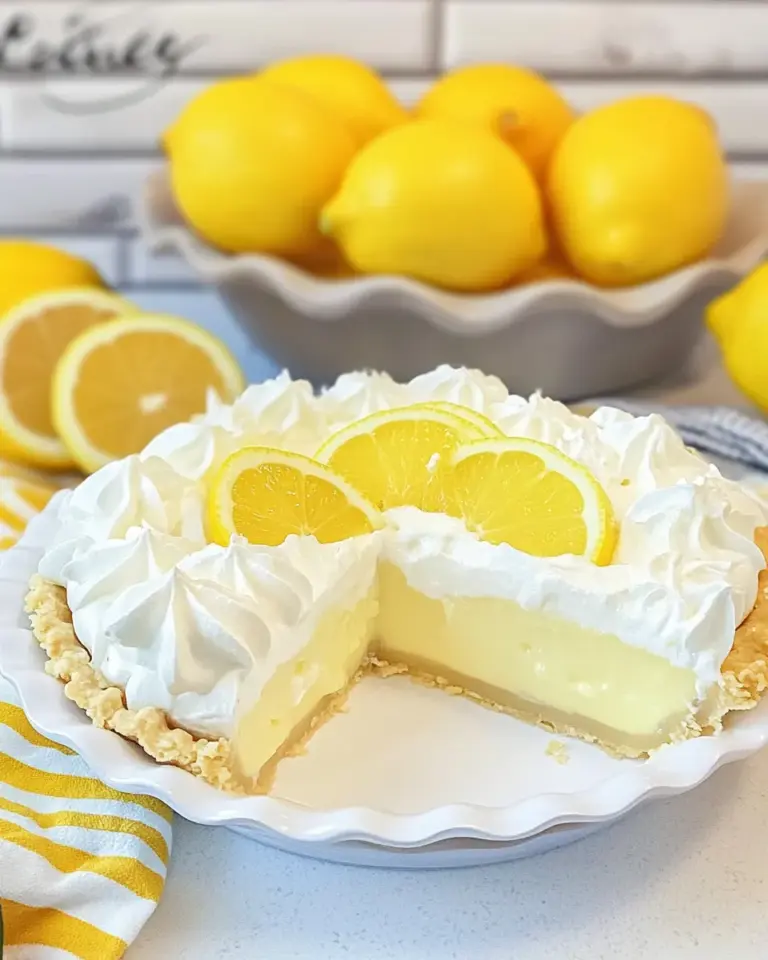
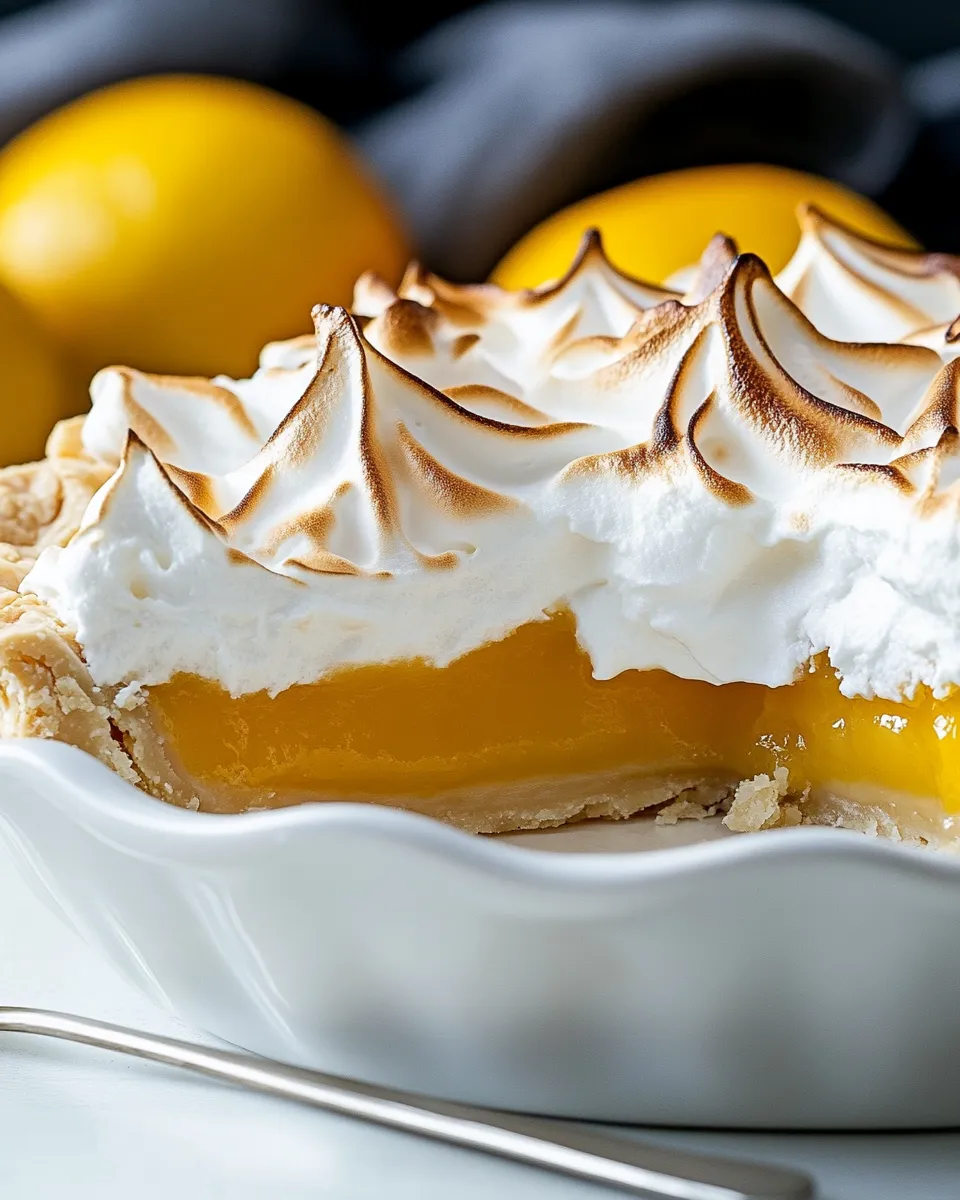
I test and retest pies until they behave the way I want: bright lemon filling that holds, a stable meringue that doesn’t weep, and a crust that still has a whisper of crisp. This Lemon Meringue Pie recipe is built for make-ahead convenience. You can finish the lemon custard a day before and top it with a freshly whipped hot-syrup meringue when you’re ready to serve.
No fluff here—just practical steps, timing advice, and the small techniques that keep this dessert neat and impressive. If you’re bringing this pie to a gathering or want to spread the work over two days, the method below will save stress without sacrificing flavor.
Read straight through for the shopping and gear lists, then follow the clear, ordered instructions. I also include common pitfalls and storage tips so you can confidently make this pie ahead and still have show-stopping results.
Shopping List

Buy quality lemons (you’ll need fresh lemon juice and grated zest), unsalted butter, and good eggs. A prebaked 19-inch pie crust makes this much faster—look for one labeled 19-inch and prebaked, or use your favorite crust recipe and prebake it. You’ll also need corn starch, granulated sugar, cream of tartar, and kosher salt.
For the meringue, plan to make the hot sugar syrup just before whipping the whites. If you don’t own a stand mixer, see the Gear Checklist for alternatives. Buy a little extra sugar and a few extra lemons just in case.
Ingredients
- 19-inch pie crust — 213 grams (homemade or store-bought), prebaked & cooled — Prebaked shell; provides the structure for the filling.
- 1¼ cups granulated sugar — 250 grams — Sweetens the lemon filling and helps thicken with the cornstarch.
- 1 cup fresh lemon juice — 227 grams, from 6 lemons — Primary flavor; use fresh for brightness.
- ½ cup water — 114 grams — Part of the filling’s liquid base to dissolve cornstarch and sugar.
- ¼ cup cornstarch — 28 grams — Thickens and stabilizes the lemon filling.
- ½ teaspoon kosher salt — Balances sweetness and brightens lemon flavor.
- 4 large eggs — 200 grams, separated (whites reserved for meringue below) — Yolks enrich the filling; whites become the meringue.
- 4 egg yolks — 56 grams — For a rich, silky lemon curd texture.
- 2 tablespoons grated lemon zest — 12 grams, from 2 lemons — Adds concentrated lemon aroma and flavor.
- 3 tablespoons unsalted butter — 42 grams, room temperature and cut into pieces — Enriches and smooths the hot curd.
- ½ cup water — 114 grams — For the hot sugar syrup used to cook the meringue.
- 1 cup granulated sugar — 200 grams — Combined with the water to make the hot sugar syrup for stable meringue.
- ¼ teaspoon kosher salt — Helps the egg whites foam and season the meringue.
- ½ teaspoon cream of tartar — Stabilizes the egg whites during whipping.
- ½ teaspoon pure vanilla extract — 2 grams — Adds a subtle background note to the meringue.
Lemon Meringue Pie, Made Easy
- Use the prepared 19-inch prebaked pie crust (213 g). If your crust is not already prebaked, prebake per your crust recipe or package directions and cool completely before filling.
- Make the lemon filling: in a large saucepan over medium heat whisk together 1¼ cups (250 g) granulated sugar, 1 cup (227 g) fresh lemon juice, ½ cup (114 g) water, ¼ cup (28 g) cornstarch, and ½ teaspoon kosher salt until the cornstarch is fully dissolved.
- Cook the mixture, stirring occasionally, until it comes to a simmer and begins to thicken and become translucent, about 5 minutes.
- Meanwhile, whisk the 4 egg yolks (56 g) in a separate bowl until smooth.
- Temper the yolks: slowly whisk about ½ cup of the hot lemon mixture into the yolks to raise their temperature (pour in a thin stream while whisking). Then whisk the tempered yolk mixture back into the saucepan.
- Return the pan to medium heat and, stirring constantly, bring the mixture to a simmer. Cook for an additional 2 minutes, or until the filling is thick enough to coat the back of a spoon without sliding off.
- Remove the pan from the heat and stir in 2 tablespoons (12 g) grated lemon zest and 3 tablespoons (42 g) unsalted butter, stirring until the butter is fully incorporated.
- Strain the hot filling through a fine-mesh strainer into the prepared (prebaked and cooled) pie shell, scraping the underside of the strainer so all filling passes through. Press a piece of plastic wrap directly onto the surface of the filling to prevent a skin from forming. Chill in the refrigerator until set, at least 2 hours and up to 24 hours.
- When the filling is chilled and set, preheat the oven to 400°F and move the oven rack to the middle position.
- Make the hot sugar syrup for the meringue: in a small saucepan over medium-high heat combine ½ cup (114 g) water and 1 cup (200 g) granulated sugar. Bring to a vigorous boil and once boiling cook exactly 4 minutes. Remove from the heat and transfer the syrup to a heatproof container.
- In the bowl of a stand mixer fitted with the whisk attachment, beat the reserved 4 egg whites (from the separated eggs) with ¼ teaspoon kosher salt and ½ teaspoon cream of tartar at medium speed until frothy, about 1 minute. Increase speed to medium-high and beat until the whites hold soft peaks, about 2 minutes.
- With the mixer running on medium-low to medium, very slowly pour the hot sugar syrup in a thin, steady stream down the inside of the bowl into the egg whites (avoid pouring directly onto the whisk to prevent splatter). Once all the syrup is added, increase speed and beat until the meringue is thick, glossy, and cooled to room temperature, about 7–10 minutes. Add ½ teaspoon (2 g) pure vanilla extract in the last minute of beating and mix to combine.
- Assemble the pie: remove the plastic wrap from the chilled lemon filling. Mound the meringue over the filling and press it against the crust all the way around to seal the meringue to the crust (this helps prevent weeping). Build up more meringue toward the center and use a spoon or spatula to create peaks as desired.
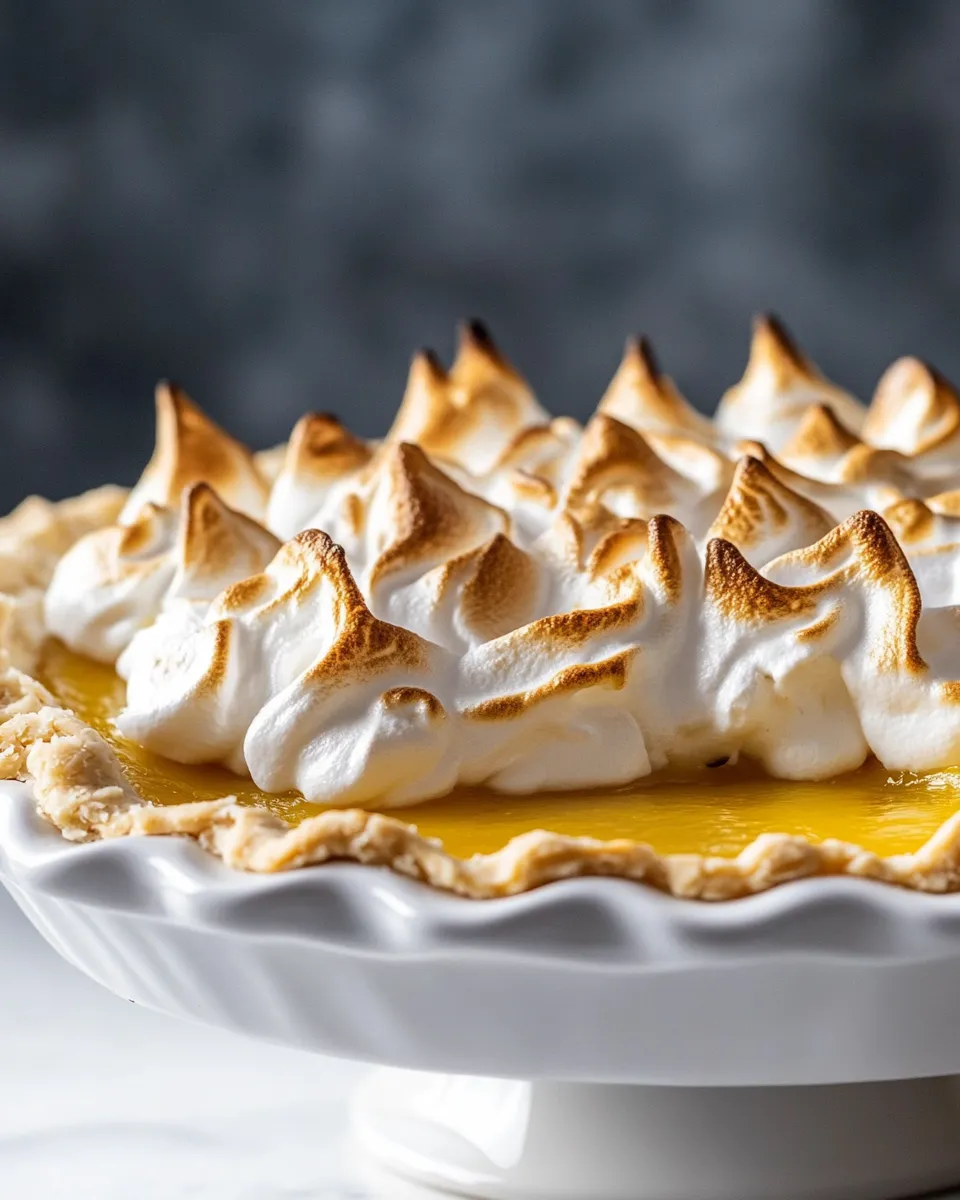
- Place the pie on a baking sheet and bake in the preheated 400°F oven until the meringue peaks are lightly golden brown, about 5–8 minutes—watch closely to avoid over-browning.
- Remove the pie from the oven and transfer to a cooling rack. Let cool before serving. If you prefer a more dramatic, even browning, you may lightly toast the meringue with a kitchen torch (exercise caution and keep a close eye for any flare-ups).
Why This Lemon Meringue Pie Stands Out

This version separates the work into stages so you can make the lemon curd ahead of time and finish the meringue just before serving. The lemon filling is cooked with cornstarch and tempered yolks for a reliably stable curd rather than an undercooked, runny one.
The hot-syrup meringue method is what gives you glossy, silky meringue that holds peaks and resists weeping. It’s slightly more hands-on than a quick Swiss meringue, but the result is worth it: a meringue that stays put and looks polished.
Finally, sealing the meringue to the crust prevents separation and sogginess. It’s the small, intentional steps—tempering, pressing meringue to the crust, and chilling the filling—that keep this pie professional-looking and delicious.
Low-Carb/Keto Alternatives
Low-carb swaps require some adjustments. You can reduce net carbs by substituting sugar with a granulated erythritol or allulose blend, but results vary—especially for the hot syrup used to stabilize meringue. Allulose behaves more like sugar when making syrups and may yield a better meringue than erythritol.
Keep in mind cornstarch will add carbs; substitute with a low-carb thickener like glucomannan in very small amounts and test texture. Lemon juice and eggs are naturally low carb, so they stay.
If you need a reliably low-carb meringue, consider using a torch-toasted aquafaba meringue or check product-specific guidance for sweetener-to-syrup conversion. Expect to test once before serving to guests.
Gear Checklist
- Large saucepan — For the lemon filling; heavy-bottomed is best for even heat.
- Fine-mesh strainer — For a silky smooth curd and to remove any cooked bits.
- Stand mixer with whisk attachment — Ideal for hot-syrup meringue; it runs hands-free and whips consistently.
- Small saucepan — For the sugar syrup used in the meringue.
- Kitchen thermometer (optional) — Helpful for the syrup, though the recipe times the boil exactly 4 minutes.
- Pie plate or 19-inch tart pan — Sized to match the prepared 19-inch crust.
- Plastic wrap — Press directly onto filling to prevent a skin while chilling.
- Kitchen torch (optional) — For finishing the meringue if you prefer more controlled browning.
Easy-to-Miss Gotchas
- Not prebaking the crust: If the crust isn’t fully prebaked and cooled, the filling may make it soggy.
- Skipping the temper step: Adding hot mixture straight to yolks will scramble them. Temper as instructed.
- Pouring syrup too fast: Add hot syrup slowly into egg whites; pouring too fast causes splatter and uneven cooking.
- Not sealing the meringue to the crust: Leaving a gap leads to weeping or separation.
- Overbrowning the meringue: Watch the 5–8 minute bake closely. It goes from perfect to overdone quickly.
- Letting the curd form a skin: Press plastic wrap directly on the filling while chilling.
In-Season Swaps
When lemons are at peak season, use zest and juice generously—the flavor is brighter and more aromatic. Off-season lemons can be less vibrant; consider increasing zest slightly to boost aroma, but don’t change juice volume or sugar ratios without testing.
If you want a flavor twist, substitute up to half the lemon juice with a milder citrus like Meyer lemon or a touch of orange for a sweet-tart balance. Do not alter core technique: tempering, cornstarch thickening, and the hot syrup method remain the same.
Pro Tips & Notes
Timing and Make-Ahead
Chill the lemon filling for at least 2 hours and up to 24 hours, as the recipe states. Make the filling a day ahead to save time on the day you plan to serve. Finish with the meringue and a quick bake right before guests arrive for best texture and appearance.
Whipping the Meringue
Use room-temperature egg whites for loft. Start at medium speed and work up as instructed. The syrup must be added slowly and the whites whipped until cool to the touch—patience here makes a stable, glossy meringue that holds peaks.
Serving
Slice with a sharp, hot knife (run under hot water and dry between slices) for clean cuts through the meringue and filling. Serve within a few hours of baking the meringue for best texture.
How to Store & Reheat
Store leftover pie refrigerated, covered loosely with a pie dome or tented foil, for up to 2 days. The meringue texture will slowly soften and may weep a little; keep cooling to slow this process.
Do not freeze the finished pie—the meringue changes texture badly when frozen. If you must freeze, freeze the lemon curd separately in an airtight container, then thaw and re-whip a fresh meringue when ready to serve.
To refresh slightly weepy meringue, very briefly toast the surface with a kitchen torch to tighten and re-brown the peaks. Avoid reheating in the oven; that will alter texture and can overcook the lemon filling.
Popular Questions
Can I use bottled lemon juice?
Fresh lemon juice gives the best flavor. Bottled juice lacks brightness; if that’s all you have, consider increasing grated zest to boost aroma.
Why did my meringue weep?
Common causes: not sealing the meringue to the crust, adding syrup too quickly, undercooking the syrup, humidity, or overbeating. The hot-syrup method minimizes weeping when done correctly.
Can I make a Swiss or Italian meringue instead?
The recipe uses a hot-syrup (Italian-style) method. Swiss meringue (heated whites and sugar over a bain-marie then whipped) can work, but the texture will differ. Follow the recipe as written for best stability.
How do I know the filling is set?
After chilling, the filling should be firm enough not to jiggle when you move the pie—enough to mound meringue on top without the filling collapsing.
Ready to Cook?
Gather your ingredients and equipment, prebake the crust if needed, and give yourself one calm hour for the filling and at least two hours of chill time. Whip up the hot-syrup meringue last so it’s glossy and cool when you mound it over the chilled curd.
Follow the instructions in order. Temper the yolks, strain the filling, protect the surface with plastic, and seal the meringue to the crust. Watch the oven closely for 5–8 minutes when browning the meringue. Do this once, and you’ll have a Lemon Meringue Pie that looks and tastes like you spent all day on it—when you actually spread the work across two easier sessions.

Lemon Meringue Pie (Make Ahead!)
Ingredients
Ingredients
- 19- inchpie crust213 grams homemade or store-bought, prebaked & cooled
- 1 1/4 cupsgranulated sugar250 grams
- 1 cupfresh lemon juice227 grams from 6 lemons
- 1/2 cupwater114 grams
- 1/4 cupcornstarch28 grams
- 1/2 teaspoonkosher salt
- 4 largeeggs200 grams separated (whites reserved for meringue below)
- 4 egg yolks56 grams
- 2 tablespoonsgrated lemon zest12 grams from 2 lemons
- 3 tablespoonsunsalted butter42 grams room temperature and cut into pieces
- 1/2 cupwater114 grams
- 1 cupgranulated sugar200 grams
- 1/4 teaspoonkosher salt
- 1/2 teaspooncream of tartar
- 1/2 teaspoonpure vanilla extract2 grams
Instructions
Instructions
- Use the prepared 19-inch prebaked pie crust (213 g). If your crust is not already prebaked, prebake per your crust recipe or package directions and cool completely before filling.
- Make the lemon filling: in a large saucepan over medium heat whisk together 1¼ cups (250 g) granulated sugar, 1 cup (227 g) fresh lemon juice, ½ cup (114 g) water, ¼ cup (28 g) cornstarch, and ½ teaspoon kosher salt until the cornstarch is fully dissolved.
- Cook the mixture, stirring occasionally, until it comes to a simmer and begins to thicken and become translucent, about 5 minutes.
- Meanwhile, whisk the 4 egg yolks (56 g) in a separate bowl until smooth.
- Temper the yolks: slowly whisk about ½ cup of the hot lemon mixture into the yolks to raise their temperature (pour in a thin stream while whisking). Then whisk the tempered yolk mixture back into the saucepan.
- Return the pan to medium heat and, stirring constantly, bring the mixture to a simmer. Cook for an additional 2 minutes, or until the filling is thick enough to coat the back of a spoon without sliding off.
- Remove the pan from the heat and stir in 2 tablespoons (12 g) grated lemon zest and 3 tablespoons (42 g) unsalted butter, stirring until the butter is fully incorporated.
- Strain the hot filling through a fine-mesh strainer into the prepared (prebaked and cooled) pie shell, scraping the underside of the strainer so all filling passes through. Press a piece of plastic wrap directly onto the surface of the filling to prevent a skin from forming. Chill in the refrigerator until set, at least 2 hours and up to 24 hours.
- When the filling is chilled and set, preheat the oven to 400°F and move the oven rack to the middle position.
- Make the hot sugar syrup for the meringue: in a small saucepan over medium-high heat combine ½ cup (114 g) water and 1 cup (200 g) granulated sugar. Bring to a vigorous boil and once boiling cook exactly 4 minutes. Remove from the heat and transfer the syrup to a heatproof container.
- In the bowl of a stand mixer fitted with the whisk attachment, beat the reserved 4 egg whites (from the separated eggs) with ¼ teaspoon kosher salt and ½ teaspoon cream of tartar at medium speed until frothy, about 1 minute. Increase speed to medium-high and beat until the whites hold soft peaks, about 2 minutes.
- With the mixer running on medium-low to medium, very slowly pour the hot sugar syrup in a thin, steady stream down the inside of the bowl into the egg whites (avoid pouring directly onto the whisk to prevent splatter). Once all the syrup is added, increase speed and beat until the meringue is thick, glossy, and cooled to room temperature, about 7–10 minutes. Add ½ teaspoon (2 g) pure vanilla extract in the last minute of beating and mix to combine.
- Assemble the pie: remove the plastic wrap from the chilled lemon filling. Mound the meringue over the filling and press it against the crust all the way around to seal the meringue to the crust (this helps prevent weeping). Build up more meringue toward the center and use a spoon or spatula to create peaks as desired.
- Place the pie on a baking sheet and bake in the preheated 400°F oven until the meringue peaks are lightly golden brown, about 5–8 minutes—watch closely to avoid over-browning.
- Remove the pie from the oven and transfer to a cooling rack. Let cool before serving. If you prefer a more dramatic, even browning, you may lightly toast the meringue with a kitchen torch (exercise caution and keep a close eye for any flare-ups).
Equipment
- Kitchen Scale(optional)
- Pie Pan
- Fine Mesh Sieve
- Stand mixer
- Baking Sheet
- Kitchen Torch (Click for my favorite)(optional)
Notes
The pie crust can be cooked and stored (in the pie tin) in an airtight container (or zipper-style bag) up to two days before.
The assembled Lemon Meringue Pie will keep a few days in the fridge, but the meringue and/or the lemon filling will begin to weep. It is best eaten the day it is assembled. If perfection isn’t necessary (ie: if not making to share) the pie will still be delicious – just not ideal.