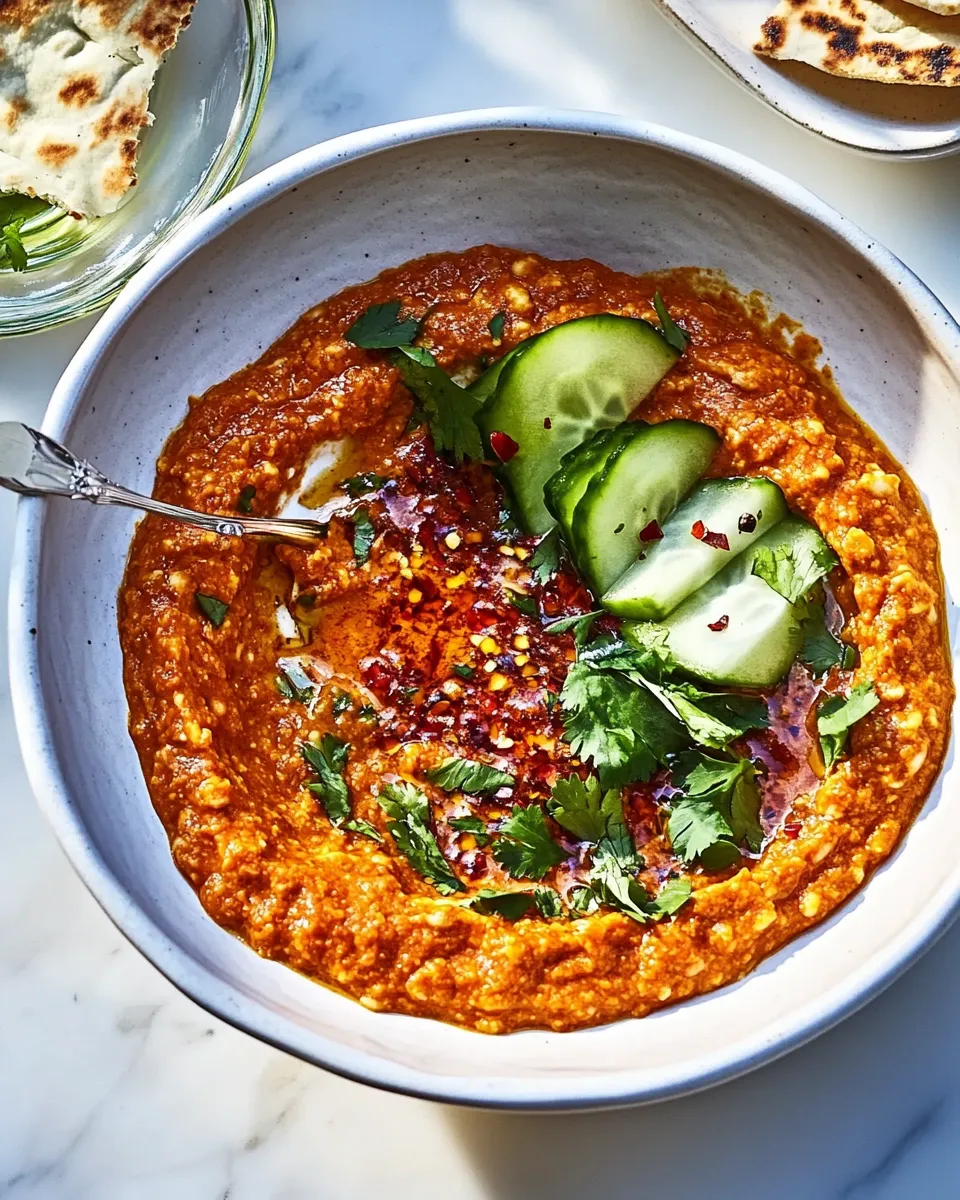
If you love bold, sun-soaked flavors with a touch of sweetness and smoke, muhammara is the dip you’ll reach for again and again. It’s a Syrian red pepper and walnut spread that sits comfortably between a dip, a spread, and a condiment — and it dresses up anything from grilled meat to a simple piece of toast. I use it as a first-course dip, a sandwich spread, and sometimes as an unexpected salad dressing when thinned slightly.
This version is straightforward and honest: roasted red bell peppers, walnuts, breadcrumbs, pomegranate molasses, and a few assertive seasonings. No fuss. The technique is basic food-processor work and a few simple tastes to get the balance right. It’s forgiving, quick, and hugely rewarding.
If you’ve never made muhammara before, don’t be intimidated. The components are pantry-friendly, and the payoff is massive. Read through the steps, assemble the parts, and you’ll have a vibrant, slightly smoky, and slightly sweet spread in under twenty minutes. Serve it with warm pita, raw vegetables, or use it to wake up a grilled chicken breast.
What Goes Into Muhammara
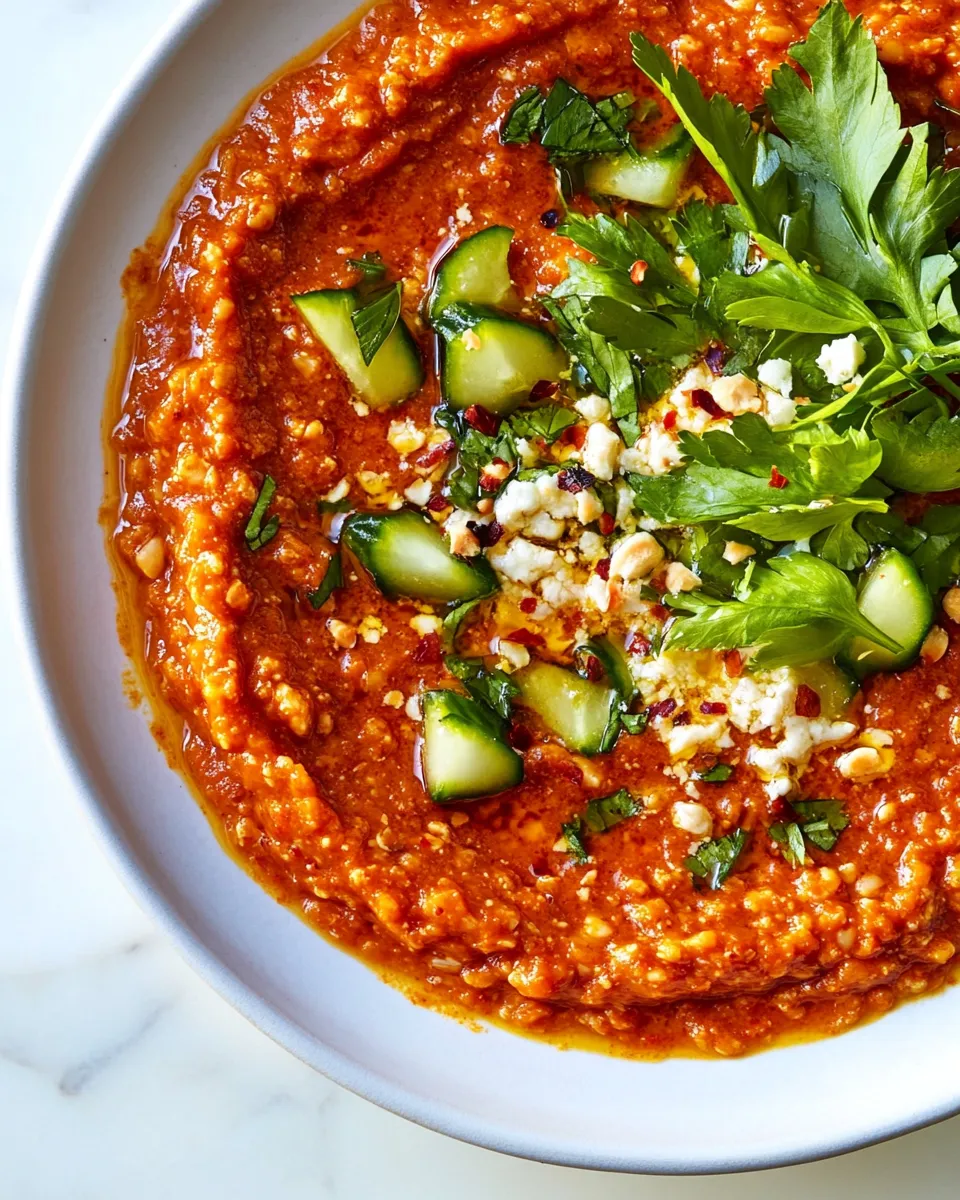
Ingredients
- 3 roasted red bell peppers — the base: sweet, smoky, and full of roasted flavor. If yours are a touch oily, blot them with paper towel.
- ½ cup bread crumbs, fresh or store-bought — adds body and helps thicken while keeping the texture smooth. Fresh crumbs yield a softer finish; store-bought gives a bit more bite.
- ½ cup walnuts — the nutty backbone; toasting briefly (if you prefer) intensifies flavor but isn’t required if your walnuts are fresh.
- 2 tablespoons extra-virgin olive oil — enriches the paste and helps carry flavors on the palate.
- 1½ tablespoons pomegranate molasses* — concentrated sweet-tart note that distinguishes muhammara from other red pepper dips. Start with the stated amount and adjust to taste.
- 1 garlic clove — sharpness and depth. Peel it just before processing for the freshest flavor.
- 1 teaspoon fresh lemon juice — lifts the spread and balances the sweetness of the molasses.
- 1 teaspoon Aleppo pepper or ½ teaspoon red pepper flakes — provides gentle, fruity heat. Choose Aleppo for a milder, more complex warmth.
- ½ teaspoon ground cumin — adds warmth and a subtle earthiness that complements the walnuts.
- Freshly ground black pepper — to taste; several grinds during processing sharpen the overall profile.
- Fresh mint, for garnish — optional but brightens the plate and pairs well with pomegranate’s fruitiness.
- Pita bread, for serving — the classic partner: warm, soft, and excellent for scooping.
Muhammara: From Prep to Plate
- Prepare the 3 roasted red bell peppers: remove stems and seeds, peel off any loose skin, and roughly chop the peppers.
- Peel the garlic clove.
- In a food processor, combine the chopped roasted peppers, ½ cup breadcrumbs (fresh or store-bought), ½ cup walnuts, 1 garlic clove, 2 tablespoons extra-virgin olive oil, 1½ tablespoons pomegranate molasses, 1 teaspoon fresh lemon juice, 1 teaspoon Aleppo pepper (or ½ teaspoon red pepper flakes), and ½ teaspoon ground cumin. Add several grinds of freshly ground black pepper.
- Pulse the mixture in short bursts until creamy and mostly smooth, stopping occasionally to scrape down the sides of the bowl with a spatula so everything blends evenly.
- Taste and adjust seasoning if desired by adding a bit more Aleppo pepper/red pepper flakes or more freshly ground black pepper.
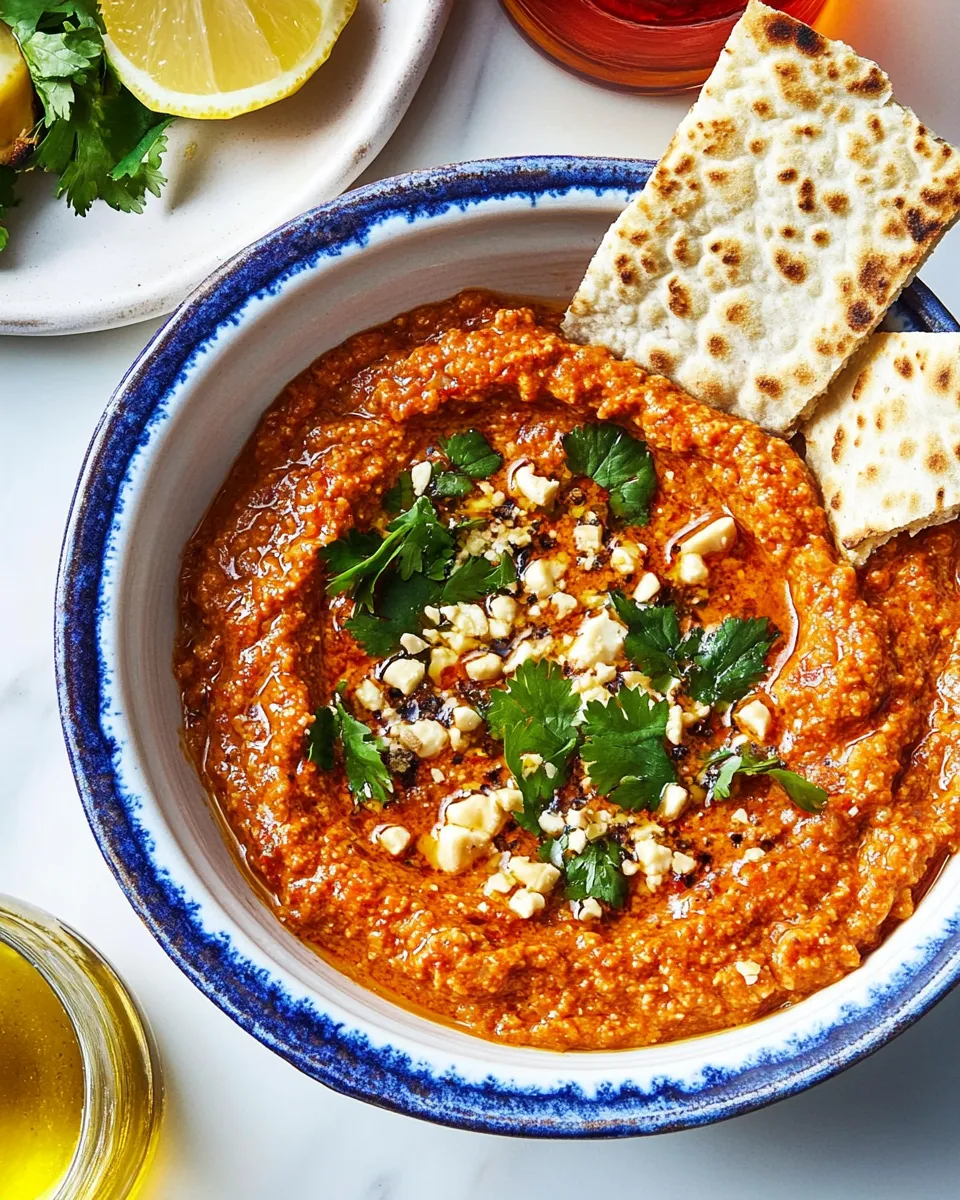
- Transfer the muhammara to a serving bowl, garnish with fresh mint, and serve with pita bread.
Why This Recipe is a Keeper
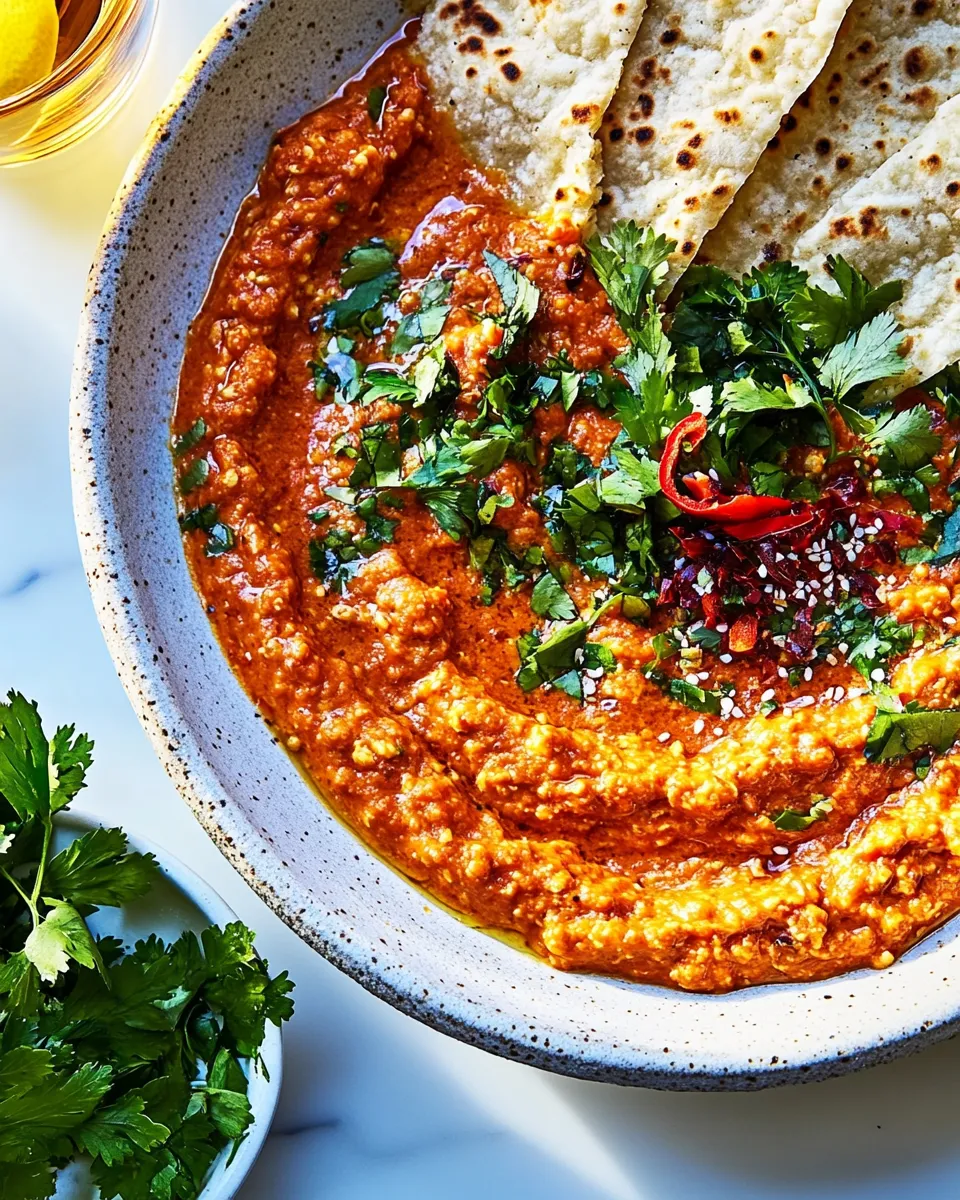
Muhammara sits at the intersection of simple technique and big flavor. The components are few, but each does heavy lifting: roasted peppers bring sweetness and smoke, walnuts give the dip substance, breadcrumbs temper the texture, and pomegranate molasses provides a warm, tangy counterpoint. Together they produce a spread that feels much more complex than the time invested.
It’s forgiving. If your peppers skew sweeter, add a dash more lemon or molasses to balance. If you like heat, increase the Aleppo pepper a touch at the end. The base is versatile: use it straight from the processor, or thin it with a touch more olive oil for dressings and marinades. Once you’ve made it once, you’ll find yourself thinking of new reasons to use it.
Budget & Availability Swaps
Not everything will be available at every market, and groceries change with seasons. A few practical swaps will keep the spirit of the dish intact without inventing a new recipe.
- Walnuts — if walnuts are expensive or sold out, try to find another neutral oilier nut at a similar cost; the goal is a creamy, slightly bitter nut texture.
- Pomegranate molasses — if unavailable, look for concentrated tart fruit reductions or syrups at specialty stores; a squeeze of lemon with a touch of honey can approximate the sweet-tart balance in a pinch, used sparingly.
- Bread crumbs — fresh breadcrumbs are ideal but stale bread blitzed in a processor works well. Store-bought crumbs perform fine too; just make sure they’re not heavily seasoned.
- Aleppo pepper — if you can’t find it, red pepper flakes are the suggested direct alternative in this recipe. Start with the recommended amount and adjust to taste.
What’s in the Gear List
You don’t need a lot of specialized equipment for this. A few items make the job easier and cleaner:
- Food processor — essential for achieving a creamy, mostly smooth texture. Short pulses give you control.
- Spatula — for scraping down the bowl and making sure everything blends evenly.
- Measuring spoons — accurate small amounts (pomegranate molasses, spices) matter here.
- Sharp knife and cutting board — for prepping the peppers and any garnishes.
- Serving bowl — a shallow bowl with room for a drizzle of olive oil and a mint garnish looks best.
Problems & Prevention
Common issues and how to fix them
- Too watery: If your roasted peppers release extra liquid, drain a bit before processing or add more breadcrumbs to absorb it.
- Too thick: Add a small splash of olive oil or a teaspoon of water at a time and re-pulse until you reach the texture you want.
- Grainy texture: Pulse longer and scrape down the bowl periodically. If it still feels grainy, a touch more oil helps smooth it out.
- Flat flavor: Check acidity and salt. A little more lemon or a few extra grinds of black pepper will brighten the profile. The pomegranate molasses also brings depth; add a touch more if you prefer sweet-tart notes.
- Too spicy: Balance with a touch more breadcrumbs or bread; neutral starch will calm heat better than adding dairy.
Spring to Winter: Ideas
Muhammara is seasonal in spirit but available year-round. Here’s how to use it as the seasons shift:
- Spring: Serve with raw spring vegetables like radishes and snap peas, or spread lightly on seared asparagus slices.
- Summer: Use as a condiment on grilled fish or chicken. Its bright acidity cuts through char and smoke.
- Fall: Pair with roasted root vegetables; a spoonful on a warm plate of roasted carrots and beets is comforting.
- Winter: Stir a dollop into warm grain bowls or slather on toasted bread with a piece of sharp cheese for a cozy, simple bite.
Cook’s Commentary
I make muhammara when I want big flavor with minimal fuss. The real trick is in roasting peppers well — charred skins loosen and the peppers develop that quintessential roasted sweetness. If you can, roast several extra and freeze portions in ice-cube trays; they thaw quickly and make this dip even quicker to assemble on busy nights.
Pomegranate molasses is non-negotiable in my kitchen for this one. It gives the dip an unmistakable tang and a rounded finish. If you’re new to it, buy a small bottle and use it in muhammara, in dressings, or to finish roasted vegetables. It keeps a long time in the fridge.
Best Ways to Store
Store muhammara in an airtight container in the refrigerator for up to 5 days. The flavors will continue to mingle, and many people find the second-day version even better. If you make a larger batch, freeze it in small portions (ice-cube trays work well) for up to 3 months. Thaw in the refrigerator and give it a quick stir, and add a teaspoon of olive oil if it looks dry.
Ask the Chef
Q: Can I use raw bell peppers instead of roasted? A: The flavor will be brighter but lacking the roasted, smoky depth that defines muhammara. If you must, briefly roast them under a broiler or on a gas flame to get some char.
Q: Is this vegan? A: Yes — the recipe as written is fully plant-based.
Q: How spicy is it? A: Mild to medium. Aleppo pepper gives a gentle warmth; red pepper flakes increase the heat by comparison. Taste and adjust before serving.
Bring It Home
Muhammara is as practical as it is delicious. Make a jar, and you’ll have an instant showstopper for guests, a quick sandwich booster for lunch, and a dependable component for weeknight dinners. Serve it simply with warm pita and mint, or use it as a vibrant finishing touch for roasted vegetables or grilled proteins. Keep some pomegranate molasses on hand, and you’ll find a dozen other uses for it across savory and sweet recipes.
One final note: taste as you go. This is a recipe that responds beautifully to small adjustments—another pinch of spice, another grind of pepper, a whisper more lemon—and you’ll quickly learn what balance you prefer. Make it once, then make it your own.
Muhammara
Ingredients
Ingredients
- 3 roasted red bell peppers
- 1/2 cupbread crumbs fresh or store-bought
- 1/2 cupwalnuts
- 2 tablespoonsextra-virgin olive oil
- 1 1/2 tablespoonspomegranate molasses*
- 1 garlic clove
- 1 teaspoonfresh lemon juice
- 1 teaspoonAleppo pepper or 1/2 teaspoon red pepper flakes
- 1/2 teaspoonground cumin
- Freshly ground black pepper
- Fresh mint for garnish
- Pita bread for serving
Instructions
Instructions
- Prepare the 3 roasted red bell peppers: remove stems and seeds, peel off any loose skin, and roughly chop the peppers.
- Peel the garlic clove.
- In a food processor, combine the chopped roasted peppers, ½ cup breadcrumbs (fresh or store-bought), ½ cup walnuts, 1 garlic clove, 2 tablespoons extra-virgin olive oil, 1½ tablespoons pomegranate molasses, 1 teaspoon fresh lemon juice, 1 teaspoon Aleppo pepper (or ½ teaspoon red pepper flakes), and ½ teaspoon ground cumin. Add several grinds of freshly ground black pepper.
- Pulse the mixture in short bursts until creamy and mostly smooth, stopping occasionally to scrape down the sides of the bowl with a spatula so everything blends evenly.
- Taste and adjust seasoning if desired by adding a bit more Aleppo pepper/red pepper flakes or more freshly ground black pepper.
- Transfer the muhammara to a serving bowl, garnish with fresh mint, and serve with pita bread.
Equipment
- Food Processor
- Spatula
- Serving Bowl
Notes
*If you don’t have pomegranate molasses, replace it with 2 teaspoons maple syrup and add an additional 2 teaspoons lemon juice.