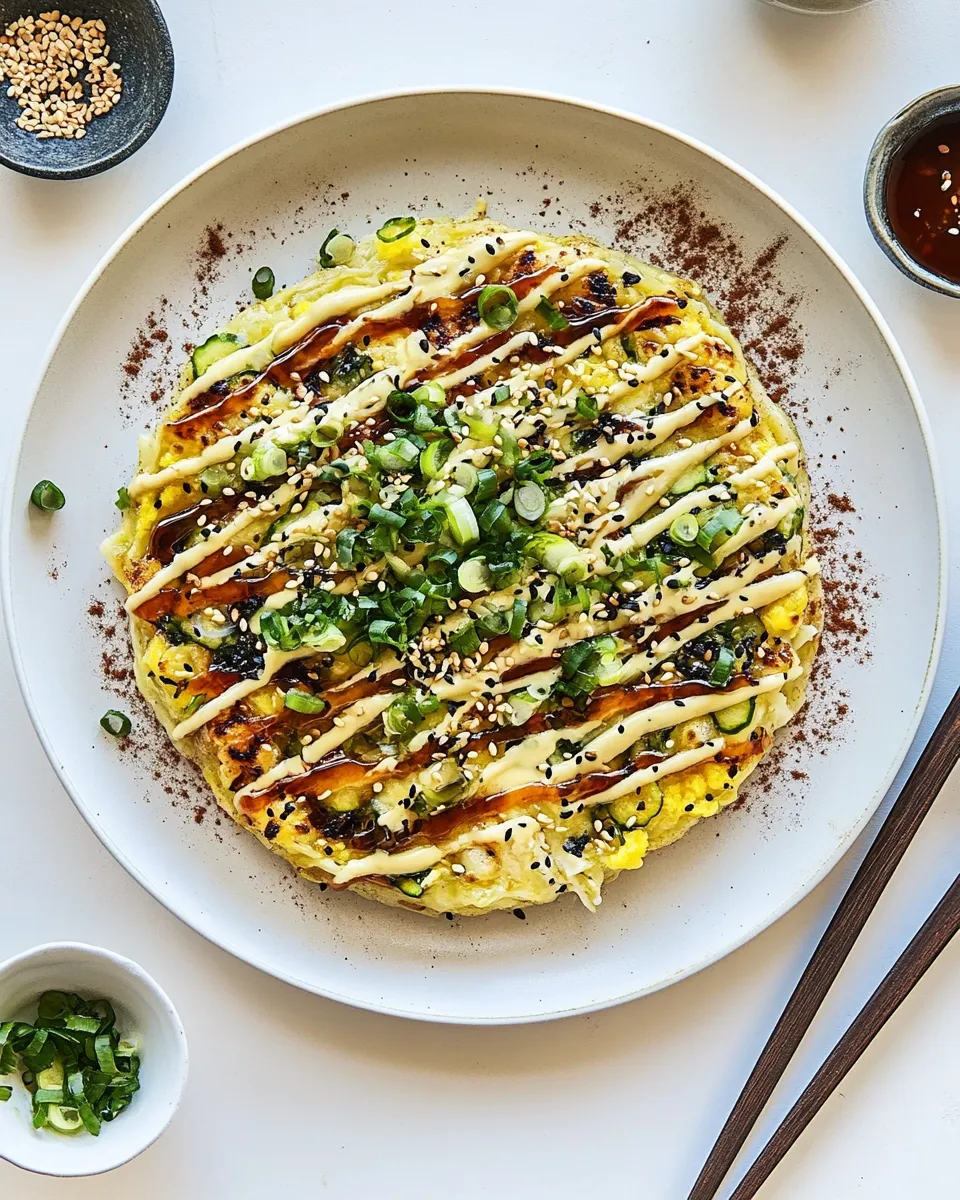
There’s something quietly satisfying about taking a handful of humble ingredients and turning them into a golden, cabbage-forward pancake that everyone reaches for at the table. This version leans on texture — lots of shredded cabbage, scallions, and panko — and keeps the batter simple so the vegetables sing. It’s forgiving, fast to assemble, and ideal for weeknight dinners or a casual weekend brunch.
I test recipes until they behave reliably: what you’ll find below is practical, foolproof guidance aimed at getting consistent results every time. The flavors are flexible, and the finishing touches — savory vegan Worcestershire, a ribbon of mayo, sesame, nori and pickled ginger — are what make each bite familiar and delicious.
Gather These Ingredients
Ingredients
- 3 packed cups finely shredded cabbage (about ½ medium) — the bulk of the okonomiyaki; shred thin so it wilts and binds with the egg.
- 1¼ cups chopped scallions (about 1 bunch) — adds oniony brightness and texture contrast.
- 1 cup panko breadcrumbs — absorbs moisture and gives structure without weighing the pancake down.
- ¾ teaspoon sea salt — seasons the whole mixture; adjust if your Worcestershire is very salty.
- 3 large eggs, beaten — the primary binder; they set the mixture as it cooks.
- Extra-virgin olive oil, for brushing — keeps the skillet nonstick and produces a nice golden crust.
- Vegan Worcestershire sauce, Annie’s recommended — adds umami and tang at the finish.
- Mayo, Sir Kensington’s or Kewpie recommended — creates the classic creamy ribbon when drizzled thinly.
- Sesame seeds — toasted or plain, they add a nutty crunch.
- Pickled ginger — brightens and cuts through the richness at the end.
- ½ sheet nori, sliced — gives that toasty sea flavor; slice thin so it sits lightly on top.
- ½ cup microgreens, optional — a fresh, peppery finish if you have them on hand.
Step-by-Step: Okonomiyaki
- In a large bowl, combine the 3 packed cups finely shredded cabbage, 1¼ cups chopped scallions, 1 cup panko breadcrumbs, and ¾ teaspoon sea salt; toss to distribute evenly.
- Add the 3 large beaten eggs and gently fold until the mixture is evenly moistened. The batter will be loose and cabbage-forward rather than a smooth flour pancake batter.
- If the mixture seems very dry, let it rest 10 minutes so the panko can absorb moisture; if it seems sufficiently cohesive, proceed immediately.
- Heat a nonstick skillet over medium heat until hot, then brush the surface with extra-virgin olive oil.
- Use a ¼-cup measure to portion the mixture into the skillet. Gently press each portion with a spatula to form a round about ½ inch thick. It’s okay if the mixture looks loose— it will bind as the egg cooks.
- Cook until the bottom is golden brown, about 3 minutes. Flip carefully and cook the second side until golden and the center is set, about 3 minutes more. Reduce heat to low if the outsides are browning too quickly.
- Transfer cooked okonomiyaki to a plate and repeat steps 4–6 with the remaining mixture, wiping out the skillet and brushing with more oil between batches as needed.
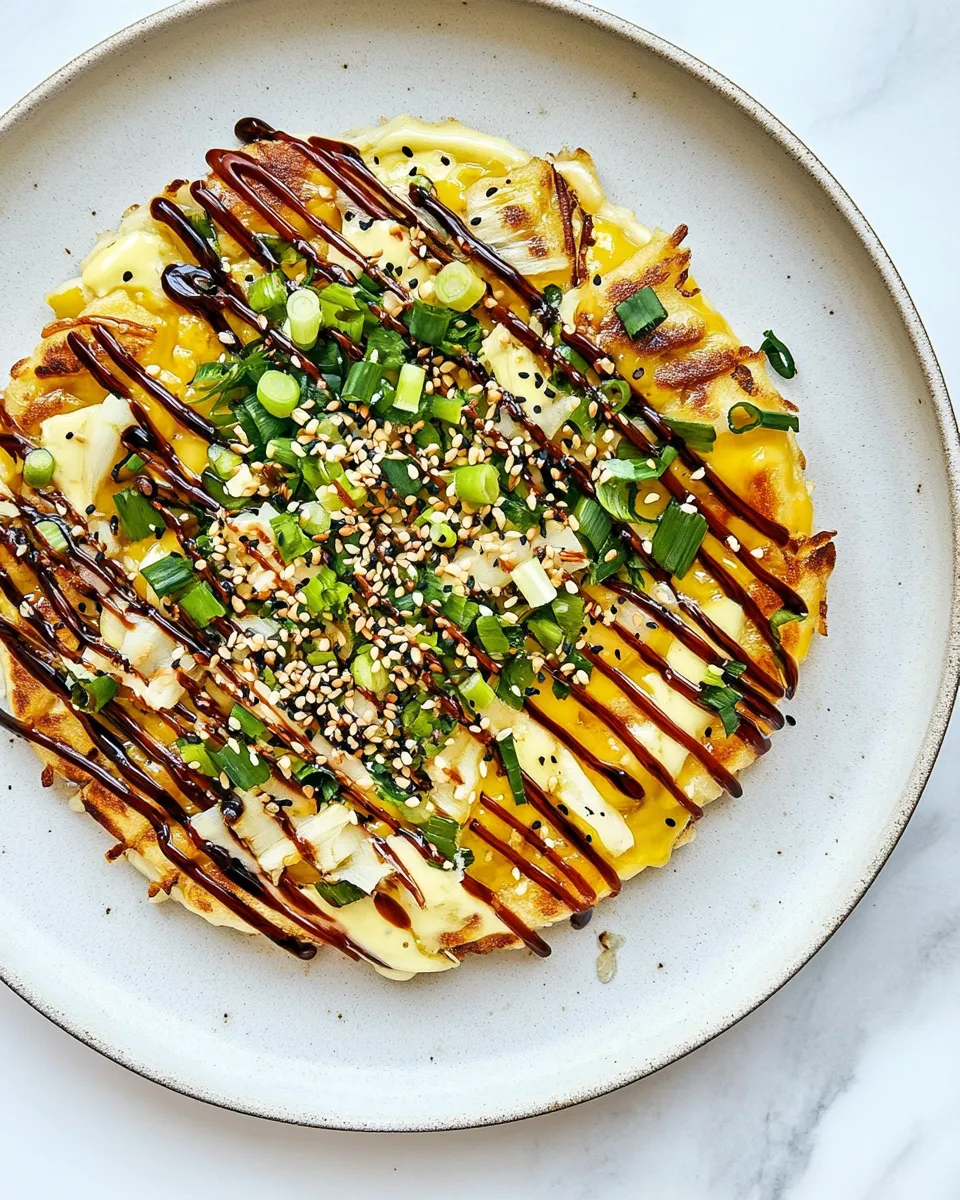
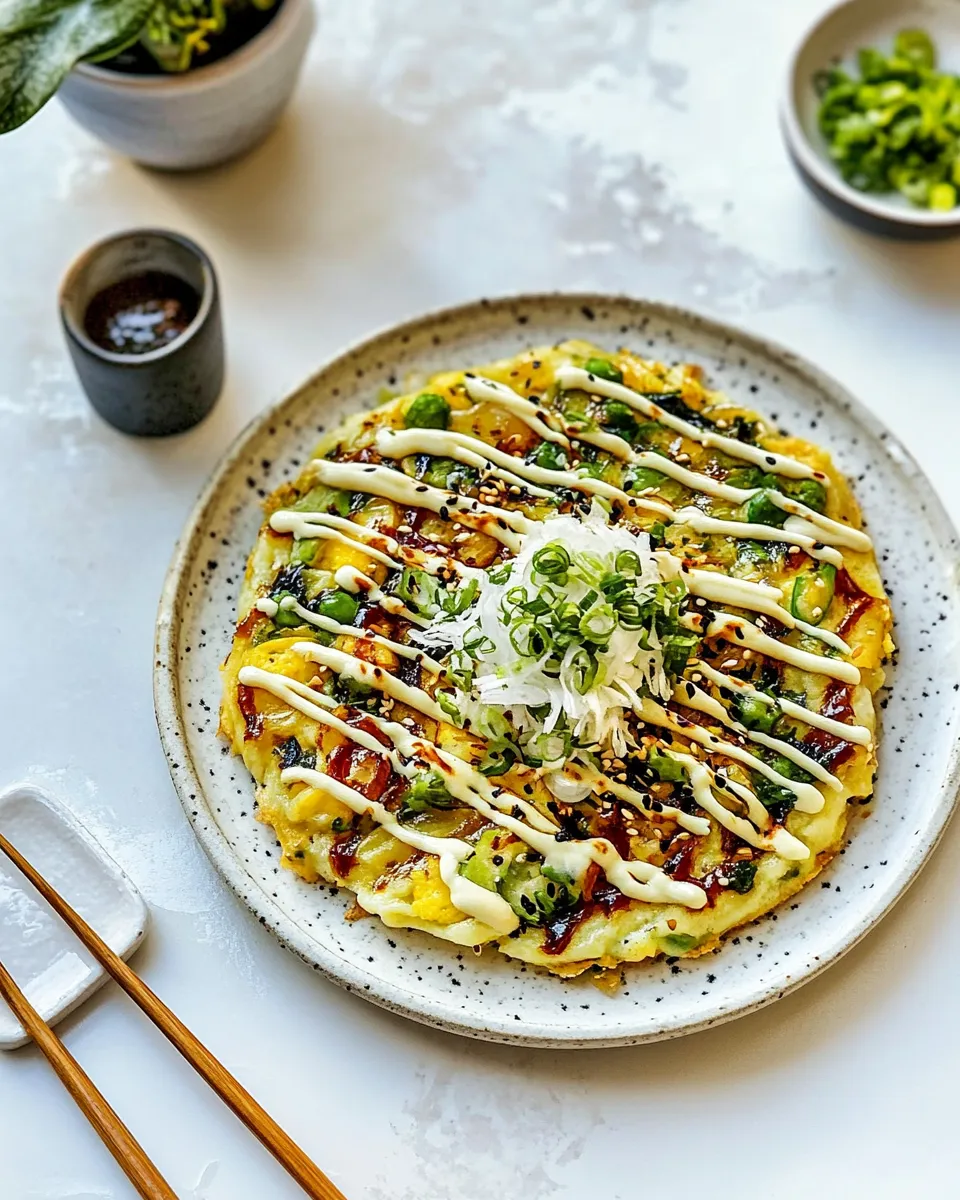
- To serve, drizzle each okonomiyaki with vegan Worcestershire sauce and squeeze thin ribbons of mayo over the top. Sprinkle with sesame seeds, arrange pickled ginger and the sliced ½ sheet nori on top, and finish with ½ cup microgreens if using. Serve hot.
Why It’s Crowd-Pleasing
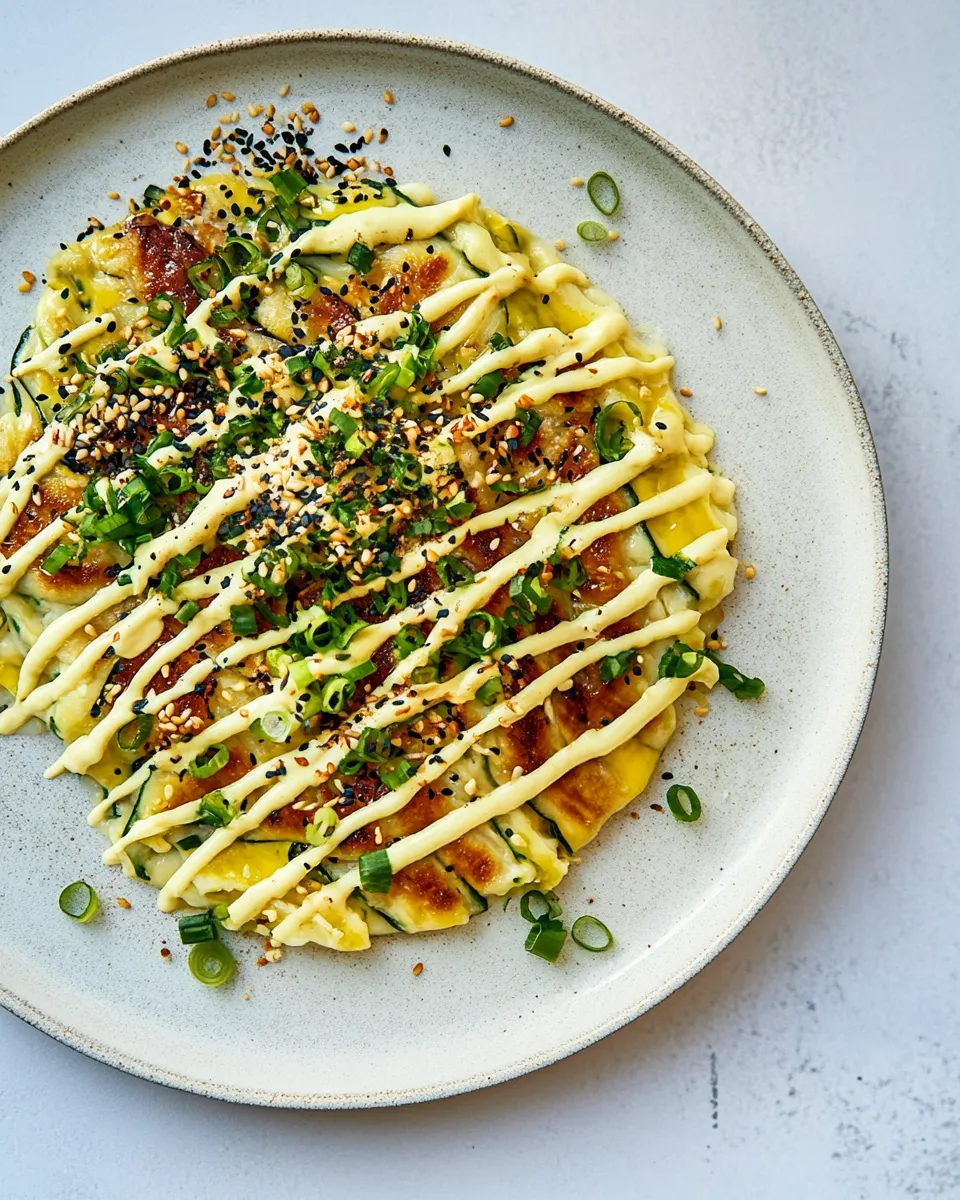
Okonomiyaki balances texture, savory flavor, and familiar condiments in a way that almost anyone can appreciate. The shredded cabbage keeps it light and slightly crunchy, while the panko gives just enough body so each cake holds together without becoming dense. The finishing trio — Worcestershire, mayo, and nori — delivers the umami and creaminess people instinctively love.
It’s also social food. These cook quickly, so you can make multiple small rounds and pass them around, or let people customize toppings. That interactive element, plus a pleasing golden crust and comforting egg-bound interior, is what makes it a hit at home or at a casual gathering.
Low-Carb/Keto Alternatives
To reduce carbs without changing the core technique, swap the panko for a low-carb binder. Options that work:
- Almond meal — use slightly less than the 1 cup panko called for, and expect a softer texture and nuttier flavor.
- Grated zucchini (squeezed dry) mixed with a small amount of almond flour — adds moisture control and bulk.
Keep the eggs as the primary binder. Because panko is a moisture absorber, let the mixture rest a few minutes and check cohesion before pan-frying. You may need to press a bit firmer when shaping on the skillet.
What You’ll Need (Gear)
A handful of basic tools keeps these simple and fast:
- Large mixing bowl — for tossing the cabbage and scallions with the panko and salt.
- Nonstick skillet — essential for an easy flip and dependable browning.
- Spatula — a wide turner helps shape and flip the cakes without breaking them.
- ¼-cup measure — for evenly sized portions so everything finishes at the same time.
- Brush or folded paper towel — for oiling the skillet between batches.
If you want perfectly uniform rounds, use a ring mold; it’s not necessary but helpful for presentations.
Mistakes Even Pros Make
There are a few common slips that can turn a reliable recipe into a soggy or undercooked result:
- Overcrowding the pan — too many cakes at once lowers pan temperature and prevents browning. Work in batches.
- Skipping the rest when the mixture looks dry — panko needs a few minutes to hydrate, so resting is not optional if it feels dry.
- Using high heat all the way through — outsides will brown before the center sets. Lower the heat if browning happens too fast.
- Pressing too hard — you want a uniform ½-inch thickness, but pressing aggressively squeezes out moisture and yields a denser cake.
Variations for Dietary Needs
Vegetarian / Vegan (egg binder)
If you need this to be vegan, the eggs are the main hurdle. Consider powdered egg replacer mixed per package instructions or a flax “egg” (1 tablespoon ground flax + 3 tablespoons water per egg, rested until gelatinous). Note that texture will shift; panko absorption becomes more important, so rest and adjust before cooking.
Gluten-Free
Panko is the gluten-containing ingredient. Substitute with gluten-free panko or a mix of crushed gluten-free crackers and a touch of rice flour to help with binding. Again, let the mixture sit so the substitute hydrates.
Allergy-Friendly Tips
Sesame seeds and soy in some Worcestershire or mayo can be allergens. Use seed-free finishes and check labels for soy-free vegan Worcestershire and allergy-friendly mayo alternatives.
Notes from the Test Kitchen
I make these several times with small tweaks before I stop adjusting. A few practical results that I rely on:
- Shred the cabbage as thinly as your mandoline or knife allows; it blends better and cooks in the same short time window as the eggs set.
- Toss the panko with the cabbage and scallions before adding the eggs. This helps the crumbs distribute evenly and prevents clumping.
- Use medium heat for the skillet. It gives you golden color in roughly three minutes per side without overcooking the center.
- Brush oil between batches rather than pouring. It conserves oil and prevents excess from steaming the edges.
Storage Pro Tips
Okonomiyaki are best eaten hot, but you can store leftovers for quick reheats. Cool completely, then wrap individually or layer with parchment and refrigerate up to 3 days.
To reheat, use a skillet over medium-low heat, covered briefly to warm through and crisp the exterior again — about 2–4 minutes per side depending on thickness. Avoid the microwave if you care about texture; it makes them soggy.
Questions People Ask
Q: Can I make the batter ahead of time?
A: You can mix the cabbage, scallions, panko, and salt and refrigerate for up to a day. Add the beaten eggs just before you cook so they don’t break down the texture too much.
Q: My okonomiyaki falls apart when I flip it. What went wrong?
A: It either wasn’t cooked long enough on the first side, or the mixture was too wet or loose. Make sure you press to about ½-inch thick and give the first side a full ~3 minutes until golden before flipping. Also check that your skillet is hot and oiled.
Q: Do I have to use vegan Worcestershire and mayo?
A: No. Those are recommended in the ingredient list for a plant-forward, pantry-friendly finish. Traditional okonomiyaki often uses a thick okonomiyaki sauce and regular Japanese mayo (Kewpie) which are delicious too. Use what you prefer.
Serve & Enjoy
Serve each okonomiyaki hot, drizzled with a thin ribbon of mayo and a generous swipe of vegan Worcestershire sauce. Finish with sesame seeds, a few strips or a small fan of sliced nori, and pickled ginger for brightness. If you kept microgreens handy, scatter a small handful on top for freshness.\p>
They’re perfect alongside a simple green salad, or as a tapas-style spread with other small plates. I like to arrange several on a platter and let people take one or two — warm, always best, and always the first to disappear.
Okonomiyaki
Ingredients
Ingredients
- 3 packed cupsfinely shredded cabbage about 1/2 medium*
- 1 1/4 cupschopped scallions about 1 bunch
- 1 cuppanko breadcrumbs
- 3/4 teaspoonsea salt
- 3 large eggs beaten
- Extra-virgin olive oil for brushing
- Vegan Worcestershire sauce Annie’s recommended
- Mayo Sir Kensington’s or Kewpie recommended
- Sesame seeds
- Pickled ginger
- 1/2 sheet nori sliced**
- 1/2 cupmicrogreens optional
Instructions
Instructions
- In a large bowl, combine the 3 packed cups finely shredded cabbage, 1¼ cups chopped scallions, 1 cup panko breadcrumbs, and ¾ teaspoon sea salt; toss to distribute evenly.
- Add the 3 large beaten eggs and gently fold until the mixture is evenly moistened. The batter will be loose and cabbage-forward rather than a smooth flour pancake batter.
- If the mixture seems very dry, let it rest 10 minutes so the panko can absorb moisture; if it seems sufficiently cohesive, proceed immediately.
- Heat a nonstick skillet over medium heat until hot, then brush the surface with extra-virgin olive oil.
- Use a ¼-cup measure to portion the mixture into the skillet. Gently press each portion with a spatula to form a round about ½ inch thick. It’s okay if the mixture looks loose— it will bind as the egg cooks.
- Cook until the bottom is golden brown, about 3 minutes. Flip carefully and cook the second side until golden and the center is set, about 3 minutes more. Reduce heat to low if the outsides are browning too quickly.
- Transfer cooked okonomiyaki to a plate and repeat steps 4–6 with the remaining mixture, wiping out the skillet and brushing with more oil between batches as needed.
- To serve, drizzle each okonomiyaki with vegan Worcestershire sauce and squeeze thin ribbons of mayo over the top. Sprinkle with sesame seeds, arrange pickled ginger and the sliced ½ sheet nori on top, and finish with ½ cup microgreens if using. Serve hot.
Equipment
- Large Bowl
- nonstick skillet
- Spatula
- 1/4-cup measure
- Plate
Notes
*I like to shred my cabbage on a mandoline to get thin, even-sized shreds.
**Use scissors to cut nori into thin strips.