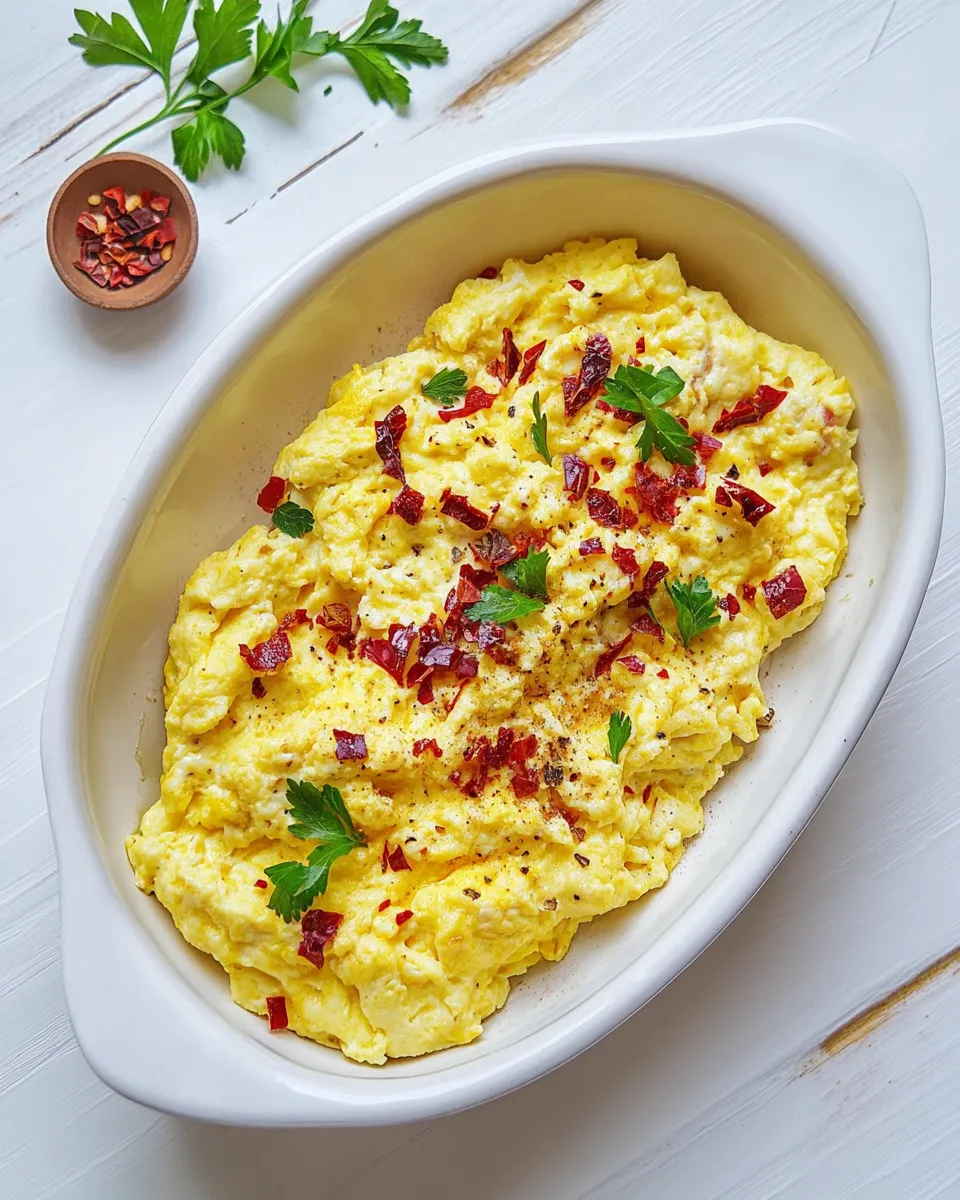
I love mornings when breakfast is simple, hands-off, and reliably delicious. Oven-baked scrambled eggs do exactly that: they turn a routine egg scramble into a set-it-and-forget-it tray that feeds a crowd, makes meal prep easier, and still tastes like something you actually want to eat.
This method gives you soft, even curds without standing at the stove and stirring. There’s a little flip halfway through to break those curds up, and then a brief rest so residual heat finishes the job—no overcooking, no rubbery edges. It’s practical, forgiving, and fast once you learn the rhythm.
Below I walk through the ingredients, the exact steps, what to watch for, and a handful of options to tailor the dish to your kitchen and diet. Use the recipe as written the first time, then make it your own.
Ingredient Notes
Ingredients
- 12 eggs — The base of the dish. Use fresh eggs for the brightest flavor and best texture.
- 1/2 cup milk — Adds creaminess and thins the eggs slightly so the curds set tenderly.
- 1/4 cup butter, melted and slightly cooled — Provides richness and helps the eggs brown gently; let it cool a bit so it doesn’t start cooking the eggs on contact.
- 1/4 teaspoon salt — Keeps the seasoning simple and lets the eggs’ flavor shine; adjust after tasting if needed.
- 1/2 teaspoon ground black pepper — Adds a warm, sharp counterpoint. Freshly ground is best if you have it.
Oven-Baked Scrambled Eggs Cooking Guide
- Preheat the oven to 350°F. Spray a 9×13-inch casserole dish with cooking spray or lightly oil it.
- Crack 12 eggs into a large bowl. Add 1/2 cup milk, 1/4 cup melted (and slightly cooled) butter, 1/4 teaspoon salt, and 1/2 teaspoon ground black pepper.
- Whisk the mixture until the eggs, milk, butter, salt, and pepper are well combined and uniform in color.
- Pour the egg mixture into the prepared 9×13-inch dish and spread it evenly.
- Bake on the middle rack for 12 minutes.
- Remove the dish from the oven and use a fork to run through the eggs, breaking them up into curds and stirring gently to redistribute any liquid.
- Return the dish to the oven and bake for another 8 minutes.
- Remove from the oven and use a fork to stir/scramble any still-wet egg into the curds; let the dish rest 1–2 minutes so residual heat finishes cooking. Serve.
What You’ll Love About This Recipe
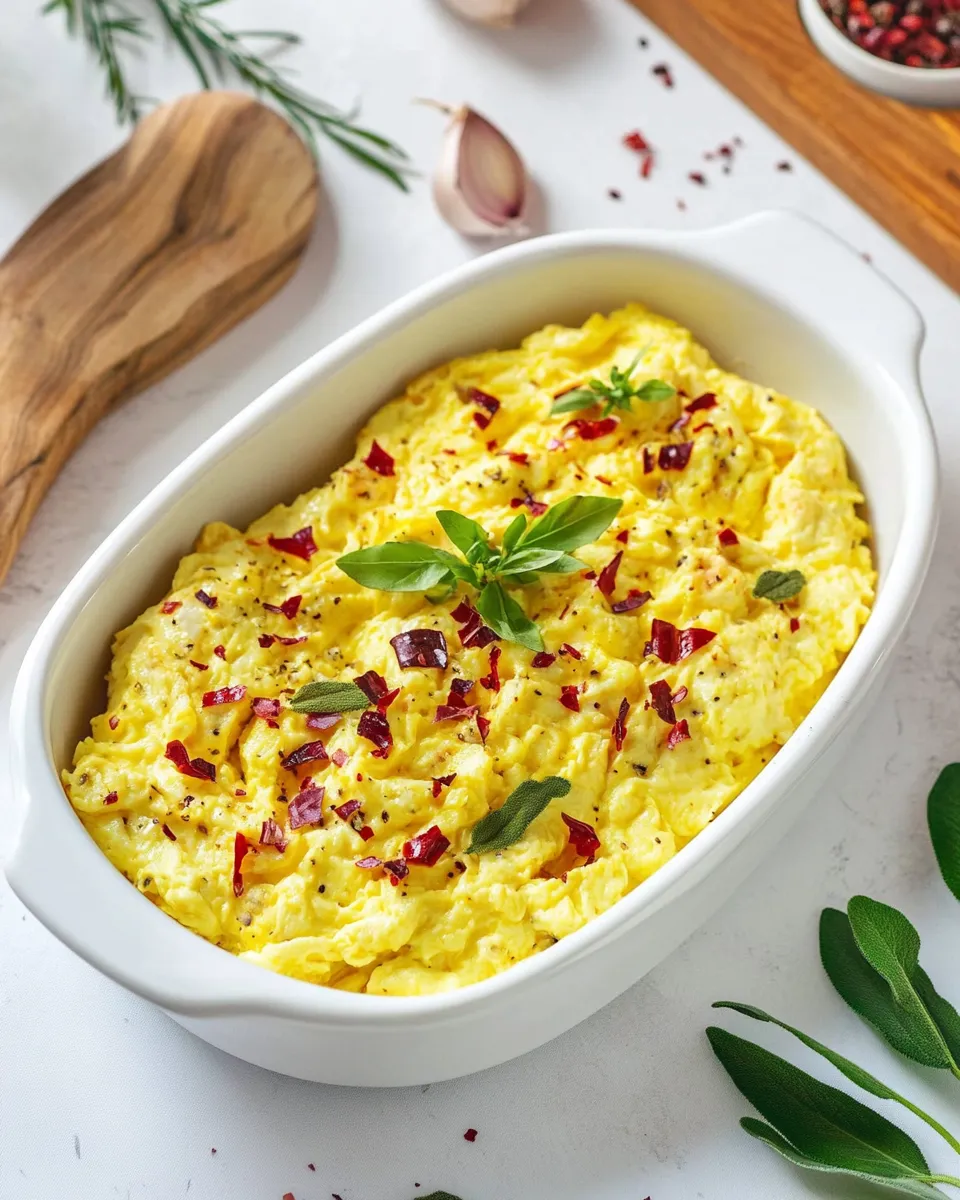
This recipe is low-fuss and high-reward. It delivers uniformly cooked eggs without constant attention. If you cook for a family, feed a brunch crowd, or want breakfast ready while you shower and get dressed, this method gives you predictable results.
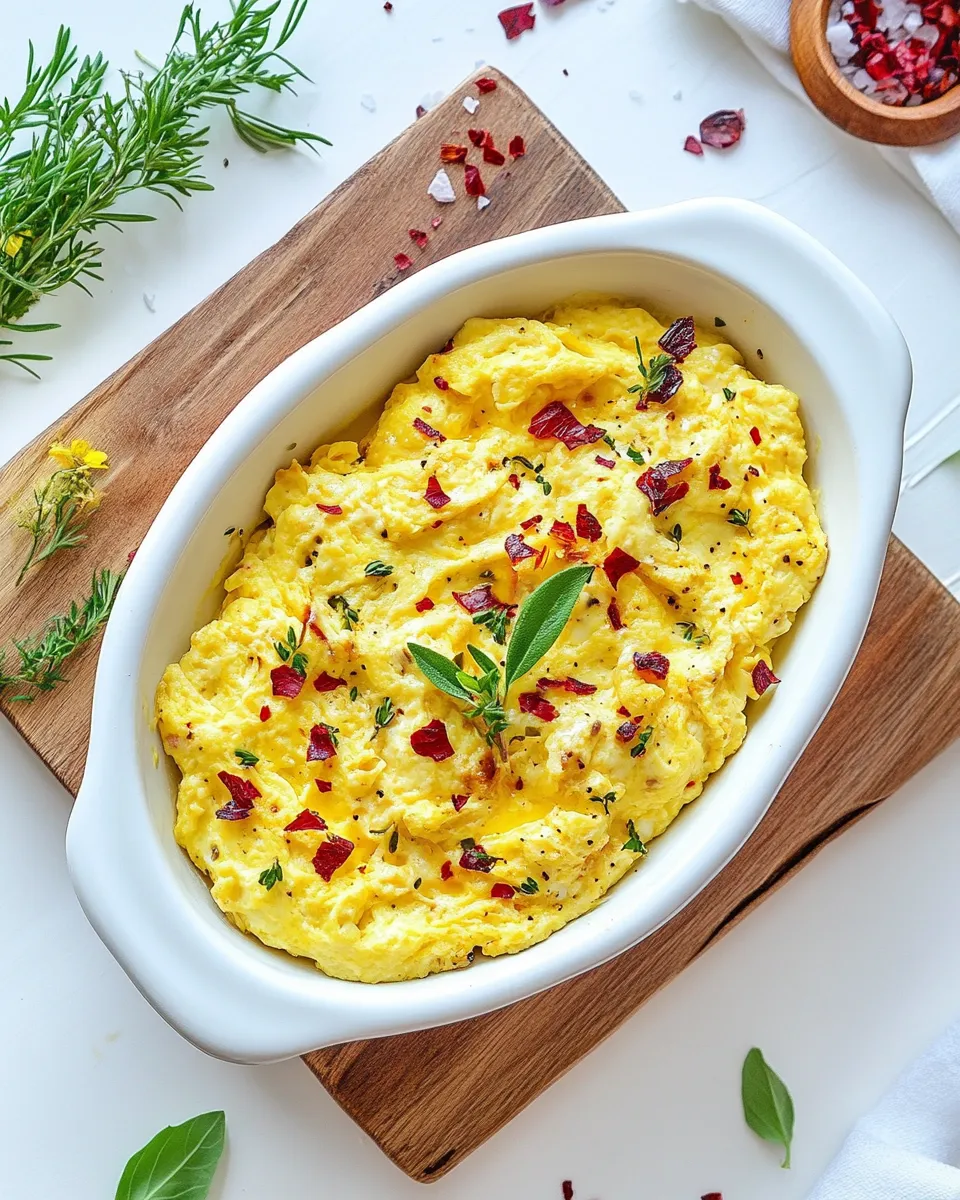
The texture is reliably tender: medium-sized curds that feel homemade but cleaner than pan-scrambled eggs. Because everything bakes at once, you skip the skillet-splatter and get an even set across the whole casserole. And clean-up is straightforward—one bowl, one dish.
No-Store Runs Needed
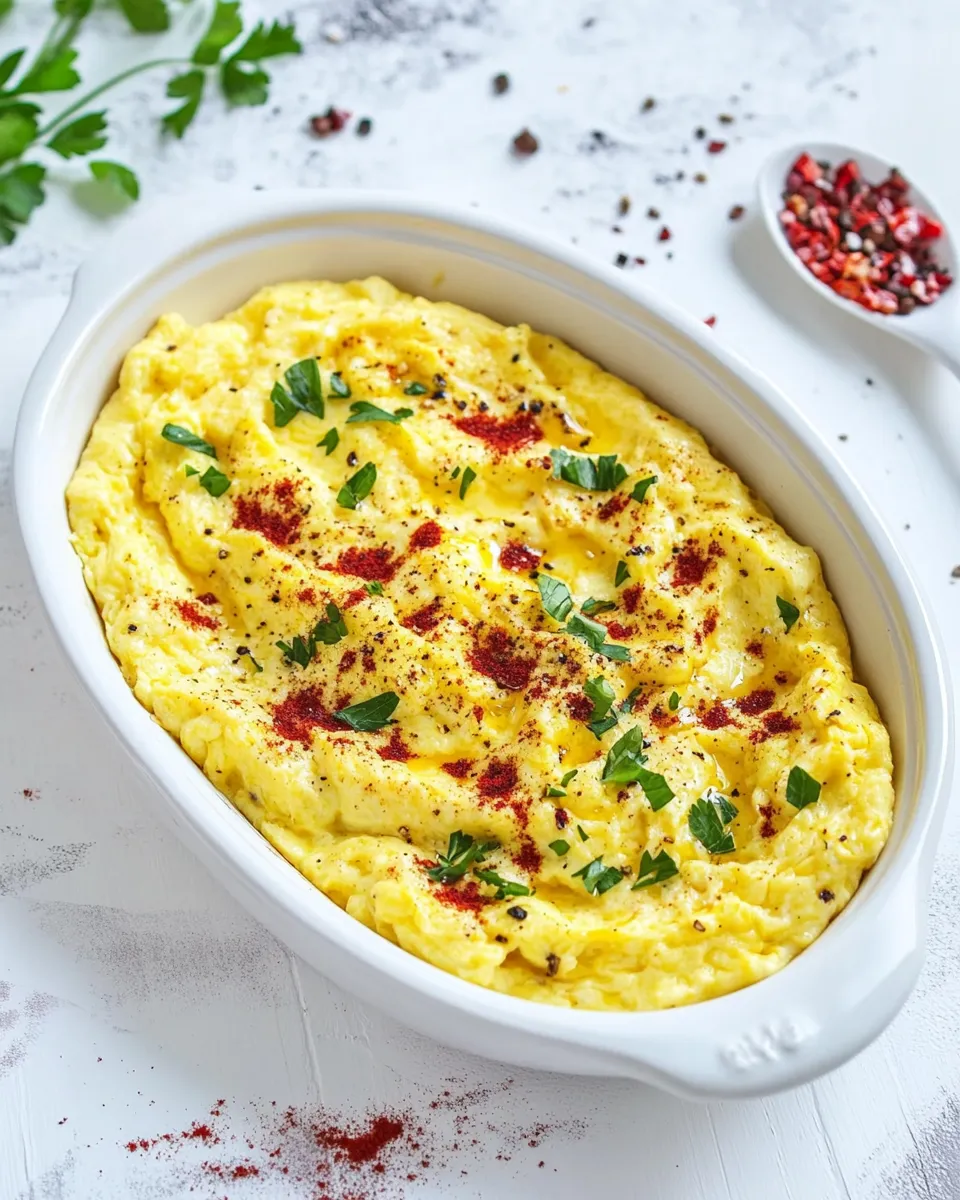
All the ingredients are pantry and fridge staples. You don’t need fancy add-ins or last-minute shopping. If you keep eggs, milk, butter, salt, and pepper on hand, you can make this any morning.
Cook’s Kit
- 9×13-inch casserole dish — the recipe is tuned to this size for even cooking.
- Large mixing bowl — to whisk the eggs and liquids until uniform.
- Whisk or fork — for combining; a whisk helps get the mixture evenly colored.
- Measuring cups and spoons — to keep the salt, milk, and butter accurate.
- Oven mitts and a fork — you’ll remove and stir halfway through, so be safe handling the hot dish.
Avoid These Mistakes
- Overheating the butter before adding it. If it’s too hot it can begin cooking the eggs as you mix; let it cool slightly first.
- Using the wrong dish size. A smaller dish will make the eggs too thick and may change the baking time; a much larger dish will make them thin and dry.
- Skipping the halfway stir. That brief fork-through turns the set sheet into curds. If you skip it you’ll end up with a solid slab rather than scrambled curds.
- Leaving it in the oven too long. The recipe times are precise to avoid overcooking. Pulling it at the listed times, then resting, prevents rubbery eggs.
- Not letting it rest. Residual heat finishes the cooking; stirring and then resting makes the texture uniform and tender.
Make It Diet-Friendly
Want to adapt this for different dietary needs? Keep the method but make these changes carefully so you don’t compromise texture.
- Lower-fat: Substitute low-fat milk for whole milk and use 1/4 cup light butter or a neutral oil; expect a slightly less rich result.
- Dairy-free: Use an unsweetened plant milk (unsweetened almond, oat, or soy) and replace the butter with a neutral oil or dairy-free butter spread. Keep the melted fat amount similar for texture.
- Higher-protein: Add chopped cooked lean ham, turkey, or a handful of cottage cheese stirred in after the first bake. If adding moist ingredients, drain well to avoid extra liquid.
- Lower-sodium: Reduce the added salt to 1/8 teaspoon and add salty mix-ins like parmesan or ham sparingly, tasting as you go.
Chef’s Notes
Small technique details affect the result. Whisk until uniform in color—this ensures even cooking. The melted butter should be warm to the touch, not hot. Spread the mixture evenly in the dish; lumps or pooled butter can create uneven curds.
When you remove the casserole at the 12-minute mark, use a fork to break and turn the eggs gently. Don’t over-agitate; you want curds, not a mashed texture. The second bake firms the curds while leaving some tender bits. After the final stir, let it sit for 1–2 minutes off heat—carryover cooking finishes any slightly wet egg without drying it out.
Keep-It-Fresh Plan
Store leftover baked scrambled eggs in an airtight container in the refrigerator for up to 3–4 days. Reheat gently: microwave in short bursts at medium power, stirring between bursts, or warm in a low oven (300°F) covered with foil until just heated through. Rapid, high heat will make eggs rubbery.
For longer storage, you can freeze portions in airtight containers for up to 1 month. Thaw overnight in the fridge and reheat gently. Texture will be slightly softer after freezing but still perfectly serviceable for meal prep.
Frequently Asked Questions
- Can I add vegetables or cheese? Yes. Add grated or crumbled cheeses sparingly and fold in after the first bake or sprinkle on top before the second bake. Vegetables should be cooked and drained first—raw vegetables release water and can make the eggs watery.
- Can I halve the recipe? You can, but adjust the dish size (use an 8×8-inch or similar) and watch the baking time. It may finish faster; start checking a few minutes early.
- What if my eggs look wet after the second bake? Stir gently with a fork and let them rest 1–2 minutes off heat. Residual heat will finish cooking the thinner bits without overdoing the set curds.
- Why use melted butter instead of whole butter pieces or oil? Melted butter blends uniformly into the egg base and provides consistent richness; whole butter pieces could melt unevenly and create oily spots. You can use oil if you prefer, but the flavor will differ.
- Is 350°F required? 350°F gives even cooking without browning the top too aggressively. You can experiment with slightly lower temps for a gentler set, but baking time will be longer.
The Takeaway
Oven-baked scrambled eggs are a reliable, low-effort way to get tender, evenly cooked eggs for a crowd or busy morning. The recipe is straightforward: mix, bake, stir, bake, rest. Follow the exact steps and timings the first time, then tweak add-ins and seasonings to suit your family.
Simple technique. Big payoff. Make it once, and you’ll reach for this when you want breakfast that’s practical, comforting, and stress-free.

Oven-Baked Scrambled Eggs
Ingredients
Ingredients
- 12 eggs
- 1/2 cupmilk
- 1/4 cupbuttermelted and slightly cooled
- 1/4 teaspoonsalt
- 1/2 teaspoonground black pepper
Instructions
Instructions
- Preheat the oven to 350°F. Spray a 9×13-inch casserole dish with cooking spray or lightly oil it.
- Crack 12 eggs into a large bowl. Add 1/2 cup milk, 1/4 cup melted (and slightly cooled) butter, 1/4 teaspoon salt, and 1/2 teaspoon ground black pepper.
- Whisk the mixture until the eggs, milk, butter, salt, and pepper are well combined and uniform in color.
- Pour the egg mixture into the prepared 9×13-inch dish and spread it evenly.
- Bake on the middle rack for 12 minutes.
- Remove the dish from the oven and use a fork to run through the eggs, breaking them up into curds and stirring gently to redistribute any liquid.
- Return the dish to the oven and bake for another 8 minutes.
- Remove from the oven and use a fork to stir/scramble any still-wet egg into the curds; let the dish rest 1–2 minutes so residual heat finishes cooking. Serve.
Equipment
- Oven
- 9x13-inch casserole dish
- Large Bowl
- Whisk
- Fork
- Cooking spray or oil