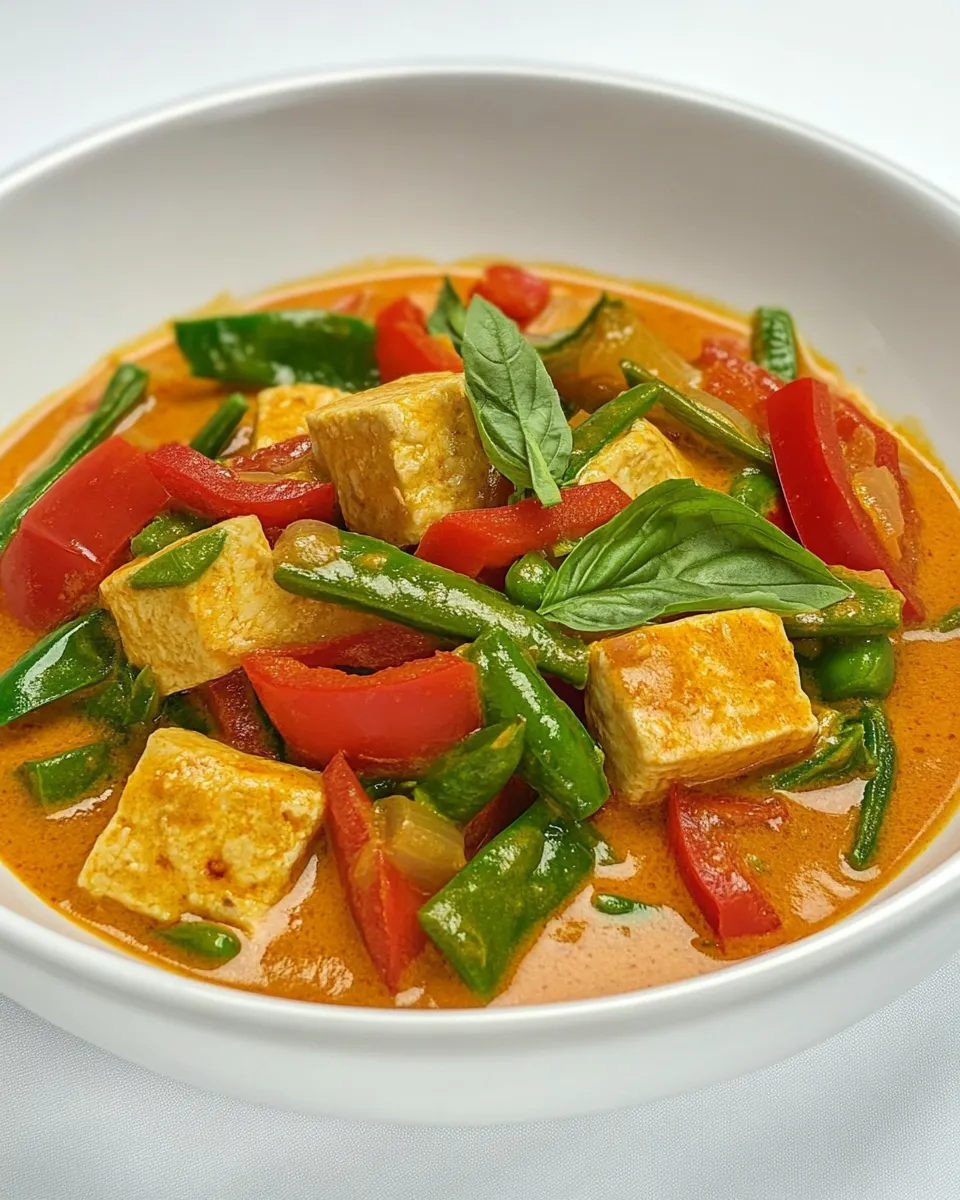
I love Panang curry for the way a few strong, clean flavors—coconut, kaffir lime, roasted curry paste—come together and feel like a hug in a bowl. This version leans on extra-firm tofu for a crisp, satisfying bite and uses pantry-stable elements so you can pull it together quickly on a weeknight. It’s forgiving and worth the small bit of attention it asks for.
Below you’ll find a straightforward ingredient list and a step-by-step method that I follow every time. There’s no gatekeeping here: press the tofu, bloom the paste, let the coconut milk reduce, and finish with basil. The order matters; the technique keeps the flavors bright and layered.
If you want to make this your go-to, I include tips on swaps, tools that make it easier, and traps to avoid. Read through once, then get cooking. You’ll have silky, slightly sweet, aromatic Panang Curry that stands up even on repeat nights.
What Goes In
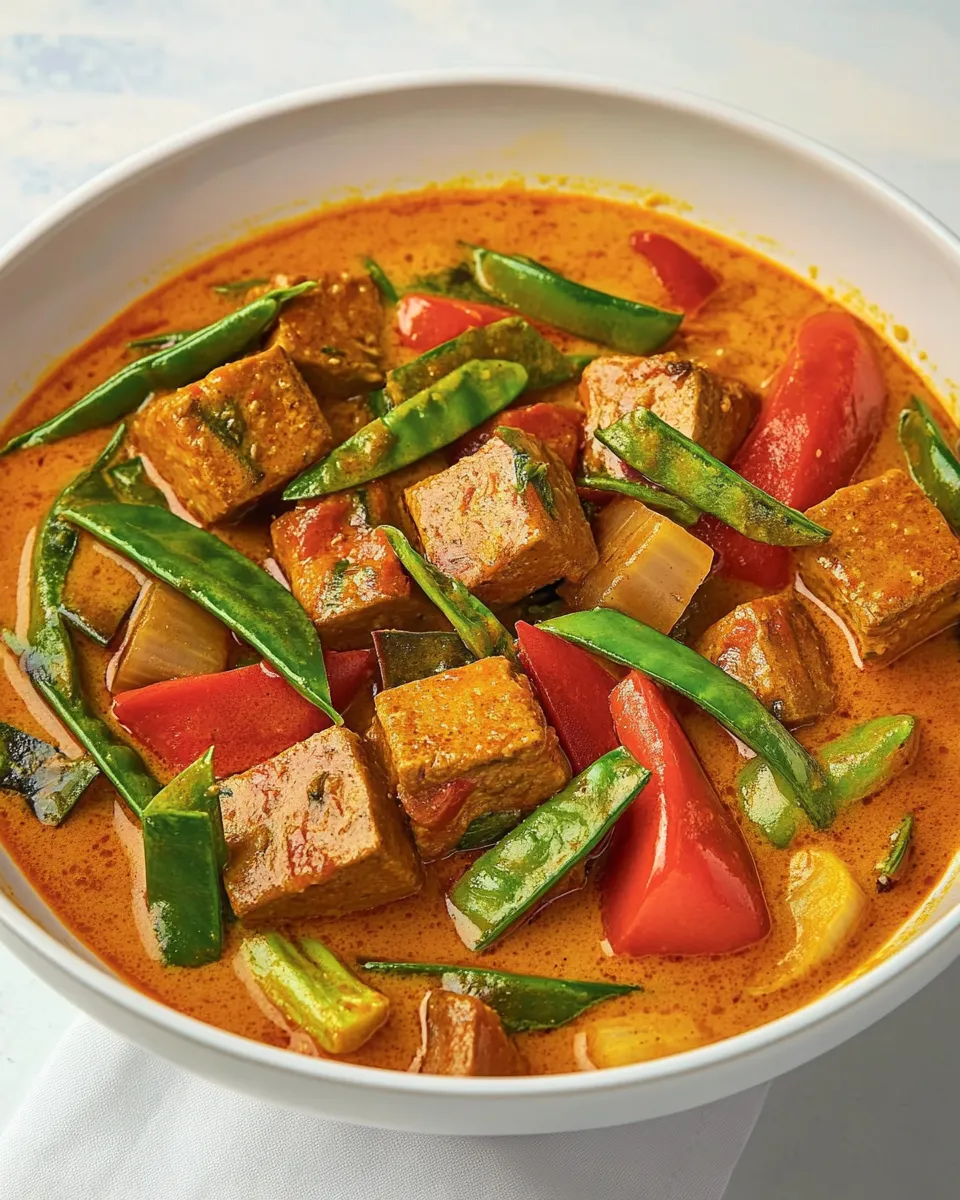
- 1 pound extra-firm tofu — the main protein; presses and crisps well to contrast the creamy curry.
- 2 tablespoons coconut oil, divided — for sautéing and crisping; divided so you can sear then carry flavor into the sauce.
- 1 small onion, peeled and chopped — provides savory base and sweetness as it softens.
- 3 bell peppers green, red, and yellow, seeded and chopped — color and texture; cut roughly 1-inch so they hold up in the sauce.
- 2 cloves garlic, minced — aromatic backbone; add with peppers so it doesn’t burn.
- 4 ounces Panang red curry paste, 1 can — the concentrated flavor; bloom it in oil for depth.
- 1 tablespoon peanut butter — gives body and that nutty note classic to Panang.
- 12 kaffir lime leaves, crushed — release bright, citrusy aroma; tear or crush to unbind the oils.
- 13.5 ounces thick coconut milk, unsweetened — creates the rich, velvety sauce; use full-fat for the best texture.
- 3 tablespoons fish sauce — salty, savory umami; balances the sweetness and fat.
- 1/4 cup Thai basil leaves or sweet basil — stir in at the end for fresh herbal lift.
Mastering Panang Curry: How-To
- Preheat the oven to 375°F (190°C). Wrap the 1 pound extra-firm tofu in paper towels and place on a cutting board. Set a heavy skillet (or the cast-iron skillet) on top to press out moisture for at least 5 minutes.
- Unwrap the tofu and discard the paper towels. Cut the tofu into 1/2–3/4-inch cubes.
- Heat a large cast-iron skillet over medium heat. Add 1 tablespoon of the coconut oil. When the oil is hot, add the tofu cubes in a single layer and sauté about 5 minutes, turning as needed so all sides develop a light golden crust.
- Transfer the tofu cubes to a baking sheet and bake on the center oven rack for 12–15 minutes to crisp. Return the skillet to the stovetop for reuse.
- While the tofu bakes, chop the small onion and the 3 bell peppers into roughly 1-inch pieces. Mince the 2 cloves garlic. Crush the 12 kaffir lime leaves to release their oils.
- Heat the skillet over medium-high heat and add the remaining 1 tablespoon coconut oil. Once the oil is melted and hot, add the chopped onion and sauté for 1 minute.
- Add the chopped peppers and minced garlic to the skillet and sauté another 2–3 minutes, until the vegetables begin to soften.
- Push the vegetables to the sides of the skillet to create an open space in the center. Add the 4 ounces Panang red curry paste and 1 tablespoon peanut butter to the center. Cook the paste and peanut butter, stirring and moving them around the pan, for 2–3 minutes to bloom the flavors.
- Add the crushed kaffir lime leaves, the 13.5 ounces thick coconut milk, and 3 tablespoons fish sauce. Stir everything together and bring to a gentle simmer.
- Reduce the heat to low or medium-low and simmer uncovered for 10–12 minutes, stirring occasionally, until the curry thickens slightly.
- Remove the skillet from the heat and stir in the 1/4 cup basil leaves. Add the crispy baked tofu and gently stir to combine, or ladle the curry into bowls and top each bowl with the crispy tofu if you prefer. Serve immediately.
Why It Deserves a Spot
This dish marries texture and comfort in a way a lot of curries don’t. The coconut milk gives silk and body; the Panang paste brings warm, roasted heat rather than sharp chili. Peanut butter deepens the mouthfeel and ties the sauce together. Tofu gets crisped and baked so you don’t end up with a soggy protein sitting in an otherwise lovely sauce.
It’s quick to scale up for guests, and it’s forgiving: the paste takes center stage, so small tweaks to timing won’t ruin the core flavor. You can serve it with jasmine rice or sticky rice and feel instantly like a proper, balanced meal is on the table.
Texture-Safe Substitutions
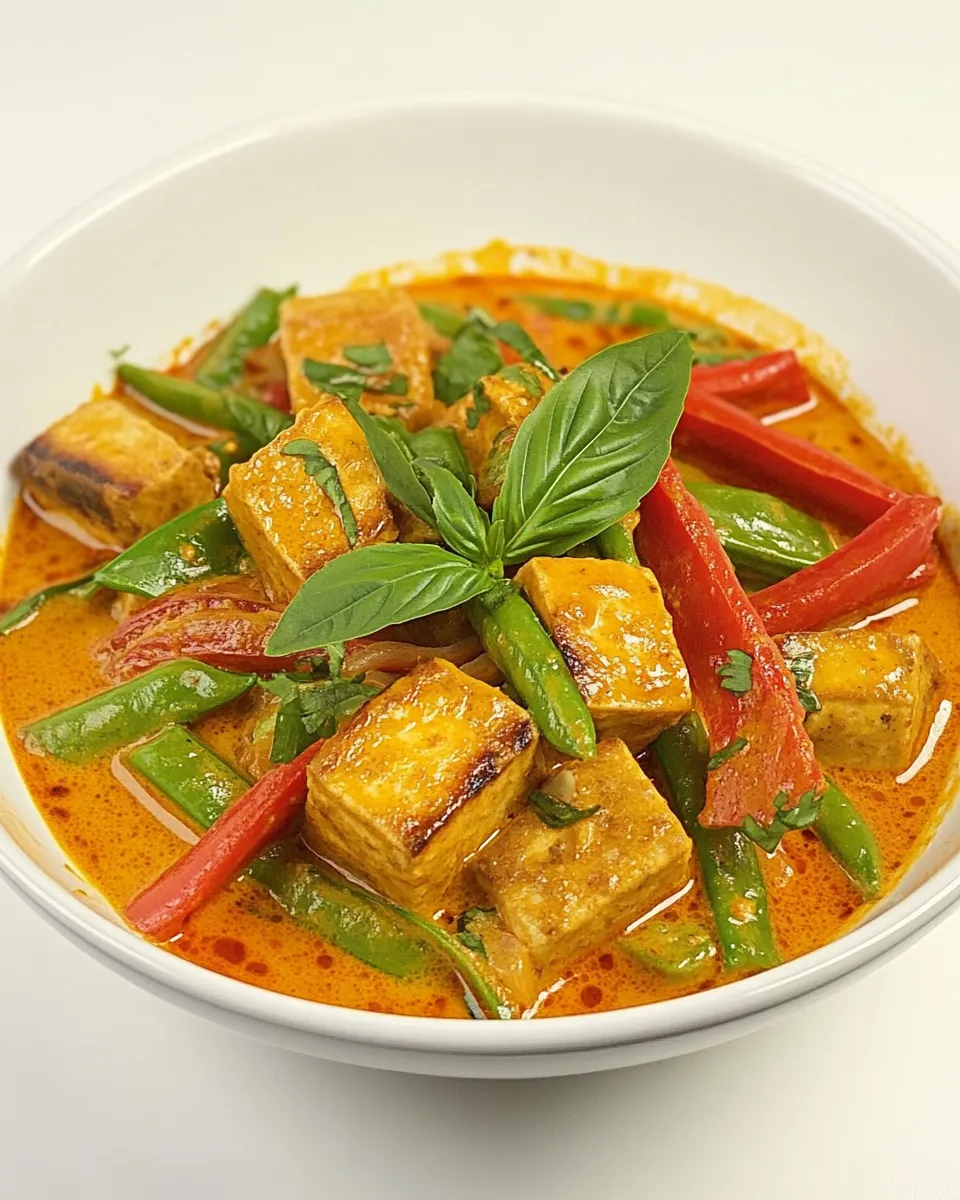
Worried about texture? Here are swaps that keep the same mouthfeel or play the same role:
- Tempeh — firmer, nuttier than tofu; press and bake the same way to get a hearty chew.
- Firm chicken — cut into 3/4-inch pieces and sear longer; finish simmering in the sauce until cooked through.
- Mushrooms (shiitake or cremini) — for a meaty, umami-rich alternative that soaks up the sauce.
- Firm paneer — if you want a non-soy, non-meat option that holds shape when seared.
Hardware & Gadgets
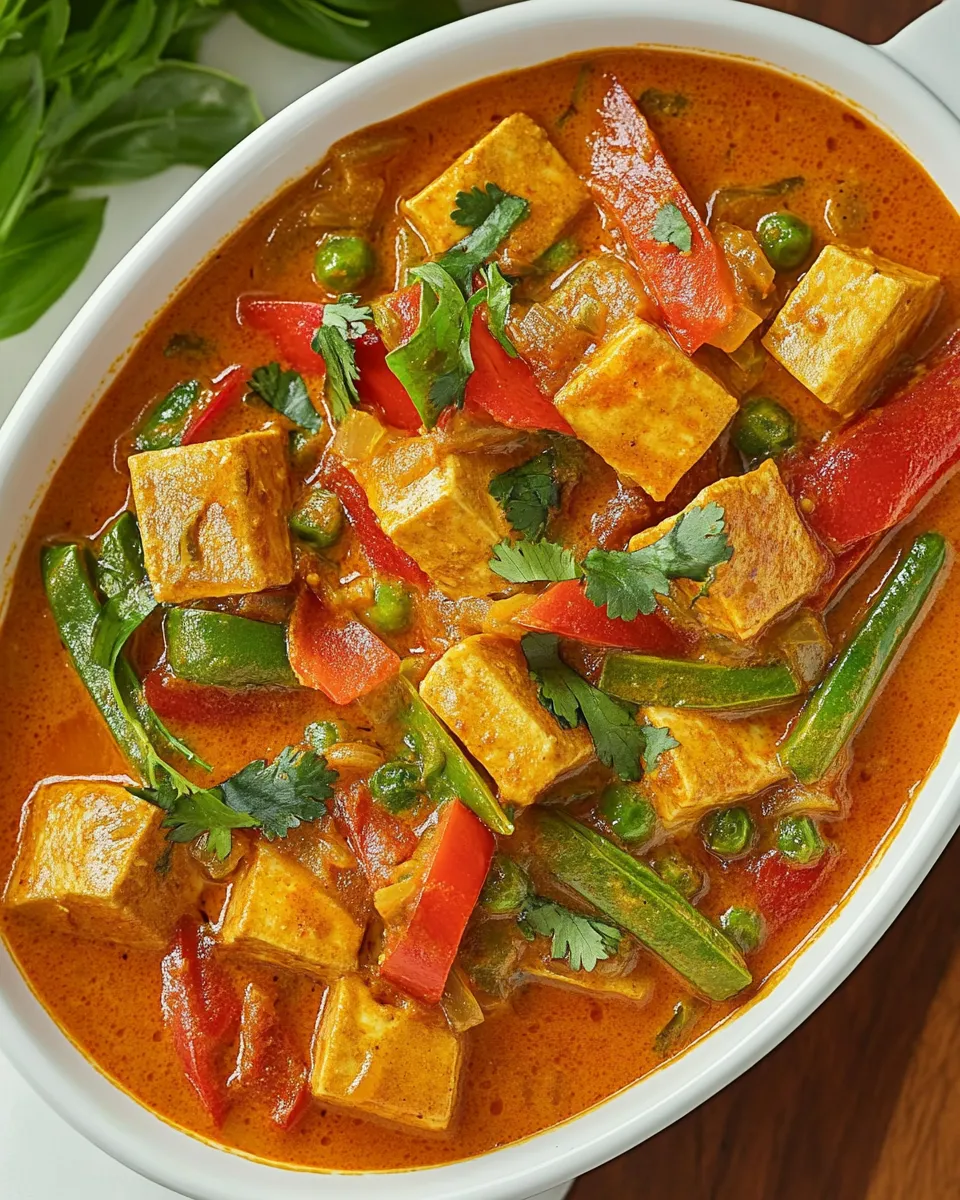
You don’t need a lot of gear, but a few items make this faster and more consistent:
- Cast-iron skillet — recommended in the method; holds heat and gives a good sear.
- Baking sheet — for crisping tofu in the oven after searing.
- Cutting board and sharp chef’s knife — for even, quick chopping of peppers and onion.
- Paper towels and a heavy pan — for pressing tofu efficiently.
- Wooden spoon or spatula — for pushing veg aside, stirring paste, and preventing scraping.
Avoid These Traps
Common mistakes add time or flatten flavor. Watch for these:
- Skipping the press — soggy tofu will not crisp and will water down the curry.
- Crowding the pan when searing — gives steam, not a golden crust; do a single layer.
- Cooking the paste on too-high heat — it can scorch; medium heat to bloom is enough.
- Add coconut milk too hot or boil aggressively — it can split. Keep a gentle simmer and stir occasionally.
- Over-salting — fish sauce is potent. Taste after the sauce reduces before adding more.
Variations by Season
Panang is a flexible template. Use seasonal produce to refresh it across the year:
- Spring — add snap peas and baby corn for crunch and brightness.
- Summer — cherry tomatoes or zucchini make it lighter; toss them in toward the end so they don’t collapse.
- Fall — roasted butternut or sweet potato cubes add sweetness and heartiness.
- Winter — root vegetables and braised greens stand up well to the rich sauce.
Cook’s Commentary
I make this with tofu because I love the contrast: crisp exterior and buoyant interior. That texture keeps the dish interesting even after a night in the fridge. The step where you push veg to the side and bloom the paste is small but transformational; it deepens the paste’s roasted notes and gives the sauce body when you add coconut milk.
Don’t rush the simmer at the end. Ten minutes of gentle reduction concentrates flavors and thickens the coconut milk just enough so the curry clings to rice. If you like your curry thinner, stop earlier—personal preference is everything here.
Make Ahead Like a Pro
This curry keeps well and actually benefits from sitting a bit—flavors fuse. Store the sauce and tofu separately in airtight containers for best texture. Reheat the sauce gently on low, and re-crisp tofu on a sheet at 375°F (190°C) for 6–8 minutes before serving. If freezing, freeze the sauce only; coconut can sometimes change texture after thawing and reheating, though many people are fine with it.
Common Qs About Panang Curry
Q: Can I make this vegetarian or vegan?
A: To keep it vegetarian/vegan, replace the fish sauce with a plant-based umami: a combination of soy sauce and a little mushroom powder or miso works well. That said, the original recipe uses fish sauce for depth—so expect a slightly different profile.
Q: I don’t have kaffir lime leaves. What else can I use?
A: You can use a strip of lime zest or a small splash of lime juice at the end for brightness. Fresh lime leaves are best, but zest gives a similar citrus note if you’re careful not to overdo it.
Q: How spicy is Panang?
A: Panang is typically milder and nuttier than other Thai curries. Spice level depends on the paste you buy; you can start with the amount in the recipe and add more paste to taste.
Q: Can I substitute peanut butter?
A: Tahini or almond butter can work if you need a nut alternative, but peanut butter is classic and gives a specific nuttiness that matches Panang paste well.
Bring It Home
Make this curry when you want something comforting yet bright. Serve it with steamed jasmine rice, a wedge of lime, and extra basil. The contrast between the creamy, aromatic sauce and the crisp tofu is what makes this version feel special. Once you’ve got the technique—press, sear, bloom, simmer—you’ll have a reliable, delicious Panang Curry that’s easy enough for a weeknight and polished enough for company.
Now: heat the skillet, press the tofu, and start with step one. You’ll be glad you did.

Panang Curry Recipe
Ingredients
Ingredients
- 1 poundextra-firm tofu
- 2 tablespooncoconut oil divided
- 1 small onion peeled and chopped
- 3 bell peppersgreen red, and yellow, seeded and chopped
- 2 clovesgarlic minced
- 4 ouncesPanang red curry paste 1 can
- 1 tablespoonpeanut butter
- 12 kaffir lime leaves crushed
- 13.5 ouncesthick coconut milk unsweetened
- 3 tablespoonsfish sauce
- 1/4 cupThai basil leaves or sweet basil
Instructions
Instructions
- Preheat the oven to 375°F (190°C). Wrap the 1 pound extra-firm tofu in paper towels and place on a cutting board. Set a heavy skillet (or the cast-iron skillet) on top to press out moisture for at least 5 minutes.
- Unwrap the tofu and discard the paper towels. Cut the tofu into 1/2–3/4-inch cubes.
- Heat a large cast-iron skillet over medium heat. Add 1 tablespoon of the coconut oil. When the oil is hot, add the tofu cubes in a single layer and sauté about 5 minutes, turning as needed so all sides develop a light golden crust.
- Transfer the tofu cubes to a baking sheet and bake on the center oven rack for 12–15 minutes to crisp. Return the skillet to the stovetop for reuse.
- While the tofu bakes, chop the small onion and the 3 bell peppers into roughly 1-inch pieces. Mince the 2 cloves garlic. Crush the 12 kaffir lime leaves to release their oils.
- Heat the skillet over medium-high heat and add the remaining 1 tablespoon coconut oil. Once the oil is melted and hot, add the chopped onion and sauté for 1 minute.
- Add the chopped peppers and minced garlic to the skillet and sauté another 2–3 minutes, until the vegetables begin to soften.
- Push the vegetables to the sides of the skillet to create an open space in the center. Add the 4 ounces Panang red curry paste and 1 tablespoon peanut butter to the center. Cook the paste and peanut butter, stirring and moving them around the pan, for 2–3 minutes to bloom the flavors.
- Add the crushed kaffir lime leaves, the 13.5 ounces thick coconut milk, and 3 tablespoons fish sauce. Stir everything together and bring to a gentle simmer.
- Reduce the heat to low or medium-low and simmer uncovered for 10–12 minutes, stirring occasionally, until the curry thickens slightly.
- Remove the skillet from the heat and stir in the 1/4 cup basil leaves. Add the crispy baked tofu and gently stir to combine, or ladle the curry into bowls and top each bowl with the crispy tofu if you prefer. Serve immediately.
Equipment
- Cast-Iron Skillet
- Oven
- Baking Sheet
- Paper Towels
Notes
Shopping Tips:
There are some ingredients that may need to be purchased at an Asian food market, but this recipe is worth the trip! Most likely: panang red curry paste, kaffir lime leaves, thick canned coconut milk, fish sauce, and Thai basil.
Extra Kaffir Lime Leaves?
Kaffir lime leaves can be kept in the freezer. They turn dark, but retain their flavor. Kaffir lime leaves stay a little tough, even after cooking. You can eat them, eat around them, or take them out after cooking.
Strict Vegetarian?
You can substitute soy sauce for the fish sauce, but fish sauce tastes more authentic.
Too Spicy?
If you are worried about the spiciness of the curry paste, start with half a can. You can add more near the end if you like.
Storing Leftovers –
Place the leftover curry in an airtight container and store in the refrigerator for up to 5 days.
Freezing Leftovers –
You can store this curry in a freezer-safe container and freeze for 3 months.
Reheating Leftovers –
Reheat in a skillet over medium heat, or in the microwave in short bursts.