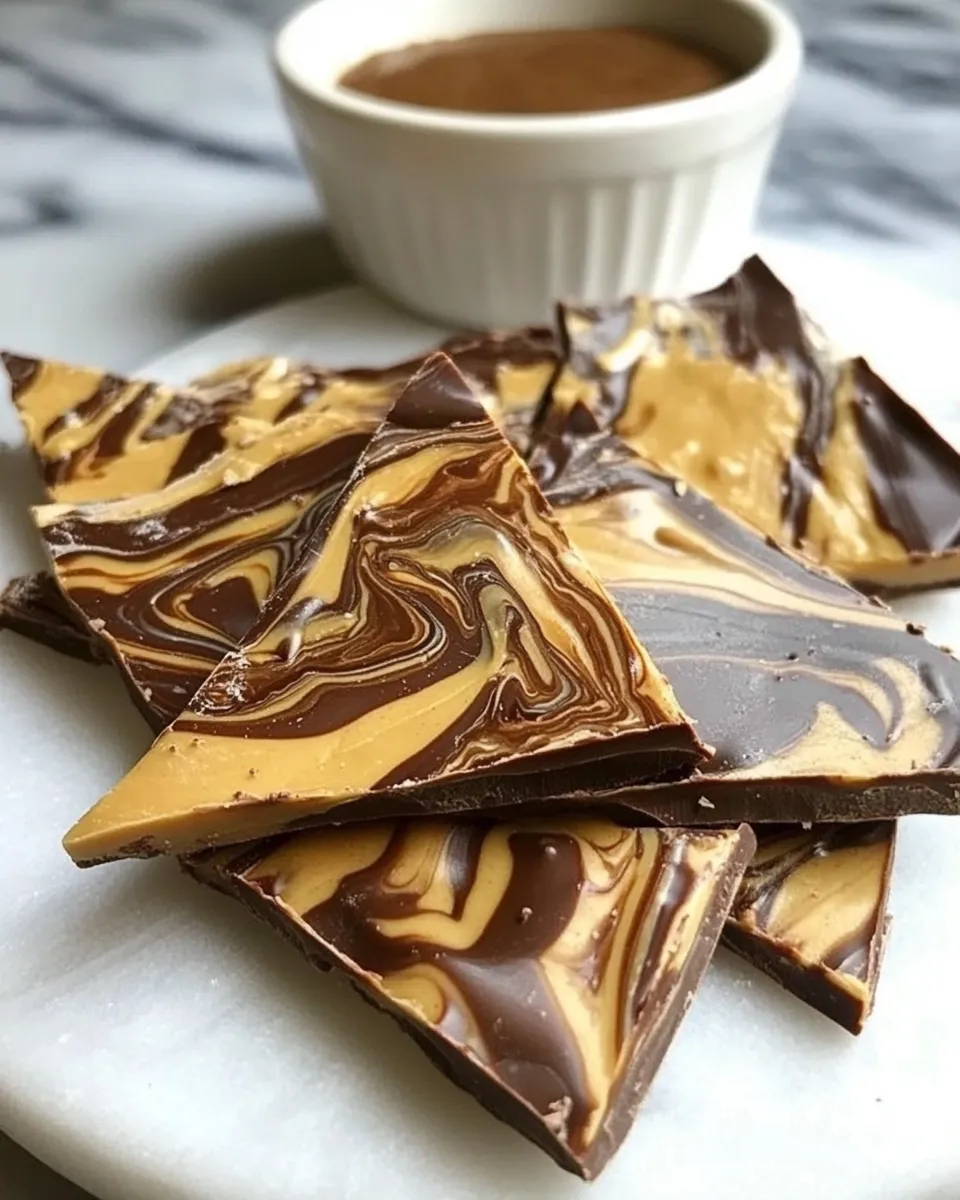
This Peanut Butter Chocolate Swirl Bark is exactly what it says on the tin: a thin, snap-ready slab of semi-sweet chocolate streaked with a glossy, peanut-butter ribbon. It’s quick to make, forgiving in technique, and stores well for gift boxes or last-minute dessert plates. I keep the method straightforward on purpose — you don’t need tempering tools or fancy chocolate to get a stunning result.
There are small choices that change the final bite: the chocolate you pick, how thin you spread the base, and how wild you swirl the peanut butter. I tested this one until the balance felt right — not too sweet, not too oily — and settled on a ratio that produces clean breaks and a satisfying peanut-chocolate hit in every piece.
Below you’ll find practical shopping tips, the exact step-by-step method to follow, troubleshooting, and smart storage notes. Read the short shopping guide, gather the three ingredients, and you’ll have bark on the table in under an hour from start to finish.
Your Shopping Guide
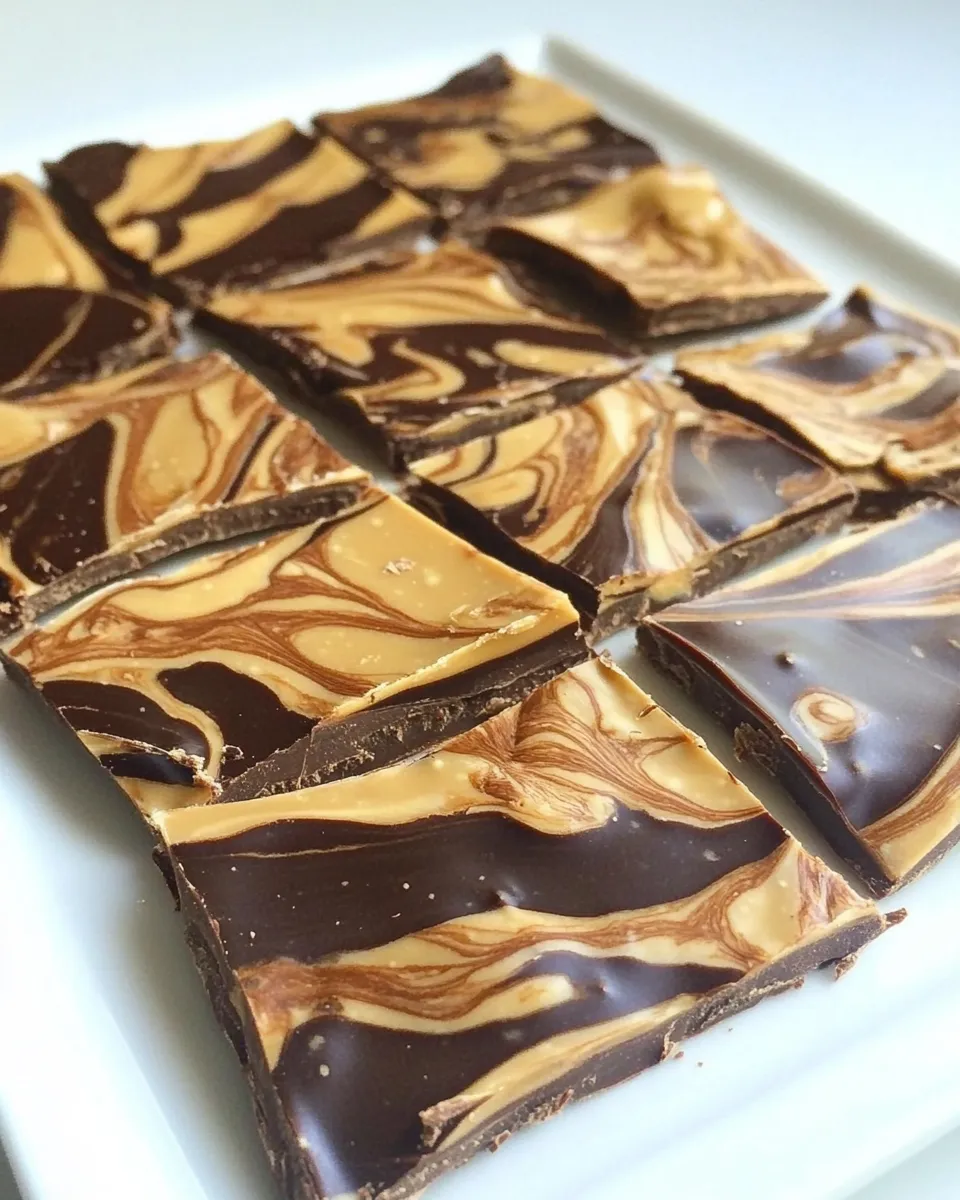
Buy real semi-sweet chocolate bars or a block and chop it yourself rather than using melting wafers. Good chocolate melts more evenly and sets with a nicer snap. If you see a brand labeled “baking chocolate” that’s unsweetened — avoid that here, because this recipe relies on the chocolate’s sweetness to balance the peanut butter.
Peanut butter chips can be found near other baking chips; they’re sweet and hold shape well. If your store is out of peanut butter chips, look for white or butterscotch chips as a last resort and remember you’ll lose some peanut flavor. For the tablespoon of creamy peanut butter, reach for a smooth, neutral jar — nothing heavily flavored or sugary.
Also pick up good parchment or a silicone mat. You’ll be spreading warm chocolate directly onto this surface; a flimsy piece of foil will make lifting and breaking the bark messier. A toothpick or a small offset spatula is all the gear you need at home.
Peanut Butter Chocolate Swirl Bark: From Prep to Plate
- Line a large baking sheet with parchment paper or a silicone baking mat and set it aside.
- Melt the semi-sweet chocolate: place the coarsely chopped chocolate in a heatproof bowl. For a double boiler, set the bowl over a pot of barely simmering water (water should not touch the bowl) and stir until the chocolate is fully melted and smooth, then remove the bowl from the heat. Or microwave the chocolate in a microwave-safe bowl in 20-second increments, stirring after each increment, until melted and smooth. Set the melted chocolate aside briefly.
- Combine the peanut butter chips and the creamy peanut butter in a small heatproof bowl. Microwave at 50% power in 20-second increments, stirring after each increment, until the mixture is completely smooth and melted.
- Pour the melted semi-sweet chocolate onto the prepared baking sheet. Use a rubber spatula to spread it into an even, smooth layer to your desired thickness.
- Drizzle the melted peanut butter and chip mixture over the chocolate in parallel lines or dots across the surface.
- Use a toothpick or a knife to drag through the chocolate and peanut butter lines to create a swirl pattern. Work quickly while the chocolate is still soft.
- Transfer the baking sheet to the refrigerator and chill until the bark is completely set and firm, about 30 minutes.
- Remove the set bark from the baking sheet and break it into pieces of your preferred size.
- Store the bark in an airtight container at room temperature in a cool, dry place for up to 1 week. During warmer months, store the bark in the refrigerator for up to 2 weeks.
Ingredients
- 8 ounces semi-sweet chocolate, coarsely chopped — this is the base; chop evenly so it melts uniformly.
- 1 cup peanut butter chips — provides the peanut flavor and structure for the swirl.
- 1 tablespoon creamy peanut butter — thins the chips and gives a glossy, spreadable swirl.
What You’ll Love About This Recipe
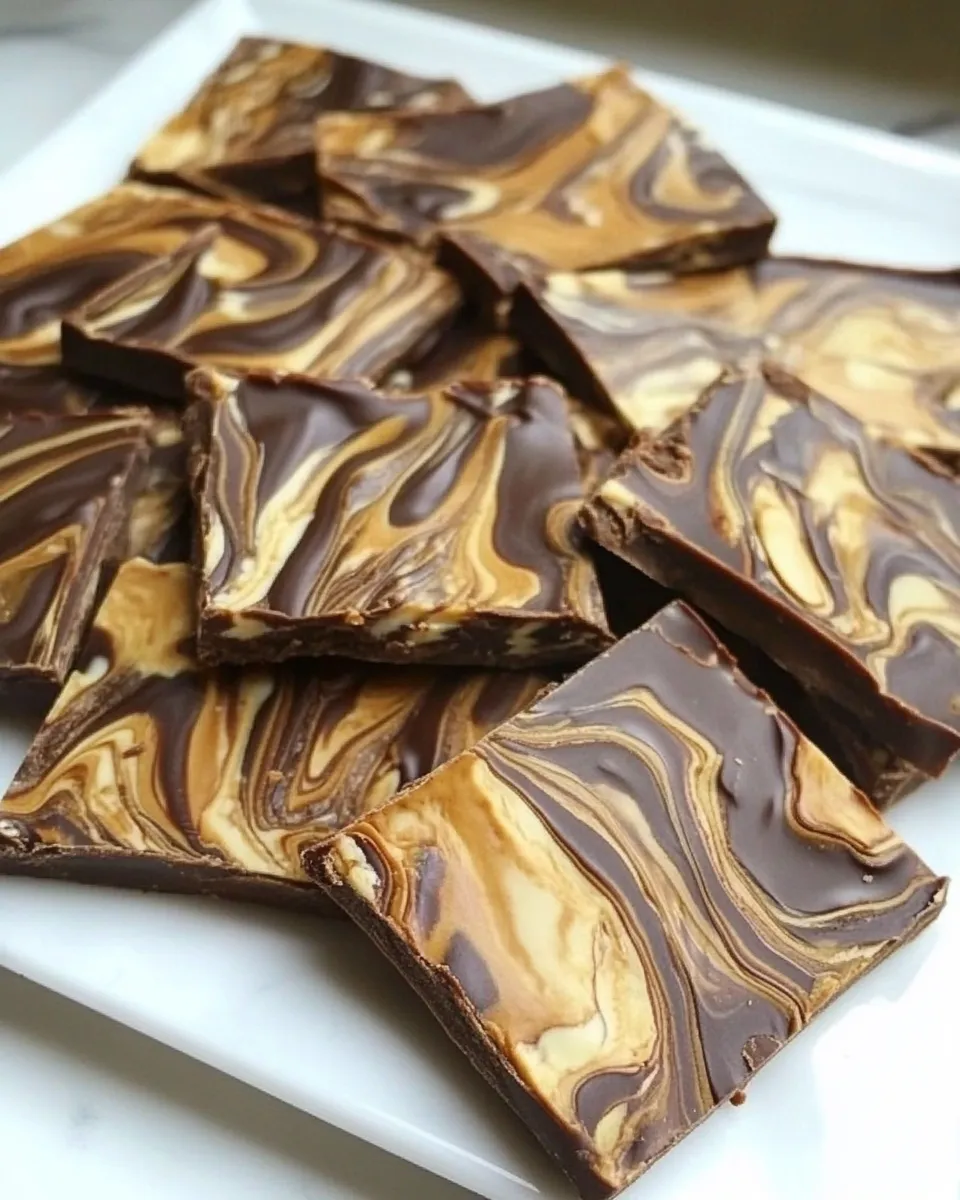
It’s fast. From melting to chilling, the timeline is short and every step is simple. No tempering, no candy thermometer, no piping bags. The finished bark looks special even when you barely try — those swirls read as intentional and artisanal.
It’s flexible. Make a thin sheet for crunchy shards or a thicker slab for bigger, chocolate-forward bites. You control the peanut-to-chocolate ratio by adjusting how much peanut swirl you drizzle. That makes it easy to tailor to a crowd that loves salty-sweet contrasts or to kids who want something milder.
It’s shareable. Break it into snackable pieces and pack it into jars or cello bags for gifts. The bark keeps reasonably well and travels without collapsing, unlike many softer confections.
Texture-Safe Substitutions

If someone needs a texture swap but you want to keep the mouthfeel close:
- For a softer, creamier swirl: swap the peanut butter chips for an equal volume of smooth peanut butter and reduce chocolate thickness so the texture isn’t overwhelmingly dense.
- To keep crunch but change the nut: swap peanut butter chips for almond or cashew baking chips. The flavor shifts but the structure stays similar.
- If you need nut-free: swap the peanut butter chips for sunflower seed butter chips (if available) and use a tablespoon of smooth sunbutter. Expect a slightly different oiliness and flavor, but the visual swirl technique remains the same.
What’s in the Gear List
Minimal tools make this a great last-minute project. You’ll want:
- Large baking sheet, lined with parchment or a silicone mat — for an even slab that’s easy to lift.
- Heatproof bowls — one for chocolate, one for the peanut mixture.
- Rubber spatula — for spreading and cleaning bowls.
- Toothpick or small knife — for dragging swirls.
- Refrigerator space — to chill the bark until set.
Don’t Do This
Don’t overheat the chocolate. If you microwave it too long or let water touch the bowl in a double boiler, it can seize and grain. If your chocolate looks crumbly or thick, don’t force it; stop heating, stir gently, and add a teaspoon of neutral oil or a small piece of unmelted chocolate to bring it back, if necessary.
Don’t wait too long to swirl. Once the chocolate cools and firms, the peanut ribbon won’t integrate cleanly and you’ll end up with separate layers rather than a pretty marbled pattern. Conversely, if everything is piping hot, the peanut swirl will sink in—aim for warm, fluid chocolate that holds a shape but isn’t shock-cold.
Don’t skip lining the pan. Parchment makes removing the set bark effortless. Without it, you’ll chip the edges trying to pry the chocolate off the metal and you may damage your baking sheet.
Season-by-Season Upgrades
Winter: Add a pinch of flaky sea salt across the top before chilling for a cozy, contrasty finish. Salt pulls the flavor forward and pairs beautifully with holiday cookie boxes.
Spring: Scatter a few freeze-dried strawberry bits for a fresh pop of color and a bright, fruity note that cuts through the richness.
Summer: Keep the bark thinner and store it in the fridge. You can add crushed pretzels for a salty, picnic-ready crunch if you want something more playful.
Fall: Toasted chopped peanuts sprinkled on top before the chocolate sets add aroma and a toasty texture. Cinnamon or a small dusting of espresso powder in the chocolate also pairs well with peanut flavors.
What I Learned Testing
Use weight where possible when buying chocolate — 8 ounces is a standard bar size in many markets and it gives predictable coverage for a large baking sheet. I found that a 1/8-inch layer makes elegant shards; a 1/4-inch layer produces a satisfying bite that feels more like candy.
When practicing different swirl patterns, parallel lines turned into the most consistent marbling once dragged with a toothpick. Random dots can look whimsical but sometimes yield large, unbalanced peanut pockets. If you want precise control, lay long, even lines before dragging.
Cooling time matters less than temperature control. I let bark chill in the fridge for about 30 minutes, but I always check the center before breaking. If it’s still slightly soft, give it another 10–15 minutes rather than forcing the break — clean edges are worth the wait.
Freezer-Friendly Notes
You can freeze pieces for longer storage. Flash-freeze single-layered pieces on a baking sheet for about 30 minutes, then transfer them to an airtight freezer bag or container. Thaw at room temperature for about 15–20 minutes before serving so the chocolate comes back to a pleasant bite temperature.
Label the container with the date; frozen bark stays good for about 2–3 months. Packaging matters: separate layers with parchment so pieces don’t fuse together in the freezer.
Troubleshooting Q&A
Q: My chocolate looks streaky or grainy after melting. What happened?
A: That’s usually overheated chocolate or chocolate that came in contact with water. Stop heating, stir gently, and move to a warmer area. If it won’t smooth out, melt a small additional piece of fresh chocolate in and stir until smooth.
Q: The peanut butter swirl sank into the chocolate. How can I avoid that?
A: Work when the chocolate is warm but not hot. If the chocolate is too fluid it won’t support the swirl. Let the melted chocolate cool for a minute or two after spreading so it thickens slightly before adding the peanut ribbon.
Q: Pieces are too soft at room temperature. What now?
A: In warm weather, store the bark in the refrigerator. For firmer pieces next time, spread a slightly thicker chocolate base or chill longer before storing at room temp.
Before You Go
If you make this, give yourself the small satisfaction of breaking the slab with your hands — there’s nothing like the audible snap of a perfect piece. Wrap extras tightly and they travel well to a friend’s house or to a potluck. This recipe scales easily: double the ingredients to fill a deeper tray, or halve them for a smaller sheet.
Finally, experiment within the method, not the technique. The swirl pattern is where you get to be creative; the melting and chilling process is the anchor. Keep it steady, and you’ll get beautiful Peanut Butter Chocolate Swirl Bark every time.
Peanut Butter Chocolate Swirl Bark
Ingredients
Ingredients
- 8 ouncessemi-sweet chocolatecoarsely chopped
- 1 cuppeanut butter chips
- 1 tablespooncreamy peanut butter
Instructions
Instructions
- Line a large baking sheet with parchment paper or a silicone baking mat and set it aside.
- Melt the semi-sweet chocolate: place the coarsely chopped chocolate in a heatproof bowl. For a double boiler, set the bowl over a pot of barely simmering water (water should not touch the bowl) and stir until the chocolate is fully melted and smooth, then remove the bowl from the heat. Or microwave the chocolate in a microwave-safe bowl in 20-second increments, stirring after each increment, until melted and smooth. Set the melted chocolate aside briefly.
- Combine the peanut butter chips and the creamy peanut butter in a small heatproof bowl. Microwave at 50% power in 20-second increments, stirring after each increment, until the mixture is completely smooth and melted.
- Pour the melted semi-sweet chocolate onto the prepared baking sheet. Use a rubber spatula to spread it into an even, smooth layer to your desired thickness.
- Drizzle the melted peanut butter and chip mixture over the chocolate in parallel lines or dots across the surface.
- Use a toothpick or a knife to drag through the chocolate and peanut butter lines to create a swirl pattern. Work quickly while the chocolate is still soft.
- Transfer the baking sheet to the refrigerator and chill until the bark is completely set and firm, about 30 minutes.
- Remove the set bark from the baking sheet and break it into pieces of your preferred size.
- Store the bark in an airtight container at room temperature in a cool, dry place for up to 1 week. During warmer months, store the bark in the refrigerator for up to 2 weeks.
Equipment
- Baking Sheet
- Parchment paper or silicone baking mat
- Heatproof bowl
- Double boiler or saucepan
- Microwave-safe Bowl
- Rubber spatula
- toothpick or knife
- Refrigerator