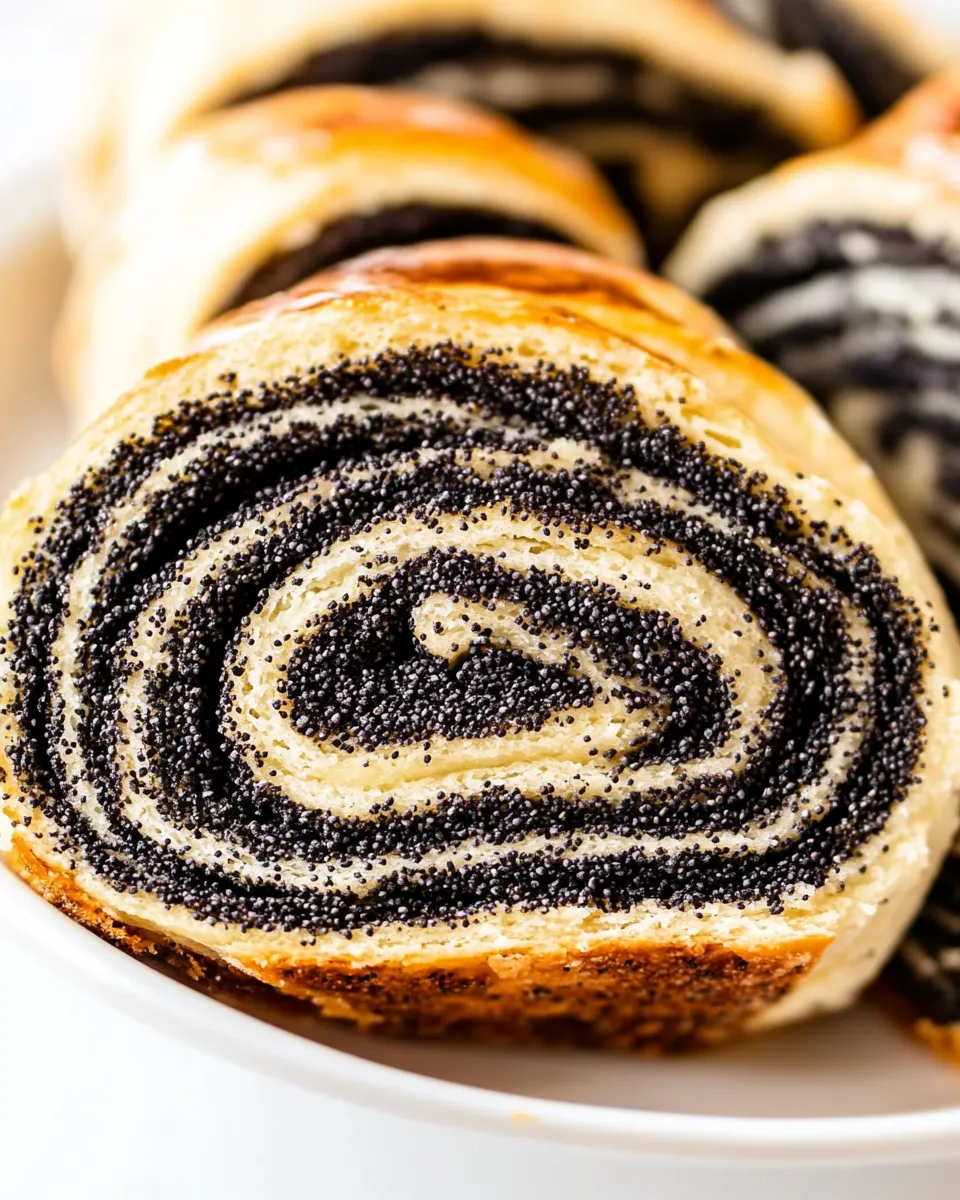
This poppy seed roll is the kind of recipe you make when you want a comforting, slightly sweet loaf with a nutty, citrus-bright filling. It browns beautifully, slices cleanly, and keeps well — which makes it perfect for weekend breakfasts, holiday tables, or an afternoon with tea. The technique is straightforward: a soft enriched dough, a fragrant poppy filling, a careful roll, and two rises.
I keep this one in regular rotation because it rewards patience. The filling pulls flavor from a short list of pantry staples: poppy seeds, ground almonds, sugar, vanilla and citrus zest. The dough is forgiving — you’ll feel when it’s ready. If you follow the steps methodically, you’ll end up with an impressive roll that’s practical to make and easy to share.
Below you’ll find ingredient notes, a step-by-step build with the original directions, sensible substitutions, equipment suggestions, storage tips and answers to common reader questions. Read through once, then commit — the process moves faster than it feels while you’re learning the rhythm of rolling and rising.
Ingredient Notes
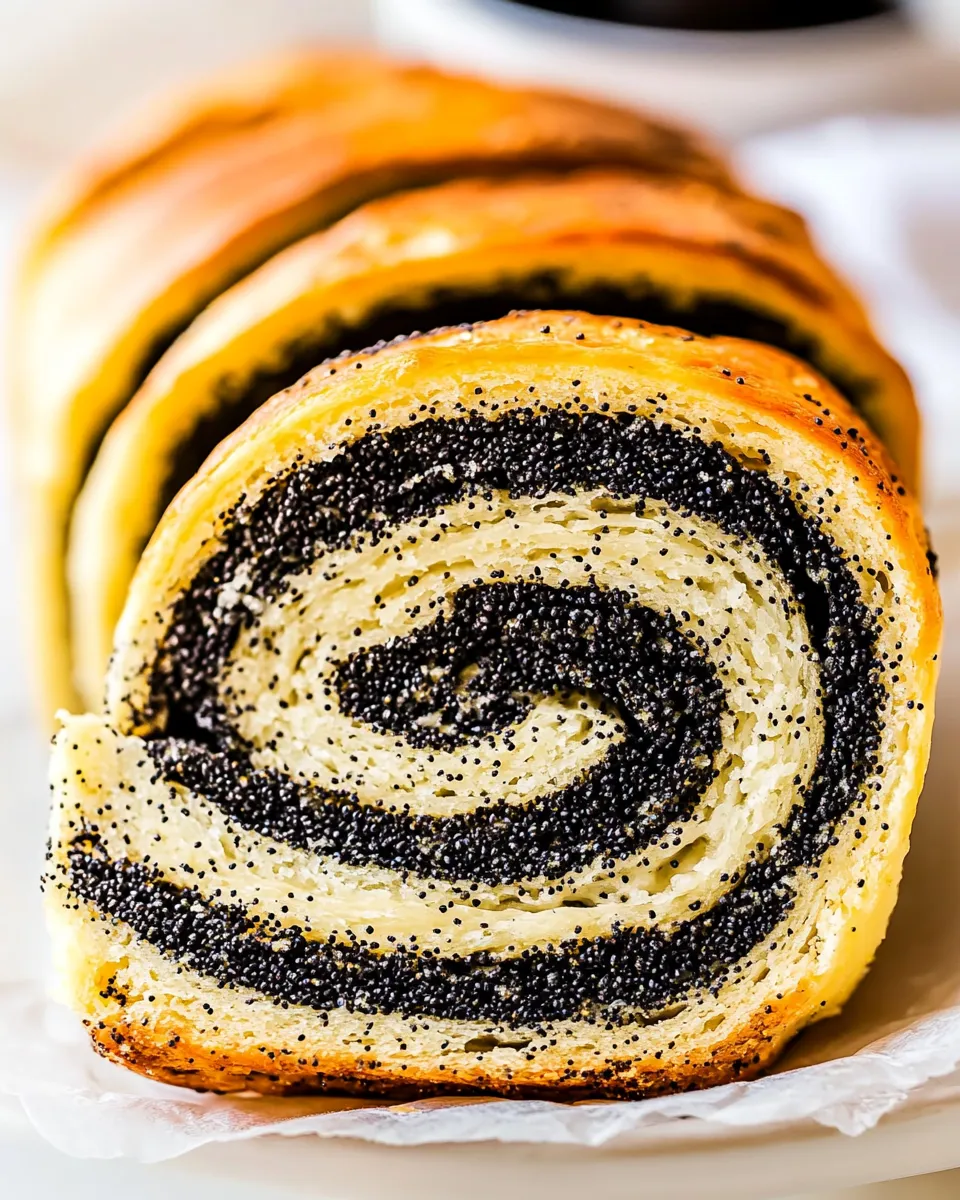
Before we list the ingredients, a few practical notes: use fresh poppy seeds and grind them just before assembling the filling for the best flavor. The milk should be warmed to the specified temperature to wake the yeast without killing it. The two eggs listed serve different jobs — one in the dough, and one as an egg wash to achieve that glossy, golden crust. Ground almonds add body and a gentle nutty depth to the filling; they also help bind the seeds.
Ingredients
- 2¼ cup all-purpose flour — the structure of the dough; measure by spooning into the cup and leveling for accuracy.
- 2 teaspoon active dry yeast — leavens the dough; make sure it’s fresh and not expired.
- ¼ cup sugar — adds a touch of sweetness to the dough and helps with browning.
- ½ teaspoon salt — balances the sweetness and strengthens the gluten network.
- 1 cup milk (heated to 110°F) — hydrates and feeds the yeast; use whole or 2% for best texture.
- 2 tablespoon vegetable oil — keeps the crumb soft and tender.
- 1 egg — enriches the dough and adds color and structure.
- 1 egg beaten (for egg wash) — brushed on before baking to give the roll a shiny, golden finish.
- 1 cup poppy seeds — the star of the filling; freshly ground they release their aroma and oils.
- ⅓ cup boiling water — softens and blooms the ground poppy seeds so they mix into a spreadable filling.
- ¼ cup ground almonds — adds texture and nutty flavor to the filling.
- ½ cup sugar — sweetens the filling; separate from the dough sugar.
- ½ teaspoon vanilla — lifts and rounds the filling’s flavor.
- 1 tablespoon lemon zest — brightens the filling; use unwaxed lemons if possible.
- 1 tablespoon orange zest — complements the lemon and poppy flavor.
Build Poppy Seed Roll Step by Step
- Make the poppy seed filling: pulse the poppy seeds in a spice grinder or food processor for about 30 seconds until coarsely ground. Transfer the ground seeds to a medium bowl. Add 1/3 cup boiling water, 1/4 cup ground almonds, 1/2 cup sugar, 1/2 teaspoon vanilla, 1 tablespoon lemon zest, and 1 tablespoon orange zest. Stir until evenly combined, then set aside to cool to room temperature.
- Bloom the yeast: pour 1 cup milk (heated to 110°F) into the bowl of a stand mixer. Sprinkle 2 teaspoons active dry yeast evenly over the milk and let sit 5–10 minutes, until foamy.
- Mix the dough: add 2 1/4 cups all-purpose flour, 1/4 cup sugar, 1/2 teaspoon salt, 2 tablespoons vegetable oil, and 1 egg to the foamy milk and yeast. Using the dough hook, mix just until the ingredients come together, then knead on medium speed about 5–8 minutes, until the dough is smooth and pulls away from the sides of the bowl. If the dough is excessively sticky, add small tablespoons of flour as needed — do not change the listed ingredient amounts.
- First rise: cover the bowl with plastic wrap or a clean kitchen towel and let the dough rise in a warm, draft-free place 30–60 minutes, until roughly doubled in size. Meanwhile, line a baking sheet with parchment paper.
- Shape and fill: turn the risen dough out onto a lightly floured surface. Use a rolling pin to roll the dough into a 14″ x 16″ rectangle. Spread the cooled poppy seed filling evenly over the dough, leaving a 1/2″ border along all edges.
- Roll and seal: starting at one of the 14″ ends, roll the dough into a tight log. Pinch the long seam to seal, and tuck the short ends under the roll to enclose the filling. Place the roll seam-side down on the prepared baking sheet.
- Second rise: cover the roll loosely with plastic wrap or a clean towel and let it rise 30–60 minutes, until puffy and about doubled.
- Preheat oven and prepare egg wash: preheat the oven to 350°F. Beat the remaining egg (the egg listed as “1 egg beaten (for egg wash)”) in a small bowl.
- Egg wash and bake: brush the top of the risen roll evenly with the beaten egg. Bake on the middle rack at 350°F for about 35 minutes, or until the roll is golden brown and cooked through.
- Cool and serve: remove the roll from the oven and let it cool on the baking sheet for 10–20 minutes before transferring to a wire rack to cool further. Slice and serve when warm or at room temperature.
The Upside of Poppy Seed Roll
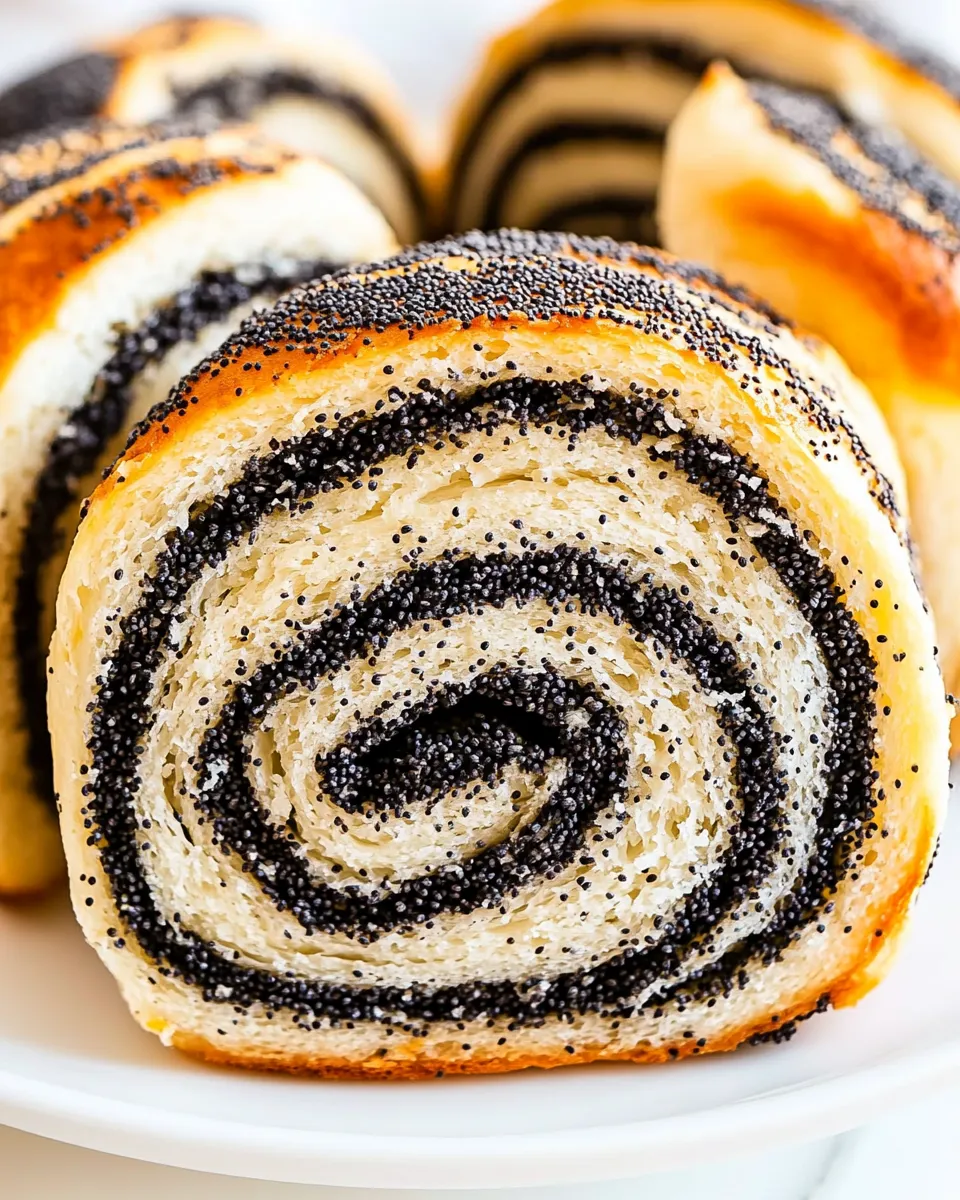
This roll gives you a lot of impact for relatively little active time. The dough is mixed and kneaded in one bowl; the filling comes together quickly once the poppy seeds are ground. It’s a great make-ahead item — you can prepare it through the second rise, refrigerate overnight, then bake in the morning. The finished roll slices attractively, so it’s great for gifting or serving at gatherings. Texture-wise you get a tender, slightly sweet dough wrapped around a dense, fragrant poppy filling with citrus brightness.
It’s also adaptable: if you like your slices less sweet, reduce the filling sugar in subsequent batches. If you prefer a moister filling, you can let the filling sit a little longer to absorb the boiling water fully. The egg wash gives a bakery-style sheen that makes presentation effortless.
Flavor-Forward Alternatives
- Boost nutty depth: increase the proportion of ground almonds in the filling (taste as you go) for a richer, denser filling.
- More citrus lift: add a touch more lemon or orange zest to brighten the overall profile without changing structure.
- Lean into texture: pulse the poppy seeds a little less for a coarser filling with more bite, or grind them finer for a smoother paste-like spread.
- Make it less sweet: use slightly less filling sugar if you prefer a subtler sweetness — reduce gradually across trials to find your preference.
Equipment & Tools
- Stand mixer with a dough hook (or a sturdy bowl and a good pair of hands for kneading).
- Spice grinder or food processor to pulse the poppy seeds.
- Rolling pin large enough to roll a 14″ x 16″ rectangle.
- Baking sheet lined with parchment paper.
- Instant-read thermometer (handy to check milk at 110°F, optional but useful).
- Wire rack for cooling.
Avoid These Traps
- Using milk that’s too hot: if it’s much hotter than 110°F you can kill the yeast; if it’s too cool the yeast won’t foam. Aim for lukewarm, about the specified temperature.
- Over-flouring the dough: add flour sparingly if the dough is sticky. Excess flour makes a dry, dense roll.
- Underproofing: rushing the rises yields a tight crumb and uneven baking. Allow the dough to double in size at each rise.
- Rolling too thin or too thick: stick to the 14″ x 16″ rectangle for predictable filling-to-dough ratio; an uneven thickness can lead to leaks or dense ends.
- Skipping the egg wash: you’ll miss the glossy, golden finish that gives the roll its bakery look.
Seasonal Ingredient Swaps
Work with what’s fresh. In citrus season, increase the lemon or orange zest slightly for a brighter filling. During colder months, a little extra ground almond warms the profile. If you’re serving the roll with fruit, match seasonality: late-summer berries or autumn poached pears are natural companions to slices of this roll, bringing balance and contrast on the plate.
Behind the Recipe
Poppy seed rolls are a staple in many Central and Eastern European kitchens. This version keeps the classic elements: a tender enriched dough and a poppy-heavy filling brightened with citrus and bound with ground almonds. The technique honors the traditional method of rolling a filled rectangle into a tidy log — it’s the expected shape, and once you master the seam pinch and tucked ends, the roll bakes evenly and slices cleanly.
The filling’s texture depends on how you grind the seeds and how long you let them sit in boiling water — both influence how the oils and flavors are released and integrated. The two-step rise produces a light crumb that still supports the dense filling without collapsing.
Keep It Fresh: Storage Guide
- Room temperature: keep the whole roll covered at room temperature for up to 2 days; slice as needed.
- Refrigerator: wrap in plastic and refrigerate for up to 5 days; bring slices to room temperature or gently warm before serving.
- Freezer: slice and flash-freeze on a tray, then transfer to a sealed container or bag for up to 3 months. Warm individual slices in a toaster oven or under a low broiler to refresh.
- Reheating: warm slices at 300–325°F for 8–12 minutes until just warmed through; avoid high heat that dries the roll.
Reader Q&A
Q: Can I use instant yeast instead of active dry yeast?
A: Yes, you can. If using instant yeast, sprinkle it into the dry ingredients and skip the bloom step — however, the original directions use active dry yeast and a proofing step, which helps confirm the yeast is active.
Q: Can I grind poppy seeds ahead of time?
A: You can, but they’re best when ground fresh. Ground seeds lose volatile oils over time, so for peak flavor grind shortly before assembling the filling.
Q: Will the roll be very sweet?
A: It has a moderate sweetness. The dough’s sugar is modest and the filling is sweeter — if you prefer less sweet, reduce the filling sugar gradually in future batches.
Q: My dough was sticky. What now?
A: Add flour, one tablespoon at a time, while kneading until the dough pulls away from the bowl. Avoid adding too much — the dough should be soft and slightly tacky, not dry.
Before You Go
This poppy seed roll is practical to make and reliably impressive. Take your time with the rises and with grinding the seeds — those small steps make a big difference. If you try it, tell me how the filling texture turned out and whether you tweaked the citrus. Share a photo if you like; I read every comment and love hearing what people do to personalize a recipe.
Happy baking — and enjoy the slice of tradition you’ve just pulled from the oven.

Poppy Seed Roll
Ingredients
Ingredients
- 2 1/4 cupall-purpose flour
- 2 teaspoonactive dry yeast
- 1/4 cupsugar
- 1/2 teaspoonsalt
- 1 cupmilk , heated to 110 F
- 2 tablespoonvegetable oil
- 1 egg
- 1 egg beaten (for egg wash)
- 1 cuppoppy seeds
- 1/3 cupboiling water
- 1/4 cupground almonds
- 1/2 cupsugar
- 1/2 teaspoonvanilla
- 1 tablespoonlemon zest
- 1 tablespoonorange zest
Instructions
Instructions
- Make the poppy seed filling: pulse the poppy seeds in a spice grinder or food processor for about 30 seconds until coarsely ground. Transfer the ground seeds to a medium bowl. Add 1/3 cup boiling water, 1/4 cup ground almonds, 1/2 cup sugar, 1/2 teaspoon vanilla, 1 tablespoon lemon zest, and 1 tablespoon orange zest. Stir until evenly combined, then set aside to cool to room temperature.
- Bloom the yeast: pour 1 cup milk (heated to 110°F) into the bowl of a stand mixer. Sprinkle 2 teaspoons active dry yeast evenly over the milk and let sit 5–10 minutes, until foamy.
- Mix the dough: add 2 1/4 cups all-purpose flour, 1/4 cup sugar, 1/2 teaspoon salt, 2 tablespoons vegetable oil, and 1 egg to the foamy milk and yeast. Using the dough hook, mix just until the ingredients come together, then knead on medium speed about 5–8 minutes, until the dough is smooth and pulls away from the sides of the bowl. If the dough is excessively sticky, add small tablespoons of flour as needed — do not change the listed ingredient amounts.
- First rise: cover the bowl with plastic wrap or a clean kitchen towel and let the dough rise in a warm, draft-free place 30–60 minutes, until roughly doubled in size. Meanwhile, line a baking sheet with parchment paper.
- Shape and fill: turn the risen dough out onto a lightly floured surface. Use a rolling pin to roll the dough into a 14" x 16" rectangle. Spread the cooled poppy seed filling evenly over the dough, leaving a 1/2" border along all edges.
- Roll and seal: starting at one of the 14" ends, roll the dough into a tight log. Pinch the long seam to seal, and tuck the short ends under the roll to enclose the filling. Place the roll seam-side down on the prepared baking sheet.
- Second rise: cover the roll loosely with plastic wrap or a clean towel and let it rise 30–60 minutes, until puffy and about doubled.
- Preheat oven and prepare egg wash: preheat the oven to 350°F. Beat the remaining egg (the egg listed as "1 egg beaten (for egg wash)") in a small bowl.
- Egg wash and bake: brush the top of the risen roll evenly with the beaten egg. Bake on the middle rack at 350°F for about 35 minutes, or until the roll is golden brown and cooked through.
- Cool and serve: remove the roll from the oven and let it cool on the baking sheet for 10–20 minutes before transferring to a wire rack to cool further. Slice and serve when warm or at room temperature.
Equipment
- KitchenAid Artisan 5 Quart Stand Mixer
- Aluminum Baking Sheet (2 pack)
- Basting and Pastry Brush
- Black Cooling Rack
Notes
I suggest leaving it whole and slicing off pieces as you enjoy this roll rather than pre-slicing it. This will help ensure the bread doesn’t dry out and will keep that perfect soft texture.