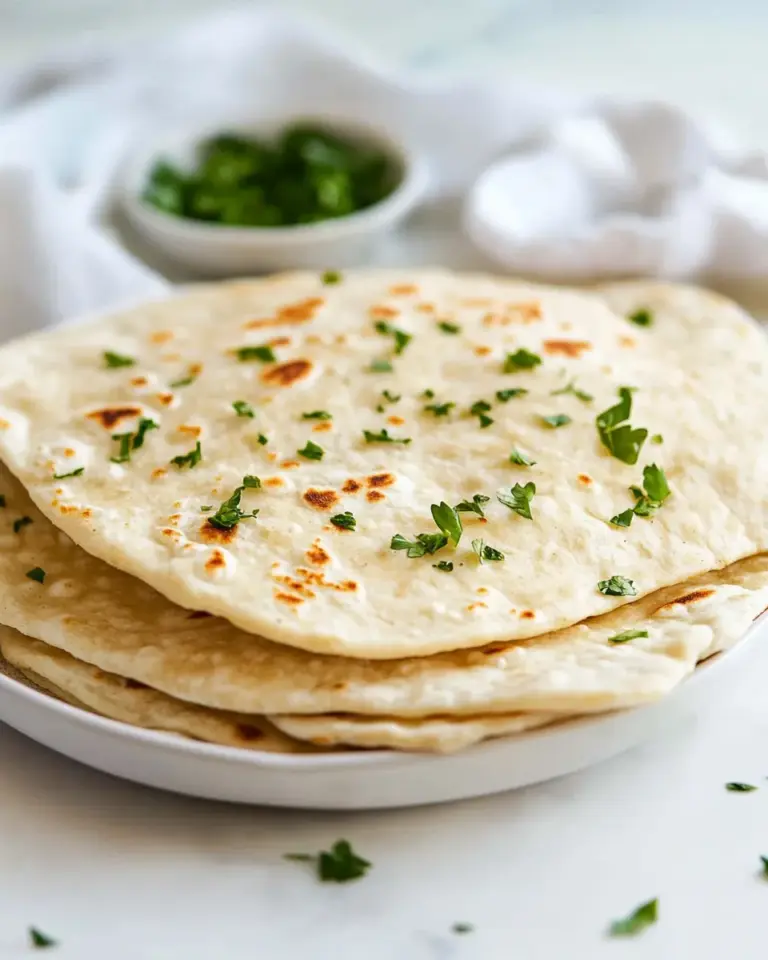
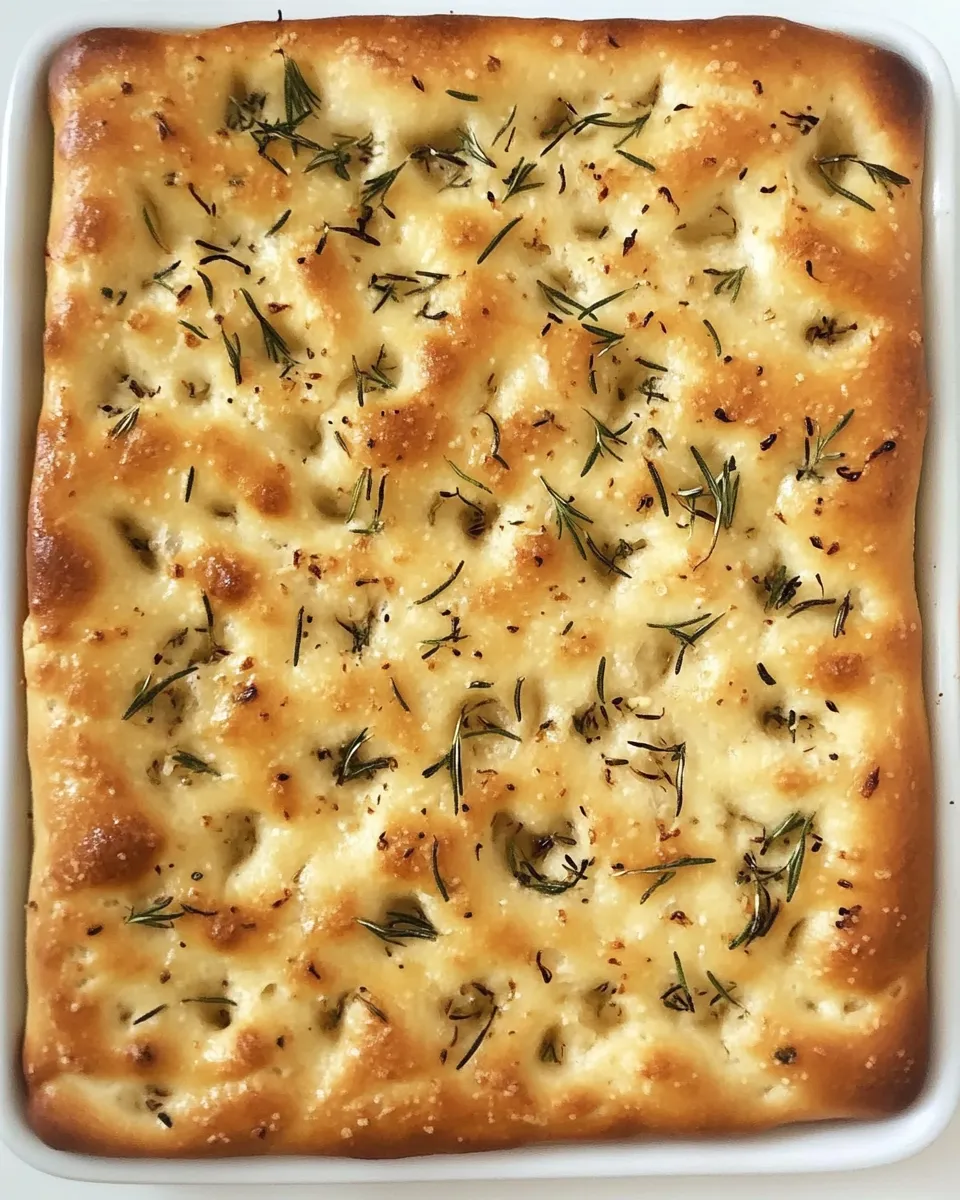
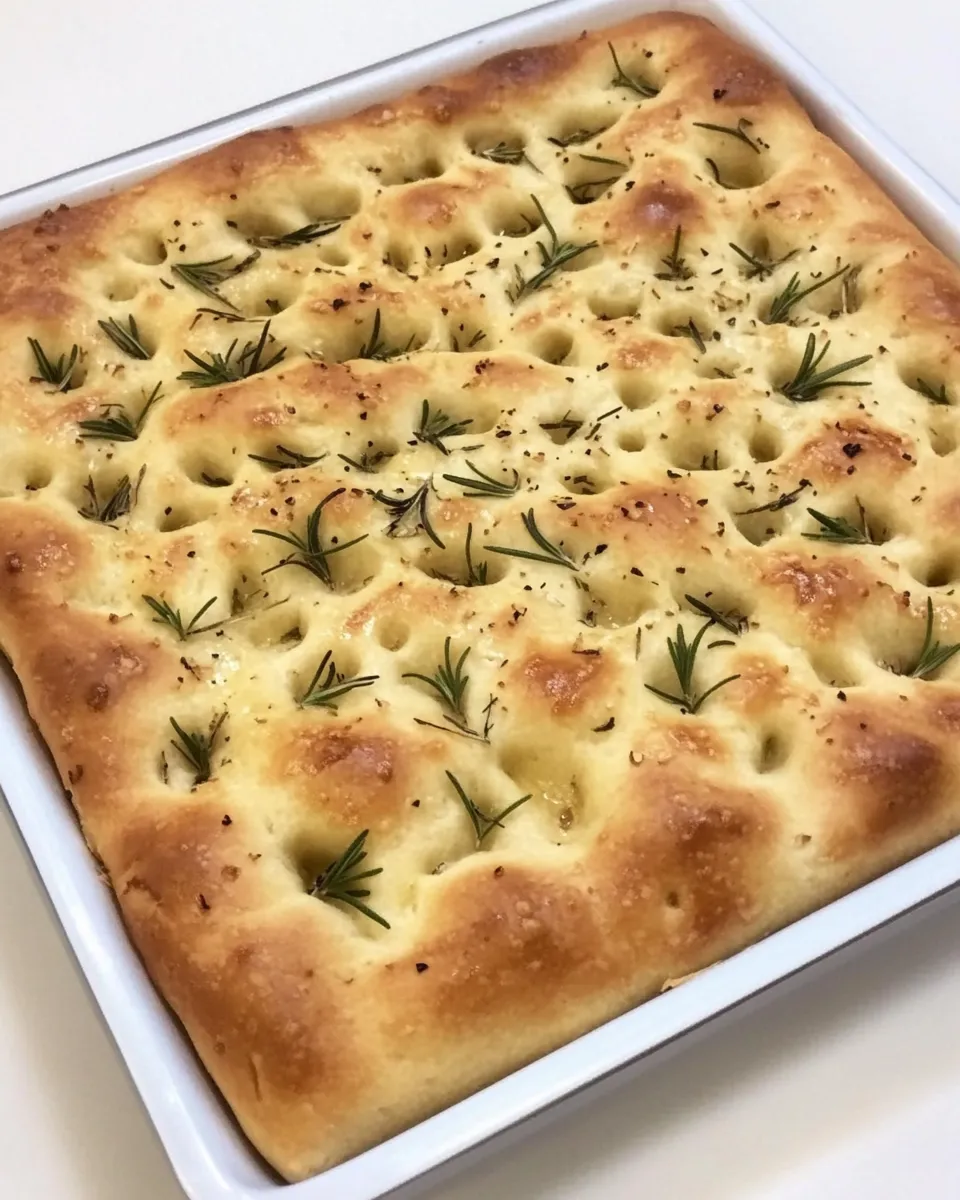
There are breads that comfort and breads that lift a room. This roasted garlic focaccia does both. It smells like a small oven miracle while it bakes: sweet garlic, warm olive oil, and rosemary perfuming the house. The result is a crust that’s golden and slightly crisp with an airy, tender crumb threaded through with mellow, roasted garlic.
I write this recipe because it’s reliable and forgiving. It scales well for a weeknight dinner or for company, and it teaches good dough rhythm—mix, rise, rest, dimple, bake. You don’t need fancy techniques; you do need a bit of patience during the first rise so the focaccia gets that open texture everyone wants.
What You’ll Need
Ingredients
- ½ cup olive oil — used for roasting garlic and coating dough; adds flavor and keeps the crumb tender.
- 1 large head of garlic, cut in half widthwise — the main aromatic; roasting softens and sweetens it.
- 1 envelope (2 ¼ teaspoons) active dry yeast (not rapid rising) — leavens the dough; make sure it’s fresh for a good rise.
- 1 ¾ cups warm water — activates the yeast; temperature should be comfortably warm, not hot.
- 4 cups white flour — provides structure; you can measure by spooning into the cup for consistency.
- 2 teaspoons fine-grain sea salt — flavors the dough; make sure it’s fully mixed into the flour.
- 2 tablespoons of the cooled roasted garlic oil (used in step 4 and 6 and more as needed) — the recipe specifies adding this oil at several stages for flavor; reserve enough when you strain the roast.
- Just under 2 tablespoons coarsely chopped, fresh rosemary (from 3 – 4 sprigs) — fresh rosemary gives the bright herb note; chop coarsely so you find fragrant bites.
- Flaky sea salt — for finishing; adds crunchy bursts and highlights the garlic and rosemary.
Method: Roasted Garlic Focaccia with Rosemary
- Preheat the oven to 300°F and place a rack in the middle position. Pour ½ cup olive oil into a small baking dish or oven-safe bowl. Place the garlic head halves cut side down in the oil, cover the dish tightly with foil, and roast until the garlic is tender and golden, 45–60 minutes.
- Remove the dish from the oven. Carefully pour the hot oil through a fine-mesh strainer into a clean heatproof bowl. Using a spoon or tongs, press the roasted garlic cloves out of their skins into the bowl and reserve the cloves. Discard the skins and any solids caught in the strainer. Let the roasted garlic oil cool completely before using.
- Rinse and thoroughly dry the bowl of a stand mixer. Sprinkle the envelope (2 ¼ teaspoons) active dry yeast into the bowl, then pour in 1 ¾ cups warm water. Stir gently to dissolve and let sit 3–5 minutes, until the mixture is foamy.
- Fit the mixer with the dough hook and start on low speed. Add 4 cups white flour, 2 teaspoons fine-grain sea salt, and 2 tablespoons of the cooled roasted garlic oil. If needed, add the flour in two additions so the mixer can handle it.
- Increase the mixer to medium once the dough begins to come together. Stop occasionally to scrape dough off the hook. Mix until the dough is smooth and slightly sticky, about 8–10 minutes.
- Add 2 teaspoons of roasted garlic oil to a large bowl and spread it around. Transfer the dough ball to that bowl and turn it so all sides are coated in oil.
- Cover the bowl with a clean kitchen towel and set it in a warm, draft-free spot to rise until doubled in size, about 1 hour 45 minutes.
- Lightly oil a rimmed baking sheet with 1 teaspoon roasted garlic oil, spreading it over the bottom and sides.
- When the dough has doubled, uncover and punch it down. Transfer the dough to the prepared baking sheet and gently stretch and press it to fill the pan to the edges.
- Cover the pan with a clean tea towel and let the dough rest in a warm spot for 30 minutes. While it rests, preheat the oven to 450°F.
- Uncover the dough. Grease your fingertips with roasted garlic oil and dimple the surface of the dough all over.
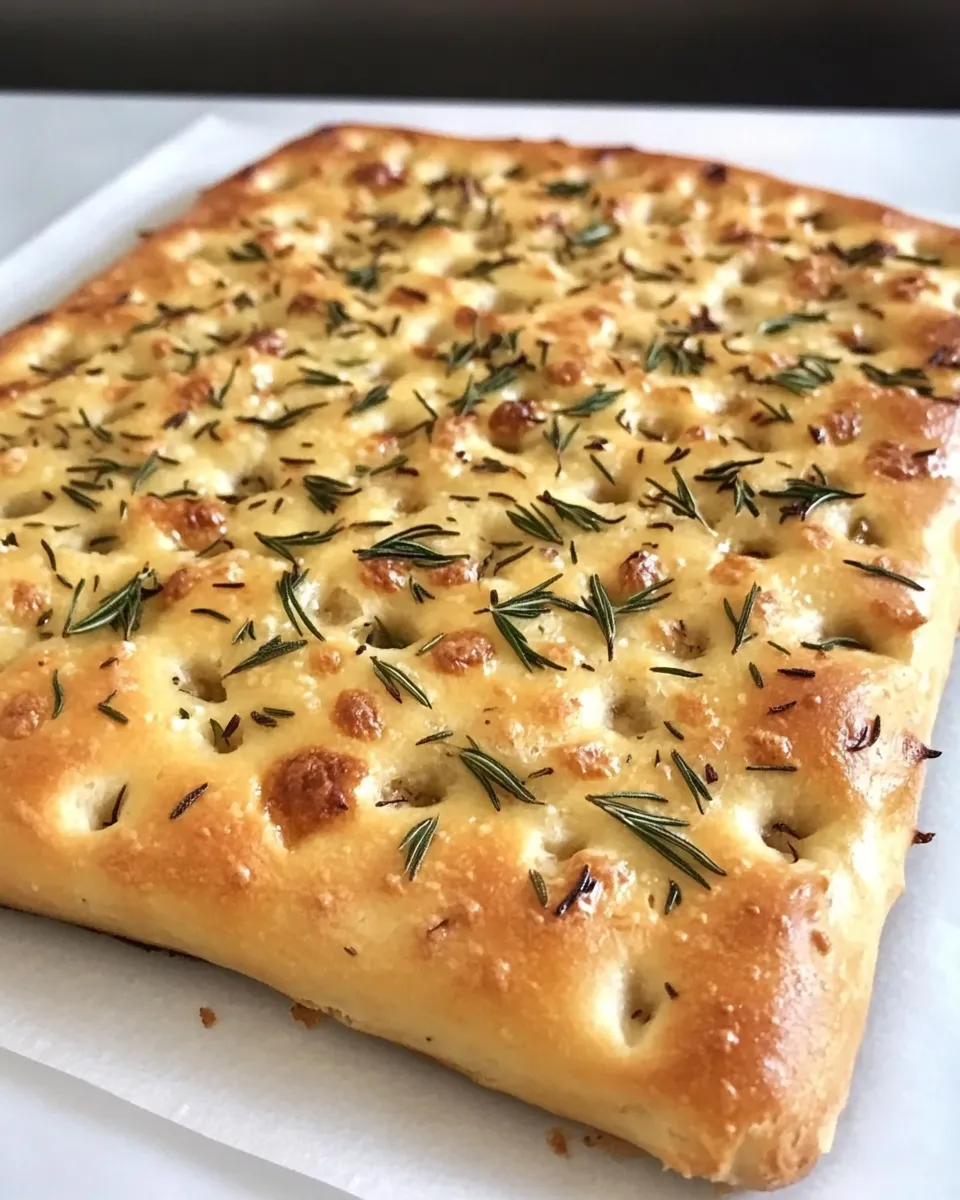
- Brush the surface with additional roasted garlic oil, dot with the reserved roasted garlic cloves, then sprinkle evenly with just under 2 tablespoons coarsely chopped fresh rosemary (from 3–4 sprigs) and a few pinches of flaky sea salt.
- Place the pan in the oven and immediately reduce the oven temperature to 375°F. Bake until the focaccia is golden brown, 20–25 minutes.
- Transfer the baked focaccia to a wire rack and let cool slightly before slicing and serving.
What Makes This Recipe Special
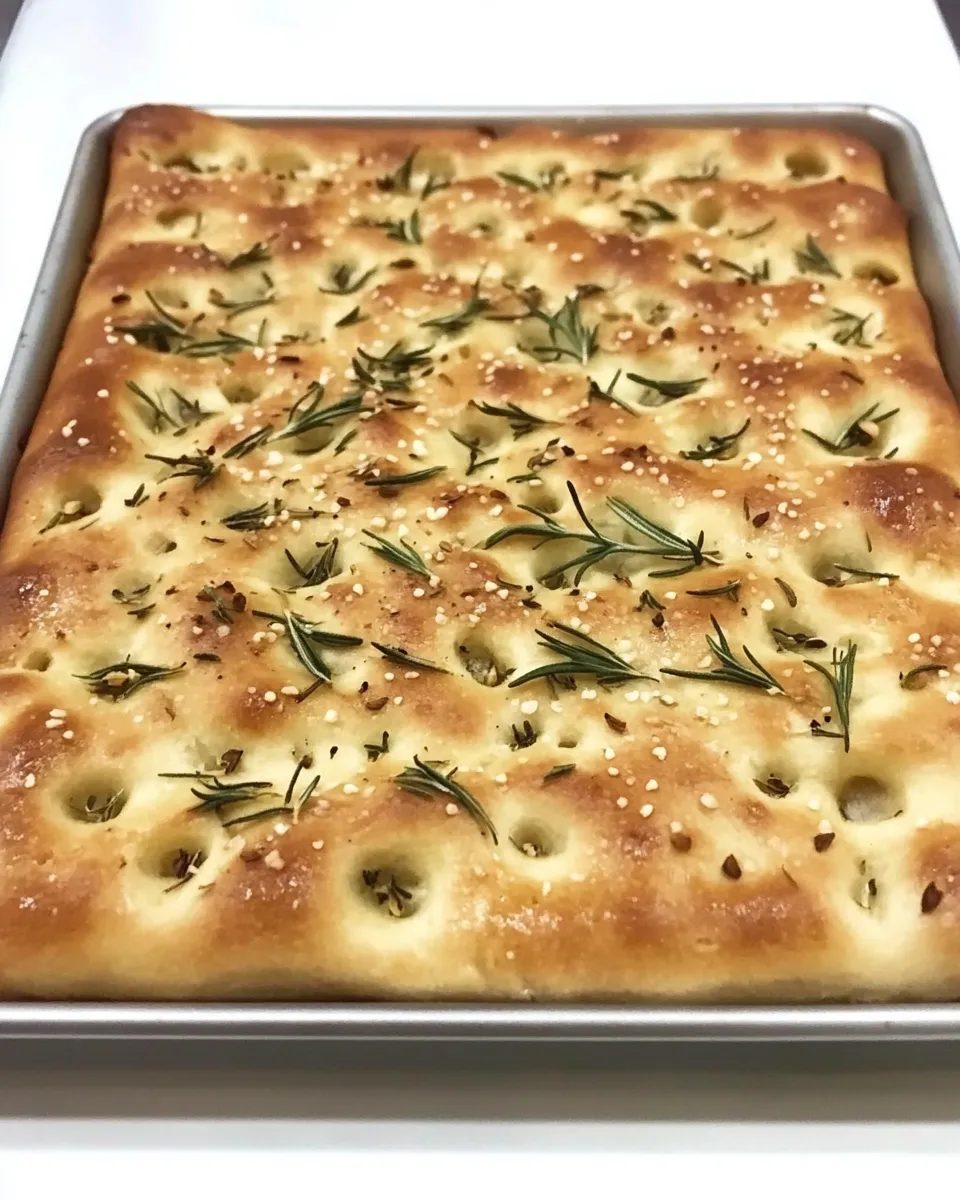
This focaccia leans on roasted garlic oil instead of plain oil, and that changes everything. Roasting the garlic first softens and caramelizes the cloves, producing oil that’s rich, sweet, and deeply savory. When you brush and dimple the dough with that oil, every pocket captures concentrated flavor.
The timing also matters: a long first rise (about 1 hour 45 minutes) lets the dough develop flavor and an airy crumb without complicated folding or high-hydration handling. The lower-temperature start for roasting the garlic (300°F) prevents burning while coaxing sugars out of the cloves. Then a quick, hot finish in the oven gives the crust its golden color.
Healthier Substitutions
If you want to trim a bit of fat without changing the technique, you can reduce the finishing oil slightly; the dough still needs oil for texture and flavor, but you can be conservative when brushing the surface. Swap half the white flour for a high-gluten bread flour for more structure if you like a chewier bite, but keep the total at 4 cups.
For a lighter sodium profile, reduce the 2 teaspoons fine-grain sea salt in the dough by up to half and use a lighter hand with flaky sea salt on top. Note: less salt affects gluten development and flavor, so balance the reduction to your taste.
Recommended Tools
Good tools keep this simple. A stand mixer with a dough hook speeds things and reduces arm fatigue. A rimmed baking sheet gives the focaccia its shape and keeps oil contained. Use a small baking dish or oven-proof bowl for roasting the garlic so you can strain the oil cleanly.
Tools that make a difference
- Stand mixer with dough hook — consistent, hands-off kneading for 8–10 minutes.
- Fine-mesh strainer — to separate garlic oil from solids, ensuring a clean flavored oil.
- Rimmed baking sheet — gives the focaccia its classic shallow pan profile.
- Wire rack — cools the bread without sogginess.
Watch Outs & How to Fix
Underproofed dough: if the dough hasn’t doubled after 1 hour 45 minutes, give it more time in a slightly warmer spot (not hot). Look for a dough that springs back slowly when poked, not one that feels dense.
Over-oiled/greasy top: if you brush too generously just before baking the surface can fry rather than caramelize. Dab excess with a paper towel before baking, or brush lightly and reserve oil for serving instead.
Dense crumb: this usually means the dough was overworked or didn’t get enough rise. Check your yeast freshness—old yeast might give a very slow rise. Also, stop kneading once the dough is smooth and slightly sticky; over-kneading can tighten the crumb.
Seasonal Twists
Spring: add thinly sliced scallions or tender thyme sprigs in place of some of the rosemary for a green, bright note. Summer: tuck in halved cherry tomatoes after dimpling for sweet, roasted pops. Fall: swap half the rosemary for chopped, sautéed shallots for a sweeter, deeper finish.
Holiday/comfort: scatter a handful of grated aged Parmesan over the top in the final five minutes of baking for a savory crust. Or press in a few olives and a little lemon zest for a Mediterranean riff.
Behind-the-Scenes Notes
Why roast garlic at 300°F? The low and slow approach steeps the oil with garlic flavor without browning it too fast. The garlic cloves become buttery and easy to mash, which harmonizes with the dough in the final loaf. Straining the oil keeps sediment out; that sediment can burn and add bitterness, so discard it.
The recipe calls for reducing the oven temp immediately after placing the pan in the oven. That small trick allows the focaccia to set with an initial burst of steam and then finish at a moderate temperature so the interior stays tender while the exterior browns evenly.
Meal Prep & Storage Notes
Make-ahead: you can roast the garlic and refrigerate the strained roasted garlic oil and reserved cloves up to 1 week. That shortens assembly and amplifies flavor on baking day. The dough itself freezes well: shape into a ball, oil lightly, wrap tightly and freeze. Thaw overnight in the refrigerator before continuing with the rising steps.
Storage: store cooled focaccia in a loose plastic bag or wrapped in a cotton towel at room temperature for up to 2 days. Reheat in a 350°F oven for 8–10 minutes to revive crust and warmth. For longer storage, slice and freeze; toast slices from frozen.
Helpful Q&A
Q: Can I make this without a stand mixer? A: Yes. Use a sturdy bowl and mix by hand; it will take a bit longer to knead by hand (about 10–12 minutes) until the dough is smooth and slightly sticky.
Q: What if my roasted garlic oil solidifies in the fridge? A: Olive oil firms up when chilled. Bring it to room temperature before using and gently warm if needed to make it brushable.
Q: Can I use instant yeast instead of active dry? A: The recipe specifies active dry yeast. If you must use instant yeast, use slightly less and note your rising time may change. For consistent results, stick with active dry as written.
Q: How can I get larger holes in the crumb? A: Higher hydration and gentler handling encourage larger holes. This recipe is balanced for reliably open crumb; avoid compressing the dough while moving it to the pan and be gentle when stretching to fit.
See You at the Table
When it comes out of the oven, break a corner off and taste it plain, warm, with a sliver of butter, or alongside a simple salad or soup. The roasted garlic will be soft and sweet; the rosemary will give each bite a green lift. This focaccia is easy to share and even easier to love. Slice, serve, and save the last end piece for yourself—it’s the best part.
Roasted Garlic Focaccia with Rosemary
Ingredients
Ingredients
- 1/2 cupolive oil
- 1 large head of garlic cut in half widthwise
- 1 envelope 2 1/4 teaspoons active dry yeast (not rapid rising)
- 1 3/4 cupswarm water
- 4 cupswhite flour
- 2 teaspoonsfine grain sea salt
- Just under 2 tablespoons coarsely chopped fresh rosemary (from 3 – 4 sprigs)
- Flaky sea salt
Instructions
Instructions
- Preheat the oven to 300°F and place a rack in the middle position. Pour ½ cup olive oil into a small baking dish or oven-safe bowl. Place the garlic head halves cut side down in the oil, cover the dish tightly with foil, and roast until the garlic is tender and golden, 45–60 minutes.
- Remove the dish from the oven. Carefully pour the hot oil through a fine-mesh strainer into a clean heatproof bowl. Using a spoon or tongs, press the roasted garlic cloves out of their skins into the bowl and reserve the cloves. Discard the skins and any solids caught in the strainer. Let the roasted garlic oil cool completely before using.
- Rinse and thoroughly dry the bowl of a stand mixer. Sprinkle the envelope (2 ¼ teaspoons) active dry yeast into the bowl, then pour in 1 ¾ cups warm water. Stir gently to dissolve and let sit 3–5 minutes, until the mixture is foamy.
- Fit the mixer with the dough hook and start on low speed. Add 4 cups white flour, 2 teaspoons fine-grain sea salt, and 2 tablespoons of the cooled roasted garlic oil. If needed, add the flour in two additions so the mixer can handle it.
- Increase the mixer to medium once the dough begins to come together. Stop occasionally to scrape dough off the hook. Mix until the dough is smooth and slightly sticky, about 8–10 minutes.
- Add 2 teaspoons of roasted garlic oil to a large bowl and spread it around. Transfer the dough ball to that bowl and turn it so all sides are coated in oil.
- Cover the bowl with a clean kitchen towel and set it in a warm, draft-free spot to rise until doubled in size, about 1 hour 45 minutes.
- Lightly oil a rimmed baking sheet with 1 teaspoon roasted garlic oil, spreading it over the bottom and sides.
- When the dough has doubled, uncover and punch it down. Transfer the dough to the prepared baking sheet and gently stretch and press it to fill the pan to the edges.
- Cover the pan with a clean tea towel and let the dough rest in a warm spot for 30 minutes. While it rests, preheat the oven to 450°F.
- Uncover the dough. Grease your fingertips with roasted garlic oil and dimple the surface of the dough all over.
- Brush the surface with additional roasted garlic oil, dot with the reserved roasted garlic cloves, then sprinkle evenly with just under 2 tablespoons coarsely chopped fresh rosemary (from 3–4 sprigs) and a few pinches of flaky sea salt.
- Place the pan in the oven and immediately reduce the oven temperature to 375°F. Bake until the focaccia is golden brown, 20–25 minutes.
- Transfer the baked focaccia to a wire rack and let cool slightly before slicing and serving.
Equipment
- Oven
- small baking dish or oven-safe bowl
- Foil
- Fine-mesh strainer
- Stand mixer
- dough hook
- Large Bowl
- Rimmed baking sheet
- Wire Rack
- kitchen or tea towel