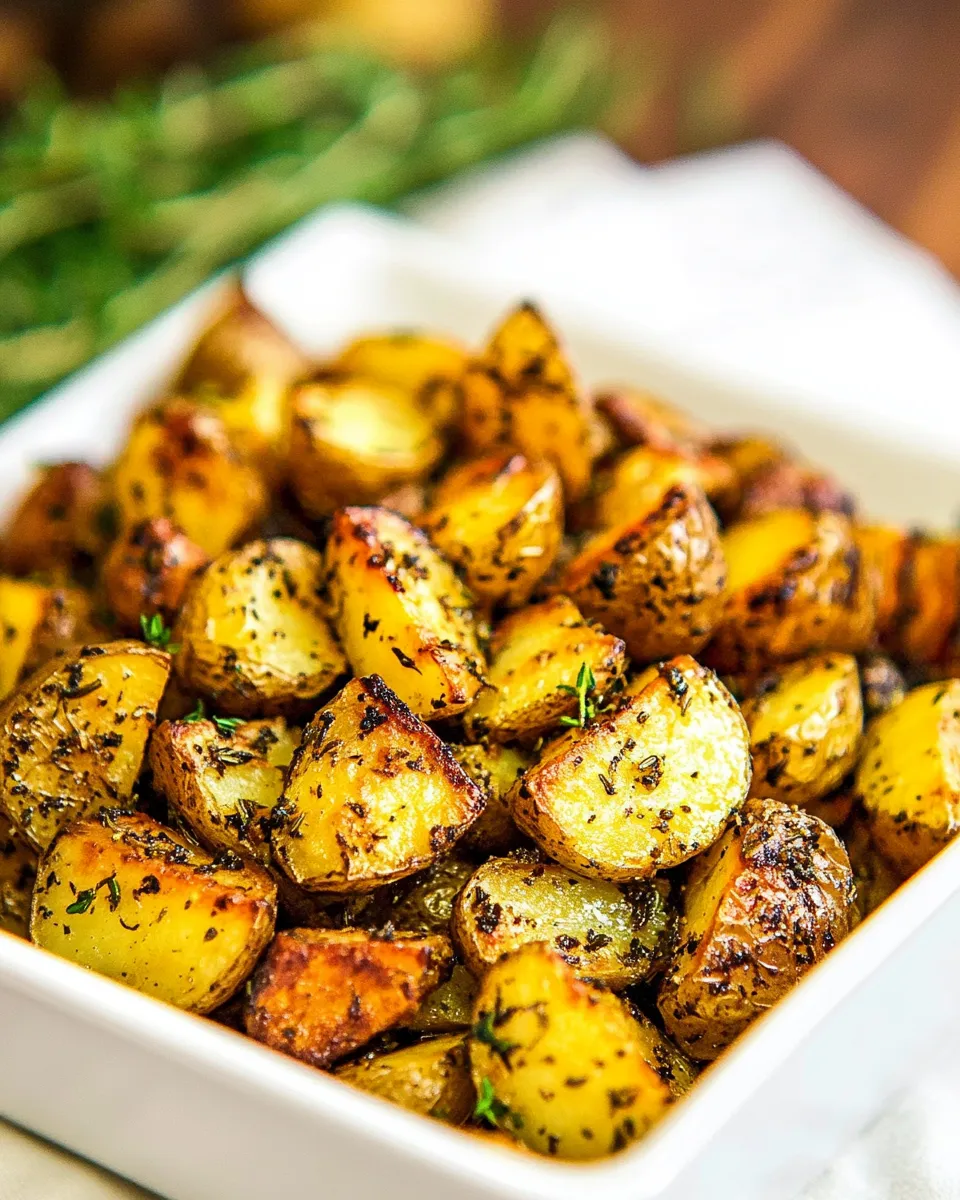
These roasted potatoes are the kind of side dish I reach for when I want something simple, comforting, and reliably delicious. The balsamic gives a gentle sweetness and depth while the fresh thyme and rosemary lift the whole pan with bright herbaceous notes. They work beside a weeknight protein, on a holiday spread, or as a hearty addition to a salad bowl.
I like that this recipe is flexible: a single sheet pan, a quick toss in a bowl, and an easy choice about when to add the shallot and herbs so you can tailor texture and flavor. The result is golden, tender potatoes with a nicely caramelized exterior and a hit of balsamic that pulls everything together.
This post walks through the ingredients, the exact steps, helpful equipment, troubleshooting tips, and what I learned while testing so you can get perfect results every time.
Ingredient Rundown
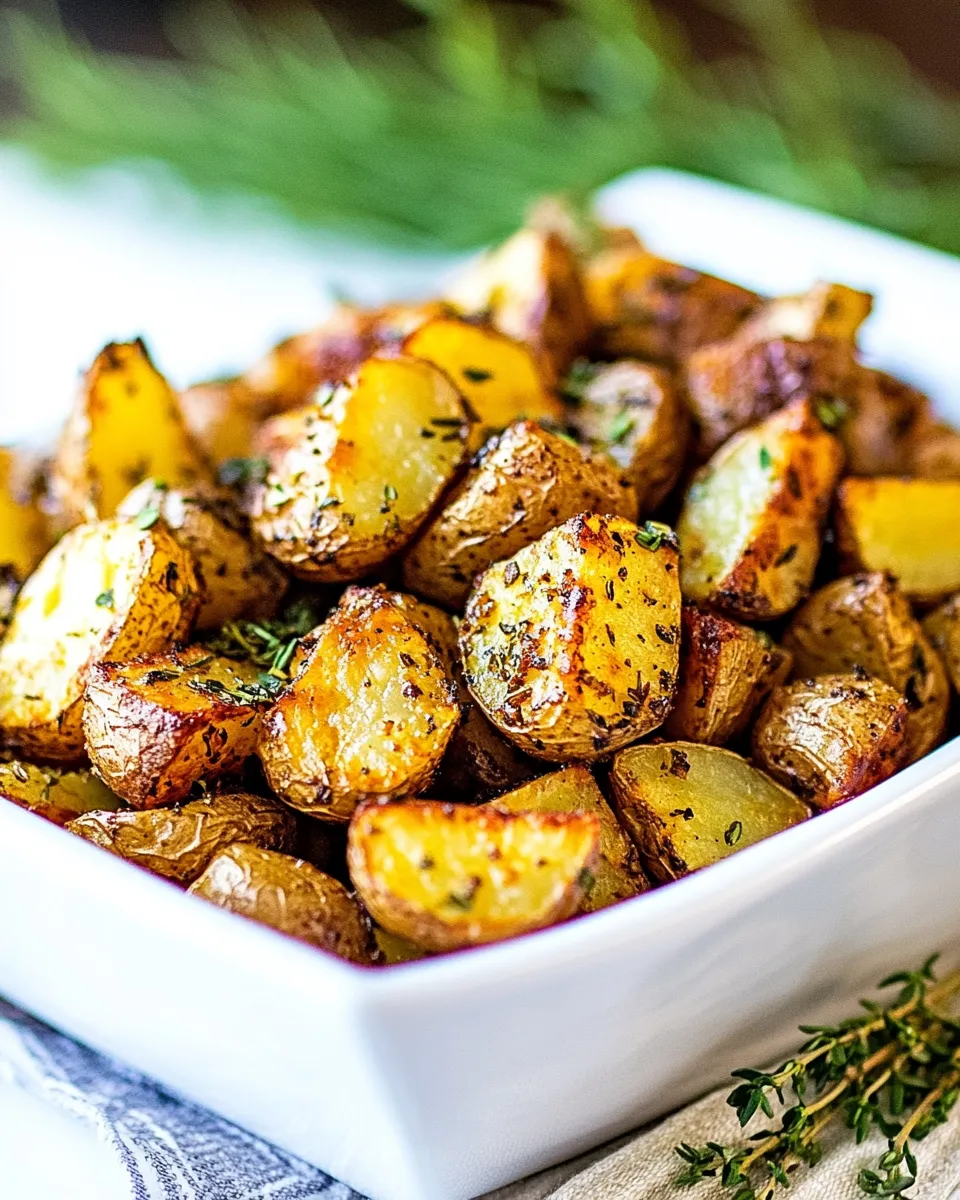
- 4 cups baby potatoes = red, yellow, purple: halved (large ones quartered) — the base of the dish; choose similar-sized pieces so everything cooks evenly.
- 2 tablespoons quality olive oil — helps the potatoes brown and carry the balsamic for even coating.
- 2 tablespoons balsamic vinegar — provides acidity and caramelized flavor as the potatoes roast.
- ¼ cup shallot chopped — adds a mild, sweet onion note; timing of addition affects texture and flavor intensity.
- 1 tablespoon thyme fresh, chopped — fresh thyme brightens the potatoes; chop to release oils.
- 1 tablespoon rosemary fresh, chopped — rosemary gives pine-like aroma and pairs well with roasted potato edges.
- salt and pepper to taste — essential for seasoning; add before and adjust at the end if needed.
- Fresh thyme and rosemary for garnish — optional finish that adds visual appeal and a fresh aroma.
- Coarse sea salt for garnish, optional — a final pinch of coarse salt adds crunch and a clean burst of saltiness.
Roasted Potatoes with Balsamic and Herbs: Step-by-Step Guide
- Preheat the oven to 400°F (200°C).
- In a large bowl combine 4 cups baby potatoes (halved; quarter any large ones), 2 tablespoons olive oil, and 2 tablespoons balsamic vinegar. Toss until the potatoes are evenly coated.
- Season the coated potatoes with salt and pepper to taste and toss once more.
- Choose one herb/shallot timing:
- For crunchier shallots and herbs: add 1/4 cup chopped shallot, 1 tablespoon chopped fresh thyme, and 1 tablespoon chopped fresh rosemary to the bowl and toss to distribute evenly.
- For fresher, more pronounced shallot and herb flavor: do not add the shallot and chopped herbs now; you will add them in step 6 with 5 minutes remaining.
- Transfer the potatoes to a large baking sheet or pan, spreading them in a single layer so pieces do not overlap (place cut sides down when possible for better browning).
- If you chose option B in step 4, when the potatoes have baked for about 25–30 minutes (5 minutes before the end of the shorter baking time), remove the pan briefly from the oven, sprinkle the potatoes with the 1/4 cup chopped shallot, 1 tablespoon chopped thyme, and 1 tablespoon chopped rosemary, toss gently to combine, then return the pan to the oven.
- Bake until the potatoes are golden and tender when pierced with a knife: 30–35 minutes total, stirring/tossing once halfway through baking. If you prefer a darker, crispier exterior, bake up to 45 minutes total.
- Remove the potatoes from the oven. Garnish with fresh thyme and rosemary (as desired) and a couple pinches of coarse sea salt, if using. Serve immediately.
Why You’ll Love This Recipe
There’s clarity in this recipe: a short ingredient list, straightforward steps, and a small number of deliberate choices that control texture and flavor. The balsamic boosts caramelization without overwhelming the potatoes. Fresh thyme and rosemary add an herbal lift that feels both rustic and refined.
The timing option for the shallot and herbs is crucial. Add them up front for mellowed, crisped aromatics. Add them at the end to keep bright, pungent notes and a fresher texture. Either approach yields a dish that’s equally at home next to roasted chicken or folded into a warm grain bowl.
Budget & Availability Swaps
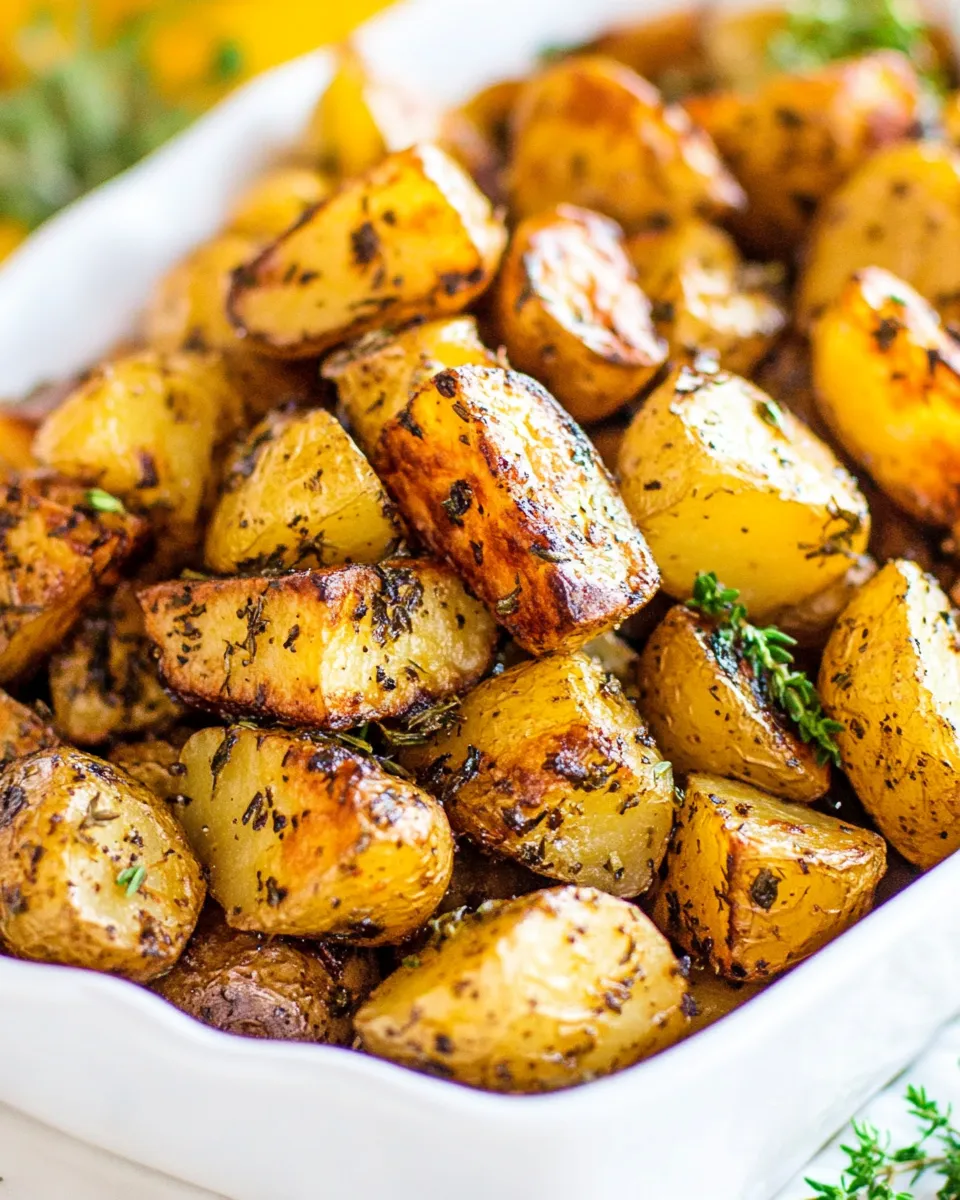
If baby potatoes aren’t available, match sizes when cutting whatever small potatoes you can find so cook times stay consistent. The recipe’s quantities are meant for a single sheet pan — if you scale up, watch for crowding because overlapping pieces steam instead of roast.
If you have limited fresh herbs, use less rather than more. The herbs are there to accent, not to dominate. You can omit the garnish and coarse sea salt without changing the cooking steps; the finished dish will still be satisfying.
Before You Start: Equipment
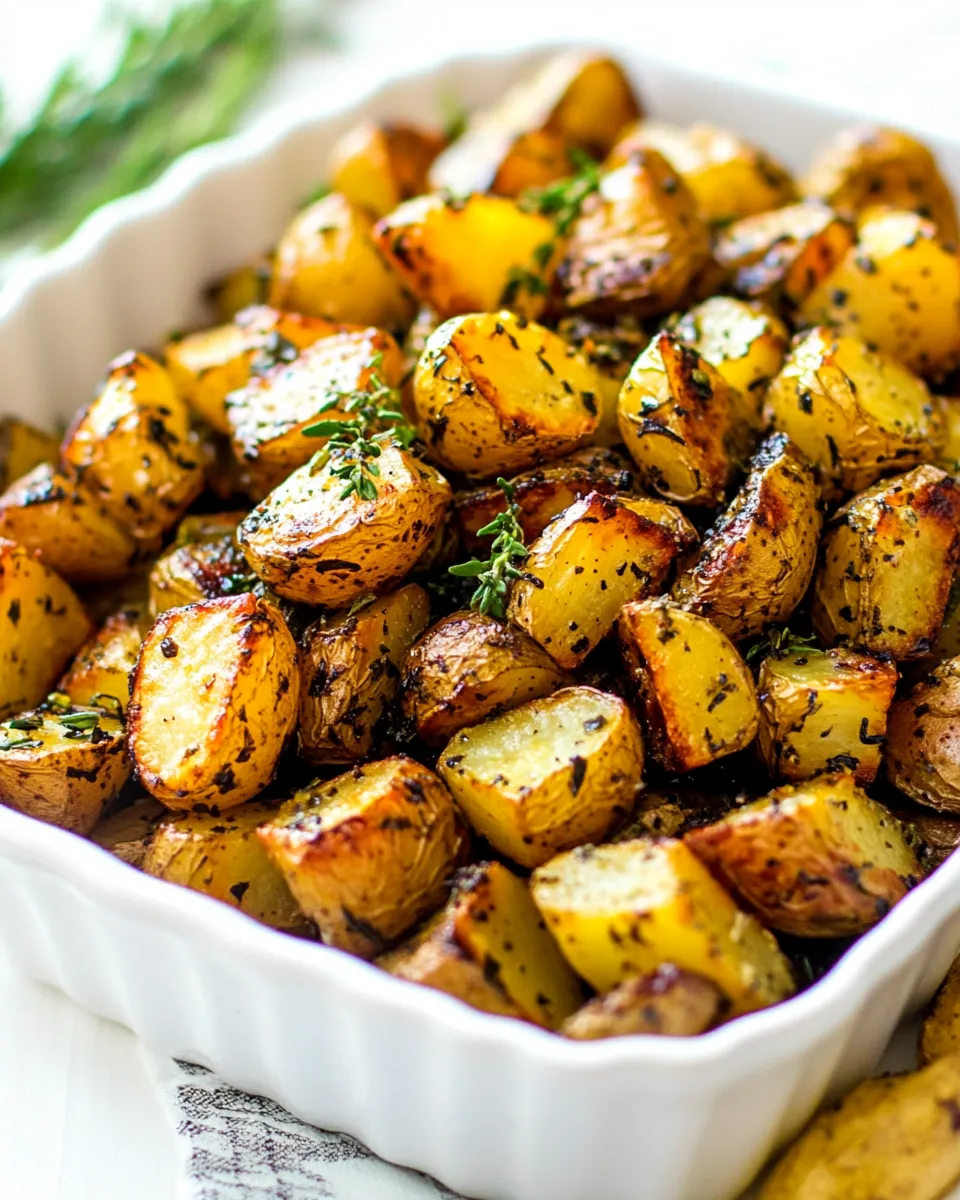
Use a large mixing bowl for tossing and a roomy baking sheet or roasting pan so the potatoes sit in a single layer. A heavy baking sheet that conducts heat evenly will produce better browning. A sharp knife and cutting board to halve or quarter potatoes matter more than specialty tools.
You’ll also want a spatula or tongs for turning the potatoes halfway through. If you have parchment paper, it can make cleanup easier, but it can slightly reduce browning — balance convenience and color based on your priorities.
Problems & Prevention
Problem: Potatoes come out steamed, pale, and soft. Prevention: Don’t crowd the pan. Spread pieces in a single layer and place cut sides down when possible so they develop direct contact with the hot pan and brown properly.
Problem: Shallots burn or turn bitter. Prevention: If you want a sharp shallot flavor, add the chopped shallot with the herbs in the final 5 minutes (option B). If you prefer mellow, add early (option A) but check for over-browning and remove earlier if pieces are crisping too quickly.
Problem: Uneven cooking. Prevention: Keep pieces similar in size. Large potatoes should be quartered so everything finishes at the same time. Stir or toss once halfway through as the recipe instructs to ensure even color and doneness.
Dietary Customizations
This recipe is naturally vegetarian and vegan as written. It contains no dairy, eggs, or animal products. That makes it an easy fit for plant-based meals or for households with mixed diets.
If you follow a low-sodium plan, reduce the added salt and finish with a smaller pinch of coarse sea salt only if desired. The herbs and balsamic add a lot of perceived flavor, so you can often cut back on salt without losing enjoyment.
What I Learned Testing
Testing this recipe repeatedly taught me the value of timing the shallot. When I added it at the start, the shallot crisps and blends into the roasted surface of the potatoes — very pleasant. When I added it with 5 minutes left, the shallot stayed lively and gave a punchier finish that cut through the richness.
Another lesson: the 400°F/200°C temperature hits the balance between interior tenderness and exterior color. Lower temperatures take longer and don’t brown as well; higher temps risk burning the herbs before the centers are done. I found the 30–35 minute window, with a midpoint toss, to be the sweet spot.
Finally, I discovered that a quick toss in the bowl with the oil and balsamic produces more even caramelization than brushing each piece. The vinegar thins and helps the oil cling, so you get great color and flavor without extra effort.
Storing, Freezing & Reheating
Store leftover roasted potatoes in an airtight container in the refrigerator for up to 3–4 days. For best texture, avoid overly tight stacking — a shallow container helps preserve edges.
Freezing is possible but will change the texture; I recommend freezing only if you plan to use the potatoes in soups or mashed preparations later. For freezing, cool completely, spread the potatoes on a tray to flash-freeze, then transfer to freezer-safe bags. Use within 2 months.
Reheat refrigerated leftovers in a 400°F (200°C) oven or in a skillet on the stovetop to restore crispiness. Microwaving will warm them but leave surfaces soft; if you must microwave, finish briefly in a hot pan to regain some crunch.
Top Questions & Answers
Q: Can I use dried herbs instead of fresh?
A: Fresh herbs are preferred for their bright oils and appearance. If you must use dried, add less and consider adding them earlier so they have time to hydrate, but fresh yields the best result.
Q: How do I get the crispiest exterior?
A: Space the potatoes so they don’t overlap, place cut sides down when possible, and avoid overcrowding. If you like extra crispness, extend baking up to 45 minutes as the recipe notes, checking periodically so the centers don’t overcook.
Q: My balsamic darkened too much; is that a problem?
A: Balsamic will caramelize and deepen in color. That’s expected and contributes to flavor. If it appears to be burning (very black bits with a bitter smell), reduce the oven temperature slightly or add the balsamic later in future batches.
Q: Can I make these ahead of time?
A: You can prepare the potatoes up to the point before roasting and refrigerate briefly, but they roast best when started from room temperature. If making ahead, re-roast or reheat in a hot oven to refresh the exterior before serving.
Final Thoughts
Roasted Potatoes with Balsamic and Herbs hits the marks I look for in a dependable side: minimal fuss, flexible technique, and big flavor. The balsamic adds complexity and the herbs bring brightness; the simple choice about when to add shallot makes this recipe adaptable to your taste and the meal you’re building around it.
Keep the core method in mind: evenly coated potatoes, single-layer roasting, and a halfway turn. Those small details make the difference between a good pan of roasted potatoes and a great one. Enjoy — and don’t forget that last-minute garnish of fresh thyme and a pinch of coarse sea salt for texture and aroma.
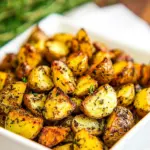
Roasted Potatoes with Balsamic and Herbs
Ingredients
Ingredients
- 4 cupsbaby potatoes=red yellow, purple: halved (large ones quartered)
- 2 tablespoonquality olive oil
- 2 tablespoonbalsamic vinegar
- 1/4 cupshallotchopped
- 1 tablespoonthymefresh chopped
- 1 tablespoonrosemaryfresh chopped
- salt and pepperto taste
- Fresh thyme and rosemaryfor garnish
- Coarse sea saltfor garnish optional
Instructions
Instructions
- Preheat the oven to 400°F (200°C).
- In a large bowl combine 4 cups baby potatoes (halved; quarter any large ones), 2 tablespoons olive oil, and 2 tablespoons balsamic vinegar. Toss until the potatoes are evenly coated.
- Season the coated potatoes with salt and pepper to taste and toss once more.
- Choose one herb/shallot timing: A. For crunchier shallots and herbs: add 1/4 cup chopped shallot, 1 tablespoon chopped fresh thyme, and 1 tablespoon chopped fresh rosemary to the bowl and toss to distribute evenly. B. For fresher, more pronounced shallot and herb flavor: do not add the shallot and chopped herbs now; you will add them in step 6 with 5 minutes remaining.
- Transfer the potatoes to a large baking sheet or pan, spreading them in a single layer so pieces do not overlap (place cut sides down when possible for better browning).
- If you chose option B in step 4, when the potatoes have baked for about 25–30 minutes (5 minutes before the end of the shorter baking time), remove the pan briefly from the oven, sprinkle the potatoes with the 1/4 cup chopped shallot, 1 tablespoon chopped thyme, and 1 tablespoon chopped rosemary, toss gently to combine, then return the pan to the oven.
- Bake until the potatoes are golden and tender when pierced with a knife: 30–35 minutes total, stirring/tossing once halfway through baking. If you prefer a darker, crispier exterior, bake up to 45 minutes total.
- Remove the potatoes from the oven. Garnish with fresh thyme and rosemary (as desired) and a couple pinches of coarse sea salt, if using. Serve immediately.
Equipment
- ▢1 Baking sheet
Notes
NOTE:
Watch the video near the top of the recipe for visual guidance.
You may need to roast the potatoes for more than 35 minutes to get them golden and crispy on the outside. Keep an eye on them, and give them a stirring every 15 to 20 minutes. Because of this, we recommend stirring in the shallot and herbs within the last 5 to 10 minutes of baking. If they are roasted for too long, they run the risk of burning.
Leftovers will keep in an air-tight container in the fridge for up to 3 to 4 days. Reheat on a baking sheet in a 350°F oven for 15 to 20 minutes. They won’t be as crisp, but they’ll still be yummy.
The recipe can easily be doubled or tripled if feeding a larger group. You may need two baking sheets.