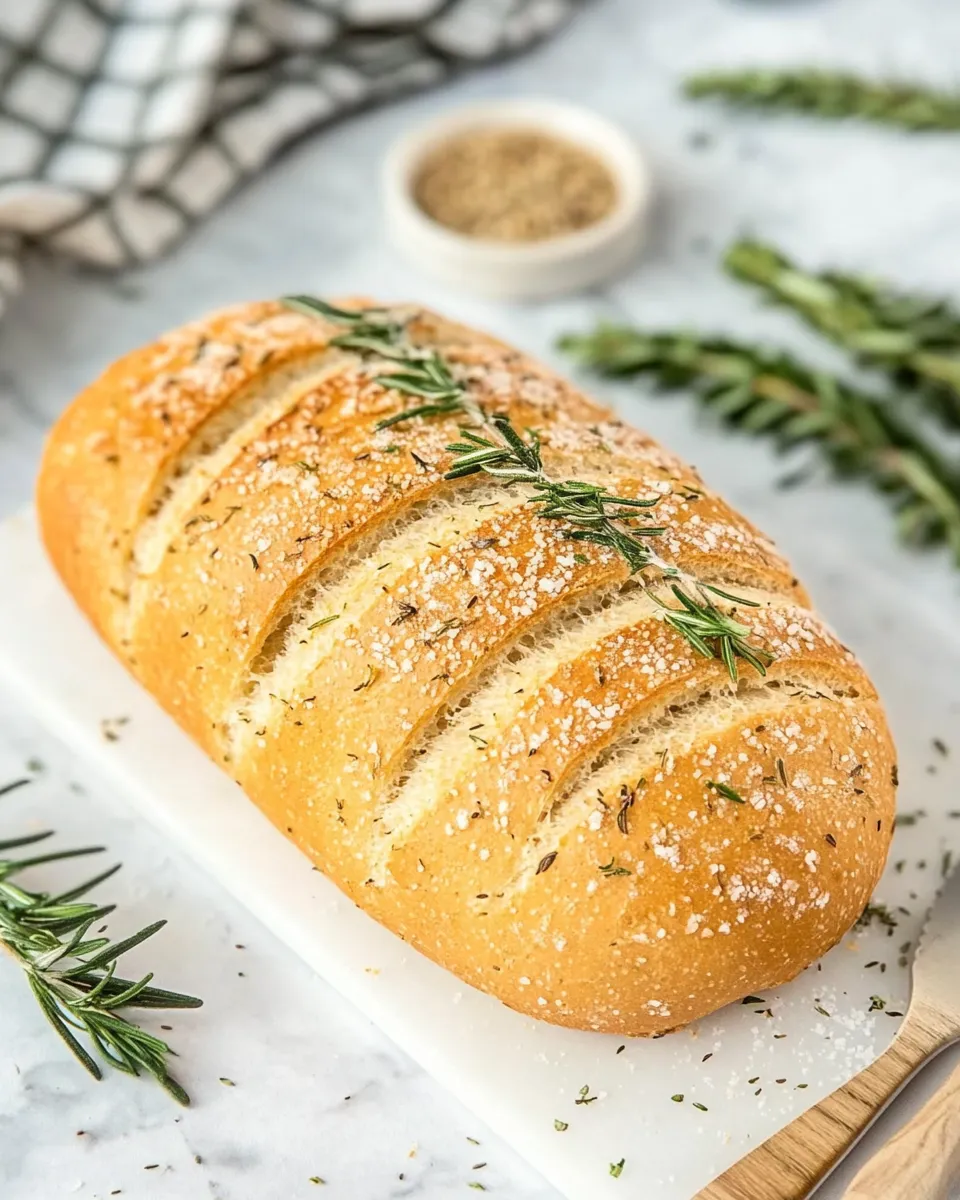
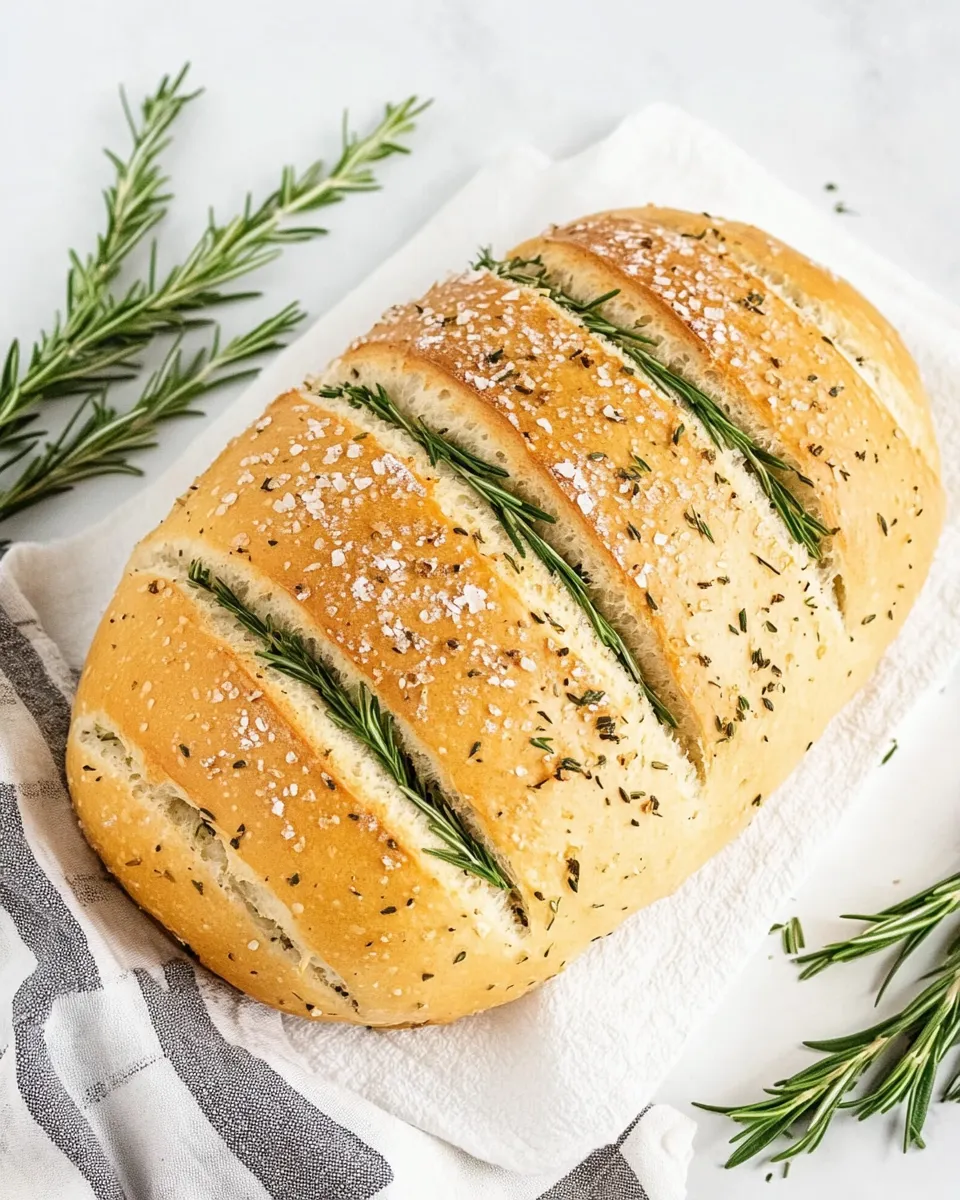
This is one of those breads that fills the kitchen with good smells and makes everyone linger at the counter. It’s rustic, aromatic and simple enough to fit into a weeknight baking routine. The rosemary and flaky sea salt give the crust a bright, savory note while the inside stays tender and chewable.
I test recipes until they behave predictably, and this one hits reliable rises and a crisp crust without complicated techniques. You’ll use a food processor for speed, but if you’d rather hand-knead, I note that option below. The timings are realistic: about an hour for the first rise, a short second rise, and roughly 40–45 minutes in the oven.
Read the ingredients and the step-by-step closely before you start. Little details — water temperature, where you place the loaf in the oven, and the size of the slashes — affect the final texture and appearance. Follow the directions as written the first time, then tweak to match your oven and taste.
What Goes In
Ingredients
- One 0.25-ounce envelope active dry yeast — the leavening agent; proof it in warm water to confirm it’s active.
- ¾ cup lukewarm water (105 to 115 degrees F.) — used in two portions in the method; keep it in the lukewarm range so the yeast blooms without being killed.
- 2 cups all-purpose flour, plus extra for dusting — forms the dough’s structure; extra dusting flour prevents sticking when shaping.
- ¼ cup whole wheat flour — adds flavor and a bit of chew; it slightly reduces rise compared with using only white flour.
- 1½ teaspoons salt — balances flavor and tightens gluten; don’t skip it.
- 1 teaspoon cornmeal — gives a little grip on the baking sheet and a hint of texture under the loaf.
- nonstick cooking spray — used on bowls and sheet pans to prevent sticking during rises and baking.
- 1 tablespoon finely chopped fresh rosemary — the primary herb flavor; chop it fine so it distributes evenly across the crust.
- ½ tablespoon flaky sea salt — sprinkled on top for crunch and bursts of saltiness; use flaky, not fine, for texture.
Build Rosemary Sea Salt Italian Bread Step by Step
- Measure the lukewarm water (105 to 115°F). In a small bowl, sprinkle the yeast over 1/4 cup of the water and let stand until foamy, about 5 minutes.
- In a food processor fitted with the dough blade, combine the all-purpose flour, whole wheat flour, and salt. Pulse briefly to mix.
- With the machine running, pour the yeast mixture and the remaining 1/2 cup water through the feed tube until the dough just forms a ball. Continue to knead the dough by pulsing until it is smooth and no longer sticky, about 30 pulses.
- Spray a large bowl with nonstick cooking spray. Transfer the dough to the bowl, cover loosely with a clean dish towel, and let rise in a warm, draft-free place until doubled in volume, about 1 hour.
- Punch down the dough. Lightly sprinkle a work surface with the extra all-purpose flour and turn the dough out onto the surface. Roll the dough into a 12 x 16-inch rectangle.
- Fold the rectangle into thirds lengthwise (like a letter), pinch the seams to seal, and shape the dough into a 12-inch tapered oval loaf.
- Spray a baking sheet with nonstick cooking spray. Sprinkle 1 teaspoon cornmeal in a 12-inch strip down the center of the sheet. Place the loaf on the baking sheet on top of the cornmeal. Cover loosely with plastic wrap or a damp towel and let rise in a warm, draft-free place until doubled in volume, about 30 minutes.
- Spray the top of the risen loaf lightly with nonstick cooking spray. Evenly sprinkle the top with the finely chopped fresh rosemary and the flaky sea salt. With a serrated knife, make 2 to 3 slashes across the top of the loaf.
- Place the baking sheet with the loaf in the upper third of a cold oven. Set the oven to 400°F and bake about 20 minutes.
- After 20 minutes, reduce the oven temperature to 350°F and continue baking 20 to 25 minutes longer, until the loaf sounds hollow when tapped on the bottom.
- Remove the loaf from the baking sheet and cool completely on a rack before slicing.
Why It’s Crowd-Pleasing
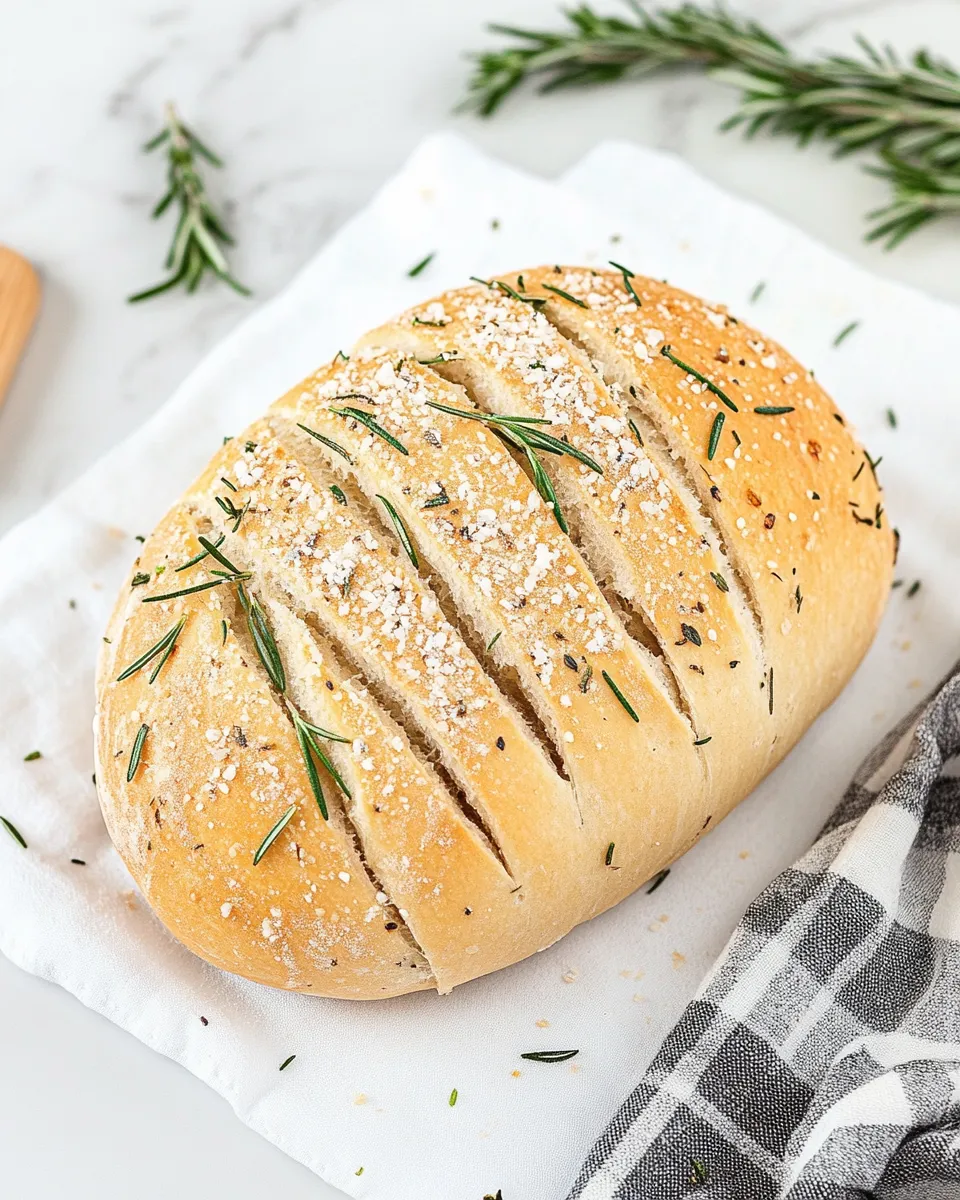
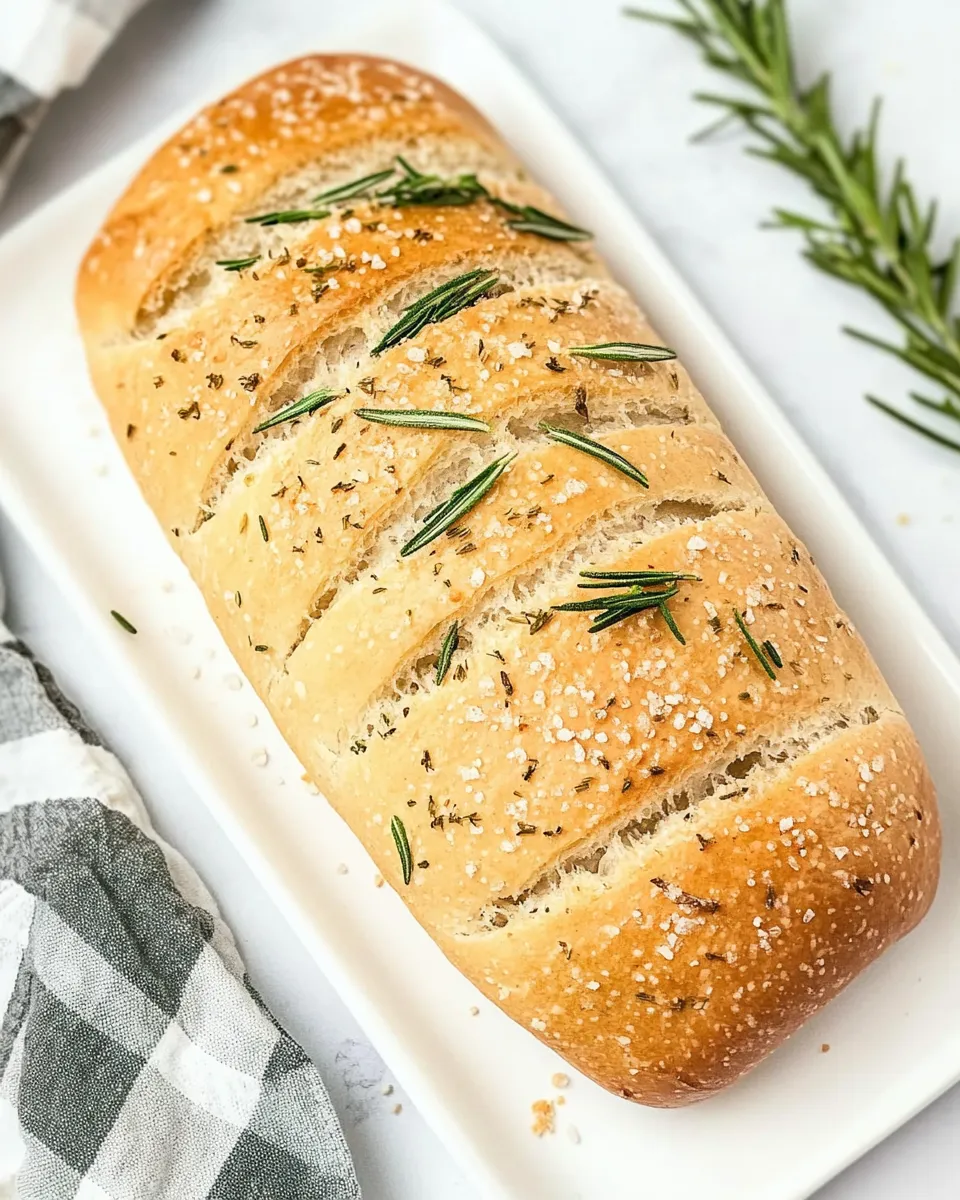
This loaf hits several pleasing notes: a crunchy, aromatic crust; visible rosemary and coarse salt that give each bite an herbaceous pop; and an open, soft crumb that works for sandwiches or dipping into soups and sauces. The method is approachable, so even non-bread bakers can get satisfying results without advanced shaping or steam tricks.
The rosemary and sea salt play well together. The herb lifts the bread’s scent and taste, while the flaky salt gives occasional bright, savory hits. Because the dough uses a food processor, you get good gluten development quickly and a consistent texture, which helps when you bake multiple loaves for a gathering.
Vegan & Vegetarian Swaps
This recipe is vegetarian as written and also vegan — there are no animal products listed. If you prefer or need slight adjustments, here are a few options that keep the spirit of the loaf.
- Replace nonstick cooking spray by lightly brushing bowls and pans with a neutral oil if you avoid sprays.
- If you want a more pronounced herbal flavor, fold a teaspoon of dried rosemary into the dough in addition to the fresh on top (no quantity changes to the base ingredients listed above).
- For a nuttier loaf, fold in up to 2 tablespoons of toasted seeds (pumpkin, sunflower) at the end of kneading — add plainly, without altering the basic ingredient amounts in the list.
Tools & Equipment Needed
- food processor with dough blade — speeds up mixing and kneading.
- measuring cups and spoons — for accuracy with water and small ingredients.
- small bowl — to proof the yeast.
- large bowl — for the first rise.
- clean dish towel or plastic wrap — to cover dough while rising.
- serrated knife — for making slashes across the top of the loaf.
- baking sheet — keep it plain; the recipe uses a strip of cornmeal for a non-stick landing.
- cooling rack — let the bread cool completely before slicing for best crumb structure.
Steer Clear of These
Several common mistakes will affect your result:
- Water too hot or too cold — hotter than 115°F will kill the yeast; colder than 105°F will slow proofing and may give inconsistent rise.
- Over-flouring during shaping — too much extra flour will make the crumb tight and dry.
- Under-baking — if the loaf is removed too early it will be gummy. Tap the bottom: a hollow sound indicates doneness.
- Placing the loaf on the wrong oven rack — the recipe directs the upper third for better crust color with this timing method. Moving it lower may brown unevenly.
Nutrition-Minded Tweaks
If you want to shift this loaf toward a slightly more nutrient-dense profile, here are adjustments that keep the recipe balanced without altering core amounts:
- Increase the whole wheat proportion gradually. Swap 1/4 cup of the all-purpose flour for another 1/4 cup whole wheat flour the next bake. Expect a denser crumb; compensate by watching rise time.
- Fold in whole seeds or rolled oats at the end of mixing for fiber and a little crunch. Add small amounts so you don’t overwhelm the hydration level.
- Serve with healthy toppings: a drizzle of extra-virgin olive oil and balsamic or a bean-based spread adds protein and healthy fats without changing the bread itself.
Pro Tips & Notes
Yeast and Water
Always proof yeast in warm water to confirm activity. If the yeast doesn’t foam within about 5 minutes, it could be old or the water temperature is off. Fresh yeast foams predictably and gives you confidence before you mix the rest of the dough.
Kneading and Texture
The food processor method is forgiving: pulse until the dough is smooth and no longer sticky, about 30 pulses. If you hand-knead, aim for a dough that’s elastic and slightly tacky, about 8–10 minutes on a lightly floured surface.
Shaping
When you roll the dough into a rectangle and fold it like a letter, you create internal layers that help the loaf hold shape and result in a nice spring in the oven. Seal seams by pinching; loose seams lead to misshapen loaves.
Scoring
Make shallow, confident slashes with a serrated knife or lame. Two to three slashes allow the loaf to expand evenly without tearing unpredictably.
Prep Ahead & Store
You can prepare dough up to the end of step 4 (first rise) and refrigerate overnight in a covered bowl. Bring it back to room temperature and continue with the shaping and second rise before baking. Overnight cold fermentation can deepen flavor.
Store the baked loaf at room temperature, wrapped in a clean kitchen towel or bread bag, for up to two days. For longer storage, slice and freeze in an airtight bag; toast or warm slices from frozen for best texture. Avoid refrigerating already-baked bread — it accelerates staling.
Top Questions & Answers
Can I make this without a food processor? Yes. Mix the flours and salt in a bowl, add the proofed yeast and water, and knead by hand on a lightly floured surface until smooth and elastic.
Why do you start baking in a cold oven? Placing the loaf in a cold oven and then setting it to 400°F gives the dough a gentle initial lift as the oven warms; it also reduces the risk of burning the bottom early. Follow the timing exactly for best results.
Can I substitute dried rosemary? You can, but fresh rosemary gives a brighter aroma and a fresher flavor on the crust. If using dried, use less and mix a little into the dough as dried herbs are more concentrated.
How do I check for doneness? Tap the bottom of the loaf; it should sound hollow. The internal temperature of a fully-baked loaf is typically around 190–200°F if you use a thermometer.
Make It Tonight
Set aside about 2 hours from start to finish if you bake without an overnight rest. Gather your ingredients, proof the yeast first, and lightly flour your workspace. Keep an eye on the rises rather than the clock — warm kitchens speed things up, cool ones slow them down.
Once it’s out of the oven, let the loaf cool on a rack. The rosemary and flaky salt on top will stay crisp and aromatic. Slice and serve with olive oil, a bowl of soup, or use thick slices for hearty sandwiches. This loaf rewards simple serving — crunchy crust, soft interior, unmistakable rosemary scent. Enjoy baking.

Rosemary Sea Salt Italian Bread
Ingredients
Ingredients
- One.25-ounce envelopeactive dry yeast
- 3/4 cuplukewarm water 105 to 115 degrees F.
- 2 cupsall-purpose flour plus extra for dusting
- 1/4 cupwhole wheat flour
- 1 1/2 teaspoonssalt
- 1 teaspooncornmeal
- nonstick cooking spray
- 1 tablespoonfinely chopped fresh rosemary
- 1/2 tablespoonflaky sea salt
Instructions
Instructions
- Measure the lukewarm water (105 to 115°F). In a small bowl, sprinkle the yeast over 1/4 cup of the water and let stand until foamy, about 5 minutes.
- In a food processor fitted with the dough blade, combine the all-purpose flour, whole wheat flour, and salt. Pulse briefly to mix.
- With the machine running, pour the yeast mixture and the remaining 1/2 cup water through the feed tube until the dough just forms a ball. Continue to knead the dough by pulsing until it is smooth and no longer sticky, about 30 pulses.
- Spray a large bowl with nonstick cooking spray. Transfer the dough to the bowl, cover loosely with a clean dish towel, and let rise in a warm, draft-free place until doubled in volume, about 1 hour.
- Punch down the dough. Lightly sprinkle a work surface with the extra all-purpose flour and turn the dough out onto the surface. Roll the dough into a 12 x 16-inch rectangle.
- Fold the rectangle into thirds lengthwise (like a letter), pinch the seams to seal, and shape the dough into a 12-inch tapered oval loaf.
- Spray a baking sheet with nonstick cooking spray. Sprinkle 1 teaspoon cornmeal in a 12-inch strip down the center of the sheet. Place the loaf on the baking sheet on top of the cornmeal. Cover loosely with plastic wrap or a damp towel and let rise in a warm, draft-free place until doubled in volume, about 30 minutes.
- Spray the top of the risen loaf lightly with nonstick cooking spray. Evenly sprinkle the top with the finely chopped fresh rosemary and the flaky sea salt. With a serrated knife, make 2 to 3 slashes across the top of the loaf.
- Place the baking sheet with the loaf in the upper third of a cold oven. Set the oven to 400°F and bake about 20 minutes.
- After 20 minutes, reduce the oven temperature to 350°F and continue baking 20 to 25 minutes longer, until the loaf sounds hollow when tapped on the bottom.
- Remove the loaf from the baking sheet and cool completely on a rack before slicing.
Equipment
- Food Processor
- dough blade
- Large Bowl
- Baking Sheet
- serrated knife
- Cooling rack
- Plastic Wrap or Damp Towel